Blog
China Best Automatic Guided Vehicle Manufacturers?
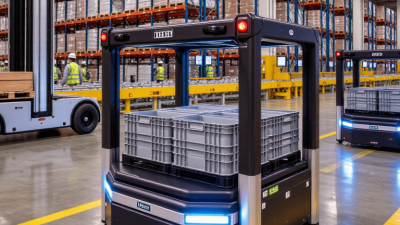
Choosing among China’s leading Automatic Guided Vehicle manufacturers requires more than comparing brochures. Buyers should examine payload ratings, navigation methods, safety features, service coverage, and integration with warehouse software. A compact tugger moving bins along a marked aisle faces different demands from a heavy-load vehicle serving a busy factory floor.
Industry data shows why the category deserves attention. The International Federation of Robotics reported 541,302 industrial robots installed worldwide in 2023. That figure covers industrial robots broadly, not AGVs alone, so it should not be mistaken for an AGV sales total. MHI’s 2024 Annual Industry Report also found that 55% of surveyed supply-chain professionals planned to invest in robotics and automation within five years. Adoption is growing. But fit matters more than hype.
A useful perspective comes from Jeff Burnstein, president of the Association for Advancing Automation, who has emphasized evaluating automation by the operational problem it solves. For AGV buyers, that means asking practical questions: Can the vehicle handle narrow turns? How does it recover after a blocked route? Who supports it after installation? These details separate a working system from an impressive demonstration. Not every factory needs the same answer. This guide compares Chinese manufacturers through that lens, while recognizing that specifications and service quality should be verified directly with each supplier.
Read more »
 By:Evelyn
- November 27, 2026

How to Choose the Right AGV Robot in 2026?
Choosing the right AGV Robot in 2026 is less about buying the fastest machine and more about matching it to the work. A robot that moves pallets smoothly across a clear warehouse aisle may struggle with tight turns, changing routes, or uneven floors. Small details matter. So do people: operators need safe, understandable workflows, not just impressive specifications. Start by mapping loads, travel paths, shift patterns, and likely growth. Then compare payload, navigation, charging, fleet software, safety features, service support, and integration needs. Numbers help, but a site walk often reveals more than a polished brochure.
Taiichi Ohno, a manufacturing systems pioneer whose ideas still inform material handling, wrote, “Where there is no standard, there can be no kaizen.” That principle is useful when assessing an AGV Robot: define today’s process before automating it, then decide how performance will be measured. Ask vendors to demonstrate the robot with your actual load and route. Watch it at crossings and narrow corners. Check how it recovers when a path is blocked. A perfect demo is not enough. Request evidence from comparable deployments, including maintenance needs and system uptime, and verify what support is available after installation. The uncomfortable part: a familiar manual process may need redesign before automation delivers value. And forecasts can be wrong. This guide examines the practical criteria, trade-offs, and questions that help teams choose an AGV Robot suited to real operating conditions—not merely a specification sheet.
Read more »
By:Evelyn
- November 27, 2026
How to Choose an Automated Guided Vehicle in 2026
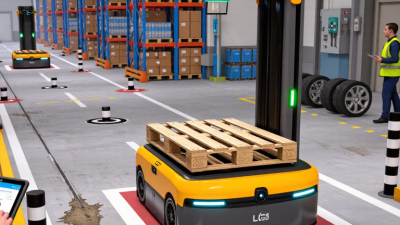
In 2026, choosing an Automated Guided Vehicle (AGV) means matching a machine to real work. Start with the load: note its weight, dimensions, pickup points, and how often it moves. Then map the route. A narrow aisle, uneven floor joint, or busy crossing can change which vehicle is suitable. Small details matter. Check whether the AGV can turn, stop, and transfer loads safely at each station, not just travel on an open test floor.
Compare guidance options, such as magnetic markers, laser navigation, or camera-based systems, against your facility’s layout and expected changes. Ask suppliers for documented payload limits, operating conditions, charging requirements, and integration details for your warehouse software and equipment. Those specifications need to fit your site, not just a brochure. Plan for people sharing work areas, maintenance access, spare parts, and the response time available when a vehicle is out of service. A low purchase price may not reflect the full cost of ownership.
Before committing, run a route trial with representative loads and normal traffic. Record cycle times, interruptions, manual interventions, and charging behavior. A tidy demonstration can miss ordinary problems; real shifts are less predictable. No single AGV suits every operation, and early estimates can be wrong. Use measured results, clear acceptance criteria, and a review of vendor support to make a grounded choice. The right decision is the one your team can operate reliably as workflows change.
Read more »
 By:Charlotte
- November 27, 2026