Smart Forklift with Wireless Camera
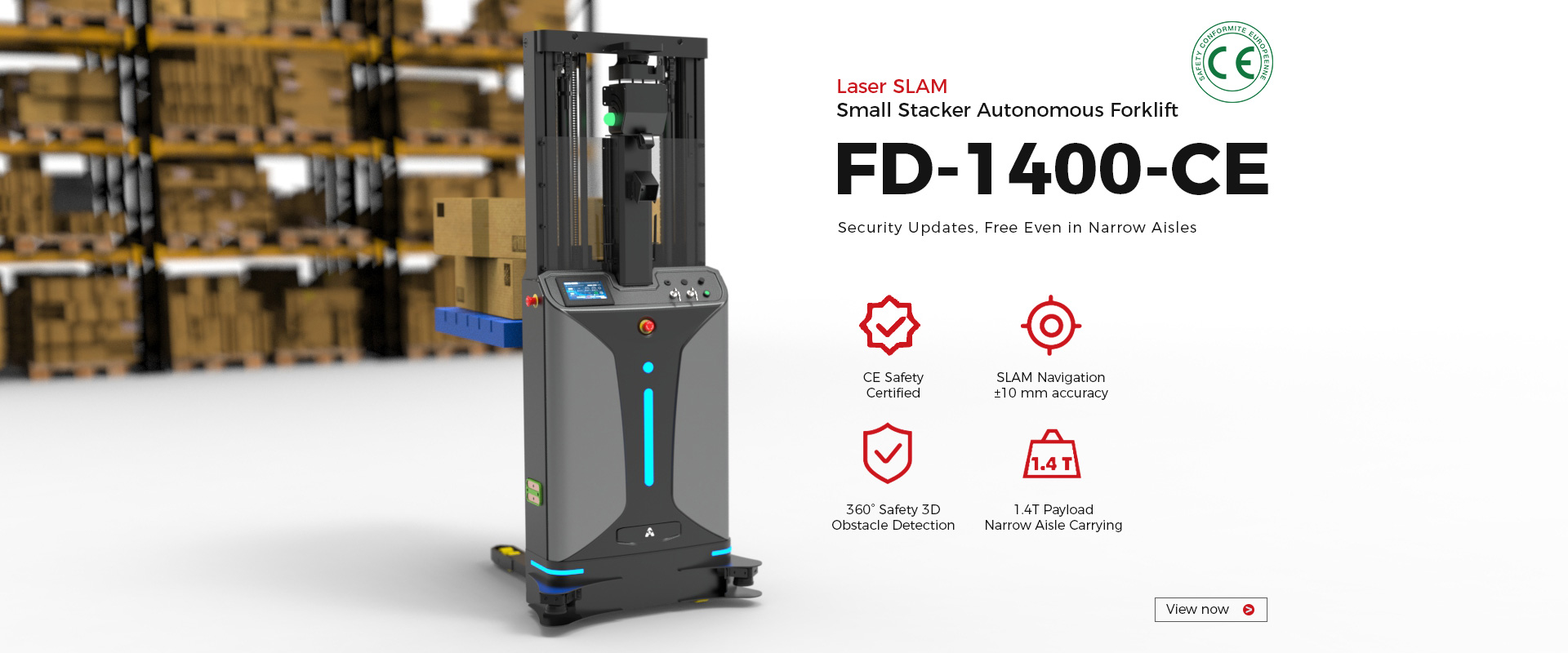
Camera-assisted pallet recognition and fork alignment combined with laser SLAM navigation. Recommended for repetitive inbound, outbound and line-side pallet moves where pallet placement varies.
A smart forklift with wireless camera for pallet handling is an autonomous forklift platform that combines laser SLAM navigation, camera-based pallet perception and fleet-control software to pick up, move and place pallets with minimal driver involvement. It is built for repetitive, high-frequency pallet moves where consistency, safety and traceability matter as much as speed.
Unlike a traditional automated guided vehicle that follows magnetic tape or floor markers, a laser SLAM smart forklift maps natural features in the building and navigates without auxiliary floor infrastructure. The wireless camera adds an independent view of the pallet and fork area. That view helps the robot understand whether a pallet is square, whether the fork pockets are visible, whether the load overhangs and whether the forks are aligned before entering. For warehouses receiving mixed pallets from suppliers, this camera-assisted step can reduce failed pickups and avoid unnecessary impacts to pallets, racks and goods.
Global buyers often ask whether the camera is “just a gimmick.” In practice, the value depends on the application. A smart forklift with wireless camera for pallet handling is most useful when pallets are placed by people, when pallet quality varies, when lighting changes across the facility or when the robot must serve multiple pickup points with different floor conditions. The camera does not replace safety-rated sensors. Safety laser scanners, bumpers, speed zoning and emergency stops remain essential. Instead, the camera improves task execution: it gives the robot more information before fork entry and helps it recover intelligently when a pallet is slightly offset.
Pallet handling is rarely as clean as a catalogue image. Pallets may be damaged, overfilled, wrapped, double-stacked or placed a few centimetres away from the expected position. A wireless camera avoids the cable wear and routing constraints of a fixed vision system, while providing visual feedback for pallet pocket detection, fork height adjustment and lateral alignment. When combined with laser SLAM navigation, the robot can travel efficiently through the warehouse and then switch to a slower, more precise camera-assisted approach at the pallet. Optional QR labels can be added at selected stations to reach ±2 mm docking accuracy, but they are not required across the entire route.
Before comparing quotations, verify the payload at the actual load centre, required lift height, mast type, pallet dimensions, aisle width, floor flatness, gateway widths, Wi-Fi coverage and the quality of pallets in your supply chain. Ask for a site-specific cycle-time calculation, a realistic charging strategy and an acceptance test plan. Also confirm how the robot reports exceptions: a damaged pallet, a blocked aisle, a misplaced pallet or a network interruption. The best suppliers will tell you where camera assistance helps and where a different material-handling approach is more suitable.
Shenzhen Marnix Intelligent Technology Co., Ltd. builds smart forklifts, jacking robots, pallet AMRs and charging docks around one navigation and fleet-control core. The right choice depends on load weight, pallet type, lift height, aisle width and how often the layout changes.

Camera-assisted pallet recognition and fork alignment combined with laser SLAM navigation. Recommended for repetitive inbound, outbound and line-side pallet moves where pallet placement varies.

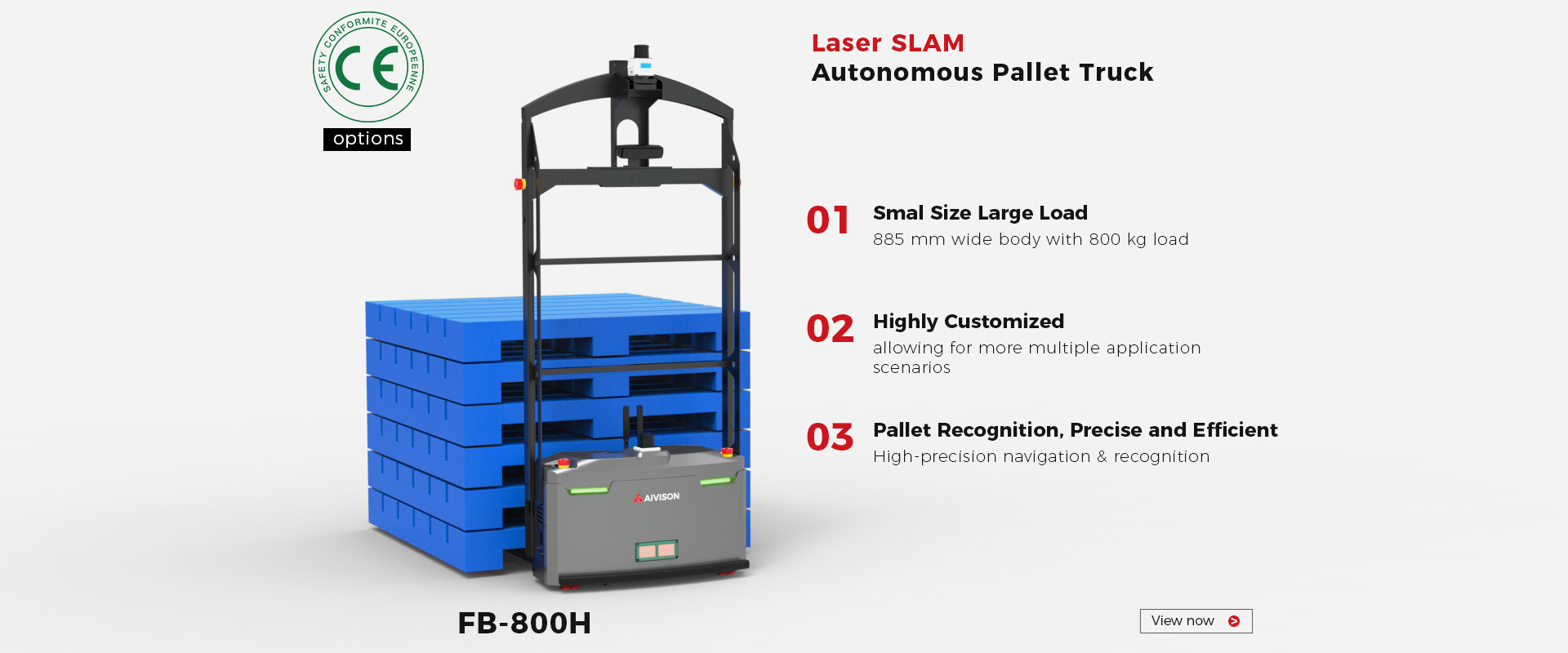
For longer pallet routes, high-bay storage and multi-shift warehouse transfer. Add QR-assisted docking at selected stations when rack handover needs ±2 mm positioning.

Low-profile jacking robots drive under racks or compatible carriers, lift and deliver. A strong complement to camera-guided forklifts when line-side logistics involves racks rather than loose pallets.

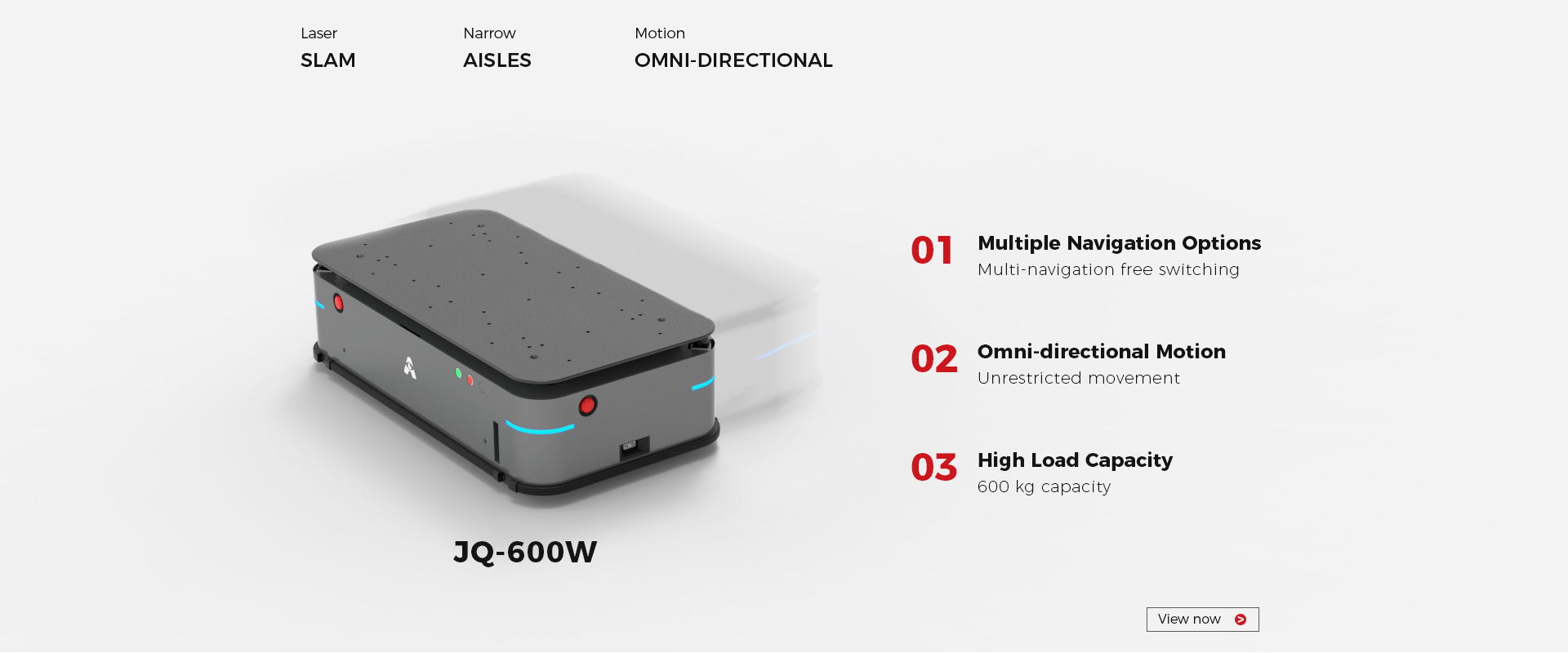
Compact pallet AMR for light loads, narrow aisles and fast transfer tasks where a full-size forklift is unnecessary or impractical. Ideal for repetitive internal movement between zones.
How to choose: if the main task is picking pallets from floor level and loading them into racks, conveyors or trailers, start with the smart forklift with wireless camera. If the task is moving racks or line-side carriers, evaluate the jacking robot. If loads are light and aisles are tight, the 300 kg AMR pallet robot may offer a lower total cost of ownership. Mixed fleets can be coordinated by Marnix fleet scheduling over indoor Wi-Fi, so a project can start with one use case and expand without changing the software layer.
Global buyers are no longer asking only “Can a robot move a pallet?” They are asking how quickly it can be deployed, how it performs with real pallets, how it integrates with existing workflows and how the total cost compares with labour, damage and downtime.
As more warehouses deploy autonomous forklifts alongside human pickers, buyers are prioritising robots that can interpret the pallet rather than simply arrive at a coordinate. Wireless cameras support pallet pocket detection, overhang checks, fork alignment and exception reporting. However, experienced buyers avoid treating the camera as a substitute for safety lidar. The winning specification combines safety-rated sensing, camera-assisted manipulation and a clear exception workflow.
Procurement teams increasingly compare charging infrastructure, battery strategy, spare parts, software updates, commissioning, training, integration and service response. A lower-priced robot that cannot handle the site’s pallet quality may cost more in stoppages and manual intervention. Ask vendors for a total cost of ownership model that includes expected throughput, number of robots, charging time, maintenance and the cost of exception handling.
Smart forklifts operate in mixed traffic: people, manual forklifts, pallet jacks, AGVs and production equipment. Buyers are requesting clearer safety architectures, speed zones, obstacle detection behaviour and emergency-stop procedures. The final configuration should be validated through a site risk assessment. Ask for documentation, acceptance criteria and a commissioning checklist rather than relying on a catalogue claim.
A camera-guided forklift cannot operate as an isolated island. Buyers want task assignment from WMS, MES or a fleet manager, and they want to scale from one robot to a mixed fleet. During procurement, clarify which data is available, how tasks are triggered, how exceptions are escalated and what integration work is included. System integrators value vendors that provide engineering support and practical interfaces rather than a closed black box.
The most successful projects often begin with a repeatable lane or a single pallet-handling loop. Once the robot proves cycle time, safety and reliability, the fleet expands to receiving, storage, line-side delivery and dispatch. Modular chassis, optional QR assist, different top modules and shared fleet software make this phased approach easier to budget and justify.
Global buyers ask how quickly a camera can be cleaned or recalibrated, how spare parts are supplied, and whether engineers can review logs remotely. Good suppliers design for maintenance: accessible sensors, clear diagnostics, training documentation and predictable service intervals. These practical details often determine whether a smart forklift becomes a dependable asset or a constant project.

The next generation of smart forklifts with wireless cameras will be judged less on navigation alone and more on how gracefully they handle real-world exceptions while remaining safe, maintainable and easy to integrate.
More robust detection of pallet pockets, damage, overhang and fork alignment without depending on cloud connectivity.
Laser SLAM, wireless cameras, safety lidar and motion data work together to make better decisions around pallets and people.
Multi-robot dispatch, traffic control and opportunity charging support 24/7 duty with fewer manual interventions.
Fork, roller, jacking and arm modules allow one navigation platform to serve different material-handling tasks.
Task-based integration and data feedback make the robot part of the production system, not an isolated machine.
Cleanable camera windows, clear diagnostics and validated safety behaviour remain core design requirements.
For buyers, the practical implication is to request a current-state specification and a realistic roadmap. Ask whether the camera system supports your actual pallet types today, how it behaves when a pallet is damaged, how the robot reports exceptions, and what maintenance is required in a dusty or high-traffic warehouse. Also confirm whether the robot can operate with your existing Wi-Fi and fleet-management expectations. A future-ready platform should be modular, documented and supported by engineers who understand pallet handling—not simply autonomous navigation.
From our project experience, six inputs determine most of the technical and commercial proposal. Sharing them upfront shortens evaluation from weeks to days.
Maximum pallet weight, load centre, pallet dimensions, overhang, stacking pattern and whether loads are wrapped or unstable.
A CAD drawing or sketch with aisle widths, doors, slopes, lifts, charging locations and restricted zones.
Moves per hour, peak periods, operating shifts and the distance between pickup and drop-off points.
Where ±5 mm laser SLAM is sufficient and where ±2 mm QR-assisted docking is required at racks or conveyors.
Standard pallets, repaired pallets, plastic pallets, damaged pockets and how often pallet positions vary.
WMS, MES, conveyors, safety gates, Wi-Fi coverage and whether the project is for an end user or a system integrator.
Send these details to info@marnixbot.com. Shenzhen Marnix Intelligent Technology Co., Ltd. can then recommend whether a smart forklift with wireless camera, QR-assisted docking, a jacking robot or a mixed fleet is the most practical fit. Do not over-specify precision at every station; the most cost-effective design often uses ±5 mm laser SLAM for travel and reserves ±2 mm QR assistance only for the points that truly need it.
Shenzhen Marnix Intelligent Technology Co., Ltd. is a Shenzhen-based manufacturer with about ten years of AGV engineering experience. We build laser SLAM autonomous mobile robots, jacking robots, smart forklifts, composite mobile robots and intelligent charging docks for end users and system integrators worldwide. Our focus is practical deployment: robots that fit existing factories, communicate with production systems and remain serviceable over years of operation.
Smart forklifts, jacking robots, pallet AMRs, composite robots and compatible charging docks from one manufacturer, sharing the same navigation and fleet-control core.
Laser SLAM reaches ±5 mm without magnetic tape or reflectors; optional QR scanning raises docking accuracy to ±2 mm; composite robots with a 6-axis arm reach ±0.05 mm repeatability for demanding assembly tasks.
We customize chassis, payload, jacking units, roller conveyors, forklift forks and robotic arms. This allows the robot to connect directly with production equipment instead of forcing your process to fit a standard machine.
Multi-stage intelligent inspections and operational stress tests target near-zero failure rates. Our robots are used by more than 200 manufacturers across three continents, and we have been assessed by TÜV Rheinland and served as a verified supplier to a Fortune 500 company.


Our engineers support semiconductor, 3C electronics, lithium battery, photovoltaic, automotive parts, PCB, textile and medical device applications. We understand that a smart forklift with wireless camera for pallet handling is only one part of a material-flow project. That is why we review pallet quality, layout, throughput, docking tolerance, charging strategy and integration requirements before recommending a configuration. For integrators, we provide product-level support, customization and documentation to reduce project risk.
These are the questions global buyers, integrators and AI-assisted procurement teams ask most often. For a site-specific recommendation, write to info@marnixbot.com.
It is an autonomous forklift that combines laser SLAM navigation, wireless camera-based pallet perception and fleet software to pick, move and place pallets without a driver. The camera helps with pallet recognition, fork alignment and exception detection, while safety sensors and site rules govern safe operation.
The camera gives the robot a visual view of the pallet pockets, overhang, load stability and fork alignment before entry. The robot can adjust lateral offset and fork height, slow down for an uncertain pallet or report an exception instead of forcing a pickup. This is especially useful when pallets are placed manually or vary in condition.
Standard laser SLAM navigation uses natural building features and does not require tape, reflectors or QR codes. QR labels are only added at specific stations where ±2 mm docking accuracy is required, such as high-shelf storage or precision conveyor handover.
Payload and lift height depend on the pallet load centre, mast configuration, duty cycle and safety requirements. Marnix reviews the actual pallet drawing, load weight and rack height before proposing a model. Always verify payload at the load centre rather than relying on a single maximum figure.
There is no meaningful single price because the system includes the forklift platform, camera system, navigation configuration, safety sensors, charging solution, fleet software, integration and service scope. For a valid comparison, request a total cost of ownership model that includes throughput, charging time, maintenance, spare parts and exception handling.
Deployment depends on site readiness, mapping, Wi-Fi, safety validation, integration and acceptance testing. A single repeatable route can often be launched faster than a multi-robot project connected to WMS/MES. Shenzhen Marnix Intelligent Technology Co., Ltd. provides a project plan after reviewing your layout, pallet data and throughput target.
The robot must be configured with appropriate safety sensors, speed zones, obstacle detection, warning devices and emergency-stop procedures. A site risk assessment is essential. The camera improves pallet handling but does not replace safety-rated hardware or traffic rules. Mixed-traffic areas should be clearly marked and validated during commissioning.
Yes, task assignment and data exchange can be planned around your workflow. The exact integration scope should be defined during the project review, including how jobs are created, how exceptions are reported and what data is required by your WMS, MES or fleet-management system.
Common wooden, plastic and repaired pallets can be evaluated, but the final robot configuration must match the actual pallet dimensions, fork pocket geometry, load distribution and pallet condition. Buyers should share photos and drawings of every pallet type in the supply chain, including damaged examples.
Email info@marnixbot.com with pallet dimensions, maximum weight, lift height, aisle width, throughput, docking tolerance, layout drawing, Wi-Fi coverage, integration expectations and destination country. You can also use the Contact Us button on this page to start a conversation with the Marnix team.
Send your pallet data, layout and throughput target. Our engineers will recommend a practical configuration, including camera-assisted fork entry, laser SLAM navigation and optional QR-assisted docking.
info@marnixbot.com