8 Warehouse Material Handling Robots for Puebla Operations
These export-ready platforms cover light pallet transfer, 2,000 kg forklift automation, rack movement, high-rack stacking, narrow-aisle line-side delivery and reconfigurable warehouse storage. Product URLs are preserved as supplied.

Warehouse Stacker CE Forklift AGV 800kg Load Capacity Light AMR Pallet
For appliance, electronics and mixed-SKU warehouses in Puebla where aisle space is tight and pallet loads stay around 800 kg. The CE forklift AGV format supports repeated put-away and line-side replenishment without floor tape.
View product
Automatic Handling CE Certificate 2000kg Forklift Robot Vehicle Laser AGV for Large Load Goods-carrying
For automotive and industrial pallets that move between receiving, buffer and production. The laser AGV format suits large-load goods carrying and repetitive transfer inside Puebla supplier parks and 3PL warehouses.
View product
AGV AMR Autonomous Forklift Smart Version Auto Mobile Transfer Stacker Robot
A smart-version autonomous forklift for flexible pallet transfer where routes change by shift or product family. Puebla cross-docks and contract warehouses can use it for buffer movement without locking the layout to fixed tracks.
View product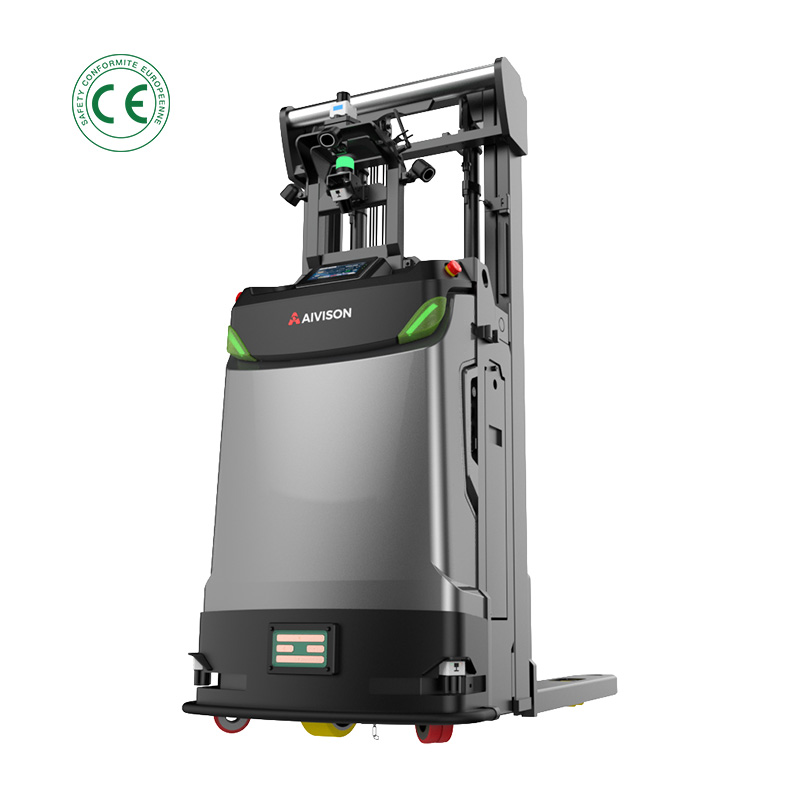
Smart Transport Robotic with Laser Navigation Reach 2000KG AGV Logistics Robots Warehouse Robot AMR
For warehouse logistics teams that need reach-style handling and laser navigation for high-rack support. A useful fit when receiving and put-away zones are separated by long travel routes in Puebla distribution centers.
View product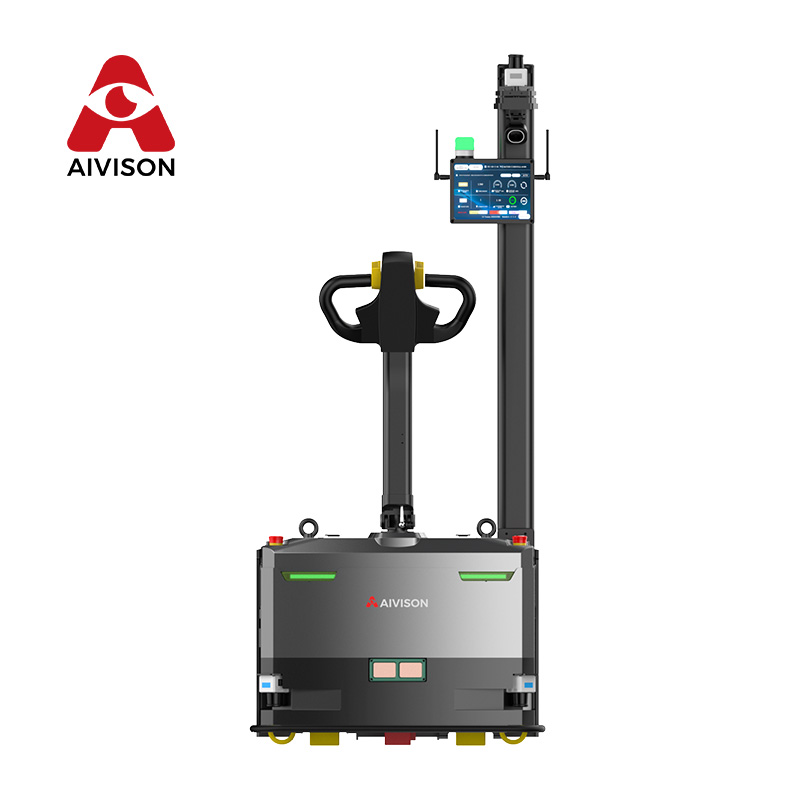
China Factory Movable Pallet Agv Robot Rack Shelf for Intelligent Robot Warehouse
For reconfigurable rack and shelf movement in intelligent warehouses. Puebla operations with seasonal layouts can move storage islands instead of rebuilding conveyors or forcing new floor infrastructure.
View product
Warehouse Robot Robotics 2000KG CE Warehousing Automatic Forklift Stacking AGV
For automatic forklift stacking where pallets must be placed at height with repeatable alignment. QR-assisted docking can be specified where a Puebla project needs ±2 mm station precision.
View product
Heavy Load 2000KG Load Forklift Laser Guide AMR for Warehouse Pallet
For dense industrial pallets and heavy warehouse loads. The laser-guided AMR platform supports high-duty cycles when manual forklift availability, operator turnover or safety exposure becomes the bottleneck.
View product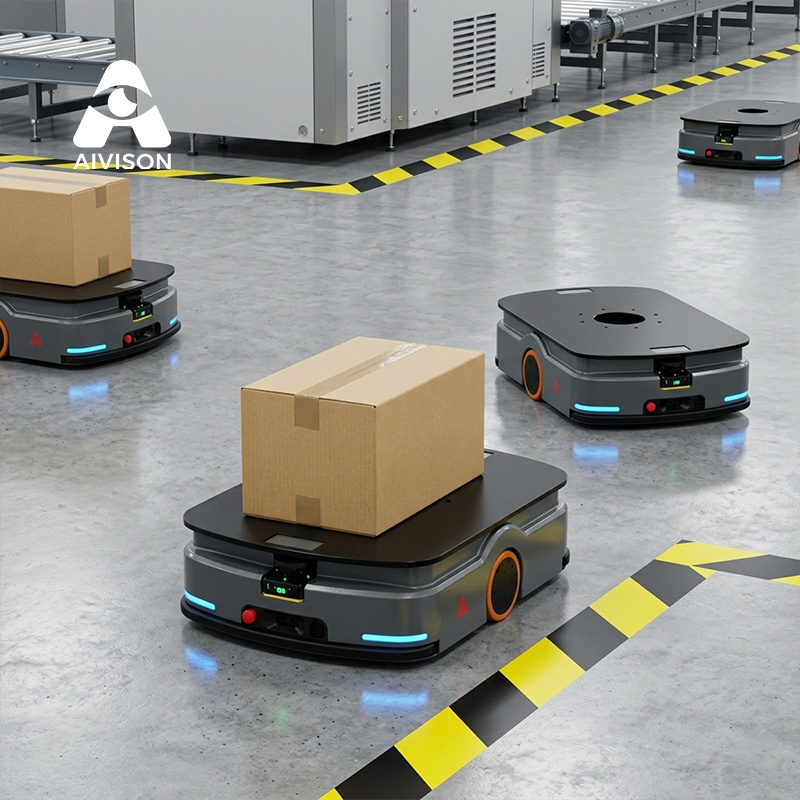
Autonomous Mobile AMR Robot 300kg Payload Laser Guided AGV for Carry Goods in Factory
For light goods, totes and small carriers inside factories. A practical first automation step for Puebla electronics, appliance and medical-device suppliers working in mixed pedestrian and vehicle traffic.
View productWhy Puebla Is a Strategic Market for Warehouse Material Handling Exporters
Puebla is more than a historic city. Its metropolitan area and state industrial corridors—including Puebla capital, San Martín Texmelucan, Huejotzingo, Cuautlancingo, Amozoc and the San José Chiapa automotive corridor—form one of central Mexico’s manufacturing and logistics bases. The state’s automotive cluster sits alongside appliance, electronics, food processing, textile, chemical and consumer-goods operations. Each of these sectors creates repeated moves of pallets, racks, totes and containers between receiving, storage, line-side stations, quality areas and shipping.
Nearshoring and USMCA-linked supply-chain redesign are pushing manufacturers and logistics providers in the Puebla market to increase throughput without waiting for a new building. Many projects start in existing warehouses with fixed columns, narrow aisles, mixed pedestrian and forklift traffic, and a short window between installation and production. A conveyor or magnetic-tape AGV layout can be effective, but it also creates civil work and route lock-in. Laser SLAM AMRs map natural features and can reduce that rework, which is why flexible material handling is often evaluated first in brownfield expansions.
For procurement teams, the choice of a warehouse material handling exporter should not be reduced to a unit price. The stronger questions are: Which accuracy level is needed at each station? Can the fleet be expanded? Does the charger match Mexican power and shift patterns? What documentation, spare-parts plan and commissioning support are included? How will the robot behave around people and manual forklifts? These questions separate a catalog quote from an engineered deployment.
Shenzhen Marnix Intelligent Technology Co., Ltd. answers those questions from a manufacturer’s position. The company brings about ten years of AGV engineering experience, a portfolio that includes jacking robots, smart forklifts, pallet AMRs, composite mobile robots and charging docks, and verified evidence such as ±5 mm laser SLAM navigation, ±2 mm QR-assisted docking, ±0.05 mm composite-robot repeatability, a TÜV Rheinland onsite assessment and supply to more than 200 manufacturers across three continents. This guide uses that evidence to map products to Puebla use cases and to show what a buyer should prepare before requesting a proposal.
Information gain in this guide
- Application-first recommendations: eight products mapped to Puebla warehouse, automotive, appliance and cross-dock tasks.
- Accuracy tiering: ±5 mm laser SLAM, ±2 mm QR-assisted docking and ±0.05 mm composite-robot repeatability explained by use case.
- Local buying inputs: power planning, import documentation, Spanish operator materials, mixed-traffic safety and service response.
- Verified exporter evidence: TÜV Rheinland onsite assessment, Fortune 500 supplier history, 200+ manufacturers and three continents of active deployments.
- RFQ acceleration: a six-point preparation checklist that shortens the gap between inquiry and engineered proposal.
Where Material Handling Robots Create Value in Puebla
Puebla operations rarely need one universal robot. They need the right mix of payload, lifting geometry, docking precision and fleet control for each material flow.
Automotive supplier parks and sequenced line-side delivery
Puebla’s automotive and tier-supplier network depends on repeatable pallet delivery to assembly and sub-assembly stations. A 2,000 kg laser AGV forklift or heavy-load forklift AMR can reduce manual forklift traffic while keeping the route flexible during model changes.
Recommended: 2,000 kg laser AGV forkliftAppliance, electronics and 3C assembly
Appliance and electronics plants often combine narrow aisles, small carriers, frequent changeovers and mixed human traffic. The 300 kg factory AMR and 800 kg light pallet stacker are practical for tote transfer, replenishment and light pallet movement without tying the layout to fixed floor tracks.
Recommended: 300 kg factory AMRFood, consumer goods and cross-dock distribution
Puebla distribution centers serving Mexico City, Veracruz and the Bajío need uptime through multiple shifts. Reach-style laser-navigation AMRs and automatic stacking AGVs can move 2,000 kg pallets between receiving, staging and dispatch while smart charging docks protect fleet availability.
Recommended: 2,000 kg reach AMRRack-based storage and reconfigurable layouts
Warehouses with seasonal SKU changes can use movable pallet AGV racks to relocate storage islands instead of rebuilding conveyors. For heavy pallets, a 2,000 kg stacking AGV or laser-guided forklift AMR keeps the storage strategy flexible as the Puebla market evolves.
Recommended: movable pallet AGV rackWhat Puebla Buyers Should Price Into the Automation Business Case
Automation decisions in Puebla are shaped by nearshoring, existing buildings, labor continuity and uptime. A warehouse material handling exporter should address all four—not only payload.
Nearshoring-driven volume volatility
New programs can ramp quickly and change mix by quarter. A scalable AMR fleet, managed over indoor Wi-Fi, is easier to expand than a fixed conveyor network when Puebla customers add shifts or new product families.
Brownfield warehouse constraints
Many Puebla sites operate inside existing buildings with columns, docks and aisle widths that cannot be reworked. Laser SLAM maps the environment, so routes can be adjusted without magnetic tape, floor QR grids or major civil works.
Labor continuity and mixed-traffic safety
High turnover makes repetitive forklift transport harder to stabilize. Autonomous robots with dynamic obstacle avoidance can handle predictable routes while trained staff focus on exceptions, quality and equipment supervision.
Uptime, charging and power planning
Multi-shift Puebla warehouses need charging strategy, not just battery capacity. Compatible intelligent charging docks and fleet scheduling help coordinate recharge windows; charger input must be confirmed for local 60 Hz industrial supply.
Selection factors Puebla buyers usually weigh
The index below is drawn from Marnix project reviews and presented as a decision aid, not a third-party market survey. It shows where proposal quality often succeeds or fails.
What this means for your RFQ
- Ask for station-by-station accuracy: ±5 mm laser SLAM is enough for most transport; ±2 mm QR assistance belongs only where docking demands it.
- Request a fleet plan: missions per hour, peak factor, travel distance, charge windows and traffic rules should be modeled before quote approval.
- Verify the exporter: request TÜV Rheinland assessment evidence, CE documentation, trade history, warranty terms and spare-parts lists.
- Confirm local conditions: voltage and frequency, importer documentation, NOM requirements, Spanish operator materials and commissioning responsibilities.
- Compare total deployed cost: floor rework, downtime, labor exposure, safety and future layout changes matter as much as the robot price.
Recommended Configurations by Puebla Warehouse Task
Use this matrix to align a Puebla application with the correct Marnix platform before requesting a formal proposal.
| Puebla task | Recommended platform | Why it fits | Product link |
|---|---|---|---|
| Light pallet and tote transfer in appliance or electronics plants | 800 kg light AMR pallet stacker or 300 kg factory AMR | Narrow-aisle flexibility, fast mapping and low floor disruption for mixed-SKU production. | 800 kg stacker · 300 kg AMR |
| 2,000 kg automotive or industrial pallet transport | Automatic 2,000 kg laser AGV forklift or heavy-load forklift AMR | CE-certified handling for large loads, repetitive transfer and line-side replenishment. | 2,000 kg laser AGV · heavy-load AMR |
| High-rack stacking and pallet put-away | 2,000 kg automatic stacking AGV or 2,000 kg reach AMR | Stacking geometry, laser navigation and optional QR assist for precision station handover. | stacking AGV · reach AMR |
| Rack, shelf and storage-island repositioning | Movable pallet AGV robot rack | Supports reconfigurable warehouse layouts without rebuilding fixed conveyors. | movable pallet AGV rack |
| Mixed fleet in a brownfield Puebla warehouse | AGV AMR smart forklift + pallet AMRs + charging docks | Shared SLAM navigation core and fleet software coordinate mixed platforms over indoor Wi-Fi. | smart forklift · Contact Us |
Why Marnix Is a Credible Warehouse Material Handling Exporter for Puebla Buyers
Shenzhen Marnix Intelligent Technology Co., Ltd. combines a complete AMR portfolio with manufacturer-level customization, verified quality evidence and fleet software for mixed robot deployments.

Manufacturing evidence, not a trading-company catalog
Marnix engineers laser SLAM autonomous mobile robots, jacking robots, smart forklifts, composite mobile robots and intelligent charging docks for factories and integrators. The company’s expertise is concentrated in semiconductor, 3C electronics, lithium battery, photovoltaic, automotive parts, PCB, textile and medical-device applications—industries that demand repeatable movement, traceability and controlled downtime.
- About ten years of AGV engineering experience, with R&D and manufacturing based in Shenzhen.
- Verified onsite assessment by TÜV Rheinland and supply history with a Fortune 500 company.
- More than 200 manufacturers served across three continents, including system integrators.
- Flexible customization of chassis, payload and top modules such as jacking units, roller conveyors, forklift forks and 6-axis arms.
About ten years of AGV engineering
Long-term experience in mobile robot design, navigation, fleet scheduling and production-line integration—not a catalog-only trading model.
Precision tiers for real stations
±5 mm natural-feature laser SLAM for standard transport, ±2 mm with QR camera for demanding docking, and ±0.05 mm repeatability for composite robots with 6-axis arms.
Complete AMR portfolio
Jacking robots, pallet AMRs, smart forklifts, composite mobile robots and compatible charging docks from one source.
Manufacturer-level customization
Chassis, payload and top mechanisms can be engineered around rack footprints, conveyor interfaces or production-machine handover.
Verified quality and trade evidence
TÜV Rheinland onsite assessment, Fortune 500 supplier history, transparent Alibaba trade records and a multi-stage quality protocol before shipment.
Fleet software, charging and integrator support
Intelligent scheduling over indoor Wi-Fi coordinates simultaneous tasks, traffic control and automatic charging for mixed robot fleets.
What to Prepare Before Requesting an AMR Proposal
From Marnix project experience, these six inputs determine most robot selection decisions. Sharing them upfront can shorten evaluation from weeks to days.
Load profile
Maximum weight, pallet or rack footprint, center of gravity and whether loads are stable enough for autonomous transport.
Site layout
A CAD drawing or sketch with aisle widths, doors, columns, slopes, elevators, charging locations and pedestrian zones.
Throughput target
Missions per hour, peak periods, shift pattern and future growth. This sets fleet size and charging dock count.
Docking precision
Identify where ±5 mm is sufficient and where ±2 mm QR assistance or composite-arm-level precision is required.
Wi-Fi and charging
Indoor Wi-Fi coverage, access-point placement, charger input voltage, frequency and available charge windows.
Import and documentation
Confirm Mexican power requirements, customs and NOM responsibilities, Spanish operator materials, warranty and spare-parts plan.
Common Questions from Puebla Warehouse and Factory Buyers
Straight answers for procurement, engineering and operations teams evaluating warehouse material handling exporters for the Puebla market.
Do laser SLAM AMRs require floor tape or QR codes in an existing Puebla warehouse?
No for standard transport. Laser SLAM maps natural features such as walls, columns and fixed structures, so the robot can navigate without magnetic tape, reflectors or a full floor QR grid. QR labels are typically added only at stations where ±2 mm docking precision is needed, which keeps retrofit work limited in existing Puebla buildings.
Which model should I choose for 2,000 kg automotive pallets or high-rack storage?
Start with the automatic 2,000 kg laser AGV forklift or heavy-load forklift AMR for pallet transport. For high-rack put-away, compare the 2,000 kg automatic stacking AGV and the 2,000 kg reach AMR. The final choice depends on rack height, fork entry clearance, aisle width, load center and whether station docking needs ±2 mm QR assistance.
How should we plan charging for 60 Hz industrial power in Mexico?
Charger input must be confirmed during project engineering. Provide the available voltage, frequency, phase, breaker capacity and charging-location layout. A Puebla project may use different supply conditions from another site, so the quotation should state the charger configuration, charging ratio, recommended dock count and any local compliance responsibilities handled by the importer or integrator.
Can a mixed fleet combine forklifts, jacking robots and 300 kg AMRs?
Yes. Marnix platforms share a SLAM navigation core and can be coordinated by an intelligent scheduling system over indoor Wi-Fi. Mixed fleets can assign tasks by payload and route, manage traffic at intersections and coordinate automatic charging. The project should still define traffic rules, priority zones and handover points during commissioning.
What documentation and support should be included in an export quotation?
Request CE documentation, electrical schematics, operation and maintenance manuals, spare-parts lists, warranty terms, commissioning plan and remote-support scope. For Puebla, also clarify Spanish operator materials, import documentation responsibilities, NOM requirements and who performs final safety validation. These items should be in the quotation—not discovered after shipment.
How do I estimate fleet size and ROI for a Puebla project?
Calculate missions per hour, average travel distance, lift and handover time, peak factor, charging ratio and available operating hours. Then compare the robot fleet with current labor, forklift utilization, floor rework, safety exposure and expected layout changes. A pilot on one route is often the fastest way to validate cycle time before scaling to a full Puebla warehouse fleet.
Request a Puebla-Focused Material Handling Review
Share your load profile, aisle drawing, throughput target and docking precision. The Marnix team will recommend a robot mix, accuracy level and charging plan for your Puebla warehouse or factory—supported by manufacturer-level customization and verified export experience.
Contact Us