Eight Warehouse AGV Platforms for Vancouver Buyers
The eight platforms below cover the payload and docking jobs we most often see in Metro Vancouver RFQs—from 300 kg urban-fulfilment AMRs to 2000 kg autonomous stackers. Each product URL is preserved; custom rack interfaces, safety scanners, chargers, and top modules are engineered by the factory around your site.

Warehouse Stacker CE Forklift AGV 800kg Load Capacity Light AMR Pallet
A compact CE-oriented stacker for light pallet and shelf work in Richmond food facilities, urban fulfilment centres, and leased multi-tenant buildings where floor modification is not practical.
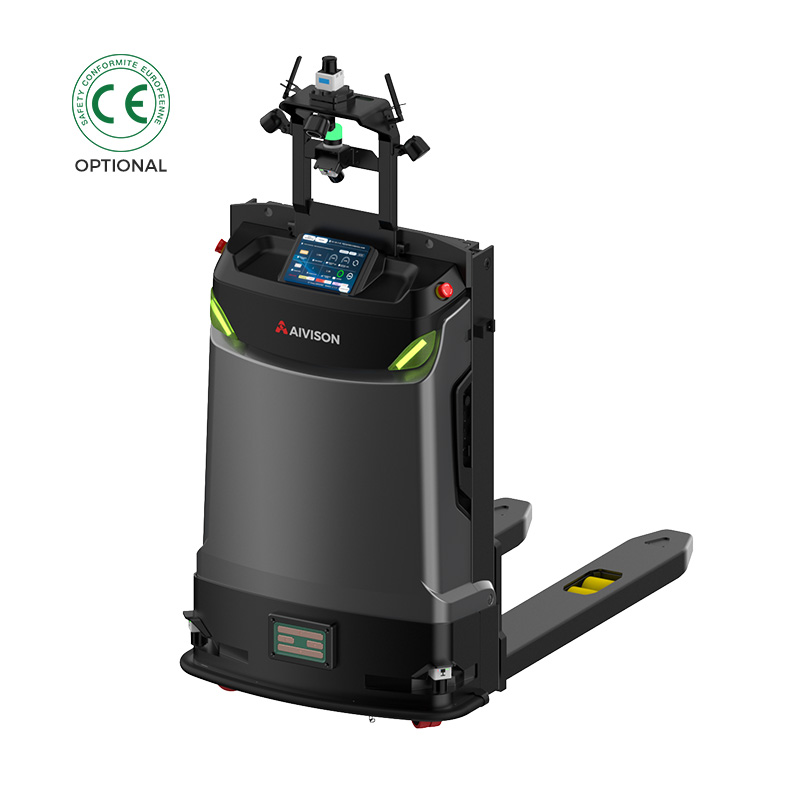
AGV AMR Warehouse Automatic Guided Vehicle 1500kg 2000kg AGV Robot Forklift
For trailer yards, cross-docks, and heavy pallet moves in Delta, Surrey, and Langley. Laser SLAM navigation avoids fixed floor infrastructure, while fleet scheduling supports peak dock windows.

Customizable 1500KG Traction Capacity AGV Autonomous Mobile Robot Amr with Lidar Guided Sensor
Useful for towing carts and totes through mixed pedestrian and forklift traffic. The lidar-guided platform can be customised for coupling height, towing routes, and site-specific safety zones.
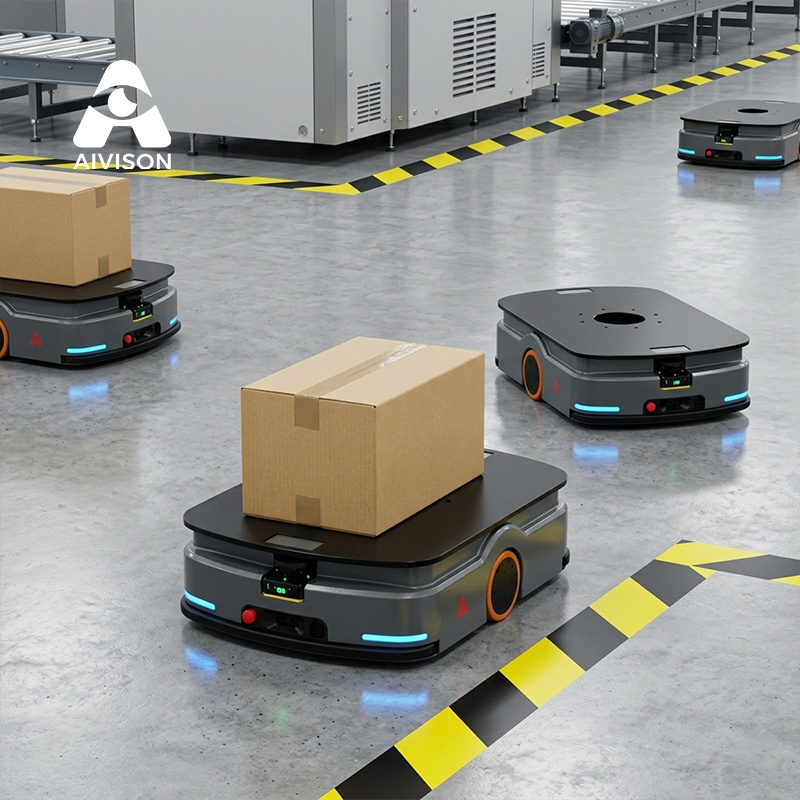
Autonomous Mobile AMR Robot 300kg Payload Laser Guided AGV for Carry Goods in Factory
An entry platform for narrow aisles, multi-level buildings, and fast mapping pilots. It suits light material handling where full-size forklifts are blocked by door widths, elevator access, or tenant rules.
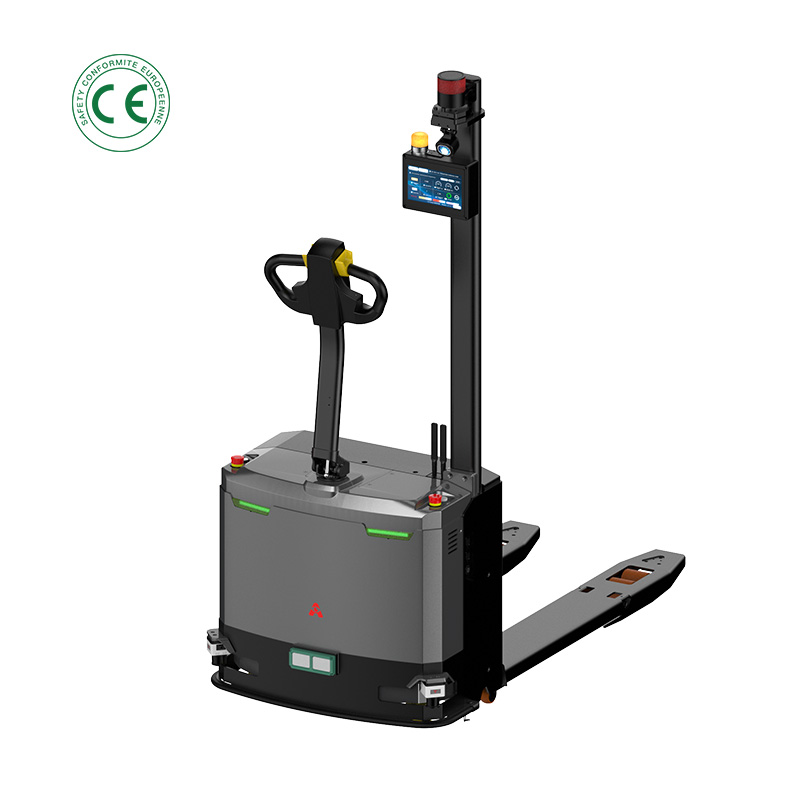
Autonomous Mobile Robot AMR AGV Forklift Pallet Stacker CE Certificate for Smart Warehouse and Production Line Automation
A CE-certified AMR forklift and pallet stacker for warehouse and production-line automation. It is a strong fit for high-rack replenishment, camera-assisted fork entry, and repetitive put-away tasks.

Omnidirectional Service Humanoid Robot Chassis Dual 7-DOF Arms Laser SLAM Navigation for Hospitality and Retail
A service-robotics platform for Vancouver hospitality, retail, and public-facing pilots. It is not a heavy pallet solution; it is for guided interaction, dual-arm tasks, and omnidirectional movement in mapped spaces.
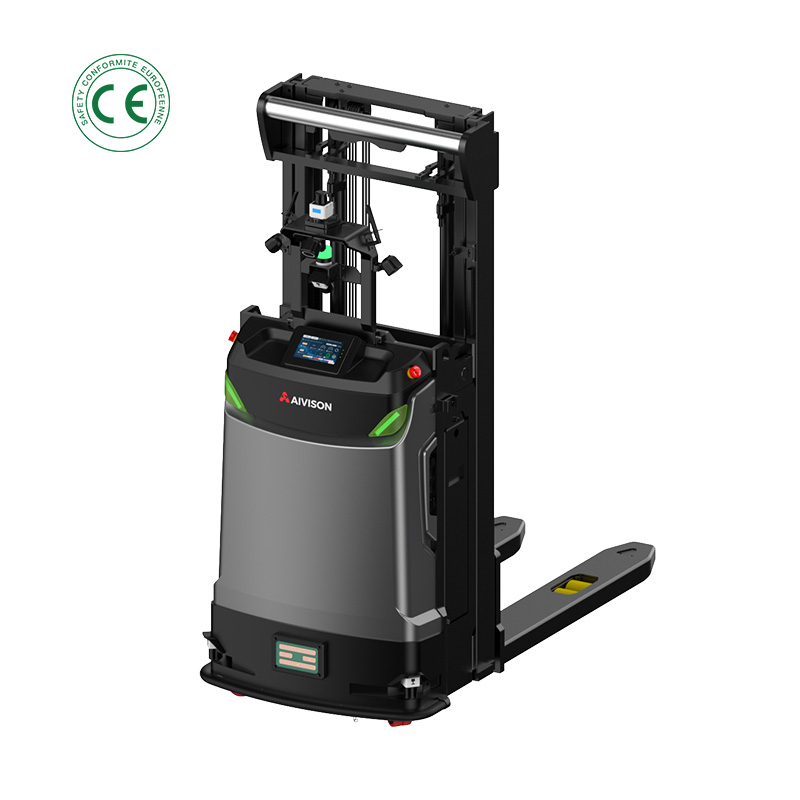
Aivison AMR Robot Vehicle Automated Warehouse Automatico AGV Logistics Industrial Guided Vehicles
An industrial warehouse logistics vehicle for 3PL and distribution sites that need scalable fleet coverage. Routes can be re-mapped when racking, pick faces, or inbound flow changes.

New Warehouse Autonomous Cars agv Robot 2000kg Load Capacity Stacker agv Robot
A heavy-duty autonomous stacker for high-throughput cross-docking, high-bay replenishment, and production-line staging. Specify rack interface, pallet quality, and aisle clearances before selection.
What a Warehouse AGV Supplier Must Prove in Vancouver
Metro Vancouver is not a clean-sheet automation market. Projects usually start inside leased bays, multi-tenant buildings, port-driven peaks, cold-chain envelopes, and mixed pedestrian/forklift traffic. The right AGV supplier must therefore prove safety, service, and integration—not only payload.
Leased and multi-tenant buildings
Routes should be re-mapped without damaging floors, adding tape, or triggering landlord approvals. Laser SLAM is usually the lowest-disruption starting point; QR labels are reserved for precision stations.
Port-driven demand peaks
Vancouver’s port and cross-border e-commerce flows create uneven dock windows. Fleet scheduling, auto charging, and modular throughput are more valuable than a single oversized robot.
Safety and mixed traffic
Vancouver sites often mix people, pallet jacks, forklifts, and contractors. The safety case should align with WorkSafeBC expectations and relevant standards such as ISO 3691-4 and CSA Z434, with the final risk assessment agreed locally.
Cold-chain and condensation
Richmond and south Vancouver food facilities require condensation management, battery temperature planning, and wash-down-safe layout. Ask for a cold-room validation plan instead of assuming a standard AMR is ready.

The RFQ question that changes the project economics
Most Vancouver RFQs ask for a price per robot. A stronger question is: what is the cost per completed pallet move under our real site conditions? That reframes the evaluation around dock waiting time, route distance, charger ratio, door thresholds, floor joints, safety-speed zones, and the labour hours actually removed from the shift.
Our application engineering team uses the same logic when sizing a fleet. A standard laser SLAM AMR can reach ±5 mm without auxiliary infrastructure. Adding a QR code camera raises docking precision to ±2 mm. Composite robots with a 6-axis arm can reach ±0.05 mm repeatability for semiconductor and medical-device work—but only when the station and safety scope justify the extra precision.
For Vancouver buyers, that means the winning proposal is the one that defines the operating envelope in writing: aisle width, pallet overhang, floor flatness, Wi-Fi roaming, charger power, forklift interaction, and escalation response.
Where AGV and AMR Projects Fit in Metro Vancouver
Use cases should be selected by material flow and risk—not by industry label alone. These six scenarios reflect the site constraints and operating patterns our team reviews most often with Vancouver-area buyers.
Port-adjacent cross-docks in Delta, Surrey, and Richmond
Trailer-to-rack flows see variable pallet quality and peak dock windows. 1500–2000 kg autonomous forklifts and stackers can be scheduled around doors and yard handoffs, with safety zones, speed maps, and floor markings agreed before deployment.
Metro Vancouver multi-level warehouses
Constrained footprints favour compact 300 kg pallet AMRs, jacking robots, and lift coordination. A site survey must confirm floor flatness, elevator call interfaces, door widths, Wi-Fi roaming on each level, and queuing space at handoff points.
Cold-chain and food distribution
Cold storage and refrigerated docks require more than a standard robot. Condensation, battery temperature, charger placement, wash-down, and emergency egress must be specified. Treat cold-chain readiness as a validation package, not a checkbox.
Electronics, medical devices, and cleanroom-adjacent production
Burnaby, Richmond, and Vancouver technical operations may use QR-assisted ±2 mm docking or composite robots with ±0.05 mm repeatability. ESD, cleanliness, documentation, and change-control requirements belong in the user requirement specification.
Building products and light manufacturing
Langley, Abbotsford, and Surrey plants often move heavy, awkward loads between saws, wrappers, and staging. Custom top modules and 1500 kg traction units can reduce manual towing while keeping routes reconfigurable.
3PL and e-commerce peak flexibility
Vancouver third-party logistics providers face seasonal peaks and high SKU churn. Fleet scheduling, auto charging, and fast route re-mapping allow capacity to flex without fixed conveyors or floor tape that slow reconfiguration.

Vancouver AGV & AMR Trends Shaping 2025–2030
The strongest buying signals are not generic “automation growth” headlines. They are the specific pressures that make a warehouse AGV project defendable in Metro Vancouver’s land, labour, safety, and logistics environment.
Land scarcity pushes storage upward
High land cost and limited industrial inventory encourage high-bay and multi-level layouts. That increases demand for ±2 mm QR-assisted docking, reliable pallet detection, and precise rack interface engineering.
Labour cost and retention
Repetitive long-distance moves, trailer loading, and line-side replenishment remain difficult roles to fill. AGVs make the strongest case when they remove non-value-added travel and stabilise shift-to-shift throughput.
Port volatility and cross-border e-commerce
Vancouver’s gateway role brings demand spikes and variable trailer arrivals. Modular fleets with Wi-Fi scheduling, charging-station ratios, and WMS triggers handle variability better than fixed automation.
Cold chain and food security
Cold-storage capacity remains strategic in British Columbia. Robotics projects in refrigerated environments must address condensation, battery performance, floor friction, emergency egress, and sanitation routines.
Safety and interoperability become gates
Buyers increasingly require risk assessments, zone control, personnel detection, PLC/API integration, and spare-parts clarity. A robot that cannot document its safety case will slow the project.
Electrification and energy transparency
Charging schedules, utility demand charges, and peak-load management now matter. Specify charger voltage, charging opportunity windows, and whether opportunity charging or battery exchange fits the operation.
Relative influence shown from Marnix application-engineering reviews; it is a decision aid, not a market statistic.
Match the Navigation Tier to the Vancouver Workflow
Over-specifying precision adds cost and calibration work. Under-specifying it creates docking failures. Use this matrix to separate transfer routes from precision stations.
| Vancouver workflow | Recommended platform | Navigation configuration | Why it fits |
|---|---|---|---|
| Dock-to-rack cross-docking | 1500–2000 kg AGV forklift or autonomous stacker | Laser SLAM ±5 mm; optional QR at rack | Handles heavy pallets and trailer-yard variability without fixed floor infrastructure. |
| High-bay replenishment | 800 kg light stacker or 2000 kg stacker | SLAM plus QR camera at ±2 mm | Improves fork entry and rack interface repeatability where clearances are tight. |
| Narrow-aisle urban fulfilment | 300 kg pallet AMR or jacking robot | Laser SLAM ±5 mm | Compact footprint, fast mapping, and no tape make leased-building pilots easier. |
| Machine tending and assembly handoff | Jacking or composite robot with 6-axis arm | QR ±2 mm to ±0.05 mm repeatability | Supports precision handshakes with production equipment after station calibration. |
| Cart towing in mixed traffic | 1500 kg traction AMR | Lidar SLAM with safety scanners | Reduces manual towing while allowing routes to change as layout evolves. |
| Hospitality and retail service pilot | Omnidirectional humanoid service chassis | Laser SLAM, mapped public areas | For guided interaction and dual-arm service tasks, not heavy pallet handling. |
±5 mm · Laser SLAM
The default for most warehouse transfers. No magnetic tape, reflectors, or floor QR codes. Validate door thresholds, floor joints, glass, and moving traffic during mapping.
±2 mm · SLAM + QR
Use QR labels only at precision stations, such as high-rack interfaces, conveyor handoffs, or machine docking. This limits label maintenance while preserving aisle flexibility.
±0.05 mm · Composite robot
For semiconductor, medical-device, or precision assembly flows where an arm and station calibration are part of the scope. This is an engineered system, not a standard AMR add-on.
How a Vancouver AGV Project Moves from RFQ to Uptime
A factory-direct robot is only one part of the result. The deployment plan should connect site data, safety scope, shipping, commissioning, and after-sales responsibility.
Intake the real operating profile
Define load weight, footprint, centre of gravity, routes, doors, slopes, lift use, throughput, peak windows, and current labour hours. Include photos of pallets and rack interfaces.
Survey floor, Wi-Fi, power, and safety
Provide CAD or a measured sketch. Confirm floor flatness, joints, aisle width, charger location, electrical distribution, network roaming, and emergency egress requirements.
Agree the precision map
Separate ±5 mm transfer routes from ±2 mm docking stations and any ±0.05 mm composite-robot tasks. This prevents over-buying and clarifies where QR labels are truly needed.
Build, test, and document
The factory configures chassis, top module, safety scanners, charger, and fleet software. Multi-stage inspections and operational stress tests target reliable handover before shipment.
Ship to Vancouver and commission
Coordinate Incoterms, export crating, commercial invoice, and delivery to the Vancouver port or job site. Commissioning covers mapping, route tuning, safety validation, and operator training.
Measure and optimise after go-live
Track completed moves, waiting time, charger utilisation, fault codes, and manual interventions. Tune routes and fleet rules before scaling to additional floors or buildings.
Why Marnix Is the Factory Behind the Proposal
Shenzhen Marnix Intelligent Technology Co., Ltd. builds laser SLAM autonomous mobile robots, jacking robots, smart forklifts, stackers, composite mobile robots, and compatible charging docks. The company draws on about ten years of AGV engineering experience and supplies both end users and system integrators.
Factory-direct engineering
Chassis, payload, top modules, and software are engineered by the manufacturer. That matters when a Vancouver site needs a non-standard rack, conveyor, or safety configuration.
Precision ladder
±5 mm laser SLAM as standard, ±2 mm with QR assist, and ±0.05 mm repeatability for composite robots. The scope can be matched to the station rather than sold as one specification.
Fleet scheduling and charging
Intelligent scheduling coordinates multiple robots over indoor Wi-Fi, with traffic control and automatic charging through compatible smart docks. This supports 24/7 duty rather than isolated demonstrations.
Custom top modules
Jacking units, roller conveyors, forklift forks, and 6-axis arms can be matched to production equipment. Integrators can engage the factory on OEM and project-specific requirements.
Verified credentials
Onsite supplier assessment by TÜV Rheinland, supplier to a Fortune 500 company, verified multispecialty supplier, and transparent trade records support the due-diligence process.
Deployment experience
More than 200 manufacturers across three continents and eight core industries have used these platforms, from semiconductor cleanroom logistics to textiles, PCB, automotive parts, and medical devices.
Questions Vancouver Buyers Ask Before Buying a Warehouse AGV
These are the practical questions that determine whether a project moves from interest to a pilot purchase order.
What does “Vancouver-ready” mean for an AGV project?
It means the proposal covers more than the robot. A Vancouver-ready scope should address floor and rack conditions, Wi-Fi roaming, charger voltage, safety-zone design, WorkSafeBC and relevant standards review, WMS/ERP integration, spare-parts strategy, and service escalation. For leased buildings, it should also confirm that no floor tape or invasive infrastructure is required.
Can you ship directly to Vancouver and support customs documentation?
Yes. We export from Shenzhen and can quote EXW, FOB, CIF, or DDP by request. The commercial invoice, packing list, HS code support, and export crating are prepared for the shipment. Import duties, GST/PST, and importer-of-record responsibilities depend on the buyer’s business status and should be confirmed with the freight forwarder before the purchase order.
How do you handle BC electrical voltage and charger requirements?
The robot uses a DC battery system, while the charger input must match the facility. Vancouver industrial sites may have 120 V, 208 V, 240 V, 480 V, or 600 V distribution, so the charger, plug, and step-down arrangement must be specified. UL/CSA-listed components can be requested where required; final field approval remains with the authority having jurisdiction.
What lead time should we plan for delivery to Vancouver?
Standard configurations often run several weeks ex-works, while custom top modules and composite systems take longer. Ocean freight to Vancouver and local commissioning add further time. Treat every date as project-specific: confirm the ex-works date, freight schedule, site-readiness date, and commissioning window in the purchase order rather than relying on a catalog lead time.
Can the AGV integrate with our WMS, ERP, or MES?
Yes, integration scope is defined during the project. Typical interfaces include task triggers, location updates, traffic rules, charger status, alarm reporting, PLC handshakes, and API or database integration. The buyer should identify the system of record, network owner, cyber-security requirements, and acceptance tests before the factory finalises the fleet software scope.
What is a sensible pilot before a full Vancouver rollout?
A single-route or single-zone pilot is usually the most defensible start: one shift, defined pallet types, measured moves per hour, safety observations, charger utilisation, and manual interventions. Use the pilot to validate floor conditions, Wi-Fi, operator behaviour, and integration before expanding to more routes, floors, or buildings. Low-MOQ customization lets a buyer test a real production case rather than a generic demo.
Build a Vancouver AGV Business Case with Factory Engineers
Share your load profile, rack drawing, aisle widths, throughput target, charger location, and precision stations. Marnix will recommend the right combination of laser SLAM AMRs, jacking robots, smart forklifts, autonomous stackers, or composite robots—then define the safety, integration, shipping, and service scope before quotation.
Factory-direct engineering · Laser SLAM ±5 mm · QR assist ±2 mm · Composite repeatability ±0.05 mm · Vancouver project support