Top China AMR Motion Control Exporters & Wholesalers Serving the Kobe Market
Shenzhen Marnix Intelligent Technology Co., Ltd. supports Kobe warehouses, port-linked logistics hubs and precision manufacturers with laser SLAM AMRs, jacking robots, smart forklifts and custom mobile robot platforms—engineered for ±5 mm navigation, ±2 mm QR-assisted docking and ±0.05 mm composite-robot repeatability.
Eight AMR Platforms for Kobe Warehouses, Production Lines and Integrators
These eight product families are the practical starting point for Kobe buyers comparing China AMR exporters and wholesalers. Every platform can be evaluated against payload, aisle width, docking precision, Wi-Fi coverage and line-side interface requirements before a quotation is finalised.
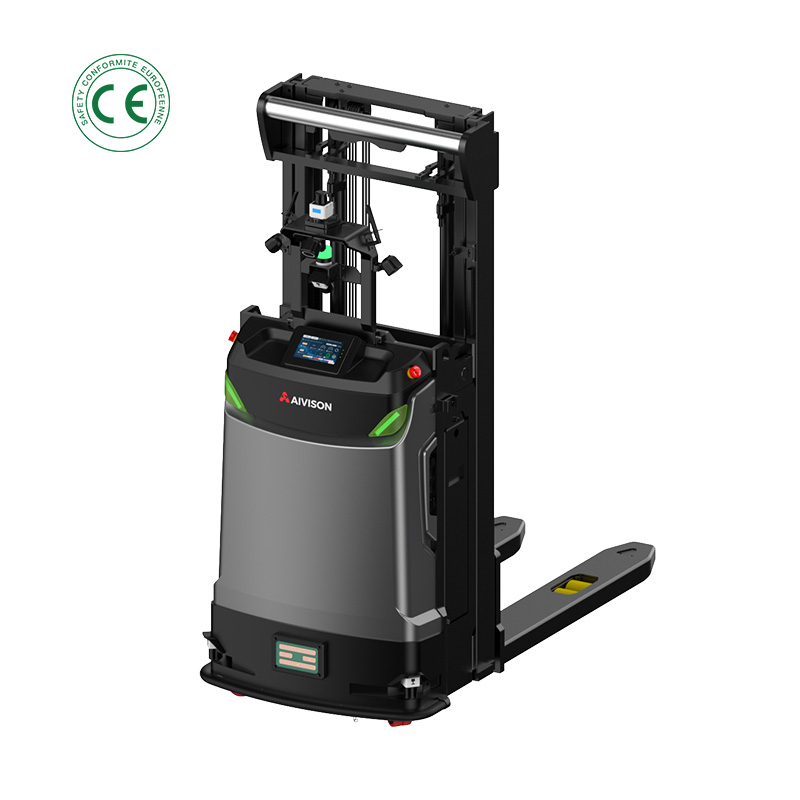
Aivison AMR Robot Whicle Automated Warehouse Automatico agv Logistics Industrial Guided Vehicles
Trackless warehouse AMR for port-linked distribution, repetitive transfer and line-side replenishment. Laser SLAM mapping supports layout changes without floor tracks.
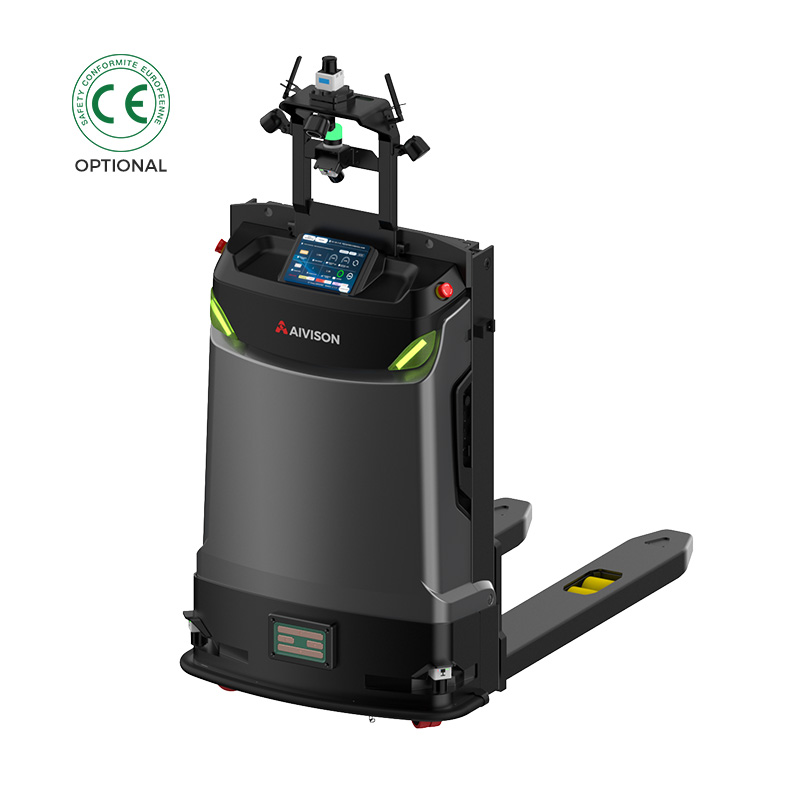
AGV AMR Warehouse Automatic Guided Vehicle 1500kg 2000kg AGV Robot Forklift
A 1.5–2 t-class autonomous forklift for pallet movement, loading bays and high-bay storage. Recommended for Kobe distribution centres that need repeatable pallet handling.
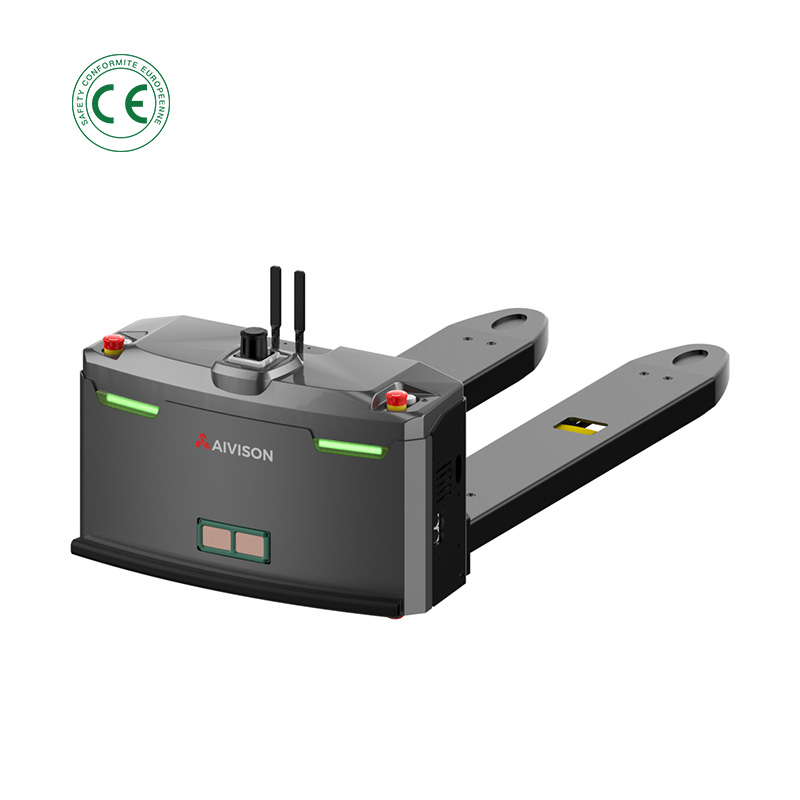
AMR Automated Warehouse Robot Logistics Automatic Industrial Logistics Robots AMR Robot
General industrial logistics AMR for mixed human and vehicle traffic, designed to integrate with Wi-Fi fleet scheduling and automatic charging docks.

Warehouse Stacker CE Forklift AGV 800kg Load Capacity Light AMR Pallet
A compact 800 kg stacker for narrow aisles and light pallets. A practical choice for small-to-mid Kobe warehouses where full-size forklifts are difficult to deploy.

AGV AMR Autonomous Forklift Smart Version Auto Mobile Transfer Stacker Robot
Smart autonomous forklift for repetitive stacking, transfer and trailer-loading tasks. Camera-assisted fork entry helps address damaged or varied pallet conditions.
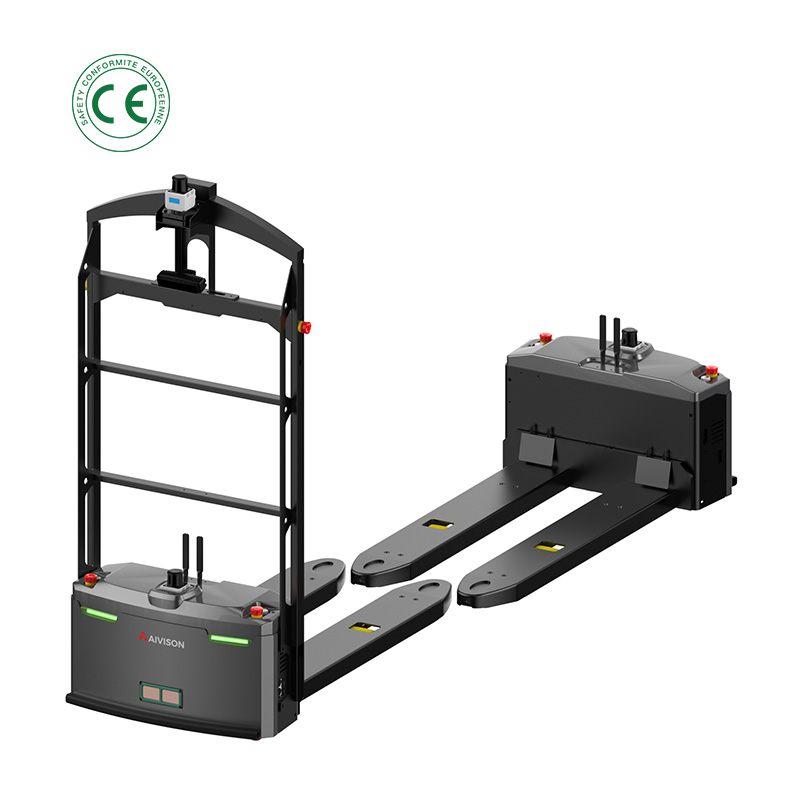
Aivison Customized 800kg Warehouse AGV Robot Lithium Battery AMR
Customisable 800 kg AMR with lithium battery architecture. Suitable for OEM projects, integrator-led warehouse automation and factory layouts requiring tailored top modules.

AI-Ready Humanoid Robot Chassis Dual 7-DOF Arms Omnidirectional Drive ROS2 Laser SLAM Open Development Platform
An open development platform for advanced robotics labs, universities and system integrators exploring AI, ROS2, laser SLAM and dual 7-DOF manipulation.

Heavy Load 2000KG Load Forklift Laser Guide AMR for Warehouse Pallet
A heavy-load 2,000 kg laser-guided forklift AMR for pallets in metals, building materials, automotive parts and other demanding Kobe industrial stores.
Factory-Level Capability, Verified Before the First Kobe Site Survey
Cross-border automation buying is not only a product comparison. Kobe buyers need evidence of engineering depth, repeatable quality, export experience and lifecycle support. These are the metrics that matter in a supplier review.
Shenzhen-based R&D and manufacturing experience.
No magnetic tape, reflectors or floor QR codes required.
QR labels only where station precision demands it.
Six-axis arm repeatability for precision assembly tasks.
End users and integrators across three continents.
Semiconductor, 3C, lithium battery, PV, automotive, PCB, textile and medical.
Why Kobe Buyers Work With a Shenzhen AMR Manufacturer—Not Just a Trading Wholesaler
Shenzhen Marnix Intelligent Technology Co., Ltd. combines about ten years of AGV engineering experience with a complete portfolio of laser SLAM autonomous mobile robots, jacking robots, smart forklifts, composite mobile robots, fleet scheduling software and intelligent charging docks. For Kobe buyers, that means one engineering team can review the route, the payload, the docking method, the charger plan and the integration interface together.
The critical difference is manufacturer-level customisation. Instead of forcing a standard platform onto an existing production line, Marnix customises chassis and top modules—jacking units, roller conveyors, forklift forks and 6-axis robotic arms—so the robot can connect directly with production equipment and warehouse interfaces.
- One navigation core: mixed fleets share SLAM navigation, Wi-Fi scheduling and compatible charging docks from day one.
- Precision without floor rework: standard SLAM avoids auxiliary tracks; QR assist is added only at ±2 mm stations.
- Verified credentials: TÜV Rheinland onsite supplier assessment, Fortune 500 supplier contract and transparent trade records.
- Integrator-friendly support: OEM discussions, export documentation, spare-parts planning and remote engineering assistance.

Where AMRs Fit the Kobe & Hanshin Industrial Belt
Kobe is both a port city and part of the wider Hanshin industrial corridor. Local buying teams commonly evaluate automation for port-linked distribution, high-mix low-volume manufacturing, medical device production, automotive parts logistics and compact urban warehouses.
Port-linked distribution and 3PL
Cross-docking, pallet transfer and 24/7 replenishment create repetitive routes where autonomous forklifts and warehouse AMRs can stabilise throughput during shift changes.
Review forklift AMRsHigh-mix production and line-side delivery
Kobe manufacturers running frequent model changes need routes that can be re-mapped quickly. Laser SLAM supports layout changes without installing magnetic tape or reflectors.
Review AMR platformsMedical devices and precision assembly
Kobe’s medical and advanced manufacturing clusters require careful handover. Use ±2 mm QR-assisted docking at stations and composite robots for six-axis arm repeatability.
Compare precision levelsCompact warehouses and retrofit projects
Existing buildings often have narrow aisles, limited charging space and mixed human traffic. Compact 800 kg stackers and 1.5–2 t forklift AMRs can be matched to the aisle survey.
Review compact modelsKobe AMR Procurement Trends Shaping Supplier Selection
For Kobe buyers, the strongest automation cases are rarely built on “robots” alone. They are built on labour stability, port throughput, compact site constraints, safety integration and lifecycle support.
Labour availability and shift stability
Repeatable transport tasks are being evaluated as a way to protect output when recruiting and shift coverage become harder to plan.
Port logistics digitalisation
Port-linked warehouses increasingly ask for coordinated fleets, automatic charging and traceable task handovers across receiving, storage and dispatch.
High-mix, low-volume layout change
Natural-feature SLAM helps Kobe production teams adjust routes when line layouts, rack positions or product mix change—without rebuilding floor infrastructure.
Safety and integrator collaboration
Japanese integrators and electrical contractors increasingly expect clear site documentation, risk-assessment inputs and practical spare-parts planning.
Information Gain for Kobe Buyers: Match Precision to the Station, Not the Whole Building
One of the most common procurement errors is over-specifying precision. If a Kobe buyer demands ±2 mm QR docking everywhere, floor labels, maintenance and change-control costs rise unnecessarily. A better approach is to use ±5 mm laser SLAM for movement and reserve ±2 mm QR assist only for machine docking, high-bay transfer or medical tray handover.
Composite robots with a six-axis arm reach ±0.05 mm repeatability at the arm and station. This is not the same as whole-vehicle absolute positioning accuracy. Separating vehicle navigation accuracy from arm repeatability helps Kobe engineers evaluate the right cost, integration effort and safety boundary.
Precision Without Floor Rework: Choose the Right Configuration for Each Kobe Station
Use this comparison to prevent unnecessary infrastructure cost and to align the supplier quotation with the actual handover requirement.
| Configuration | Accuracy | Typical Kobe use case | Installation impact |
|---|---|---|---|
| Laser SLAM on natural features | ±5 mm | Port distribution, warehouse transfer, line-side delivery, layout changes | No tape, reflectors or floor QR codes; map existing environment |
| SLAM + QR code camera | ±2 mm | High-bay storage, precision machine docking, medical tray transfer | QR labels only at precision stations |
| Composite robot with 6-axis arm | ±0.05 mm | Semiconductor, medical device and precision electronics assembly | Station calibration and integration engineering |
Start with peak missions per hour, average mission cycle time and realistic utilisation. For a Kobe 3PL considering 90 pallet moves per hour, a robot averaging 16 moves per hour at 80% utilisation gives a starting point of about 7 robots, before spare-capacity decisions.
Fleet ≈ peak missions/hour × cycle time (hours) ÷ target utilisation
Total Cost of Ownership Questions for Kobe Buyers
Purchase price is only one line in the business case. Kobe procurement teams should also compare charging-dock count, Wi-Fi coverage upgrades, spare-parts lead time, integration engineering, operator training, floor-label maintenance and downtime risk. A lower-cost wholesaler quotation can become more expensive if the navigation method requires continuous floor upkeep or if the supplier cannot support mixed-fleet expansion.
- Compare like-for-like: include chargers, fleet software, integration, training and recommended spares.
- Check the interface boundary: clarify who supplies Wi-Fi, safety assessment, electrical connection and local installation.
- Plan for growth: confirm how additional robots are scheduled, charged and integrated later.
Evidence Kobe Procurement Teams Can Review Before Purchase
Supplier verification is particularly important for cross-border AMR programmes. Review the following credentials alongside the technical proposal.

TÜV Rheinland onsite assessment
Independent onsite supplier assessment covering company premises and operations.

Supplier to a Fortune 500 company
Procurement contract evidence that supports supplier due diligence.

Verified multispecialty supplier
Low-MOQ customisation and multi-category robot procurement capability.
Credit and transaction records
Transparent credit index and trade history for commercial review.

Common Kobe Procurement Questions: Shipping, Voltage, Integration and Spare Parts
These are the practical questions Kobe buyers and system integrators usually raise before requesting a formal AMR quotation.
Can Marnix ship AMRs and forklift robots to Kobe?
Yes. Equipment is exported from Shenzhen with export packing and commercial documentation. For Kobe, freight planning usually combines ocean or air transport with a local forwarder for customs clearance and last-mile delivery. Share the delivery address, site access restrictions, dock height and preferred incoterm so the quotation can reflect realistic logistics.
What should Kobe buyers confirm about voltage and frequency?
The Kansai region generally uses 60 Hz, but the actual building supply, charger location and protection design must be confirmed by the facility electrician. Marnix can align the charger configuration with the site requirement, while final electrical compliance and installation are verified by the local electrical contractor.
Which AMR is suitable for narrow aisles in a Kobe warehouse?
Start with the 800 kg stacker AMR or the customised 800 kg warehouse AGV when the aisle is tight and the payload is light. For 1.5–2 t pallet handling, review the 1500/2000 kg autonomous forklift series. Aisle width, rack leg clearance, pallet overhang and door thresholds should be checked before selection.
Do we need to modify the floor for laser SLAM navigation?
No for standard laser SLAM projects. Natural-feature navigation maps the existing environment and avoids magnetic tape, reflectors or floor QR codes. QR labels are only added at stations where ±2 mm docking precision is required, which keeps retrofit work focused and controlled.
How do we achieve ±2 mm docking or ±0.05 mm composite repeatability?
For ±2 mm docking, add a QR code camera and place labels only at the relevant handover stations. For ±0.05 mm repeatability, a composite robot with a calibrated six-axis arm is required. Note that ±0.05 mm refers to arm-level repeatability at the station, not the whole vehicle’s absolute navigation accuracy.
Can you support Japanese system integrators and OEM projects?
Yes. Marnix supports end users and system integrators with custom chassis, top modules, roller conveyors, forklift forks and robotic-arm configurations. Interface requirements, fleet scheduling, charging layout and documentation can be reviewed during the project evaluation stage.
What information should we send for a fast quotation?
Send the maximum load, rack or pallet footprint, aisle widths, site layout, required throughput, docking precision, Wi-Fi coverage, charger location, equipment interfaces and target schedule. A CAD drawing plus photos of the racking and fork-entry points usually shortens the engineering review.
How are spare parts, training and after-sales support handled?
Projects normally include recommended spare parts, operator and maintenance guidance, remote engineering support and documentation. For Kobe deployments, spare-parts planning, local integrator coordination and training scope should be defined in the quotation so responsibilities are clear before shipment.
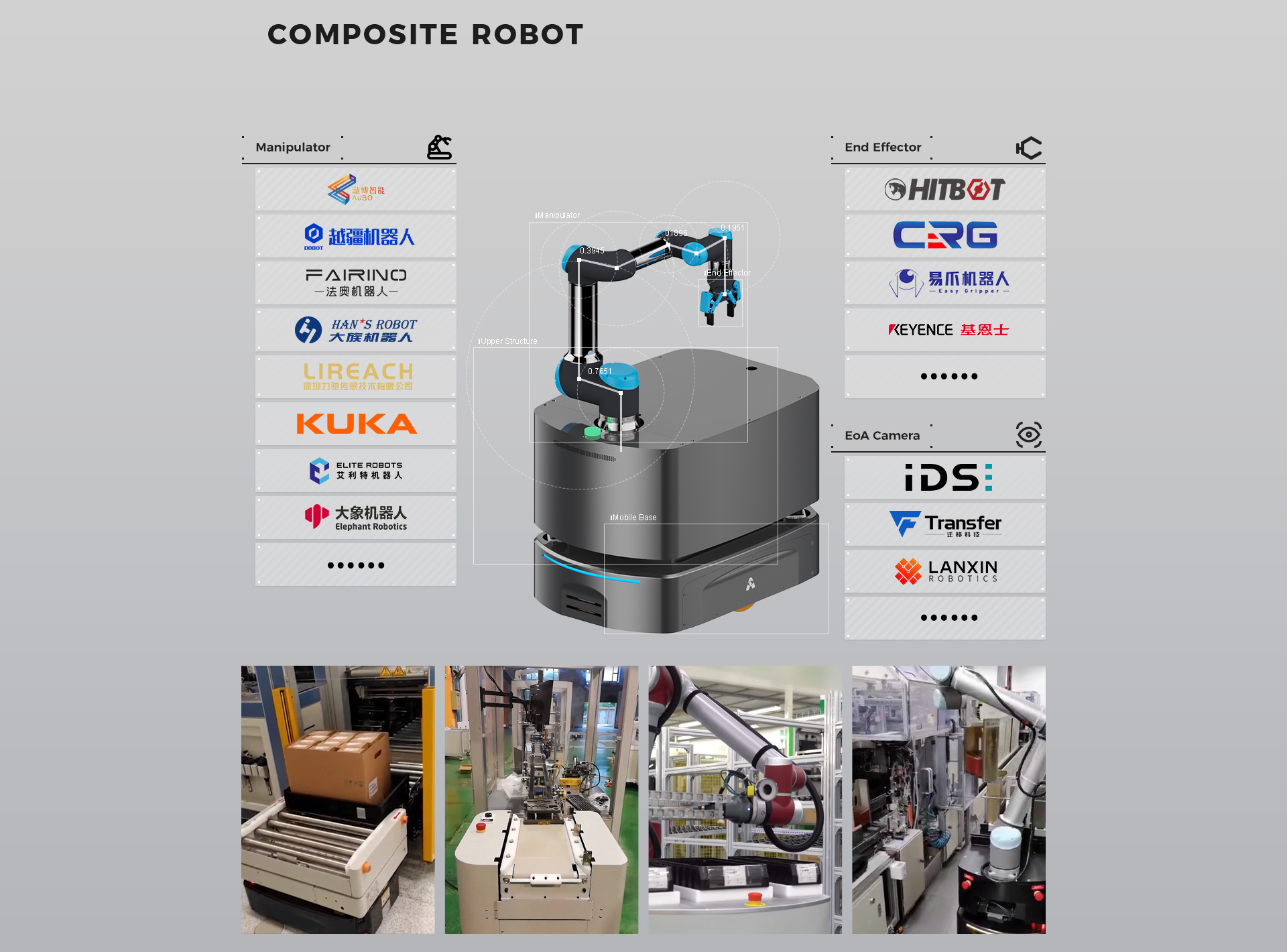
When a Standard AMR Is Not Enough, Engineer the Top Module Around the Process
Many Kobe automation projects fail at the handover point, not at the navigation layer. A robot may reach the station accurately but still cannot transfer the load because the conveyor height, roller pitch, rack tolerance or machine signal does not match. Marnix addresses this by treating the top module as part of the engineering scope.
Available top-module directions include jacking units for rack transport, roller conveyors for PCB and electronics lines, forklift forks for pallets and six-axis robotic arms for precision assembly. The same SLAM chassis and fleet software can be reused across a mixed fleet, which helps Kobe integrators reduce spares complexity and programming variation.
For a Kobe site survey, the most useful inputs are load profile, aisle dimensions, station height, transfer direction, cycle time and safety boundary. With those inputs, the supplier can recommend a platform and identify whether QR assist, custom tooling or local integration work is required.
Inquire NowSend Your Kobe Site Layout, Load Profile and Throughput Target
Our engineering team will review the right AMR mix, navigation configuration, charging plan and export checklist. For the fastest response, include maximum load, aisle width, peak moves per hour, docking precision, Wi-Fi coverage and equipment interfaces.
Shenzhen Marnix Intelligent Technology Co., Ltd. · Room 102, Building P, No. 163 Ban Xuegang Avenue, Shenzhen, Guangdong, China · info@marnixbot.com