Why Berlin Warehouses Are Replacing Manual Forklift Fleets
Berlin-Brandenburg is one of Germany's densest logistics corridors, yet its warehouse stock is unusually constrained. That combination is reshaping how forklift automation is specified.
Berlin's freight landscape is split between two very different realities. Inside the city ring, operators work in converted industrial halls in Kreuzberg, Moabit, Tempelhof, Neukölln and Lichtenberg — buildings with 2.2 to 2.8 metre aisles, uneven expansion joints, low ceilings and freight lifts that were never designed for a 2-tonne counterbalance truck. Outside the ring, the picture reverses: the GVZ Berlin Süd Großbeeren, GVZ Berlin West Wustermark, Freienbrink and the logistics parks around BER Airport offer high-bay racking, long dock aprons and 24/7 shift patterns.
Both environments share the same bottleneck. Skilled forklift operators are scarce, shift handovers are fragile, and a single absence can stall an outbound wave. Manual counterbalance trucks also generate the majority of internal transport incidents in mixed pedestrian zones. Autonomous forklift platforms address both problems — but only if the navigation technology fits the building. Magnetic tape and floor QR grids, the default answer a decade ago, cannot be installed in a listed Altbau hall, in leased space with strict reinstatement clauses, or on a floor that the landlord will not permit to be cut.
That is the reason laser SLAM has become the reference architecture in this region. A robot maps the natural geometry of the building — walls, columns, racking uprights — and navigates without auxiliary infrastructure. When a pick face moves, the map is updated rather than the floor. In Berlin, where a single distribution centre may be reconfigured three times a year, that difference is operational rather than cosmetic.
The regulatory frame matters just as much. Driverless industrial trucks are governed by ISO 3691-4:2023, which replaced EN 1525 and sets requirements for detection zones, speed limiting, braking performance and emergency stop behaviour. In Germany, deployment also falls under the Betriebssicherheitsverordnung (BetrSichV), which requires a documented risk assessment before the vehicle enters service, and the Arbeitsstättenverordnung for traffic route design. Machinery must carry CE marking under Directive 2006/42/EC today, and will fall under Regulation (EU) 2023/1230 from 20 January 2027 — a change that affects how safety functions are documented and how software updates are managed over the machine's lifetime.
There is one more local factor that surprises international suppliers: any robot carrying cameras into a German workplace usually triggers co-determination. Under BetrVG §87(1) No. 6, the works council has a say in how monitoring technology is used. Berlin buyers therefore ask early whether the camera stream is processed on-board, whether images are stored, and whether the system can run with person-detection only and no recording. A supplier who cannot answer that question cleanly will not reach the pilot stage.
Eight Autonomous Forklift & AMR Platforms for Berlin Intralogistics
Rather than publishing a marketing top-ten list, we show the eight production platforms that cover the ten most common Berlin warehouse duty cycles — dock-to-rack transfer, high-bay put-away, line-side delivery, cross-docking, cold-store handling, and machine tending. Every platform shares one SLAM navigation core and one fleet controller, so mixed fleets work together from day one.
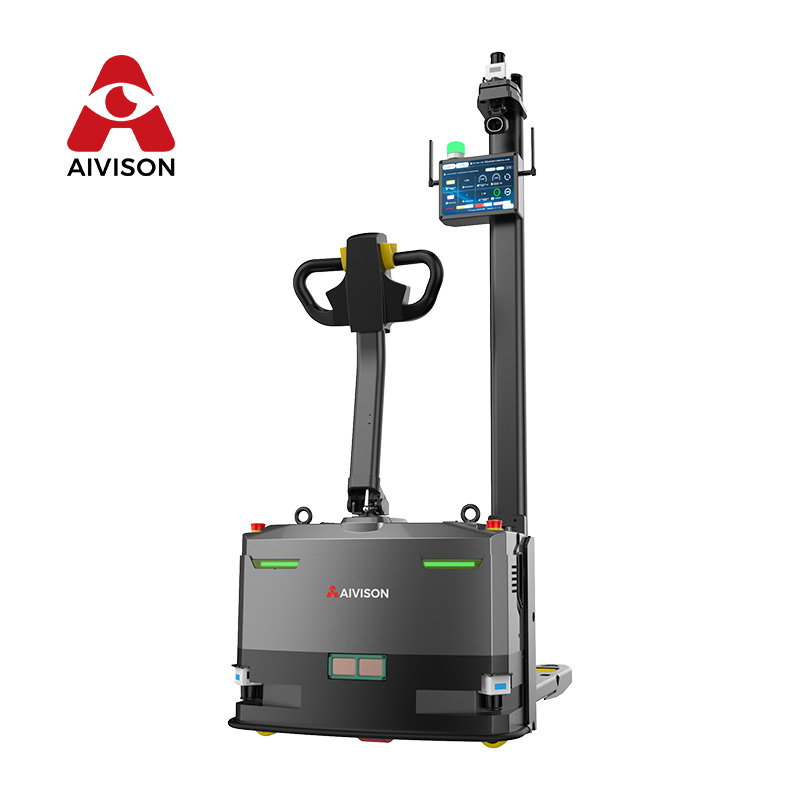
Customizable 1500KG Traction Capacity AGV Autonomous Mobile Robot Amr with Lidar Guided Sensor
A 1,500 kg traction platform that integrators use as the base for custom top modules. Natural-feature LiDAR SLAM removes the need for magnetic tape in listed Altbau halls, while repeatable ±5 mm stops support conveyor and lift handover at GVZ cross-docks.
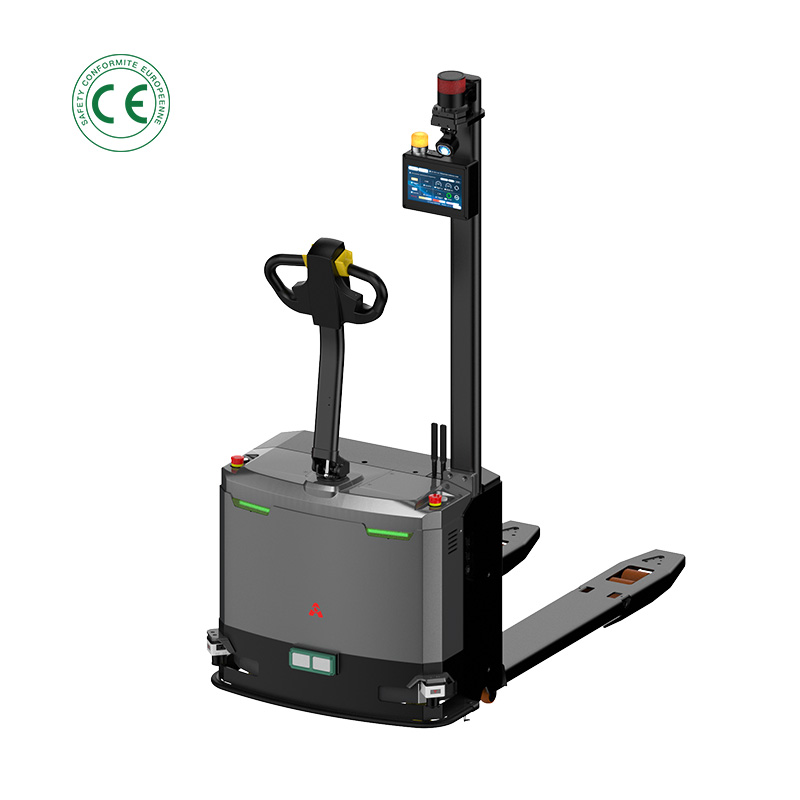
CE Certification Industrial AMR AGV Robot for Warehouse Automation Autonomous Material Handling Logistics
The general-purpose warehouse workhorse of the range. CE marked and designed against ISO 3691-4 safety functions, with dynamic obstacle avoidance for the mixed pedestrian and forklift traffic typical of inner-city Berlin distribution centres and the BER Airport logistics parks.

Humanoid Robot Chassis Dual 7-DOF Arms Laser SLAM Omnidirectional Navigation ROS2 Open Platform AMR
A ROS2 open platform combining two 7-DOF arms with an omnidirectional SLAM chassis. Relevant to Berlin's Adlershof technology park, university laboratories and Fraunhofer pilot lines where mobile manipulation and flexible lab automation are being evaluated.

Aivison Stacker Truck Pallet Stacker Forklift Agv 1.5 Ton Autonomous Forklift Smart Deliver AMR Robot
A 1.5 tonne autonomous stacker for pallet-level handling. Compact enough for the narrow aisles found in converted Kreuzberg and Moabit warehouses, with automatic fork entry and pallet detection for repeatable put-away and retrieval across shifts.
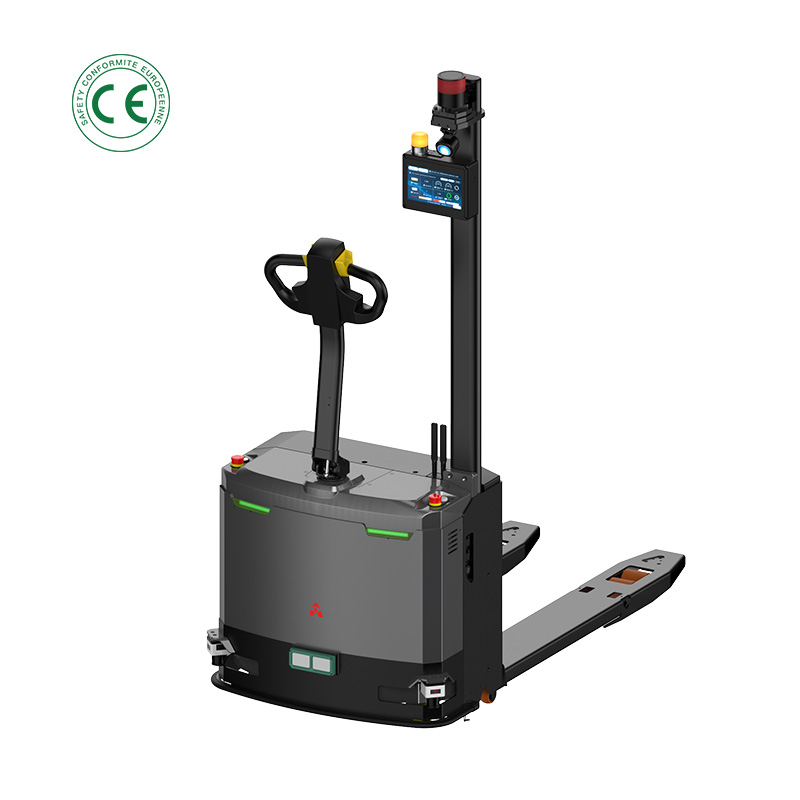
Automatic Handling CE Certificate 2000kg Forklift Robot Vehicle Laser AGV for Large Load Goods-carrying
Built for large-load goods carrying. Twin laser scanners and a 2,000 kg rated capacity suit the high-bay warehouses around Freienbrink and Wustermark, where block storage and heavy pallets dominate the inbound and outbound flow.
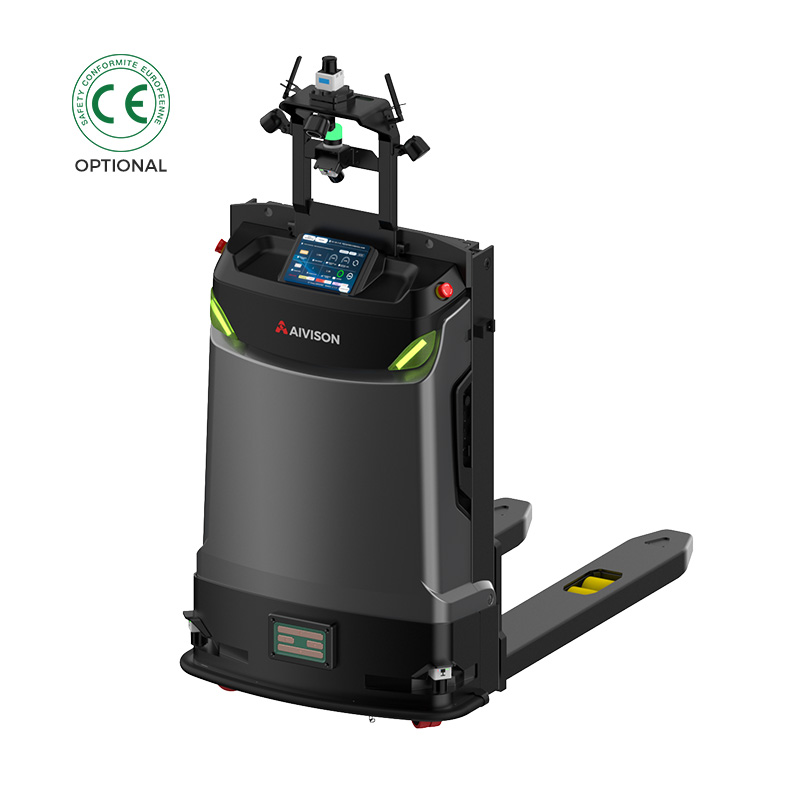
AGV AMR Warehouse Automatic Guided Vehicle 1500kg 2000kg AGV Robot Forklift
A dual-capacity platform available in 1,500 kg and 2,000 kg ratings. Because it shares the SLAM core and fleet controller with the rest of the range, it can be mixed with jacking robots on one Berlin site without operating two separate scheduling systems.
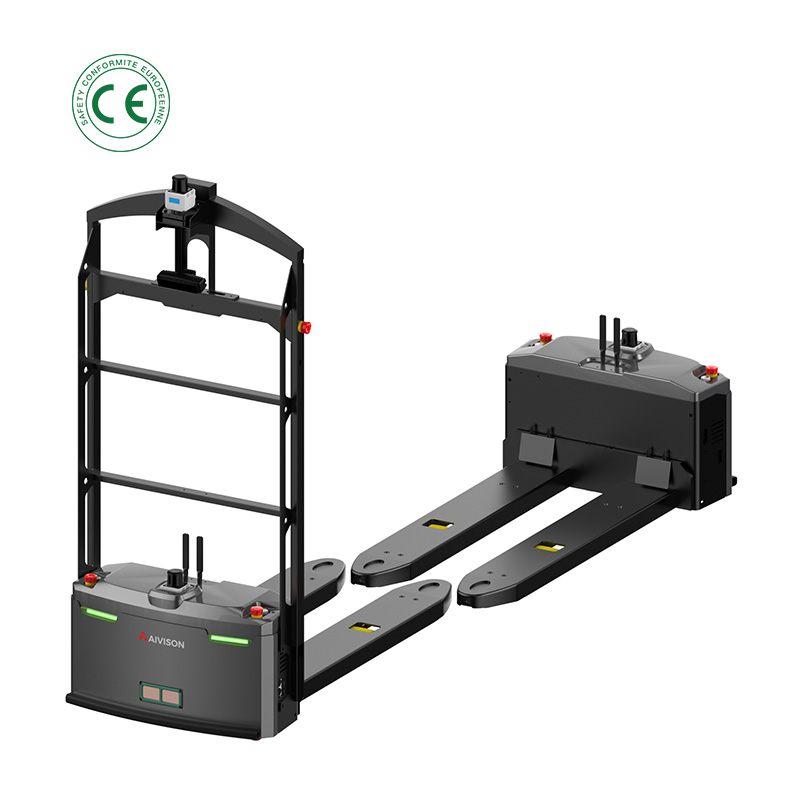
Aivison Customized 800kg Warehouse AGV Robot Lithium Battery AMR
An 800 kg lithium-battery AMR for light-to-medium internal transport. Opportunity charging and a compact footprint make it a fit for multi-shift e-commerce fulfilment in Berlin's inner districts, where charging windows between waves are short.
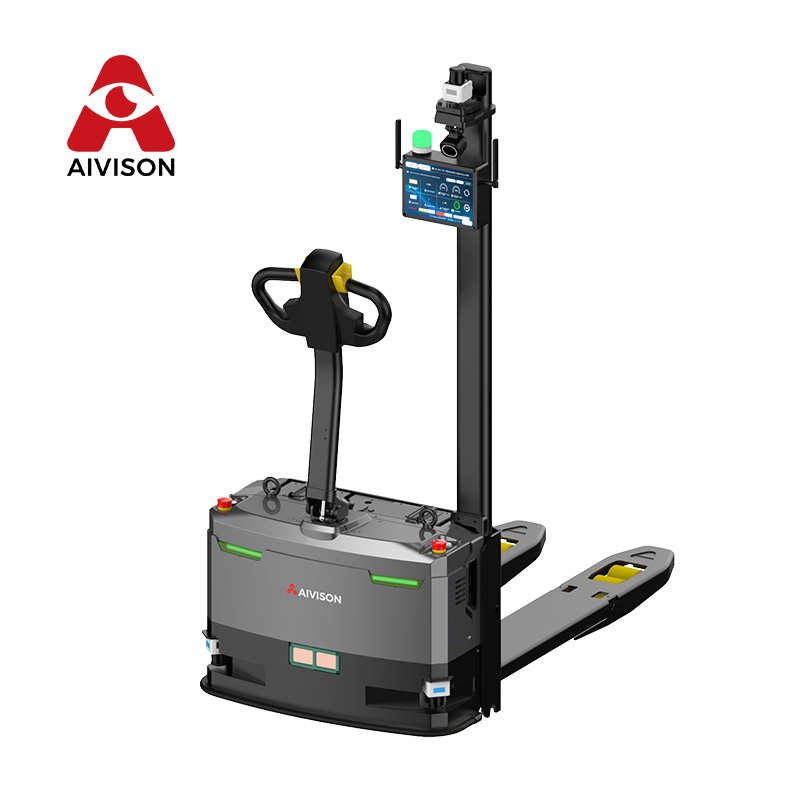
Aivison AGV Forklift High Quality Industrial Unmanned Pallet Forklift
The unmanned pallet forklift for repetitive dock-to-rack moves. Camera-assisted fork entry reduces pallet and rack damage, and the platform can be ordered together with the fleet scheduling system and intelligent charging dock as a single delivered package.
Where These Robots Actually Run in Berlin and Brandenburg
Machine specifications only become meaningful when they are matched to a building, a shift pattern and a traffic mix. These are the four deployment archetypes we see most often in the region.
Inner-City Micro-Fulfilment
Converted halls in Kreuzberg, Tempelhof, Moabit and Neukölln serve same-day and next-hour delivery zones. Aisles of 2.2–2.6 metres, freight lifts and frequent rack reconfiguration rule out fixed guidance. Laser SLAM re-maps after a layout change instead of requiring new floor infrastructure, and an 800 kg or 1.5 t platform keeps axle loads within the limits of upper floors.
GVZ Hubs & High-Bay Racking
At Großbeeren, Wustermark, Freienbrink and the BER logistics parks, the constraint is dock throughput rather than aisle width. Here a 2,000 kg laser AGV forklift works block storage and trailer unloading, while a QR-assisted configuration brings docking to ±2 mm for high-bay put-away and automated conveyor handover at the ramp.
Brandenburg Production Lines
Automotive and rail supply around Grünheide, Ludwigsfelde and Hennigsdorf, plus the Adlershof science park, run takt-based line-side delivery. A jacking or roller-conveyor top module hands material directly to the machine, and the fleet controller sequences missions against the line cycle rather than a fixed schedule.
Cold Chain, Food & Pharma
Temperature-controlled warehouses around Berlin operate with very short dwell times and strict documentation. Lithium-battery platforms with opportunity charging avoid long charging interruptions in the freezer zone, while the same fleet software provides the mission logs that food and pharmaceutical quality systems expect to see during an audit.
Four Procurement Shifts Reshaping Berlin-Brandenburg in 2025
The questions Berlin buyers ask have changed substantially in the past three years. These four topics now dominate technical due diligence.
VDA 5050 & Fleet Interoperability
The German automotive industry's VDA 5050 interface has moved from a specification to a procurement requirement in many supply chains. Buyers no longer accept a closed fleet controller from a single vendor; they want the option to run robots from different brands under one master control and one traffic plan.
Compliance Being Specified Up Front
ISO 3691-4:2023 is now cited in tender documents rather than discovered during commissioning. With Regulation (EU) 2023/1230 applying from January 2027, buyers are asking suppliers how safety software updates and technical files will be maintained over a ten-year asset life.
Private 5G and Wi-Fi 6E Coverage
Campus networks using locally assigned 3.7–3.8 GHz spectrum are appearing in Brandenburg logistics parks, while Wi-Fi 6E becomes the baseline for indoor fleets. Coverage surveys are increasingly a contract milestone, because a weak handover zone is the most common cause of fleet-level downtime.
Total Cost of Ownership Scrutiny
Energy cost and battery lifespan now sit at the centre of the business case. Opportunity charging, lithium iron phosphate chemistry and the EU Battery Regulation's documentation duties are compared line by line against the cost of a three-shift manual forklift operation.
Match Navigation Accuracy to the Station, Not to the Brochure
Most Berlin projects over-specify precision on every route and then pay for floor infrastructure they never needed. The correct approach is to define accuracy station by station.
| Configuration | Accuracy | Floor Preparation | Typical Berlin Use Case |
|---|---|---|---|
| Laser SLAM on natural features | ±5 mm | None — no tape, reflectors or floor codes | Inner-city distribution, line-side delivery, sites with frequent layout changes |
| SLAM + QR code scanning camera | ±2 mm | QR labels only at the docking stations | High-bay racking, automated conveyor handover, dock leveller docking |
| Composite robot (AMR + 6-axis arm) | ±0.05 mm | Station calibration at the work cell | Semiconductor, medical device and precision electronics assembly |
Dynamic Obstacle Avoidance
Layered safety laser scanners and on-board perception let the platform share routes with pedestrians, pallet trucks and manual forklifts without dedicated lanes.
Wi-Fi Fleet Scheduling
An intelligent scheduling system distributes missions across the fleet, manages traffic at intersections and re-assigns tasks when a robot needs to charge.
Autonomous Charging
Compatible intelligent charging docks bring the robot back to full charge between missions, which is what makes round-the-clock operation realistic.
What Shenzhen Marnix Brings to a Berlin Deployment
Shenzhen Marnix Intelligent Technology Co., Ltd. draws on roughly ten years of AGV manufacturing experience to build autonomous mobile robots that enter existing factories with minimal disruption — for end users and for the system integrators who serve them.
Ten Years of AGV Engineering
Shenzhen-based R&D and manufacturing with a product portfolio spanning jacking robots, smart forklifts, pallet AMRs, composite robots and intelligent charging docks — sourced from one supplier rather than assembled from several.
Three Precision Tiers, One Core
±5 mm laser SLAM as standard, ±2 mm with a QR scanning camera at selected stations, and ±0.05 mm repeatability on composite robots with a 6-axis arm. Buyers pay only for the accuracy each station genuinely needs.
Manufacturer-Level Customisation
Chassis, payload and top mechanisms are engineered to the process rather than forced into a standard fit. Jacking units, roller conveyors, forklift forks and robotic arms can all be specified against an existing production interface.
Fleet Software & Charging Included
The intelligent scheduling system coordinates multiple robots simultaneously over indoor Wi-Fi, handling task assignment, traffic control and automatic charging through compatible smart docks, so a fleet grows without a second control layer.
Verified Before It Ships
Multi-stage intelligent inspection and thousands of operational stress tests target near-zero failure rates. The company operates under an onsite supplier assessment by TÜV Rheinland and supplies a Fortune 500 company, with more than 200 manufacturers served across three continents.
Built for Integrators
Products and complete solutions are supplied to system integrators as well as end users, with low-MOQ customisation and multi-category robot procurement. For a Berlin integrator running several client sites, that means one technical contact for the whole fleet.
Six Inputs That Shorten a Berlin Evaluation to Days
From project experience, these six inputs determine roughly ninety percent of robot selection. Sharing them at first contact replaces a week of back-and-forth with a single feasibility review.
Load Profile
Maximum weight, footprint and centre of gravity for every rack, pallet and carrier to be moved, plus the load stability you expect when the robot brakes.
Site Layout
A CAD drawing or measured sketch showing aisle widths, door clearances, slopes, freight lift dimensions and any floor joints or expansion gaps.
Throughput Target
Missions per hour at average and at peak. This single figure sets fleet size, the number of charging docks and the required battery strategy.
Docking Precision
Where ±5 mm is sufficient and where ±2 mm QR assistance or arm-level repeatability is genuinely required. Over-specifying here is the most common avoidable cost.
Network Coverage
Existing access points, handover zones and coverage quality across the whole robot operating area, including any basement or cold-store sections.
Compliance & Interfaces
Your risk assessment owner, CE documentation requirements, works council considerations, and the conveyors, machines or shelving the robot must hand over to.
Berlin Procurement Questions We Answer Every Week
Direct answers from the engineering team on navigation, compliance, integration and local deployment. For anything project-specific, use the contact link below.
Do laser SLAM forklift robots require floor modifications in older Berlin buildings?
No. Standard laser SLAM maps the natural features of the building — walls, columns and racking — so no magnetic tape, reflectors or floor-cut QR grids are needed. That matters in converted Altbau halls and in leased space where the landlord prohibits floor works. QR labels are only applied at the specific stations where ±2 mm docking accuracy is required.
Are the robots CE marked and aligned with ISO 3691-4?
Yes. Machinery carries CE marking under Directive 2006/42/EC, and safety functions are designed to ISO 13849-1 with the detection-zone and braking requirements of ISO 3691-4:2023 for driverless industrial trucks. A declaration of conformity, risk assessment support and technical documentation are supplied, so your safety officer can complete the Gefährdungsbeurteilung required under BetrSichV. We are also preparing documentation for Regulation (EU) 2023/1230, applicable from 20 January 2027.
What is the typical lead time and delivery term to Berlin?
Standard platforms are quoted in weeks rather than months, with customised top modules adding engineering time. Lead time is confirmed in the quotation against your configuration and is not fixed in advance. Delivery is normally quoted DAP to a Berlin or Brandenburg address, with export documentation, CE paperwork and UN 38.3 battery transport documentation included so that import clearance does not stall.
Can the fleet connect to our WMS or ERP, and is VDA 5050 supported?
The fleet scheduling system exposes interfaces for order dispatch and status feedback, and integration with WMS, ERP or MES platforms is scoped per project. For German automotive and intralogistics customers, VDA 5050 compatibility is a standard topic in the technical review; the exact scope is confirmed against your master control system before the contract is signed, not after.
Our building has poor Wi-Fi. Will the robots still work?
Navigation itself does not depend on the network — the robot localises from its own sensors. The network carries mission assignment and traffic coordination, so coverage gaps cause scheduling delays rather than navigation failure. We start with a site survey, then recommend additional access points or, in larger Brandenburg parks, a private 5G campus network using locally assigned 3.7–3.8 GHz spectrum.
How do you handle cameras, GDPR and the works council?
Cameras are used for localisation and pallet recognition. Processing can be configured to run entirely on board with no image storage and no personal identification, which is the configuration most Berlin sites request. Under BetrVG §87(1) No. 6 the works council normally has co-determination rights over monitoring technology, so we supply a written description of what is captured, where it is processed and how long it is retained to support that consultation, alongside the data protection impact assessment your DPO will expect.
What battery chemistry is used and how does charging fit a three-shift operation?
Platforms use lithium iron phosphate battery packs with opportunity charging through compatible intelligent charging docks. The robot takes short charging windows between missions instead of a single long recharge, which is what allows continuous multi-shift coverage. Packs are documented for UN 38.3 transport, supplied with the information required under the EU Battery Regulation, and connected to standard 230 V or 400 V site supply.
What support is available after the robots arrive in Berlin?
Deployment includes remote commissioning support, operator and maintenance training, and English-language documentation, with German-language documentation available for site safety files. Spare parts and technical escalation run through a named project contact, and fleet software updates are handled remotely so that a safety-relevant change is documented rather than quietly applied.
Request a Berlin-Specific Feasibility Review
Send us your layout, load profile, throughput target and docking precision. Our engineers will return a recommended platform, an accuracy map per station and an indicative fleet size — before any commercial discussion begins.
info@marnixbot.com