Top 10 Smart Factory Robot Factories & Factory for Hai Phong
A factory-grade guide to laser SLAM AMRs, autonomous forklifts, jacking robots and dual-arm mobile manipulators — with localized application insight for Hai Phong’s electronics, automotive, port-logistics and cleanroom supply chains.
8 Smart Factory Robot Platforms Shortlisted for Hai Phong Projects
These are not catalogue placeholders. Each platform is presented with its native product link so engineers can verify payload, navigation, top-module and integration details before an RFQ is issued. For Hai Phong buyers, the right shortlist begins with load profile, aisle width, docking tolerance and the service model — not with a generic “best robot” claim.
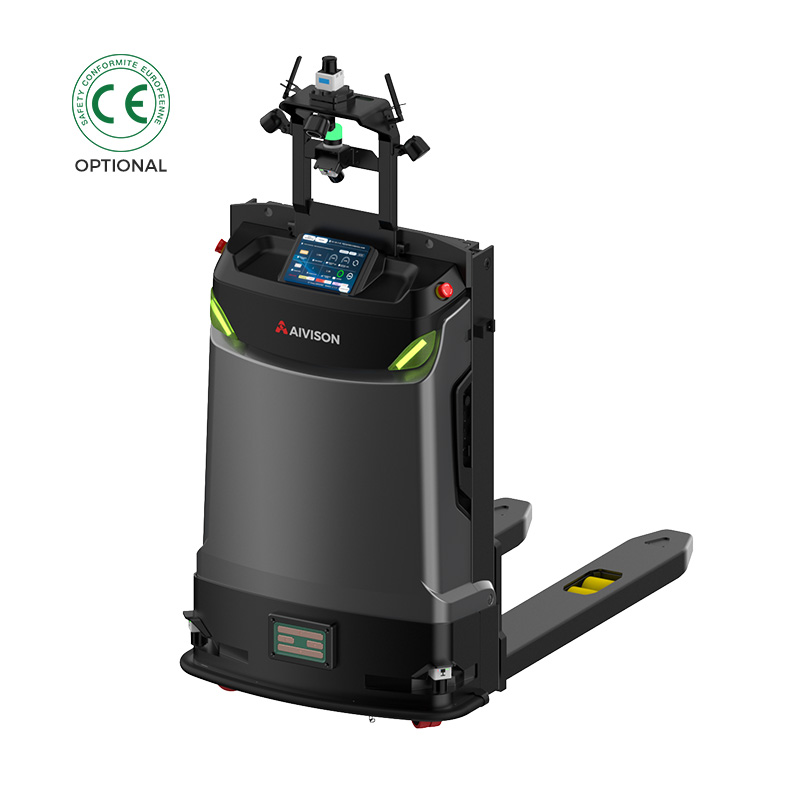
AGV AMR Warehouse Automatic Guided Vehicle 1500kg 2000kg AGV Robot Forklift
For pallet and rack transfer between receiving, line-side buffers and dispatch lanes. The 1500/2000 kg class supports dense pallet flows, while laser SLAM avoids magnetic tape in leased warehouses where floor modification is restricted. In port-adjacent Hai Phong sheds, this is often the first robot to evaluate because it can share aisles with manual forklifts after a traffic and risk assessment.
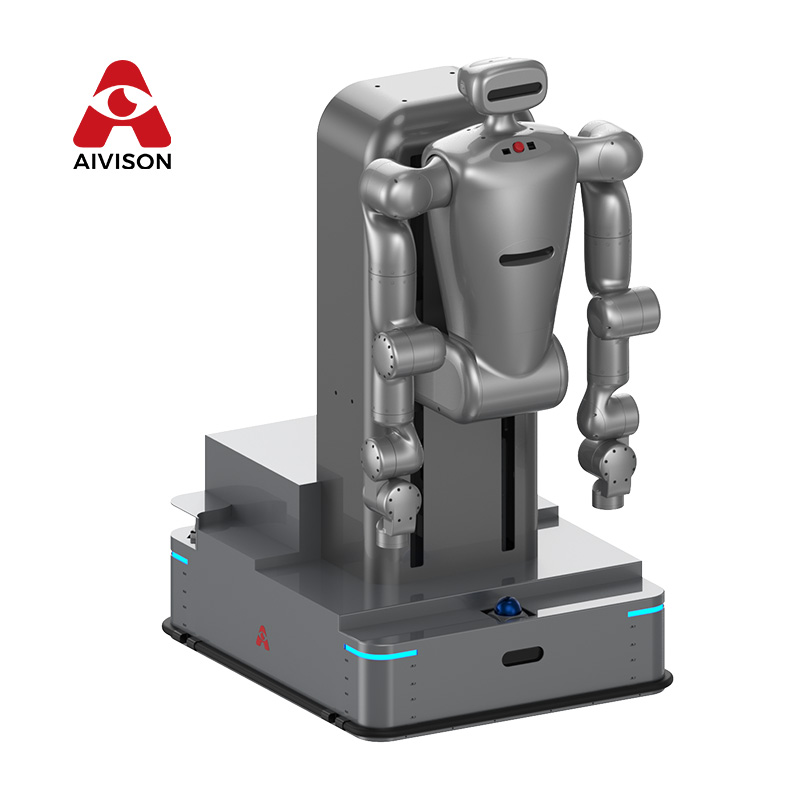
Omnidirectional Mobile Manipulator AMR Dual 7-DOF Arms ±0.03 mm Repeatability Laser SLAM Humanoid Robot Base
Built for precision tasks where a standard AMR stops at the aisle. Dual 7-DOF arms and an omnidirectional base enable tending, inspection and machine-loading sequences. The listed ±0.03 mm repeatability makes it relevant to semiconductor, medical-device and high-value electronics projects where fixture alignment and traceability are part of acceptance testing.
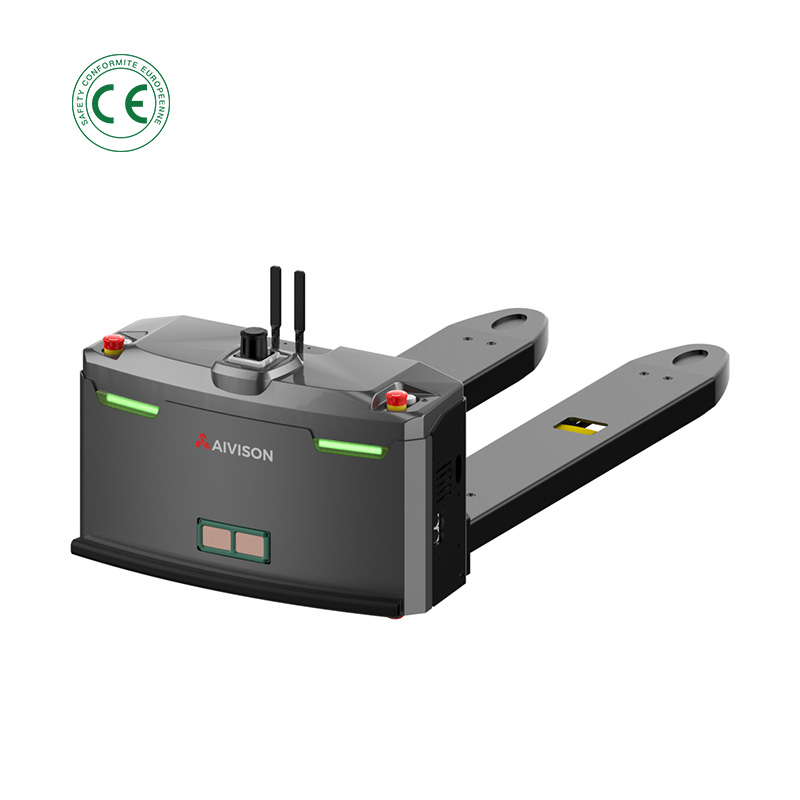
AMR Automated Warehouse Robot Logistics Automatic Industrial Logistics Robots AMR Robot
A general-purpose warehouse AMR for repetitive material movement. It suits sites that need quick mapping and stable throughput before committing to a larger fleet. The platform can be integrated with fleet scheduling and charging infrastructure so additional robots can be added as Hai Phong volumes grow, without changing the operating logic.
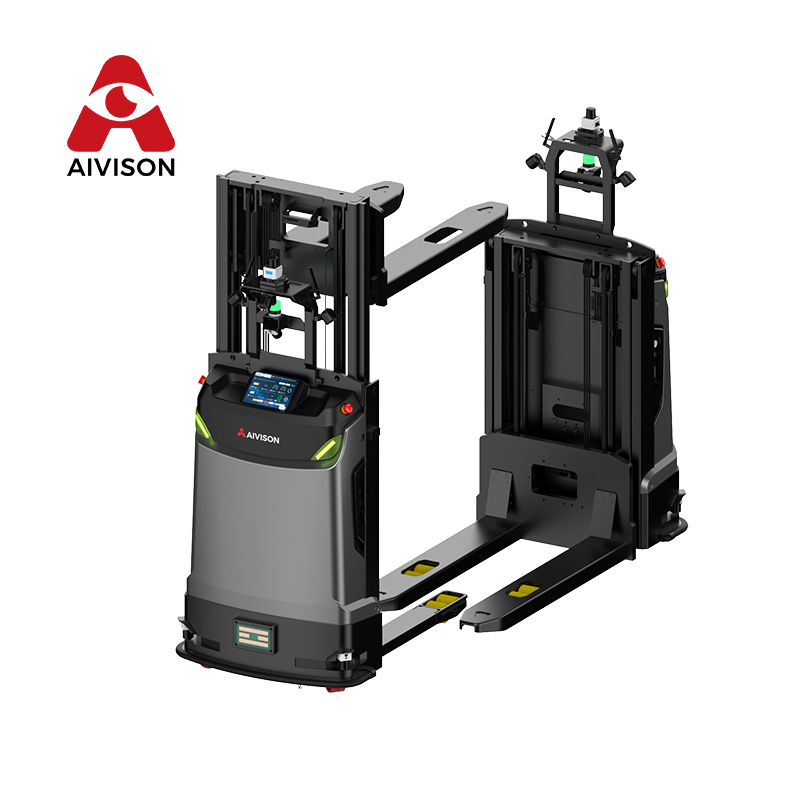
New Warehouse Autonomous Cars agv Robot 2000kg Load Capacity Stacker agv Robot
A 2000 kg stacker AGV for high-bay and floor-stacked pallet storage. It addresses a common local constraint: warehouses built for rapid FDI growth often have uneven use of vertical space. A stacker platform helps standardize put-away and retrieval without rebuilding the racking layout, provided rack tolerance and pallet condition are checked during survey.
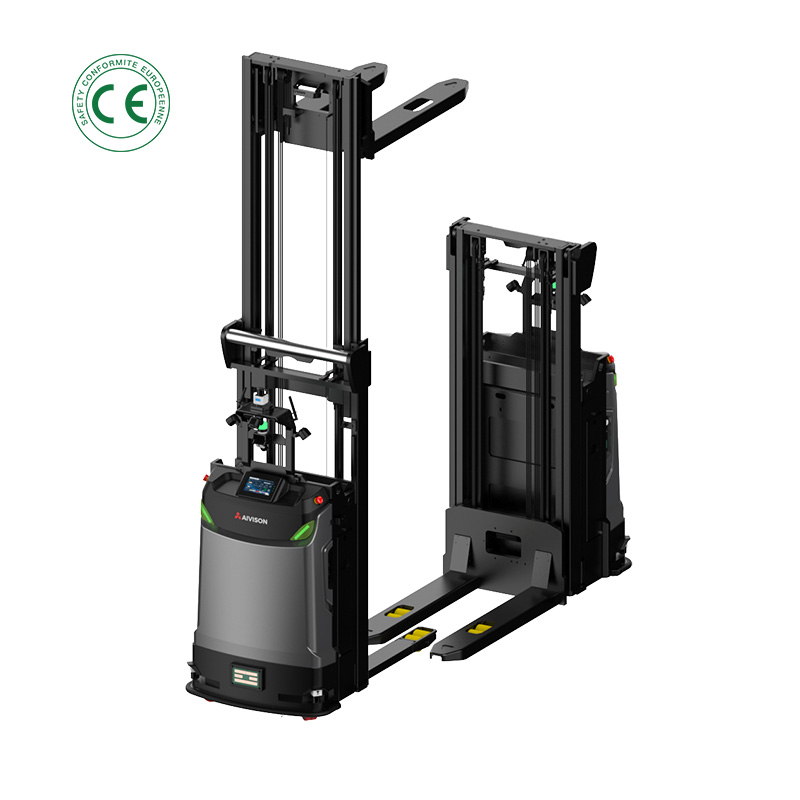
High-performance Intelligent Smart Automated Guided Vehicle 2000kg AMR Robot
A high-performance 2000 kg intelligent AMR for continuous logistics. It is appropriate for production-line replenishment and finished-goods transfer where uptime and route stability matter. Typical specification work includes route priorities, charging windows and a spare-battery or opportunity-charging policy that matches shift patterns in Hai Phong factories.
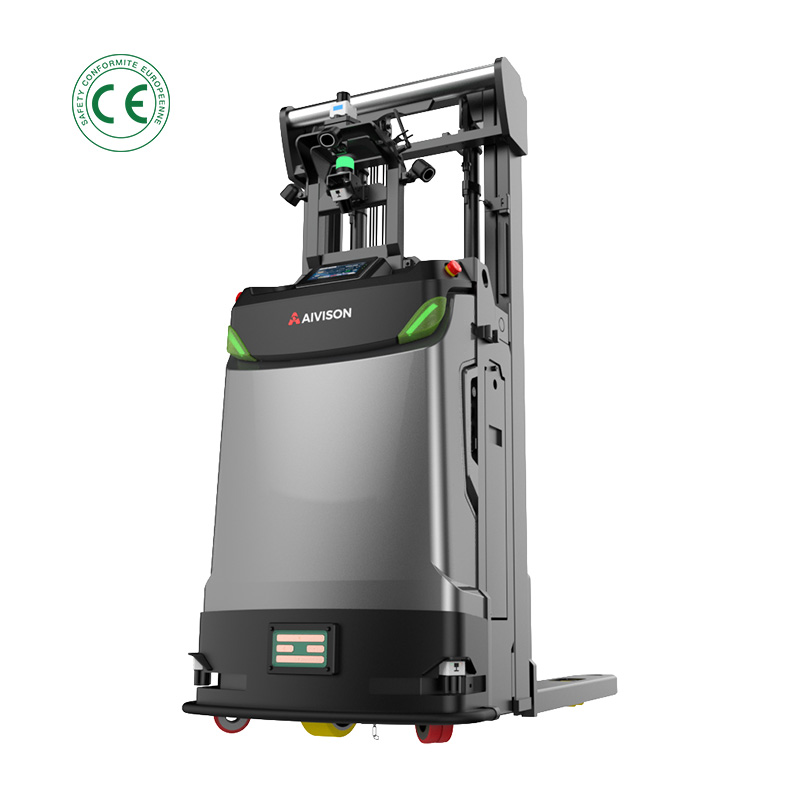
Smart Transport Robotic with Laser Navigation Reach 2000KG AGV Logistics Robots Warehouse Robot AMR
A laser-navigation reach robot for 2000 kg warehouse logistics. Reach capability is valuable where pallets must be placed at height yet the aisle cannot be dedicated to a conventional forklift. The project team should confirm rack beam deflection, pallet condition and floor flatness during site survey, because reach performance is only as stable as the storage interface.
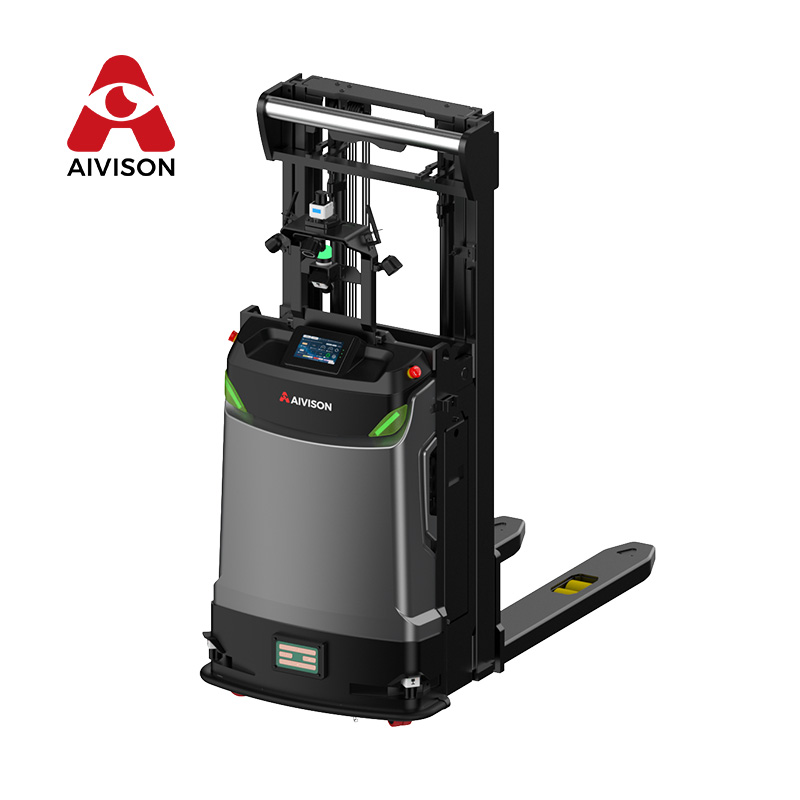
Heavy Load 2000KG Load Forklift Laser Guide AMR for Warehouse Pallet
A heavy-load 2000 kg laser-guided forklift AMR for pallet handling. It is aimed at automotive parts, building materials and heavy electronics packaging. Vision and laser guidance reduce dependence on fixed floor markers; the acceptance test should include deformed pallets, low-light areas and blind corners before the robot is released into production traffic.
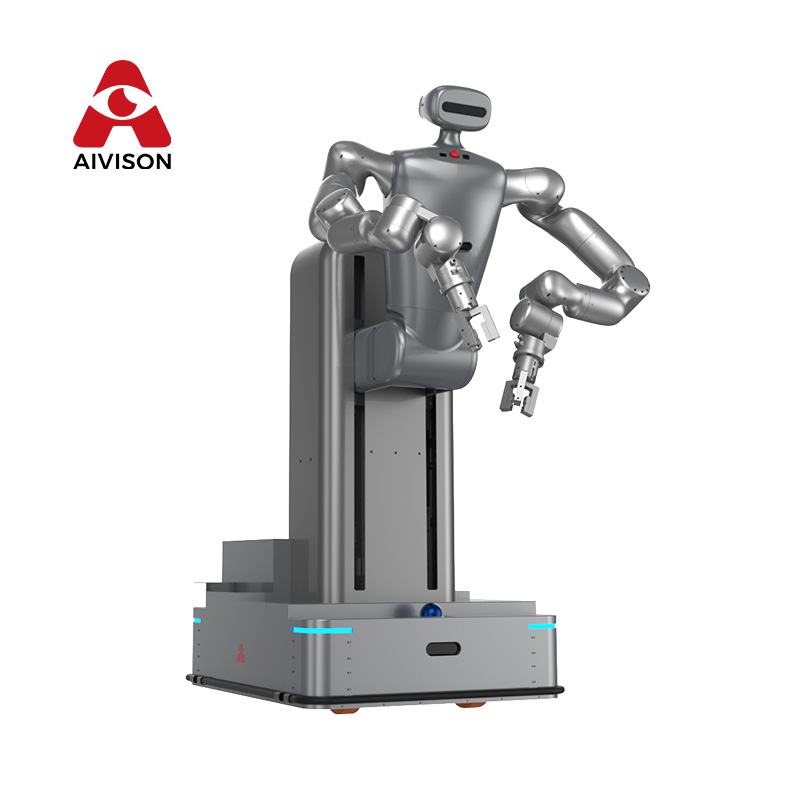
Omnidirectional Service Humanoid Robot Chassis Dual 7-DOF Arms Laser SLAM Navigation for Hospitality and Retail
An omnidirectional humanoid robot chassis with dual 7-DOF arms and laser SLAM. In a factory context, it can support reception, sample delivery, remote expert sessions or light service tasks at the office–factory interface. It also signals a practical trend: mobile manipulators are moving from showroom demonstrations into controlled, repetitive service workflows with measurable acceptance criteria.
Need a shortlist for a specific Hai Phong line, warehouse or cleanroom?
Why Smart Factory Robots Are Moving From Pilot to Procurement in Hai Phong
Hai Phong is no longer a secondary logistics city in Northern Vietnam. It combines a deep-water port system, industrial zones such as Dinh Vu – Cat Hai, Deep C, VSIP Hai Phong, Trang Due and Nam Cau Kien, and a growing base of electronics, automotive, mechanical and petrochemical plants. For factory owners, the strategic question is not whether automation will arrive; it is whether the chosen robot platform can survive the next product changeover, the next warehouse lease and the next labor cycle.
That is why a “top 10 smart factory robot factories” list for Hai Phong should be read as a procurement framework, not a logo parade. A credible supplier must demonstrate navigation in mixed traffic, customization at the top-module level, import documentation discipline, spare-parts planning and a deployment method that does not stop an occupied factory. The product must also fit local realities: seasonal humidity, salt-laden coastal air, fast line changes and a labor market that rewards companies able to redeploy people into higher-value work.
Localized insight: Hai Phong projects often start with one bottleneck — receiving, line-side replenishment, high-bay put-away or finished-goods transfer. The most successful rollouts prove one route, one shift and one acceptance test before expanding the fleet. This phased approach reduces disruption and gives operations teams evidence for the next budget cycle.

Years in AGV Engineering
Shenzhen-based R&D and manufacturing experience.
Laser SLAM Accuracy
No tracks, reflectors or floor codes in standard navigation.
Manufacturers Served
Deployments across three continents and complex industries.
Core Industries
Semiconductor, 3C, lithium battery, PV, auto parts, PCB, textile and medical.
The Top 10 Smart Factory Robot Factory Criteria for Hai Phong Buyers
Instead of repeating a directory of suppliers, use this 10-point framework in your RFQ, technical clarification and factory acceptance test. It reflects how experienced buyers separate a robot demo from a production asset.
Navigation Proof in Mixed Traffic
Ask for a live route test with people, forklifts and blind corners. Review re-localization time, obstacle avoidance logic and behavior after a Wi-Fi interruption.
Accuracy Matched to the Station
±5 mm laser SLAM is enough for transport; ±2 mm QR assist belongs at critical docking; ±0.05 mm composite handling belongs at assembly. Over-specifying QR everywhere adds cost and maintenance.
Payload and Top-Module Engineering
Check load center, rack footprint, fork entry, roller height and arm reach. The robot must meet the load interface, not just the weight number on a brochure.
Fleet Scheduling and Charging Logic
Confirm intersection rules, elevator interface, charging queue and task prioritization. A single robot is a machine; a fleet is an operating system.
Factory Acceptance Testing
Test with your pallets, floor, lighting and Wi-Fi. Require logged results for route completion, docking, fault recovery and safety stop behavior.
Deployment in an Occupied Factory
Ask how installation will be phased, what happens during night shifts and how the supplier protects existing material flow. Downtime risk belongs in the commercial evaluation.
Service Model for Hai Phong
Clarify spare-parts lists, remote diagnostics, local integrator support and response escalation. Ask who will respond on a Saturday night during a peak shipment window.
Import and Compliance Documents
Request packing lists, commercial invoices, battery transport documents where applicable and product documentation. Confirm HS classification and import steps with your customs broker.
Total Cost of Ownership
Compare battery cycles, charging strategy, maintenance, spare parts, floor repair avoidance and labor redeployment. The lowest purchase price is rarely the lowest operating cost.
Integrator Communication
Check CAD formats, PLC interfaces, English documentation and escalation paths for Vietnamese system integrators. Clear communication shortens commissioning and reduces rework.

Inside the Factory: Why Shenzhen Marnix Is Built for Hai Phong Projects
Shenzhen Marnix Intelligent Technology Co., Ltd. draws on about ten years of AGV engineering experience to build autonomous mobile robots that drop into existing factories with minimal disruption — for end users and for the system integrators who serve them. The company’s advantage is not a single robot model; it is the ability to engineer the chassis, navigation stack, top module, fleet software and charging infrastructure as one system.
For a Hai Phong buyer, this matters because many projects fail at the interfaces: the robot reaches the aisle but not the conveyor; the fleet software works in simulation but not with the customer’s Wi-Fi; the custom fork fits the pallet but not the rack. A manufacturer that controls more of the integration layer can reduce those gaps before shipment.
Manufacturer DNA
About ten years of AGV engineering, with R&D and manufacturing based in Shenzhen. This supports faster problem-solving when a standard platform needs adaptation.
Chassis and Top-Module Customization
Flexible engineering of jacking units, roller conveyors, forklift forks and 6-axis or dual-arm modules to connect directly with production equipment.
Three Precision Tiers
±5 mm laser SLAM for trackless transport, ±2 mm QR assist for precision docking, and composite-robot repeatability for assembly and inspection tasks.
Fleet Scheduling and Charging
Intelligent scheduling over indoor Wi-Fi coordinates simultaneous task assignment, traffic control and automatic charging through compatible smart docks.
Verified Quality and Trade Record
Onsite supplier assessment by TÜV Rheinland, supplier to a Fortune 500 company, and transparent trade and credit records support procurement due diligence.
Global Deployment Experience
200+ manufacturers served across three continents, with applications spanning semiconductor, 3C, lithium battery, photovoltaic, automotive parts, PCB, textile and medical devices.
Match Navigation Accuracy to Each Hai Phong Station — Not to the Brochure
Most factories do not need one accuracy level everywhere. A tiered architecture keeps infrastructure lean: laser SLAM for transport, QR only where docking demands it, and high-precision manipulation only at value-critical stations.
Laser SLAM on natural features maps the existing environment and reaches ±5 mm without magnetic tape, reflectors or floor QR codes. That is usually the right foundation for warehouse transfer, line-side delivery and routes that change when a new product is introduced.
Where a station requires ±2 mm docking, a QR code scanning camera can be added only at that point. This avoids covering the entire floor with labels while still meeting high-shelf or precision handover requirements. For composite robots with a 6-axis or dual-arm module, repeatability reaches the assembly-level range needed for semiconductor and medical-device work.
This tiered approach is especially relevant in Hai Phong, where a single site may combine a leased warehouse with a new production hall. The navigation strategy should be able to grow with the site instead of forcing a full floor rework during every layout change.
Navigation accuracy ladder
Use the lowest infrastructure tier that satisfies the station. Add QR labels only where precision handover creates measurable value.
Where Smart Factory Robots Fit in Hai Phong’s Industrial Map
Hai Phong is not a single market. Electronics, automotive, port logistics and high-mix manufacturing each impose different payload, precision and service requirements.
Electronics and 3C Manufacturing
In and around Trang Due, VSIP Hai Phong and Nam Cau Kien, electronics suppliers face fast changeovers, ESD control and pressure to keep line-side buffers small. A laser SLAM AMR can move magazines, trays and totes without cutting the floor, while a jacking robot can lift racks at the line side.
Specify cleanroom compatibility, particle control, ESD measures and handover height only after the line layout is fixed. Avoid buying a precision QR solution for every route; use QR only at the test and assembly stations where ±2 mm docking is genuinely required.
Automotive and EV Supply Chain
Hai Phong’s automotive and EV ecosystem rewards sequencing accuracy more than raw speed. Heavy pallets, kitting carts and mixed forklift traffic make 2000 kg stacker AGVs, heavy-load forklift AMRs and dual-arm mobile manipulators relevant, depending on whether the task is storage, line feeding or machine tending.
The acceptance test should include deformed pallets, low-light corners, pedestrian crossings and shift-change peaks. A robot that performs only in an empty aisle is not ready for an automotive production environment.
Port-Adjacent Logistics and Bonded Warehouses
Around Dinh Vu and Deep C, warehouses operate close to port schedules and cannot stop for a long automation project. Repetitive pallet transfer, put-away and retrieval are natural starting points for 1500/2000 kg AMR forklifts and reach robots with opportunity charging.
Because the port does not stop for a pilot, plan a phased route that starts with one shift and one product family. Then expand after the fleet proves route reliability, charging discipline and recovery behavior during peak throughput.
High-Mix Factories and Labor Retention
Many Hai Phong factories run high-mix, low-volume production with frequent changeovers. A modular AMR platform lets the same navigation core serve multiple top modules, while a service humanoid chassis can support office–factory reception, sample delivery or remote expert sessions.
The goal is not to remove every human task. It is to remove the tasks that drive turnover, safety incidents and night-shift instability — then redeploy trained operators into quality, maintenance and process improvement.
Localization Trends That Will Shape Robot Procurement Through 2028
These trends are not abstract macro forecasts. Each one changes the specification, commercial model or service plan for a smart factory robot project in Hai Phong.
China+1 and Tier-2 Localization
As supply chains diversify, Hai Phong factories face more product variants and shorter ramp-up cycles. Robots must be re-mappable and easy to redeploy without new floor infrastructure.
Wage Growth and Labor Turnover
Rising wages and turnover make quick operator training essential. Intuitive HMI, clear recovery procedures and local-language training support reduce dependence on a few experts.
Port and Warehouse Density
Port-adjacent growth increases aisle congestion and multi-shift pressure. Fleet scheduling, charging windows and traffic rules become as important as payload capacity.
Cleanroom and Traceability
Electronics, medical and semiconductor suppliers demand traceability and controlled contamination. Robot documentation, cleaning procedures and acceptance logs should be part of the RFQ.
Green Factory and Energy Goals
Electric material handling supports lower emissions inside factories. Opportunity charging and energy monitoring help align robot deployment with factory sustainability targets.
Local Integrator Ecosystem
Vietnamese system integrators are becoming more capable. Choose a robot factory that supports partners with CAD, PLC interfaces, English documentation and clear escalation paths.
What to Prepare Before Requesting a Smart Factory Robot Proposal
From project experience, six inputs determine most of the robot selection. Sharing them upfront shortens evaluation from weeks to days and prevents an expensive over-specification cycle.
Load Profile
Maximum weight, footprint, center of gravity and pallet condition. Include racks, carts, totes and any non-standard carrier used in Hai Phong.
Site Layout and Floor Condition
CAD or sketch with aisle widths, doors, slopes, floor joints, lift points and charging location. Note any leased-area restrictions on floor modification.
Throughput and Peak Factor
Missions per hour, peak windows and shift pattern. This sets fleet size, charging dock count and the traffic logic required at intersections.
Docking Precision Map
Mark where ±5 mm is enough, where ±2 mm QR assist is needed, and where an arm-level process requires higher repeatability. Precision should follow value.
Wi-Fi, Power and Safety
Access-point coverage, dead zones, power supply and mixed pedestrian/forklift traffic. A robot route is only as reliable as the infrastructure around it.
Service and Spare-Parts Plan
Target response time, critical spares, local integrator support and operator training. Include these in the commercial comparison, not after the purchase order.

Common Questions Local Buyers Ask Before Ordering
These answers reflect the practical questions that arise when a Hai Phong factory, warehouse or system integrator evaluates a robot factory in Shenzhen.
How do we import a smart factory robot from Shenzhen to Hai Phong?
Most projects use sea freight from a Shenzhen or South China port to Hai Phong, with a local customs broker handling import declaration. Request a complete document pack early: packing list, commercial invoice, product manual and, where lithium batteries are installed, the transport documents requested by your forwarder, such as UN38.3 and MSDS where applicable. Confirm HS classification and duty with your broker before the purchase order, not after the container arrives.
What lead time should we plan for a standard robot versus a custom top module?
A realistic schedule separates engineering, production, factory acceptance testing, sea freight, customs clearance and commissioning. Standard platforms move faster, while custom chassis, roller conveyors, forks or arm modules require design review and a more detailed FAT. For Hai Phong projects, add buffer for site readiness, Wi-Fi verification and operator training. A supplier that gives one vague date without a phase plan is harder to manage than one that gives a structured schedule.
Will Hai Phong humidity and coastal air affect the robot?
Humidity and salt-laden air near the coast are real considerations, especially for warehouses with open loading bays or temperature swings. The right protection level depends on the zone: cleanroom, air-conditioned warehouse, covered loading area or semi-open logistics hall. During project review, define cleaning routines, corrosion inspection points, battery storage conditions and any additional protection needed. Do not assume a generic specification is sufficient for every coastal site.
Do we need to install floor tracks or QR codes everywhere?
No. Standard laser SLAM navigation uses natural features and does not require magnetic tape, reflectors or floor QR codes. QR labels are added only at stations that need ±2 mm docking precision, such as high-shelf storage or precision handover. If an RFQ demands ±2 mm everywhere, challenge the requirement: it may add floor infrastructure, cleaning work and maintenance without improving the actual process.
Can the robot be customized for our production line?
Yes. Manufacturer-level customization can cover chassis configuration, payload, jacking units, roller conveyors, forklift forks and 6-axis or dual-arm top modules. The useful starting point is not a photo of a robot; it is a CAD layout, load drawing and interface description. That allows the supplier to confirm reach, handover height, cycle time and safety clearances before production begins.
How many robots will we need for our Hai Phong warehouse or line?
Fleet size should come from a throughput model, not a guess. Share missions per hour, peak factor, travel distance, loading and unloading time, charging window and blocked-route assumptions. A simple simulation can show whether one robot, two robots or a larger fleet is required, and whether the bottleneck is the robot, the docking station, the elevator or the operator handover.
What about training, spare parts and local support?
Ask for a recommended spare-parts list with lead times, critical sensors, drive components and battery guidance. Training can combine remote sessions, documentation and on-site support from a customer-appointed integrator. For Hai Phong, the service plan should define who performs first-line checks, how remote diagnostics are handled and what escalation path applies during peak production. Clear responsibilities are more valuable than a generic promise of support.
What information should we send for a fast inquiry?
Send the load profile, site layout, aisle widths, throughput target, docking precision map, Wi-Fi coverage, power availability, target timeline and any top-module requirement. If a cleanroom or coastal environment is involved, state that clearly. With these inputs, an engineering team can recommend a platform, propose a phased deployment and define the factory acceptance test instead of replying with a generic catalogue.
Bring a Hai Phong Project to the Front of the Engineering Queue
A Hai Phong robot project is a system design problem, not a catalogue order. Share your load profile, aisle width, throughput target and docking tolerance. The Marnix engineering team will respond with a configuration recommendation, a phased deployment path and the acceptance criteria that should be tested before shipment.