Top 10 AMR Controller Factories & Wholesaler Serving Fukuoka
A buyer-side technical guide for Fukuoka manufacturers, 3PL operators and system integrators comparing laser SLAM AMRs, jacking robots, smart forklifts and factory-direct controller platforms.
Why Fukuoka Buyers Search for AMR Controllers, Not Just Robot Bodies
In Fukuoka, the phrase “AMR controller factory” is often used as shorthand for something broader than a circuit board. A production-grade AMR controller combines laser SLAM localisation, motion control, safety I/O, task execution, Wi-Fi fleet scheduling and charging logic. The robot body is visible; the controller determines whether the robot can work reliably in a mixed-traffic Fukuoka warehouse, a high-mix production line in Kitakyushu, or a space-constrained logistics hub near Hakata Port.
That is why a serious wholesaler serving Fukuoka should be evaluated on controller architecture, navigation precision, top-module flexibility and local project support—not simply on unit price. Fukuoka facilities are often brownfield sites. They mix people, pallet trucks, forklifts, conveyors and legacy racking. A robot that cannot map the existing floor, avoid dynamic obstacles and integrate with WMS or PLC logic becomes a demo rather than an operating asset.
This page is structured as a transparent top-10 comparison dossier. Rather than publishing an unverifiable ranking, it gives procurement teams the 10 scoring criteria that matter when comparing AMR controller factories and wholesalers serving Fukuoka, then shows how the Marnix platform performs against those criteria.
What a Fukuoka-ready AMR controller must do
- Map existing floors without magnetic tape, reflectors or full-floor QR installation.
- Hold ±5 mm laser SLAM navigation and support ±2 mm QR docking where stations demand it.
- Coordinate multiple robots over indoor Wi-Fi with traffic control and automatic charging.
- Accept custom top modules such as jacking units, roller conveyors, forks and 6-axis arms.
- Support integration with WMS, MES, PLC, conveyors and safety systems through project engineering.
8 AMR Platforms for Fukuoka Automation Projects
The product URLs below are preserved from the original catalog. Each platform can be evaluated as a complete AMR system: chassis, controller, navigation configuration, top module, charging strategy and fleet integration.
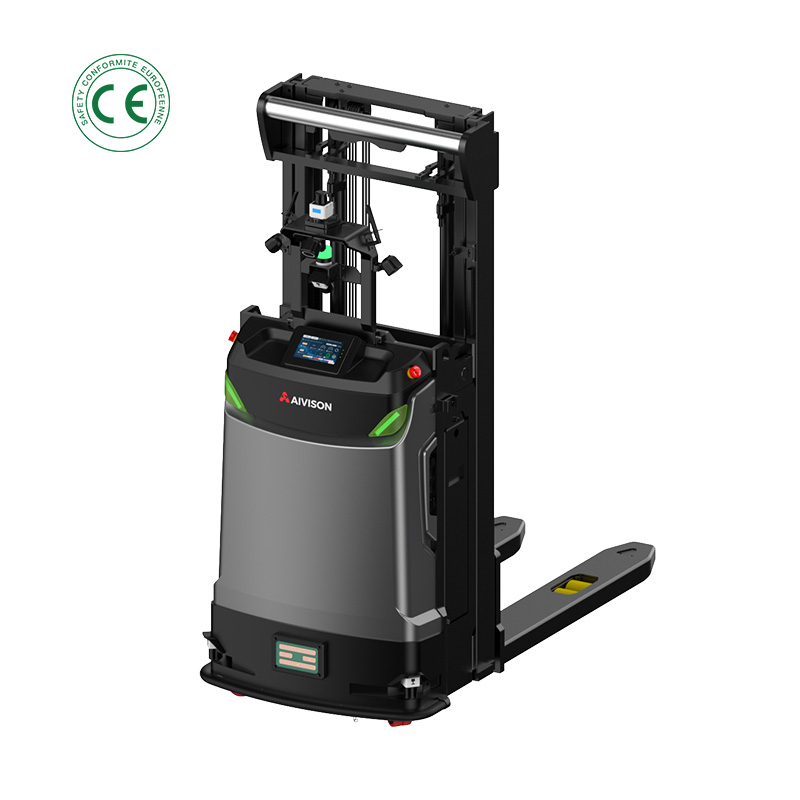
Aivison AMR Robot Vehicle Automated Warehouse Automatico AGV Logistics Industrial Guided Vehicles
A flexible warehouse AMR vehicle for repeatable internal transport, multi-stop logistics and automated material flow. Suitable for Fukuoka 3PL and distribution sites that need rapid mapping and route changes without floor reconstruction.
View product →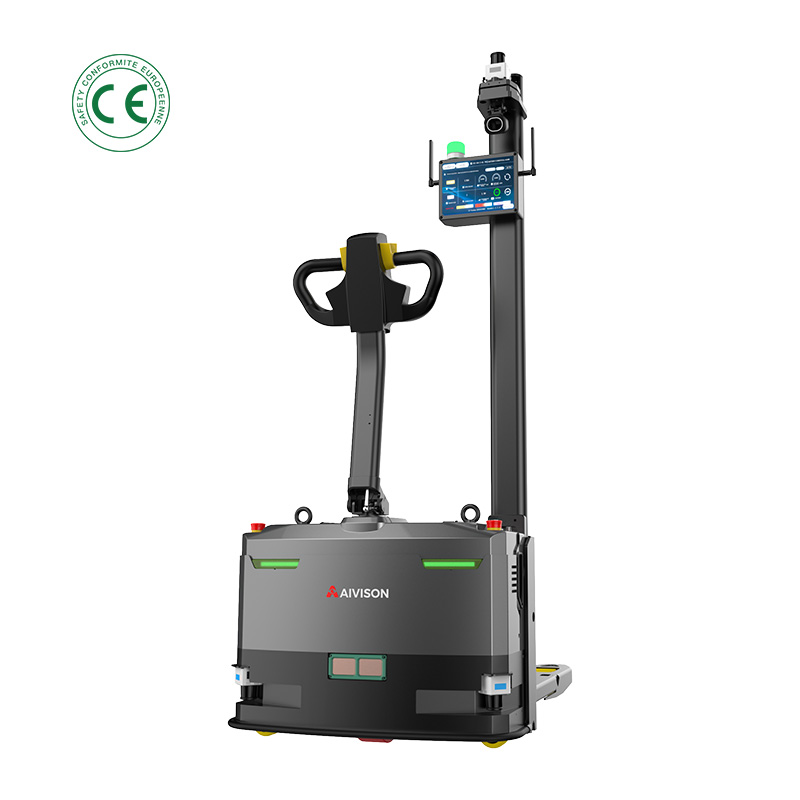
AIVISON CE Laser SLAM Navigation AGV 1500kg Warehouse Lifting Operations
A 1500 kg lifting AGV designed for rack movement, line-side replenishment and medium-payload pallet handling. The laser SLAM configuration suits existing Fukuoka warehouses where installation time and production continuity are critical.
View product →
Heavy Load 2000KG Load Forklift Laser Guide AMR for Warehouse Pallet
A heavy-load forklift AMR for palletised goods where conventional forklift labour is difficult to recruit or schedule. Laser guidance supports stable route following and repeatable pallet transfer in high-throughput warehouse zones.
View product →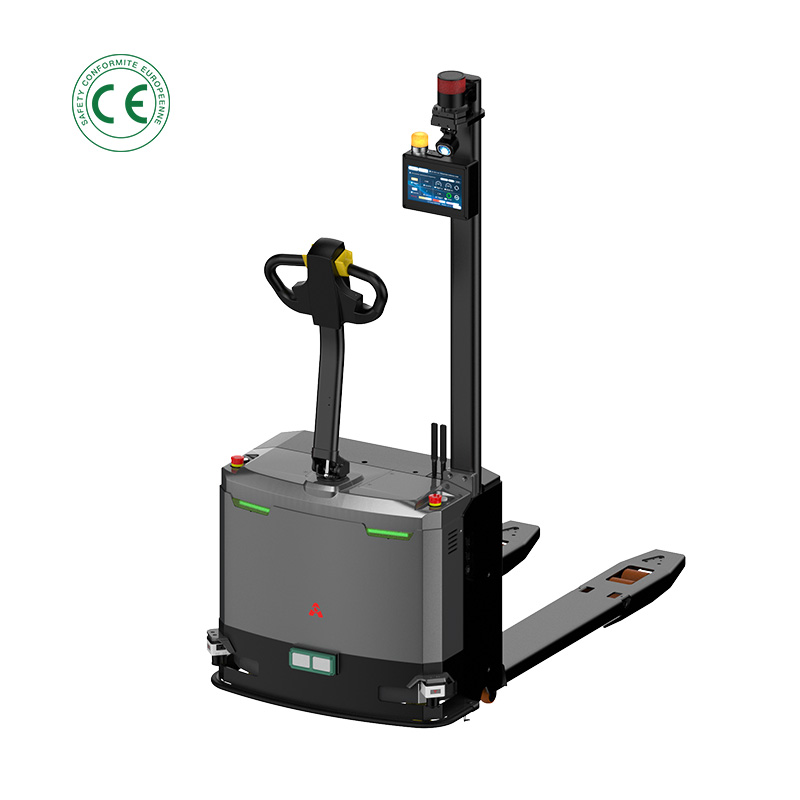
CE Certification Industrial AMR AGV Robot for Warehouse Automation Autonomous Material Handling Logistics
A CE-certified industrial AMR platform for autonomous material handling, internal logistics and warehouse automation. Its general-purpose architecture is suited to Fukuoka factories that want one controller platform across multiple transport tasks.
View product →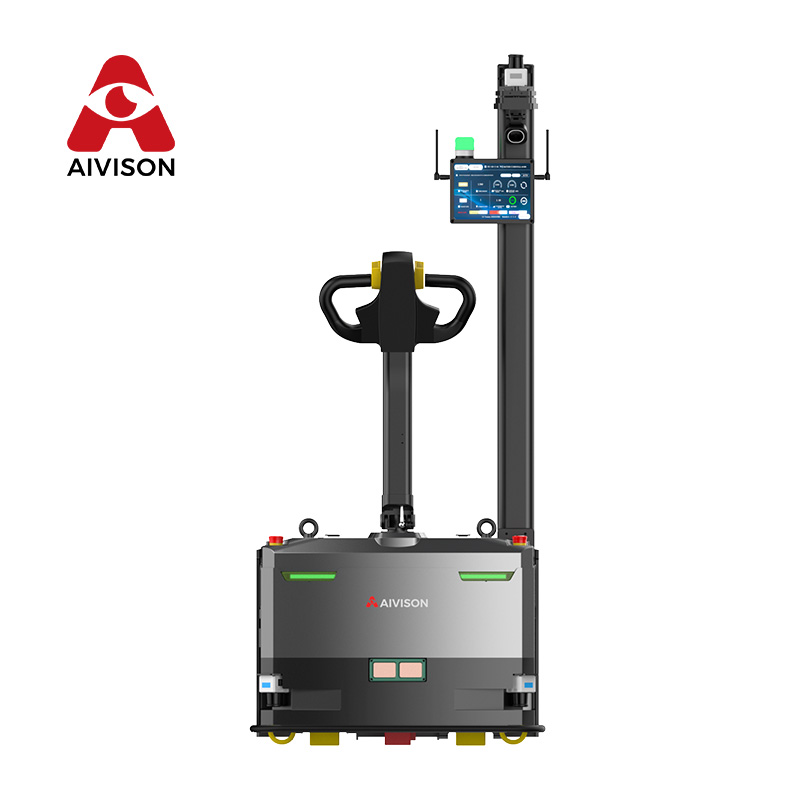
China Factory Movable Pallet Agv Robot Rack Shelf for Intelligent Robot Warehouse
A movable pallet and rack system for intelligent warehouses where storage density and flexible layout matter. Instead of moving only pallets, the robot can reposition racking or shelving to match changing product profiles and order peaks.
View product →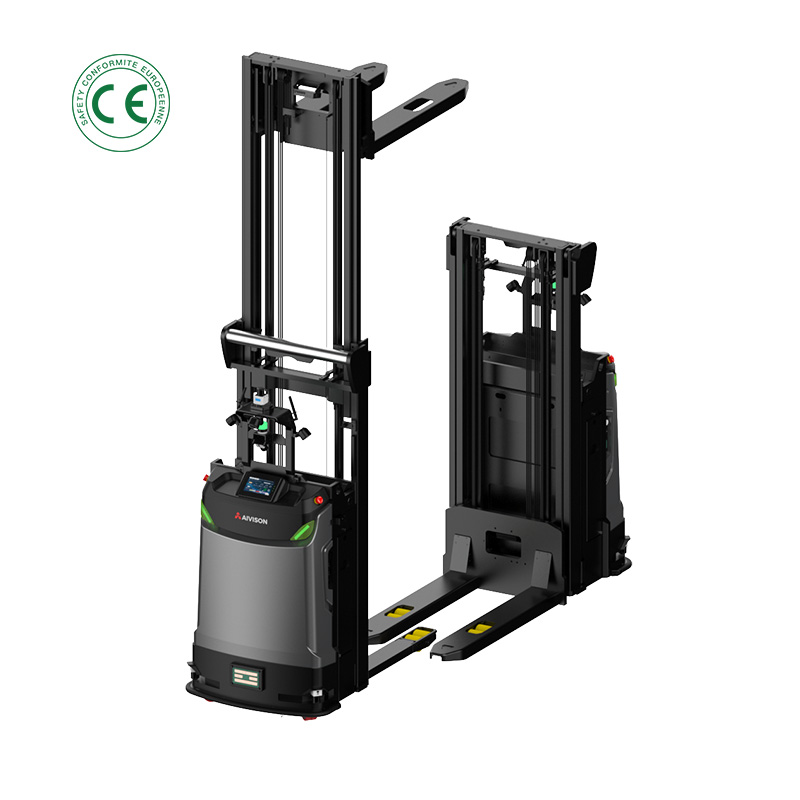
Factory AMR Robot AGV Robot Laser 2000kg Forklift AGV for Industrial Material Handling
A 2000 kg laser forklift AGV for industrial material handling between production, staging and dispatch zones. It is aimed at Fukuoka manufacturers replacing repetitive forklift trips while keeping existing pallet standards and rack interfaces.
View product →
Automatic Handling CE Certificate 2000kg Forklift Robot Vehicle Laser AGV for Large Load Goods-carrying
A CE-certified 2000 kg forklift robot vehicle for large-load goods carrying and automatic handling. It supports stable pallet transfer where load weight, safety distance and repeatable pick-up positions are key procurement factors.
View product →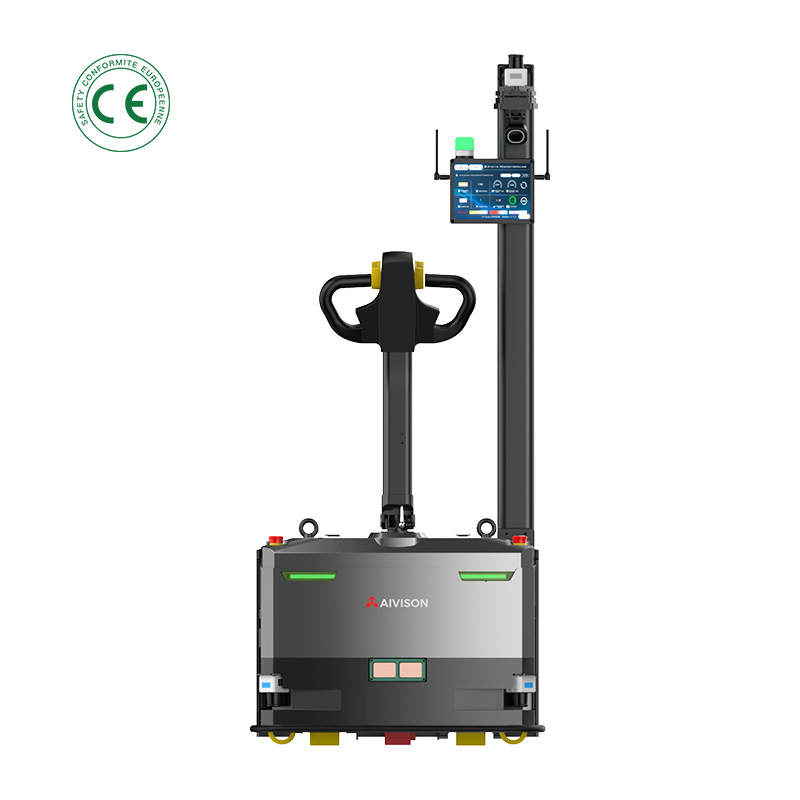
Autonomous Mobile Robot AGV CE Laser SLAM Navigation for Material Handling and Logistics
A general-purpose autonomous mobile robot with CE laser SLAM navigation for material handling and logistics. It is a practical starting point for Fukuoka integrators building repeatable AMR deployments across multiple customer sites.
View product →Need a Fukuoka-specific configuration? Share payload, aisle width, throughput and docking tolerance to receive a factory-direct recommendation.
How to Compare the Top 10 AMR Controller Factories & Wholesalers Serving Fukuoka
A credible top-10 shortlist should be reproducible. Use the same ten criteria for every candidate—then verify claims through factory acceptance tests, site acceptance tests, documentation and reference projects.
Controller depth
Does the supplier own navigation, motion control, safety logic, fleet scheduling and charging control—or merely assemble third-party parts?
Precision tiers
Look for ±5 mm laser SLAM, ±2 mm QR-assisted docking and arm-level repeatability only where each level is genuinely needed.
Brownfield fit
Can the robot map existing floors without tape, reflectors or a full QR grid? This directly affects Fukuoka retrofit cost and downtime.
Top-module flexibility
Jacking units, roller conveyors, forklift forks and 6-axis arms should be engineered around the process, not forced into one standard chassis.
Fleet control
Multi-robot dispatch, traffic control, task prioritisation and automatic charging must be proven, not promised.
Integration capability
Check experience with WMS, MES, PLC, conveyors, safety doors, lifts and production equipment interfaces.
Quality evidence
Look for multi-stage inspection, stress testing, CE documentation and independent supplier verification such as TÜV Rheinland assessment.
Fukuoka support
Confirm English technical documentation, escalation paths, spare-parts planning and coordination with Japanese-speaking integrators.
Total cost of ownership
Compare battery strategy, charging docks, spare parts, engineering hours, re-mapping effort and expected uptime—not only machine price.
Verifiable references
Ask for comparable payloads, industries and layouts. Marnix cites 200+ manufacturers served across three continents and supplier records available for review.
Where AMR Controllers Create Measurable Value in Fukuoka
Fukuoka is not a single market. The procurement logic changes between Kitakyushu’s industrial base, Hakata Port logistics, Fukuoka City’s service and technology clusters, and the wider Kyushu manufacturing corridor.
Automotive, machinery and parts plants
In Kitakyushu, Miyawaka and surrounding industrial zones, AMRs support line-side kitting, pallet transfer, empty-container return and sequenced delivery. A 1500 kg lifting AGV or 2000 kg forklift AMR can reduce repetitive forklift travel between staging areas and assembly cells, while the controller maintains route logic and task sequencing during shift changes.
Hakata Port logistics and 3PL warehouses
Distribution centres near Hakata Port and Fukuoka’s expressway network face labour shortages, peak-season volatility and tight staging areas. AMRs can handle inbound-to-storage transfer, cross-docking runs and dispatch staging. Laser SLAM mapping is especially relevant where racking changes or temporary peak layouts would make fixed guidepaths impractical.
Electronics, medical and semiconductor-linked logistics
Fukuoka City and the wider Kyushu region host electronics, medical-device and advanced manufacturing supply chains. Here, ±2 mm QR-assisted docking or composite robots with 6-axis arms may be justified for wafer carriers, precision assemblies or cleanroom-adjacent transfer. The key is to avoid over-specifying every station to the highest precision level.
What Fukuoka projects typically prioritise
This is a qualitative decision-weight model drawn from brownfield AMR projects. It helps buyers structure internal scoring rather than treating every specification as equally important.
Three Trends Shaping AMR Procurement in Fukuoka
Labour constraints and logistics reform
Japan’s logistics labour environment, including the 2024 driver-work-hour rules, is pushing warehouses to stabilise internal operations. AMRs do not solve every labour issue, but they can reduce non-value-added walking, forklift trips and shift-to-shift variability. In Fukuoka, that means buyers increasingly ask for 24/7 duty, automatic charging and low-maintenance fleets rather than one-off showcase robots.
High-mix, low-volume production
Kyushu’s semiconductor and automotive investment cycle is increasing demand for flexible internal logistics. Fixed conveyors and guidepaths are difficult to justify when product mix changes. Laser SLAM AMRs allow routes and stations to be re-mapped, while QR labels at selected docking points provide precision without rebuilding the entire floor. This “right precision at the right station” approach is a major cost-control lever.
Brownfield retrofit and energy efficiency
Most Fukuoka projects cannot pause operations for a full facility redesign. Buyers therefore favour suppliers that can commission in phases, integrate with existing Wi-Fi and WMS, and size the fleet around actual throughput. Intelligent charging docks, opportunity charging and route optimisation are becoming part of the ROI discussion, not afterthoughts.

Why Marnix Belongs on a Fukuoka Buyer’s Shortlist
Shenzhen Marnix Intelligent Technology Co., Ltd. is a mobile robot manufacturer with about ten years of AGV engineering experience. The company builds laser SLAM AMRs, jacking robots, smart forklifts, composite mobile robots and intelligent charging docks for end users and system integrators. For Fukuoka buyers, the value is not just a product list; it is the ability to match controller configuration, chassis design and top modules to a specific process.
The company reports 200+ manufacturers served across three continents, a supplier relationship with a Fortune 500 company, and an onsite supplier assessment by TÜV Rheinland. Robots are used in semiconductors, 3C electronics, lithium battery, photovoltaic, automotive parts, PCB, textile and medical device environments.
Precision without overbuild
±5 mm laser SLAM, ±2 mm QR assist and ±0.05 mm composite repeatability available by task.
Manufacturer customization
Chassis, payload and top modules engineered for jacking, rollers, forks or 6-axis arms.
Fleet scheduling
Multi-robot coordination over indoor Wi-Fi, with compatible intelligent charging docks.
Quality protocol
Multi-stage intelligent inspection and operational stress testing before shipment.
Integrator support
Products and solutions for system integrators building automation projects worldwide.
Export project experience
Documentation and engineering communication for international deployments.
What to Prepare Before Requesting an AMR Controller Quote
From project experience, six inputs determine most of the robot selection. Sharing them upfront shortens the evaluation from weeks to days and reduces the risk of an oversized or under-specified fleet.
Load profile
Maximum weight, pallet or rack footprint, centre of gravity and whether the load is stable during acceleration and braking.
Site layout
CAD drawing or marked-up sketch with aisle widths, door clearances, slopes, lift interfaces and restricted zones.
Throughput target
Missions per hour, peak periods and shift patterns. This sets fleet size, charging strategy and buffer requirements.
Docking precision
Where ±5 mm is sufficient, where ±2 mm QR assist is needed, and whether any station requires robotic-arm-level repeatability.
Wi-Fi and IT
Access-point coverage, roaming quality and integration points with WMS, MES, ERP or PLC systems.
Equipment interfaces
Conveyors, machines, shelving or safety doors the robot must hand over to, plus any required top-module design.
Common Questions from Fukuoka AMR Buyers
These answers focus on the practical concerns raised by Fukuoka-based factories, warehouses and integrators during early project evaluation.
Are you a factory or a trading company?
Marnix is a Shenzhen-based mobile robot manufacturer. The company engineers and supplies AMR, AGV, jacking robot, smart forklift and charging dock solutions, and supports OEM and system integrator projects. For Fukuoka buyers, this means technical questions can be routed directly to factory engineering rather than a pure reseller layer.
Do we need to modify the floor in a Fukuoka facility?
Standard laser SLAM navigation uses natural features and maps the existing environment, so magnetic tape, reflectors or full-floor QR codes are not required. QR labels are added only at stations where ±2 mm docking precision is needed. This is important for older buildings and leased warehouses where floor modification may be restricted.
How do you support Japanese-speaking teams?
Factory engineering and project documentation can be provided in English, and Marnix can coordinate with Fukuoka-based integrators or Japanese-speaking partners for site communication. Buyers should define the required language support, spare-parts plan and escalation path during the quotation stage.
Can the AMR controller connect to WMS, MES or PLC?
Yes, integration is a project-engineering topic rather than a simple plug-and-play claim. Typical requirements include task dispatch from WMS, status feedback to MES, handshakes with PLC-controlled conveyors or doors, and traffic rules around shared zones. These should be documented in the interface specification before shipment.
How is navigation accuracy verified?
Accuracy depends on the selected configuration. Laser SLAM is specified at ±5 mm, QR-assisted docking at ±2 mm, and composite robots with a 6-axis arm at ±0.05 mm repeatability. Verification should be tied to the actual docking station, load condition and acceptance test criteria—not just a brochure number.
What is the typical delivery lead time?
Lead time varies by chassis, payload, top module, controller configuration and fleet size. A realistic quotation should separate engineering approval, production, factory acceptance testing, shipping to Japan and site commissioning. Sharing layout, throughput and docking requirements early is the fastest way to obtain a reliable schedule.
Request a Fukuoka-Ready AMR Configuration
Whether you are comparing top 10 AMR controller factories, selecting a wholesaler serving Fukuoka, or specifying a laser SLAM AMR for an existing warehouse, start with the load, layout, throughput and precision target. Marnix can match the controller platform, chassis and top module to the actual process.
Get CatalogProject evaluation: info@marnixbot.com · Include payload, aisle width, docking tolerance, Wi-Fi coverage and required interfaces for a faster technical response.