8 Smart Pallet Forklift & AMR Platforms for the Philippines Market
Recommended configurations from Marnix’s product range for Philippine warehouses, factories, 3PL operators, and system integrators. Product URLs are preserved for direct evaluation.
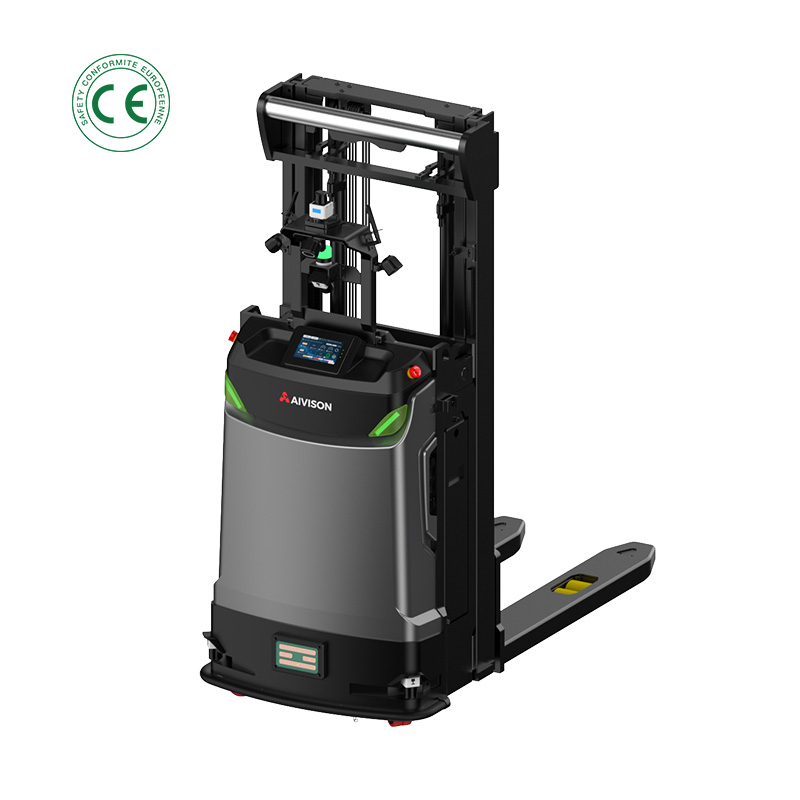
Aivison AMR Robot Vehicle for Automated Warehouse Logistics
For 3PL hubs and distribution centers needing repeatable pallet transfer without fixed tracks. Laser SLAM supports layout changes common in Manila and PEZA warehouses.
View product →
AI-Ready Humanoid Robot Chassis with Dual 7-DOF Arms
For integrators, universities, and electronics R&D teams; ROS2, laser SLAM, omnidirectional drive. Use it for pilot handling and research, not as a first forklift replacement.
View product →
New Warehouse Autonomous 2000kg Stacker AGV Robot
Heavy pallet stacker for 2,000 kg loads; useful for FMCG, construction materials, and 3PL staging where repetitive forklift trips consume labor.
View product →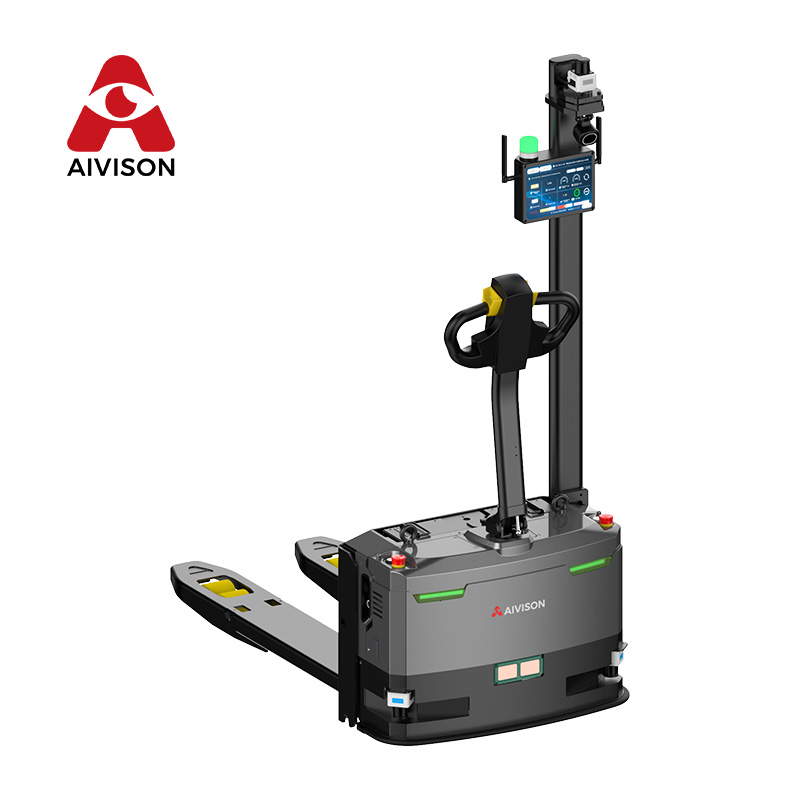
Aivison 1.5 Ton Autonomous Forklift / Pallet Stacker AGV
A practical mid-market platform for line-side replenishment, pallet transfer, and indoor logistics. Best suited to factories transitioning from manual forklift routines.
View product →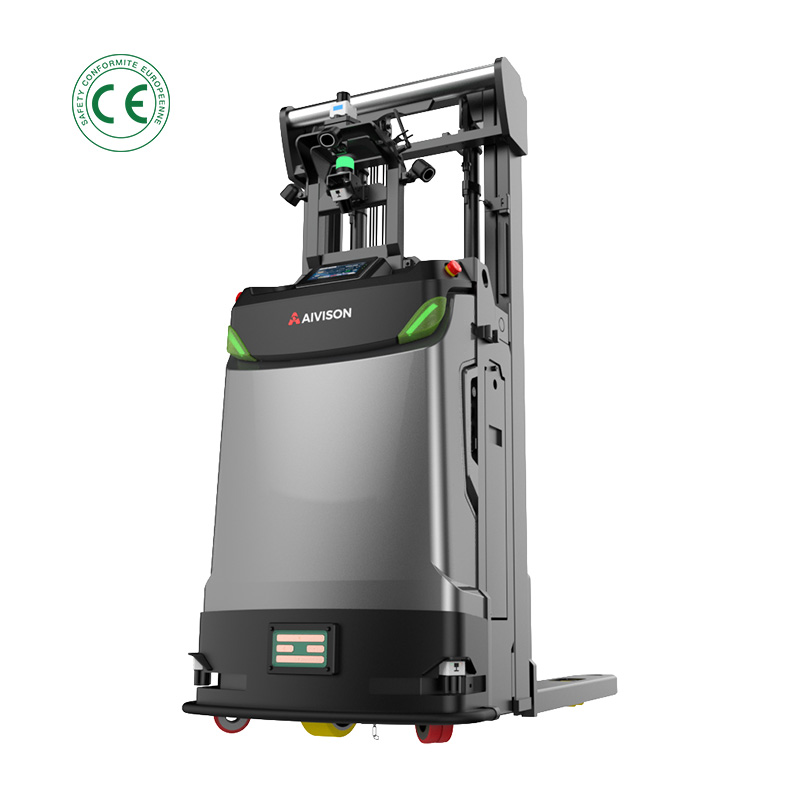
2000kg Laser Navigation Reach AGV Warehouse Robot
Reach-type platform for dense racking and higher storage positions. Pair with QR assistance at pick faces when ±2 mm docking precision is required.
View product →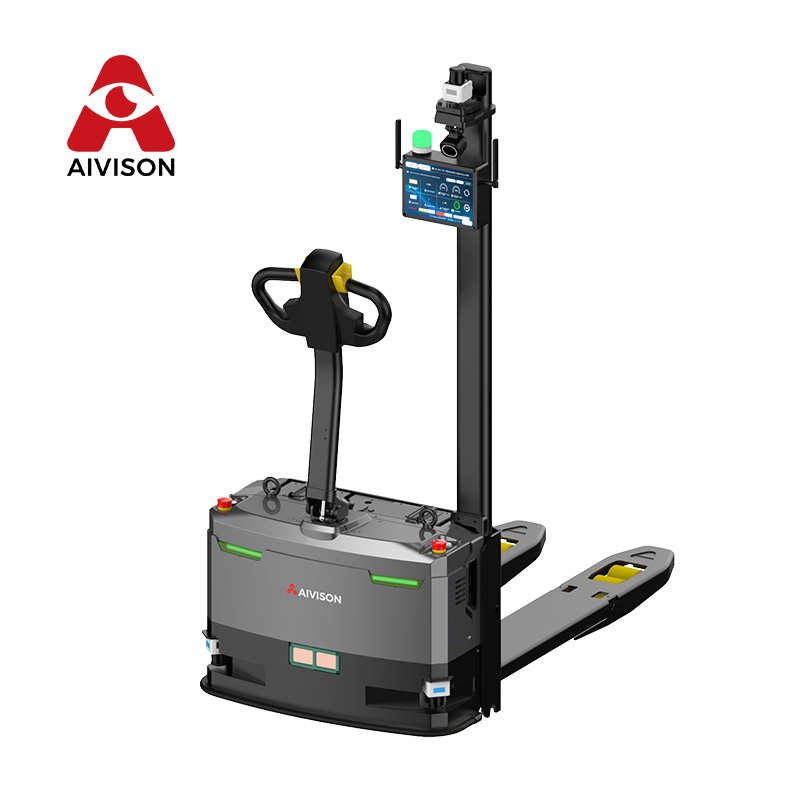
Aivison Industrial Unmanned AGV Pallet Forklift
General industrial pallet forklift for repetitive movements across shifts. Suitable for food distribution, manufacturing, and logistics sites preparing to scale into fleets.
View product →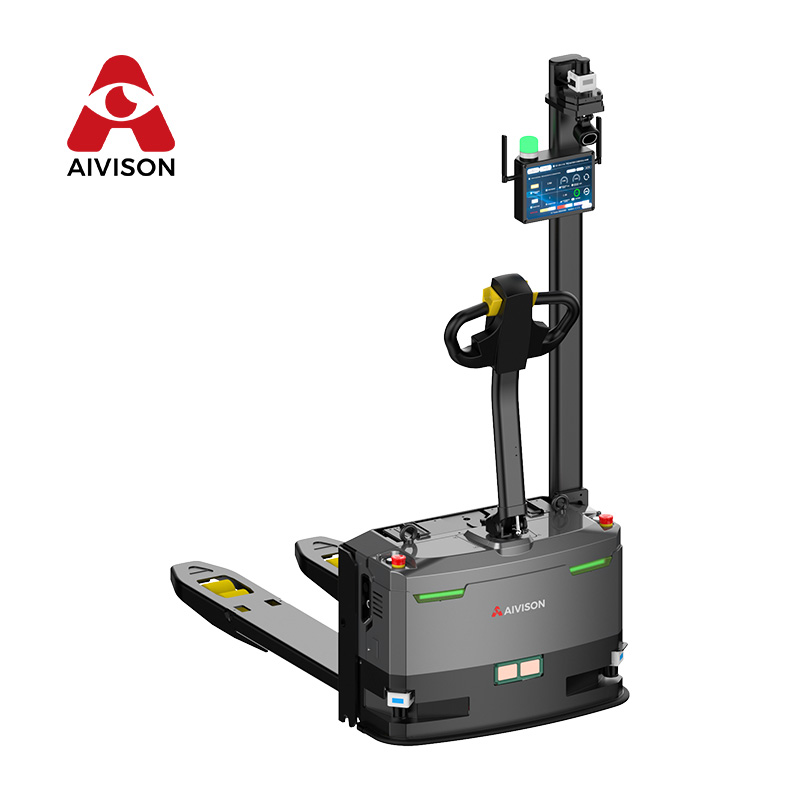
Laser SLAM Navigation 1500kg AGV Forklift
Compact 1.5-ton platform for narrow aisles, mixed pedestrian traffic, and changing layouts. Useful for electronics, retail distribution, and urban warehouses.
View product →
Omnidirectional Mobile Manipulator AMR with Dual 7-DOF Arms
Composite mobile robot for advanced manufacturing and integrator projects. Laser SLAM mobility plus robotic manipulation for precision handling in semiconductor, medical, and electronics workflows.
View product →Why Smart Pallet Forklifts Are Gaining Ground in the Philippines
Search demand for smart pallet forklift suppliers in the Philippines is becoming more specific: buyers now compare laser SLAM autonomous forklifts, 1.5-ton and 2-ton stacker AGVs, reach AGVs, jacking robots, and OEM mobile manipulators by workflow rather than by brochure capacity.
Automation must fit the building, not fight it
The Philippines is no longer a wait-and-see market for warehouse automation. E-commerce fulfilment around Metro Manila and Cebu, PEZA-anchored electronics and semiconductor manufacturing in Laguna, Cavite, and Batangas, cold-chain expansion near ports, and 3PL operators serving Luzon, Visayas, and Mindanao all push buyers to look beyond manual forklifts.
The constraint is rarely the idea of automation. It is finding a supplier or wholesaler who can match laser SLAM navigation, local pallet handling, spare-parts responsiveness, and a realistic return on investment. A smart pallet forklift is not simply a forklift that drives itself; it is a navigation system, safety package, fleet controller, charging strategy, and material-flow design working together.
In many Philippine warehouses, the most important design choice is trackless navigation. Instead of rebuilding the floor or installing fixed rails, the operations team maps the existing site, defines routes, and deploys. That matters when 3PL client zones change, when e-commerce peaks require temporary staging, or when a PEZA production line is rebalanced.

Manufacturer-level engineering and mobile robot assembly for end users and system integrators.
Trackless Laser SLAM
A supplier should map your building rather than sell fixed infrastructure. Laser SLAM uses natural features and safety lidar to navigate at ±5 mm; a QR camera at selected stations can upgrade docking to ±2 mm.
Load & Fork Compatibility
Match 1.5-ton and 2-ton platforms to pallet width, fork length, rack beam height, floor conditions, and center of gravity. A site drawing and load table are more useful than a catalogue photo.
Fleet Scheduling
Multiple robots should share traffic rules over the site Wi-Fi. Ask how missions are allocated, how charging is queued, and how manual forklifts are integrated into the same traffic plan.
Custom Top Modules
For Philippine 3PL, manufacturing, and cold-chain projects, the top module determines value: stacker fork, jacking unit, roller conveyor, or robotic arm for direct machine interfacing.
Philippines Market Trends That Affect Smart Forklift Procurement
These local operating realities should shape the technical brief you send to any supplier or wholesaler.
E-commerce Fulfilment Density
E-commerce and quick-commerce fulfilment around Metro Manila and Cebu reward warehouses that replenish pick faces faster. A smart pallet forklift reduces travel between receiving, staging, and put-away; the value comes from repeated short trips, not from replacing every manual forklift.
PEZA & Advanced Manufacturing
PEZA locators in Laguna, Cavite, Batangas, and Clark often run high-mix production with frequent changeovers. Laser SLAM lets routes and drop points be updated in software, which suits lines rebalanced more often than the building changes.
Labor Turnover & Safety
Forklift turnover and safety training are recurring costs. Autonomous pallet movers handle repetitive runs and reduce exposure at blind-corner traffic points. They do not remove safety protocols, but they make predictable routes easier to standardize.
Racking Density Near Manila
Warehouse rents near Manila push operations toward higher racking and denser storage. High-bay work is where ±2 mm QR-assisted docking and reach-type AGVs matter; ±5 mm may be sufficient for floor transfer but not for precise fork entry at height.
Cold Chain & Food Distribution
Cold storage and food distribution require a realistic review of condensation, floor condition, hygiene routines, and charging. The robot is only one part of the change; buyer checklists should include washdown rules, pallet quality, and emergency recovery.
Port-Adjacent 3PL Flexibility
Manila, Subic, and Batangas 3PLs often reconfigure client zones. Trackless robots reduce reconfiguration cost because they can be remapped without moving magnetic tape or installing floor codes throughout the building.
Where Smart Pallet Forklifts Fit Philippine Operations
These scenarios reflect common material-flow patterns in Philippine warehouses, factories, and industrial parks.
Metro Manila 3PL & Distribution
Receiving-to-staging transfers, replenishment, and empty pallet returns. Recommended: 2,000 kg stacker AGV or laser navigation reach AGV with fleet scheduling for multi-client zones.
Laguna / Cavite Electronics
Line-side material delivery and finished-goods transfer with clean, repetitive routes. Recommended: 1.5-ton autonomous forklift, 1,500 kg SLAM forklift, or jacking robot for rack transport.
Batangas / Bulacan Food & Cold Chain
Pallet movement into staging and dispatch with stable pallet quality. Recommended: industrial unmanned pallet forklift; confirm cold-store condensation and charging requirements during project review.
Cebu Retail & Wholesale
Distribution centers serving Visayas retail with mixed pallet types and seasonal route changes. Recommended: laser SLAM forklift or jacking robot with quick remapping and Wi-Fi fleet dispatch.
Clark / Subic Export Manufacturing
Flexible zones, PEZA workflows, and custom equipment interfaces. Recommended: OEM custom AGV with roller, conveyor, or jacking top module built around the production line.
High-Bay Storage
Racking density and precise fork entry near Valenzuela, Bulacan, or Cavite. Recommended: reach AGV with laser SLAM plus QR assist at pick faces where ±2 mm positioning is required.
Match the Right Robot Type to Each Philippine Workflow
Use this comparison to separate a low-cost catalogue sale from a workable automation project.
Navigation Precision Comparison
What These Values Mean in Practice
±5 mm is usually sufficient for pallet transfer, line-side delivery, and warehouse staging. ±2 mm is relevant for high-shelf storage, precision docking, and wafer or electronics handling. Composite robots with robotic arms are project-specific and should be reviewed with the production equipment interface in mind.
Why Marnix Is a Practical Wholesale Partner for Philippine Automation Projects
Shenzhen Marnix Intelligent Technology Co., Ltd. supplies laser SLAM AMRs, jacking robots, smart forklifts, composite robots, and charging docks to end users and system integrators worldwide.
About a Decade of AGV Engineering
Marnix draws on about ten years of AGV manufacturing experience, with Shenzhen-based R&D and production. That background matters to Philippine buyers who need a supplier able to discuss floor layout, pallet conditions, and commissioning rather than only selling a unit.
Complete Portfolio, One Navigation Core
Jacking robots, smart forklifts, pallet AMRs, composite robots, and compatible intelligent charging docks come from one source. Mixed fleets share software and navigation logic, simplifying procurement for 3PLs and integrators.
Precision Matched to the Station
±5 mm laser SLAM avoids auxiliary tracks and floor QR codes. Adding a QR scanning camera raises accuracy to ±2 mm. Composite robots with 6-axis arms can reach ±0.05 mm repeatability for demanding electronics and medical-device workflows.
Manufacturer-Level Customization
Chassis and top modules can be engineered around real production equipment: jacking units, roller conveyors, forklift forks, and robotic arms. This is valuable when a Philippine line has existing conveyors or machine handover points.
Quality and Fleet Control
Multi-stage intelligent inspection and operational stress testing target reliable uptime. An intelligent scheduling system manages robots over indoor Wi-Fi for simultaneous task assignment, traffic control, and automatic charging through compatible smart docks.
Verified Credibility
Marnix has been assessed onsite by TÜV Rheinland, serves as a supplier to a Fortune 500 company, and maintains credit, transaction, and trade-capacity records. More than 200 manufacturers across three continents have worked with Marnix robots.

Quality inspection and robot testing before shipment—critical for overseas projects where downtime is expensive.
What to Prepare Before Requesting a Wholesale Quotation
From project experience, these six inputs determine most of the robot selection. Sharing them upfront shortens evaluation from weeks to days.
Load Profile
Maximum weight, pallet dimensions, fork opening, load center, and center of gravity for racks, pallets, or carriers to be moved.
Site Layout
CAD drawing or sketch with aisle widths, doors, ramps, slopes, elevator or lift points, rack heights, and pedestrian zones.
Throughput Target
Missions per hour, peak periods, shift patterns, and charging windows. These values set fleet size and dock count.
Docking Precision
Where ±5 mm is enough and where ±2 mm QR assist or robotic-arm-level precision is required. Over-specifying every station adds cost.
Digital Infrastructure
Wi-Fi coverage, access-point density, firewall rules, and ERP, WMS, or MES interfaces that the robot fleet must communicate with.
Service Plan
Spare-parts expectations, operator training, remote support, local partner availability, and escalation process for emergency recovery.
Questions Asked by Smart Pallet Forklift Buyers in the Philippines
Practical answers for warehouse owners, factory engineers, 3PL operators, and system integrators evaluating autonomous pallet handling.
What is the difference between a smart pallet forklift and a standard forklift?
A standard forklift depends on a human operator for steering, pallet engagement, safety judgment, and route planning. A smart pallet forklift uses laser SLAM or QR-assisted navigation, safety sensors, and fleet software to execute repeated missions autonomously. The goal is not to automate every movement; it is to remove predictable, repetitive travel so trained operators can focus on complex handling, loading docks, and exception management.
Do I need to modify the floor for laser SLAM navigation?
No. Standard laser SLAM maps existing natural features, so magnetic tape, reflectors, and floor QR codes are not required through the main routes. QR labels are only added at stations where ±2 mm docking precision is needed. For Philippine sites with floor joints, ramps, or mixed traffic, a site survey should still confirm route feasibility, safety zones, and charging placement.
Can autonomous forklifts handle Philippine pallet sizes and load conditions?
In most cases, yes, but the load profile must be documented rather than assumed. Buyers should provide pallet width, depth, height, maximum weight, fork opening, load center, rack beam height, and whether pallets are wooden, plastic, or uneven. The supplier should then confirm fork length, lift height, wheel configuration, and safety derating. A 2,000 kg platform is not automatically correct for every 2,000 kg load if the center of gravity is poor.
Are these systems suitable for PEZA locators and 3PL warehouses?
They can be, especially where routes are repetitive and layouts change. PEZA manufacturers often need line-side delivery and finished-goods transfer, while 3PLs need pallet movement between receiving, staging, storage, and dispatch. Trackless navigation is beneficial when client zones are reconfigured. However, integration with Wi-Fi, WMS, fire safety rules, and local maintenance procedures should be reviewed before purchase.
What navigation accuracy is enough for high-bay storage?
For high-bay racking, ±2 mm QR-assisted docking is often the safer specification because fork entry at height is less tolerant of positioning error. For floor-level pallet transfer, line-side delivery, and staging, ±5 mm laser SLAM is usually sufficient. Composite robots with robotic arms are a separate category for precision assembly and should be evaluated against the equipment interface, not only against warehouse navigation accuracy.
How should a Philippine buyer evaluate ROI?
Start with repeated trips, labor hours per shift, safety incidents, forklift utilization, damaged pallets, and floor space used for staging. Then compare those numbers with robot throughput, charging time, fleet size, training, and service costs. A realistic calculation includes the cost of manual forklift turnover and the value of stabilizing material flow across shifts. Avoid comparing only the robot purchase price with one operator salary.
What support is available after shipment?
Support should be defined before the order: remote commissioning, operator training, English documentation, spare-parts list, troubleshooting escalation, and whether local service partners are available. Marnix supports end users and system integrators with manufacturer-level customization and project evaluation. For Philippine projects, confirm Wi-Fi readiness, floor plans, and on-site responsibilities before shipment to reduce commissioning delays.
How do I request wholesale pricing or an OEM configuration?
Send your load profile, site layout, throughput target, docking precision, rack height, and any required top module such as forks, jacking unit, roller conveyor, or robotic arm. Include photos of pallets and floor conditions. A useful quotation should specify navigation configuration, battery and charging strategy, safety features, commissioning scope, and training. Contact Us to start the evaluation.
Request a Philippines-Specific Smart Forklift Proposal
Share your load profile, warehouse layout, throughput target, rack height, and precision requirements. Our engineers will recommend a practical smart pallet forklift, AMR, or OEM configuration for your Manila, Cebu, Laguna, Cavite, Batangas, Clark, or Subic project.
Contact UsWholesale and integrator inquiries are welcome. Please include pallet photos, CAD or sketch, and target go-live timing.