Smart Pallet Forklift Supplier & Exporters for Boston
Laser SLAM AGV forklifts, AMR pallet stackers, and material-flow engineering for Boston, Massachusetts warehouses, biotech campuses, cold-chain facilities, electronics manufacturers, and system integrators. Compare payload, docking precision, floor readiness, fleet software, and export support before you request a quote.
8 Pallet Automation Products for Boston Buyers and Integrators
The eight products below show the range most often screened by Boston procurement teams: compact warehouse AMRs, 2,000 kg laser forklifts, CE-certified pallet stackers, humanoid robot chassis for service or research, and LiDAR components for local machine builders. Each card preserves the original catalogue URL so your engineering team can review the full specification before contacting the supplier.
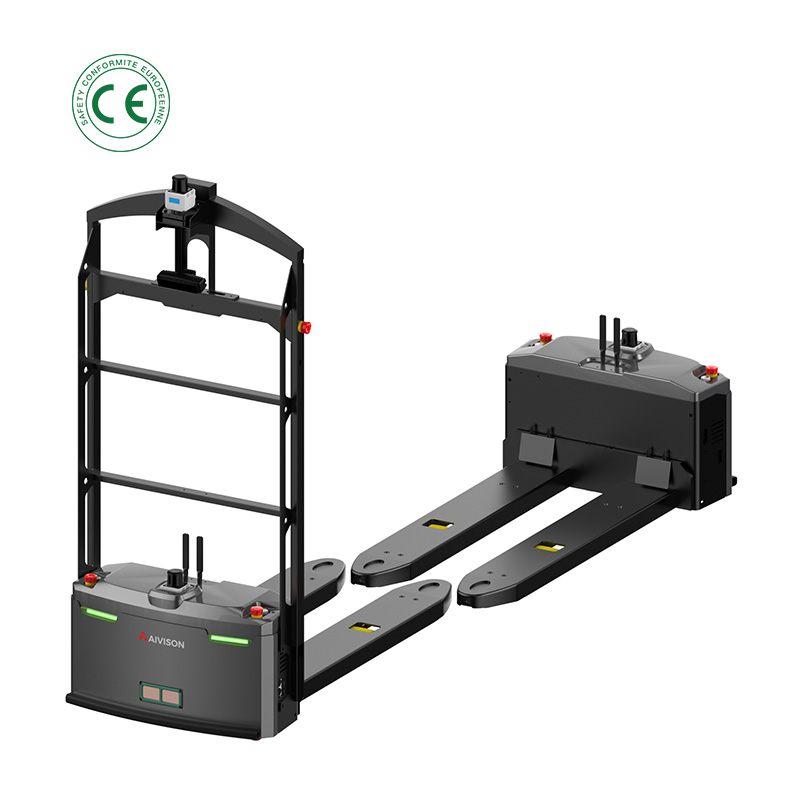
Aivison Customized 800kg Warehouse AGV Robot Lithium Battery AMR
A compact 800 kg warehouse AMR for lithium-battery, 3C, and light assembly flows where a full-size forklift is too large. Use it as a flexible transfer platform when Boston floor space is tight.

Omnidirectional Service Humanoid Robot Chassis Dual 7-DOF Arms Laser SLAM Navigation for Hospitality and Retail
Dual 7-DOF arms, laser SLAM, and omnidirectional movement for hospitality, retail, and public-facing service pilots. Best treated as a research or front-of-house platform, not a pallet mover.

Humanoid Robot Chassis Dual 7-DOF Arms Laser SLAM Omnidirectional Navigation ROS2 Open Platform AMR
An ROS2 open-platform humanoid chassis for integrators building advanced mobile manipulation applications. The dual-arm architecture supports custom end-effectors and laser SLAM navigation.
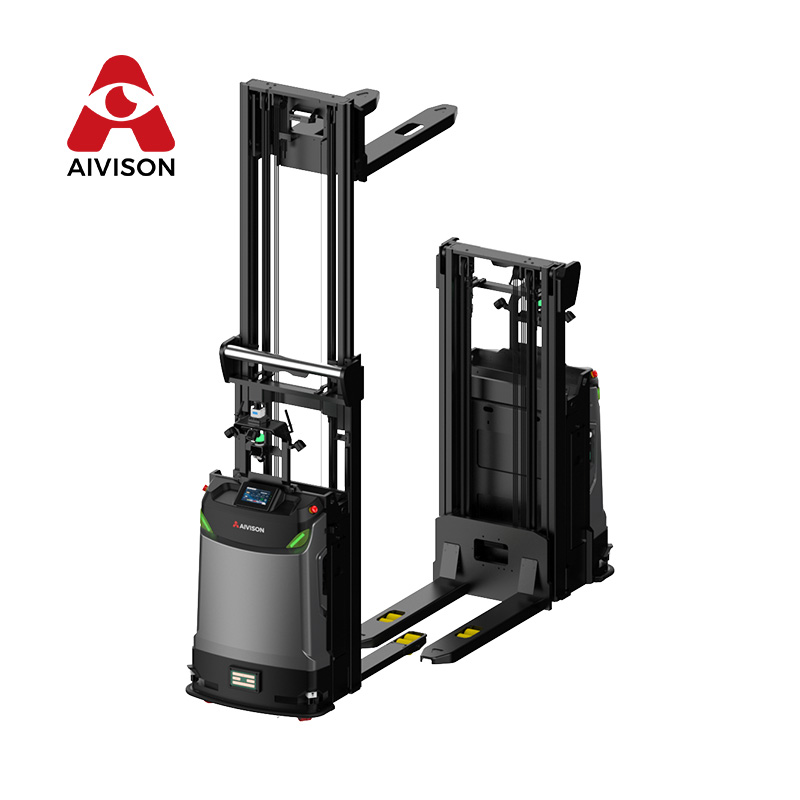
High Precision AGV Forklift Full Servo Motor Controlled Laser Forklift with Heavy Load 2000kg
A 2,000 kg servo-controlled laser forklift for high-value production and warehouse interfaces. Full servo control and ±5 mm SLAM navigation support stable pallet pick-and-place.
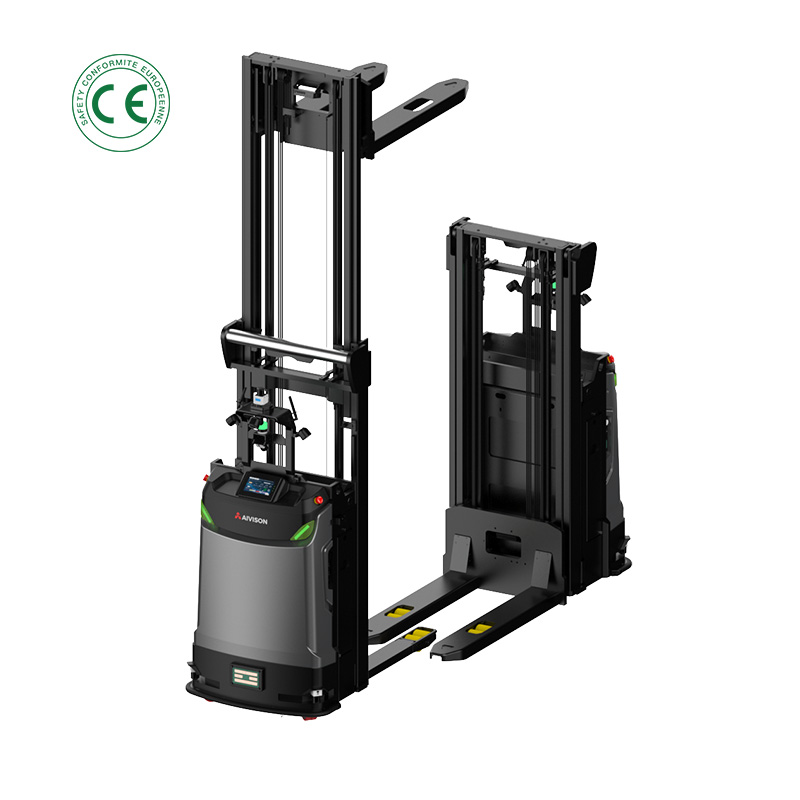
Factory AMR Robot AGV Robot Laser 2000kg Forklift AGV for Industrial Material Handling
A factory-focused 2,000 kg laser forklift AGV for industrial material handling between receiving, WIP, and dispatch. A practical shortlist item for Boston 3PL and manufacturing projects.
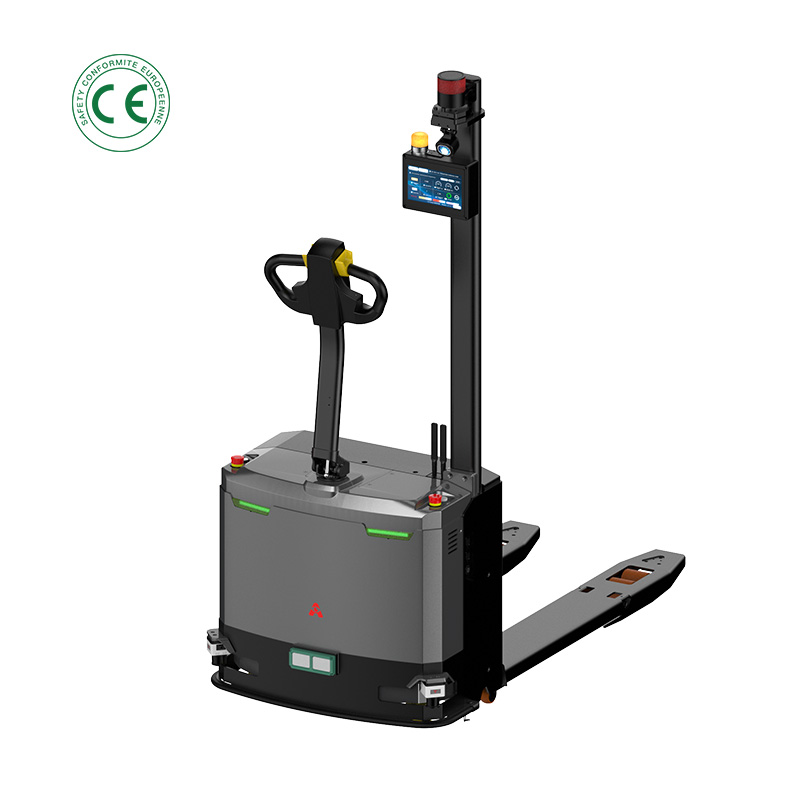
Autonomous Mobile Robot AMR AGV Forklift Pallet Stacker CE Certificate for Smart Warehouse and Production Line Automation
A CE-certified AMR forklift and pallet stacker for smart warehouse and production-line automation. Best when the project needs enclosed safety systems and integrator-ready fleet coordination.

Heavy Load 2000KG Load Forklift Laser Guide AMR for Warehouse Pallet
A heavy-load 2,000 kg laser-guided forklift AMR for warehouse pallets, tall racking, and repeatable transport tasks. Review aisle width and pallet condition before final model selection.

Hot Selling Logistics Navigation Detector Sensor Lidar Manufacturers Direct Sales
A logistics navigation LiDAR sensor sold direct from the manufacturer for local AGV, AMR, and machine-builder teams. Useful for prototype or sub-assembly projects that need a navigation core component.
Years in AGV Engineering
Shenzhen-based R&D and manufacturing experience.
Laser SLAM Accuracy
Natural-feature navigation without floor tape or reflectors.
With QR Assist
Use QR labels only where station docking demands it.
Manufacturers Served
Across three continents, including integrator projects.
Company-reported figures from Shenzhen Marnix Intelligent Technology Co., Ltd. Confirm current test records, certificates, and project references during procurement.

Why Boston Is Not a Generic Pallet-Forklift Market
Boston concentrates several material-flow problems into a compact geography. Seaport and South Boston warehouses operate near dense traffic and limited loading space; Cambridge, Somerville, and the Longwood area hold research and life-science sites that expect clean, traceable, and quiet material movement; Chelsea, Everett, and the port-facing belt support food, cold chain, and 3PL operations; and the broader Route 128 manufacturing base needs repeatable moves between machining, test, and shipping cells.
In older buildings, floor condition, door widths, fire doors, and rack tolerances can matter as much as payload. A supplier that only quotes a forklift specification without asking for a CAD layout is not enough. Boston buyers should ask for a route plan, safety concept, exception strategy, and export schedule before comparing price.
- Brownfield retrofits: standard laser SLAM maps natural features without magnetic tape or reflectors.
- Mixed traffic: dynamic avoidance for people, pallets, and manual forklifts.
- Precision stations: QR assist only where ±2 mm handover is required.
- Export coordination: English documentation, crating review, and commissioning planning.
Boston Trends Reshaping Pallet Automation
Boston projects are shaped by real-estate pressure, quality expectations, cold-chain peaks, and global shipping. These are the trends most useful to discuss during an early supplier review.
Brownfield Retrofits
Older warehouses in South Boston, Charlestown, and Chelsea cannot always stop for floor reconstruction. Laser SLAM avoids tape and reflectors, but door thresholds, aisle widths, and fire doors still need a measured survey.
Life-Science Traceability
Cambridge and Longwood operations value repeatable material movement, clear exception logs, and controlled interfaces between storage, labs, and shipping. Ask suppliers how task data can support internal quality reviews.
Cold-Chain and Peak Resilience
Food, grocery, and e-commerce flows around Boston face seasonal peaks and tight delivery windows. Automation should be sized for peak missions per hour, not average demand, with charging capacity planned for the same window.
Port-Adjacent 3PL and Export
Conley Terminal, Logan Airport, and New England forwarders connect Boston to global supply chains. Export staging requires documentation, packing discipline, and a supplier that can coordinate English manuals and commissioning plans.
Where Smart Pallet Forklifts Fit in Greater Boston
Use these scenarios to decide whether a compact AMR, a 2,000 kg laser forklift, or a mixed fleet is the better first step.
Life Sciences and Biotech Campus Logistics
From Longwood to Kendall, biotech and medical-device campuses move samples, consumables, and packaged goods between storage, labs, and shipping. A laser SLAM AMR with clear task logs can reduce manual pallet moves while keeping aisles clear.
South Boston and Seaport 3PL Fulfillment
3PLs near the Seaport face tight receiving windows and mixed pedestrian traffic. A pallet stacker or 2,000 kg forklift AGV can run repeatable put-away and replenishment routes while manual forklifts handle exceptions.
Cold Chain and Food Distribution in Chelsea/Everett
Food distributors need more than a fast robot. Review condensation, battery temperature, safety scanning, and washdown practice. Use a site risk assessment to decide which zones are ready for automation and which should remain manual.
Electronics and Robotics R&D in Cambridge/Somerville
Electronics and robotics teams need flexible transfer and open interfaces. The ROS2 humanoid chassis and LiDAR components can support R&D pilots, while production AMRs handle repeatable material movement between build cells and test stations.
Precision Manufacturing Along Route 128
Precision manufacturers need repeatable docking and stable cycle times. Servo-controlled 2,000 kg laser forklifts can link machining, metrology, and shipping cells without adding floor tape to clean or high-traffic production areas.
Conley Terminal and Logan Export Staging
Export staging demands documentation, packing, and predictable handover. A supplier with export experience can coordinate crating review, English manuals, and commissioning plans before equipment leaves Shenzhen for Boston or a New England forwarder.
Match Accuracy to the Station, Not to the Sales Brochure
One of the most common procurement mistakes in Boston is buying the highest precision on every mission. Most transfer, line-side, and put-away routes do not need floor codes.
Laser SLAM on natural features is usually enough for warehouse transfer and line-side delivery. Use QR labels only at stations that need ±2 mm handover. For composite robots with a six-axis arm, station calibration can reach ±0.05 mm repeatability. Matching accuracy to the station protects budget and avoids unnecessary floor work.
| Configuration | Accuracy | Floor Setup | Best For |
|---|---|---|---|
| Laser SLAM on natural features | ±5 mm | No tape, reflectors, or floor codes on standard routes | Warehouse transfer, line-side delivery, frequent layout changes |
| SLAM plus QR code camera | ±2 mm | QR labels only where precision docking is needed | High-shelf storage, precision docking, wafer handling |
| Composite robot with six-axis arm | ±0.05 mm | Station calibration and controlled interface design | Semiconductor, medical-device, and precision assembly |
Dynamic Avoidance
Lidar and safety sensing support mixed human and vehicle traffic. Final safety layout still requires a site-specific risk review and acceptance plan.
Wi-Fi Fleet Scheduling
The scheduling system coordinates simultaneous task assignment, traffic control, and charging over indoor Wi-Fi. Validate coverage before layout sign-off.
Auto Charging
Compatible intelligent charging docks support 24/7 duty cycles. Dock count should be calculated from shift pattern, travel distance, and battery window.
How a Boston Project Moves From Drawing to Fleet Recommendation
Boston projects rarely fail because a robot cannot move. They fail because the project team under-specifies the relationship between layout, throughput, and exception handling. The weighting shown here is an illustrative engineering screen, not a market statistic. It shows the order in which early-stage inputs usually constrain fleet size.
A good supplier should turn your inputs into a route map, a charging plan, a safety boundary, and a clear list of what remains manual. If the proposal only lists a robot model and a unit price, ask for the operating assumptions behind it.
What to Verify in a Smart Pallet Forklift Supplier and Exporter
Boston buyers comparing overseas suppliers need evidence, not just a catalogue. Shenzhen Marnix Intelligent Technology Co., Ltd. is a Shenzhen-based manufacturer with about ten years of AGV engineering experience. Its range includes laser SLAM AMRs, jacking robots, smart forklifts, composite mobile robots, LiDAR components, and charging docks.

Manufacturer-Level Customization
Chassis, payload, jacking units, roller conveyors, forklift forks, and six-axis arms can be engineered around the process instead of forcing a standard platform into a difficult Boston building.
Precision Without Floor Rework
Standard laser SLAM maps natural features and requires no magnetic tape, reflectors, or floor QR codes. Add QR only where ±2 mm docking is justified by the station interface.
Fleet Scheduling Over Indoor Wi-Fi
Multiple robots can be coordinated for task assignment, traffic control, and automatic charging. For Boston sites, Wi-Fi coverage and IT security must be reviewed before commissioning.
Composite Robotics Capability
AMR mobility plus robotic arms or roller modules supports machine tending and precision handover. Multi-layer synchronization is stated at ±0.05 mm repeatability for suitable station designs.
Quality and Test Protocol
Multi-stage intelligent inspection and operational stress testing are used before shipment. Ask for the test record, safety concept, spare-parts list, and commissioning scope for your project.
Independently Assessed Credentials
Marnix states an onsite supplier assessment by TÜV Rheinland, Fortune 500 supply experience, and more than 200 manufacturers served across three continents. Verify current documents for your procurement file.
TÜV Rheinland Onsite Assessment
Company premises and operations assessed by an independent inspection body. Use the current report and certificate package to support supplier onboarding.
Fortune 500 Supplier Evidence
Trade history and procurement experience can be reviewed during due diligence. Ask for relevant references, not only product photos.
Verified Multispecialty Supplier
Low-MOQ customization and multi-category robot procurement capability may help integrators assemble mixed fleets from one manufacturer.
Credit and Trade Records
Transparent credit index and transaction history support export risk review. Confirm the latest records before issuing a deposit or letter of credit.
What to Prepare Before Requesting a Boston Quote
From our project-review experience, these six inputs determine most robot selection and fleet-sizing decisions. Sharing them upfront can shorten evaluation from weeks to days.
Payload and Load Profile
Share maximum weight, pallet or rack footprint, center of gravity, and load condition. The difference between an 800 kg AMR and a 2,000 kg laser forklift starts here.
Site Layout
Provide CAD or a measured sketch with aisle widths, door openings, dock levelers, slopes, elevators, and no-go zones. Older Boston buildings often hide constraints in door thresholds and column spacing.
Throughput and Peak Windows
Estimate moves per hour, peak windows, shift pattern, and exception rate. Fleet size and charging-dock count depend on peak demand, not average demand.
Docking Precision
Mark which stations truly need ±2 mm and which can accept ±5 mm. Over-specifying precision increases cost and floor maintenance without improving throughput.
Wi-Fi and IT Integration
Confirm access-point coverage, roaming behavior, cybersecurity requirements, and integration with WMS, ERP, or MES. Fleet scheduling depends on stable indoor Wi-Fi.
Equipment Interfaces
List conveyors, machines, racks, elevators, and fire doors the robot must interact with. Top-module selection follows the interface, not the other way around.
A Better ROI Comparison Than Price per Robot
Labor and Shift Coverage
Compare the cost of repeatable moves per shift with the robot's realistic availability, including charging, maintenance, and manual exception handling.
Safety and Damage Reduction
Quantify damage to racks, pallets, doors, and products. A stable laser-guided forklift route can reduce repeated impacts caused by fatigue and tight schedules.
Space and Flow
Automation can release aisle space or improve dock-turn time, but only when the route plan avoids blocking manual forklifts and pedestrian paths.
Uptime and Service
Ask for spare-parts recommendations, response process, remote diagnostics, and commissioning support. Boston sites should define escalation before the first shift goes live.
Common Local Procurement Questions
These are the questions most often raised by Boston buyers evaluating laser forklifts, pallet AMRs, and export delivery.
Can a smart pallet forklift operate in an older Boston warehouse?
Often yes, but the building must be surveyed. Laser SLAM maps existing features, so standard navigation does not require magnetic tape or reflectors. The real constraints are aisle width, floor flatness, door thresholds, fire doors, Wi-Fi coverage, and mixed-traffic safety. Send measured drawings and photos; the supplier should confirm whether a 2,000 kg forklift AGV or a smaller pallet AMR is appropriate.
Should we choose an 800 kg AMR or a 2,000 kg laser forklift?
Start with the load, not the robot class. An 800 kg warehouse AMR suits light assembly, 3C, and battery-line transfers. A 2,000 kg laser forklift is better for loaded pallets, rack interfaces, and heavy material handling. If loads vary, design for the worst credible pallet plus a safety margin, then verify fork dimensions and load center.
Do we need QR codes, tape, or reflectors on the floor?
No for standard laser SLAM routes. QR labels are added only where a station needs ±2 mm docking, such as high-shelf storage or precision machine handover. This hybrid approach keeps most aisles free of floor infrastructure while protecting the few interfaces that need higher accuracy.
How should we review local safety and compliance for a Boston site?
Treat safety as a project file, not a spec sheet. Ask for the robot safety concept, E-stop and obstacle-detection design, manuals, and CE documentation where applicable. For U.S. deployment, have your local AHJ, insurer, and safety team review the installation against applicable requirements, including ANSI/ITSDF B56.5 and NFPA 70 where relevant. CE certification alone does not replace a U.S. site risk assessment.
Can the robot connect to our WMS, ERP, or conveyor PLC?
Yes, integration is project-specific. Marnix supplies fleet scheduling and supports system integrators. Prepare API documentation, PLC protocols, task states, exception rules, and cybersecurity requirements. A pre-project interface workshop is cheaper than discovering a protocol gap during commissioning.
What should we send for an export quote to Boston?
Send payload, load footprint, layout drawing, aisle widths, throughput target, docking precision, Wi-Fi coverage, equipment interfaces, destination zip code, required Incoterm, and preferred delivery window. If your site is in a biotech, cold-chain, or regulated environment, include cleaning, documentation, and audit requirements. Export crating, English manuals, and commissioning scope should be clarified before the quote is finalized.
Request a Boston Pallet-Flow Review
Share your layout and load profile. The supplier can recommend whether an 800 kg warehouse AMR, a 2,000 kg laser forklift, or a mixed fleet is the better starting point for your Boston site.