Robot Control System Supplier & Suppliers Serving the Frankfurt Market
A procurement-grade guide to laser SLAM AMRs, jacking robots, smart forklifts, charging docks and VDA 5050-ready fleet control for Frankfurt factories, warehouses and system integrators.
8 Robot Control System Products Recommended for Frankfurt Projects
These eight products connect mobile robotics with real material-flow tasks: pallet movement, rack transport, LiDAR navigation, laser-guided AMR transfer, 800 kg warehouse AMR handling, 1500 kg SLAM forklift work, autonomous stacking and 1.5-ton smart forklift delivery. For Frankfurt buyers, the value is not a single robot—it is a control architecture that can mix payloads, integrate with WMS or MES, and scale from one aisle to a multi-building site.
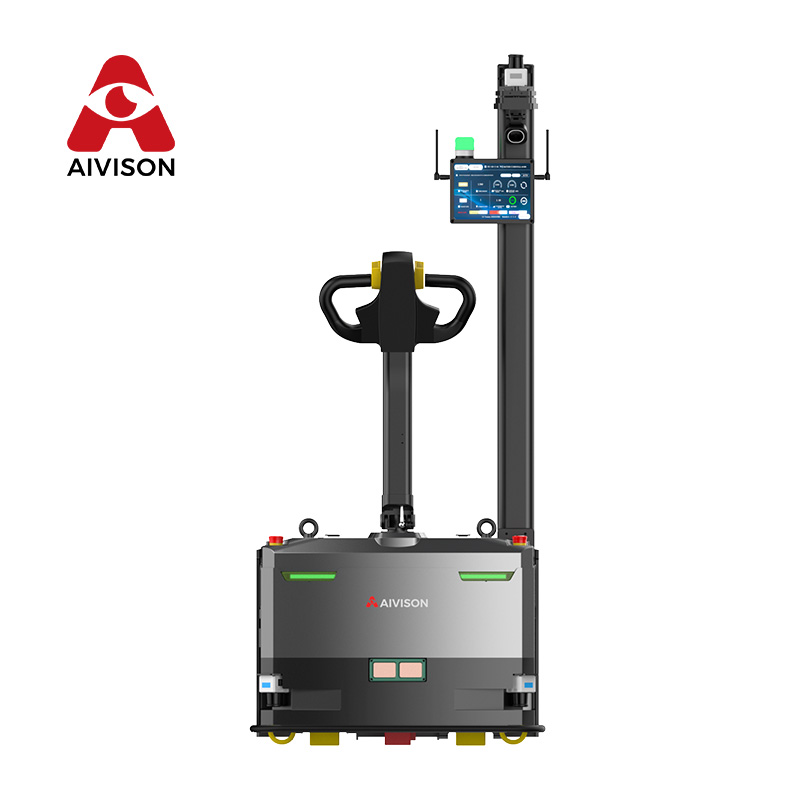
China Factory Movable Pallet AGV Robot Rack Shelf for Intelligent Robot Warehouse
For scalable rack-to-station flow, where the rack becomes part of the automation system rather than a fixed shelf.
View product
Hot Selling Logistics Navigation Detector Sensor Lidar Manufacturers Direct Sales
Navigation sensing for logistics robots that must map natural features, avoid mixed traffic and operate without floor tape.
View product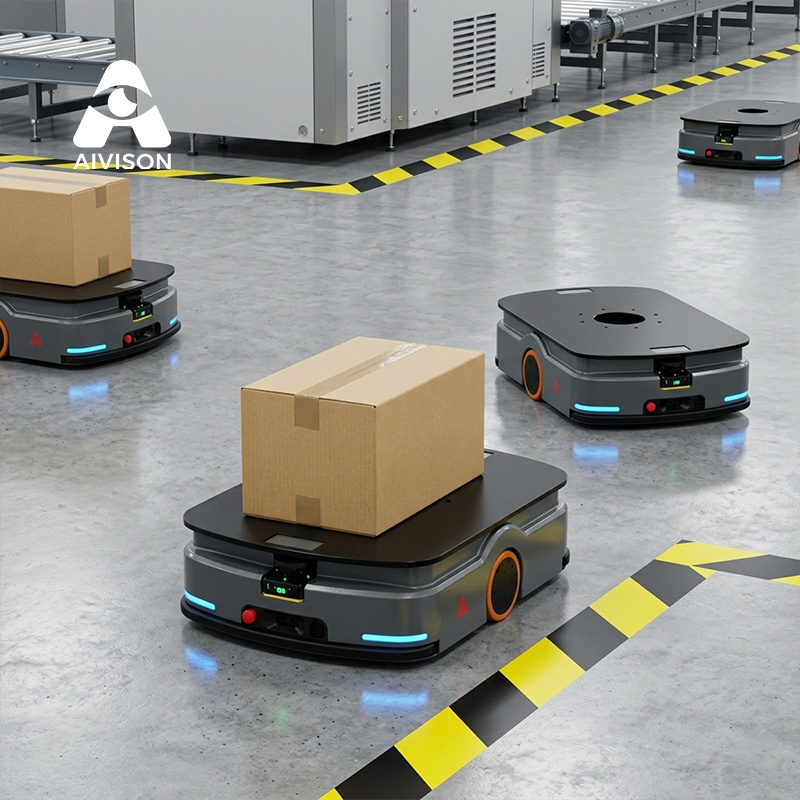
Autonomous Mobile AMR Robot 300kg Payload Laser Guided AGV for Carry Goods in Factory
A compact laser-guided AMR for light goods, line-side delivery and narrow aisles where large forklifts reduce flexibility.
View product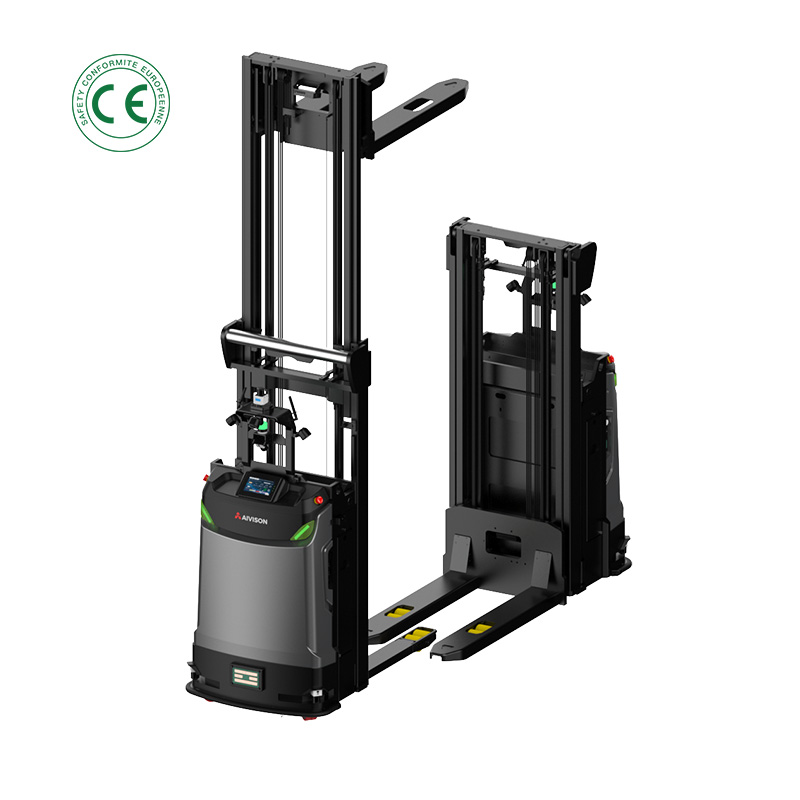
Factory AMR Robot AGV Robot Laser 2000kg Forklift AGV for Industrial Material Handling
Heavy-duty pallet handling for industrial material flow, with laser navigation and autonomous forklift behaviour.
View product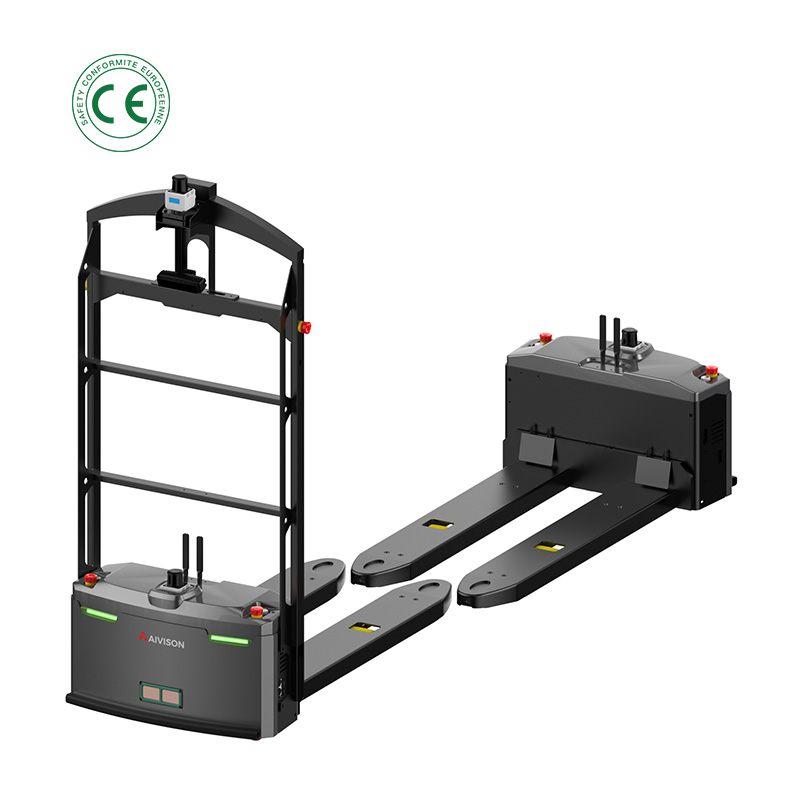
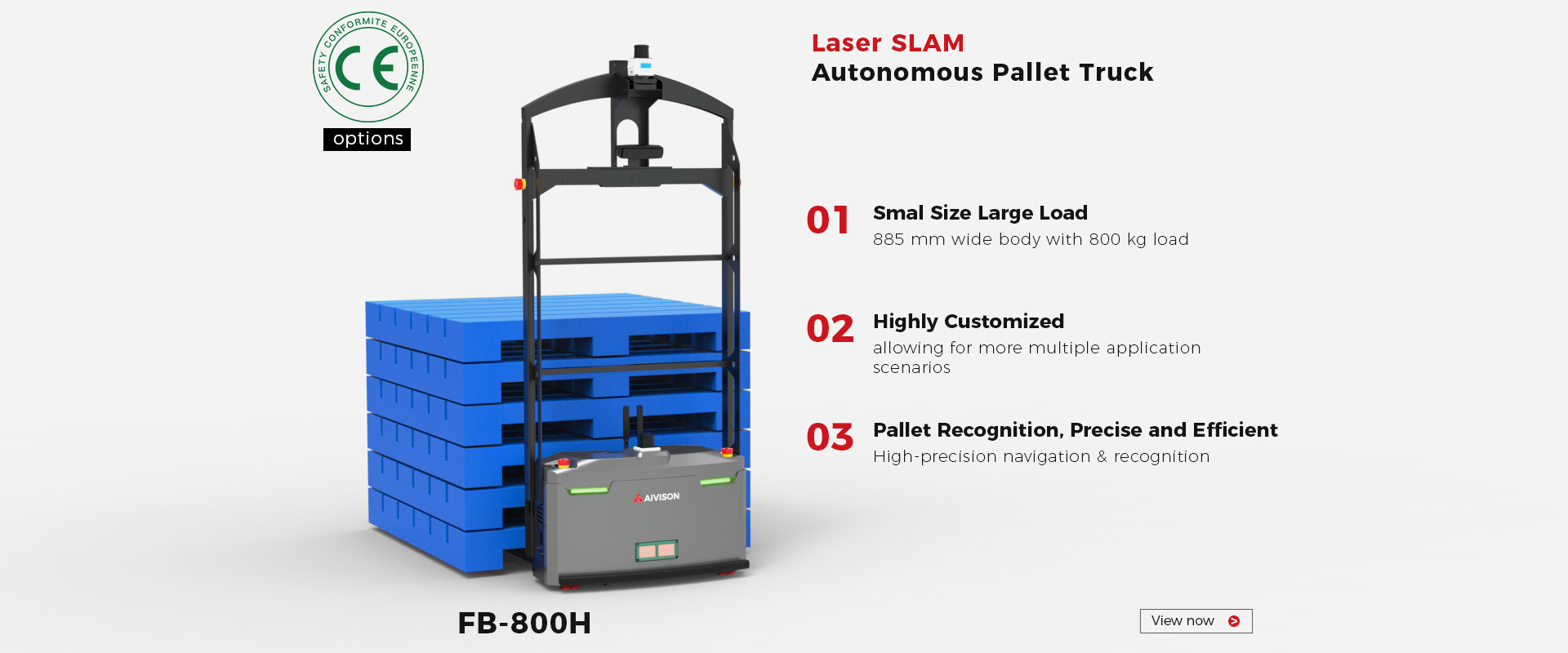
Aivison Customized 800kg Warehouse AGV Robot Lithium Battery AMR
A customized warehouse AMR with lithium battery operation for repetitive transport and scalable fleet deployment.
View product
Laser SLAM Navigation Automated Guided Vehicle Forklift agv 1500kg Load Capacity
Laser SLAM navigation for 1500 kg loads, suited to warehouses that need automated pallet movement without fixed tracks.
View product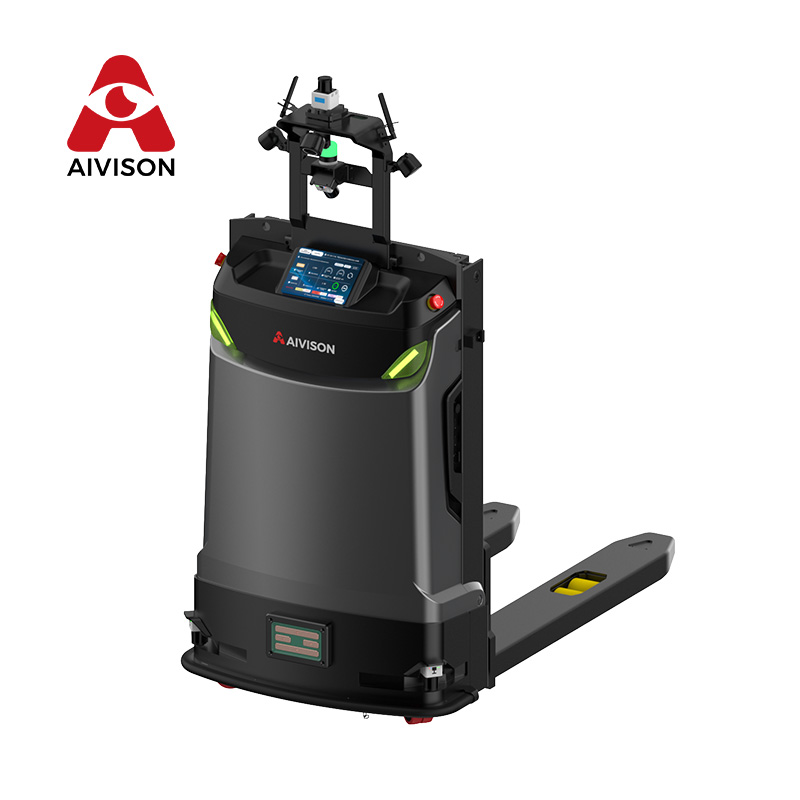
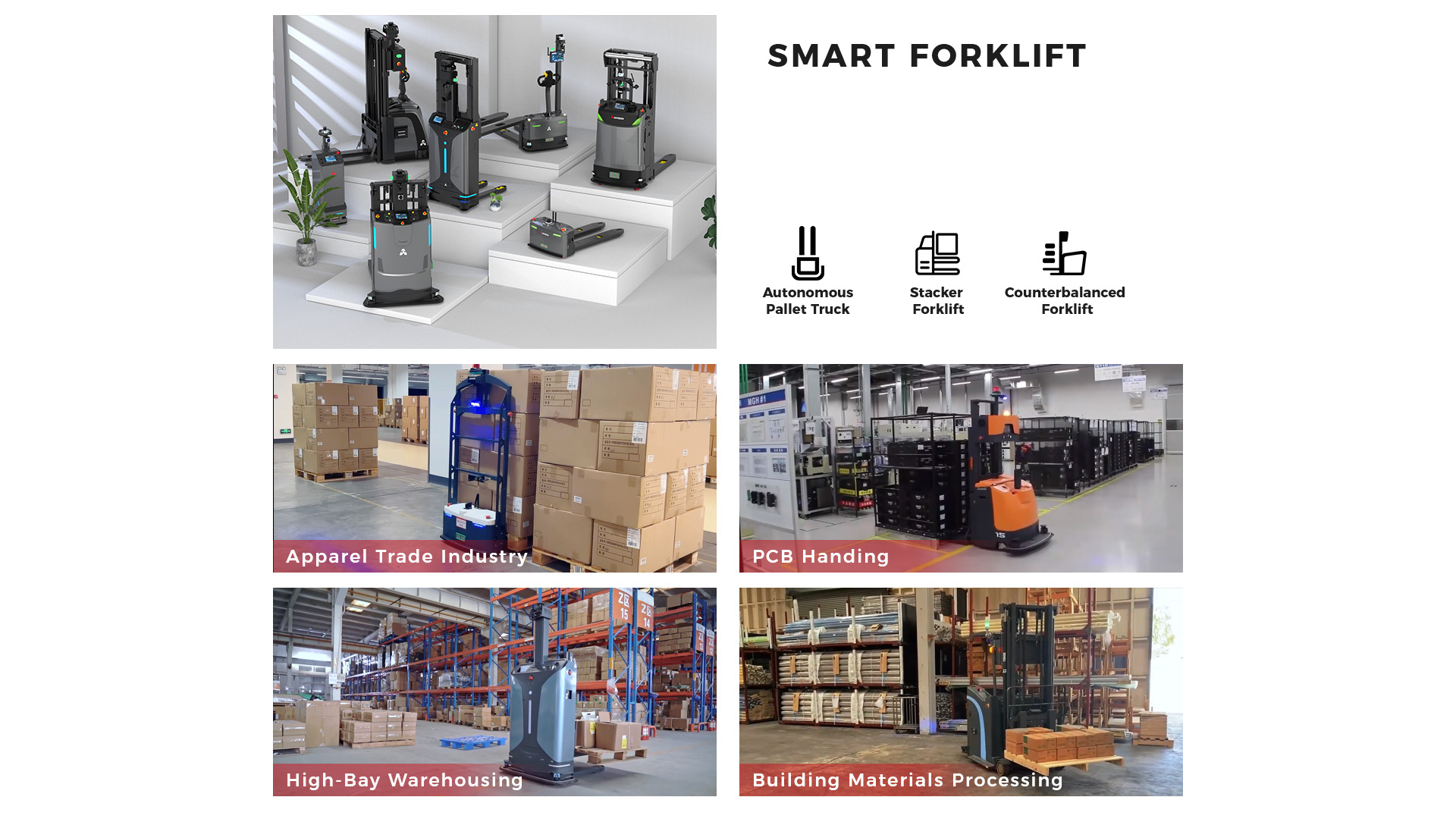
AGV AMR Autonomous Forklift Smart Version Auto Mobile Transfer Stacker Robot
Smart autonomous forklift and stacker behaviour for transfer tasks that combine horizontal travel with lifting.
View product
Aivison Stacker Truck Pallet Stacker Forklift Agv 1.5 Ton Autonomous Forklift Smart Deliver AMR Robot
An autonomous forklift for pallet stacking and smart delivery where repeatable fork entry and throughput matter.
View productWhy Frankfurt Buyers Should Evaluate the Control System Before the Robot
Frankfurt is not a generic German logistics market. It is a high-rent, high-throughput and compliance-aware region where a robot control system must coordinate mixed fleets inside existing buildings, connect to WMS, MES and ERP layers, and document safety for insurers, works councils and customers. Procurement teams searching for a robot control system supplier serving the Frankfurt market commonly ask three questions: can the system run on our existing Wi-Fi and floor plan; can it integrate with VDA 5050 and our warehouse software; and can our team be supported quickly in German and English? These questions are more important than the headline payload of a single AMR.
Shenzhen Marnix Intelligent Technology Co., Ltd. approaches the Frankfurt opportunity from the control layer outward. Its laser SLAM AMRs, jacking robots, smart forklifts, composite mobile robots and intelligent charging docks share a navigation core coordinated by an intelligent scheduling system over indoor Wi-Fi. With about ten years of AGV engineering experience, the company builds robots for semiconductor, 3C electronics, lithium battery, photovoltaic, automotive parts, PCB, textile and medical device production—industries that also shape the Rhine-Main industrial base. The practical result is a supplier conversation centred on throughput, safety files, interfaces and service—not only on unit price.
What a Frankfurt Robot Control System Supplier Must Prove
German procurement is rarely convinced by a demo alone. A credible supplier should provide evidence across safety, integration, precision, service and total cost of ownership. Use this framework to compare proposals and to expose gaps before a site visit.
CE and Safety File
Confirm how the machine is assessed against the applicable EU requirements, including ISO 3691-4 for driverless industrial trucks, EN 1175 where relevant and EN ISO 13849 for safety-related control performance. Ask for the boundary between robot, fleet manager, site infrastructure and integrator responsibilities.
VDA 5050 and APIs
Frankfurt warehouses often run mixed automation estates. A VDA 5050-ready fleet interface, clear REST or database APIs and documented master-data mapping reduce integration risk with WMS, MES and ERP systems.
Accuracy by Station
Do not over-specify precision everywhere. Laser SLAM at ±5 mm is sufficient for many transfer routes; a QR code camera at ±2 mm is useful for high-shelf docking; a composite robot with a 6-axis arm can reach ±0.05 mm repeatability.
Service and Spare Parts
Ask for response times, remote diagnostics, spare-parts categories, training language and escalation paths. For Frankfurt projects, a practical support plan combines remote engineering with scheduled commissioning and a clearly agreed onsite service window.
German Documentation
Operator manuals, risk assessments, training materials and maintenance instructions should be available in German for the local team, with English engineering documents for central groups and integrators.
Transparent TCO
Compare robot, fleet software, integration, charging infrastructure, training, spare parts and energy. A lower robot price can be outweighed by integration rework or a fleet licence model that is unsuitable for phased expansion.
Robot Control Scenarios in Frankfurt and the Rhine-Main Region
The Frankfurt market is shaped by air cargo, contract logistics, pharmaceutical and chemical production, automotive suppliers, machinery, electronics and medical technology. Each environment imposes a different mix of safety, cleanliness, throughput and traceability requirements.

Air Cargo and Contract Logistics
Around Frankfurt Airport and the wider Rhine-Main logistics belt, operations run against tight cut-off windows. A fleet control system should prioritise tasks by flight or truck departure, manage congestion at handover points and keep routes stable during peak surges. Laser SLAM reduces infrastructure work in leased buildings, while auto charging supports multi-shift duty.
Pharma, Chemical and Life Sciences
In pharmaceutical and chemical environments, traceability matters as much as cycle time. Robot control should log task execution, handover status and exceptions in a way that supports quality records. For clean or controlled zones, project teams should agree cleaning procedures, material compatibility and access rules with quality and EHS before commissioning.
Automotive and Machinery Suppliers
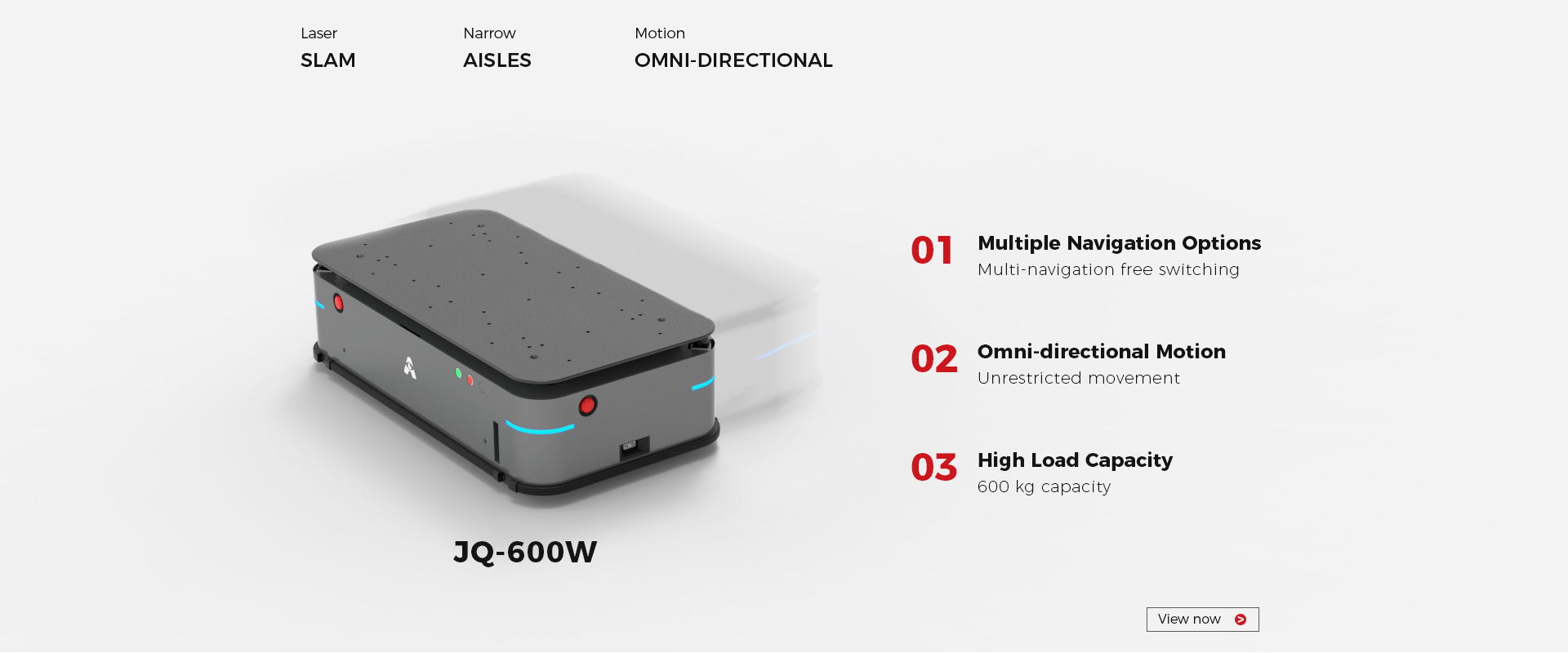
Frankfurt’s hinterland includes automotive and machinery suppliers with high product variation and frequent line changes. Jacking robots and low-profile AMRs can move racks and carriers between staging areas and lines without fixed conveyors. The key evaluation criterion is not only payload, but route reconfiguration time when a line layout changes.
High-Bay Warehouses and E-Commerce
High-shelf storage and e-commerce fulfilment require reliable docking more than high speed. Use ±5 mm laser SLAM for transport routes, then add QR-assisted ±2 mm docking only where the process demands it. This tiered approach avoids adding floor labels everywhere and keeps future layout changes economical.
Frankfurt Automation Trends That Affect Robot Control Decisions
The Rhine-Main market is moving toward interoperability, brownfield deployment and evidence-based safety. Buyers are less interested in isolated robots and more interested in fleets that can be expanded, audited and supported over a five-to-seven-year horizon.
VDA 5050 Becomes a Procurement Filter
As warehouses add robots from multiple vendors, the fleet interface becomes a governance issue. A control supplier that documents its VDA 5050 position and integration boundaries is easier to approve than one that relies on proprietary gateways alone.
Brownfield Sites Without Floor Rework
Frankfurt real estate is expensive and many buildings are leased. Laser SLAM mapping of natural features avoids magnetic tape and reduces tenant alterations. QR labels remain a targeted precision tool at selected stations rather than a site-wide requirement.
Labour Flexibility and 24/7 Duty
Shift flexibility, driver shortages and peak season volatility make autonomous charging and fleet scheduling more valuable than raw top speed. The control system should balance missions, charging windows and congestion in the same decision layer.
Energy-Aware Charging
German energy costs make charging strategy part of TCO. Opportunity charging, peak avoidance where feasible and right-sized battery capacity can reduce operating cost without compromising throughput.
Data Protection and Works Councils
Robot telemetry, camera use and performance monitoring can trigger employee consultation requirements. Project plans should define what data is collected, why it is needed, where it is stored and how access is controlled under GDPR principles.
Composite Robots for Complex Handovers
For semiconductor, medical device and precision electronics, a mobile chassis plus 6-axis arm can replace several manual handovers. Marnix composite robots target ±0.05 mm repeatability, but the process must still be validated at station level.
Match Navigation Accuracy to the Value of Each Task
A common source of over-budgeting is applying the highest precision everywhere. The more useful approach is to separate transport accuracy from docking accuracy and assembly repeatability, then design the control system around those zones.
| Configuration | Accuracy | Floor setup | Best-fit use case |
|---|---|---|---|
| Laser SLAM on natural features | ±5 mm | No tape, reflectors or floor codes | Warehouse transfer, line-side delivery, frequent layout changes |
| SLAM plus QR code camera | ±2 mm | QR labels only at precision stations | High-shelf storage, precision docking, wafer handling |
| Composite robot with 6-axis arm | ±0.05 mm | Station calibration | Semiconductor, medical device and precision electronics assembly |
A Manufacturer-Level Partner for Frankfurt Integrators and End Users

Engineering depth beyond a catalogue
Shenzhen Marnix Intelligent Technology Co., Ltd. is a Shenzhen-based AMR manufacturer with about ten years of AGV engineering experience. The portfolio covers jacking robots, smart forklifts, pallet AMRs, composite mobile robots and compatible intelligent charging docks. Instead of forcing a standard chassis into every process, Marnix customizes top modules such as jacking units, roller conveyors, forklift forks and 6-axis robotic arms to connect directly with production equipment.
- Fleet control over indoor Wi-Fi: simultaneous task assignment, traffic control and automatic charging coordination.
- Precision without unnecessary floor work: ±5 mm laser SLAM, ±2 mm with QR assist and ±0.05 mm composite repeatability.
- Independent verification: onsite supplier assessment by TÜV Rheinland, Fortune 500 supplier experience and more than 200 manufacturers served.
- Integrator-friendly delivery: chassis, top modules and fleet software supplied for system integrators building Frankfurt automation projects.

Quality is engineered before shipment. Marnix uses multi-stage intelligent inspections and operational stress tests to reduce failure risk on mission-critical lines. For Frankfurt buyers, this evidence should be combined with a site-specific risk assessment, operator training and a clear spare-parts plan. The company’s experience across semiconductor, 3C electronics, lithium battery, photovoltaic, automotive parts, PCB, textile and medical device industries provides a useful reference base, but every Frankfurt project still requires its own acceptance criteria.
A Market-Ready Path from Frankfurt Inquiry to Stable Fleet Operation
A structured rollout protects throughput during installation. The following six-step model is suitable for end users and system integrators evaluating a robot control system supplier for the Frankfurt market.
Requirement Snapshot
Share load profile, rack or pallet footprint, site plan, aisle widths, throughput targets and docking precision. Include Wi-Fi coverage and any lift or fire-door constraints.
Safety and Compliance Scoping
Define machine boundaries, risk-assessment ownership, CE documentation expectations and employee consultation needs. Agree which interfaces belong to the robot supplier and which belong to the integrator.
Simulation and Layout Validation
Model routes, handover points and charging locations. Check whether the proposed fleet can meet peak throughput without blocking emergency exits or disrupting existing forklift traffic.
Integration and Data Mapping
Map task orders from WMS, MES or ERP into the fleet manager. Confirm VDA 5050 scope, API behaviour, error handling, logging and data-protection controls.
Commissioning and Training
Run acceptance tests for mission completion, docking accuracy, traffic behaviour and charging. Train operators and maintenance staff in German and English, with a clear escalation path.
Scale and Optimise
Measure availability, cycle time and exception rate. Add robots, charging docks or QR-assisted stations only when the data shows a bottleneck, keeping the original control architecture intact.
“A Frankfurt procurement team should not have to choose between a low-cost robot and a production-ready control system. The supplier’s job is to make safety, integration, precision and service visible enough to compare before the purchase order—not after commissioning.”
Marnix project guidance for European integrators and end usersCommon Purchasing Questions from Frankfurt and Rhine-Main Buyers
These answers are written for procurement, engineering and operations teams comparing robot control system suppliers in Germany. Project-specific requirements should always be confirmed in a technical review.
Are Marnix robots CE marked and assessed to ISO 3691-4?
For Frankfurt projects, the CE and safety documentation must match the exact robot configuration, route and site conditions. Marnix robots are designed for industrial deployment and the project review should confirm the applicable conformity route, ISO 3691-4 assessment for driverless trucks, EN ISO 13849 safety functions and site-side risk controls. Ask for a responsibility matrix that separates robot, fleet manager, integration and customer infrastructure obligations.
Can the fleet control system support VDA 5050 and our WMS or MES?
VDA 5050 is a key interoperability topic in German logistics. Procurement should request the current interface scope, version, supported master data, task states and error handling. The same review should cover REST APIs, database integration or file-based exchange for WMS, MES and ERP. Marnix coordinates robots through an intelligent scheduling system over indoor Wi-Fi and customizes integrations around project requirements.
What local support is available for a Frankfurt installation?
A realistic Frankfurt support plan should define remote engineering hours, commissioning responsibilities, spare-parts categories, response targets and language coverage. Marnix works with end users and system integrators globally; for Rhine-Main projects, the commercial proposal should clearly state what is handled remotely, what is scheduled onsite and how urgent spare parts are expedited.
Do we need to modify the floor or install QR codes everywhere?
No. Standard laser SLAM navigation maps natural features, so there is no need for magnetic tape, reflectors or floor QR codes on ordinary transport routes. QR labels are added only at stations that require ±2 mm docking precision. This is valuable in leased Frankfurt buildings where floor alterations may require landlord approval or reinstatement.
How do you calculate ROI for a Frankfurt warehouse?
Use a transparent model: payback equals total investment—robots, fleet software, integration, charging, training and spare parts—divided by annual savings from labour hours avoided, error and rework reduction, energy delta and throughput improvement. Also include the cost of layout change and downtime. A pilot with measured cycle times is more reliable than a generic payback claim.
Can you customize top modules for our production line?
Yes. As a manufacturer, Marnix customizes chassis and top modules such as jacking units, roller conveyors, forklift forks and 6-axis robotic arms. This allows the mobile robot to connect directly with production equipment. For Frankfurt integrators, the important deliverable is a defined mechanical, electrical and software interface—not only a customized drawing.
How many robots and charging docks will we need?
Fleet size depends on missions per hour, route length, handover time, charging window and peak profile. A simulation should test the 90th-percentile peak, not only average demand. Include buffer capacity for blocked aisles, lift delays and seasonal peaks. The charging strategy should be designed together with the fleet scheduler to avoid queuing at shift changes.
What documentation and training should be provided in German?
Ask for German operator instructions, safety-related information, maintenance intervals, fault codes and training materials. Engineering documents may remain in English for central teams, but local operators and maintenance staff need usable German documentation. Training should include normal operation, emergency handling, battery or charging procedures and first-line troubleshooting.
How do you address data protection and employee consultation?
Define what telemetry is collected, whether cameras are used, where data is stored and who can access it. Apply GDPR principles such as purpose limitation and data minimisation. In German sites, involve the works council early if robot data could be used to monitor individual performance. The control system should report process exceptions and fleet state without unnecessary personal data.
How do we start a Frankfurt project evaluation?
Prepare a load profile, site layout, throughput target, docking precision map, Wi-Fi coverage and interface list. Then request a technical review and product catalogue. The fastest path is to share a CAD plan or sketch with aisle widths, handover points and peak volumes, so the supplier can recommend the right mix of AMRs, jacking robots, smart forklifts and charging docks.
Build a Frankfurt-Ready Robot Control Plan
Share your payload, floor plan, throughput target and docking precision requirements. Our engineering team will map the right combination of laser SLAM AMRs, jacking robots, smart forklifts, composite robots and charging infrastructure for your Rhine-Main project.