Eight Mobile Robot Platforms for QR-Assisted Wafer Handling Projects
For semiconductor wafer handling, the robot is only one part of the material-transfer cell. The strongest projects combine a stable mobile base, QR code docking at critical stations, a cleanroom-reviewed top module, and fleet scheduling that keeps wafer carriers moving without floor tracks. The platforms below show the range available from Shenzhen Marnix Intelligent Technology Co., Ltd. for end users and system integrators serving Greater Los Angeles.
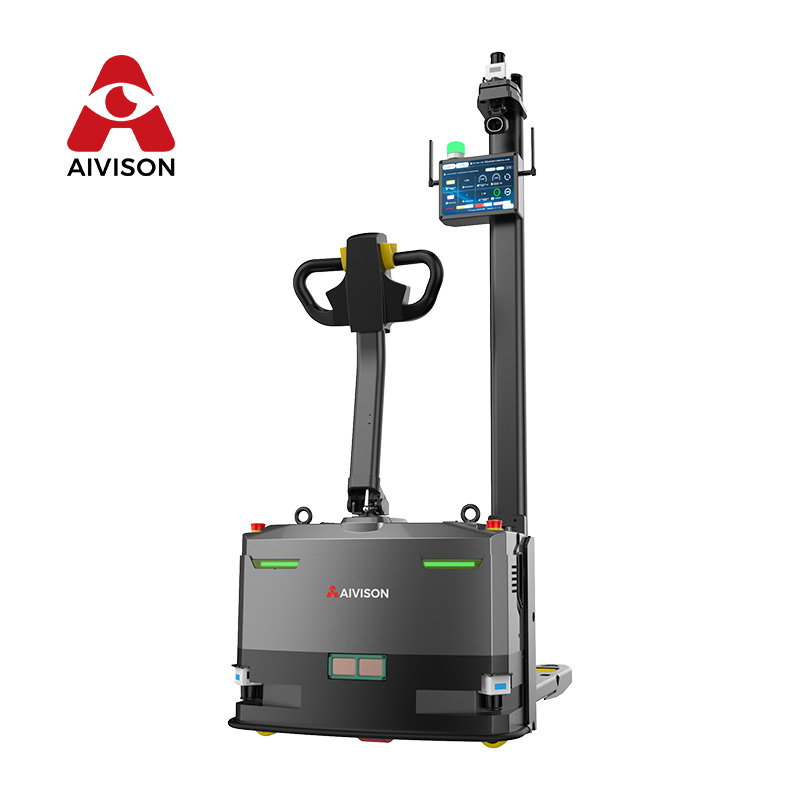
Customizable 1500KG Traction Capacity AGV Autonomous Mobile Robot Amr with Lidar Guided Sensor
Heavy-duty traction platform for wafer fab and advanced packaging logistics where stable towing and repeatable route execution matter.
View product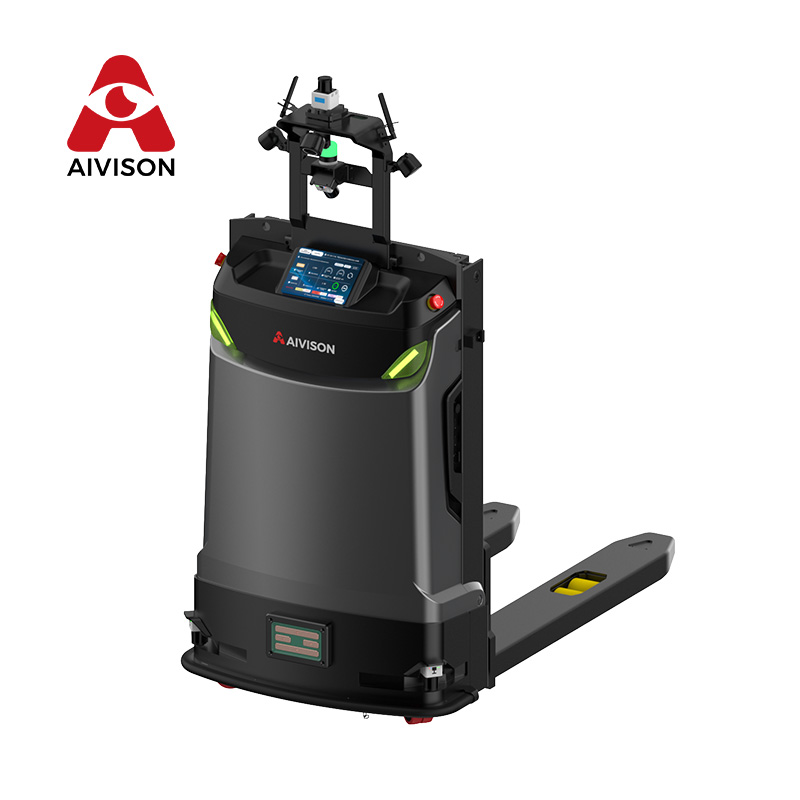
AGV AMR Autonomous Forklift Smart Version Auto Mobile Transfer Stacker Robot
Intelligent stacker configuration for palletized materials, consumables and packaging flow supporting semiconductor supply chains.
View product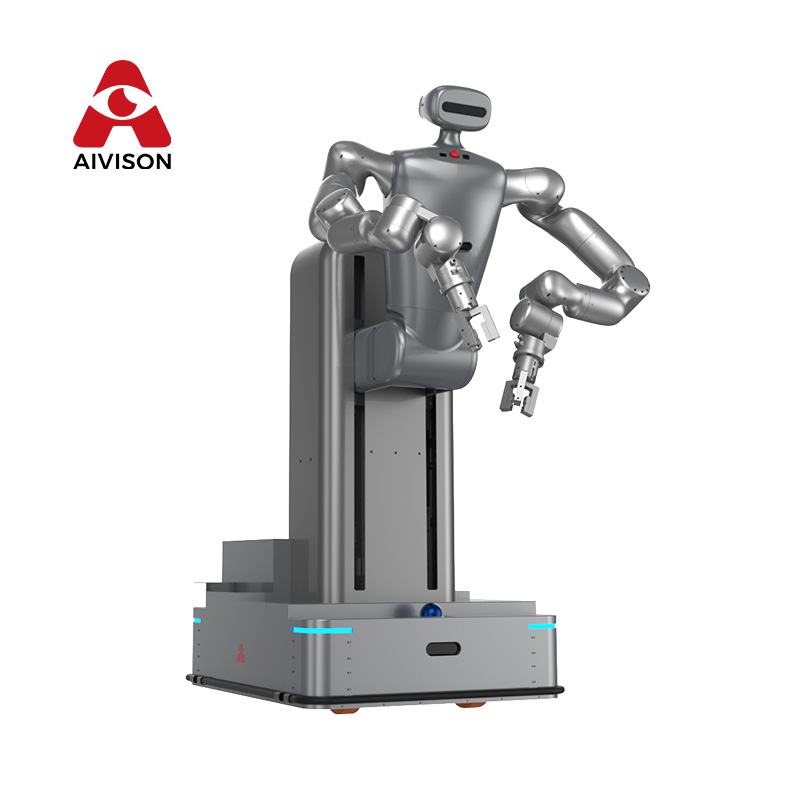
Omnidirectional Service Humanoid Robot Chassis Dual 7-DOF Arms Laser SLAM Navigation for Hospitality and Retail
Dual-arm mobile platform that can be adapted for controlled handling tasks and service workflows in high-value facilities.
View product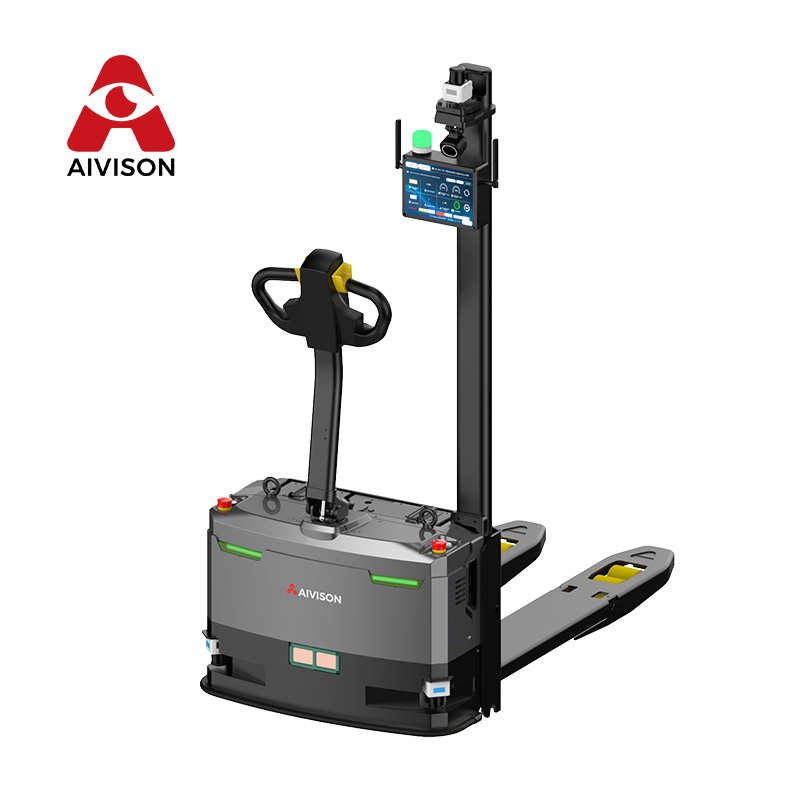
Aivison AGV Forklift High Quality Industrial Unmanned Pallet Forklift
Industrial unmanned pallet forklift for high-bay, warehouse and line-side transfer where pallet integrity and safety are critical.
View product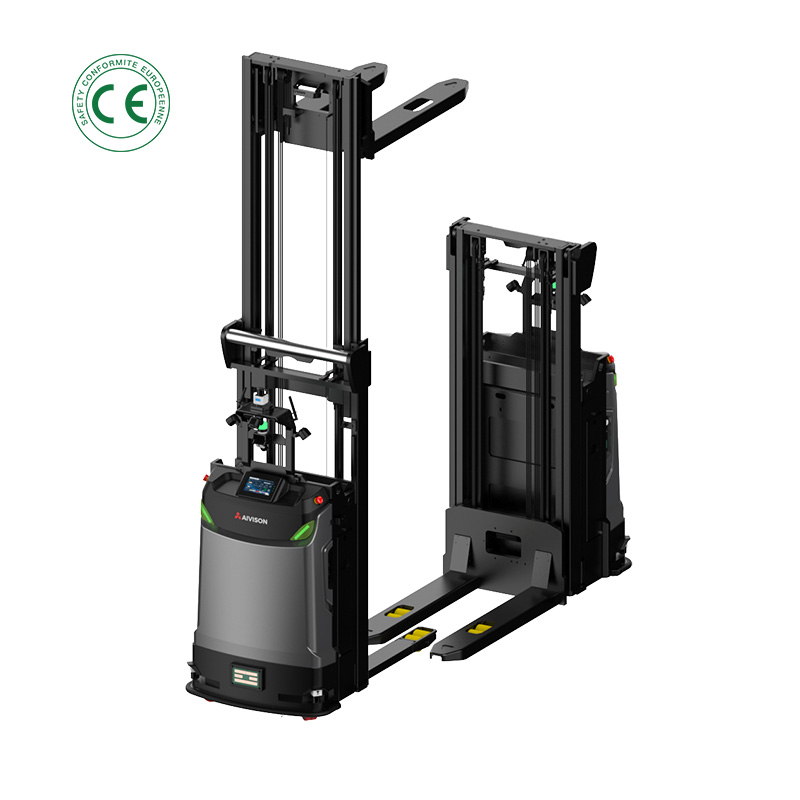
High-performance Intelligent Smart Automated Guided Vehicle 2000kg AMR Robot
2000 kg-class AMR for demanding material flow where payload, uptime and route flexibility must be balanced.
View product
Omnidirectional Humanoid Robot Chassis Dual 7-DOF Arms Laser SLAM Autonomous Warehouse AMR Mobile Platform
Composite mobile robot platform for integrators needing a mobile base plus upper-level manipulation, sensing or transfer modules.
View product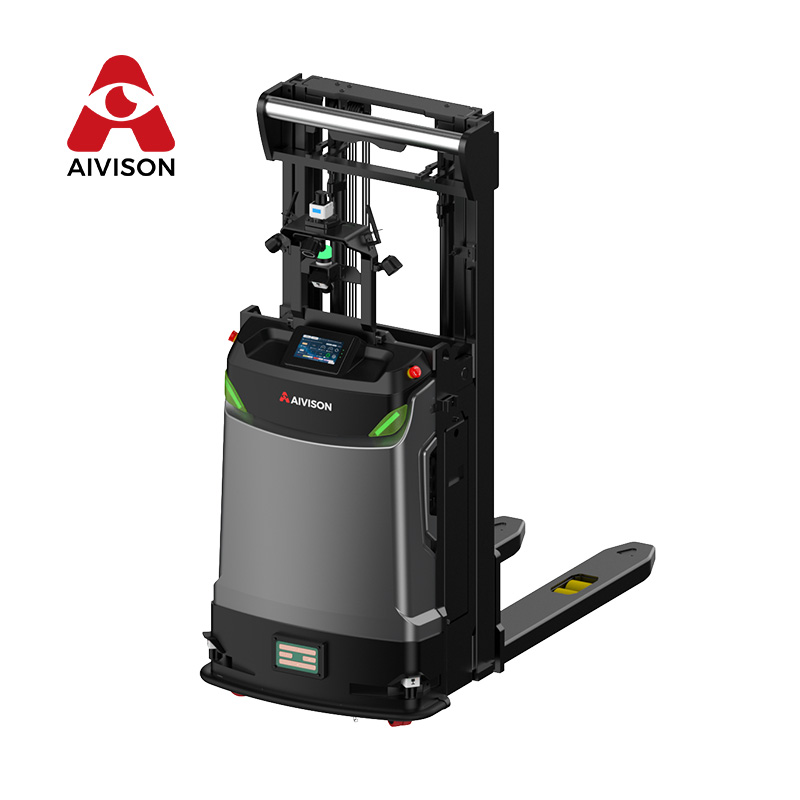
Heavy Load 2000KG Load Forklift Laser Guide AMR for Warehouse Pallet
Laser-guided heavy-load forklift AMR for pallet movement in warehouse, distribution and manufacturing support areas.
View product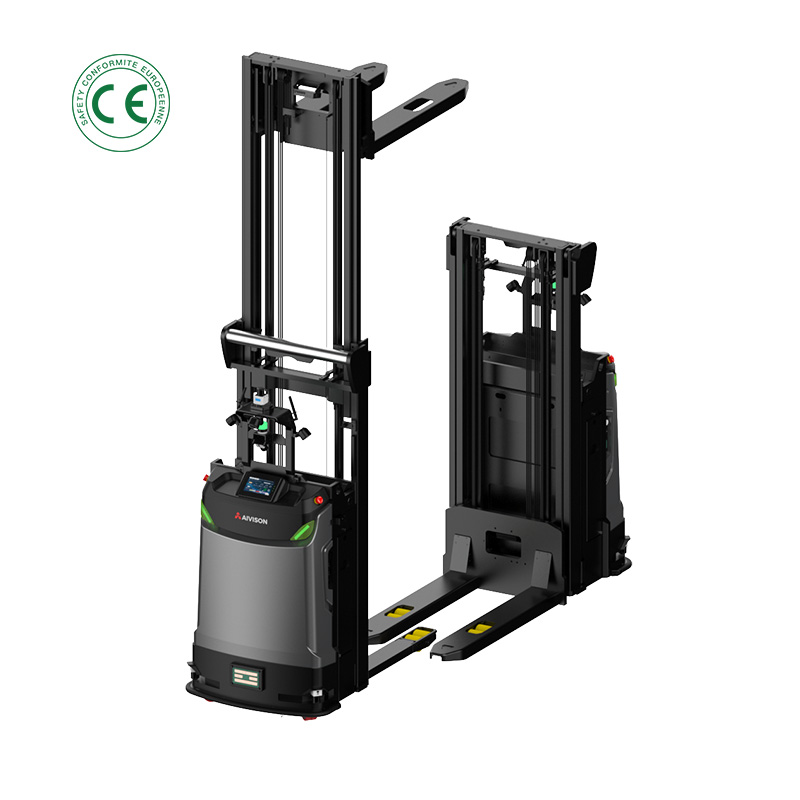
Factory AMR Robot AGV Robot Laser 2000kg Forklift AGV for Industrial Material Handling
Factory-focused laser forklift AGV for repetitive industrial material handling and integration with existing warehouse workflows.
View productWhy QR Code Scanning AMR Is Becoming a Material-Transfer Control Point in Los Angeles Semiconductor Facilities
Semiconductor wafer handling is not simply about moving a cassette from point A to point B. It is about maintaining carrier identity, route discipline, cleanroom behavior, docking repeatability and traceability across every handoff. In Greater Los Angeles, where advanced electronics, aerospace, defense microelectronics, medical devices and high-value logistics share the same constrained industrial real estate, the right AMR strategy is rarely “drive everywhere on QR codes” or “remove all floor marks.” The stronger model is hybrid: laser SLAM for global navigation, QR code scanning for local docking certainty, and software that treats every station as a controlled transfer node.
Separate Global Localization from Station-Level Precision
Many automation proposals blur two different engineering questions: Where is the robot in the building? and Is the robot aligned to the load port? Laser SLAM answers the first with natural-feature mapping and gives the fleet freedom to reroute around people, carts and maintenance activity. A QR code scanning camera answers the second at the exact station where a wafer carrier or FOUP must be transferred with repeatable alignment. This separation is valuable in Los Angeles facilities because it reduces floor infrastructure, shortens layout-change cycles and gives cleanroom managers a clear boundary between general vehicle traffic and controlled material transfer.
For a semiconductor wafer handling project, the QR label is best treated as a station calibration and identity checkpoint, not as a track. At selected load ports, metrology tools, stockers, purge stations or packaging cells, the robot reads a QR code to confirm the station, adjust final approach and authorize a handoff. Between stations, the AMR uses laser SLAM and safety sensors to navigate shared corridors. This hybrid approach can deliver ±5 mm global navigation, ±2 mm QR-assisted docking and, for composite robots with a 6-axis arm, up to ±0.05 mm repeatability for specialized operations after integration and calibration.
- Less floor disruption: no need to rebuild the entire facility with QR codes or magnetic tape.
- Traceable handoff: QR reads can be tied to station identity, task records and fleet scheduling events.
- Layout flexibility: global map updates are easier when only critical stations need physical QR labels.
 Manufacturer-level engineering: chassis, navigation, top modules and fleet software are developed together, not sourced as disconnected parts.
Los Angeles buying note: Do not over-specify QR coverage. A wafer-handling AMR project should map which stations truly require ±2 mm docking and reserve full-floor QR infrastructure only for legacy or highly constrained environments. This usually lowers installation time, floor maintenance and change-control overhead.
| Navigation Configuration | Typical Accuracy | Floor Setup | Best Fit in Semiconductor & High-Value Logistics |
|---|---|---|---|
| Laser SLAM with natural features | ±5 mm | No auxiliary tracks, reflectors or full-floor QR codes | Cleanroom corridors, warehouse transfer, line-side delivery and facilities with frequent layout changes |
| Laser SLAM + QR code scanning camera | ±2 mm | QR labels only at precision stations | FOUP/FOSB docking, stocker handoff, high-shelf storage, metrology and load-port alignment |
| Composite AMR + 6-axis arm | ±0.05 mm | Station calibration plus robot integration | Advanced packaging, medical device assembly and specialized semiconductor handling cells |
Where a QR-Assisted AMR Creates Measurable Value in Greater Los Angeles
The Los Angeles market is not a single manufacturing environment. It combines advanced electronics, aerospace and defense supply chains, medical device production, high-value warehousing, port-driven logistics and a growing battery and electric vehicle ecosystem. A robot strategy that works in a Torrance cleanroom may need a different safety and docking plan in an Inland Empire warehouse. The common thread is high-value material movement with limited tolerance for delay, damage or traceability gaps.
Semiconductor & Microelectronics Cleanrooms
For wafer carrier, reticle box and consumable movement between stockers, tool islands, metrology and packaging areas, hybrid SLAM + QR AMR can respect cleanroom traffic rules while confirming docking at critical points. Los Angeles-area teams should review particle, ESD, outgassing and cleaning requirements early, then match the top module and robot materials to the actual cleanroom class.
Aerospace & Defense Electronics Supply Chains
High-mix, low-volume production environments often need flexible routes and documented handoffs. An AMR can move kits, fixtures, inspection samples and sealed containers without dedicating a full conveyor line, making it easier to adapt to changing programs and security-controlled material workflows.
Medical Device & Biotech Operations
Los Angeles and Orange County medical device teams often handle trays, components and packaged goods with strict identification. QR station scanning supports controlled transfer checks, while laser SLAM navigation keeps routes adaptable as production lines evolve.
Battery, EV & Inland Empire Warehousing
As battery and electric vehicle supply chains expand across the broader Los Angeles and Inland Empire region, jacking robots, smart forklifts and heavy-load AMRs can reduce repetitive transfer, improve shift consistency and support high-throughput inbound and outbound flows from the ports of Los Angeles and Long Beach.
 Mixed-traffic material flow is a system design question: safety sensors, traffic rules, fleet scheduling and station behavior must be engineered together.
Los Angeles Automation Trends Shaping AMR Procurement Through 2028
Buyers in Los Angeles are not selecting AMRs in isolation. They are responding to land constraints, labor availability, supply-chain resilience, cleanroom quality requirements, cybersecurity reviews and the need to show measurable uptime. The most defensible robot projects align with these regional pressures rather than treating automation as a one-time equipment purchase.
Reshoring & Advanced Packaging
Federal semiconductor investment and private reshoring programs continue to emphasize advanced packaging, testing and resilient supply chains. AMR projects that can document station identity and transfer events are better positioned for quality audits than manually pushed carts.
High Land Cost & Dense Layouts
Los Angeles industrial space is expensive. Compact AMRs, jacking robots and narrow-aisle pallet platforms help teams increase throughput without expanding floor area or reconfiguring every aisle.
Labor Flexibility & Safety
Repetitive transport and pallet movement are difficult to staff consistently. Automating predictable transfers can redeploy skilled staff to inspection, maintenance and process control while reducing pedestrian–vehicle conflict when routes are properly engineered.
Traceability & Change Control
Semiconductor and medical-device customers increasingly expect digital records for material movement. QR station scans, fleet task logs and integration events can support internal traceability and change-control reviews.
Power Reliability & Auto Charging
Facilities are reviewing charging strategy as fleets grow. Intelligent charging docks and scheduling logic help avoid peak-demand conflicts and keep robots available across multiple shifts.
Integrator-Led Deployment
Los Angeles projects often involve controls integrators, cleanroom contractors and facility engineers. Manufacturers that support custom top modules, documentation and fleet APIs can reduce integration risk and shorten commissioning.
Where Los Angeles Buyers Typically Focus in an AMR Business Case
The percentages below are planning priorities drawn from common semiconductor and high-value logistics evaluations, not a guarantee of savings. The point is to show why the discussion should move beyond robot speed and compare total material-flow performance.
 Custom top modules—rollers, jacking units, forks or arms—connect the AMR to the production process instead of forcing the process to fit a standard cart.
Recommended Configurations by Semiconductor Wafer-Handling Scenario
Use this short list to structure a request for quotation. A proper recommendation should be based on carrier type, load weight, cleanroom class, route width, docking precision, throughput and required documentation.
FOUP / FOSB Transfer in Cleanroom Corridors
Recommended base: laser SLAM AMR with QR scanning camera at load ports; cleanroom-reviewed top module; fleet scheduling over indoor Wi-Fi. Why: ±5 mm global navigation is sufficient for corridor travel, while ±2 mm QR-assisted docking supports controlled station handoff.
Reticle, Sample & Fixture Movement
Recommended base: compact AMR or composite mobile robot with enclosed carrier and station verification. Why: high-value items benefit from route discipline, controlled access and clear transfer logs rather than manual handoff.
Consumables & Packaging Flow
Recommended base: 1500 kg traction AMR, jacking robot or pallet AMR. Why: repetitive movement of boxes, consumables and pallets can be separated from precision wafer-carrier transfer to avoid over-specifying every route.
Warehouse & Port-Supply Support
Recommended base: smart forklift, 2000 kg AMR or unmanned pallet forklift. Why: Los Angeles and Long Beach supply chains often require high-throughput pallet flow with reliable 24/7 scheduled runs and auto charging.
Advanced Packaging & Assembly Cell
Recommended base: composite AMR with 6-axis arm or roller conveyor module. Why: the robot becomes a mobile transfer cell that can align with equipment and perform repeatable pick-and-place after integration.
Integrator-Led Custom Project
Recommended base: customizable chassis plus OEM/ODM top module engineering. Why: system integrators serving Los Angeles need a manufacturer that can adapt payload interfaces, communications and fleet logic to project requirements.
What to Verify Before Trusting a QR Code Scanning AMR Manufacturer
Shenzhen Marnix Intelligent Technology Co., Ltd. presents a manufacturer profile built around roughly ten years of AGV engineering experience, a complete mobile robot portfolio, custom top-module capability and independent supplier assessment. For Los Angeles buyers, the strongest proof is not a slogan—it is the ability to align engineering, documentation and integration support with the actual material-transfer risk.
Manufacturer-Level Customization
Chassis, payload, jacking units, roller conveyors, forklift forks and 6-axis arms can be engineered around the production line. This matters when a semiconductor project requires a specific carrier interface, height, communication protocol or cleanroom material review.
Laser SLAM + QR Precision Stack
Laser SLAM delivers ±5 mm natural-feature navigation without auxiliary tracks or QR floor codes. A QR code scanning camera raises local docking accuracy to ±2 mm, while composite robots with 6-axis arms can reach ±0.05 mm repeatability after integration and calibration.
Fleet Scheduling & Charging
An intelligent scheduling system over indoor Wi-Fi coordinates task assignment, traffic control and automatic charging with compatible smart charging docks. This is essential for multi-robot semiconductor and warehouse environments where collisions and idle time directly reduce throughput.
Independent Supplier Assessment
The company has undergone an onsite supplier assessment by TÜV Rheinland. Buyers can review assessment and trade-capacity information before an RFQ. This supports procurement teams that need third-party context before shortlisting an overseas robot manufacturer.
Fortune 500 & Integrator Experience
Marnix states that it is a verified supplier to a Fortune 500 company and has served more than 200 manufacturers across three continents. Its robots are used in semiconductor, 3C electronics, lithium battery, photovoltaic, automotive parts, PCB, textile and medical device industries.
Quality Before Shipment
Multi-stage intelligent inspections and operational stress testing are used to target near-zero failure rates. For Los Angeles projects, ask for the project-specific factory acceptance checklist, documentation package, spare-parts list and commissioning plan.
 Reliability should be engineered and verified before shipment. The right supplier supports inspection, documentation and commissioning rather than treating delivery as the end of the project.
What to Prepare Before Requesting a QR Code Scanning AMR Proposal
From our project experience, a small number of inputs determine most of the robot selection and integration effort. Sharing these upfront shortens evaluation from weeks to days and helps the manufacturer recommend a realistic configuration instead of a generic datasheet.
01 · Load & Carrier Profile
Provide maximum weight, footprint, center of gravity and carrier type, including FOUP, FOSB, cassette, tray, pallet, rack or custom container. Include any required enclosure or purge feature.
02 · Cleanroom & Facility Rules
Share ISO class, ESD controls, particle limits, cleaning agents, doorway widths, floor slopes, elevator use, fire-sprinkler clearance and seismic or building-code review requirements for the Los Angeles site.
03 · Docking Precision Map
Identify every station and classify whether ±5 mm laser SLAM is sufficient or whether ±2 mm QR-assisted docking is required. Avoid adding QR labels everywhere; precision should be placed only where the process needs it.
04 · Throughput & Peak Demand
Provide moves per hour, peak periods, shift patterns, route distance and expected wait times. This determines fleet size, battery strategy, charging-dock count and scheduling logic.
05 · Wi-Fi, Power & Integration Interfaces
Document Wi-Fi coverage, access-point density, charging location, voltage, equipment protocols, MES/AMR interfaces and any cybersecurity review process required by the facility.
06 · Local Support & Spare Parts Plan
Define response expectations, spare-parts stocking, remote diagnostics, on-site commissioning, operator training and the role of the Los Angeles-area integrator or facility engineering team.
Local procurement note: Los Angeles projects often involve shipping through the Ports of Los Angeles and Long Beach, customs clearance, local rigging and an integrator’s commissioning schedule. Include delivery destination, site access constraints and required documentation in the RFQ so the factory can quote a complete plan rather than only a robot.
Los Angeles Procurement FAQ for QR Code Scanning AMR in Wafer Handling
Straight answers for semiconductor, advanced electronics, medical device and logistics teams comparing mobile robots for the Los Angeles market.
What is a QR code scanning AMR, and why use it for semiconductor wafer handling?
A QR code scanning AMR uses laser SLAM for general navigation and a camera to read QR labels at selected stations for precise docking and station verification. In semiconductor wafer handling, this hybrid approach is useful because the robot can move flexibly through cleanroom corridors while confirming alignment at load ports, stockers, metrology tools or other critical handoff points. It avoids the cost and maintenance burden of covering the entire floor with QR codes while still delivering station-level repeatability where needed.
Do we need to install QR codes across the entire Los Angeles factory floor?
No. Standard laser SLAM navigation maps the existing environment and can operate without magnetic tape, reflectors or full-floor QR codes. QR labels are typically added only at stations that require ±2 mm docking precision or where a station-identity checkpoint is valuable. This is especially important in Los Angeles facilities where production layouts change and floor space is expensive.
What navigation accuracy can Marnix AMRs achieve?
Laser SLAM on natural features reaches approximately ±5 mm positioning accuracy. Adding a QR code scanning camera raises local docking accuracy to approximately ±2 mm. Composite robots with a 6-axis arm can reach ±0.05 mm repeatability after integration and calibration. The correct choice depends on the carrier, station design and process tolerance, not on the largest number in a brochure.
Can the robot be customized for a cleanroom wafer-carrier interface?
Yes. As a manufacturer, Marnix can customize chassis and top modules such as jacking units, roller conveyors, forklift forks and 6-axis robotic arms. For semiconductor wafer handling, the project team should review cleanroom class, ESD, particle, outgassing, cleaning and carrier-interface requirements before finalizing the configuration. Final suitability should be confirmed through engineering review and, where required, site acceptance testing.
How are multiple robots coordinated in a wafer fab or warehouse?
Robots are managed by an intelligent scheduling system over indoor Wi-Fi, enabling simultaneous task assignment, traffic control and automatic charging with compatible smart charging docks. The facility should provide adequate Wi-Fi coverage and clear traffic rules. For Los Angeles projects, a site survey and integrator coordination plan should be part of commissioning.
Do you serve the Los Angeles market directly?
Marnix serves the Los Angeles market through factory engineering, export documentation, remote technical support and collaboration with local integrators and facility teams. The exact service model depends on project scope, spare-parts plan and commissioning requirements. Buyers should define response expectations and on-site support responsibilities before placing an order.
How long does a typical AMR project take from inquiry to deployment?
Timing depends on customization, cleanroom review, fleet size, integration complexity and shipping. A standard platform can move through quotation and engineering review relatively quickly, while a custom wafer-handling project requires more detailed review of carrier interface, station layout, safety, communications and acceptance criteria. Include your destination, site access constraints and target commissioning date in the first inquiry.
What should we send with our RFQ?
Send your load and carrier profile, facility layout, aisle widths, cleanroom and safety requirements, throughput target, docking precision map, Wi-Fi coverage, charging location, equipment interfaces and desired delivery date to Los Angeles. If you are working with an integrator, include their role and required documentation. This lets the factory propose a realistic robot, top module, fleet size and support plan.
Specify a QR Code Scanning AMR for Your Wafer-Handling Flow
Share your carrier type, cleanroom requirements, station layout, throughput target and docking precision. The Marnix engineering team can recommend a laser SLAM + QR-assisted AMR configuration, custom top module and fleet scheduling approach for your Los Angeles project.
info@marnixbot.comShenzhen Marnix Intelligent Technology Co., Ltd. · Room 102, Building P, No. 163 Ban Xuegang Avenue, Shenzhen, Guangdong, China