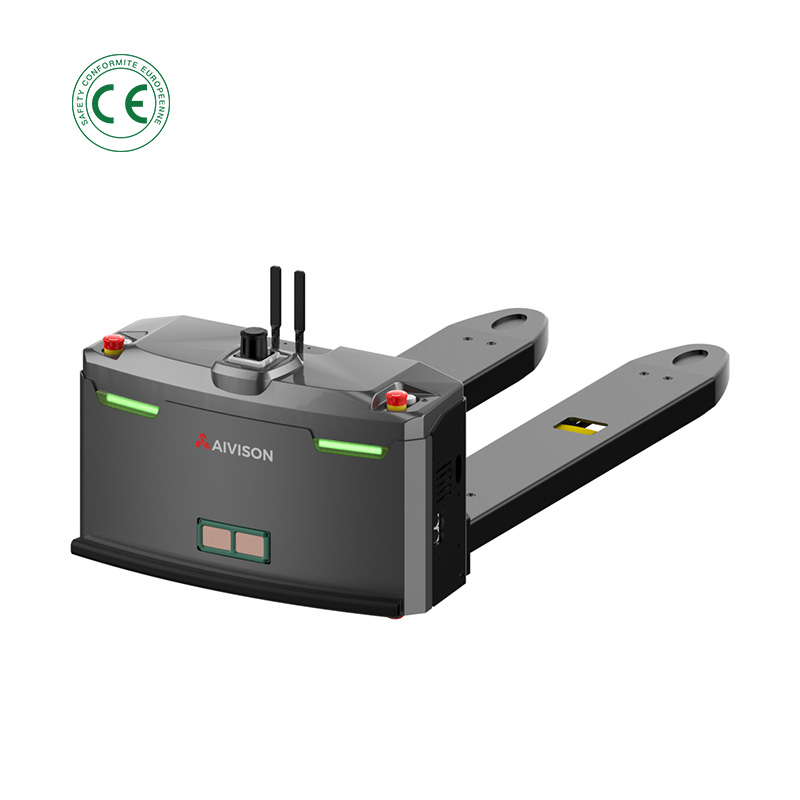
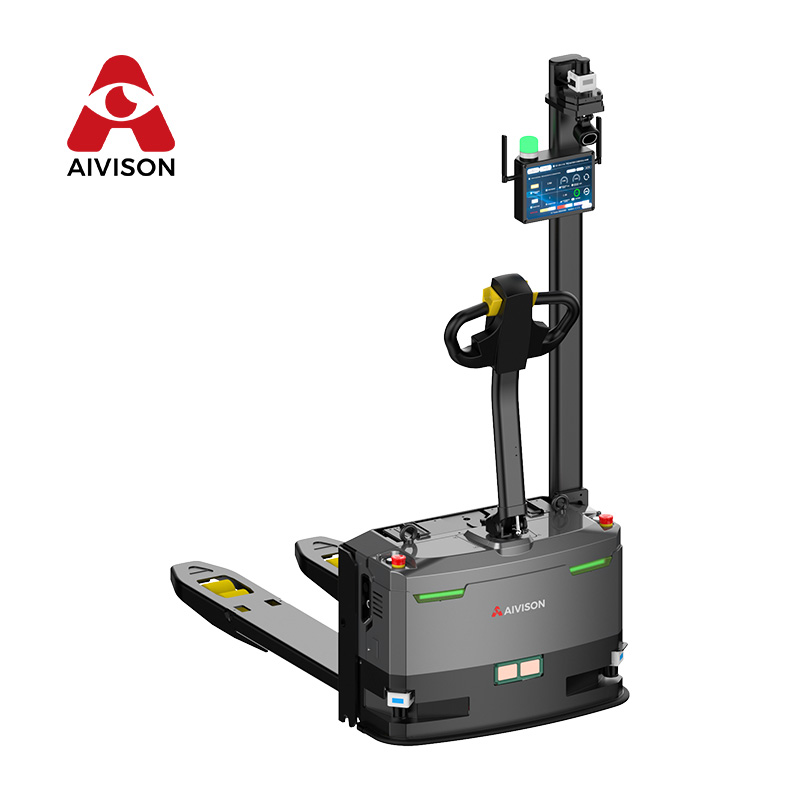
Recommended Platforms

8 Recommended Electric Stacker AGV and AMR Platforms for Guadalajara Wholesalers

These are production platforms from the Marnix mobile robot range, not generic catalog placeholders. Use them to shortlist a pallet-handling base, stacking AGV, OEM chassis or precision manipulator for local assembly and warehouse workflows. Each product link preserves the original product-page URL.

10+Years in AGV engineeringShenzhen R&D and manufacturing team
±5 mmLaser SLAM navigationNo tape, reflectors or floor QR codes
200+Manufacturers servedAcross three continents
8Core industriesSemiconductor to textiles and medical devices

Local Market Context

Why Guadalajara Is a Practical Starting Point for Electric Stacker AGV Automation

Guadalajara is not a single warehouse market. The metropolitan area combines automotive Tier 1 and Tier 2 suppliers, electronics and appliance assembly, 3PL cross-docks, food and beverage distribution, medical devices, textiles and retail replenishment. For wholesalers and integrators, that variety creates demand for electric stacker AGVs that can be configured per aisle, pallet type and docking tolerance rather than a single fixed model.

The commercial case is strongest where conventional electric stackers are productive but repetitive: trailer unloading, staging-to-line delivery, pallet put-away, high-shelf replenishment and end-of-line transfer. Labor turnover, shift consistency, pedestrian safety and 24/7 order cycles all push buyers toward trackless automation. Laser SLAM is usually the right starting point in Guadalajara because it maps existing floors and avoids the retrofit cost of magnetic tape, reflectors or floor QR codes across the entire route.

Marnix is a Shenzhen-based manufacturer with about ten years of AGV engineering experience, not a trading intermediary. The company builds laser SLAM AMRs, jacking robots, smart forklifts, composite robots and intelligent charging docks, and has served more than 200 manufacturers across three continents. For Guadalajara buyers, that matters at the specification stage: fork dimensions, rack interfaces, Wi-Fi coverage, charging strategy, spare-parts planning and OEM/ODM top modules can be reviewed before a unit is shipped.


Application Scenarios

Localized Applications for Electric Stacker AGVs in Guadalajara and Jalisco

Automation succeeds when the robot is matched to the physical flow, not when the flow is forced to match a catalog specification. These are the most common Guadalajara scenarios we review with wholesalers and integrators.

Automotive parts in El Salto and Tlajomulco

Tier 1 and Tier 2 plants need repeatable line-side delivery, returnable-container movement and sequencing support across shifts. An electric stacker AGV can move pallets from staging to the line without floor tracks, while fleet scheduling keeps multiple robots from competing for the same aisle.

3PL and cross-docking in Zapopan and Tlaquepaque

Third-party logistics operators face inbound trailer peaks, pallet put-away and order-staging pressure. AGVs reduce travel time and improve traceability between receiving, storage and dispatch. For Guadalajara wholesalers, the strongest ROI often comes from replacing repetitive pallet moves rather than attempting to automate every warehouse task at once.

Electronics and appliance assembly

High-mix electronics production needs frequent changeovers, clean material flow and precise handover at stations. Laser SLAM handles route changes without floor rework, while an optional QR camera provides ±2 mm docking at conveyors or test stations. Custom top modules can support totes, trays or roller interfaces.

Food, beverage and agri-food logistics

Guadalajara's food and beverage distribution networks handle palletized loads, seasonal peaks and strict dispatch schedules. Before selecting an electric stacker AGV, confirm floor conditions, washdown expectations, condensation risk and battery-charging placement. The right configuration protects uptime without over-specifying a platform for the entire facility.

Medical devices and precision assembly

Medical-device production values traceability, stable material flow and low-error handover. Composite mobile robots with a 6-axis arm can reach ±0.05 mm repeatability for precision work, while standard AMR platforms handle clean transport between stores, cells and inspection areas.

Retail, e-commerce and wholesale distribution

Wholesale distributors and e-commerce fulfillment centers need replenishment, pallet transfer and returns handling without adding repetitive forklift traffic. AGVs can run scheduled routes during peak windows and recharge automatically between tasks, helping local operators stabilize throughput when labor availability fluctuates.

Local Trends

Guadalajara Market Trends Shaping Electric Stacker AGV Purchasing

Buyers are not only comparing vehicle price. They are evaluating deployment speed, integration risk, safety culture and the cost of keeping a mixed fleet productive for five to ten years.

01

Nearshoring and SKU proliferation

Nearshoring continues to add new product lines and shorter delivery cycles to Jalisco supply chains. Fixed conveyor layouts struggle with frequent changeovers, so trackless AGVs and electric stacker platforms are attractive when routes must change without construction work.

02

Safety and labor continuity

Forklift-pedestrian interaction remains a core safety concern in mixed warehouses. Buyers ask for obstacle avoidance, speed zoning and fleet traffic control, not only load capacity. Automation is increasingly framed as a way to remove repetitive travel from skilled operators.

03

Energy, charging and uptime

Charging strategy affects fleet size more than many buyers expect. Opportunity charging, compatible smart docks and battery management should be planned with the site's electrical contractor. The goal is predictable uptime across shifts, not simply the largest battery available.

04

WMS, MES and mixed fleets

Guadalajara operators increasingly want task data, route records and multi-robot coordination linked to warehouse or production systems. A shared navigation core and fleet scheduling layer reduce the risk of managing separate software stacks for every robot type.

Engineering Advantages

Marnix Engineering Advantages for OEM/ODM Wholesalers

Marnix combines laser SLAM navigation, vision fusion, fleet scheduling and modular top mechanisms in one engineering system. The platform is designed for buyers who need a manufacturable robot base, not a one-off demonstration. Standard laser SLAM reaches ±5 mm positioning accuracy without magnetic tape, reflectors or floor QR codes; adding a QR scanning camera raises docking accuracy to ±2 mm where stations require it.

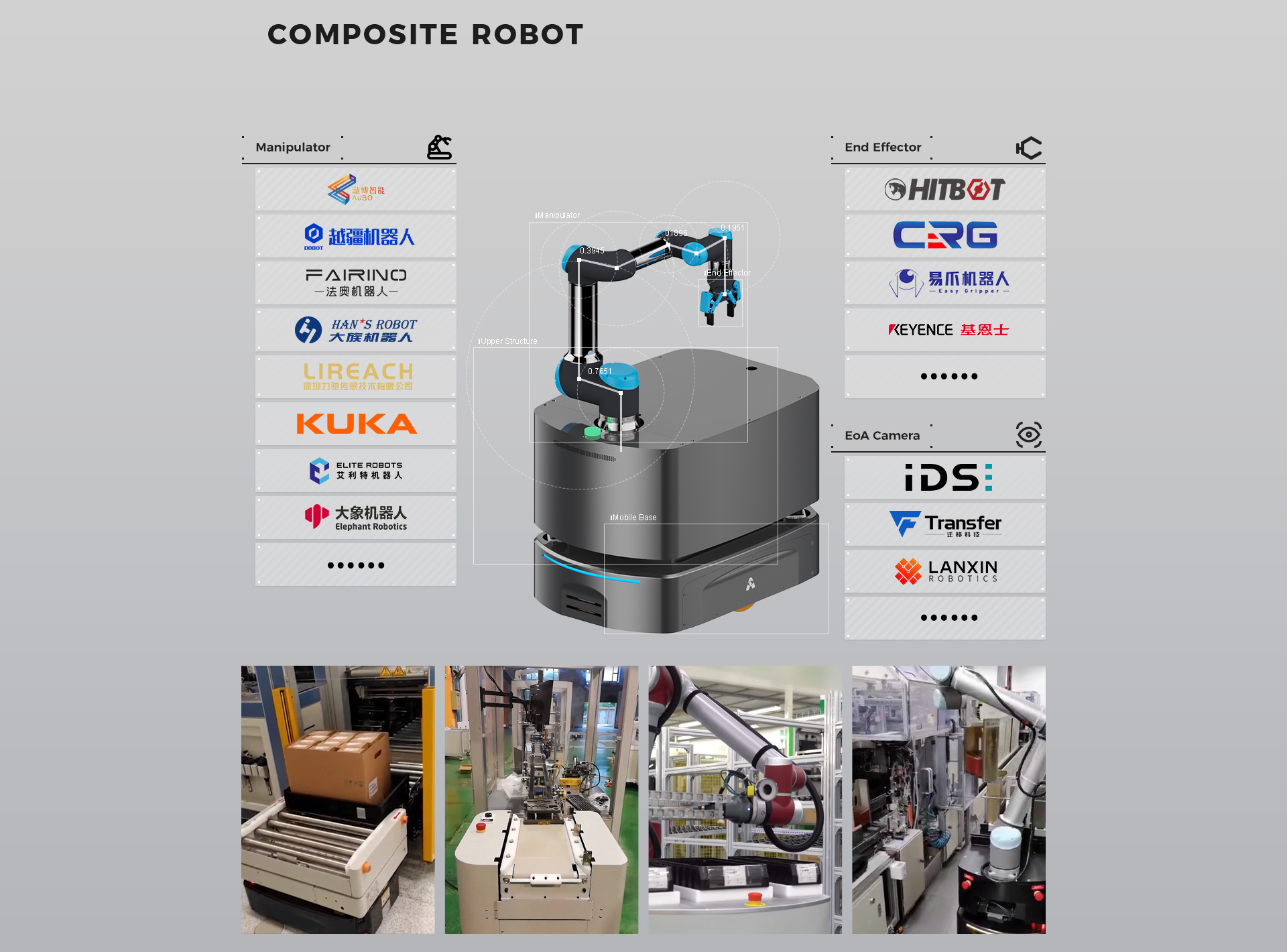
For more complex production work, composite mobile robots combine an AMR chassis with a 6-axis arm and multi-layer synchronization protocols to reach ±0.05 mm repeatability. The same engineering team can customize chassis, payload, jacking units, roller conveyors, forklift forks and arm interfaces so the robot connects directly to production equipment rather than forcing a manual handover.

  • Intelligent scheduling over indoor Wi-Fi for simultaneous multi-robot task assignment and traffic control.
  • Compatible intelligent charging docks for autonomous recharge and 24/7 duty planning.
  • Multi-stage inspections and operational stress testing before shipment, targeting near-zero failure rates.
  • TÜV Rheinland onsite assessment, Fortune 500 supplier experience and verified trade records.
  • Manufacturer-level OEM/ODM customization for wholesalers and system integrators.

Laser SLAM natural-feature navigation

±5 mm — no auxiliary tracks, reflectors or floor QR codes. Best for warehouse transfer, line-side delivery and layouts that change frequently.

Laser SLAM plus QR code camera

±2 mm — QR labels only where precision docking is needed. Suitable for high-shelf storage, conveyor handover and tight station alignment.

Composite robot with 6-axis arm

±0.05 mm repeatability — station calibration and multi-layer synchronization for semiconductor, electronics and medical-device assembly tasks.

Marnix factory quality control and robot testing before shipment
Quality control is part of the deployment plan: multi-stage inspection and operational testing reduce the risk of discovering integration issues on a Guadalajara shop floor.

OEM / ODM Relationship

What Guadalajara Wholesalers and Integrators Get from an OEM/ODM Relationship

A wholesaler needs more than a unit price. The supplier must support configuration, export documentation, commissioning planning, spare-parts strategy and future fleet expansion.

Configuration around local pallets and racks

Fork length, fork opening, load center, top module and safety sensors can be reviewed against Guadalajara pallet types and rack interfaces. OEM/ODM work is most valuable when a standard platform is close but not fully aligned with the site.

Export and commissioning planning

Mexican industrial power, charging placement, Wi-Fi coverage and customs documentation should be reviewed before shipment. Marnix supports the technical package; the local importer or broker confirms NOM and customs applicability for the final configuration.

Spare parts and local service enablement

LiDAR sensors, drive components, chargers and safety parts can be planned as a recommended spare-parts kit. A local integrator can stock fast-moving items while Marnix provides remote technical support and configuration guidance.

An OEM/ODM project usually starts with six inputs: load profile, site layout, throughput target, docking precision, Wi-Fi coverage and equipment interfaces. Marnix uses these to recommend a standard platform or a custom chassis and top module. Because the navigation core, fleet scheduling software and charging ecosystem are shared across the range, a wholesaler can build a mixed fleet without introducing a separate software stack for every vehicle.

Customized AMR top modules including robotic arm and roller conveyor
Custom top mechanisms let an electric stacker or AMR chassis connect directly to production equipment through roller conveyors, robotic arms or specialized fixtures.

Local Procurement FAQ

FAQ for Guadalajara Buyers Comparing Electric Stacker AGV Wholesalers

These are the questions that most often decide whether a project moves from concept to site survey, and eventually to a purchase order.

Can an electric stacker AGV work in an existing Guadalajara warehouse without floor magnets?

Yes. Standard laser SLAM navigation maps natural features in the existing environment, so the route does not require magnetic tape, reflectors or floor QR codes. QR labels are added only at stations where ±2 mm docking precision is needed, which keeps retrofit work focused and predictable.

What voltage and charging setup should we plan for in Mexico?

Industrial sites in Jalisco can present different voltage and phase arrangements, so the final electrical design should be confirmed by the site contractor. Marnix can configure charging docks and power options for the project, but the buyer should verify available voltage, grounding, circuit protection and charging location before shipment.

How do we import an AGV into Guadalajara?

Most projects use a customs broker and arrive through Manzanillo or Lázaro Cárdenas before inland transport to Jalisco. The broker typically reviews the commercial invoice, packing list, bill of lading, product documentation and applicable NOM requirements. CE documentation supports the technical file but does not replace local customs advice.

How long does deployment take?

Schedule depends on customization, production lead time, ocean freight, customs clearance and site readiness. A standard platform with a clear layout can be planned more quickly than a custom chassis with new top modules. Mapping, route validation, operator training and acceptance testing should be scheduled before the first production run.

Can you customize forks, racks and top modules for local pallets?

Yes. As a manufacturer, Marnix can review fork dimensions, load center, jacking units, roller conveyors, forklift forks and robotic arm interfaces. The goal is to connect the robot to the actual pallet, rack or machine interface used in Guadalajara rather than forcing the site to adopt an unsuitable standard.

What spare parts should a wholesaler stock?

A practical starting kit may include a LiDAR sensor, drive-wheel components, emergency-stop devices, charger parts and commonly replaced sensors. The exact list depends on fleet size and duty cycle. A local integrator can hold fast-moving parts while Marnix provides remote diagnostics and configuration support.

Do you support mixed fleets and WMS or MES integration?

Marnix robots share a navigation core and fleet scheduling system, which helps mixed fleets coordinate over indoor Wi-Fi. Integration scope should be defined during project evaluation: task assignment, route logic, station handover and data exchange need to be reviewed against the customer's warehouse or production software.

What information speeds up a quote?

Send the maximum load and pallet footprint, aisle widths and layout drawing, required moves per hour, docking accuracy, Wi-Fi coverage and equipment interfaces. Photos or video of the current flow are also useful. With these inputs, Marnix can recommend a standard electric stacker AGV, an AMR platform or an OEM/ODM configuration.

Request a Guadalajara-Specific Electric Stacker AGV Proposal

Share your pallet weight, aisle width, throughput target, docking accuracy, site power and Wi-Fi details. Marnix engineers will recommend a standard platform or OEM/ODM configuration and outline shipping, commissioning and spare-parts planning for Guadalajara.