OEM/ODM Autonomous Warehouse Forklift Manufacturers & Exporter for the Edmonton Market
Laser SLAM AGV and AMR forklifts, stackers, jacking robots and custom top modules for Edmonton warehouses, cold-chain facilities, industrial distributors and Alberta system integrators.
Eight Autonomous Warehouse Forklift, Stacker & AMR Products for Edmonton Operations
Edmonton buyers rarely need a demonstrator robot; they need a production asset that can handle cold loading-dock drafts, pallet-quality variation and mixed forklift traffic. These eight platforms cover 800 kg lithium-battery logistics, 1,500 kg line-side lifting, 2,000 kg high-shelf stacking and ROS2-based OEM development.
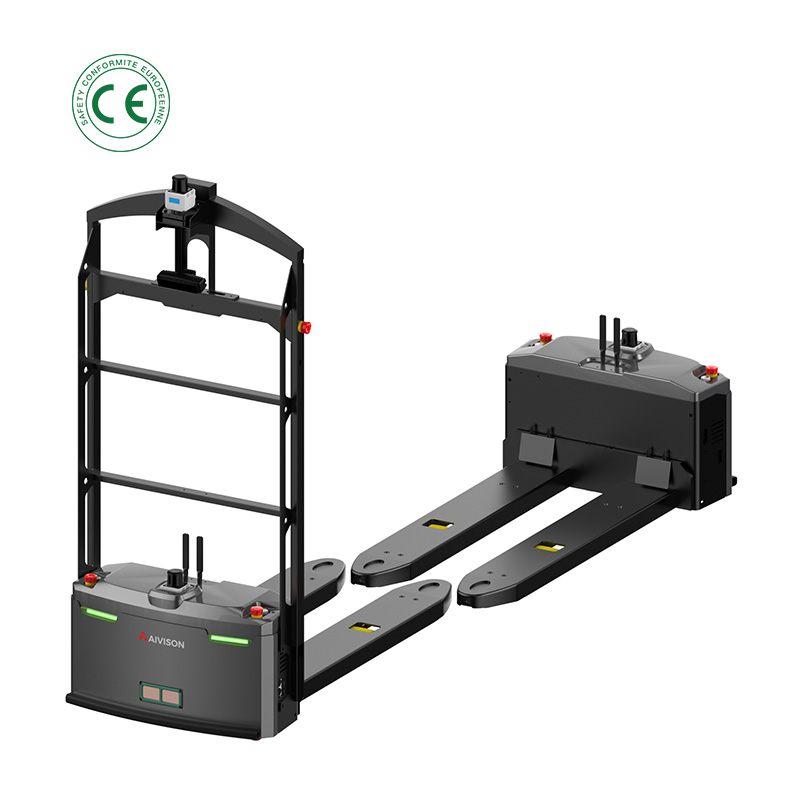
Aivison Customized 800kg Warehouse AGV Robot Lithium Battery AMR
A compact customized AMR for lithium-battery, electronics and light industrial materials. The 800 kg payload and application-specific top module suit Edmonton distributors that need clean, repeatable movement without floor tape.
View product →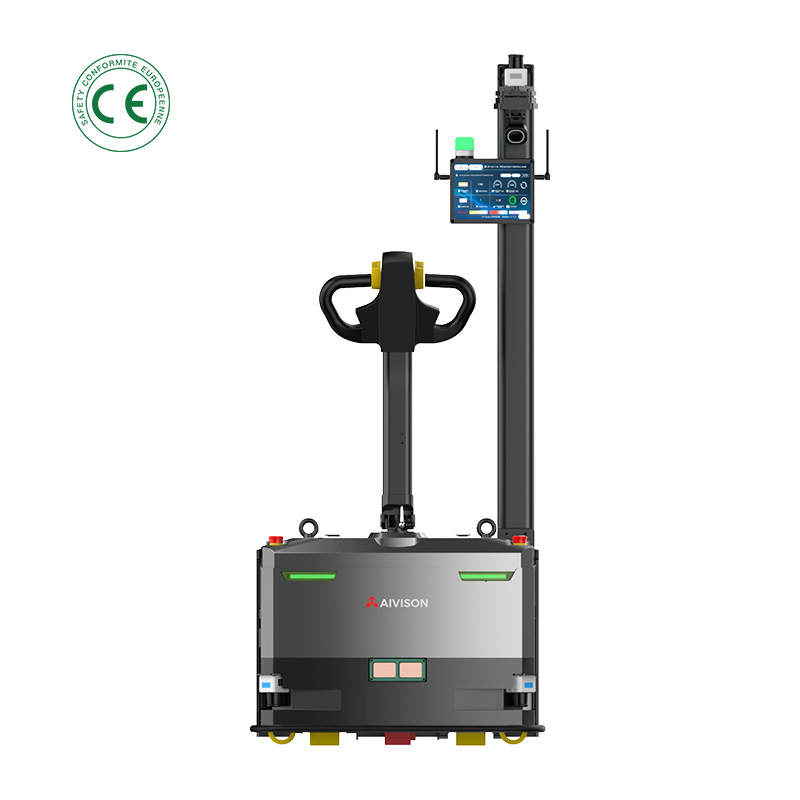
Autonomous Mobile Robot AGV CE Laser SLAM Navigation for Material Handling and Logistics
A general-purpose laser SLAM AMR for warehouse transfer and line-side logistics. It navigates with natural features rather than fixed tracks, which is useful for Edmonton facilities that reconfigure racking or change material routes.
View product →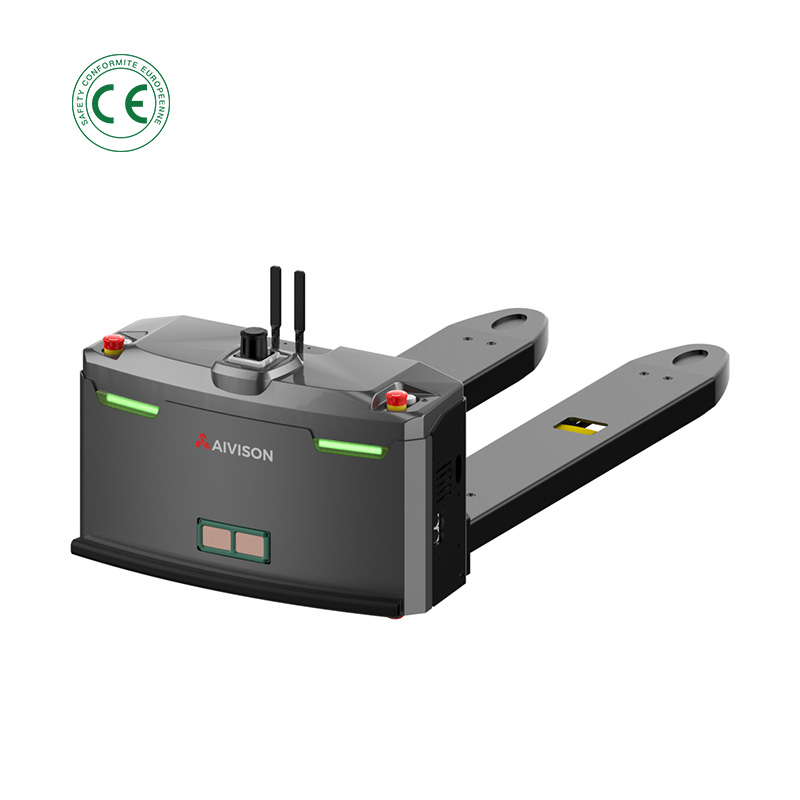
AMR Automated Warehouse Robot Logistics Automatic Industrial Logistics Robots AMR Robot
Designed for repetitive warehouse movements between receiving, storage and dispatch. Edmonton distribution centers can use this platform to stabilize material flow during labor shortages and seasonal peaks.
View product →
New Warehouse Autonomous Cars agv Robot 2000kg Load Capacity Stacker agv Robot
A 2,000 kg autonomous stacker AGV for heavier pallets and high-shelf storage. For Edmonton warehouses, it is a practical choice when operators need repeatable lift-and-place cycles without converting the entire floor.
View product →
Warehouse Robot Robotics 2000KG CE Warehousing Automatic Forklift Stacking AGV
A CE-configured automatic forklift stacker for warehouse and production logistics. It suits Edmonton operations that need repeated pallet pick-and-place, high-shelf positioning and predictable cycle times.
View product →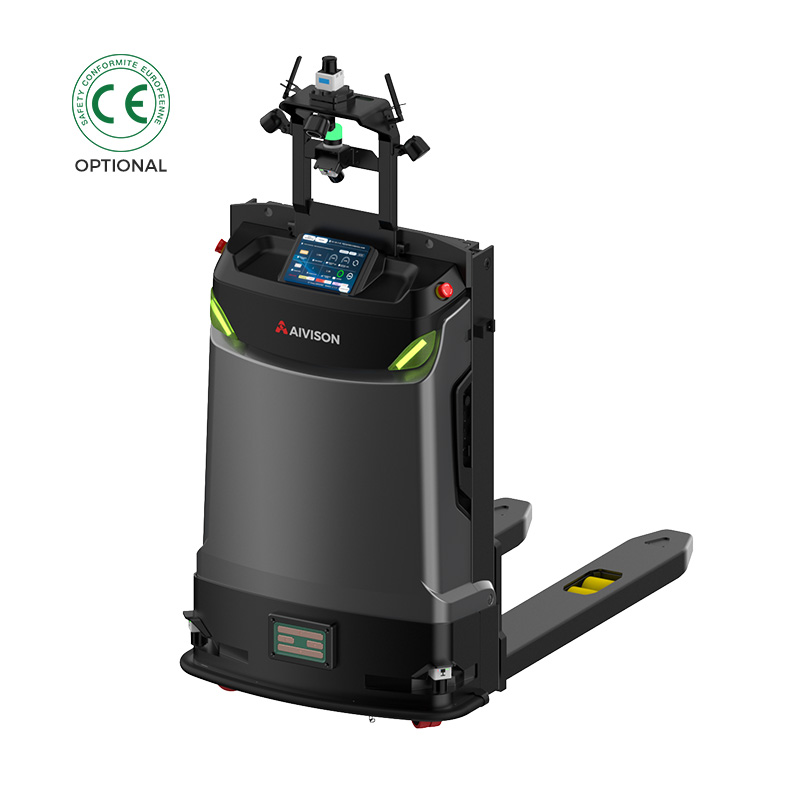
AGV AMR Warehouse Automatic Guided Vehicle 1500kg 2000kg AGV Robot Forklift
A flexible 1,500 kg–2,000 kg AGV/AMR forklift platform for mixed warehouse and production environments. It is especially relevant for Edmonton industrial suppliers moving palletized parts between staging, storage and outbound lanes.
View product →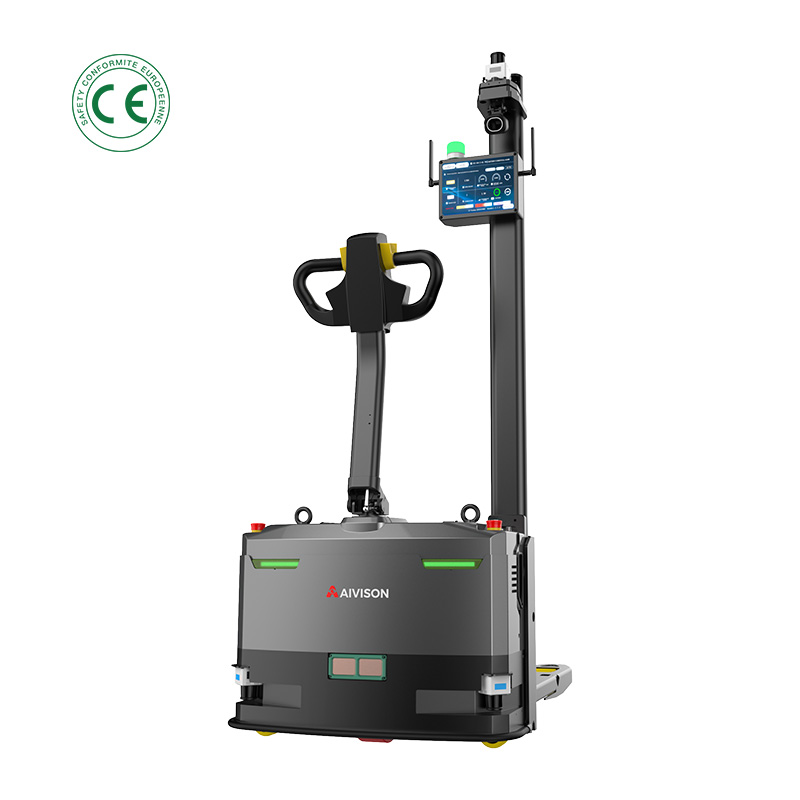
AIVISON CE Laser SLAM Navigation AGV 1500kg Warehouse Lifting Operations
A 1,500 kg CE laser SLAM lifting AGV for warehouse lifting operations and line-side handling. Edmonton buyers can use it to reduce manual cart and pallet movement in repeatable transfer loops.
View product →
Humanoid Robot Chassis Dual 7-DOF Arms Laser SLAM Omnidirectional Navigation ROS2 Open Platform AMR
An OEM-focused mobile manipulation platform with dual 7-DOF arms, omnidirectional navigation and a ROS2 open platform. It gives Edmonton integrators a development base for research, semiconductor handling and advanced assembly.
View product →What Makes a Forklift AGV “Edmonton-Ready”?
“Edmonton-ready” is not a single certification. It is a documented match between payload, aisle width, floor condition, Wi-Fi coverage, docking tolerance, winter staging and Canadian electrical and safety requirements. For most warehouses, laser SLAM at ±5 mm removes the need for floor tape; for 2 mm high-shelf docking, add QR assist. For unheated loading docks, plan a heated charging and staging zone and ask the manufacturer to document battery temperature limits rather than assuming a standard AMR will operate at −30°C.
For Alberta procurement, request CE documentation where offered, then confirm whether CSA/UL or local electrical inspection is required by your integrator, insurer and authority having jurisdiction. Marnix supplies the robot, top module and fleet software; the Edmonton integrator or facility team owns site safety validation. This division of responsibility keeps the project technically honest and audit-ready.
Where Autonomous Warehouse Forklifts Create Measurable Value in Edmonton
Edmonton is a northern logistics hub with industrial corridors in Nisku, Leduc, Acheson, Sherwood Park and the Alberta Industrial Heartland. The strongest automation cases are not always the largest warehouses; they are the operations with repeatable, high-frequency movements and persistent labor constraints.
Distribution & E-Commerce Fulfillment
Facilities serving Edmonton and Northern Alberta face peak-season swings and high turnover in repetitive pallet movement. A 1,500 kg–2,000 kg forklift AGV stabilizes replenishment, put-away and outbound staging while keeping manual operators on exceptions.
- Reduce repeated pallet handling between receiving and reserve storage.
- Schedule overnight transfer loops before dispatch deadlines.
- Use Wi-Fi fleet scheduling for multiple robots in shared aisles.
Cold-Chain & Food Distribution
Edmonton's food and grocery distribution network requires consistent movement between ambient, cooler and freezer zones. Autonomous forklifts can reduce door-cycle variability and operator discomfort, but cold-zone projects need a documented staging and charging plan.
- Confirm unheated dock and freezer temperatures before selection.
- Specify heated charging areas and condensation-safe parking.
- Match forks and sensors to pallet wrap and frost conditions.
Energy & Industrial Supply Chains
Alberta's energy, mining and industrial supply chains move heavy parts, components and maintenance materials. A 2,000 kg stacker AGV with high-shelf positioning can reduce forklift traffic in repetitive storage lanes while improving traceability.
- Evaluate floor flatness and outdoor-to-indoor transition zones.
- Set clear right-of-way rules for mixed forklift traffic.
- Document load stability for heavy or irregular pallets.
Building Materials & Modular Construction
Building-supply yards and modular fabricators often use long loads, panel carts and variable pallet quality. Custom top modules, roller conveyors and jacking units can be engineered around the load rather than forcing the load into a standard AMR.
- Use custom top modules for non-standard carriers.
- Validate floor joints, ramps and dock plates early.
- Combine 5 mm SLAM with QR docking where precision matters.
Localized Trends Reshaping Warehouse Automation in Edmonton
Buyer intent in Edmonton is moving from “Can we buy a robot?” to “Can this robot keep working through winter, labor turnover, mixed traffic and Canadian procurement review?” That shift favors suppliers who can provide engineering documentation, not just a catalog page.
Flexible SLAM Replaces Fixed Infrastructure
Warehouse operators prefer natural-feature laser SLAM because racking changes and seasonal layouts do not require magnetic tape, reflectors or floor QR codes. This reduces installation downtime in facilities that cannot stop shipping.
Single Robots Become Scheduled Fleets
Edmonton buyers increasingly ask about fleet scheduling, traffic control and automatic charging. A pilot robot is useful, but the business case strengthens when the same navigation core can coordinate multiple units over indoor Wi-Fi.
TCO and Uptime Matter More Than Purchase Price
Procurement teams are comparing robot uptime, spare-parts strategy, charging cycle planning and integrator support against manual forklift costs. Winter staging and battery documentation are now part of the total cost of ownership conversation.
OEM/ODM Demand from Integrators
Alberta system integrators want a mobile robot chassis they can adapt with roller conveyors, forklift forks, jacking units or 6-axis arms. The ROS2 open platform and dual 7-DOF arm robot reflect this shift toward engineering collaboration.
The bars above are qualitative planning priorities based on common application questions, not a published Edmonton market forecast.
Match Precision to the Task: A Buyer’s Ladder, Not a Single Specification
Most warehouse automation projects over-specify accuracy. Use this guide to decide where ±5 mm is sufficient, where ±2 mm QR assist is justified, and where a composite robot with a 6-axis arm is the correct engineering choice.
| Configuration | Accuracy | Floor Setup | Best Edmonton Fit |
|---|---|---|---|
| Laser SLAM on natural features | ±5 mm | None — no tape, reflectors or floor codes | Warehouse transfer, line-side delivery, layout changes |
| SLAM + QR code camera | ±2 mm | QR labels only at precision stations | High-shelf storage, precision docking, wafer handling |
| Composite AMR + 6-axis arm | ±0.05 mm | Station calibration | Semiconductor and medical device assembly |
Why Marnix Is a Practical OEM/ODM Partner for Edmonton System Integrators
Shenzhen Marnix Intelligent Technology Co., Ltd. draws on about ten years of AGV engineering experience. The company manufactures laser SLAM AMRs, jacking robots, smart forklifts, composite robots and intelligent charging docks for end users and system integrators.
Complete AMR Portfolio from One Source
Jacking robots, smart forklifts, pallet AMRs, stacker AGVs, composite robots and compatible charging docks share the same navigation and fleet software foundation. This reduces integration risk when an Edmonton project expands beyond a single robot type.
Precision Without Floor Rework
Laser SLAM reaches ±5 mm without auxiliary tracks or floor QR codes. Where docking demands more, a QR scanning camera raises accuracy to ±2 mm. Composite robots with a 6-axis arm reach ±0.05 mm repeatability for semiconductor and medical device production.
Manufacturer-Level Customization
Marnix engineers chassis and top modules such as jacking units, roller conveyors, forklift forks and robotic arms. This is the information gain that matters to integrators: the robot is adapted to the production interface, not forced into a standard fit.
Fleet Scheduling over Indoor Wi-Fi
An intelligent scheduling system coordinates multiple robots, including simultaneous task assignment, traffic control and automatic charging through compatible smart charging docks. This is essential for Edmonton warehouses planning phased automation.
Quality Protocol and Field Experience
Multi-stage intelligent inspections and thousands of operational stress tests target near-zero failure rates. The robots are trusted by more than 200 manufacturers across three continents, with deployments in semiconductor, 3C electronics, lithium battery, photovoltaic, automotive parts, PCB, textile and medical device industries.
Verified Credentials for Serious Buyers
The company has completed a TÜV Rheinland onsite supplier assessment and is listed as a supplier to a Fortune 500 company, with verified multispecialty supplier status, credit index and trade capacity records available for review before purchase.
What Edmonton Buyers Should Prepare Before Requesting an AMR Proposal
From project experience, six inputs determine most of the robot selection. Sharing them upfront shortens evaluation from weeks to days and reduces the risk of an undersized fleet or an over-specified navigation package.
Load Profile
Maximum weight, footprint, center of gravity and load stability for racks, pallets or carriers. Include load variation by shift, not just the average pallet.
Site Layout and Aisle Width
A CAD drawing or sketch with aisle widths, doors, dock plates, slopes, elevators, charging locations and pedestrian zones. This determines whether a stacker, forklift AGV or jacking robot is viable.
Throughput Target
Missions per hour, peak periods and shift patterns. These numbers set fleet size, charging dock count and whether overnight operation is required.
Docking Precision
Where ±5 mm is enough and where ±2 mm QR assist or arm-level precision is required. Precision should be applied station-by-station, not across the entire floor.
Power, Wi-Fi and Winter Staging
Existing access points, coverage quality, charging power, unheated dock temperatures and snow or grit ingress. These details prevent a technically sound robot from failing in daily operation.
Canadian Compliance and Interfaces
Equipment interfaces such as conveyors, machines and shelving, plus electrical and safety documentation requirements. Confirm CSA/UL or local inspection expectations with your integrator and authority having jurisdiction.
Localized Questions Buyers Ask Before Importing an Autonomous Forklift
Straight answers for Edmonton warehouse operators, Alberta system integrators and Canadian procurement teams evaluating an overseas OEM/ODM manufacturer.
Can you ship an autonomous warehouse forklift directly to Edmonton?
Yes. Marnix exports from Shenzhen and supports Edmonton buyers through export documentation, packaging, sea freight or air freight coordination, and remote commissioning support. Typical routes for heavy equipment to Alberta use ocean freight through a Canadian west-coast port followed by rail or truck to Edmonton; smaller pilot units or urgent spares may be evaluated for air freight. Final logistics depend on robot size, battery shipping classification and Incoterms.
Is CE marking enough for Alberta?
CE marking is not a substitute for Canadian electrical or safety approval. It is useful documentation, but Edmonton buyers should confirm with their integrator, insurer and authority having jurisdiction whether CSA/UL or local field inspection is required. Marnix can provide available product documentation, while site-specific safety validation remains the responsibility of the Canadian facility and its qualified integrator.
Will a standard AMR operate in Edmonton winter temperatures?
Do not assume that a standard lithium-battery AMR will operate without limits at −30°C. For unheated loading docks, freezer zones or temporary winter staging areas, share the actual temperature profile before selection. The practical plan usually includes heated charging and parking areas, condensation management and a battery-temperature review. The robot specification must be matched to the environment rather than relying on a generic “warehouse” rating.
Do I need to install magnetic tape or floor QR codes?
Standard laser SLAM navigation maps existing natural features and does not require magnetic tape, reflectors or floor codes. QR labels are added only at stations where ±2 mm docking precision is needed. This is a major advantage for Edmonton facilities that cannot stop operations during installation or that change racking layouts seasonally.
What is the minimum order for OEM/ODM customization?
Customization scope matters more than a single published MOQ. Marnix is listed as a verified multispecialty supplier with low-MOQ customization capability, but forklift AGV projects can range from a single pilot unit to a multi-robot fleet. For Edmonton integrators, the fastest path is to share load, layout, throughput and top-module requirements so the engineering team can confirm feasibility and quantity strategy.
How do you support commissioning in Edmonton?
Support typically combines remote engineering, documentation, network and mapping guidance, and coordination with the local integrator. Because site safety validation must be handled locally, the strongest project structure is a three-way collaboration: Marnix supplies the robot and top module, the Edmonton integrator performs installation and site validation, and the facility owner defines operating rules. For complex projects, service scope is defined during quotation.
Which model is best for my Edmonton warehouse?
Use the application to narrow the platform: 800 kg customized AMR for light lithium-battery or electronics logistics; 1,500 kg lifting AGV for line-side operations; 2,000 kg stacker or forklift AGV for high-shelf pallet handling; and the ROS2 humanoid-arm platform for OEM research or advanced manipulation. If you are unsure, share aisle width, load weight, lift height, docking tolerance and required moves per hour.
How should we calculate ROI for an Edmonton warehouse?
Build the business case around repeatable movements, paid labor hours, forklift utilization, safety incidents, product damage, peak-season overtime and floor-space productivity. Include the cost of winter staging, charging infrastructure, integrator time, spare parts and training. Avoid comparing only the robot purchase price with one operator’s wage; the stronger comparison is a documented material-flow loop with measured uptime and service response.
Discuss Your Edmonton Autonomous Forklift Project
Send your payload, aisle width, lift height, docking tolerance, Wi-Fi coverage and winter operating conditions. Our engineering team will help you compare laser SLAM, QR-assisted docking and custom top-module options for the Edmonton market.
Inquire Now OEM/ODM manufacturing · Export documentation · Fleet scheduling · Custom top modules · TÜV Rheinland onsite assessed