Eight OEM/ODM Robots for Textile Warehouse Transport Projects
These platforms cover heavy fabric rolls, palletized cartons, roll cages, totes, conveyor handoff, and high-mix specialty handling. For Washington DC buyers, the right starting point is the load interface and handoff precision — not the largest payload number on the page.
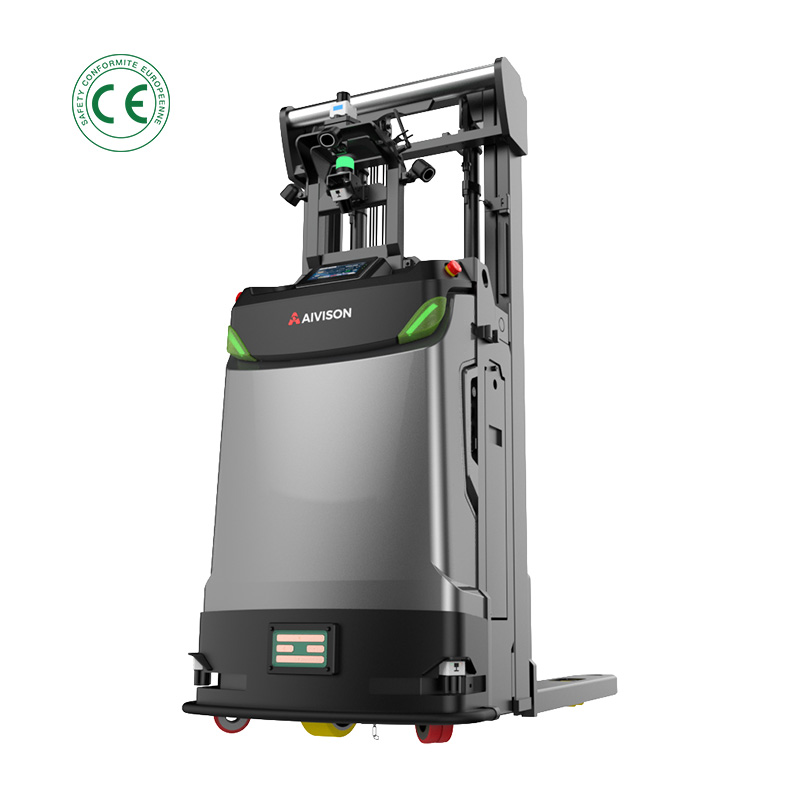
Smart Transport Robot with Laser Navigation, 2000 kg Reach — AGV/AMR Warehouse Logistics
Heavy-duty transport platform for textile roll carts, pallets, and line-side replenishment. Laser SLAM maps existing aisles; custom cradles can stabilize long or tall roll loads.

Laser SLAM Navigation Automated Guided Vehicle Forklift, 1500 kg Load Capacity
Pallet-focused forklift AGV for cartons of fabric, beam racking, and dock-to-storage runs. A strong fit when standard pallets are the primary textile load interface.
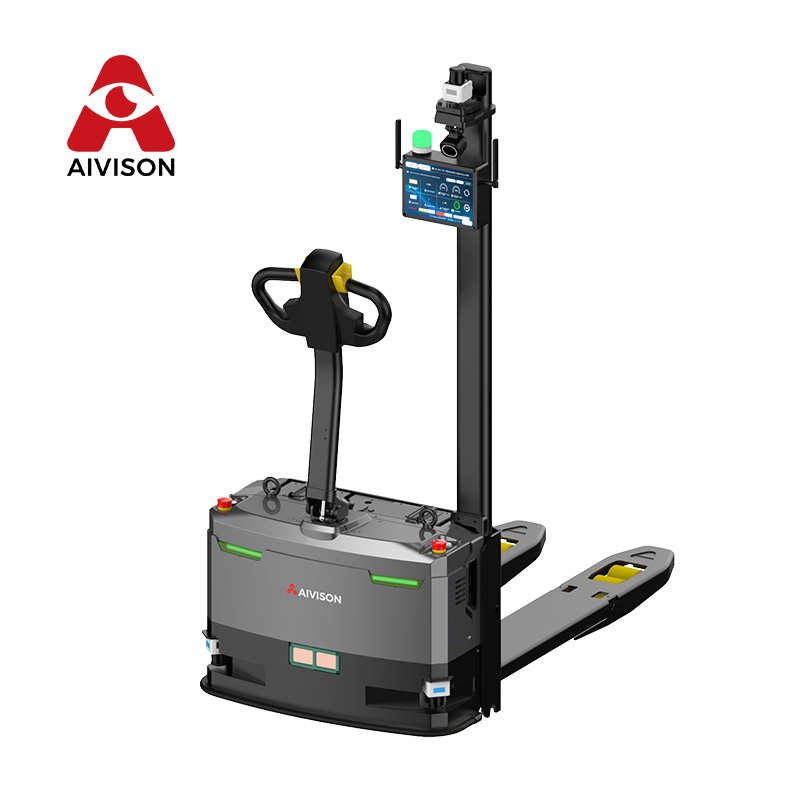
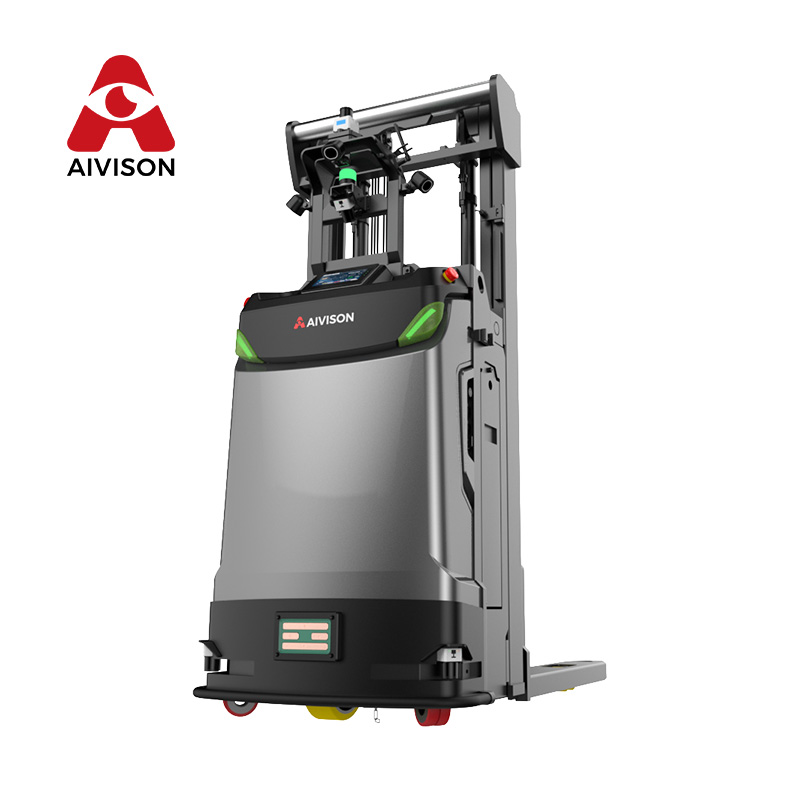
Aivison High-Quality Industrial Unmanned Pallet Forklift
Unmanned pallet forklift for repetitive put-away and replenishment. Integrators can connect task dispatch to WMS/WCS and add camera-assisted fork entry where rack tolerance is tight.
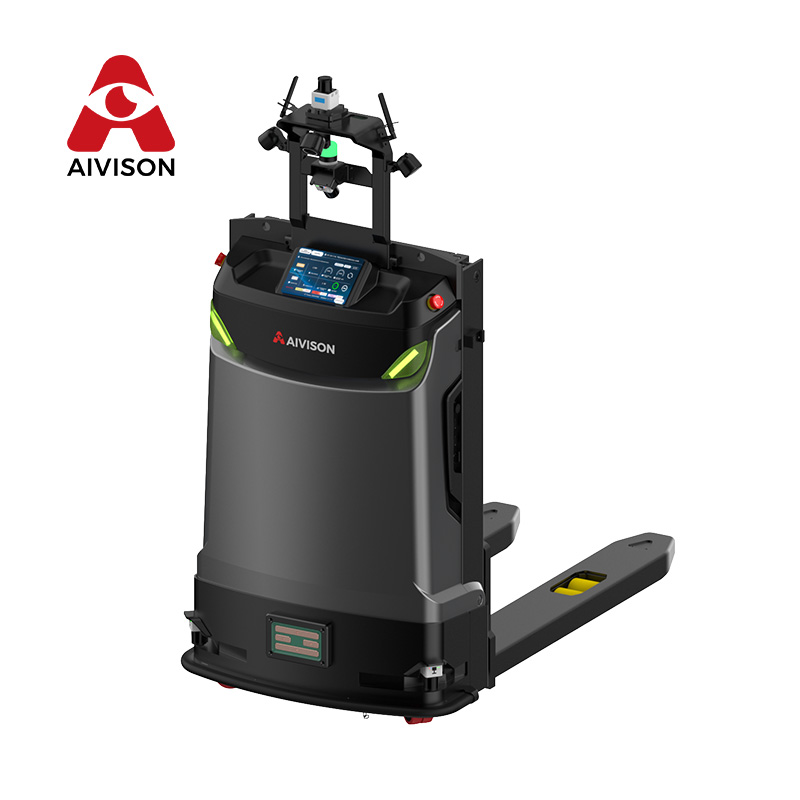
AGV/AMR Autonomous Forklift — Smart Mobile Transfer Stacker
Smart stacker for stacked cartons, roll cages, and low-level racking in DC-area 3PLs where aisle width and load stability matter. Configurable top interface supports textile-specific carriers.
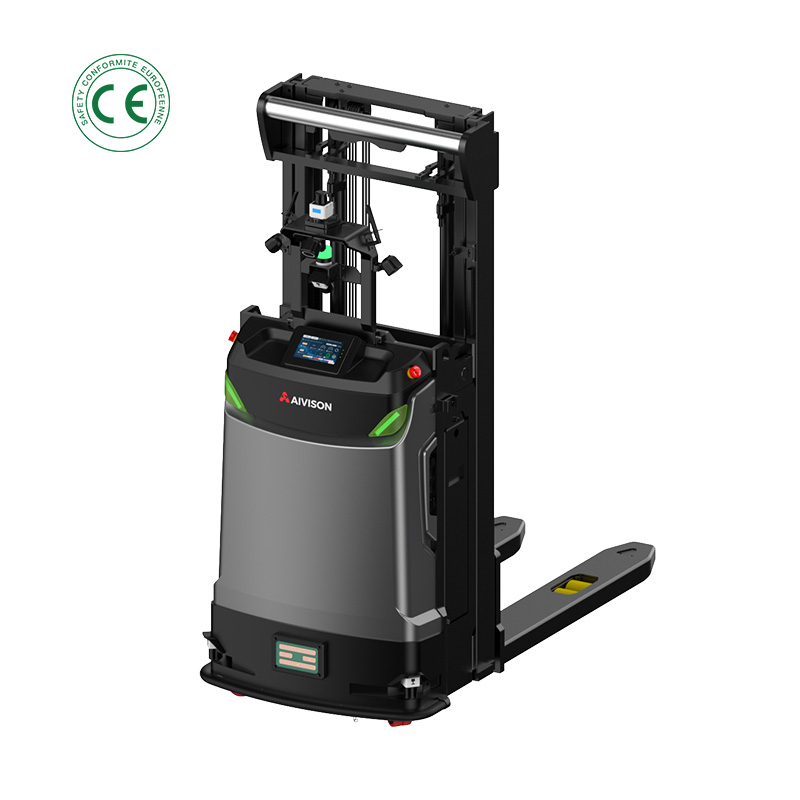
Aivison AMR Robot Vehicle for Automated Warehouse Logistics
General warehouse AMR for clean textile distribution, cross-dock transfer, and tote movement. A practical fleet backbone where multiple robot types need one scheduling layer.

Omnidirectional Humanoid Robot Chassis, Dual 7-DOF Arms, Laser SLAM AMR Mobile Platform
For specialty fabric sampling, manipulator-assisted handling, and integrator demonstration projects. Not a first choice for simple pallet transport — but powerful where flexible pick-and-place is the bottleneck.

AI-Ready Humanoid Robot Chassis, Dual 7-DOF Arms, ROS2 Laser SLAM Open Development Platform
Open development platform for integrators building AI-ready textile inspection, labeling, or pick-and-place applications. Keep the mobility core and add your own vision, gripper, or software stack.
Autonomous Mobile Robots (AMR) for Cargo Transportation Between Warehouse and Conveyor Line
Strong fit for cross-dock, sortation infeed, and automated packing lines where conveyor handoff defines throughput. Integrate PLC handshakes and barcode verification during acceptance testing.
Need an OEM textile roll carrier, custom cart interface, or a mixed fleet for a Washington DC warehouse? Send your load details and floor plan.
Textile Warehouse Transport in Washington DC: What Makes This Market Different
Washington DC buyers rarely face a simple “move pallets from A to B” problem. The region combines compact urban facilities, high-value institutional textiles, government-contractor compliance, and distribution centers spread across Northern Virginia and suburban Maryland.
A textile warehouse here may handle hotel linens for a downtown property, sterile packs for a hospital, uniforms for a federal contractor, or rolls of specialty fabric for a theatre or design studio. That mix changes robot selection. A 2,000 kg transport AMR may be right for heavy roll carts, while a 1,500 kg autonomous forklift is better for palletized cartons. A conveyor-handoff AMR can be more valuable at an e-commerce returns line than a larger forklift. The most reliable deployments start with load stability, handoff precision, and floor conditions — not with the biggest payload number on a specification sheet.
Hospitality & Institutional Linens
Hotels, universities, and hospitals in the District often process clean and soiled linens in separate zones. Robots move roll cages or carts between laundry, storage, and loading. Laser SLAM avoids floor tape in leased or historic buildings; lint cleaning and cart hygiene must be written into the daily checklist.
Healthcare Textiles & Sterile Packs
Precision docking at storage rooms or cart-exchange points matters more than raw speed. QR-assisted positioning can reach ±2 mm where stations require it. Route planning should separate clean and soiled flows, and the automation plan must be reviewed with infection-control and facility teams.
Uniform & Government Contractor Distribution
Task logs, access control, and predictable material flow are often as important as payload. Fleet software can exchange task status with a WMS through the integrator, while robots reduce staff walking in high-security or badge-controlled areas. Network access and screening requirements need early planning.
Specialty Fabrics, Theatre & Design Supply
Long rolls, sample bolts, and narrow aisles create handling problems that standard pallet AMRs do not solve. Omnidirectional mobility and a dual 7-DOF arm platform can support pick-and-place or sampling pilots, while custom roll cradles stabilise transport loads. This is a high-mix, lower-volume automation case.
E-commerce Returns & Conveyor Lines
Returns create unpredictable short moves and frequent re-slotting. A conveyor-handoff AMR reduces travel between storage and sortation infeed, and automatic charging supports extended shifts. Barcode verification, PLC handshakes, and exception handling should be included in the acceptance test, not added later.
3PL & Urban Micro-fulfillment
High rents mean every square foot counts. A compact AMR with fast mapping and no fixed floor track lets a 3PL reconfigure racking seasonally. Multi-tenant Wi-Fi, fire-door integration, elevator access, and shared charging zones must be coordinated with building management before the first robot arrives.
Which Platform Fits Which Textile Load?
Use this first-pass matrix to narrow the robot type before requesting a quotation. Final sizing still requires a floor survey, load photos, and a throughput calculation.
| Textile flow | Best-fit platform | Navigation / docking | Engineering note |
|---|---|---|---|
| Heavy fabric rolls on carts or racks | 2,000 kg Smart Transport AMR | ±5 mm laser SLAM; no floor tape | Specify roll cradles, chocks, and acceleration limits for a high centre of gravity. |
| Palletized fabric cartons | 1,500 kg SLAM forklift or unmanned pallet forklift | Laser SLAM; ±2 mm QR at tight racks | Confirm pallet quality, fork-entry clearance, and rack tolerance before choosing QR assist. |
| Roll cages and stacked cartons | Autonomous stacker / smart forklift | Laser SLAM with station handoff | Survey aisle width, turning clearance, and load restraint; cage wheels can affect stability. |
| Totes to conveyor or sortation | AMR for warehouse-to-conveyor transport | Laser SLAM with PLC handshake | Define conveyor height, handoff dwell time, barcode scan point, and fault recovery. |
| Specialty sampling and manipulation | Dual 7-DOF humanoid chassis | Vision + SLAM; station calibration | Best treated as an integrator pilot, not a simple pallet-transport replacement. |
| Mixed fleet in one warehouse | AMR + forklift + jacking platforms | One Wi-Fi fleet scheduling layer | Plan traffic rules, charging dock locations, and priority zones together. |
Washington DC Market Trends Reshaping Textile Warehouse Automation
Automation decisions in the DC region are shaped by space scarcity, institutional procurement, labour pressure, and the need to absorb seasonal peaks without adding permanent warehouse footprint.
Infill Warehouses & No-Rework Deployment
High land values push textile operations into infill sites, older buildings, and multi-tenant facilities where floor drilling or tape installation is unwelcome. Laser SLAM maps natural features, so QR labels are added only at stations that genuinely need ±2 mm precision.
Labour Pressure & Safety Documentation
Repetitive transport work is difficult to staff consistently. AMRs take non-value-added moves while people handle quality, exceptions, and customer requirements. US buyers should align risk assessment with applicable standards such as ANSI/ITSDF B56.5 where their safety team requires it.
Institutional Procurement & Supplier Verification
Federal contractors, healthcare groups, universities, and large hotels often require more than a datasheet. Verify the manufacturer’s onsite assessment, trade history, insurance, export documentation, and cyber/network responsibilities before issuing a purchase order.
Seasonal Peaks & Scalable Fleets
Hospitality, healthcare, uniforms, and event textiles create uneven demand. Fleet scheduling and automatic charging let buyers add robots to a proven route instead of leasing more space. The first phase should prove uptime, intervention rate, and charge ratio before scaling.
Textile-Specific Engineering Notes Buyers Should Put in the RFQ
Most robot catalogues focus on payload and accuracy. In textile warehouses, the harder questions are load stability, lint, floor transitions, and integration with existing handling equipment.
Long-Roll Stability
Long fabric rolls create a high centre of gravity and can shift during acceleration. Specify cradle geometry, restraint method, maximum roll diameter, and acceleration limits. A 2,000 kg platform is not automatically suitable for every 2,000 kg roll load unless the carrier is engineered for it.
Lint, Dust & Sensor Cleaning
Textile sites generate lint that can affect lidar windows, camera lenses, fans, and drive areas. Build a daily and weekly cleaning routine into acceptance testing. Ask for sensor access, filter maintenance intervals, and spare covers where appropriate; do not treat navigation performance as maintenance-free.
Floor & Threshold Survey
Laser SLAM removes the need for magnetic tape, but floor condition still matters. Survey expansion joints, dock levelers, threshold plates, slopes, and worn concrete. In leased or historic DC buildings, confirm whether any anchoring is permitted and how floor protection will be handled during installation.
Wi-Fi & Racking Obstructions
Metal racking, roll cages, and dense textile stock can weaken Wi-Fi coverage. A site survey should test roaming across aisles, not just signal at the access point. Fleet scheduling depends on stable indoor Wi-Fi; dead zones become congestion points and missed task handoffs.
Fire Doors, Elevators & Handshakes
Robots do not operate in isolation. Fire doors, lifts, airlocks, and security gates may require hardware or software handshakes. Document who owns each interface, what happens on signal loss, and how manual override works. Building management and the local authority having jurisdiction should review the final plan.
Acceptance Test in Production
Define KPIs before the pilot: moves per hour, uptime, intervention rate, average charge ratio, and handoff accuracy. Test during a real shift with real loads. A robot that works in an empty aisle may fail when roll cages, carts, and people share the same route.
OEM/ODM Manufacturer Advantages for Washington DC Integrators and End Users
Shenzhen Marnix Intelligent Technology Co., Ltd. is a Shenzhen-based manufacturer with about ten years of AGV engineering experience. It builds laser SLAM AMRs, jacking robots, smart forklifts, composite mobile robots, and intelligent charging docks for factories, warehouses, and system integrators worldwide.


Built Around the Textile Load, Not Around a Fixed Catalogue
For Washington DC projects, manufacturer-level customization matters because textile warehouses rarely share one load interface. Buyers may need roll cradles, cart adapters, jacking units, roller conveyors, forklift forks, or arm-based handling. Marnix engineers the chassis and top module together so the robot can connect directly with production equipment instead of forcing the warehouse to adapt to a standard machine.
Precision is applied selectively: ±5 mm laser SLAM without floor tape for normal transfer, ±2 mm QR-assisted docking at precision stations, and ±0.05 mm repeatability for composite robots with a 6-axis arm. An intelligent scheduling system coordinates robots over indoor Wi-Fi, while compatible smart charging docks support 24/7 operations.
The company is independently assessed by TÜV Rheinland, is a verified supplier to a Fortune 500 company, and has served more than 200 manufacturers across three continents. These credentials help DC-area integrators and institutional buyers evaluate supplier reliability before committing to a pilot.
Custom Chassis & Top Modules
Jacking, roller conveyor, forklift forks, 6-axis arm, and project-specific carriers for textile rolls, cages, totes, and pallets.
Precision Without Floor Rework
Natural-feature laser SLAM avoids auxiliary tracks and floor codes; QR is added only where ±2 mm docking is truly required.
Fleet Software & Charging
Wi-Fi scheduling supports coordinated task assignment and traffic control. Compatible charging docks keep mixed fleets available across shifts.
Verified Quality & Export Support
Multi-stage inspection, operational stress testing, TÜV Rheinland onsite assessment, and export documentation for US-bound projects.
FAQ: Buying a Textile Warehouse AMR for Washington DC
Practical answers for warehouse managers, 3PL operators, and system integrators comparing autonomous mobile robots for the DC, Northern Virginia, and Maryland market.
What autonomous mobile robot should a Washington DC textile warehouse choose first?
Start with the load, not the robot. For heavy fabric rolls on carts or racks, evaluate the 2,000 kg Smart Transport AMR with a custom roll cradle. For palletized cartons, evaluate the 1,500 kg SLAM forklift or the unmanned pallet forklift. For totes moving to a conveyor or sortation line, the conveyor-handoff AMR is usually more relevant. Send load photos, cart dimensions, aisle widths, throughput, and docking precision; a layout review will narrow the platform before a full quotation.
Can the robot work in an existing DC warehouse without floor modification?
Standard laser SLAM maps natural features and does not require magnetic tape, reflectors, or floor QR codes. QR labels are typically added only at stations that need ±2 mm docking accuracy. However, “no floor modification” does not mean “no floor survey.” Expansion joints, dock levelers, thresholds, slopes, and worn concrete can affect routing and load stability. In leased or historic buildings, confirm floor protection and anchoring rules with building management before installation.
How do lint, dust, and fabric debris affect robot reliability?
Textile sites generate lint that can collect on lidar windows, cameras, filters, and drive areas. Navigation performance should be treated as a maintenance item. Build cleaning intervals into the daily and weekly checklist, request accessible sensor covers where appropriate, and include a dirty-environment trial in acceptance testing. A robot that performs well in a clean showroom may need a different cleaning routine in a textile warehouse with high lint and cardboard dust.
What navigation and docking accuracy is realistic?
Laser SLAM on natural features typically reaches ±5 mm positioning without auxiliary tracks. Adding a QR code scanning camera raises accuracy to ±2 mm for precise docking. Composite robots with a 6-axis arm can reach ±0.05 mm repeatability for assembly or manipulation tasks. Most textile warehouse transfers do not need the highest precision; over-specifying accuracy can add cost and complexity without improving throughput. Match precision to the station and keep the rest of the route simple.
Can Marnix provide OEM/ODM customization for Washington DC integrators?
Yes. As a manufacturer, Marnix customizes chassis, payload, and top modules such as jacking units, roller conveyors, forklift forks, and robotic arms. Integrators can specify interfaces, documentation, and project support for local installation, network configuration, and safety validation. The manufacturer role is especially useful when a textile warehouse needs a roll cradle, a non-standard cart interface, or a robot that connects directly to existing production and conveyor equipment.
How should Washington DC buyers evaluate fleet size, ROI, and support?
Provide missions per hour, average travel distance, load and unload time, shift pattern, and charging windows. A simulation should estimate fleet size, charging dock count, and traffic bottlenecks. Run a pilot in one zone and measure moves per hour, uptime, intervention rate, and charge ratio before scaling. Contract for spare parts, remote engineering support, response times, and a local integrator plan. Review the supplier’s onsite assessment, trade history, insurance, and safety documentation as part of the purchase decision.
Request a Textile Warehouse AMR Layout Review
Send your Washington DC, Northern Virginia, or Maryland floor plan with load photos, cart or rack dimensions, throughput target, shift pattern, and docking precision. Our engineers will recommend an OEM/ODM platform, navigation configuration, charging strategy, and fleet size for your textile warehouse transport project.