8 AMR and Robotic Platforms for Udon Thani Auto Parts Assembly
Start with the material flow, then select the mobile base and top module. These eight platforms cover heavy pallet transfer, line-side replenishment, rack lifting, flexible robotic tending and OEM/ODM development for local integrators.

2000 kg Intelligent AMR for Heavy Auto Parts
High-payload autonomous platform for stamping containers, subframes and heavy subassembly transfer between machining, staging and assembly zones.
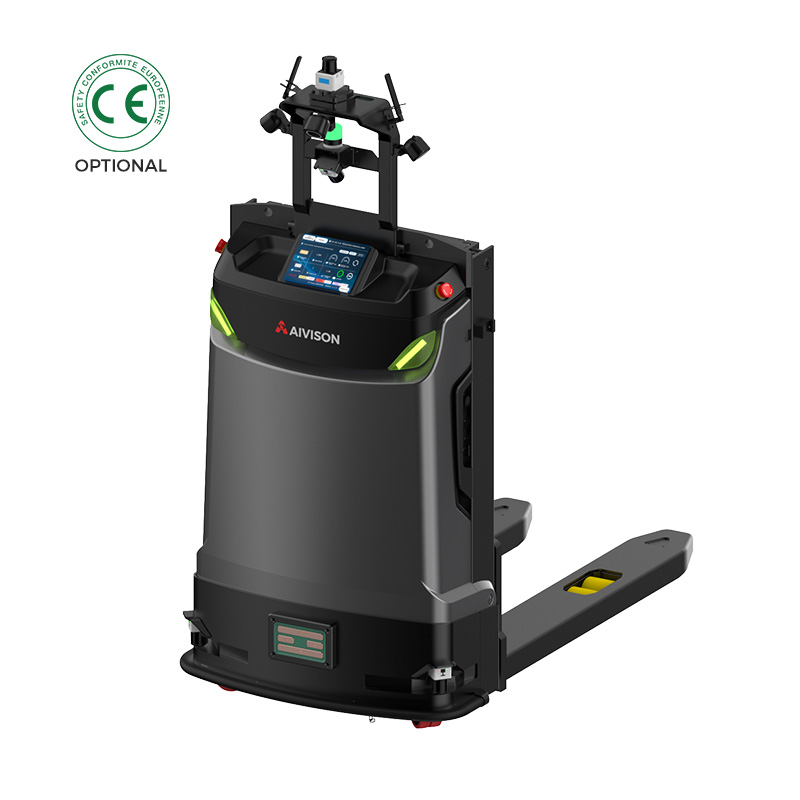
SLAM Lifting AGV Chassis for OEM Top Modules
Factory-built lifting chassis for rack transport and integration projects. A practical base for custom top modules, robotic arms or roller decks.
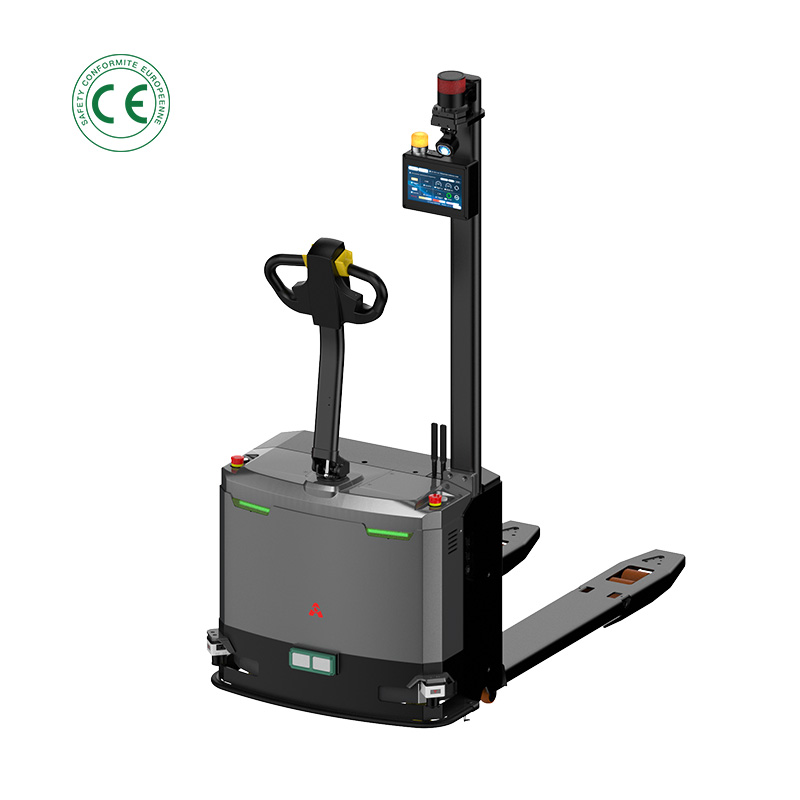
CE Industrial AMR for Warehouse Material Handling
Autonomous material handling platform for warehouse automation, line-side delivery and repetitive transfer tasks in mixed-traffic environments.

2000 kg Laser Forklift Robot for Palletized Parts
Unmanned forklift platform for large-load goods-carrying, pallet handling and finished parts transfer where standard AMRs are not enough.

AI-Ready Dual 7-DOF Humanoid Robot Chassis
Omnidirectional development platform with ROS2, laser SLAM and dual arms for flexible assembly research, machine tending and advanced automation pilots.
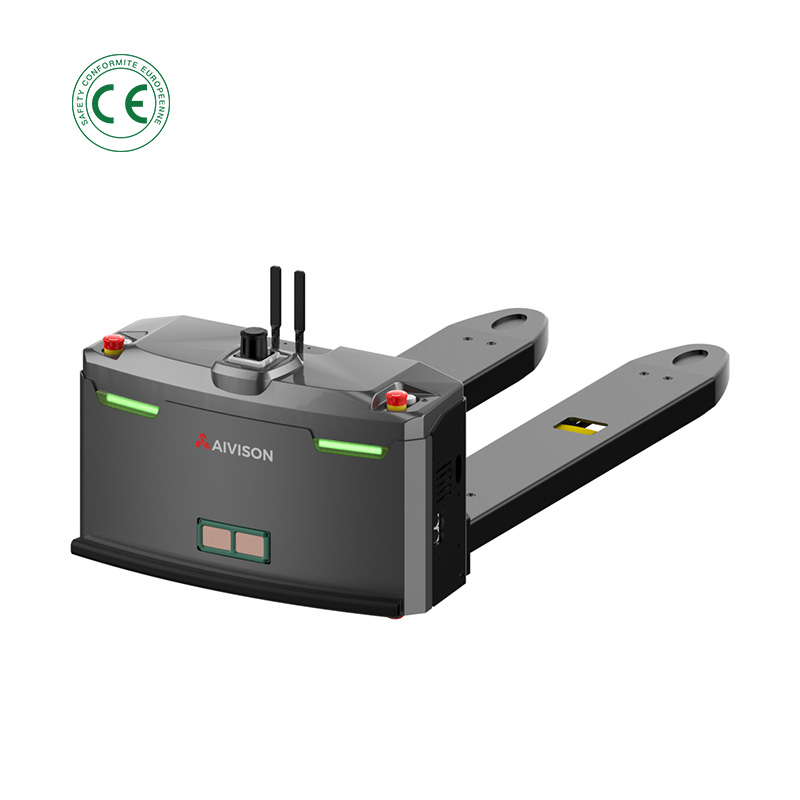
AMR Automated Warehouse Logistics Robot
Industrial logistics AMR for scheduled material flow between receiving, storage, kitting and assembly dispatch points with automatic charging support.
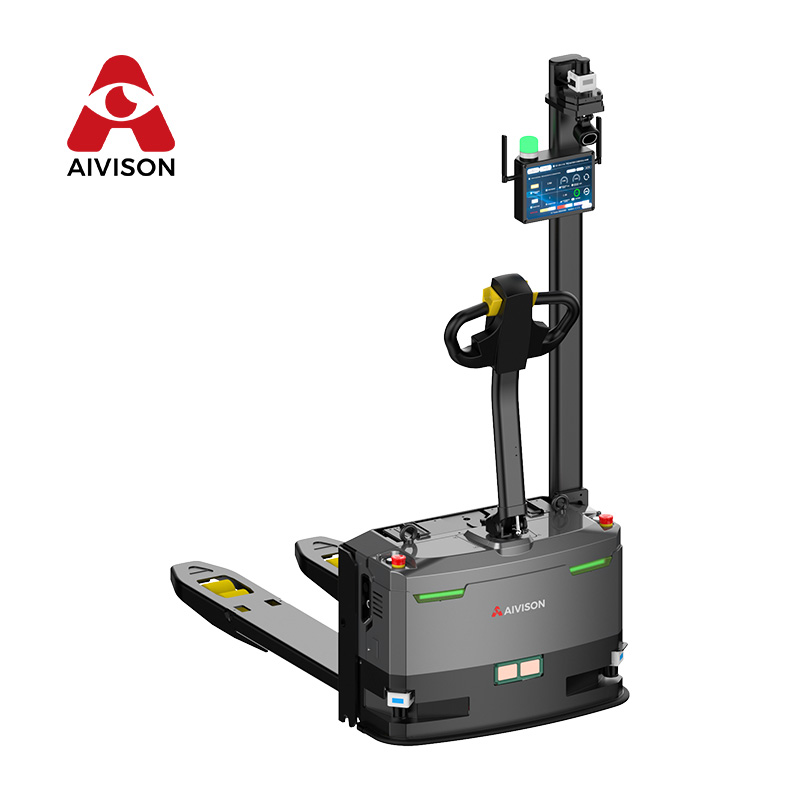
1500 kg Laser SLAM Forklift AGV
Navigation and lifting combined for raw material, WIP and finished goods movement. Suitable for repetitive pallet cycles and high-shelf access.

Omnidirectional Dual-Arm Service Robot Chassis
Dual 7-DOF arms with omnidirectional mobility for kitting, inspection assistance, flexible assembly cells and human-robot collaboration studies.
Need the complete specification set, including payload options, arm selection, docking accuracy and integration scope for a Udon Thani project?
Get CatalogEngineering Signals Udon Thani Buyers Should Verify
Automation projects fail when the robot is treated as a single machine rather than a production system. These benchmarks show how Marnix approaches navigation, payload, repeatability and fleet deployment.
Marnix publishes an onsite assessment by TÜV Rheinland, a Fortune 500 supplier record and verifiable trade-history information. Buyers should always ask for the current report, configuration drawing and acceptance criteria before approving an OEM/ODM AMR project.
What “OEM/ODM AMR with Robotic Arm” Should Mean in an Auto Parts Factory
An OEM/ODM AMR with robotic arm for auto parts assembly is not simply a mobile robot with an arm bolted onto it. In a production-worthy system, the mobile base, arm, end-of-arm tooling, vision, safety logic, docking method and fleet scheduler must work as one station. The mobile base carries the arm between workcells; the arm performs pick-and-place, machine tending, screwdriving, inspection or kitting; the fleet software decides which robot receives the next task; and the docking method determines whether the station can hold repeatable position over thousands of cycles.
For Udon Thani, the most practical architecture is usually hybrid. Use laser SLAM navigation at ±5 mm for transport, line-side delivery and pallet movement. Add QR-assisted docking at ±2 mm only where a mobile platform must hand over a fixture or rack with tighter positional tolerance. Reserve ±0.05 mm composite robot repeatability for selected assembly, dispensing, inspection or machine-tending stations where the process justifies calibrated station design. This layered approach avoids over-specifying every robot and keeps infrastructure cost under control.
Udon Thani buyers should also examine what the supplier can customize. Marnix is a mobile robot manufacturer, not only a trading company. Its portfolio includes jacking robots, smart forklifts, pallet AMRs, composite robots, humanoid development chassis and intelligent charging docks. Custom top modules can include jacking units, roller conveyors, forklift forks, 6-axis arms and dual-arm configurations. That matters for auto parts assembly because the part family often changes faster than the building layout.
- OEM: build the mobile robot, top module and interface to the buyer’s specification and line requirements.
- ODM: adapt proven chassis, navigation and fleet software, then customize the upper structure for faster deployment.
- Integration: define docking, handover, safety zones, Wi-Fi coverage and acceptance tests before shipment.
Choose Precision by Station, Not by Habit
The key question is not “Which robot has the highest accuracy?” but “Which stations truly need that accuracy, and what is the cost of achieving it repeatedly?”
Match the Robot to the Auto Parts Assembly Task
Auto parts production combines heavy pallets, small high-value components, repeated changeovers and mixed human traffic. A single robot type rarely fits every zone.
Inbound and Pallet Transfer
Use the 2000 kg AMR or 1500–2000 kg laser forklift platforms for raw material, stamping containers and finished goods pallets.
Line-Side Replenishment
Deploy SLAM AMRs with rack lifting or roller modules to deliver kits and subassemblies according to takt time.
Robotic Arm Assembly Cell
Use a composite mobile manipulator or dual-arm chassis for machine tending, screwdriving support, pick-and-place and inspection.
Flexible Kitting and Inspection
Use dual-arm or humanoid development platforms to validate new kitting, quality-inspection and high-mix assembly workflows.
Where OEM/ODM AMRs with Robotic Arms Fit in Udon Thani
Udon Thani sits within a practical logistics and manufacturing corridor serving Isan and cross-border supply chains. The winning automation project is usually the one that solves a specific bottleneck without forcing a complete factory rebuild.
Mixed-Model Line-Side Delivery
Move brackets, fasteners, connectors and subassemblies to multiple stations in the same shift. SLAM navigation handles route changes without floor tape, which is valuable when a Udon Thani factory introduces a new model variant.
Rack and Trolley Transport
Jacking robots lift and carry racks between machining cells, pre-assembly and final assembly. The low-profile base is useful where conventional forklifts create congestion or require wider aisles.
CNC and Machine Tending
A mobile manipulator can travel between machines, load or unload fixtures and return to a charging dock. For high-mix production, the robot’s value comes from redeployment rather than fixed automation that becomes obsolete after one part family.
Kitting and Sequencing
Robots can deliver sequenced kits to operators, reducing walking time and wrong-part risk. Dual-arm platforms can support small-part picking, tray handling and inspection tasks where ergonomics and consistency matter.
End-of-Line Palletizing and Inspection
Mobile platforms with robot arms can move between end-of-line stations, pick finished parts, place them into trays or perform repeatable visual checks. This is valuable for factories that cannot justify a dedicated fixed robot at every line.
Warehouse-to-Line Cross-Dock
Automated warehouse AMRs can connect receiving, storage and assembly dispatch. For Udon Thani operations serving regional distribution or cross-border customers, consistent 24/7 transfer reduces dependence on shift-by-shift forklift availability.
Automation Trends Shaping Udon Thani’s Auto Parts Supply Chain
The business case for mobile manipulators is becoming clearer as factories balance labor flexibility, traceability, energy cost and high-mix production.
Shift Stability
Manufacturers want to protect output when operators are unavailable. AMRs keep material moving across breaks, night shifts and seasonal peaks.
High-Mix, Low-Volume
Auto parts factories increasingly produce multiple variants on the same floor. Mobile robots redeploy faster than fixed conveyors when layouts change.
Cross-Border Connectivity
Udon Thani’s position supports logistics links into the wider Isan region and neighboring markets. Reliable material handling helps factories serve time-sensitive customers.
Traceability and Data
Managers want task records, robot status, charging cycles and exception alerts. Fleet software turns material movement into measurable operational data.
Thailand’s broader manufacturing direction, including Thailand 4.0 and the shift toward higher-value automotive and EV-related components, encourages factories to evaluate automation as a step-by-step capability rather than a one-time purchase.

Shenzhen-based R&D and manufacturing for laser SLAM AMRs, jacking robots, smart forklifts and charging docks.
Why Work with Marnix for an OEM/ODM AMR Project?
Shenzhen Marnix Intelligent Technology Co., Ltd. builds autonomous mobile robots for factories and system integrators. The company draws on about ten years of AGV engineering experience and supplies a complete portfolio that includes jacking robots, smart forklifts, pallet AMRs, composite robots and intelligent charging docks. For Udon Thani auto parts projects, this breadth matters because the same fleet software can support different payloads and top modules.
Navigation is handled by laser SLAM with vision fusion. Robots are coordinated by an intelligent scheduling system over indoor Wi-Fi, enabling simultaneous task assignment, traffic control and automatic charging with compatible docks. Standard SLAM navigation does not require auxiliary tracks or QR codes; QR scanning can be added only where precision docking demands it. For composite robots with a 6-axis arm, multiple synchronization protocols can support repeatability down to ±0.05 mm in properly calibrated stations.
Marnix also supports manufacturer-level customization. Chassis, payload and top mechanisms can be engineered around the process, including jacking units, roller conveyors, forklift forks and robotic arms. Quality control includes multi-stage intelligent inspection and operational stress testing before shipment. The company publishes third-party verification through a TÜV Rheinland onsite assessment, a Fortune 500 supplier record and visible trade-history information. These are useful checks for buyers in Thailand who need a supplier that can support both the machine and the integration conversation.
- Complete AMR portfolio from one manufacturer, reducing multi-vendor integration friction.
- OEM/ODM support for integrators, including custom top modules and fleet software coordination.
- Track record with 200+ manufacturers across three continents and eight core industries.
- Third-party verification and trade records available for procurement due diligence.
What Udon Thani Buyers Should Prepare Before Requesting a Quote
These six inputs determine most of the robot selection, fleet size and integration effort. Sharing them early shortens technical review from weeks to days.
Load Profile
Provide maximum weight, footprint and center of gravity for racks, pallets, trays or fixtures. Also state whether the load is stable during acceleration.
Site Layout
Send a CAD drawing or sketch with aisles, doors, slopes, elevator or lift points, charging locations and any areas where human traffic is dense.
Throughput Target
Define moves per hour, peak periods and acceptable waiting time. This sets the number of robots, charging ratio and buffer strategy.
Docking Precision
Identify where ±5 mm is enough and where ±2 mm QR docking or arm-level repeatability is required. Precision has cost implications.
Wi-Fi and Environment
Share access-point coverage, heat and dust conditions, floor quality and mixed-traffic rules. These influence configuration and maintenance planning.
Equipment Interfaces
List conveyors, machines, racks or workstations the robot must hand over to, plus any top-module, gripper or safety requirements.
Common Local Procurement Questions in Udon Thani
Practical answers for factory owners, purchasing teams and system integrators evaluating an OEM/ODM AMR with robotic arm.
Can an AMR with robotic arm be deployed without rebuilding our Udon Thani factory floor?
In most standard configurations, yes. Laser SLAM navigation maps existing natural features, so magnetic tape, reflectors or floor QR codes are not required for basic transport. QR labels are added only at stations that need tighter docking accuracy. A robotic arm station still needs a proper safety review, fixture layout and handover zone, but the building does not normally need a full reconstruction.
What navigation accuracy is realistic for auto parts assembly?
Laser SLAM can achieve approximately ±5 mm positioning for transport and line-side delivery. Adding a QR scanning camera at selected stations can raise docking accuracy to about ±2 mm. Composite mobile robots with a 6-axis arm can reach ±0.05 mm repeatability in calibrated station conditions. The right choice depends on the part, gripper, fixture and process tolerance rather than on a single headline number.
How does OEM/ODM customization work for a mobile manipulator?
Marnix can customize the chassis, payload interface, jacking unit, roller conveyor, forklift forks and robotic arm mounting. For OEM projects, the robot is built to the buyer’s specification. For ODM projects, a proven chassis and navigation stack are adapted to the application. Udon Thani buyers should provide part drawings, target cycle time, station layout and handover requirements so the arm reach and tooling can be selected correctly.
What should we submit for a project evaluation?
Send the load profile, CAD layout, throughput target, docking precision, Wi-Fi coverage, electrical requirements and interface list. If a robotic arm is required, include part dimensions, material, gripper needs and whether the robot must load machines or only transfer trays. This allows the supplier to recommend a realistic platform instead of quoting a generic robot.
How are multiple robots coordinated on the same floor?
Marnix robots can be managed by an intelligent scheduling system over indoor Wi-Fi. The fleet software assigns tasks, handles traffic control and supports automatic charging with compatible intelligent charging docks. For a Udon Thani project, the Wi-Fi survey and traffic rules should be reviewed during the site evaluation.
How do you address tropical heat, dust and mixed forklift traffic?
These factors are reviewed during project scoping. The correct configuration depends on the actual environment, duty cycle, cleaning routine and maintenance access. Marnix engineering can review environmental conditions and recommend suitable protection, charging strategy and service intervals. Buyers should avoid assuming that a standard warehouse robot is automatically suitable for every dusty or high-temperature zone.
Can local integrators in Thailand partner with Marnix?
Yes. Marnix supplies products and solutions to system integrators as well as end users. Integrators can request OEM/ODM support, custom top modules, fleet software coordination and factory acceptance testing before shipment. Local integration partners are valuable for installation, electrical work, safety validation and ongoing service in Udon Thani and the wider Isan region.
How do we start a Udon Thani automation project?
Begin with a short process review: what moves, how far, how often, how heavy and how precisely. Then request the catalog and share your layout and takt-time target. Marnix can review the application and recommend a combination of AMR, jacking robot, smart forklift or mobile manipulator. Email info@marnixbot.com or use the inquiry button below to request the current catalog and project checklist.
Ready to Specify an OEM/ODM AMR with Robotic Arm for Udon Thani?
Share your part family, payload, takt time, docking precision, floor layout and target start date. Our engineering team will help you compare a laser SLAM transport fleet, a jacking or forklift platform, and a robotic arm configuration before you commit to a layout.
Get CatalogFor technical review, email info@marnixbot.com with “Udon Thani AMR Project” in the subject line.