Material Handling AGV Manufacturers & Exporter for San Antonio
Laser SLAM AMRs, jacking robots, smart forklifts and custom top modules engineered by Shenzhen Marnix for San Antonio plants, distribution centers and system integrators—without floor tracks, reflectors or disruptive facility rebuilds.
8 Material Handling AGV & AMR Systems for San Antonio Operations
These are the platforms most often requested by North American buyers evaluating warehouse transfer, line-side delivery, pallet handling, conveyor handoff and advanced robotics development. They share a common navigation and fleet-control core, but differ in payload interface, docking method and customization potential.
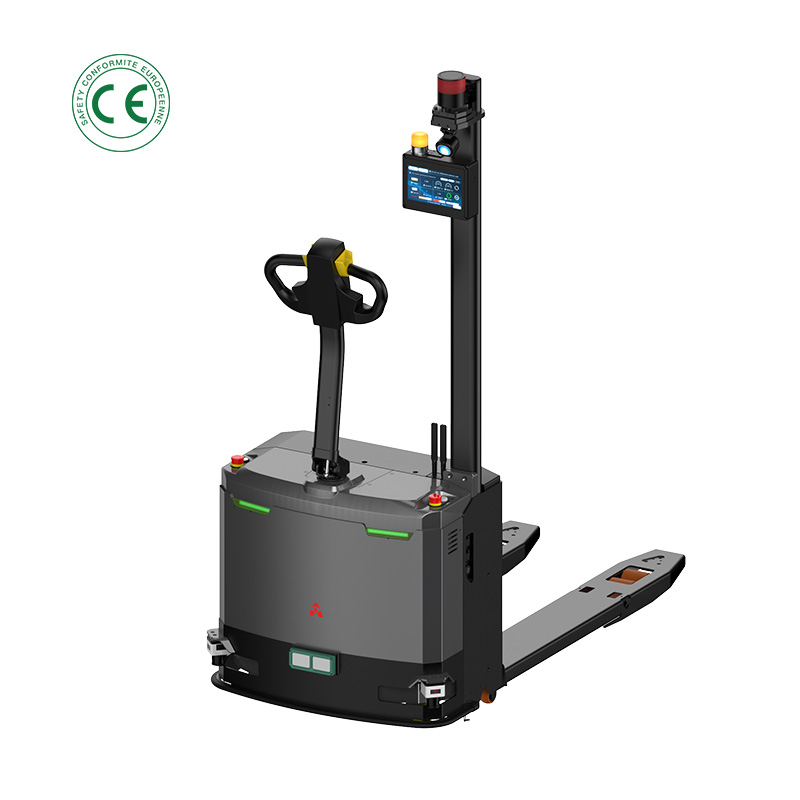
Automatic Handling CE Certificate 2000kg Forklift Robot Vehicle Laser AGV for Large Load Goods-carrying
A heavy-duty smart forklift AGV for large pallets, returnable containers and trailer or dock interfaces. It suits San Antonio manufacturers that need high payload capability without converting the floor to fixed guide infrastructure.
View product →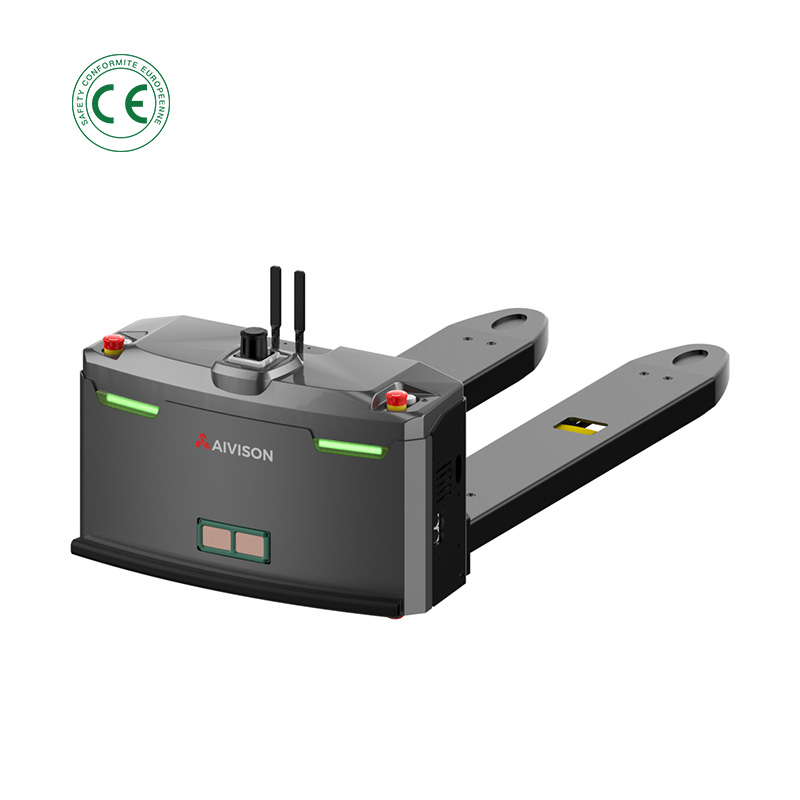
AMR Automated Warehouse Robot Logistics Automatic Industrial Logistics Robots AMR Robot
An automated warehouse AMR for repetitive inbound-to-staging, put-away and dispatch movement. The platform is practical for 3PL, e-commerce and distribution operations where volume fluctuates and route changes are routine.
View product →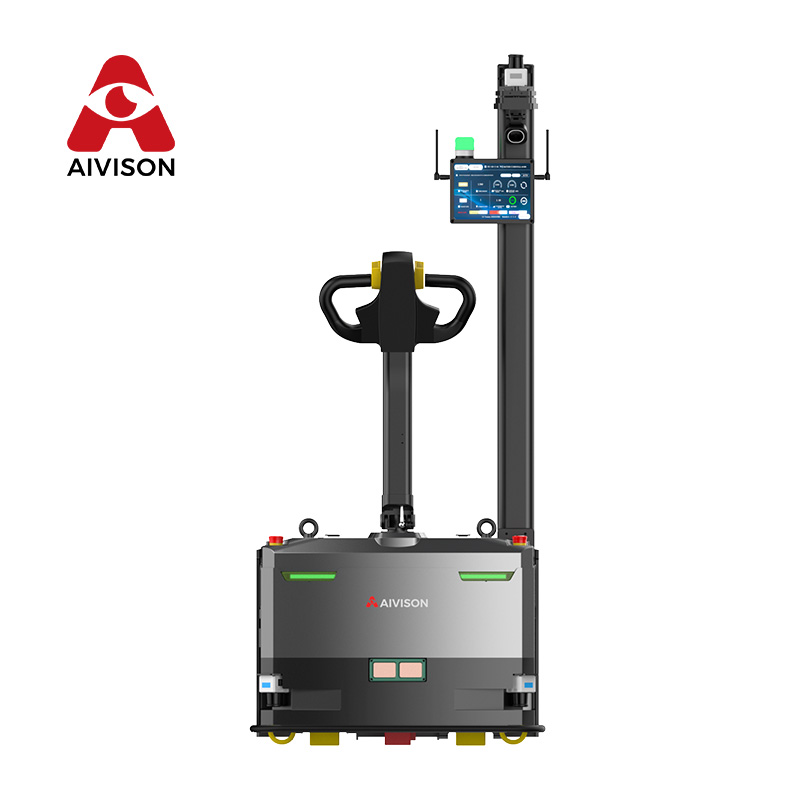
China Factory Movable Pallet Agv Robot Rack Shelf for Intelligent Robot Warehouse
A movable pallet AGV rack platform that turns shelves and racks into flexible mobile inventory. It is useful for high-mix production, temporary storage and line-side buffers where fixed conveyors would be too rigid.
View product →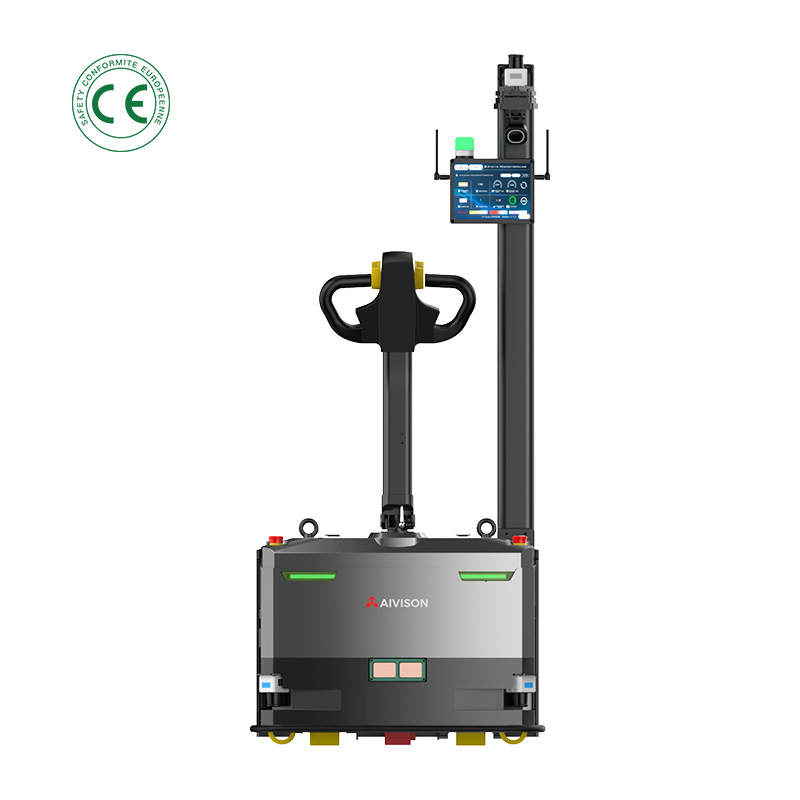
Autonomous Mobile Robot AGV CE Laser SLAM Navigation for Material Handling and Logistics
A general-purpose laser SLAM AMR for material handling and logistics. It maps natural features to navigate existing facilities, with optional QR assistance at stations that require ±2 mm handover precision.
View product →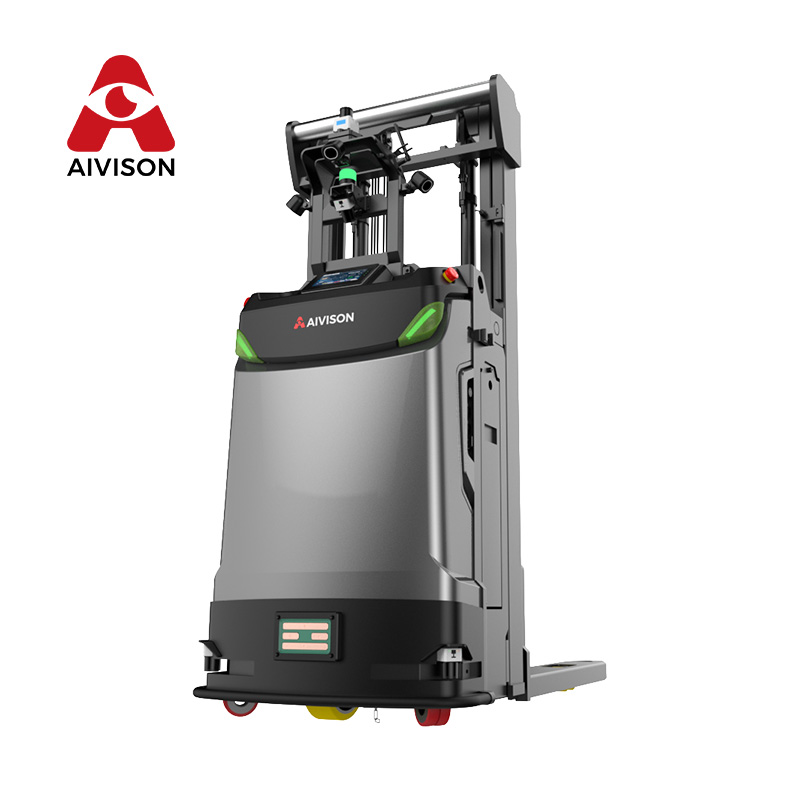
Autonomous Mobile Robots (AMR) Implement Cargo Transportation Between Warehouse and Conveyor Line
An AMR configured for cargo transfer between warehouse storage and conveyor lines. It reduces manual handoffs and work-in-process waiting where conveyors end and the next production or sorting zone begins.
View product →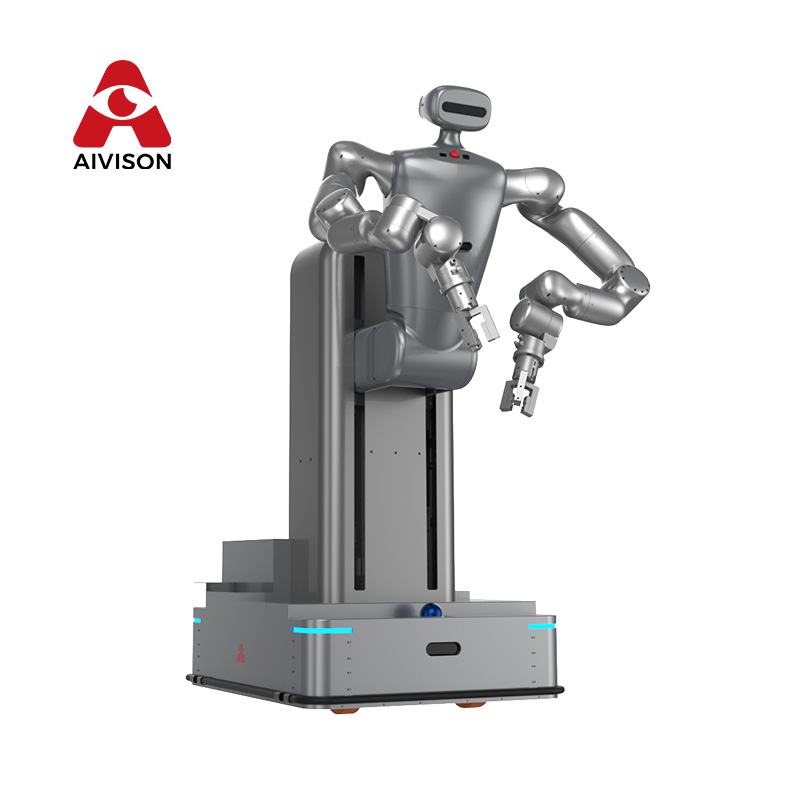
Omnidirectional Service Humanoid Robot Chassis Dual 7-DOF Arms Laser SLAM Navigation for Hospitality and Retail
An omnidirectional humanoid service robot chassis for hospitality, retail, healthcare and research pilots. Dual arms and laser SLAM navigation make it a platform for guided interaction and service-task prototyping.
View product →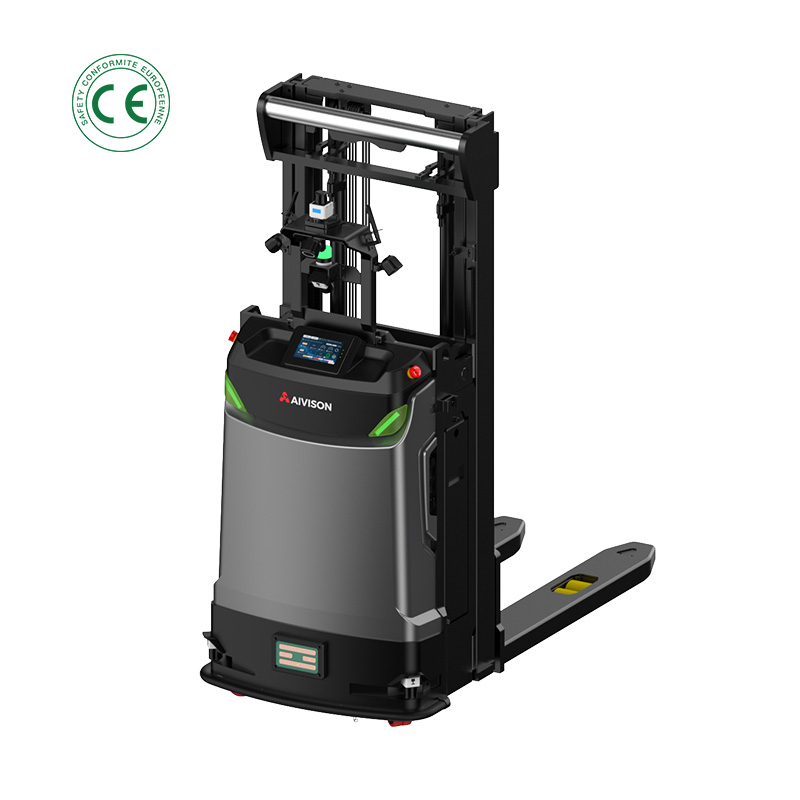
Aivison AMR Robot Whicle Automated Warehouse Automatico agv Logistics Industrial Guided Vehicles
An industrial AMR vehicle for automated warehouse logistics and repetitive pallet or cage movement. It is designed for fleet scheduling and charging-dock compatibility in sustained-duty operations.
View product →
AI-Ready Humanoid Robot Chassis Dual 7-DOF Arms Omnidirectional Drive ROS2 Laser SLAM Open Development Platform
An open development platform for robotics labs, universities and integrators. It combines omnidirectional drive, dual 7-DOF arms, ROS2 and laser SLAM for perception, manipulation and autonomous interaction research.
View product →Not sure which platform fits your San Antonio layout?
Share the load, rack or pallet drawing, aisle width, throughput target and docking precision. We will recommend a robot mix instead of forcing one platform into every route.
Material Handling Automation for a Broad Industrial Footprint
San Antonio’s industrial base is unusually broad for a metro of its size. Automotive assembly and supplier parks, aerospace and defense maintenance at Port San Antonio, bioscience and medical-device manufacturing, food and beverage processing, and large distribution operations all compete for the same constrained labor pool. The city’s position on I-35 and I-10, plus its proximity to the Laredo border crossing and Mexico’s manufacturing corridor, also makes it a staging point for cross-border freight. That mix rewards material handling automation that can handle pallets, racks, totes and line-side containers without forcing every building into a new floor or a single fixed conveyor layout.
For procurement teams, the question is not whether an AGV can move a load. It is whether the system can reduce empty travel, maintain takt time during peak shifts, dock accurately enough for the actual rack or conveyor, and recover gracefully when a person or forklift crosses its path. Laser SLAM robots map existing natural features—walls, columns and fixed equipment—rather than depending on magnetic tape, reflectors or a floor full of QR codes. QR labels can still be added only at the few stations that need ±2 mm handover, which keeps infrastructure cost focused where it creates value.
Marnix approaches San Antonio as an export manufacturer, not a local distributor with unverified inventory. The right project structure is therefore technical: define the process, approve the robot configuration, confirm the interface matrix, test critical functions before shipment, and coordinate installation with a local integrator or the plant engineering team.

Why Marnix Is a Practical AGV & AMR Partner for San Antonio Projects
San Antonio buyers need more than a robot specification sheet. They need a manufacturer that can document precision, customize payload interfaces, support fleet scheduling and answer integrator questions before installation.
Manufacturer-Level Engineering, Not Catalog Resale
Chassis, navigation, top modules, fleet scheduling and charging docks are engineered under one manufacturer. That shortens the feedback loop when a San Antonio integrator needs a custom conveyor, jacking or fork interface.
One SLAM Core, Multiple Top Modules
The same navigation and fleet software supports jacking units, roller conveyors, forklift forks and 6-axis arms. Mixed fleets can be deployed without maintaining four unrelated control stacks.
Precision Where the Process Needs It
Laser SLAM delivers ±5 mm without floor infrastructure; a QR camera raises docking to ±2 mm; composite robots with a 6-axis arm reach ±0.05 mm repeatability for semiconductor and medical-device tasks.
Fleet Scheduling and Automatic Charging
An intelligent scheduling system coordinates simultaneous tasks over indoor Wi-Fi and manages charging with compatible smart docks. The objective is sustained duty, not a single demonstration robot.
Quality Protocol Before Shipment
Multi-stage intelligent inspections and thousands of operational stress tests target near-zero failure rates. More than 200 manufacturers across three continents have used Marnix robots in production and warehouse environments.
Export Documentation and Integrator Support
TÜV Rheinland onsite assessment, Fortune 500 supplier experience and verified supplier records support procurement review. Marnix supplies drawings, interface documentation, export packing and customization for integrators.
Where San Antonio and South-Central Texas Operations Use AGVs and AMRs
These are common RFQ patterns from North American warehouses and plants evaluating material handling automation against existing workflows, labor availability and mixed forklift traffic.
3PL and Distribution Along I-35 / I-10
Distribution centers often need flexible inbound-to-staging transfer without adding more forklift drivers to repetitive runs. AMRs can move pallets, cages and totes between receiving, put-away, picking and dispatch while the WMS remains the system of record.
Automotive and Heavy-Equipment Suppliers
San Antonio’s automotive assembly footprint supports a supplier network that moves bulky parts, racks and returnable containers on tight schedules. A 2,000 kg laser forklift AGV or movable pallet rack robot can stabilize line-side replenishment and reduce forklift traffic in shared aisles.
Aerospace, Defense and Advanced Manufacturing
Port San Antonio and surrounding advanced-manufacturing facilities place a premium on traceability, controlled movement and careful handling of high-value components. Configurations can combine laser SLAM mobility with conveyor, jacking or arm-based modules, with docking precision matched to the workstation.
Medical Device, Bioscience and Controlled Logistics
Medical-device and bioscience operations need repeatable transfer of carriers, trays and carts without unnecessary floor infrastructure. Cleanroom-adjacent projects should define cleaning, material and airflow requirements early so the robot and top module can be reviewed against the actual environment.
Food, Beverage and Consumer Goods Warehousing
High-volume consumer goods sites often face peak-season labor gaps and long carry distances. AMRs can absorb repetitive pallet and tote moves, while fleet scheduling balances charging and task priority so throughput does not collapse when one vehicle is unavailable.
Cross-Border Staging and Mexico Nearshoring
San Antonio’s proximity to Laredo makes it a natural staging point for components and finished goods moving between Mexico and the United States. Automation can improve trailer-to-warehouse transfer, cross-dock visibility and returnable-container circulation when layout and dock interfaces are engineered together.

What Is Changing in San Antonio Material Handling Procurement
San Antonio is not a single-industry market. The strongest automation business cases combine nearshoring, labor resiliency, existing-building constraints and station-level precision.
Nearshoring Increases the Value of Flexible Flow
As Mexico-linked supply chains expand, San Antonio warehouses face more variable inbound timing and mixed pallet profiles. Fixed conveyors are efficient for stable volume, but laser SLAM fleets can be remapped when storage zones or cross-dock lanes change.
Brownfield Retrofits Are Preferred Over Facility Disruption
Most local facilities cannot shut down for weeks to install floor tracks. Trackless navigation avoids that capital project and lets automation be phased in by route, shift or zone, which is often easier to approve than a full conveyor rebuild.
High-Bay and High-Density Storage Demand Station-Level Precision
Where racks are tall and clearances are tight, ±5 mm navigation may be sufficient for travel but not for final handover. A QR-assisted ±2 mm station or a composite arm can provide precision only where it is needed.
Mixed Fleets Are Replacing Single-Robot Pilots
Buyers increasingly start with one workflow, then add jacking robots, forklifts or conveyor AMRs. A common scheduling layer matters more than a single hero robot because it prevents islands of automation and simplifies operator training.
Labor Resiliency and Safety Are Board-Level Metrics
Turnover, overtime and forklift-pedestrian incidents are easier to justify than a simple headcount comparison. Automation should be evaluated on stable throughput, reduced high-risk trips and predictable ramp-up during peak season.
Integrators Are Becoming the Deployment Hub
San Antonio system integrators need OEM partners that can customize top modules, share interface documentation and support commissioning. Marnix positions itself as a manufacturer behind the integrator rather than a competing turnkey contractor.
Recommended Configurations by San Antonio Workflow
Use the workflow to narrow the platform, then verify the payload, rack drawing, aisle width, throughput and docking precision with engineering.
Heavy Pallet and Trailer Interface
Start with the Automatic Handling CE 2000 kg Forklift Robot Vehicle Laser AGV. It is suited to large-load goods-carrying, heavy pallets and dock or trailer interfaces where a smart forklift must work in mixed traffic.
View system →Warehouse-to-Line Replenishment
Combine a laser SLAM AMR with a jacking or movable pallet rack platform. This pattern keeps line-side inventory in racks and lets the robot lift, move and position the rack without installing a fixed conveyor.
View system →Distribution Center Transfer and Staging
Use an automated warehouse AMR or Aivison industrial AMR for repetitive receiving-to-staging runs. QR assist can be reserved for high-shelf or precision conveyor handoffs where the process actually requires it.
View system →Advanced Robotics and Humanoid Development
For universities, robotics labs and integrators, the AI-ready humanoid chassis with ROS2 and dual 7-DOF arms provides an open platform for perception, manipulation and omnidirectional drive research.
View system →Match Precision to the Station, Not the Brochure
One of the most common procurement mistakes is buying the highest precision in the catalog for every route. That adds cost and complexity without improving throughput. San Antonio projects should separate travel accuracy from docking accuracy and from manipulation repeatability.
Laser SLAM Travel and Transfer
Natural-feature navigation maps existing walls, columns and equipment. No magnetic tape, reflectors or floor QR codes are required for normal travel. Best for warehouse transfer, line-side delivery and layouts that change.
SLAM + QR Station Docking
QR labels are installed only at selected stations. This is the practical choice for high-shelf storage, precision conveyor handoff and carrier docking where final positioning matters more than the entire route.
Composite Arm Repeatability
A mobile chassis with a 6-axis arm and multi-layer synchronization protocol addresses semiconductor, medical-device and precision assembly tasks. The arm is for station-level manipulation; the chassis still handles transport.

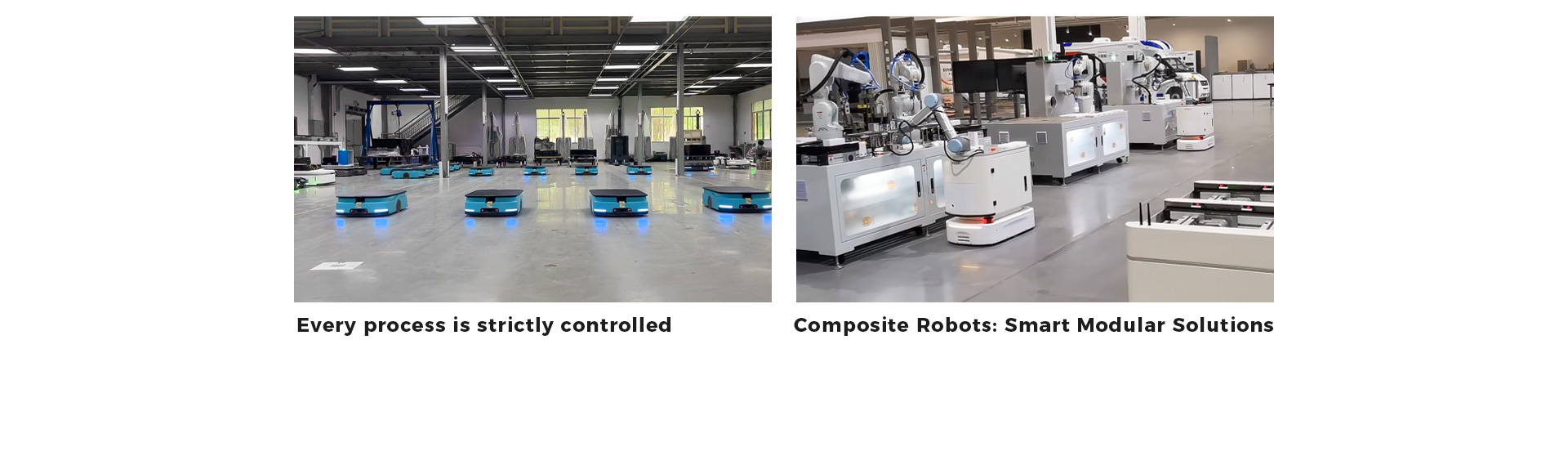
Quality evidence should be part of the RFQ, not an afterthought. Marnix uses multi-stage intelligent inspections and thousands of operational stress tests before shipment. The company has served more than 200 manufacturers across three continents and eight core industries, and has been assessed onsite by TÜV Rheinland. For San Antonio buyers, these are not decorative badges: they shorten vendor qualification and give the integrator a documented starting point for site acceptance testing. Procurement teams should still verify the exact configuration, U.S. site requirements and interface scope in writing. A credible manufacturer will welcome that review.

TÜV Rheinland Onsite Assessment
Company premises and operations verified by an independent inspection body.

Supplier to Fortune 500
Procurement contract experience with a Fortune 500 company, assessed by independent third parties.

Verified Multispecialty Supplier
Low-MOQ customization and multi-category robot procurement capability for integrators and end users.
Credit and Transaction Records
Transparent credit index, transaction level and trade capacity history available for review.
What San Antonio Buyers Should Prepare Before Requesting an AGV Quote
From project experience, these six inputs determine most robot selection decisions. Sharing them upfront shortens evaluation from weeks to days and reduces the risk of a mismatched pilot.
Load and Carrier Profile
Maximum weight, footprint, center of gravity, rack or pallet type, and whether loads are open, fragile or stackable.
Layout and Aisle Constraints
CAD or scaled sketch with aisle widths, door openings, columns, ramps, elevators, charging locations and fire egress routes.
Throughput and Peak Pattern
Moves per hour by shift, peak-season profile, dwell time at stations, acceptable queue length and charging windows.
Docking Precision
Which stations truly need ±2 mm QR assist or arm-level repeatability, and which can accept ±5 mm travel accuracy.
Network and Fleet Integration
Wi-Fi coverage, access-point density, dead zones, WMS/MES/PLC interface expectations and cybersecurity review.
Commercial and Site Readiness
Destination ZIP, Incoterms, target install window, local integrator availability, spare-parts plan and acceptance criteria.
Frequently Asked Questions for San Antonio AGV Projects
Direct answers for procurement teams, plant engineers and system integrators evaluating a material handling AGV or AMR program.
Is Marnix a local San Antonio AGV manufacturer or an exporter?
Marnix is a Shenzhen-based manufacturer and exporter. We support San Antonio projects through export engineering, factory acceptance testing, documentation, export packing, remote commissioning support and coordination with local integrators. We do not represent that we hold local inventory or a local service depot in San Antonio unless a project-specific arrangement is confirmed in writing.
Do Marnix AGVs require floor tracks, reflectors or QR codes?
Standard laser SLAM maps natural features, so no magnetic tape, reflectors or floor QR codes are required for normal travel. QR labels are added only at stations that require ±2 mm docking precision. This matters in San Antonio brownfields where floors are already in use and shutdowns are expensive.
Which robot should a San Antonio operation buy first?
Start from the load and carrier. For heavy pallets and trailer interfaces, review the 2,000 kg forklift AGV. For rack or shelf movement, review a jacking or movable pallet rack platform. For repetitive warehouse transfer, review a warehouse AMR. For conveyor handoff, review an AMR configured between warehouse and conveyor line. A pilot should measure one route, not every move.
Can the robots integrate with WMS, MES and existing conveyors?
Fleet scheduling runs over indoor Wi-Fi and coordinates multi-robot tasks. Integration scope depends on your WMS, MES, PLC and conveyor protocols; Marnix engineers document interface points before shipment. Ask for an interface matrix and define who owns the PLC handshake, error recovery and acceptance test. Do not assume plug-and-play with every ERP.
How are U.S. site requirements, shipping and lead time handled?
Configurations shown include CE-certified options where noted. For U.S. sites, voltage, guarding, network, fire and life-safety, and local electrical requirements must be reviewed with your integrator and authority having jurisdiction; UL or other site-specific certifications should be confirmed per project rather than assumed. Shipping is quoted per Incoterms to the destination port or door. Lead time begins after technical confirmation, deposit and interface freeze.
What information do you need for a quote, and what support follows?
Send payload, rack or pallet drawing, layout CAD, throughput by shift, docking precision, Wi-Fi coverage, equipment interfaces, destination ZIP and target install window. Include your integrator contact if one is already engaged. Support can include factory acceptance documentation, export packing, remote commissioning coordination, spare-parts planning and after-sales troubleshooting; exact scope should be written into the order.
Send Your San Antonio Layout, Payload and Throughput Target
Our engineers will map a practical robot mix—laser SLAM AMRs, jacking robots, smart forklifts and charging docks—and identify where QR assist or a composite arm is truly justified. If you already have a layout, include aisle widths, rack drawings, shift patterns and existing Wi-Fi coverage. Ask about an NDA before sharing sensitive drawings.