Logistics Robot Manufacturers & Supplier Serving the Chicago Market
Laser SLAM AMRs, jacking robots and smart forklifts engineered for Chicago-area warehouses, 3PLs, food plants and production lines — with ±5 mm navigation, ±2 mm QR-assisted docking, custom top modules and manufacturer-level support.
Get a QuoteEight Logistics Robot Configurations Recommended for Chicago Facilities
These eight platforms cover the practical range of Chicago market requirements: light 3PL transport, heavy pallet flow, cold-chain entry, high-shelf docking, packaging line support and integrator-led advanced automation. Every product link is preserved below.

Omnidirectional Mobile Manipulator AMR Dual 7-DOF Arms ±0.03 mm Repeatability Laser SLAM Humanoid Robot Base
Recommended for high-mix assembly, machine tending and quality-critical cells where mobility and manipulation must be combined. The ±0.03 mm repeatability suits advanced manufacturing pilots in the Chicago industrial corridor.
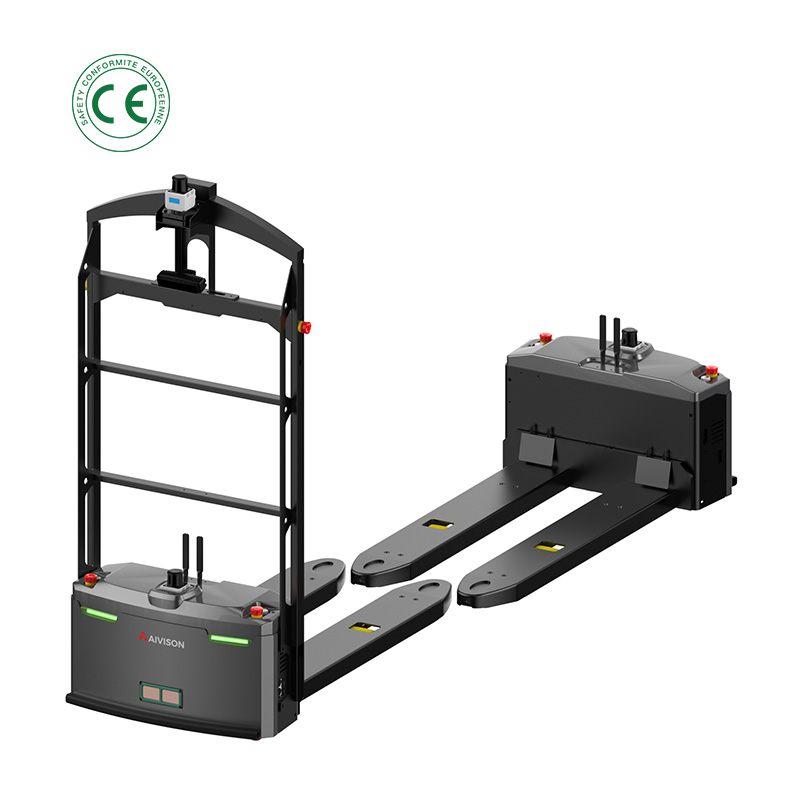
Aivison Customized 800kg Warehouse AGV Robot Lithium Battery AMR
A practical 800 kg platform for light 3PL, packaging and warehouse retrofits. Lithium battery operation and custom tops help fit older Chicago buildings with limited charging space and changing rack layouts.

High-performance Intelligent Smart Automated Guided Vehicle 2000kg AMR Robot
For heavier pallet moves between receiving, staging and production. The 2,000 kg class is suited to dense Chicago distribution operations, multi-shift line support and high-throughput replenishment.

Humanoid Robot Chassis Dual 7-DOF Arms Laser SLAM Omnidirectional Navigation ROS2 Open Platform AMR
Recommended for Chicago integrators building ROS2-based automation. The open platform supports rapid development of new top modules, machine interfaces and research-to-production pilots.
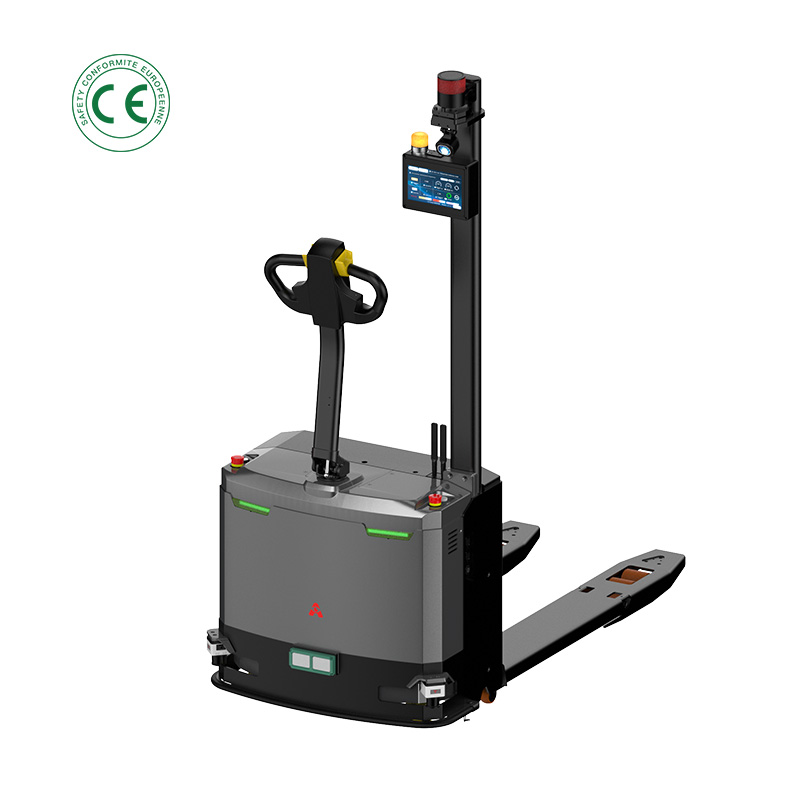
Autonomous Mobile Robot AMR AGV Forklift Pallet Stacker CE Certificate for Smart Warehouse and Production Line Automation
A CE-certified AMR forklift for pallet stacking and warehouse automation. Camera-assisted fork entry helps manage pallet variation common in high-volume 3PLs, food distribution and cross-dock operations.

Warehouse Stacker CE Forklift AGV 800kg Load Capacity Light AMR Pallet
Compact 800 kg pallet stacker for tight aisles, low clearances and lighter loads. A good fit for small and mid-size Chicago facilities that need to automate without rebuilding the rack layout.
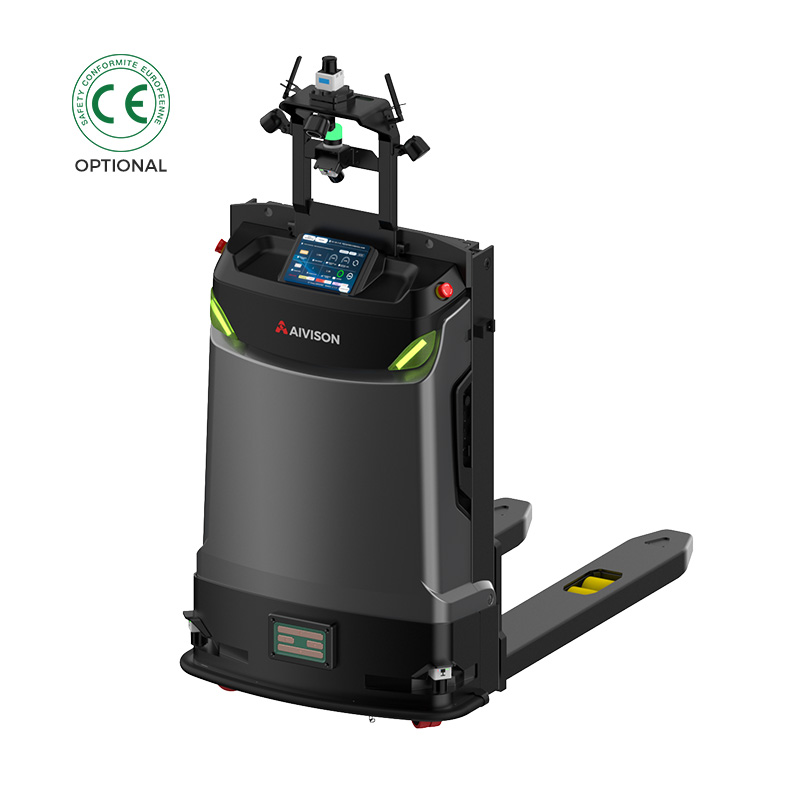
AGV AMR Warehouse Automatic Guided Vehicle 1500kg 2000kg AGV Robot Forklift
1,500–2,000 kg AGV/AMR forklift for high-throughput warehouses and production lines. Suitable for Chicago distribution centers that combine rail, truck and cross-dock flows.

Heavy Load 2000KG Load Forklift Laser Guide AMR for Warehouse Pallet
Heavy-load 2,000 kg laser-guided forklift AMR for repetitive pallet movement. Use where labor continuity, safe high-stack handling and predictable cycle times matter more than maximum travel speed.
Years of AGV engineering and mobile robot manufacturing
Laser SLAM navigation without tape, reflectors or floor QR codes
Manufacturers served across three continents
Repeatability for composite mobile robots with 6-axis arms
Chicago Is Not a Generic Automation Market
Chicago is one of North America’s most important logistics markets, but it is not a single, uniform environment. A third-party logistics operation in Joliet, a food plant near Bedford Park, a packaging converter in Carol Stream and a system integrator serving O’Hare all face different constraints. The common thread is the need to move more pallets with fewer touches while preserving safety, uptime and flexibility.
Marnix approaches the Chicago market as a manufacturer supporting local end users and integrators, not as a catalogue reseller. Our engineering team starts with the route, the load and the handover point — then matches the robot platform, navigation mode and top module. That order matters because the most expensive robot is the one that cannot complete the real route at the real dock door.
Chicago facilities often combine older concrete slabs, dock levelers, narrow aisles, mixed pedestrian traffic, seasonal freeze-thaw at doors and fast SKU changes. These conditions do not automatically require floor magnets or fixed infrastructure. Laser SLAM maps natural features and can navigate without tape, reflectors or floor QR codes at ±5 mm. For high-precision stations, a QR camera raises accuracy to ±2 mm without turning the entire aisle into a precision environment. For composite robots with a 6-axis arm, repeatability can reach ±0.05 mm. This tiered approach is important because over-specifying the whole route increases cost and maintenance without improving throughput.
Chicago Application Scenarios Where Mobile Robots Pay Back Fastest
Robots create value when the work is repeatable, the route has clear start and end points, and the operation can measure touches, travel distance, wait time or safety exposure. These five scenarios are especially relevant to Chicago-area buyers.
Food, Beverage and Cold-Chain Transfer
Chicago-area food processors and grocery distributors run refrigerated docks, freezer vestibules and wet floors. Robots reduce repeated travel from cold storage to staging. Specify door-opening interfaces, condensation management, floor conditions and charging away from extreme temperatures. Use 800–2,000 kg AMR forklifts for pallet moves and reserve QR-assisted docking for high-precision handover points.
3PL and E-Commerce Fulfillment
Chicago is a national fulfillment hub. High SKU counts and peak seasons make fixed conveyors difficult to justify. Laser SLAM AMRs re-route without floor magnets, while fleet scheduling coordinates multiple robots over Wi-Fi. The best first project is usually replenishment or pallet movement — not piece picking — because ROI is easier to measure and exception rates are lower.
Packaging, Metalworking and Assembly
Suburban manufacturing parks need line-side delivery and machine tending. Composite robots and dual-arm platforms can connect mobility with a roller conveyor, jacking unit or robotic arm. In high-mix production, keep robot routes stable and place QR labels only at high-precision stations. This preserves aisle flexibility while improving handover repeatability.
Intermodal and Distribution Centers
Facilities around Joliet and Elwood handle pallets from many origins, so pallet quality varies. Camera-assisted smart forklifts help locate fork pockets, while heavy-load 2,000 kg models handle repetitive moves. Map congested dock areas first, separate pedestrian routes where possible and validate floor conditions before selecting tire type, speed zones and charging locations.
System Integrators and Pilot Programs
Chicago has a strong integrator community. Marnix supports integrators with manufacturer-level customization, ROS2 open platforms and mixed fleets. Start with a baseline measurement — travel distance, touches, wait time and safety incidents — then scale only after the first route is stable. A disciplined pilot is more persuasive than a large catalogue promise.
What Is Changing in Chicago Logistics Automation
Buyers are moving from isolated robot demonstrations to production-grade fleet decisions. These four trends are shaping procurement conversations across Chicago warehouses, factories and integrator projects.
Labor Continuity Over Labor Replacement
Chicago’s labor market is deep but not frictionless; turnover and absenteeism can disrupt dock and line-side work. Buyers increasingly evaluate robots by repeatable touches per shift, not headcount alone. A robot that completes the same route, at the same speed and safety behavior, across every shift is often more valuable than a faster machine that requires constant intervention. Marnix emphasizes stable mapping, simple exception handling and fleet scheduling over one-off speed claims.
Cold-Chain, Energy and Charging Discipline
Cold storage and frozen docks demand attention to condensation, floor traction, door interfaces and charging location. Instead of treating winter as an edge case, Chicago projects should specify environmental conditions during the site survey. Intelligent charging docks and opportunity charging can keep fleets available without dedicated battery rooms. Electrical load planning also matters where facilities pursue sustainability targets or face demand charges.
Software-First WMS, MES and Safety Integration
Chicago buyers increasingly ask how robots will be dispatched, how exceptions are escalated and how data is handed to warehouse or production systems. Marnix robots share a laser SLAM navigation core and scheduling software, enabling mixed fleets to work together. Integrators value open platforms such as ROS2 because they reduce the risk of custom software becoming a dead end when the process changes.
Safety and Interoperability in the First Meeting
Mixed traffic is the norm in Chicago warehouses: pedestrians, pallet jacks, forklifts and robots share the same floor. Projects should define speed zones, crossing points, blocked-aisle protocols and maintenance lockout before the first mapping run. CE-certified platforms and documented risk assessments help, but the real outcome depends on route design, traffic rules and change management.
A Practical Precision Ladder for Chicago Automation Projects
Use the lowest precision that reliably meets the station requirement. This protects cost, reduces retrofit work and keeps the floor flexible as Chicago operations change.
Navigation Accuracy by Configuration
Precision is a station decision, not a whole-facility decision. Most Chicago routes should remain on laser SLAM; QR labels belong only where handover tolerance demands them.
Match the Navigation Mode to the Work
Laser SLAM at ±5 mm is the right base for pallet transfer, line-side delivery, warehouse-to-dock movement and frequent layout changes. It requires no tape, reflectors or floor QR codes, so older Chicago buildings can be mapped without production shutdowns for floor work.
SLAM plus QR camera at ±2 mm is appropriate for high-shelf storage, precision docking and wafer or carrier handover. QR labels are placed only at the stations that need them. This keeps the majority of aisles flexible while protecting the critical handover point.
Composite robots at ±0.05 mm combine autonomous mobility with a 6-axis arm or other top module. These systems are usually calibrated at the station and used for semiconductor, medical device or advanced assembly work where the robot must not simply arrive — it must arrive ready to manipulate.
From Dock to Line: A Chicago Deployment Sequence
A successful Chicago robot deployment does not begin with a chassis. It begins with traffic, pallet quality, Wi-Fi and handover precision. Use this three-stage sequence to keep the project measurable.
Map the Real Operation
Collect CAD or a sketch, aisle widths, door widths, floor joints, slopes, elevator or lift constraints, Wi-Fi coverage, fire safety clearance, dock schedules and pallet quality. Photograph the worst pallet, the tightest turn and the busiest crossing. These details determine whether a 800 kg, 1,500 kg or 2,000 kg platform is appropriate.
Pilot One Repeatable Route
Select one route with a clear start and end point and a measurable baseline: touches, travel distance, wait time, safety events and interventions. Deploy one or two robots with charging, define exception handling and train shift leads. The goal is not to impress visitors; it is to prove that the route can run across shifts without hidden manual support.
Scale with Fleet Software
Add routes only after the first route is stable. Use scheduling, traffic rules, charging strategy and a service plan. Track uptime, missions, interventions and total touches avoided. For Chicago operations with peak seasons, size the fleet against peak throughput and charging windows rather than average daily volume alone.
Why Marnix Is a Practical Logistics Robot Supplier for the Chicago Market
Shenzhen Marnix Intelligent Technology Co., Ltd. is a Shenzhen-based manufacturer with about ten years of AGV engineering experience. We build laser SLAM AMRs, jacking robots, smart forklifts, composite robots and compatible charging docks. We serve end users and system integrators, so we are comfortable working behind the scenes with a Chicago integrator or directly with a plant operations team on a defined pilot.
Manufacturer-Level Customization
Chassis, payload, jacking units, roller conveyors, forklift forks and 6-axis arms can be engineered around the process. This matters in Chicago where older buildings rarely match a catalogue layout.
Tiered Navigation Accuracy
±5 mm laser SLAM without floor rework, ±2 mm with QR-assisted docking and ±0.05 mm for composite robots. The right precision is applied to the station, not the entire building.
Fleet Scheduling and Charging Ecosystem
Intelligent scheduling over indoor Wi-Fi coordinates task assignment, traffic control and automatic charging through compatible smart charging docks. Mixed fleets share one navigation core.
Verified Quality and Credentials
Multi-stage inspections and operational stress testing target near-zero failure rates. Published credentials include TÜV Rheinland onsite assessment, Fortune 500 supplier history and verified trade records.

What Chicago Buyers Should Prepare Before Requesting a Robot Proposal
From project experience, these six inputs determine most of the robot selection. Sharing them upfront shortens evaluation from weeks to days and reduces the risk of an oversized or under-specified fleet.
Load and Pallet Profile
Maximum weight, footprint, center of gravity, pallet condition and rack type. Include the worst pallet, not only the average pallet. For Chicago 3PLs, pallet quality variation often influences smart forklift selection.
Floor, Aisle and Door Conditions
Concrete joints, slopes, dock levelers, freezer transitions, aisle widths, door widths and clear heights. Older facilities may need route adjustments rather than floor reconstruction.
Throughput and Peak Profile
Missions per hour, peak periods, shift patterns and acceptable queue time. This sets robot count, charging dock count and whether opportunity charging is required.
Docking Precision and Handover
Where ±5 mm is enough, where ±2 mm QR assist is needed and where arm-level precision is required. Define what the robot must hand over to: conveyor, rack, machine or operator.
Wi-Fi and Software Integration
Access point coverage, dead zones and any WMS, MES or safety-system interfaces. Fleet scheduling depends on reliable indoor Wi-Fi and clear exception escalation rules.
Safety, Service and Spare Parts
Traffic rules, pedestrian crossings, lockout procedures, operator training and local service expectations. A robot is operational equipment, not a one-time product purchase.
What Local Buyers Usually Ask About Logistics Robots
These are the practical questions we hear from Chicago-area plant teams, 3PL operators and integrators during early evaluation.
Do you supply logistics robots to Chicago and the Midwest?
Yes. Marnix supports Chicago-area projects through direct engineering and integrator partners. We review your layout, load, throughput and docking precision, then recommend a platform and top module. For larger rollouts, we can coordinate with local integrators for installation, commissioning and service planning.
Can AMRs handle Chicago winter conditions around docks and freezers?
Indoor logistics robots can operate in cold-chain and dock-adjacent areas when the project is engineered for the environment. Condensation, ice, floor traction, door interfaces, battery-charging location and temperature transitions should be reviewed during the site survey. A freezer transition is not treated as a standard route; it needs specific environmental and safety validation.
Do we need to modify our warehouse floor or install magnetic tape?
No for standard laser SLAM routes. The robot maps natural features, so no auxiliary tracks, reflectors or floor QR codes are required for ±5 mm navigation. QR labels can be added only at stations where ±2 mm docking is needed. This keeps aisles flexible and reduces retrofit work in older Chicago buildings.
What is the best first project in a 3PL or distribution center?
Start with repeatable pallet movement: receiving to staging, staging to reserve storage or line-side replenishment. These routes have clear start and end points, measurable touches and enough volume to justify automation. Piece picking is usually a later phase because exception rates and interface complexity are higher.
How many robots do we need for peak season?
Peak-season sizing depends on missions per hour, route distance, charging window and acceptable queue time. We model fleet size against normal and peak throughput, then add charging capacity where needed. A smaller pilot that proves the route is safer than buying a full fleet before the process is stable.
Can Marnix customize robots for a Chicago integrator?
Yes. As a manufacturer, Marnix customizes chassis and top modules and supports system integrators with robot platforms and complete solutions. We can discuss ROS2 open platforms, roller conveyors, fork mechanisms, arm integration and charging docks. The earlier the integrator shares load, interface and safety requirements, the faster the engineering review.
Get a Practical Robot Configuration for Your Chicago Facility
Send your load profile, layout, throughput, docking precision and any cold-chain or high-shelf requirements. Our team will recommend the right AMR, jacking robot or smart forklift and outline a realistic pilot for the Chicago market.
Get a Quote