Eight Lidar Navigation Robot Platforms for Montreal Buyers
Montreal buyers comparing a lidar navigation robot wholesaler usually need a platform that can be quoted, customized and supported as part of a repeatable program. The eight platforms below preserve the original product URLs and cover warehouse AMRs, laser forklifts, jacking platforms, mobile manipulators and CE-marked SLAM robots. Use them as a shortlist—not as a one-size-fits-all catalog—because the right choice depends on load profile, aisle width, docking tolerance, traffic mix and the handover point to your WMS.
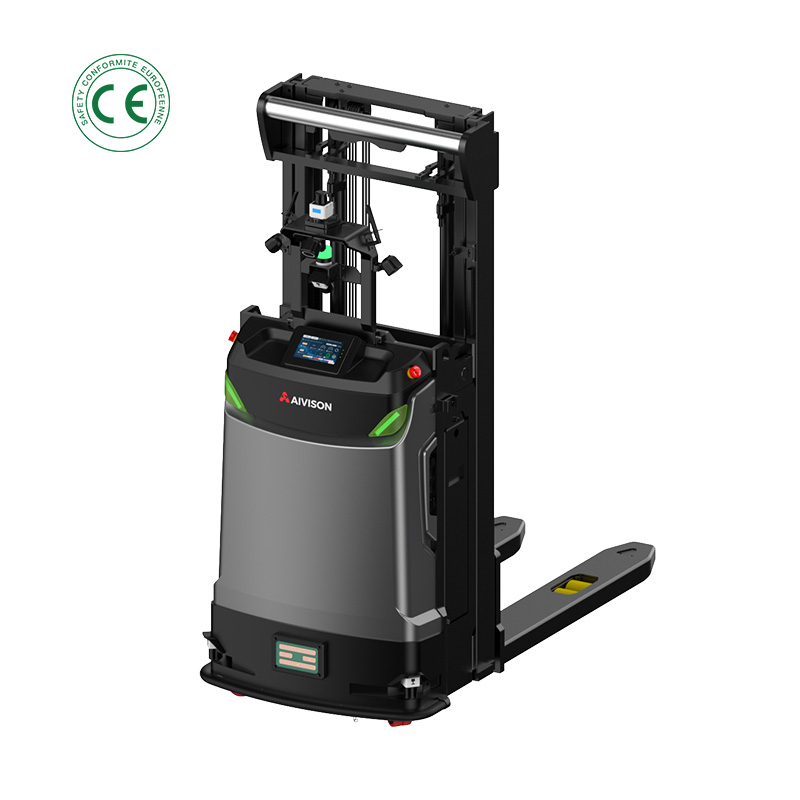
Aivison AMR Robot Whicle Automated Warehouse Automatico agv Logistics Industrial Guided Vehicles
A general-purpose warehouse AMR for pallet and rack transfer in 3PL, cross-dock and distribution centers that need fast route changes without magnetic tape.
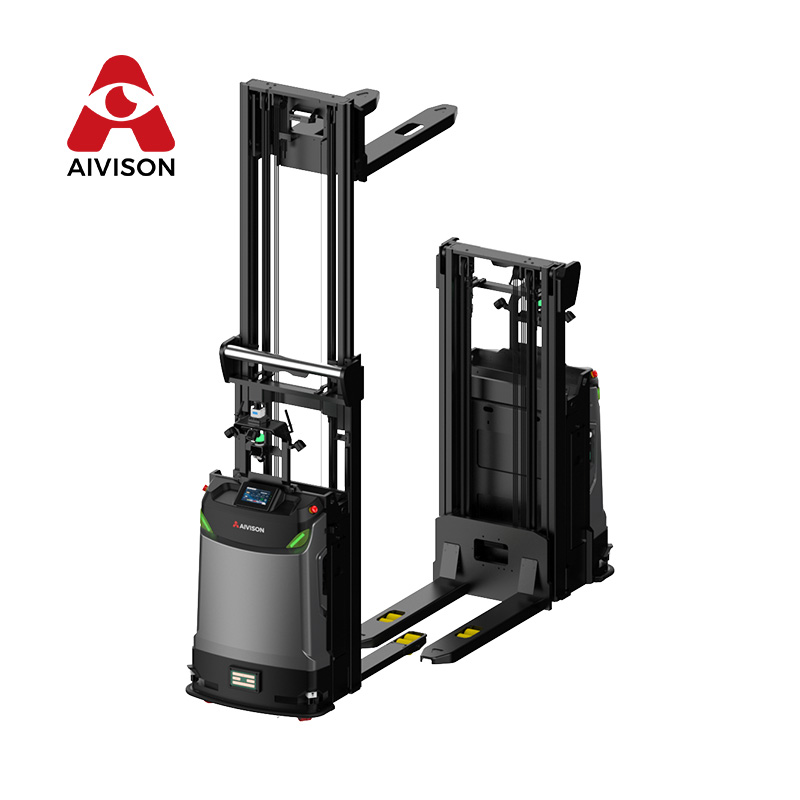
High Precision agv Forklift Full Servo Motor Controlled Laser Forklift with Heavy Load 2000kg
A servo-controlled laser forklift for 2,000 kg loads, suited to high-bay pallet handling and repetitive dock-to-storage cycles in Montreal warehouses.
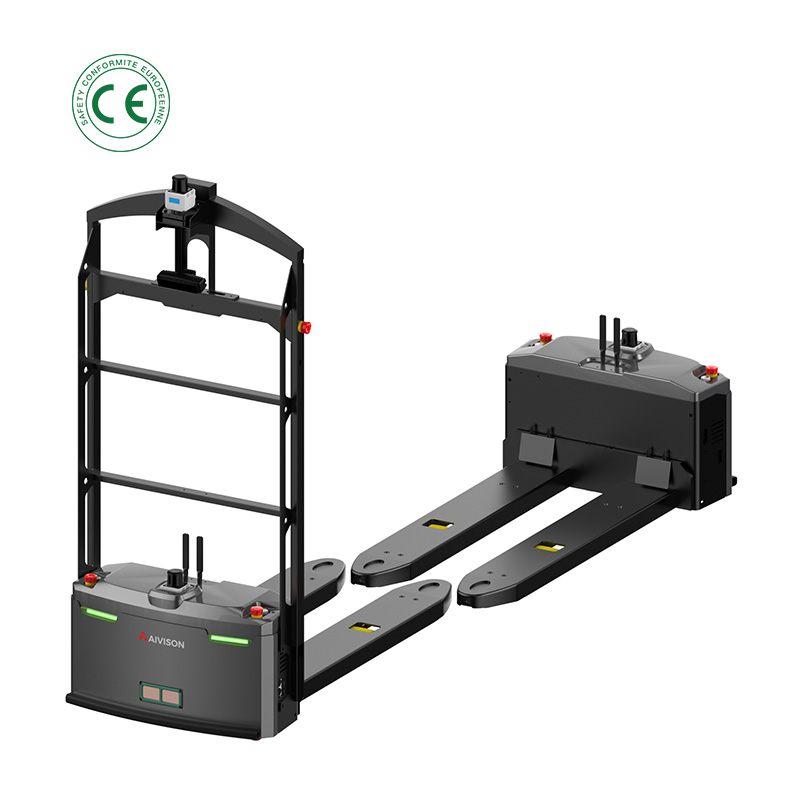
Aivison Customized 800kg Warehouse AGV Robot Lithium Battery AMR
A customized 800 kg lithium-battery AMR for line-side replenishment, kitting and light pallet movement where compact dimensions and uptime matter.

Omnidirectional Mobile Manipulator AMR Dual 7-DOF Arms ±0.03 mm Repeatability Laser SLAM Humanoid Robot Base
A dual-arm mobile manipulator with omnidirectional movement and precision repeatability for assembly, laboratory automation and advanced R&D environments.
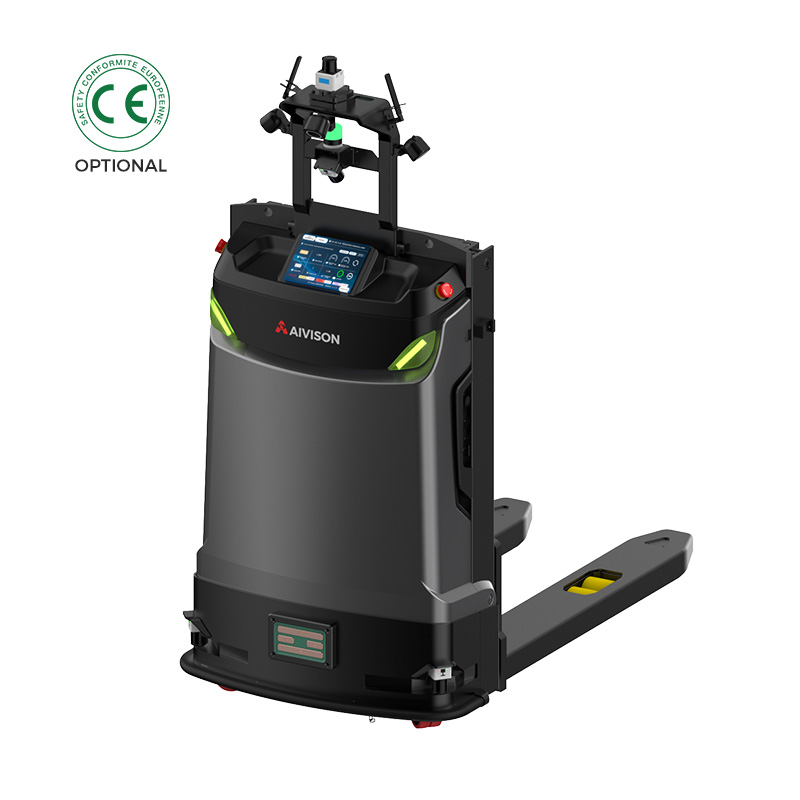
China Factory Automated Mobile Robot SLAM Lifting Wholesale AGV Chassis Vehicle
A SLAM lifting AGV chassis for wholesalers and integrators who need a cost-effective base platform for jacking, roller or custom top modules.

Heavy Load 2000KG Load Forklift Laser Guide AMR for Warehouse Pallet
A heavy-load laser-guided AMR forklift for pallet handling in food distribution, cold storage and industrial warehousing where labor continuity is critical.
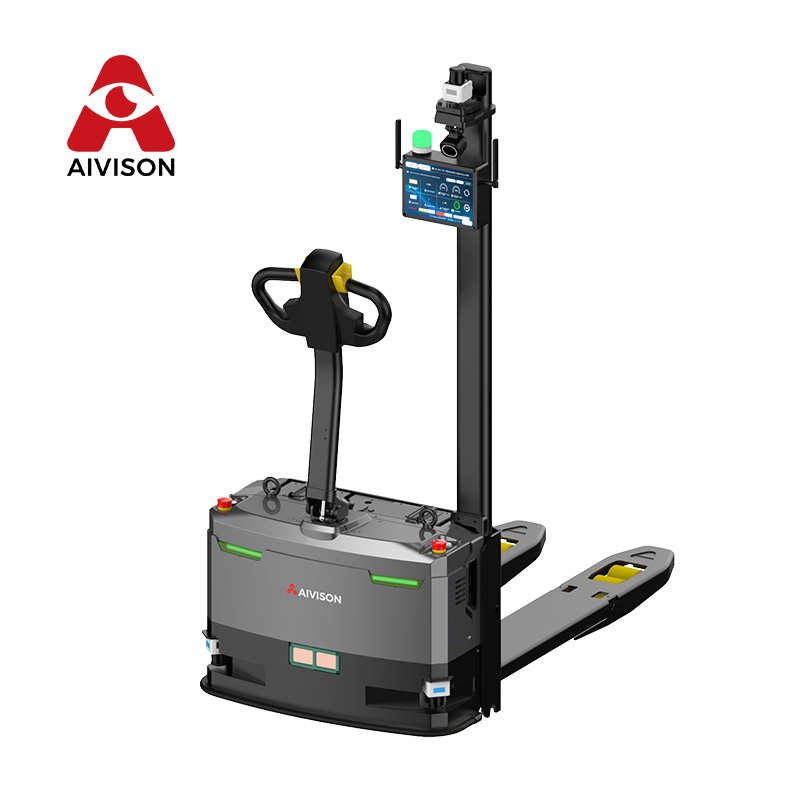
Aivison AGV Forklift High Quality Industrial Unmanned Pallet Forklift
An industrial unmanned pallet forklift built for repetitive transfer, trailer loading and warehouse automation projects with mixed traffic.
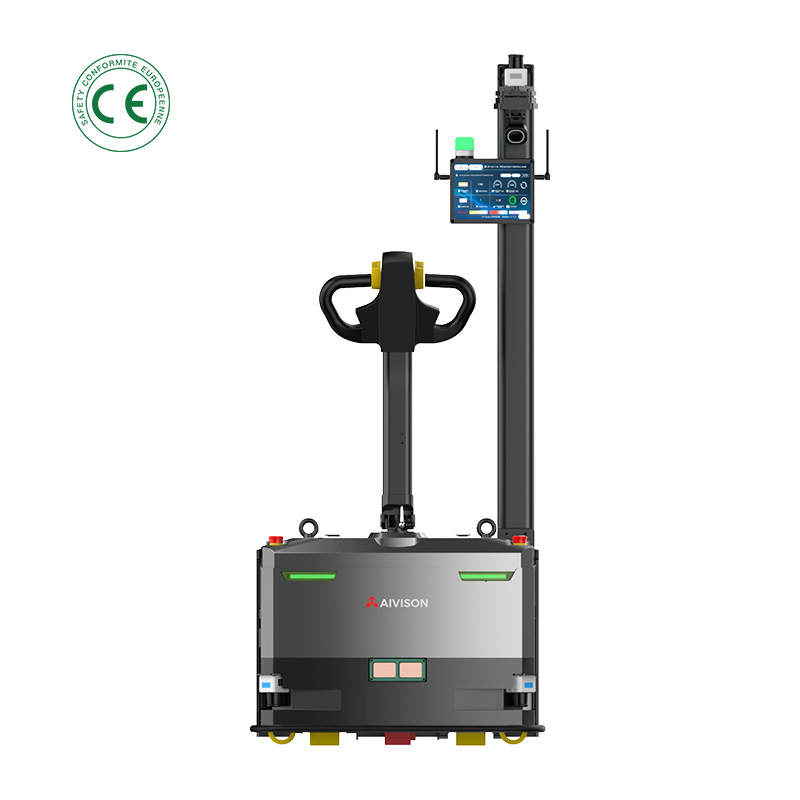
Autonomous Mobile Robot AGV CE Laser SLAM Navigation for Material Handling and Logistics
A CE-marked laser SLAM AMR for material handling and logistics, suited to mixed human-robot traffic and bilingual operating environments.
Why Lidar Navigation Robots Are Now a Wholesale Category in Greater Montreal
Montreal is not a single buying market. The Island of Montreal, Laval, Longueuil, the South Shore and the West Island contain different mixes of 3PL warehouses, aerospace suppliers, life-sciences companies, food distributors and port-linked logistics operations. What they share is a high cost of repetitive material movement and a low tolerance for downtime.
For a wholesaler, distributor or system integrator, the phrase “lidar navigation robot wholesaler in the Montreal market” points to a practical procurement question: which platform can be delivered, commissioned and supported without forcing the customer to rebuild infrastructure or accept a single-language operating process? The answer is usually not a single robot model. It is a repeatable configuration that combines a proven navigation core, a compatible top module, a charging strategy and documentation that survives a local safety review.
Lidar navigation, usually described as laser SLAM, lets a robot map natural building features and navigate without magnetic tape, floor reflectors or a dense grid of QR codes. In a Montreal facility with changing rack layouts, seasonal peaks and mixed forklift traffic, this matters more than a headline top speed. Standard laser SLAM can deliver ±5 mm positioning; a QR scanning camera can raise docking precision to ±2 mm where high-bay storage or machine tending demands it; and a composite mobile manipulator can reach ±0.05 mm repeatability at the tool center point. The right specification is the lowest precision that reliably completes the task—over-specifying wastes capital and slows acceptance.
Wholesale buyers also need to separate a “robot wholesaler” from a true manufacturer. A trading company may offer a low unit price but limited influence over customization, spare parts and firmware. A manufacturer with an existing chassis, fleet controller, charging dock and top-module ecosystem can support a repeatable program: one navigation core, multiple payload interfaces and a service strategy that survives beyond the first pilot. For Montreal projects, ask whether the supplier can provide English and French operating documentation, a risk-assessment package for local safety review, a spare-parts list and a clear boundary between standard product and engineered-to-order scope.
Landed cost is another local issue. The cheapest ex-works robot can become expensive if every commissioning change requires an overseas engineer, if batteries and sensors are not supported through the channel, or if the unit cannot be integrated with the customer’s WMS, ERP or existing conveyor handover. A better wholesale evaluation compares total cost of ownership across three years: platform price, integration effort, floor preparation, spare parts, training, energy, expected interventions and the cost of lost throughput during ramp-up. That is the commercial lens Montreal buyers should apply to every quotation.
Precision ladder
Match accuracy to the task before comparing price.
Use QR labels only at precision stations. Keep general routes trackless to preserve layout flexibility.
“Who can supply a repeatable platform, not a one-off demo?”
Look for a product family, spare-parts structure, training path and consistent configuration data across models.
“Which OEM supports custom top modules, fleet software and charging?”
Ask for interface documentation, top-module engineering boundaries and escalation support during commissioning.
“Which robot handles our pallet, rack, aisle and docking conditions?”
Start with the load profile, floor layout and handover tolerance before selecting payload or navigation options.
Where Lidar Navigation Robots Fit Across Greater Montreal
Montreal deployments rarely fail because the robot cannot move. They fail because the operating context—cold zones, bilingual shifts, mixed traffic and WMS handovers—was not designed into the project.
Third-Party Logistics and E-Commerce Fulfilment
In multi-client 3PL sites around Saint-Laurent, Laval and the South Shore, routes change when a new account starts. A laser SLAM AMR can be remapped without floor tape, while fleet scheduling keeps multiple robots from queuing at the same dock. Use ±5 mm platforms for trailer-to-staging transfer and add QR docking only where a conveyor or wrapper requires repeatable alignment.
Food, Beverage and Cold-Chain Distribution
Cold storage and freezer anterooms demand careful specification of batteries, condensation protection and floor friction. Laser-guided pallet forklifts reduce time spent entering and leaving chilled zones, while AMRs can move totes and finished goods between production, blast freezing and dispatch. Montreal buyers should ask for a cold-environment checklist, maintenance access plan and a clear battery-charging strategy.
Aerospace, Metal Fabrication and Industrial Kitting
Montreal’s aerospace and metalworking suppliers handle heavy, high-value parts where traceability and damage prevention matter. Lifting AGV chassis and custom top modules can move fixtures, baskets and kitted components between machining, inspection and assembly. For precision assembly cells, a composite mobile manipulator with a 6-axis or dual-arm configuration may be appropriate, but only after station calibration and risk assessment.
Life Sciences, Medical Devices and Electronics
Life-science and electronics operations often combine cleanroom protocols, ESD controls and tight handover tolerances. A CE-marked laser SLAM AMR can transport carriers between production rooms, while a manipulator or QR-assisted docking platform supports machine loading. French and English work instructions, cleaning procedures and change-control documentation should be part of the URS, not an afterthought.
Lithium Battery, EV and Advanced Manufacturing
Line-side replenishment in battery and EV plants is a high-frequency, repetitive task with strict safety expectations. Jacking robots can lift racks and carriers; smart forklifts handle heavier pallets; fleet software coordinates charging and traffic. Buyers should validate fire-safety procedures, battery charging zones and the handover logic between automated and manual vehicles before selecting payload capacity.
Port, Rail and Cross-Dock Operations
The Port of Montreal and nearby rail-linked warehouses create wave-based inbound and outbound flows. Unmanned pallet forklifts and heavy-load AMRs can stabilize trailer loading and staging, but the site must define lane control, pedestrian segregation and peak-season throughput. A pilot should measure missions per hour, dock waiting time and intervention rate, not only single-robot speed.
Montreal Market Trends Shaping Lidar Robot Procurement
The local buying conversation is moving from “Can a robot do this?” to “Can the same platform be deployed, documented and serviced across multiple sites?”
From single pilot to repeatable fleet program
Montreal wholesalers are moving away from isolated demos. The commercial unit is becoming a small fleet with a standard chassis, shared charging strategy and documented integration pattern that can be copied from one customer to the next.
Bilingual documentation and French operating materials
Operators, maintenance teams and safety committees need clear French and English instructions. A supplier that can provide both—plus label templates, training slides and change logs—reduces commissioning friction and supports local compliance reviews.
Modular top interfaces over one-off machines
Rather than buying a unique robot for every line, integrators prefer a proven SLAM chassis with interchangeable jacking, roller, forklift or arm modules. This lowers engineering risk and shortens spare-parts planning.
Tighter integration with WMS, WCS and safety systems
Montreal buyers increasingly ask for API documentation, fleet-manager data, Wi-Fi coverage planning and escalation hooks into existing warehouse software. A robot that cannot communicate with the WMS becomes an expensive island.
| Configuration | Typical accuracy | Floor preparation | Montreal-fit use case |
|---|---|---|---|
| Laser SLAM on natural features | ±5 mm | None—no tape, reflectors or floor codes | General warehouse transfer, line-side delivery, cross-dock and 3PL routes |
| SLAM plus QR code camera | ±2 mm | QR labels only where precision is needed | High-bay storage, conveyor handover, machine tending and repeatable docking |
| Composite AMR with 6-axis or dual-arm module | ±0.05 mm | Station calibration and risk assessment | Semiconductor, medical device, electronics and precision assembly cells |
What to Prepare Before Requesting a Lidar Robot Catalog
From our project experience, these six inputs determine most of robot selection. Sharing them upfront shortens evaluation from weeks to days.
Load profile
Maximum load, dimensions, center of gravity, rack or pallet type and whether the load is stable during acceleration and braking.
Site layout
CAD or sketch with aisle widths, door openings, ramps, floor condition, elevator or lift use and pedestrian zones.
Throughput target
Missions per hour by shift, peak waves, trailer arrival pattern and the number of charging opportunities per day.
Docking precision
Which stations need ±5 mm, which need ±2 mm QR assist and which require manipulator-level repeatability.
Wi-Fi and cybersecurity
Access-point coverage, handover behavior, VLAN policy, remote-access rules and data ownership requirements.
Interfaces and training
WMS/WCS/ERP touchpoints, conveyor or machine handshakes, French/English SOPs and maintenance training needs.
Manufacturing Depth for Montreal Integrators and Wholesale Programs
Shenzhen Marnix Intelligent Technology Co., Ltd. is a Shenzhen-based manufacturer with about ten years of AGV engineering experience. Its portfolio includes laser SLAM AMRs, jacking robots, smart forklifts, composite mobile robots and intelligent charging docks.
The company reports ±5 mm laser SLAM navigation, ±2 mm with QR assistance and ±0.05 mm repeatability for composite robots. It serves more than 200 manufacturers across three continents, supports system integrators and has undergone a TÜV Rheinland onsite assessment; its trade history includes supply to a Fortune 500 company. For a Montreal procurement file, those signals matter because they reduce the unknowns in first-order due diligence—but they still need to be combined with a live reference, a site-specific safety review and a clear spare-parts plan.
Manufacturer-level customization
Chassis and top modules such as jacking units, roller conveyors, forklift forks and 6-axis robotic arms can be specified to connect with production equipment rather than forcing a standard fit.
Navigation precision ladder
Laser SLAM reaches ±5 mm without floor infrastructure; QR assist raises docking to ±2 mm; composite robots with arms reach ±0.05 mm repeatability for precision work.
Fleet ecosystem
Intelligent scheduling over indoor Wi-Fi coordinates simultaneous tasks, traffic control and automatic charging with compatible smart docks so a mixed fleet can operate as one system.
Verified quality signals
The company reports multi-stage inspections, operational stress testing, a TÜV Rheinland onsite assessment and integrator support. These are observable trust signals for a Montreal procurement file.

Engineering and assembly in Shenzhen, with a focus on laser SLAM AMRs, jacking robots and smart forklifts.

Factory quality control before shipment; request the test report and configuration checklist for your order.
Quality is not only a certificate. For a wholesaler, it is the ability to repeat the same inspection, documentation and packing process from unit to unit. Marnix describes multi-stage intelligent inspections and thousands of operational stress tests before shipment, plus composite robot synchronization protocols for demanding assembly. A Montreal buyer should still verify a live reference, review the safety file and test the exact payload and route, but a supplier with a documented quality process reduces the unknowns in a first order.
Lidar Navigation Robots, Wholesale Supply and Local Deployment
These are the questions our engineering and export teams hear most often from Canadian distributors, integrators and plant teams. They are written for procurement files, not sales brochures.
What is a lidar navigation robot wholesaler in the Montreal context?
In Montreal, a lidar navigation robot wholesaler may be a distributor, a systems integrator or a manufacturer selling through channel partners. The commercial label matters less than the scope of supply. Ask whether the supplier owns the navigation stack, can customize top modules, controls the fleet software, supplies charging docks and provides spare parts. A true wholesale program should support repeat orders, documentation and service escalation—not just a single demonstration unit. Since Montreal buyers often serve bilingual operations, confirm the language of the HMI, manuals and training materials.
Can AMRs and robot forklifts work in Quebec cold storage and mixed traffic?
Yes, when specified correctly. Cold storage affects battery performance, condensation, lubricants, seals and floor friction, so the quotation should state the temperature range and duty cycle. Mixed traffic requires safety scanners, dynamic obstacle avoidance, speed zoning and a traffic plan for pedestrians and forklifts. Laser SLAM navigates the existing building, but the integrator must still validate blind corners, door crossings and docking areas. For freezer work, plan charging outside the coldest zone or use a battery strategy approved for the duty cycle.
Which certifications and documents should Montreal buyers request?
Request the declaration of conformity, CE documentation where applicable, risk assessment, safety functions description, electrical diagrams, spare-parts list and warranty terms. For Canadian deployments, confirm whether CSA/UL or other local electrical approval is required for the final installation, and discuss the plan with the authority having jurisdiction and your insurer. Ask for English and French operator instructions, maintenance procedures and a change-control process. Third-party signals such as a TÜV Rheinland onsite assessment or verified trade history can support supplier due diligence, but they do not replace a site-specific safety review.
How much navigation accuracy is needed for pallet handling or high-shelf storage?
Use the simplest configuration that meets the task. General pallet transfer, line-side delivery and cross-dock movement usually fit ±5 mm laser SLAM. High-shelf storage, conveyor handover, machine tending or repeated docking can justify a QR-assisted ±2 mm configuration. Composite mobile manipulators with arms reach ±0.05 mm repeatability for precision assembly, but they require station calibration and a stronger integration effort. Over-specifying accuracy adds cost without improving throughput if the load, floor or docking fixture is not stable.
How do we integrate robots with our WMS, ERP and bilingual teams?
Start with the material flow, not the software. Define who requests a mission, what the handover point is, what happens after a failed docking and how operators escalate an exception. The fleet scheduling system should expose the interfaces needed for your WMS/WCS, whether that is an API, a call-button process or a manual dispatch screen. For bilingual teams, test the HMI workflow and training material with actual operators. Run a pilot on one route before scaling, and record baseline cycle time, intervention rate and safety observations.
What should a Montreal pilot include before a wholesale order?
Provide load profile, layout drawing, throughput by shift, docking tolerance, Wi-Fi coverage and equipment interfaces. Agree on success criteria: missions completed, cycle time, docking success rate, intervention rate, battery uptime and safety performance. Include operator training, maintenance access and spare-parts planning in the pilot scope. A well-run pilot should produce a configuration file and a deployment checklist that can be reused for the next site—that is the point of a wholesale relationship.
Request the Lidar Navigation Robot Catalog for Montreal Programs
Share your load profile, aisle dimensions, docking tolerance and target throughput. Our team will respond with recommended platforms, a configuration checklist and the documentation required for a Montreal procurement review.