Lidar Navigation Robot Exporter & Exporters Serving Mérida
Shenzhen Marnix Intelligent Technology Co., Ltd. engineers laser SLAM AMRs, jacking robots, smart forklifts and direct-source lidar sensors for Yucatán warehouses, production lines and system integrators—backed by about ten years of AGV engineering, ±5 mm navigation, ±2 mm QR-assisted docking and ±0.05 mm composite-robot repeatability.
Eight Lidar Navigation Robot Platforms for Mérida Export Projects
For a Mérida project, the right starting point is not the largest robot—it is the handoff that creates delay, risk or wasted labor. This set covers warehouse AMRs, rack-moving platforms, omnidirectional composite chassis, forklift-class AGVs, stacker robots, customizable lithium-battery AMRs, direct-source lidar sensors and large-load laser forklifts.
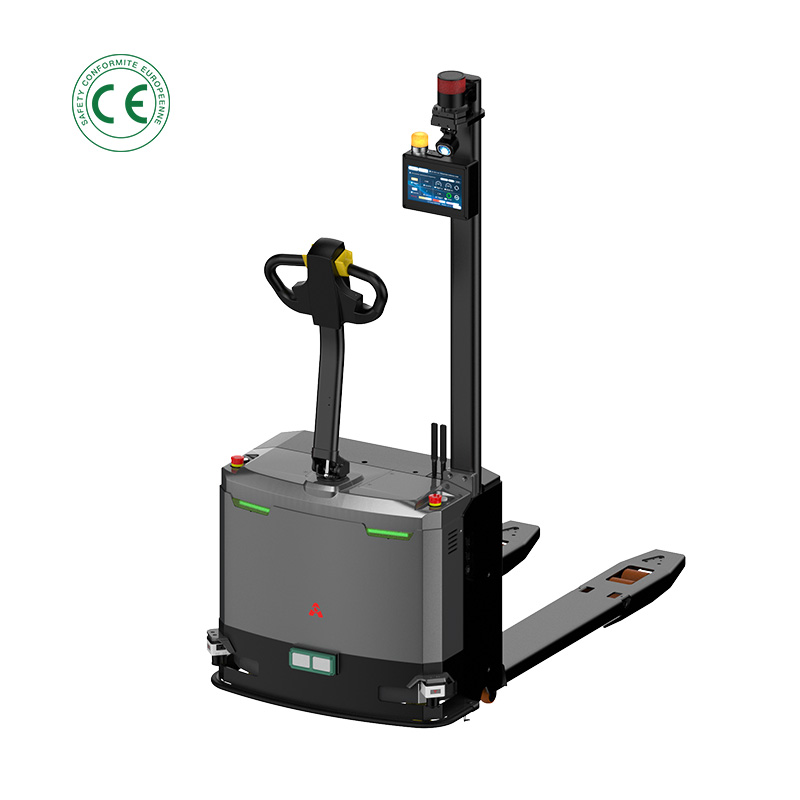
CE Certification Industrial AMR AGV Robot for Warehouse Automation Autonomous Material Handling Logistics
Recommended for mixed-traffic warehouse transfer, receiving-to-storage loops and 3PL sites around Mérida’s Periférico. Laser SLAM maps existing walls and racks, so routes can change without magnetic tape; QR assist is added only at precise handoffs.
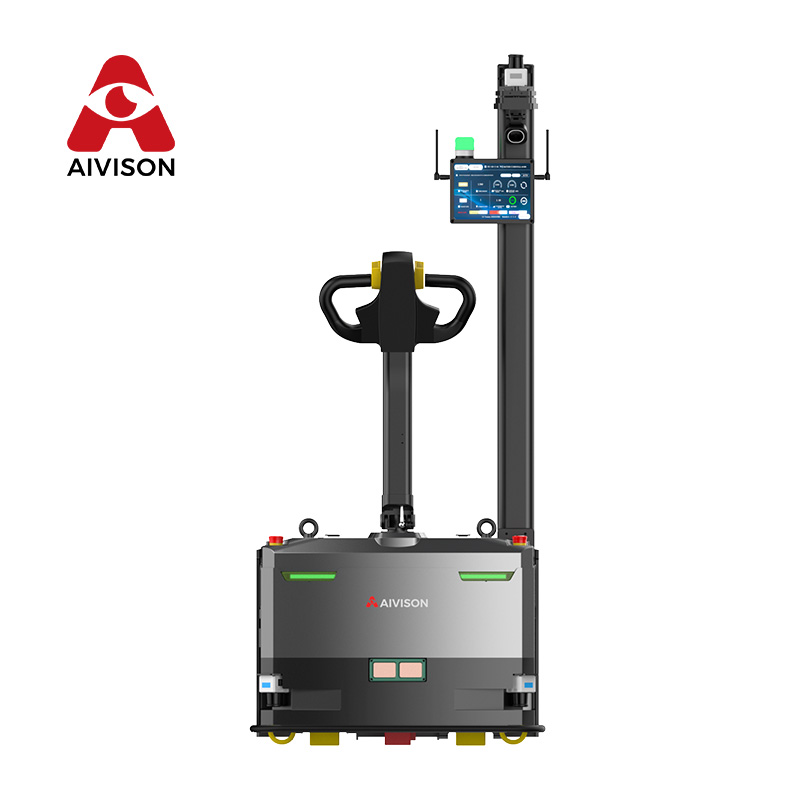
China Factory Movable Pallet Agv Robot Rack Shelf for Intelligent Robot Warehouse
Best where pallet racks or shelf carts must be moved without fixed conveyors. The movable pallet AGV rack format supports high-density replenishment and line-side staging; confirm rack footprint, load center and top-module interface during survey.

Omnidirectional Humanoid Robot Chassis Dual 7-DOF Arms Laser SLAM Autonomous Warehouse AMR Mobile Platform
An advanced composite platform for integrators, research teams and precision assembly pilots. Dual 7-DOF arms and omnidirectional mobility suit semiconductor, medical-device or laboratory-style tasks where ±0.05 mm repeatability justifies station calibration.
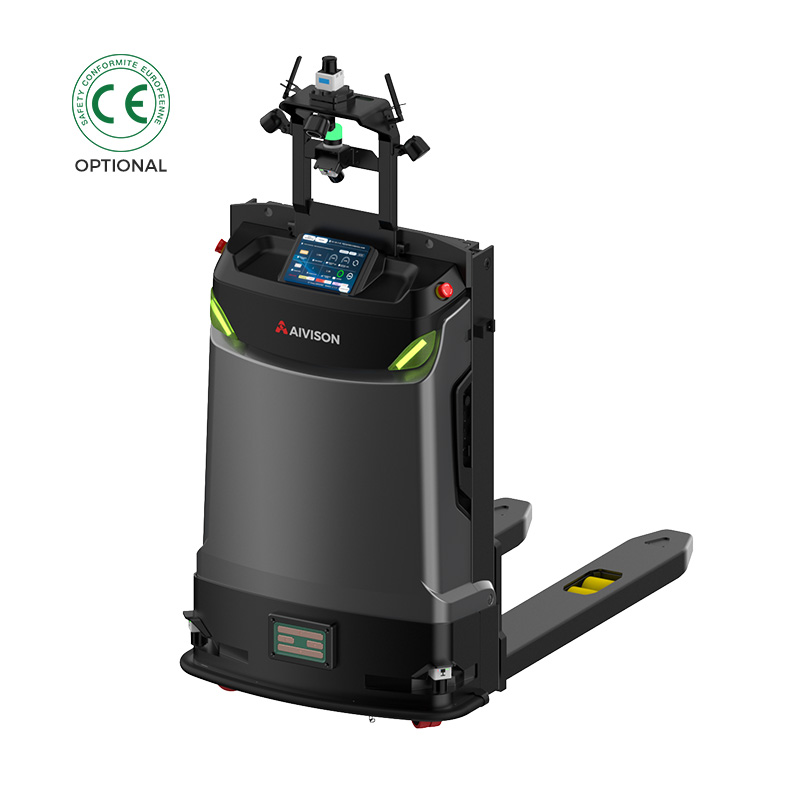
AGV AMR Warehouse Automatic Guided Vehicle 1500kg 2000kg AGV Robot Forklift
Choose this forklift-class AMR for palletized goods, dock-to-storage transfer and trailer-adjacent handling. 1500–2000 kg formats fit food, beverage, building-material and distribution warehouses serving Mérida and Progreso port flows.

New Warehouse Autonomous Cars agv Robot 2000kg Load Capacity Stacker agv Robot
Recommended for high-rack storage and repetitive stacker work. The 2000 kg stacker platform reduces travel waste when the rack interface—not open-floor speed—is the bottleneck; precision tier should be set station by station.
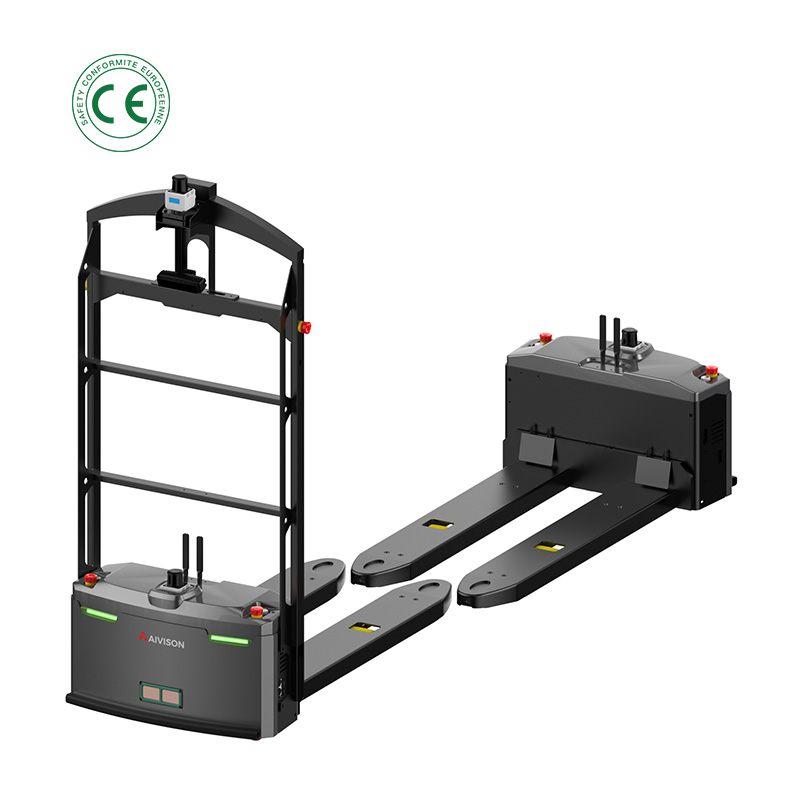
Aivison Customized 800kg Warehouse AGV Robot Lithium Battery AMR
An 800 kg customizable AMR for lithium-battery or light-medium material handling. For Mérida’s long shifts and warm ambient conditions, pair the robot with a planned charging room, airflow and spare-battery strategy.

Hot Selling Logistics Navigation Detector Sensor Lidar Manufacturers Direct Sales
Direct-source lidar sensor for AMR builders, maintenance teams and system integrators in Yucatán. Keeping a local sensor and spares strategy is often more valuable than buying the lowest-cost sensor without service planning.

Automatic Handling CE Certificate 2000kg Forklift Robot Vehicle Laser AGV for Large Load Goods-carrying
A 2000 kg CE-referenced laser AGV forklift for large-load pallet handling. Recommended when pallet quality and fork entry are stable and the project needs a robust automated alternative to repeated manned forklift trips.
Not sure whether your Mérida workflow needs a pallet AMR, jacking robot, smart forklift or composite platform? Send the load profile, layout and docking target for a configuration review.
Send an InquiryThe Export Case in Numbers
Marnix credentials matter in Mérida only when they shorten commissioning and reduce failure risk. These figures summarize the proof points a technical buyer should verify in the quotation, documentation package and acceptance plan.
Precision can be matched to the station: ±5 mm with natural-feature laser SLAM, ±2 mm with an optional QR code camera, and ±0.05 mm repeatability for composite robots with a 6-axis arm under calibrated station conditions.
Lidar SLAM vs. Fixed Infrastructure: What Changes for a Mérida Site
A lidar navigation robot does not follow a painted line. Laser scanners read natural features—walls, pillars, rack uprights, machines and fixed structures—and compare them with a digital map in real time. For a Mérida warehouse or assembly plant, this changes the commercial conversation: the building does not need weeks of magnetic-tape, reflector or floor-code installation before the first route can be tested.
The practical advantage is not “no infrastructure.” It is infrastructure that can move with your operation. When a rack line is reorganized, a new staging area is opened or a production cell is relocated, laser SLAM routes are re-mapped in software. Fixed guidance becomes sunk cost. That matters in Yucatán, where many projects retrofit existing buildings rather than design a greenfield factory from the floor up.
Precision should still be engineered station by station. A transfer route from receiving to put-away may be perfectly served by ±5 mm navigation. A conveyor handoff, high-rack dock or machine-tending point may justify QR-assisted docking at ±2 mm. A composite robot with a 6-axis arm needs station calibration and a ±0.05 mm repeatability target. Over-specifying every meter of travel adds cost without improving throughput.
| Configuration | Accuracy | Floor setup | Best-fit Mérida scenario | Platform examples |
|---|---|---|---|---|
| Laser SLAM on natural features | ±5 mm | No tape, reflectors or floor codes for standard routes | Receiving, put-away, line-side transfer, changing layouts, mixed traffic | Industrial AMR AGV, 800 kg AMR, warehouse AMR platforms |
| Laser SLAM + QR code camera | ±2 mm | QR labels only at selected handoff stations | High-rack docking, conveyor handoff, precision staging | 2000 kg stacker, automatic forklift, movable pallet rack platform |
| Composite AMR + 6-axis arm | ±0.05 mm | Station calibration and controlled interface | Semiconductor, medical-device assembly, inspection and laboratory automation | Omnidirectional humanoid chassis with dual 7-DOF arms |
- Wi-Fi roaming and handover test across every operating zone
- 72-hour endurance run at the planned peak mission rate
- Obstacle avoidance with people, pallets and manned forklifts
- Dock repeatability measured at the actual rack or conveyor interface
- Charging-cycle validation, including queueing and opportunity charging
- Emergency stop, manual recovery and operator handover drill
Localized Application Scenarios in Mérida and Yucatán
Mérida is not a generic warehouse market. Its value as a logistics node comes from the combination of regional distribution, port linkage through Progreso, industrial-park production and consumer supply chains serving the wider southeast.
Port-to-Warehouse and Regional Distribution
For importers moving containers through Progreso and redistributing to Mérida, Valladolid, Cancún or Campeche, the bottleneck is often trailer-to-rack handoff. Use laser SLAM forklifts or pallet AMRs for repetitive runs while keeping manned forklifts for irregular loads. A pilot should measure dock cycle time—not only robot speed.
Industrial Parks and Line-Side Replenishment
In Mérida’s industrial parks and assembly plants, space is often tighter than in greenfield factories. Jacking robots and compact pallet AMRs move racks or kits without widening every aisle. QR-assisted docking at conveyor or machine interfaces gives ±2 mm where needed, while route changes remain software-driven.
Food, Beverage, Medical and E-commerce Fulfillment
Yucatán’s consumer and export supply chains need repeatable replenishment, traceability and clean floors. Fleet scheduling over indoor Wi-Fi, automatic charging and 24/7 duty support shift patterns. For cold or climate-controlled zones, validate condensation, floor friction and charging location before selecting a model.

Mixed-traffic logistics is the real test: a Mérida deployment should be accepted against people, pallets, manned forklifts and changing floor conditions—not only open-aisle demonstrations.
Localized Development Trends Shaping Yucatán Procurement
Automation decisions in Mérida are being shaped less by robot novelty and more by nearshoring, labor flexibility, energy planning and the need for local service after commissioning.
Nearshoring and Southeast Mexico Logistics Growth
Mérida is attracting distribution and light-manufacturing investment. Buyers want automation that can start with one route and scale as volume grows, rather than committing to a fixed conveyor layout on day one.
From Fixed Conveyors to Modular Fleets
A shared SLAM chassis with jacking, roller, fork or arm top modules protects capital as product mix changes. The same fleet software can coordinate transfer, line-side delivery and pallet handling.
Climate-Aware Engineering and Energy Planning
Heat and humidity make charging-room design, airflow, maintenance access and duty-cycle planning part of robot selection—not an afterthought. Battery strategy should be reviewed with the same rigor as payload.
Spanish-Language Operations and Local Partners
Export success is proven after commissioning: operator training, documentation, spare sensors and integrator collaboration should be written into the scope. Remote diagnostics reduce response time but do not replace local readiness.
Survey and Map
Document aisles, ramps, Wi-Fi, charging room and handoff points.
Pilot One Corridor
Validate traffic, cycle time and recovery procedures before scaling.
Prove the Handoff
Measure repeatability at the rack, conveyor or machine interface.
Scale the Fleet
Add robots, charging docks and scheduling rules as demand grows.
Enterprise Advantages Mérida Buyers Can Verify
Marnix is strongest when the project needs a manufacturer that can adapt the chassis and top module to the real production interface—not a catalog-only reseller.
Shenzhen Marnix Intelligent Technology Co., Ltd. draws on about ten years of AGV engineering experience to build laser SLAM autonomous mobile robots, jacking robots, smart forklifts, composite mobile robots and intelligent charging docks. The company serves both end users and system integrators, with about 200+ manufacturers served across three continents and deployments in eight core industries: semiconductor, 3C electronics, lithium battery, photovoltaic, automotive parts, PCB, textile and medical devices.

Manufacturer-Level Customization
Custom chassis and top modules—jacking units, roller conveyors, forklift forks and 6-axis robotic arms—connect the robot directly to production equipment instead of forcing a standard fit.
Precision by Station
±5 mm natural-feature laser SLAM, ±2 mm QR-assisted docking and ±0.05 mm composite-robot repeatability let buyers avoid paying for precision where transfer accuracy is sufficient.
Fleet-Level Thinking
An intelligent scheduling system coordinates robots over indoor Wi-Fi, handling simultaneous task assignment, traffic control and automatic charging through compatible smart charging docks.
Verified Commercial Trust
TÜV Rheinland onsite assessment, a Fortune 500 supplier relationship, verified trade records and integrator experience support export procurement beyond a product brochure.
Products in this set include CE certification references for the industrial AMR and the 2000 kg laser AGV forklift. Treat certification as a documentation package to verify per SKU and destination—not as a substitute for a Mexican import review, electrical assessment or site-specific safety validation. This is the reliable way to compare an exporter serving Mérida: ask for the exact certificate scope, the bill of materials, the spare-parts list and the acceptance test plan.
Procurement Checklist for a Mérida Lidar Robot Project
Most delays come from missing inputs, not robot performance. Prepare these six items before asking for a quotation or live-chat configuration review.
Load Profile
Maximum weight, pallet or rack footprint, center of gravity, overhang and load stability. Include the heaviest and most awkward load—not only the average carton.
Layout and Floor Conditions
CAD or sketch with aisle widths, doors, ramps, slopes, elevators, floor joints, glass walls and high-traffic crossings. These details determine whether ±5 mm SLAM is sufficient.
Throughput and Shifts
Missions per hour, peak periods, shift pattern, charging windows and future volume. Throughput targets set fleet size and the number of charging docks.
Docking Precision
Mark every handoff: floor transfer, conveyor, rack, machine or trailer. Use ±5 mm for transfer, ±2 mm QR assist for precise docking and ±0.05 mm only where the process truly requires it.
Wi-Fi, Power and Charging
Access-point coverage, roaming quality, voltage, charging-room location, ventilation and battery strategy. For Mérida’s climate, plan airflow and maintenance access from the start.
Import, Training and Service
Destination port such as Progreso, Incoterms, customs broker, documentation, Spanish operator training, spare sensors and remote diagnostics. A good export quote makes these visible.
Mérida Procurement FAQ
Common questions from plant, warehouse and systems-integration teams evaluating lidar navigation robots for Yucatán.
Can Marnix export lidar navigation robots to Mérida, Mexico?
Yes. Marnix serves buyers worldwide, including end users and system integrators in Mexico. The quotation should define Incoterms, export packing, documentation and the destination port—commonly Progreso or another Mexican gateway selected by your freight forwarder. Engage a customs broker early to confirm import classification and any product-specific requirements for your SKU.
Do we need magnetic tape, reflectors or QR codes everywhere?
No. Standard laser SLAM uses natural features and reaches approximately ±5 mm, so most transfer routes require no tape or reflectors. QR labels are added only at stations that need ±2 mm docking precision. Composite robots with a 6-axis arm require station calibration to target ±0.05 mm repeatability.
Which robot should we start with in a mixed-traffic warehouse?
Start with one repeatable route—receiving to staging, rack to line, or dock to storage. Use an industrial AMR or pallet AMR for general transfer, a smart forklift for palletized loads, and a jacking robot for rack movement. A pilot should include a 72-hour endurance run, obstacle-avoidance testing and manual recovery drills.
How does Mérida’s heat and humidity affect robot selection?
Do not ignore it. Plan charging-room ventilation, duty cycle, battery strategy, maintenance access and sensor-cleaning procedures. Validate floor friction and condensation risk in climate-controlled zones. Ask for the IP rating, operating temperature range and cleaning guidance for the exact robot and lidar sensor you intend to deploy.
Can local integrators customize top modules and interface with our equipment?
Yes. As a manufacturer, Marnix customizes chassis and top modules such as jacking units, roller conveyors, forklift forks and 6-axis robotic arms. For integrator projects, provide interface drawings, handshake protocols, load dimensions and station tolerances so the robot can connect directly to production equipment.
What should be included in the inquiry for a fast recommendation?
Send payload, pallet or rack dimensions, layout CAD or sketch, throughput target, docking precision, Wi-Fi coverage, voltage, destination port, timeline and whether you are an end user or system integrator. With those inputs, the engineering team can recommend a platform, precision tier and fleet size for a Mérida-specific proposal.
Request a Mérida-Specific Robot Recommendation
Share your payload, layout, throughput, docking accuracy and Wi-Fi conditions. Our engineers will recommend the right lidar navigation robot configuration for your Mérida warehouse, production line or integrator project.
Email: info@marnixbot.com