Laser Navigation Robot Manufacturers & Wholesaler for the Charlotte Market
Factory-engineered laser SLAM AMRs, jacking robots, smart forklifts and custom mobile platforms for Charlotte warehouses, production plants and system integrators. Built for brownfield facilities, mixed traffic and measurable uptime.
Eight Laser Navigation Robot Configurations for the Charlotte Market
Charlotte buyers rarely need a single robot; they need a repeatable material-flow asset that can be supported by their integrator, maintained by their team and expanded without reworking the floor. The eight configurations below cover warehouse AMR, high-payload AGV, laser SLAM lifting, humanoid development and customized lithium-battery platforms. Product URLs are preserved exactly as supplied; confirm controller version, payload, battery, safety configuration and delivery schedule for your Charlotte address during inquiry.
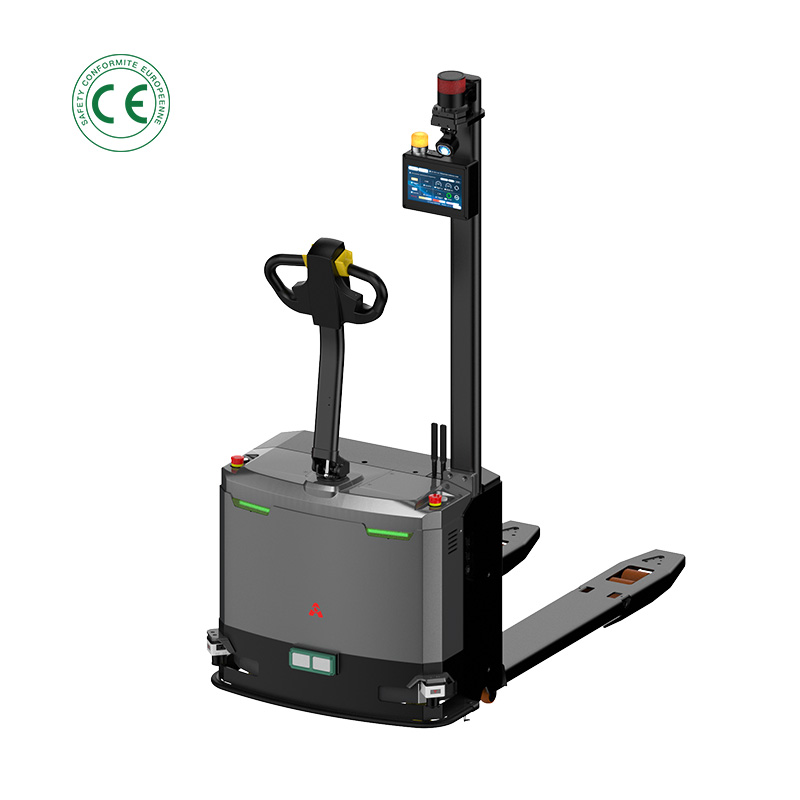
CE Certification Industrial AMR AGV Robot for Warehouse Automation
General warehouse automation platform for autonomous material handling, put-away, replenishment and cross-dock transfer in 3PL and distribution facilities.
View product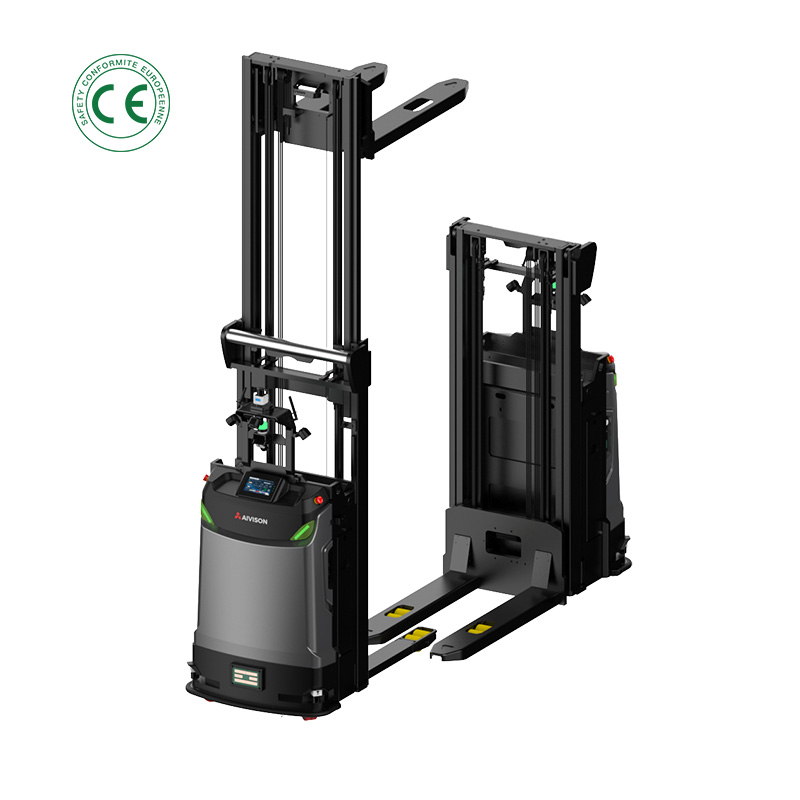
High-Performance Intelligent Smart Automated Guided Vehicle 2000kg AMR
High-payload platform for heavy WIP, pallet and industrial tote movements where manual forklift traffic or long hauls create bottlenecks.
View product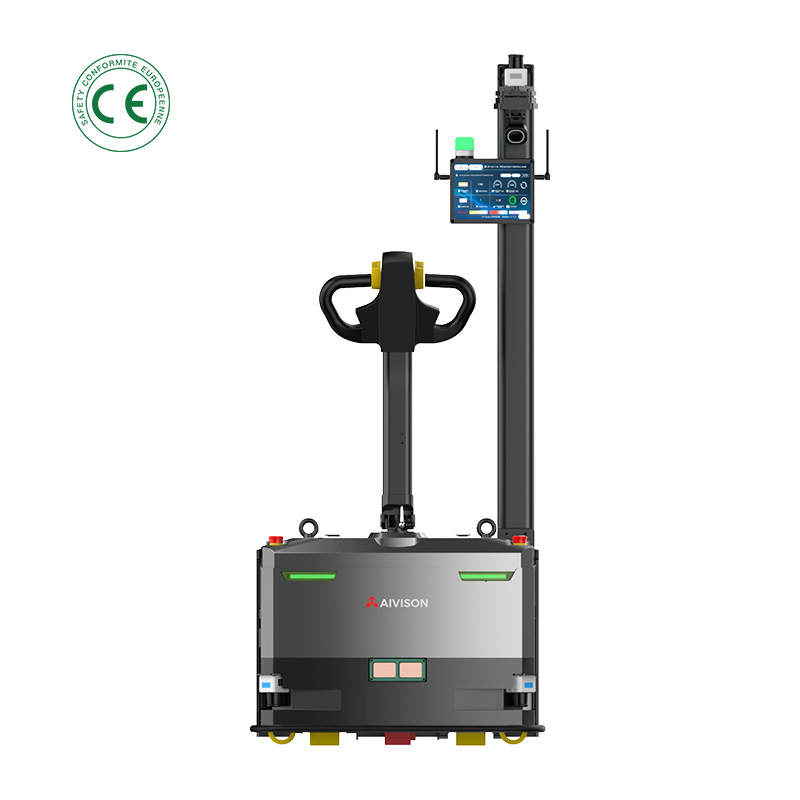
Autonomous Mobile Robot AGV CE Laser SLAM Navigation
Trackless laser SLAM navigation for material handling and logistics, delivering ±5 mm transit accuracy with optional QR assist for precision docking.
View product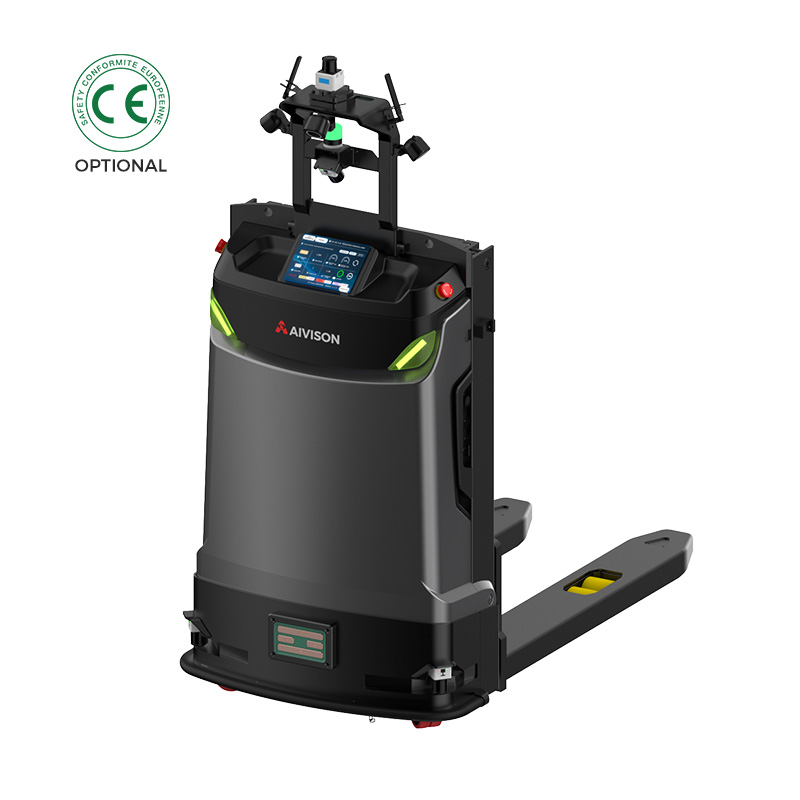
Automated Mobile Robot SLAM Lifting Wholesale AGV Chassis
Lifting chassis for rack, shelf and carrier transport. A practical OEM base for integrators needing custom top modules and fleet-ready software.
View product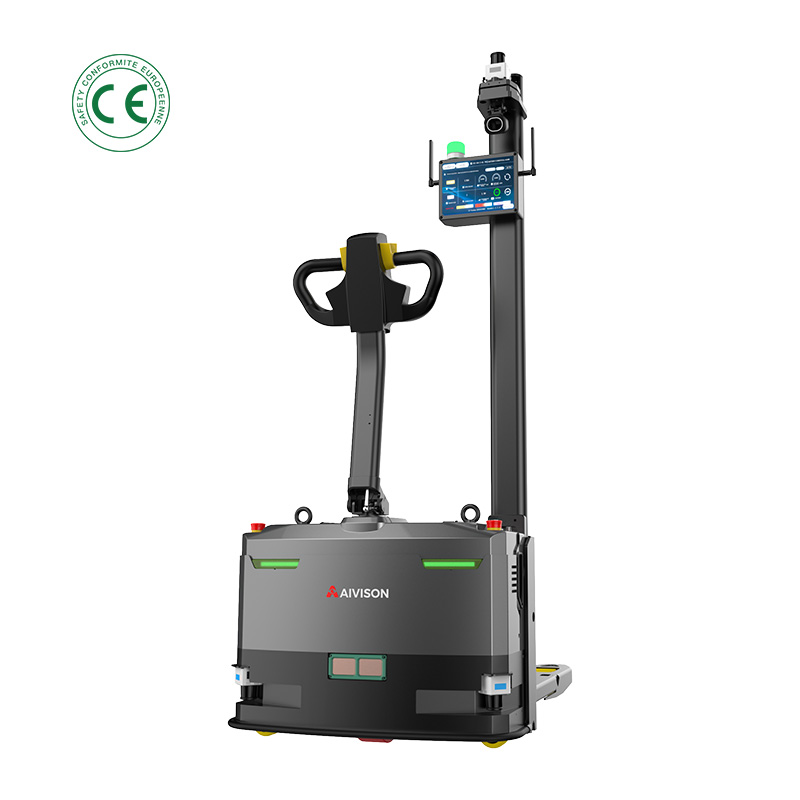
AIVISON CE Laser SLAM Navigation AGV 1500kg Warehouse Lifting
1500 kg laser SLAM lifting AGV for warehouse lifting operations, line-side supply, high-throughput replenishment and repetitive transfer tasks.
View product
AI-Ready Humanoid Robot Chassis with Dual 7-DOF Arms
ROS2 and laser SLAM open development platform with dual 7-DOF arms and omnidirectional drive for robotics research and integrator prototyping.
View product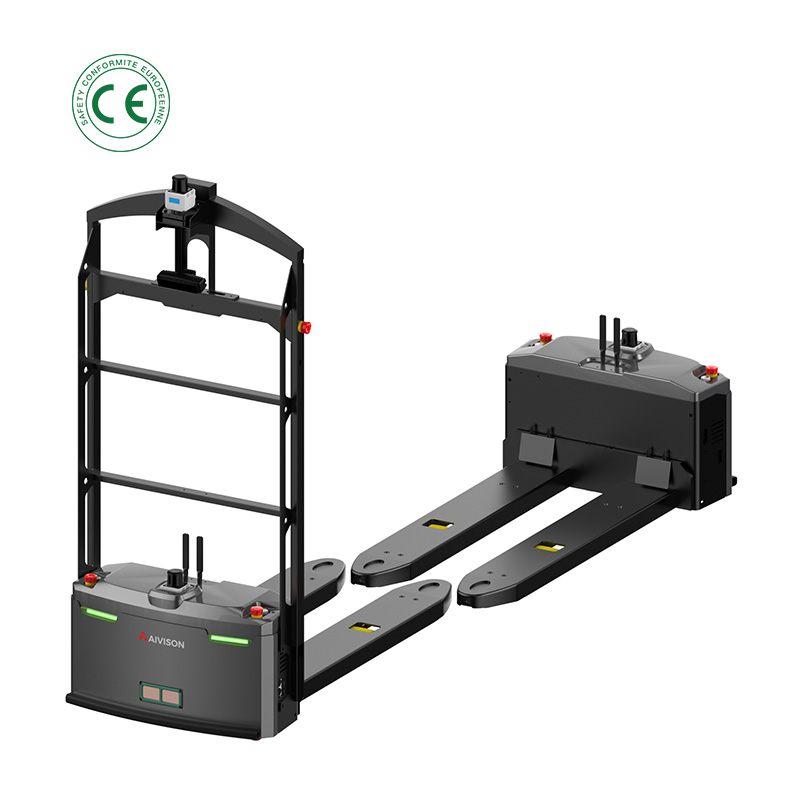
Aivison Customized 800kg Warehouse AGV Robot Lithium Battery AMR
Customized 800 kg warehouse AMR for flexible, scalable projects in mid-size facilities that need lithium-battery operation and tailored load handling.
View product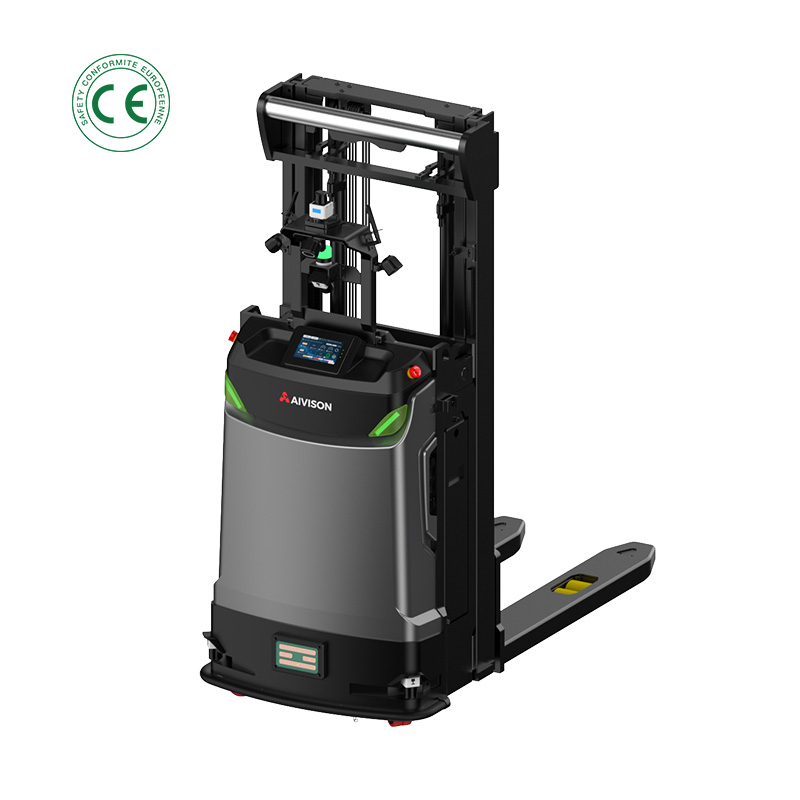
Aivison Industrial AMR Robot for Automated Warehouse Logistics
Industrial warehouse AMR for automated logistics, repetitive transfer and 24/7 material flow with fleet scheduling and compatible charging support.
View productA Charlotte-Focused Laser Navigation Robot Program — Not a Generic Catalog Page
Charlotte's material handling conversation is shaped by real facilities: distribution centers near the I-85 and I-77 corridors, advanced manufacturing sites, 3PL operations around Charlotte Douglas International Airport, and existing plants with narrow aisles, dock levelers, mixed forklift traffic and uneven Wi-Fi coverage. The right robot program must fit that reality.
Shenzhen Marnix Intelligent Technology Co., Ltd. brings about ten years of AGV engineering experience to laser SLAM autonomous mobile robots, jacking robots, smart forklifts, composite mobile robots and intelligent charging docks. The original company profile positions Marnix as a manufacturer serving both end users and system integrators, with ±5 mm laser SLAM navigation on natural features, ±2 mm accuracy when a QR scanning camera is added, and ±0.05 mm repeatability for composite robots using a 6-axis arm.
For Charlotte buyers, the most useful insight is this: do not buy a single accuracy number. Buy a precision map. Use standard laser SLAM for general transit, put-away and line-side delivery. Add QR labels only at the few stations where ±2 mm docking is genuinely needed. Reserve ±0.05 mm composite solutions for semiconductor, medical device or machine-tending work where the station and end effector are engineered together. This prevents unnecessary floor labels, reduces maintenance, and keeps route changes practical when a Charlotte operation adds racking, shifts a line or changes a lease footprint.
As a manufacturer, Marnix supports customization of chassis, payload and top mechanisms rather than forcing every project into a standard shape. That matters for wholesale and integrator programs: the core navigation platform, fleet software and charging ecosystem can stay consistent while the load interface changes to match the process.

Match Precision to the Workflow — Not the Spec-Sheet Trophy
Most Charlotte automation projects over-specify navigation and under-specify integration. Use this precision ladder to separate general transit from true docking and assembly requirements.
Laser SLAM on natural features
Best for warehouse transfer, replenishment, cross-dock movement, line-side delivery and facilities that change layouts. No auxiliary tracks, reflectors or floor QR codes are required for standard navigation.
SLAM plus QR code camera
Use QR labels only at precision stations: high-shelf docking, conveyor handover, wafer handling or kitting interfaces. Do not QR-code the whole floor; it creates maintenance work and slows layout changes.
Composite robot with 6-axis arm
Reserved for semiconductor, medical device and machine-tending applications where the mobile platform, arm, end effector and station are calibrated as one system. Multi-layer synchronization protocols support repeatability.
Where Laser Navigation Robots Deliver Value in Charlotte Operations
From 3PL fulfillment to advanced manufacturing, Charlotte projects usually share the same constraints: limited floor space, mixed pedestrian and forklift traffic, tight labor availability, and a need to demonstrate ROI before scaling.
3PL and e-commerce fulfillment
Dock-to-stock, replenishment, put-away and cross-dock transfer in facilities along the I-85/I-77 logistics corridor and around CLT. Start with the supplied warehouse AMR and industrial AMR links, then benchmark cycle time and blocked time.
Advanced manufacturing and EV/battery suppliers
Line-side supply, heavy WIP movement, lifting operations and repetitive transfers. The 2000 kg AGV, 1500 kg lifting AGV, 800 kg custom AMR and SLAM chassis are relevant starting points for Charlotte production teams.
High-bay and high-shelf storage
Where fork entry, shelf docking or conveyor handover needs more than ±5 mm, use a QR camera only at the station. This keeps the rest of the route flexible and avoids turning the entire facility into a maintenance-intensive QR floor.
Brownfield plant retrofits
Older Charlotte-area buildings often have mixed forklift and pedestrian traffic, changing rack layouts and limited space for floor infrastructure. Laser SLAM supports trackless deployment and remapping rather than fixed guidepaths.
Integrators and robotics labs
Charlotte system integrators can use customizable AGV chassis, roller or lifting modules, and the AI-ready humanoid platform with dual 7-DOF arms for ROS2 development, research and proof-of-concept work.
Food, textile and medical device flows
Repetitive transfer, clean-material movement and kitting support are common entry points. For cleanroom, washdown or medical-device assembly, confirm environmental requirements and documentation before selecting the final platform.

A practical Charlotte deployment sequence
Phase 1 — one route. Choose a repetitive transfer with clear ownership, such as dock-to-stock or line-side replenishment. Map the route, benchmark manual cycle time and record blocked time, charging behavior and operator interventions.
Phase 2 — one network. Confirm Wi-Fi coverage, traffic rules, charging location and emergency response. Define how the robot hands off to conveyors, racks or operators. If ±2 mm is required, isolate QR use to those handoff points.
Phase 3 — one fleet. Add robots only after the route data supports it. Use the intelligent scheduling system over indoor Wi-Fi for task assignment, traffic control and automatic charging with compatible smart docks. This staged approach is more defensible to operations and finance teams than a facility-wide leap.
Charlotte Market Trends to Build Into Your 2025–2027 Automation Plan
The Charlotte region continues to attract distribution, advanced manufacturing and logistics investment. For robot buyers, the practical impact is not simply more automation demand; it is tighter competition for floor space, maintenance talent and integration resources.
Brownfield-first automation
Leased buildings and existing plants reward trackless laser SLAM because routes can be mapped and changed without major floor work. This lowers the risk of starting in a Charlotte facility that was not designed for robots.
Labor flexibility and cross-training
Automation should absorb repetitive travel while freeing associates for exception handling, quality and customer-specific work. Measure not only labor savings but also stabilization of takt time and reduction of non-value-added walking.
Mixed fleets and fleet software
Operations rarely buy one robot category forever. A shared navigation core, fleet scheduler and charging ecosystem reduces training and spare-parts complexity when jacking robots, AMRs and smart forklifts work in the same building.
Landed cost and supply-chain transparency
For Charlotte buyers, freight, Incoterms, customs classification, duties and insurance belong in the business case. Request landed-cost assumptions in writing and separate factory lead time from international transit and local commissioning.
Uptime, charging and energy management
24/7 duty depends on charging strategy as much as battery capacity. Plan compatible smart charging docks, opportunity charging, battery swap or shift charging based on actual mission profiles, not catalog run times.
Integrator-led WMS/MES integration
Robot scheduling is only one layer. Define how missions are triggered, how exceptions are escalated and who owns the WMS, MES, PLC or conveyor interface. Integrator-led software scope with manufacturer support is often the cleanest model.
A starting evaluation model for Charlotte buyers
Weighting changes by project, but this model prevents a low purchase price from hiding integration or lifetime cost risk.
What this means for the business case
A laser navigation robot is not a standalone purchase. The defensible Charlotte business case includes mapping and commissioning, integration, operator training, maintenance, spare parts, charging infrastructure, insurance and change management. It also includes the cost of not automating: overtime, turnover, safety incidents, inconsistent cycle time and missed service levels.
Use a three-year and five-year scenario. Test a pilot route before scaling. Ask each supplier to separate factory scope from local scope, and require written assumptions for Wi-Fi, floor conditions, handoff points and acceptance criteria. This is where an experienced manufacturer and a competent local integrator complement each other.
Contact UsWhy Marnix Is a Credible Manufacturing Partner for Charlotte Projects
Marnix is a Shenzhen-based manufacturer. For Charlotte, this means the core platform, firmware, customization and factory acceptance work are handled by the manufacturer, while local site work should be scoped with your chosen integrator. We do not pretend that a Shenzhen factory is a Charlotte warehouse; we make the boundaries of responsibility explicit before the PO.
Complete AMR portfolio
Jacking robots, smart forklifts, pallet AMRs, composite robots and compatible intelligent charging docks from one source.
Lidar, vision and fleet control
Laser SLAM with vision fusion, Wi-Fi fleet scheduling and optional QR assist for station-level precision rather than full-floor guidepaths.
Manufacturer-level customization
Chassis, payload and top mechanisms can be engineered around your process: jacking units, roller conveyors, forks and 6-axis arms.
Charging and 24/7 readiness
Compatible smart docks support automatic charging and multi-robot scheduling for operations that cannot stop for manual battery handling.

Factory testing before shipment — and written assumptions before purchase
Original company materials describe multi-stage intelligent inspections and extensive operational stress testing intended to target near-zero failure rates. For a Charlotte project, ask for the acceptance test plan, the configuration sheet and the spare-parts list. Clarify what is tested at the factory, what is validated on site, and who signs off each stage.
This is especially important for composite mobile robots. A ±0.05 mm repeatability claim only has meaning when the arm, end effector, station fixture, calibration routine and acceptance criteria are defined together. The same discipline applies to ±2 mm QR docking: the label placement, lighting, maintenance and camera cleaning plan must be owned by someone after commissioning.

TÜV Rheinland onsite assessment
Company premises and operations verified by an independent inspection body in the original profile.
View report
Supplier to a Fortune 500 company
Original company profile states a procurement contract with a Fortune 500 company, assessed by third parties.
Trade history
Verified multispecialty supplier
Low-MOQ customization and multi-category robot procurement capability are part of the original supplier profile.
Trade capacityCredit and transaction records
Transparent credit index and transaction history are available through the original company trust pages.
Credit indexWhat to Send Before Asking for a Charlotte Quotation
From project experience, six inputs determine most of the robot selection. Sharing them upfront shortens evaluation from weeks to days and prevents a supplier from quoting a platform that cannot fit your building.
Load profile
Maximum weight, footprint, center of gravity and carrier type for racks, pallets, totes or fixtures. Include empty and loaded weights.
Site layout
CAD drawing or marked-up PDF with aisle widths, doors, slopes, elevator or lift points, dock levelers, charging locations and fire lanes.
Throughput target
Missions per hour, peak periods, shift pattern and expected growth. This drives fleet size, charging strategy and traffic rules.
Docking precision
Identify where ±5 mm is sufficient and where ±2 mm QR assist or ±0.05 mm arm-level repeatability is genuinely required.
Wi-Fi coverage
Access point locations, signal quality across the robot area, roaming performance and any dead zones near racking or fire doors.
Equipment interfaces
Conveyors, machines, shelving, doors or safety systems the robot must hand over to, plus any WMS, MES or PLC integration expectations.
Questions Charlotte Buyers Ask Before Automating Material Flow
Straight answers for procurement, operations and system integrators. For project-specific details, send your layout, load profile and throughput target.
Do you have a Charlotte office, showroom or local stock?
Marnix manufactures in Shenzhen and serves global markets. This page does not claim a Charlotte warehouse or showroom. For Charlotte projects, we scope the solution with your layout and confirm current lead time, shipping terms, documentation and whether an integrator-led demonstration is available before you commit.
Can your robots work in an existing Charlotte warehouse without floor modifications?
Standard laser SLAM navigation maps existing environmental features and does not require magnetic tape, reflectors or full-floor QR codes. QR labels are added only at stations that need ±2 mm docking precision. A site survey still checks floor transitions, aisle widths, door thresholds, ramp grades, rack protrusions and Wi-Fi coverage.
What if we only need one robot for a pilot?
A phased pilot is a sensible Charlotte entry point. Start with one route and one shift, then measure cycle time, blocked time, charging behavior, operator interventions and exceptions. Scale only after the data supports it. Low-MOQ customization is part of the original supplier profile, but final MOQ and pricing remain configuration-specific.
How are multiple robots coordinated?
An intelligent scheduling system manages the fleet over indoor Wi-Fi, handling task assignment, traffic control and automatic charging with compatible smart charging docks. For WMS, MES or PLC integration, define the interface and exception ownership early. The local integrator often leads software integration while the manufacturer supports robot-side documentation and configuration.
Are the robots CE certified?
CE certification appears in the supplied product listings, including certain industrial AMR/AGV and laser SLAM models. Certification is configuration-specific. Request the current declaration and safety documentation for the exact robot, battery, charger, top module and intended use before purchase. A site risk assessment remains necessary.
What about shipping to Charlotte, duties and lead time?
Robots ship from the factory. Incoterms, freight, insurance, customs classification, duties and local delivery depend on the final configuration and project. We provide commercial documents and can work with your freight forwarder or a nominated forwarder. Lead time is quoted after configuration freeze; catalog availability should not be treated as Charlotte local stock.
Can you customize top modules for our production process?
Yes. As a manufacturer, Marnix customizes chassis and top modules such as jacking units, roller conveyors, forklift forks and 6-axis robotic arms. For composite robots, multi-layer synchronization protocols support ±0.05 mm repeatability, but station calibration, end effector design and acceptance criteria must be agreed as part of the project.
How should a Charlotte buyer evaluate ROI?
Model total cost of ownership, not purchase price alone: labor availability, overtime, turnover, throughput variability, floor marking, charging infrastructure, integration, training, spare parts, downtime and expansion. Run a three-year and five-year scenario, then validate the assumptions with a pilot route and actual cycle-time data.
Request a Charlotte Deployment Review
Send your CAD or marked-up layout, load profile, throughput target, docking precision, Wi-Fi coverage and required date. We will return a recommended robot configuration, precision level, fleet-size estimate, charging plan and integration questions.
For projects that require local installation, we will define the hand-off with your Charlotte integrator before the proposal. Email: info@marnixbot.com