Intelligent Forklift Factories & Supplier for Manila
Laser SLAM AMRs, smart forklifts, jacking robots and warehouse automation platforms engineered for Metro Manila 3PLs, PEZA locators, electronics plants, food distributors and system integrators.
8 Intelligent Forklifts, AMRs and Warehouse Robots for Evaluation
For a Manila deployment, the right starting point is not a catalogue page but a clear match between payload, aisle width, docking tolerance, charging strategy, Wi-Fi coverage, floor condition and after-sales plan. The eight platforms below preserve the original product URLs and give your team a practical shortlist for 3PL, manufacturing, warehousing, research and system-integration projects.
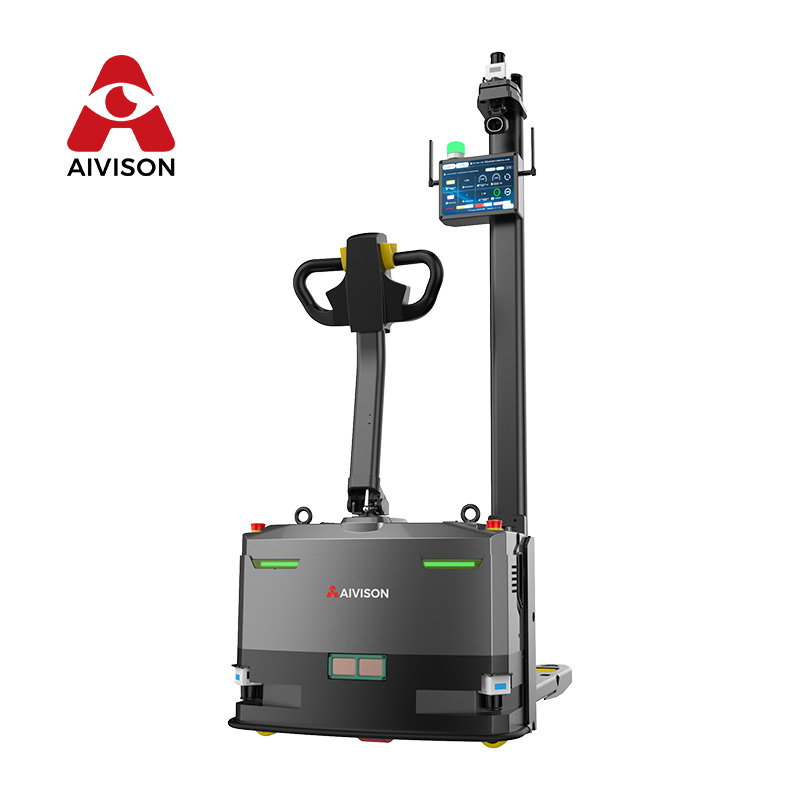
Customizable 1500KG Traction Capacity AGV Autonomous Mobile Robot Amr with Lidar Guided Sensor
A versatile 1.5 t traction platform for long-distance material transfer, line-side replenishment and warehouse-to-production movement. Laser-guided navigation supports no-tape mapping where layouts change with production models.
View product details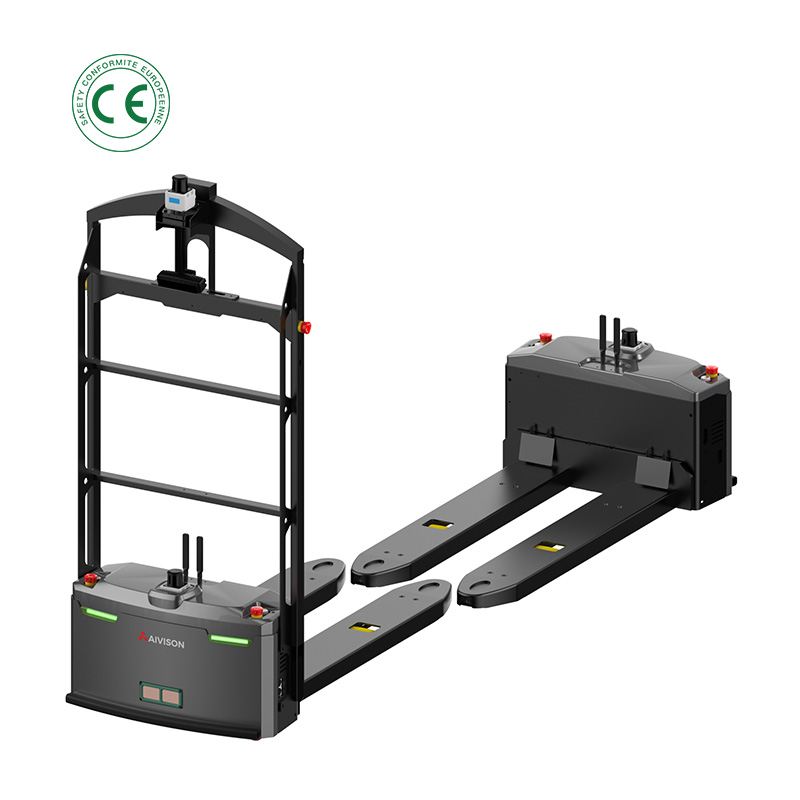
Warehouse Stacker CE Forklift AGV 800kg Load Capacity Light AMR Pallet
An 800 kg stacker AMR for light pallet movement, retail replenishment, spare-parts storage and line-side feeding. A practical option for Manila warehouses where compact footprint and smooth pallet handling matter more than heavy-tonnage lifting.
View product details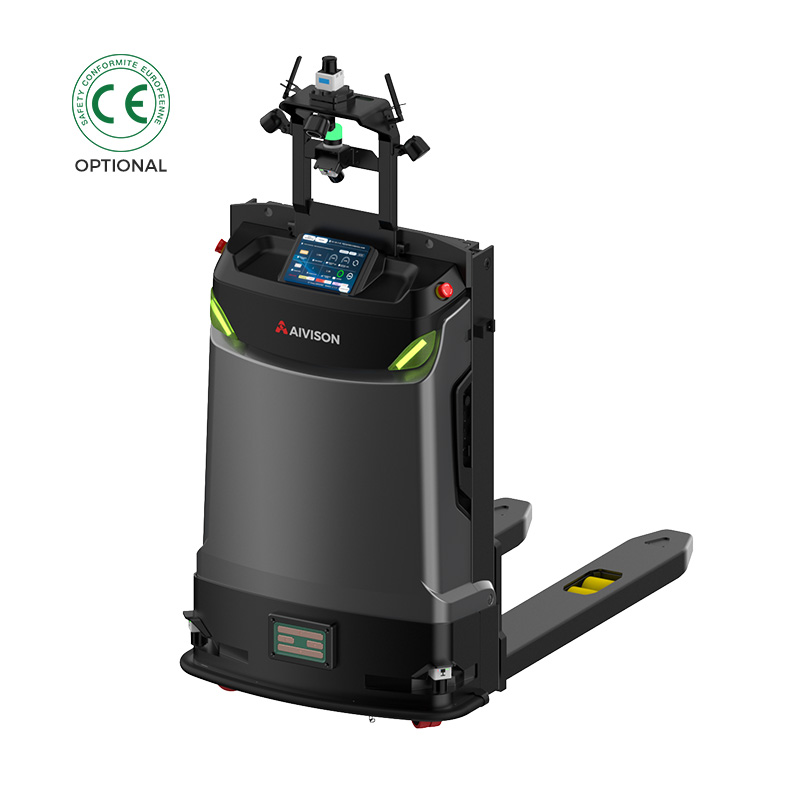
AGV AMR Warehouse Automatic Guided Vehicle 1500kg 2000kg AGV Robot Forklift
A heavy-duty warehouse robot forklift for repeat put-away, pallet transfer and high-shelf logistics. Add QR assist where docking tolerance needs to reach ±2 mm, or keep natural-feature SLAM where floor marking should remain minimal.
View product details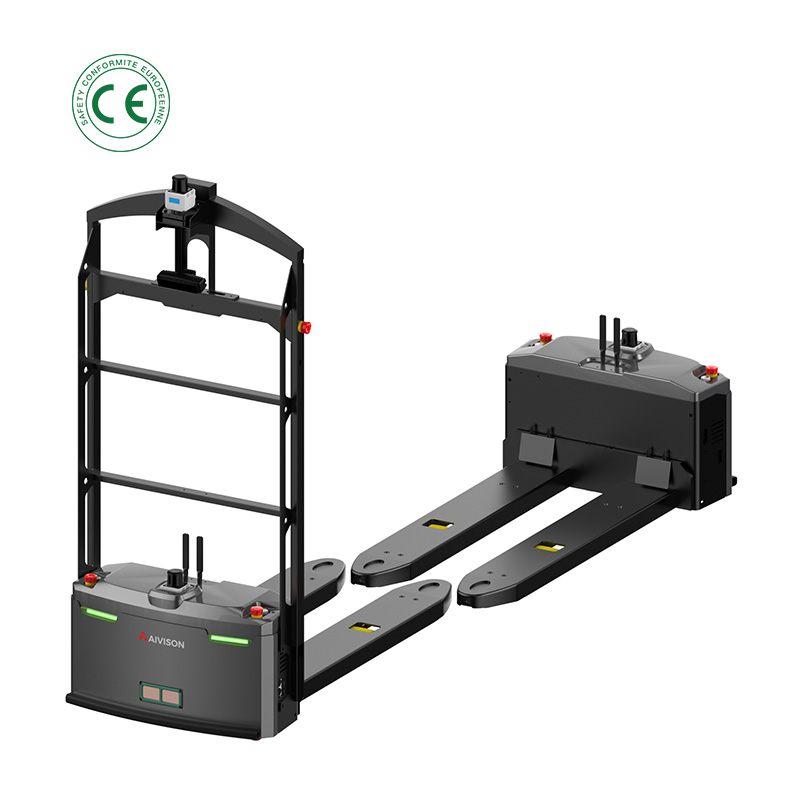
Aivison Customized 800kg Warehouse AGV Robot Lithium Battery AMR
A customized 800 kg warehouse robot with lithium battery architecture for multi-shift logistics. Suitable for 3PL, food, retail and electronics operations that need flexible route planning without fixed floor tracks.
View product details
AI-Ready Humanoid Robot Chassis Dual 7-DOF Arms Omnidirectional Drive ROS2 Laser SLAM Open Development Platform
An open development platform for universities, R&D centres and integrators building advanced robotics capability. Dual 7-DOF arms, ROS2 and laser SLAM make it a strong testbed for Philippine automation talent and applied research.
View product details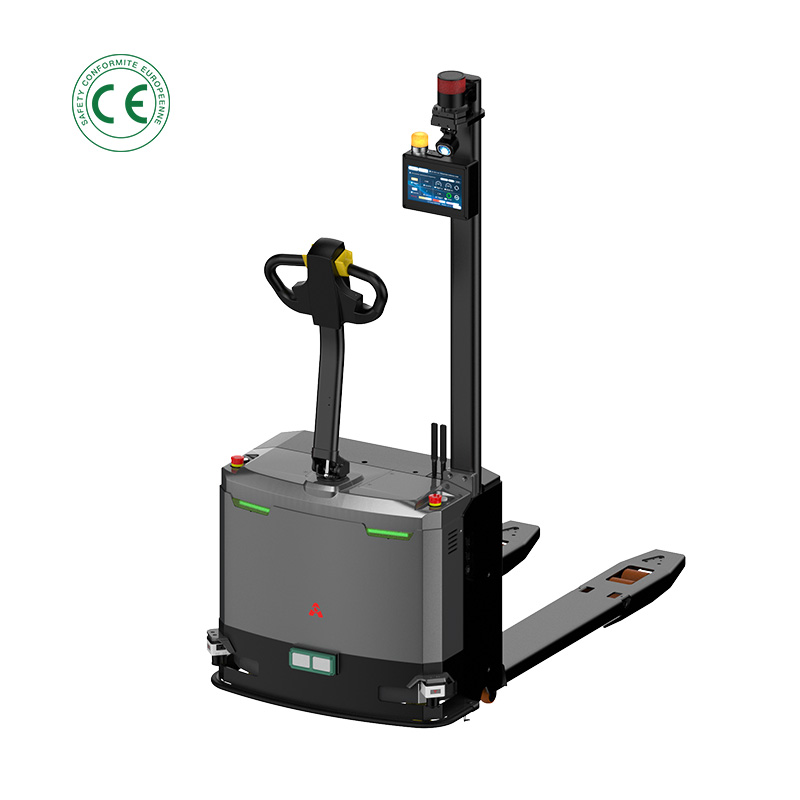
CE Certification Industrial AMR AGV Robot for Warehouse Automation Autonomous Material Handling Logistics
An industrial AMR AGV designed for autonomous material handling in mixed human-vehicle traffic. Recommended for Manila distribution centres and factories planning 24/7 scheduled transfer with fleet coordination and smart charging.
View product details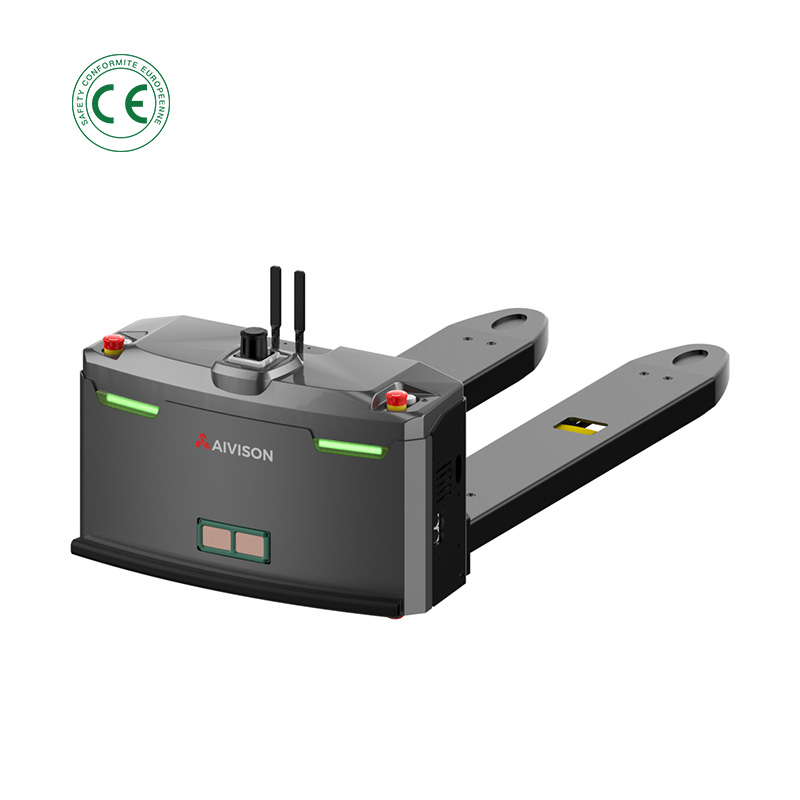
AMR Automated Warehouse Robot Logistics Automatic Industrial Logistics Robots AMR Robot
A continuous-transfer warehouse robot for receiving, put-away, replenishment and dispatch. Use it to reduce idle walking and repeated pallet moves in Metro Manila facilities where floor space is tight and labour allocation is critical.
View product details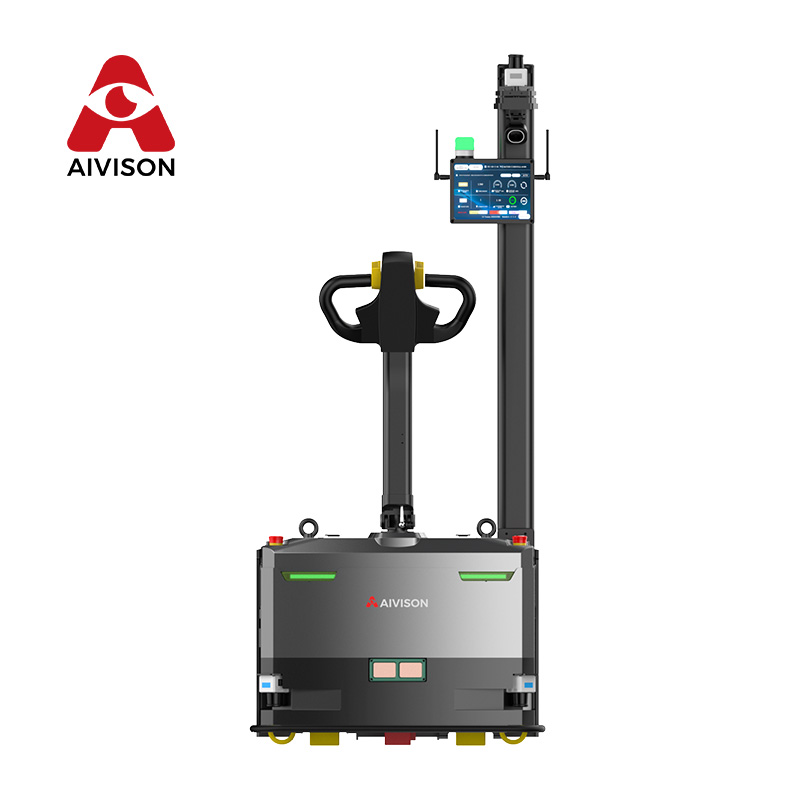
China Factory Movable Pallet Agv Robot Rack Shelf for Intelligent Robot Warehouse
A movable pallet rack and shelf AGV concept for SMEs modernizing storage without a full automated storage and retrieval system. This is useful for staged automation, pilot warehouses and compact storage zones in Manila.
View product detailsWhat Manila Buyers Can Verify Before Shortlisting
A serious intelligent forklift supplier should be evaluated with the same discipline as any production asset. Marnix combines about ten years of AGV engineering experience, laser SLAM navigation, QR-assisted precision, manufacturer-level customization and third-party verification records that can be reviewed during procurement.
Verification references include an onsite supplier assessment by TÜV Rheinland, supplier-to-Fortune-500 trade records, credit index information and transaction history available through the company’s published profile. Buyers should still confirm the exact certificate scope, configuration and destination compliance requirements for each Manila project.
Why Intelligent Forklift Factories Matter in Manila Now
Manila is not a single warehouse market. It is a network of port-linked logistics, Metro Manila fulfilment, Cavite–Laguna–Batangas manufacturing, Clark and Subic corridors, and PEZA locators serving export customers. That mix makes “one standard forklift” less useful than a configurable fleet that can handle narrow aisles, mixed traffic and repeatable material movement.
Warehouse operators around Metro Manila face a familiar combination: higher rents for usable floor area, limited room to expand, rising e-commerce service expectations, competition among 3PLs, and labour schedules that become harder to align with 24/7 fulfilment windows. In this environment, the business case for an intelligent forklift factory is not simply “replace people with robots.” It is to stabilise repetitive transport, reduce damage to racks and goods, improve traceability, and free skilled staff for exception handling, quality checks and customer-specific tasks.
At the same time, Manila buyers are right to ask harder questions than buyers in a new-build automated warehouse. Existing buildings may have expansion joints, ramps, uneven floor patches, variable Wi-Fi coverage and mixed pedestrian-forklift traffic. The Philippine power environment often requires confirmation of 220V/60Hz supply and charging-room capacity. Tropical heat and humidity also demand a clear specification for battery strategy, ventilation and condensation control. A supplier that ignores these details is not ready for a Manila project.
This is where laser SLAM AMRs and smart forklifts become practical. They map existing natural features, avoid the cost of magnetic tape or extensive floor QR grids, and can be re-routed when a tenant changes a rack layout. QR assist is added only where the process truly needs millimetre-level docking. Composite robots with 6-axis arms are reserved for higher-value assembly or machine-tending tasks where ±0.05 mm repeatability justifies the engineering effort.
Space-Constrained Warehouses
Many Metro Manila facilities cannot easily expand. Robots that fit existing aisles and reduce unnecessary travel deliver value without waiting for a new building.
E-Commerce and 3PL Pressure
Fulfilment windows are tighter, SKU counts are higher and customers expect accurate dispatch. Scheduled AMR transfer supports consistent replenishment and staging.
Labour Allocation and Safety
Repetitive pallet moves contribute to fatigue and turnover. Automation can absorb routine travel while trained staff focus on quality, exceptions and supervision.
Retrofit-Friendly Automation
Laser SLAM lets projects start in existing buildings. QR labels are added only at precision stations, which lowers disruption and avoids full floor rework.
Which Robot Type Fits Your Manila Operation?
Use the operating context to select the platform, not the other way around. A 3PL in Parañaque, an electronics exporter in Laguna and a food distributor in Valenzuela may all need mobile robots, but they will not need the same payload, top module or docking tolerance.
Metro Manila 3PL and E-Commerce
Start with the 800 kg light AMR pallet platform and warehouse AMR for replenishment, picking support and dispatch staging. Keep a small, interoperable fleet rather than over-automating one aisle.
Cavite–Laguna Production Lines
Use a 1,500 kg Lidar-guided AMR for line-side material transfer where layout changes follow production models. Map once, then adjust routes as cells are rearranged.
High-Bay and Rack Docking
Choose the 1,500 kg / 2,000 kg warehouse AGV robot forklift with optional QR assistance where high-shelf positioning and pallet handover require ±2 mm repeatability.
Electronics and Precision Assembly
Use QR-assisted AMRs for wafer, PCB or component handling, and reserve composite mobile robots with 6-axis arms for machine tending or assembly tasks that require higher repeatability.
System Integrators
Source jacking robots, smart forklifts, pallet AMRs, charging docks and open ROS2 development platforms from one manufacturer, then customize top modules for your end customer.
Food, Retail and Spare Parts
For repetitive ambient-warehouse transfer, the customized 800 kg lithium-battery AMR or automated warehouse robot can reduce walking distance and improve replenishment consistency.
Manila-Specific Application Scenarios for Smart Forklifts and AMRs
Localization is not a translated brochure. It is the ability to design around Philippine building stock, tropical operations, import logistics, power supply, labour models and the customer’s real process.
PEZA Locators in Cavite, Laguna and Batangas
Support line-side replenishment, finished-goods transfer and pallet staging between production and warehouse zones. Laser SLAM is valuable where product changeovers alter route layouts.
Metro Manila 3PL and Fulfilment
Use scheduled AMR routes for receiving-to-storage transfer, replenishment and dispatch staging. Keep human pickers focused on exceptions while robots absorb repeated long-distance moves.
Port and Container Freight Staging
For facilities near the Port of Manila or inland container depots, robots can handle repetitive pallet movement between staging lanes, inspection areas and storage zones.
Food, Beverage and Retail Distribution
Apply AMR pallet transfer for ambient warehouses and distribution centres. Specify wash-down expectations, battery location and condensation control before site acceptance.
Electronics, Semiconductor and PCB
Precision docking and clean material flow are critical. Combine QR-assisted robots with documented handover procedures where wafer, PCB or component carriers need repeatable positioning.
Medical Supplies and Pharma Distribution
Traceable, repeatable transfer supports regulated warehouse operations. Confirm documentation, cleaning procedures and emergency-stop validation with the quality team before deployment.

Illustrative warehouse application: dynamic avoidance, scheduled transfer and safe operation in mixed human-vehicle traffic.
Match Navigation Precision to Each Manila Station
Over-specifying precision is an easy way to inflate a project. In most Manila warehouses, ±5 mm laser SLAM is already sufficient for transfer, line-side delivery and replenishment because the robot does not depend on magnetic tape, reflectors or a floor-wide QR grid. QR labels should be reserved for the few stations where pallet handover, high-shelf docking or machine interface requires ±2 mm. Composite robots with 6-axis arms are a separate category for assembly or machine-tending tasks where ±0.05 mm repeatability is genuinely needed.
- Warehouse transfer: laser SLAM maps natural features and adapts when racks or work cells are rearranged.
- Precision docking: add a QR camera only where the process needs ±2 mm handover, reducing floor marking cost.
- Composite tasks: 6-axis arms and multi-layer synchronization for higher-value assembly, with station calibration.
Indicative Selection Guide
The bars are a visual selection aid, not a performance guarantee. Final accuracy depends on site survey, floor condition, docking design, lighting, Wi-Fi and project acceptance criteria.
Why Marnix Is a Credible Intelligent Forklift Factory for Manila Projects
Marnix is a Shenzhen-based manufacturer of laser SLAM autonomous mobile robots, jacking robots, smart forklifts, composite mobile robots and intelligent charging docks. The advantage for Manila buyers is not simply a product list; it is the ability to customise chassis and top modules around a real production or warehouse process, then support system integrators with engineering documentation.
Manufacturer-Level E-E-A-T
About ten years of AGV engineering experience, in-house R&D and manufacturing, plus an onsite supplier assessment by TÜV Rheinland. Buyers can review published credentials, credit information and trade history before committing.
Complete AMR Portfolio
Jacking robots, smart forklifts, pallet AMRs, composite robots, humanoid development platforms and compatible charging docks can be sourced from one technology base instead of piecing together unrelated vendors.
Laser SLAM + QR Fusion
Natural-feature navigation at ±5 mm, QR-assisted precision at ±2 mm, and composite robot repeatability at ±0.05 mm. This lets buyers pay for precision only where the process actually needs it.
Custom Top Modules
Jacking units, roller conveyors, forklift forks and 6-axis arms can be engineered to interface with production equipment, conveyors or racks rather than forcing a standard robot into a non-standard process.
Fleet Scheduling and Charging
An intelligent scheduling system manages multi-robot dispatch over indoor Wi-Fi, with compatible smart charging docks for automatic recharging and 24/7 duty cycles.
Integrator and Export Support
We support both end users and system integrators, with documentation for configuration, shipping, commissioning planning and spare-parts strategy. Manila projects should confirm scope, local partner coverage and acceptance criteria in the quotation.

Manufacturing and engineering base in Shenzhen: configuration, assembly and testing before export to Manila and other international projects.

Multi-stage inspection and operational testing help identify configuration issues before shipment, but final site acceptance remains project-specific.
What to Prepare Before Requesting a Manila Quote
A good AMR proposal is not a price list. It is a configuration decision based on load, route, throughput, docking, power, Wi-Fi and service expectations. Share these six inputs and the engineering discussion becomes much faster and more accurate.
Load Profile
Maximum weight, pallet or rack footprint, centre of gravity, load stability and whether the robot must lift, tow, stack or interface with a conveyor.
Site Layout
CAD or sketch with aisle widths, doors, ramps, expansion joints, lift access, charging room location and any areas where pedestrians and forklifts share routes.
Throughput Target
Missions per hour, peak periods, shift pattern and expected growth. These numbers determine fleet size, charging ratio and whether one robot can be justified first.
Docking Precision
Identify which stations need ±5 mm laser SLAM, which need ±2 mm QR assist, and whether any task requires a 6-axis arm or custom top module.
Power and Wi-Fi
Confirm 220V/60Hz supply, charging-room capacity, ventilation, Wi-Fi coverage and network responsibilities. Manila facilities often need an on-site survey before final design.
Import and Service Plan
Plan the shipping route from Shenzhen to Manila, customs broker, HS code review, installation responsibilities, training, spare-parts list and response expectations.
A Practical Deployment Path from Shenzhen to Manila
The safest automation project is staged. Start with a bounded route, prove the operational and safety case, then expand fleet size and top-module complexity only after the first acceptance gate.
Site Data Review
Share layout, load, throughput, docking and power/Wi-Fi details for an initial feasibility review.
Configuration Proposal
Select robot class, top module, navigation mode, charging strategy and safety options.
Factory Test
Validate navigation, load handling and interface logic before shipment; agree acceptance criteria.
Export and Shipping
Prepare packing, documentation and freight coordination from Shenzhen to the Manila consignee.
Commissioning and Scale
Map the site, train operators, verify routes and expand after stable operation is confirmed.
Common Questions from Manila Buyers
These are the practical questions raised by warehouse operators, factory engineers and integrators when evaluating an overseas intelligent forklift supplier for a Philippine project.
What is an intelligent forklift factory, and how is it different from a traditional forklift dealer?
An intelligent forklift factory develops the robot chassis, navigation system, safety logic, fleet software and payload modules as an integrated product. A traditional dealer usually resells standard forklifts and may not control navigation, custom top modules or fleet scheduling. For Manila projects involving laser SLAM, QR-assisted docking or WMS integration, manufacturer-level engineering support is usually more valuable than simple equipment resale.
Can Marnix supply intelligent forklifts and AMRs to Manila?
Yes. Marnix is based in Shenzhen and supports international projects, including end users and system integrators. Product selection should be confirmed against your payload, aisle, throughput, docking precision, power, Wi-Fi and after-sales plan. Because local service coverage and installation scope vary by project, these points should be clarified in the quotation rather than assumed.
Do I need to modify my warehouse floor or install magnetic tape?
Standard laser SLAM navigation is designed to map natural features in the existing environment, so magnetic tape and a floor-wide QR grid are not normally required. QR labels are added only at stations that need ±2 mm docking. However, floors must still be assessed for cleanliness, ramp condition, expansion joints, gaps and mixed-traffic safety. A site survey is recommended before final acceptance criteria are set.
What about 220V/60Hz power and charging in the Philippines?
Philippine facilities often use 220V/60Hz supply, but actual site conditions must be verified. Charging-room capacity, circuit protection, ventilation, location and shift pattern all affect the battery and charging strategy. Provide your single-line diagram or charging-room constraints during engineering review so the robot and charger configuration can be checked properly.
How do humidity, heat and dust affect robot performance?
Tropical heat and humidity can influence battery behaviour, electronics cooling and condensation risk, especially if a robot moves between air-conditioned and non-conditioned areas. Dust and packaging debris can also affect sensors and floors. For Manila, specify the actual operating environment, cleaning routine, charging-room conditions and any wash-down or food-safety constraints before selecting the final configuration.
Can you support installation, training and spare parts in the Philippines?
Support scope should be agreed project by project. A typical plan covers remote engineering review, documentation, operator training material, commissioning guidance and a recommended spare-parts list. If you need on-site installation or local partner support, include this requirement in the inquiry so the commercial and service model can be discussed transparently.
What should we prepare for import, customs and delivery to Manila?
Prepare the consignee details, destination port or address, HS code review with your customs broker, import licence requirements, packing preferences and documentation expectations. Marnix can support export packing and shipping coordination from Shenzhen, but the importer remains responsible for confirming Philippine customs treatment, duties, taxes and compliance with the assistance of a qualified broker.
How do we start an inquiry or project evaluation?
Send your load profile, site layout, throughput target, docking precision, power and Wi-Fi conditions, target commissioning date and any existing WMS or conveyor interface requirements. The more specific the data, the faster the team can recommend a robot class, top module, navigation mode and charging plan. You can start with the inquiry button on this page and attach drawings or photos where available.
Send Your Manila Project Data for a Robot Configuration Review
Share payload, pallet type, aisle width, layout drawing, throughput, docking tolerance, voltage, Wi-Fi coverage, floor condition and target commissioning date. We will use those inputs to recommend the most suitable intelligent forklift, AMR or composite robot configuration and identify the next engineering steps.
Send an Inquiry Email: info@marnixbot.com · Shenzhen Marnix Intelligent Technology Co., Ltd.