Custom Roller Conveyor AMR for PCB Production Lines Supplier & Exporter Serving the San Diego Market
Trackless material flow for PCB magazines, panels, fixtures and line-side WIP—engineered with ESD-aware roller conveyor top modules, ±2 mm QR-assisted docking options and Wi-Fi fleet scheduling for high-mix electronics operations in San Diego County and the cross-border Baja electronics corridor.
Eight Configurable AMR Platforms for PCB and Electronics Intralogistics
For PCB production lines, the highest-value configuration is often a custom roller conveyor AMR: a laser SLAM mobile chassis with a powered roller top module, load sensors, ESD grounding and an optional line-side handshake. The eight platforms below can serve as the mobile base or adjacent material-handling equipment. Product URLs are preserved exactly as supplied.
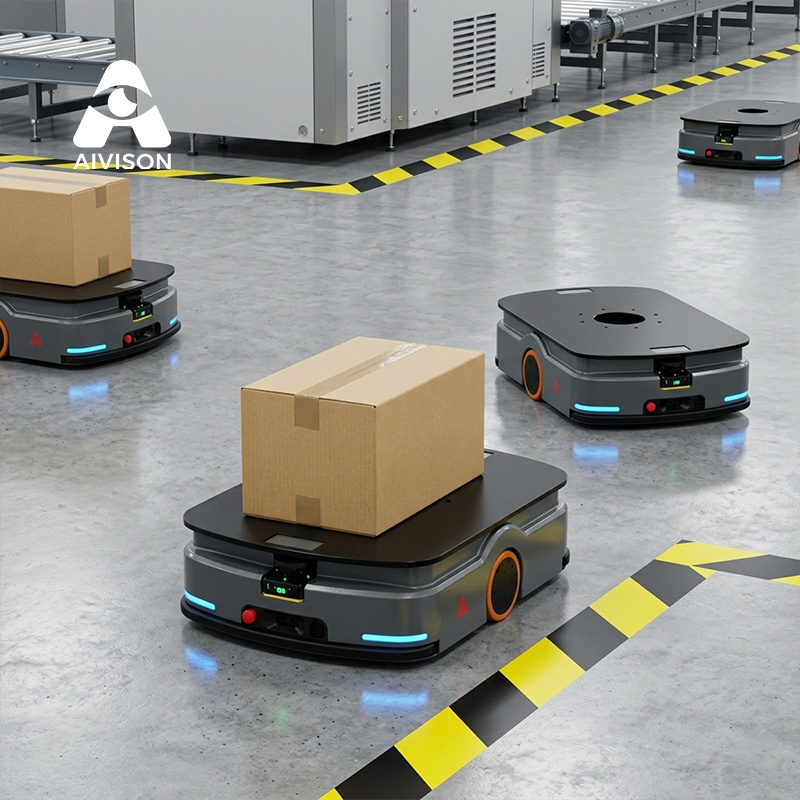
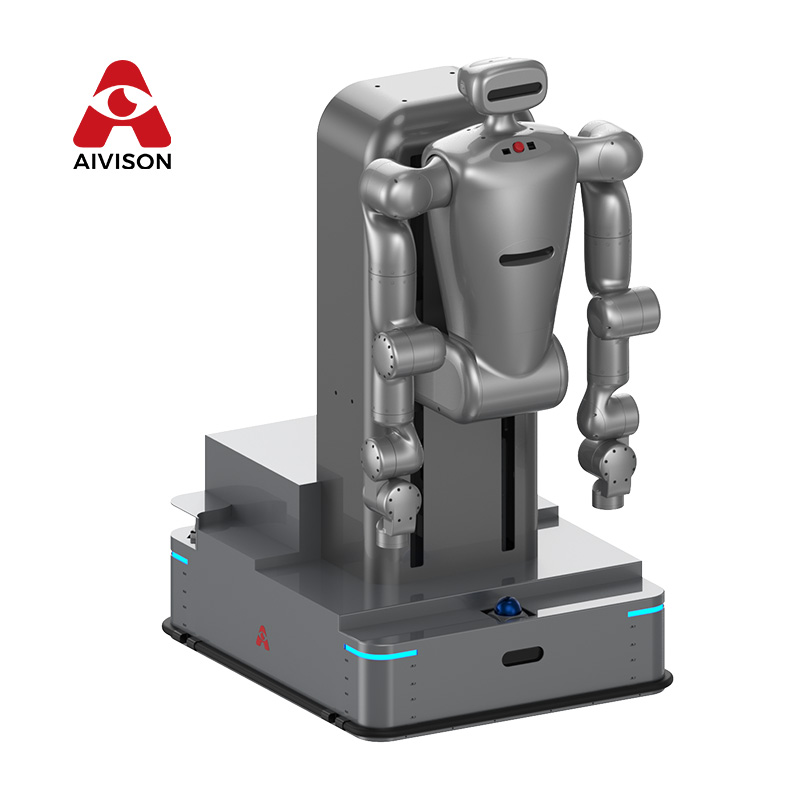

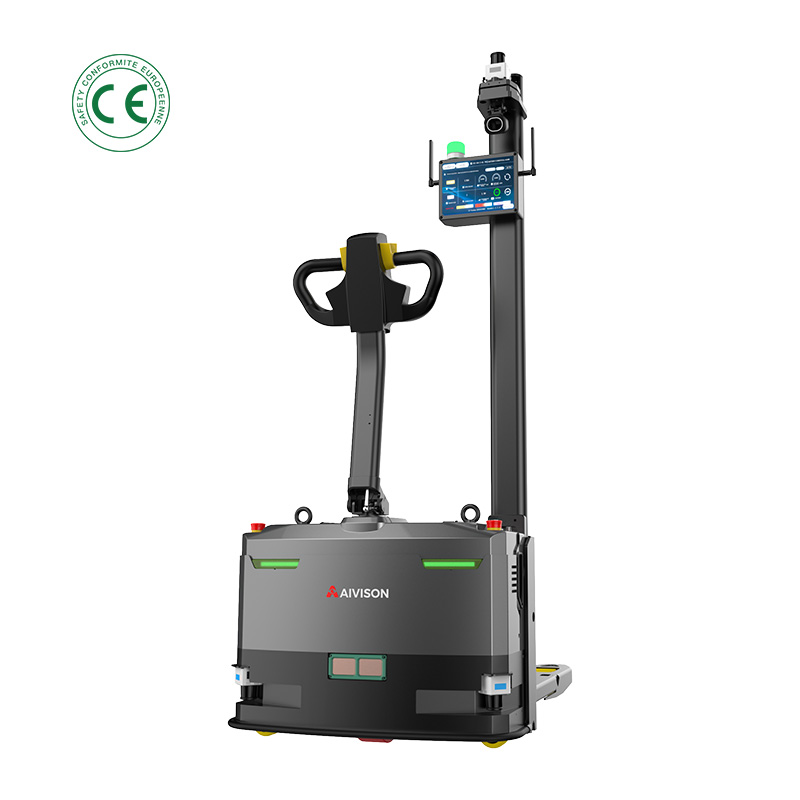


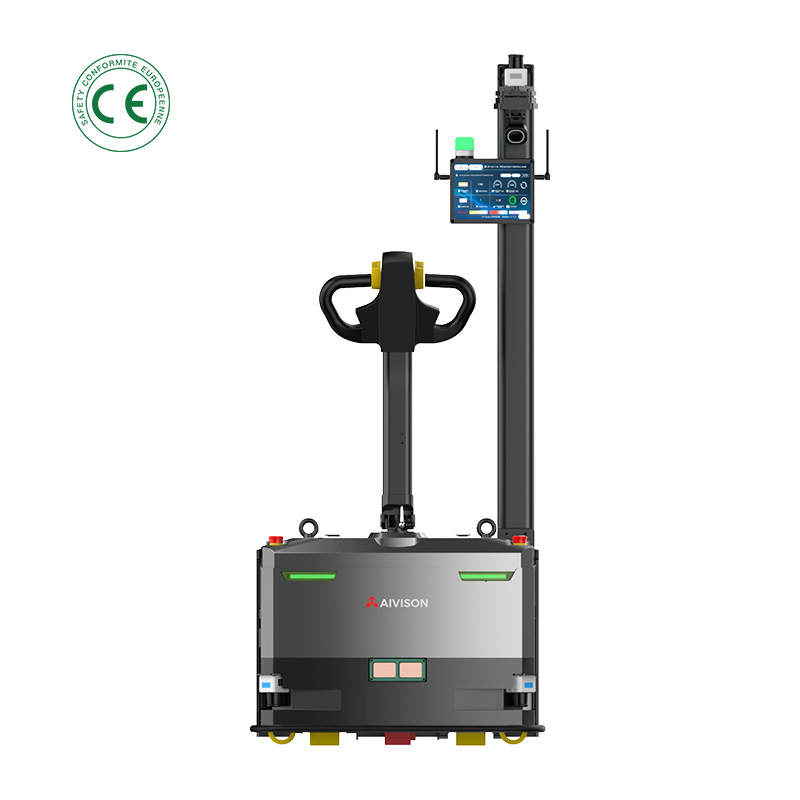

Need a custom roller conveyor top module?
Tell us your PCB magazine dimensions, load weight, transfer height, docking tolerance, ESD requirement and line-side communication protocol. We will recommend the appropriate chassis and roller configuration.
Get a QuoteA Roller Conveyor AMR Is a Mobile Transfer Station—Not a Cart With Motors
The value is created at the handshake between the robot and your PCB equipment. That is where engineering detail determines whether the project reduces labor or simply moves the queue.
A standard AMR moves a pallet from point A to point B. A custom roller conveyor AMR must create a dependable transfer cycle with fixed production assets. On a PCB line, that cycle can include magazine location confirmation, board-present sensing, roller speed matching, ESD grounding verification, interlock logic and traceability event reporting. The top module therefore has to be designed around the load, the machine interface and the line’s failure modes. Buying a chassis first and adapting the conveyor later often increases cost and project risk.
PCB transfer usually involves magazines, panels, trays or fixtures rather than loose boards. The mechanical specification should define roller pitch, transfer width, side guides, stop position, anti-drop features, load sensing and the height range of every load port. The robot should approach, confirm that the port is ready, dock within tolerance, transfer the load, confirm the transfer, release the interlock and depart. ±5 mm laser SLAM is sufficient for many route and line-side transfers. Where a magazine or fixture demands tighter alignment, a QR-assisted ±2 mm docking configuration can be applied at selected stations. Composite configurations with a 6-axis arm can reach ±0.05 mm repeatability for high-precision handling, while the supplied dual-arm platform is specified at ±0.03 mm repeatability in its product title.
San Diego PCB production tends to be high-mix and low-to-medium volume, with frequent changeovers and mixed processes. Fixed roller conveyors are efficient when layout and volume never change. A mobile roller conveyor AMR uses facility mapping and software routing instead of floor tracks, so a line can add an inspection station, move an assembly cell or rebalance work without tearing out conveyor frames. The trade-off is that the fleet must be properly sized, charged and scheduled. The engineering answer is not “more robots”; it is the correct number of robots, load ports and charging docks matched to the transfer cycle.
Use a cycle-based calculation rather than a simple speed comparison: total transfer time = load + travel + dock + handshake + unload + return. Add a realistic allowance for traffic, door delays, operator confirmation and charging. Then compare the number of manual moves per shift, loaded labor cost, damage and scrap risk, WIP floor space and changeover time. That calculation is more useful than a catalog top speed because it exposes the real bottleneck: waiting at the load port, not driving between stations.
Powered Roller Handshake
Stop, position, transfer and confirm using sensors and logic matched to the load port—not an uncontrolled roller run.
Task-Matched Docking
Laser SLAM ±5 mm, QR-assisted ±2 mm at precision ports, and composite-arm precision for inspection or assembly.
Wi-Fi Fleet Scheduling
Multi-robot task assignment, traffic control and automatic charging coordination through an intelligent scheduling system.
ESD & Cleanroom Planning
Grounding, surface materials and particle-control requirements are reviewed before build—important for San Diego medical and electronics lines.
| Criterion | Fixed Roller Conveyor | Manual Cart / Operator Transfer | Custom Roller Conveyor AMR |
|---|---|---|---|
| Best production profile | Stable high-volume lines with infrequent layout changes | Low-volume or highly variable operations | High-mix PCB lines with changeovers, multiple load ports and growth |
| Layout change cost | High—frames, wiring, anchors and downtime | People adapt, but labor and WIP rise | Re-map routes and reload transfer points with software |
| Floor infrastructure | Anchors, cable routing and fixed interfaces | None, but traffic and clutter increase | No tracks or reflectors; QR labels only where ±2 mm docking is needed |
| Work-in-process visibility | Fixed by conveyor position | Highly dependent on operator discipline | Tasks and transfer events can be tracked through fleet dispatch |
| Labor exposure | Low steady-state labor but high reconfiguration effort | High repetitive walking and handling | Reduces routine moves while keeping people available for exceptions |
| Docking precision | Determined by fixed structure | Operator dependent | ±5 mm SLAM; QR-assisted ±2 mm at selected ports; composite options for higher precision |
PCB Manufacturing Scenarios Where a Roller Conveyor AMR Pays Back
The strongest projects are usually where operators repeatedly move magazines between processes, where WIP crowds the aisle, or where line changes make fixed conveyors expensive to modify.
Sorrento Valley, Miramar & Poway
High-mix electronics and RF/microwave PCB operations often need flexible transfer between SMT, AOI, X-ray, depaneling and conformal coating. A mobile roller conveyor can serve multiple load ports as product mix changes.
Kearny Mesa & Defense Electronics
For defense and aerospace electronics, repeatable material movement and documented transfer events can reduce operator variability. Traceability and controlled handling matter as much as speed.
Carlsbad, Vista & North County
Medical-device and life-science PCB assembly can require ESD control and cleanroom-compatible equipment. Roller conveyor AMRs can move sealed magazines and fixtures without adding fixed line-side conveyor length.
Otay Mesa–Tijuana Corridor
Cross-border electronics operations benefit when fixtures, transfer heights and data formats are standardized. AMR routes can be replicated in multiple facilities, while each site keeps independent fleet control.

What Is Changing PCB Material Flow in San Diego and the Border Region?
Automation decisions are being shaped by supply-chain resilience, scarce floor space, labor availability and the need to support more product variants without rebuilding the factory.
Supply-Chain Resilience
Public investment and customer requirements continue to push electronics production toward regional resilience. That favors flexible automation that can support new products without a fixed-conveyor rebuild.
Labor and Space Pressure
San Diego industrial space is expensive, and repetitive material handling competes with skilled operator time. Mobile transfer can reduce walking, aisle congestion and WIP that occupies valuable floor area.
Cross-Border Standardization
San Diego and Baja California electronics teams increasingly look for common equipment standards, fixture interfaces and reporting formats across sites to simplify engineering and support.
Traceability and Right-Sizing
Buyers want data, not just motion. Fleet tasks, transfer confirmations and exception events can support internal audits and continuous improvement—while right-sized robots avoid over-automating low-value moves.
Match the Roller Conveyor AMR to the PCB Transfer Task
Use this matrix to frame the technical discussion. The final configuration should be confirmed against load dimensions, transfer heights, equipment interlocks and site safety requirements.
| Transfer Task | Recommended AMR Approach | Typical Navigation | Key Inputs for Engineering |
|---|---|---|---|
| PCB magazines between SMT, AOI and X-ray | Powered roller conveyor top module with load-presence sensors and stop position control | ±5 mm SLAM; QR assist at transfer ports where needed | Magazine length/width/weight, port heights, board-present logic, ESD control plan |
| Line-side WIP and fixture replenishment | Roller conveyor AMR or jacking AMR depending on rack design | ±5 mm SLAM with dynamic obstacle avoidance | Moves per hour, route distance, aisle width, shift pattern, charging location |
| Precision inspection or assembly handoff | Roller module plus QR docking, or composite mobile manipulator | ±2 mm QR docking; ±0.03–±0.05 mm arm repeatability options | Datum features, fixture repeatability, equipment PLC protocol, cycle time |
| Finished PCB panels to pack-out or storage | Roller conveyor AMR or smart forklift for palletized loads | SLAM navigation; QR at high-precision storage lanes | Pallet or carrier dimensions, stacking height, handling rate, warehouse layout |
| Cleanroom or medical PCB movement | Cleanroom-reviewed roller conveyor build with ESD grounding and wipe-down surfaces | ±5 mm or ±2 mm depending on port design | ISO cleanliness target, ESD standards, cleaning chemicals, traffic segregation |
| Component pallets from warehouse to line | 1500 kg lifting AGV or 1.5 ton autonomous forklift | Laser SLAM with dynamic avoidance | Pallet type, rack height, fork entry clearance, floor slope, safety zones |
What to Review Before a Roller Conveyor AMR Goes Live
Most deployment risk sits outside the robot itself: Wi-Fi coverage, load port design, charging location, pedestrian traffic and the electrical handshake with line equipment.
- Wi-Fi and fleet coverage: confirm access point coverage, roaming behavior and dead zones along every route. Fleet scheduling depends on stable indoor wireless communication.
- Transfer port geometry: validate roller height, gap, side clearance and stop position for each machine. A small fixture change at the port can be far cheaper than over-specifying every route to ±2 mm.
- Safety and mixed traffic: define pedestrian crossings, forklift zones, speed limits and emergency-stop procedures. Use risk assessment and applicable site safety reviews before commissioning.
- ESD and cleanroom requirements: review the build against your ESD control plan and cleanliness target. Materials, grounding, rollers and cleaning methods should be specified at quotation, not discovered during acceptance.
- Equipment interface: clarify whether the line needs a simple ready/busy handshake or deeper PLC/MES data exchange. Interface scope should be written into the project specification.
- Charging strategy: place charging docks where robots can reach them without crossing busy zones, and size the charger count around peak workload rather than average workload.
Site & Load Survey
Share CAD layout, load drawings, transfer heights, move counts, ESD/cleanroom requirements and target throughput.
Configuration & Simulation
Match chassis, roller module, navigation accuracy, fleet size and charging plan to the cycle-time model.
Build & Factory Acceptance
Verify mechanical interfaces, transfer logic, safety functions and load handling before shipment.
Deploy & Optimize
Map routes, commission station docking, train users and tune traffic rules after real production data is available.
Why San Diego Buyers Work With Marnix for Custom AMR Projects
Shenzhen Marnix Intelligent Technology Co., Ltd. combines mobile robot manufacturing with application engineering. We support end users and system integrators who need a reliable production source, not just a catalog link.

Marnix draws on about ten years of AGV engineering experience and manufactures laser SLAM autonomous mobile robots, jacking robots, smart forklifts, pallet AMRs, composite robots and intelligent charging docks. Our portfolio serves semiconductor, 3C electronics, lithium battery, photovoltaic, automotive parts, PCB, textile and medical device industries.
More than 200 manufacturers across three continents have used our robots, and we supply both end users and system integrators. For a San Diego PCB project, that means we can discuss the mobile chassis, the roller conveyor top module, the docking accuracy and the fleet software as one system rather than disconnected components.
Manufacturer-Level Customization
Chassis and top modules can be engineered around the process: roller conveyors, jacking units, forklift forks and 6-axis robotic arms.
Accuracy Matched to the Port
Use ±5 mm SLAM for route flexibility, ±2 mm QR assist for precision docking and composite-arm precision where the process demands it.
Fleet Software and Auto Charging
Robots are coordinated by an intelligent scheduling system over indoor Wi-Fi for simultaneous task assignment, traffic control and automatic charging.
Multi-Stage Quality Protocol
Intelligent inspections and operational stress testing target reliable uptime before shipment, with a focus on production-critical applications.
Verified Trade Credentials
Review TÜV Rheinland onsite assessment, Fortune 500 supply record, verified supplier status, credit index and transaction history before procurement.
Export Support for San Diego
From Shenzhen to California, we support specification review, export documentation, English project communication and remote commissioning planning.

Questions San Diego Buyers Ask Before Purchasing a PCB AMR
These are the practical questions that determine specification, budget and deployment risk. For a project-specific answer, use the quote button and include your layout and load details.
What does a custom roller conveyor AMR cost?
Cost is driven by payload, roller width, number of load ports, docking tolerance, ESD or cleanroom requirements, battery and charging strategy, fleet software, documentation and safety scope. A credible quotation requires an application review; a catalog price without those inputs would be misleading. Share your transfer task and target throughput to receive a configured proposal.
Do I need to replace my existing PCB conveyors or production equipment?
Usually no. The roller conveyor AMR is designed to dock with load/unload ports and move material between stations. In some projects, a lightweight port guide, fixture change or height adjustment improves repeatability. The goal is to avoid unnecessary fixed-conveyor capital while making the robot-to-machine handshake reliable.
How accurate is docking for PCB magazines?
Laser SLAM on natural features provides approximately ±5 mm positioning without magnetic tape, reflectors or floor QR codes. Adding a QR code scanning camera raises docking accuracy to about ±2 mm at selected stations. Composite robots with a 6-axis arm can reach ±0.05 mm repeatability, and the dual-arm manipulator platform is listed at ±0.03 mm repeatability in its product title. The correct choice depends on the transfer port and fixture design.
Can the AMR meet ESD and cleanroom requirements common in San Diego electronics?
Yes, ESD grounding, surface materials, roller selection and cleanroom compatibility can be engineered into the top module and chassis specification. Requirements vary by site, so provide your ESD control plan and cleanliness target during inquiry. The build should be reviewed against your internal standards and applicable site procedures before order release.
How many robots will my PCB line need?
Start with a transfer-cycle model: load time + travel time + docking + handshake + unload + return, then add traffic, charging and operator-response allowances. Provide moves per hour, peak periods, route distance, load/unload times and shift pattern. A small simulation is usually more informative than a simple robot-to-operator ratio.
How are multiple AMRs coordinated?
Robots are managed by an intelligent scheduling system over indoor Wi-Fi, enabling simultaneous task assignment, traffic control and automatic charging with compatible smart charging docks. Wi-Fi coverage should be surveyed across every route and load port before deployment.
Can you integrate with MES, WMS or a line PLC?
Project scope can include line-side handshake logic and transfer event reporting. The appropriate interface depends on your equipment, PLC, IT/OT architecture and cybersecurity requirements. Define the required data and control responsibilities early so the robot, roller module and host system are designed together.
What shipping and export details should a San Diego buyer prepare?
Confirm Incoterms, destination address, receiving capability, crating requirements and required commercial documentation with your freight forwarder. Robots are exported from Shenzhen and can be routed through West Coast logistics channels. Battery shipping and handling requirements should be confirmed before booking.
What information should I send with my quote request?
Send a CAD layout or sketch, PCB magazine/fixture dimensions and weights, transfer heights, move count per shift, peak throughput, docking tolerance, Wi-Fi coverage notes, ESD or cleanroom requirements, existing equipment interfaces and your target installation window. The more complete the input, the faster the engineering review.
Request a PCB Material-Flow Review for Your San Diego Line
Send your layout, load dimensions, transfer heights, move count and docking tolerance. Our engineers will recommend a custom roller conveyor AMR configuration, navigation accuracy and charging plan for your application.
Get a Quote