Eight Wholesale-Ready Smart Logistics Robots for Ho Chi Minh City Operations
These eight configurations are directly linked to their product pages. They cover pallet movement, conveyor handover, heavy stacking, composite assembly and wholesale chassis supply for Vietnamese integrators. All product URLs below are preserved as supplied; where a URL is unavailable, buyers should use the Inquire Now button to request an equivalent configuration.

Laser SLAM Navigation Automated Guided Vehicle Forklift agv 1500kg Load Capacity
A trackless 1.5-tonne platform for pallet movement between receiving, staging and production. Natural-feature SLAM means no magnetic tape, reflectors or floor QR codes, making it a practical first pilot for factories in Binh Duong, Long An or Saigon Hi-Tech Park that need flexible routes.
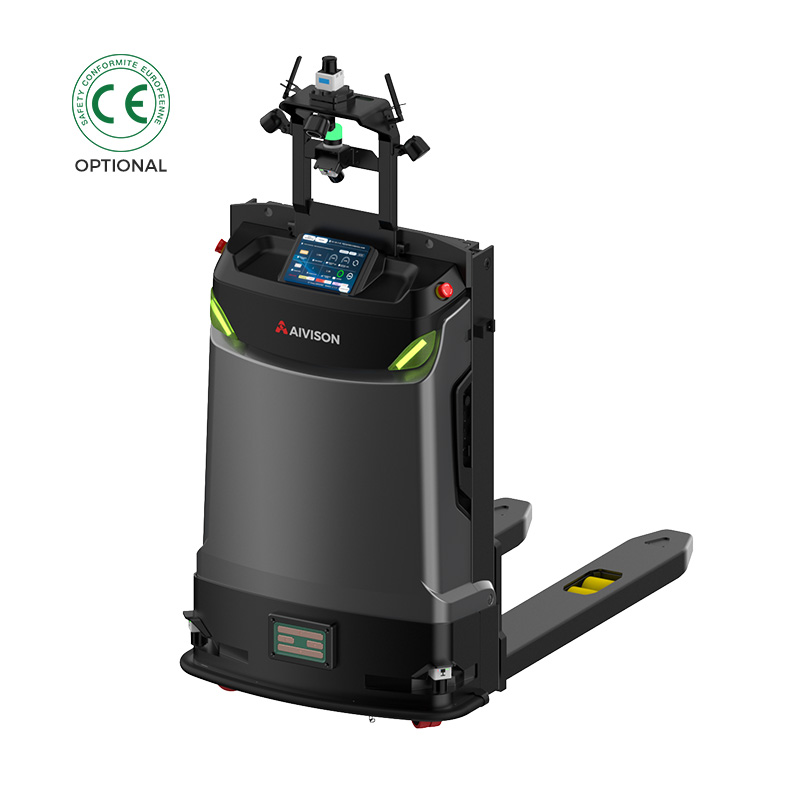
Autonomous Mobile Robots (AMR) Implement Cargo Transportation Between Warehouse and Conveyor Line
Built for repetitive transfer between warehouse storage and conveyor lines. In Ho Chi Minh City electronics and 3PL sites, it reduces waiting time at handover points and can be coordinated with other robots through a Wi-Fi fleet-scheduling layer.
AGV AMR Warehouse Automatic Guided Vehicle 1500kg 2000kg AGV Robot Forklift
A 1.5–2 t warehouse forklift AGV for mixed pallet sizes and high-turnover storage. Recommended where Vietnamese buyers need to automate put-away and replenishment without changing racking or adding guide tape.

Omnidirectional Humanoid Robot Chassis Dual 7-DOF Arms Laser SLAM Autonomous Warehouse AMR Mobile Platform
A high-value R&D and assembly platform with omnidirectional mobility and dual 7-DOF arms. It suits semiconductor, medical-device and precision-electronics evaluations in Saigon Hi-Tech Park and District 9, where ±0.05 mm repeatability must be validated by station.

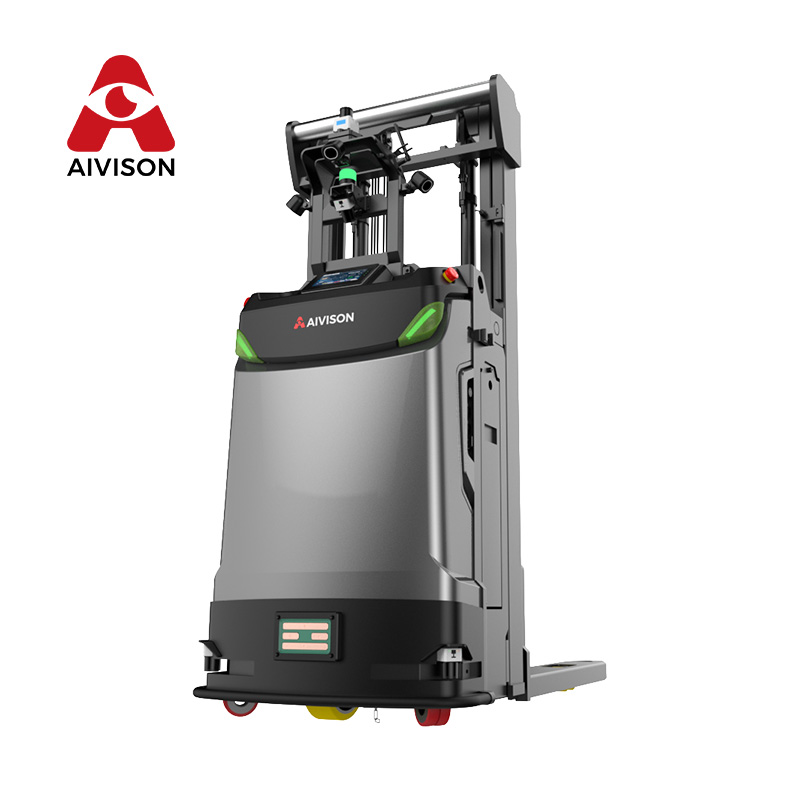
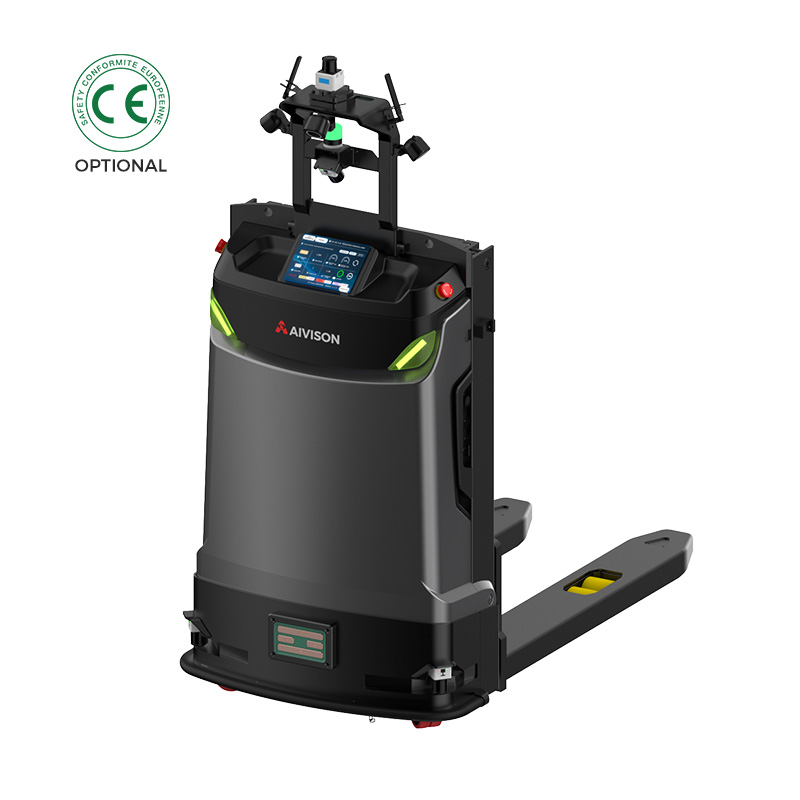
Aivison Stacker Truck Pallet Stacker Forklift Agv 1.5 Ton Autonomous Forklift Smart Deliver AMR Robot
A 1.5-tonne autonomous stacker for warehouses that need unmanned pallet stacking. The smart-deliver AMR configuration is useful in finished-goods warehouses around Ho Chi Minh City where forklift drivers are stretched across shifts.
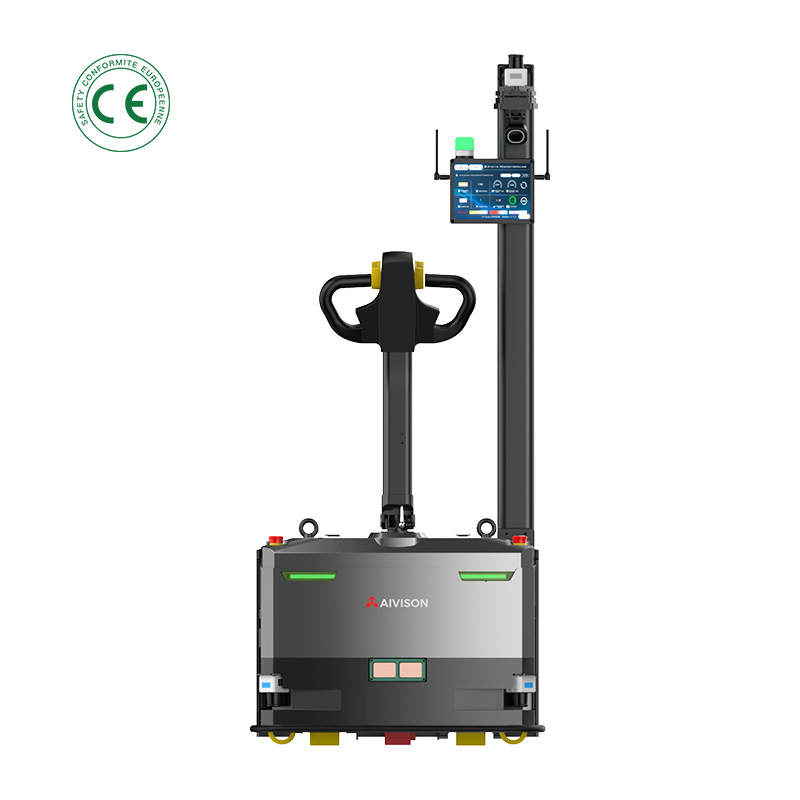
Autonomous Mobile Robot AGV CE Laser SLAM Navigation for Material Handling and Logistics
A CE laser SLAM AMR for general material handling and logistics. It is a good match for export-oriented manufacturers and system integrators that need documented safety and navigation inputs for customer audits.
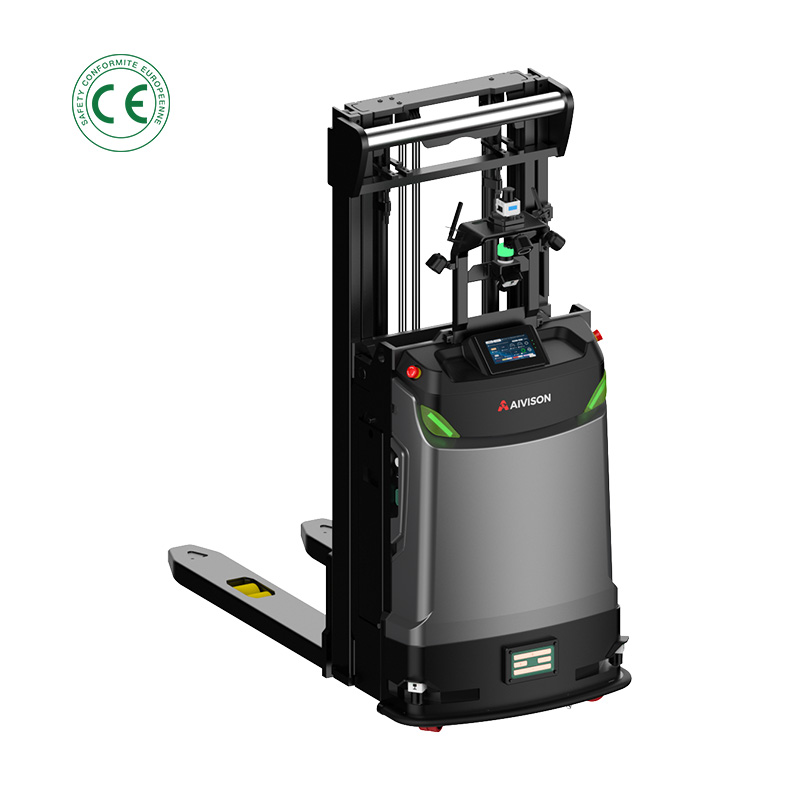
Warehouse Robot Robotics 2000KG CE Warehousing Automatic Forklift Stacking AGV
A 2,000 kg automatic stacking AGV for heavier finished goods, pallet racking and warehouse automation. Recommend it after a load-profile review covering pallet weight, rack beam height and floor flatness.
China Factory Automated Mobile Robot SLAM Lifting Wholesale AGV Chassis Vehicle
A wholesale SLAM lifting AGV chassis for integrators and OEMs that want to add their own top module. This is the shortest route for a Vietnamese automation partner to localize a solution while keeping the navigation core, fleet controller and charging strategy proven.
Why Ho Chi Minh City Is a High-Intent Market for Smart Logistics Robots
Ho Chi Minh City is the commercial and logistics gateway to the Southern Key Economic Region, which includes Binh Duong, Dong Nai, Long An, Ba Ria–Vung Tau and Tay Ninh. For a Chinese smart logistics robot manufacturer, the market is not a single city; it is a connected industrial corridor where e-commerce fulfillment, electronics, textiles, footwear, automotive parts, food processing and export warehousing overlap.
Years in AGV engineering
Shenzhen-based R&D and manufacturing experience across mobile robot projects.
Laser SLAM accuracy
Natural-feature navigation without magnetic tape, reflectors or floor QR codes.
Manufacturers served
End users and system integrators across three continents and eight core industries.
Core industries
Semiconductor, 3C electronics, lithium battery, photovoltaic, automotive parts, PCB, textile and medical devices.
Demand in and around Ho Chi Minh City is being shaped by China+1 supply-chain diversification, rapid e-commerce growth, Grade A warehouse development and a tightening labor market for forklift drivers and night-shift material handlers. Vietnamese factories are not simply buying robots to reduce headcount. They are buying repeatable material flow: consistent line-side delivery at shift change, fewer pallet waits at conveyors, safer movement in mixed pedestrian and forklift traffic, and a reliable way to scale throughput without expanding aisle space.
For wholesale buyers, this changes the specification conversation. The key question is not “Which robot is cheapest?” but “Which robot configuration can be deployed, trained, maintained and expanded in a Ho Chi Minh City operating environment?” That is why a manufacturer with direct engineering control over the chassis, top module, fleet software and charging dock can shorten the path from quotation to stable operation.
Where Smart Logistics Robots Deliver Value in Ho Chi Minh City and Southern Vietnam
Robots succeed when the application is specific. These are the most common high-return scenarios we review with Vietnamese 3PLs, manufacturers and automation integrators.
3PL and e-commerce fulfillment
Use 300 kg light AMRs for cartons and totes, and 1.5–2 t forklift AGVs for pallet replenishment. Design the fleet around campaign peaks, not average daily volume, so inbound, put-away, picking and outbound staging remain synchronized.
Electronics and high-tech manufacturing
Saigon Hi-Tech Park and District 9 operations often need repeatable handover to conveyors and machines. Laser SLAM handles travel; QR assistance at the station can tighten docking to ±2 mm. For arm-based machine tending, validate composite-robot repeatability by station.
Textile, footwear and garment
Rolls, semi-finished racks and cartons move between cutting, stitching, packing and warehouse zones. Jacking robots reduce line-side buffer size and make changeovers faster when style runs shorten across Binh Duong and Dong Nai factories.
Automotive parts and precision mechanical
Sequenced delivery for assembly cells, pallet replenishment and end-of-line transfer are common starting points. A 2 t stacking AGV is suitable after a rack and pallet audit; mixed traffic requires safety scanners, speed zones and clear handover rules.
Food, beverage and cold-chain-adjacent warehouses
Humidity, washdown and condensation should be written into the RFQ. Robots can reduce pedestrian and forklift interaction in repetitive pallet runs, but IP rating and environmental limits must be confirmed rather than assumed from a standard brochure.
Export warehouses feeding Cat Lai and Cai Mep–Thi Vai
Export warehouses need fast inbound consolidation, labeling and outbound staging. Automated warehouse AMRs handle internal moves between receiving, storage and dispatch; outdoor yard automation is a separate engineering scope and should not be mixed into an indoor AMR quotation.
Six Trends Shaping Smart Logistics Robot Procurement in Ho Chi Minh City
These trends explain why Vietnamese buyers are moving from one-off pilot projects to repeatable, multi-robot deployments with clearer service expectations.
From fixed-route AGV to trackless SLAM
Factories in Ho Chi Minh City, Binh Duong and Long An change layouts more frequently than before. Natural-feature SLAM reduces floor infrastructure and allows routes to be re-mapped when lines, racks or staging areas move.
From single robots to fleet orchestration
Buyers now ask how robots receive tasks, avoid each other, charge automatically and report status. Wi-Fi scheduling, traffic control and WMS or MES integration are becoming evaluation criteria, not optional add-ons.
From one payload to modular top modules
A single SLAM chassis can support jacking units, roller conveyors, forklift forks or 6-axis arms. This modularity helps Vietnamese integrators localize solutions without rebuilding the navigation core for every project.
China+1 raises documentation standards
As supply chains diversify into Vietnam, procurement teams want traceable quality records, CE documentation, factory assessment reports, spare-parts lists and clear responsibility during commissioning.
Labor strategy shifts from replacement to stability
Vietnamese manufacturers increasingly use robots to stabilize night shifts, reduce repeated lifting and keep takt time consistent, while redeploying skilled workers to quality, changeover and equipment care.
Local service and Vietnamese-language operation
Buyers are asking for Vietnamese HMI options, training materials, spare-parts planning and remote diagnostics. A China factory with an integrator-friendly model can support local service better than a pure trading company.
Choose the Right Precision Level Before Requesting a Wholesale Quotation
Most buyers over-specify navigation and then pay for floor infrastructure they do not need. Match accuracy to the station, not to the entire factory.
No magnetic tape, reflectors or floor codes. Best for warehouse transfer, line-side delivery, pallet movement and sites that change layout frequently.
QR labels are added only where precision docking is required, such as high-shelf storage, conveyor handover or wafer-handling interfaces.
Station calibration and multi-layer synchronization support semiconductor, medical-device and precision-electronics assembly tasks.
| Ho Chi Minh City use case | Recommended product | Why it fits |
|---|---|---|
| E-commerce and 3PL pallet replenishment | AGV AMR Warehouse Automatic Guided Vehicle 1500kg 2000kg | Trackless forklift AGV for mixed pallet sizes, no guide tape and flexible routes during peak campaigns. |
| Conveyor handover in electronics production | AMR Cargo Transportation Between Warehouse and Conveyor Line | Designed for repetitive transfer between storage and conveyor lines with fleet scheduling support. |
| Heavy finished-goods stacking | Warehouse Robot Robotics 2000KG CE Automatic Forklift Stacking AGV | 2,000 kg stacking platform for heavier pallets after rack, pallet and floor-flatness review. |
| High-value assembly and R&D | Omnidirectional Humanoid AMR Dual 7-DOF Arms | Omnidirectional chassis and dual arms for machine tending and precision assembly evaluations. |
| Integrator localization and OEM chassis | Automated Mobile Robot SLAM Lifting Wholesale AGV Chassis | Wholesale chassis for Vietnamese integrators adding their own top module and local application logic. |
| General material handling and export audits | Autonomous Mobile Robot AGV CE Laser SLAM for Material Handling | CE laser SLAM platform for logistics and manufacturing projects requiring documented specifications. |
What a Ho Chi Minh City Buyer Should Verify in a China Wholesale Manufacturer
Shenzhen Marnix Intelligent Technology Co., Ltd. is a Shenzhen-based manufacturer with about ten years of AGV engineering experience. The company builds laser SLAM AMRs, jacking robots, smart forklifts, composite mobile robots and charging docks for end users and system integrators.
Direct manufacturer and custom engineering
As a manufacturer, Marnix customizes chassis and top modules such as jacking units, roller conveyors, forklift forks and 6-axis arms. This matters for Vietnamese integrators who need a configuration that connects directly to production equipment rather than forcing a standard fit.
Precision matched to the task
Laser SLAM on natural features reaches ±5 mm without floor infrastructure. A QR code scanning camera raises accuracy to ±2 mm where docking demands it. Composite robots with a 6-axis arm reach ±0.05 mm repeatability for semiconductor and medical-device production.
Fleet software and charging ecosystem
Robots are managed by an intelligent scheduling system over indoor Wi-Fi, enabling simultaneous task assignment, traffic control and automatic charging with compatible smart charging docks. This supports 24/7 duty in warehouses where stopping to manage individual robots is not practical.
Quality records and third-party credibility
Multi-stage intelligent inspections and operational stress tests target near-zero failure rates. Marnix has served more than 200 manufacturers across three continents, holds a TÜV Rheinland onsite supplier assessment, and is a supplier to a Fortune 500 company according to its verified trade profile.




TÜV Rheinland onsite assessment
Company premises and operations verified by an independent inspection body.

Supplier to Fortune 500
Procurement contract assessed by independent third parties.

Verified multispecialty supplier
Low-MOQ customization and multi-category robot procurement capability.
Credit and transaction records
Transparent credit index and trade history available for pre-qualification.
What Most Robot Quotations Leave Out for Ho Chi Minh City Projects
Successful deployment is decided by site conditions and lifecycle planning. Use this checklist to compare suppliers on total operating risk, not only robot price.
Floor flatness and joints
Confirm floor tolerance, expansion joints, ramps, drains and dock levelers. Forklift AGVs and high-shelf docking are more sensitive than simple transfer AMRs.
Wi-Fi coverage and roaming
Map access points and dead zones along robot routes. Fleet scheduling depends on stable handover when robots move between warehouse zones and production areas.
Power quality and voltage
Vietnamese facilities commonly plan around 220/380 V 50 Hz, but actual distribution, phase balance and charging location should be checked before final layout.
Safety zoning and mixed traffic
Define pedestrian crossings, forklift speed zones, blind corners and handover areas. Safety scanners and traffic rules must be reflected in the site layout, not added after commissioning.
Battery, charging and spare parts
Calculate charging-window availability and spare-battery policy for multi-shift operation. Ask for wear-part lists, lead times and local support responsibilities.
WMS, MES and Vietnamese HMI
Clarify task allocation, API or file interfaces, alarm handling and operator language. A robot that cannot be understood by local line staff creates hidden training cost.
From Ho Chi Minh City Requirement to Factory Acceptance Test
A disciplined four-step process shortens evaluation and reduces the risk of buying the wrong payload, precision level or fleet size.
Share operating data
Send payload, pallet footprint, aisle width, throughput target, docking precision, Wi-Fi coverage, voltage and target commissioning date.
Configure and simulate
Select chassis, top module, navigation mode and fleet size. Define handover points, charging strategy and safety zones before quotation.
Factory acceptance test
Validate load handling, route logic, docking behavior and alarms in the Shenzhen factory before shipment.
Ship and commission
Plan shipping to Ho Chi Minh City or Cat Lai, then complete site mapping, operator training and service handover with the local integrator.
Frequently Asked Questions from Ho Chi Minh City Buyers
These are the questions Vietnamese 3PLs, factory engineers and system integrators commonly ask during the first technical review.
What information should we send for a fast robot quotation?
Send the maximum load, pallet or rack footprint, aisle width, required throughput per hour, docking accuracy by station, building layout, Wi-Fi coverage, power supply and target commissioning date. Photos or CAD drawings of handover areas help the engineering team recommend the right chassis and top module.
Do we need to modify the factory floor in Ho Chi Minh City?
For standard laser SLAM navigation, no magnetic tape, reflectors or floor QR codes are required. QR labels are added only at stations that need ±2 mm docking precision. Floor condition, joints and ramps still need review for forklift AGVs and high-shelf applications.
Can the robots be configured for Vietnam power and language requirements?
Power configuration, charging layout and operator interface should be confirmed during the RFQ. Vietnamese facilities commonly plan around 220/380 V 50 Hz; the supplier should verify the actual distribution and propose a charging plan. Vietnamese-language HMI, labels and training materials should be requested early so they are included in the project scope.
How does shipping from Shenzhen to Ho Chi Minh City usually work?
Sea freight and road freight are common for larger robot fleets, while air freight may be considered for urgent pilot units. Quotations should clarify Incoterms, packaging, battery transport documentation and delivery to the buyer’s site or a nominated freight forwarder. Cat Lai and Cai Mep–Thi Vai are frequent reference points for Southern Vietnam logistics planning.
What is the MOQ for wholesale or OEM robot orders?
A single unit can be considered for a pilot, while fleet pricing and customization terms depend on the configuration. Low-MOQ customization is available for suitable projects, but final MOQ depends on the top module, software scope and documentation requirements. Integrators should discuss annual volume and local service plan together.
Can the AMR or AGV connect to our existing WMS or MES?
Integration scope should be defined before quotation. The fleet scheduling system can coordinate tasks over indoor Wi-Fi, but the project must confirm API availability, task data format, alarm handling and responsibility for the WMS or MES interface. Avoid assuming that every robot link is plug-and-play.
How are multiple robots coordinated in a mixed-traffic warehouse?
An intelligent scheduling system handles simultaneous task assignment, traffic control and automatic charging with compatible charging docks. For mixed traffic, the site plan should define speed zones, pedestrian crossings, forklift routes and handover areas. Safety scanners alone do not replace a clear traffic plan.
What service and spare-parts support is available after delivery?
Ask for a spare-parts list, wear-part recommendations, remote diagnostic process and training plan. For Ho Chi Minh City and Southern Vietnam projects, the best model is usually factory technical support combined with a local integrator who can attend site issues quickly. Service responsibilities should be written into the project agreement.
Request a Ho Chi Minh City Project Review
Share your load profile, floor layout, throughput target and docking precision. The Marnix team will recommend a wholesale robot configuration for your 3PL, electronics, textile, automotive or integrator project.