Eight Wholesale Autonomous Robot Platforms for Nashville Buyers
These eight platforms cover the most common buying paths we see from the Nashville market: pallet transport, warehouse-to-conveyor handoff, high-shelf docking, autonomous forklift work, industrial material handling, LiDAR integration and AI-ready humanoid development. Product links are preserved exactly as supplied so your engineering team can review specifications without losing the original inquiry path.

Logistics Navigation Detector Sensor LiDAR
A perception-grade LiDAR option for AGV and AMR navigation, obstacle detection and dense mixed-traffic aisles.
Explore Product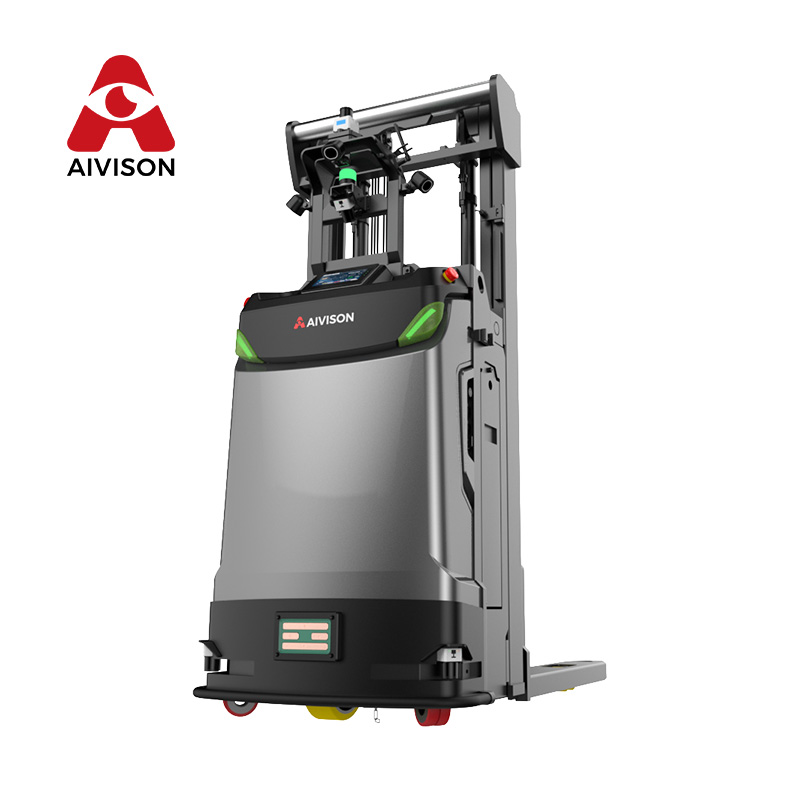
AMR for Cargo Transport Between Warehouse and Conveyor Line
Production-proven AMR for line-side replenishment, WIP movement and warehouse-to-conveyor transfer in regional facilities.
Explore Product
AI-Ready Humanoid Robot Chassis with Dual 7-DOF Arms
ROS2 open development platform with omnidirectional drive, laser SLAM and AI-ready compute for R&D and pilot projects.
Explore Product
Humanoid Robot Chassis with Dual 7-DOF Arms and Laser SLAM
An open AMR platform for research, inspection, service-robotics pilots and academic automation programs.
Explore Product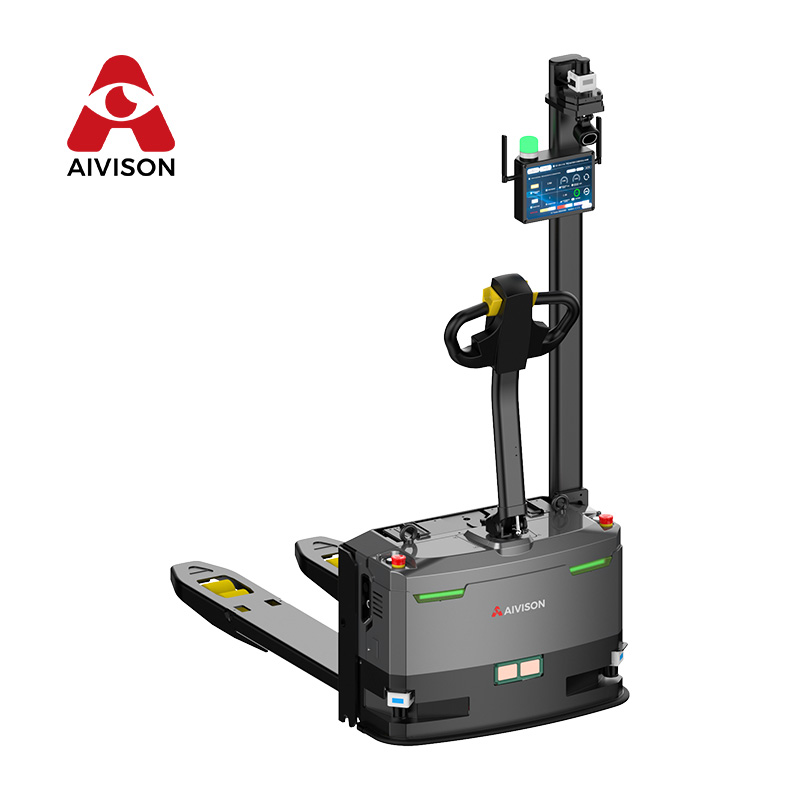
Laser SLAM Navigation AGV Forklift, 1500 kg
A 1,500 kg autonomous forklift for pallet pick-and-place, trailer loading and high-bay transfer without reflector tape.
Explore Product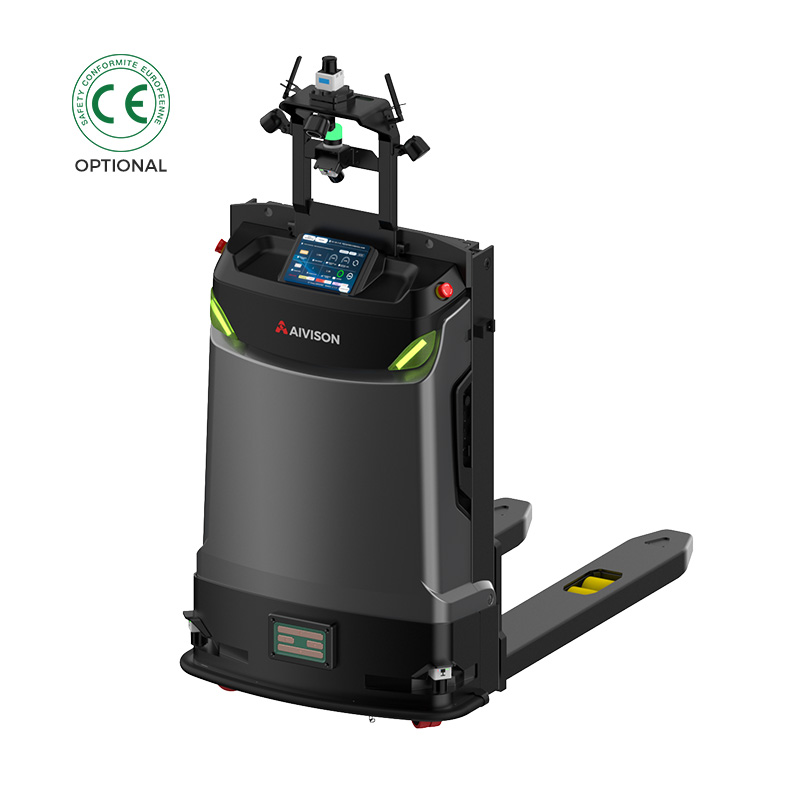
AGV AMR Warehouse Automatic Guided Vehicle, 1500–2000 kg
A flexible warehouse AGV/AMR forklift platform for regional distribution centers handling medium-to-heavy pallet loads.
Explore Product
High-Performance 2000 kg Intelligent AMR Robot
A heavy-payload AMR for high-throughput pallet movement, automated material handling and repetitive transfer duty.
Explore Product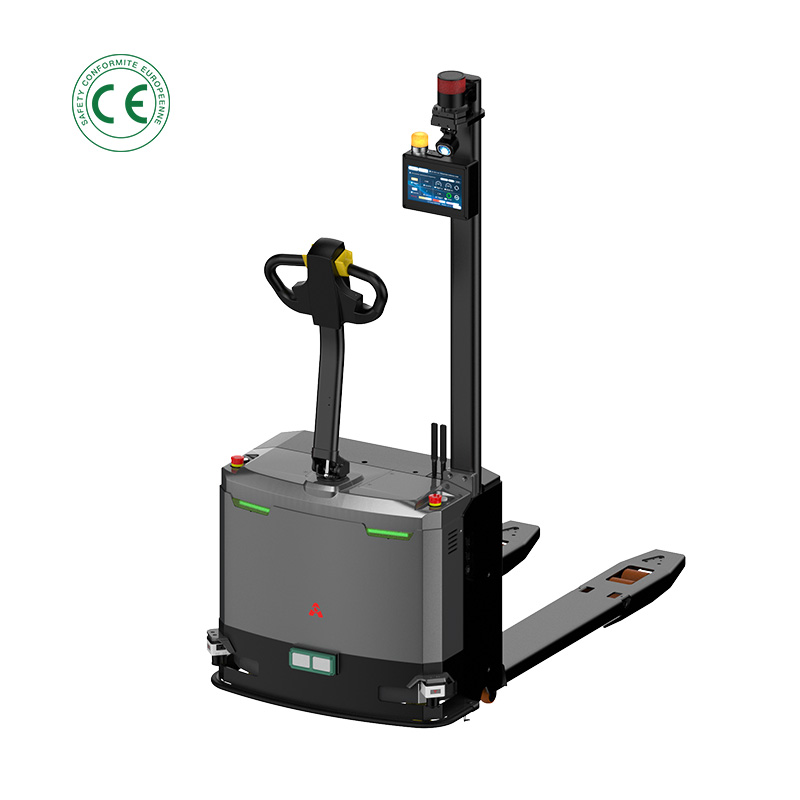
CE-Certified Industrial AMR AGV Robot for Warehouse Automation
An industrial AMR/AGV platform for autonomous material handling, logistics and warehouse automation projects.
Explore ProductFactory engineering heritage from Shenzhen, China, serving global automation projects.
Natural-feature navigation without magnetic tape, reflectors or floor QR codes.
Across three continents, including end users and system integrators.
Semiconductor, 3C electronics, lithium battery, PV, automotive, PCB, textile and medical.
Why Nashville Is Not a Generic Warehouse Automation Market
Nashville and Middle Tennessee sit at the center of one of the Southeast’s most active logistics and advanced-manufacturing corridors. I-40, I-24, I-65 and I-840 connect regional distribution centers, automotive suppliers, healthcare operations, consumer-goods fulfillment and fast-growing industrial parks. That matters because robot selection in Nashville is rarely about moving one standard pallet from A to B. It is about mixed pallet footprints, congested aisles, tight dock windows, multi-shift labor planning, Wi-Fi coverage, safety reviews and the ability to reconfigure routes without stopping operations.
3PL & Distribution
Multi-client 3PL sites around Nashville often need flexible routes, mixed fleet scheduling and fast re-mapping as accounts change.
Automotive & EV Supply Chain
Middle Tennessee automotive suppliers need repeatable line-side delivery, WIP movement and pallet transfer in mixed human-traffic areas.
Healthcare & Medical Devices
Nashville’s healthcare and medical-device ecosystem values traceable movement, precise docking and controlled material flow.
Food, Beverage & Consumer Goods
Regional fulfillment operations need hygienic routes, reliable charging and 24/7 pallet movement with safe obstacle avoidance.
Application fit indicators for Nashville buyers
These bars are not performance guarantees. They are planning indicators based on typical project requirements: mixed pallet flow, line-side replenishment, high-shelf docking and precision assembly. Use them to frame your site survey and ask better technical questions before requesting a quote.
What Nashville Buyers Are Asking for in Autonomous Robot Projects
The strongest Nashville inquires increasingly combine U.S. growth pressure with China factory economics: infrastructure-light navigation, mixed-fleet coordination, documented safety reviews and a clear total-cost-of-ownership model. Generic catalog pages rarely answer those questions with enough depth, so use the following procurement trends as a practical filter.
Infrastructure-Light SLAM
Buyers want laser SLAM that maps the existing floor and avoids magnetic tape, reflectors or floor codes. QR labels are added only at stations that need ±2 mm docking precision, which reduces renovation risk and protects lease requirements.
Mixed Fleets over Single Robots
One forklift model rarely solves every move. Nashville projects increasingly compare jacking robots, pallet AMRs, autonomous forklifts and conveyor-handoff AMRs under one fleet scheduling layer, rather than buying isolated point solutions.
Nearshoring & Regional DC Growth
Regional distribution growth creates more SKUs, shorter order cycles and unpredictable peaks. Scalable AMR capacity—add robots, change top modules, add charging docks—is often more valuable than a highly fixed conveyor expansion.
Safety & Labor Resilience
Plant and warehouse teams want dynamic obstacle avoidance, predictable charging behavior and documented operating zones. The goal is not only labor savings; it is stable throughput when hiring is tight and mixed traffic creates risk.
Recommended Robot Configurations by Nashville Application
Use this section to narrow the conversation before a sales call. The right configuration depends on load, rack geometry, throughput, docking tolerance, aisle width, Wi-Fi coverage and whether a local integrator will handle installation and safety validation.
Inbound Pallet to Storage
For receiving-to-storage movement, compare the 1500 kg laser SLAM AGV forklift and the 2000 kg intelligent AMR forklift. Prioritize aisle width, pallet quality and dock handoff tolerance.
View 1500 kg forkliftWarehouse to Conveyor Line
Use the AMR cargo transportation platform when the core job is repeatable warehouse-to-conveyor transfer, line-side replenishment or WIP movement with automatic handoff.
View conveyor AMRHigh-Shelf & Precision Docking
For high-shelf storage or tight station docking, combine laser SLAM with a QR code camera. Standard natural-feature navigation reaches ±5 mm; QR assist can target ±2 mm where the process demands it.
View industrial AMRAI, Research & Humanoid Pilots
For robotics labs, university programs and AI developers, the dual 7-DOF humanoid chassis and ROS2 open platform provide an omnidirectional base for perception and manipulation development.
View AI-ready chassisNavigation Accuracy Without Floor Reconstruction
Many buyers over-specify navigation. The practical question is simple: where does the robot need a few millimeters, and where would a ±5 mm natural-feature SLAM route be sufficient? Matching precision to the station avoids unnecessary infrastructure cost.
Trackless Natural-Feature Navigation
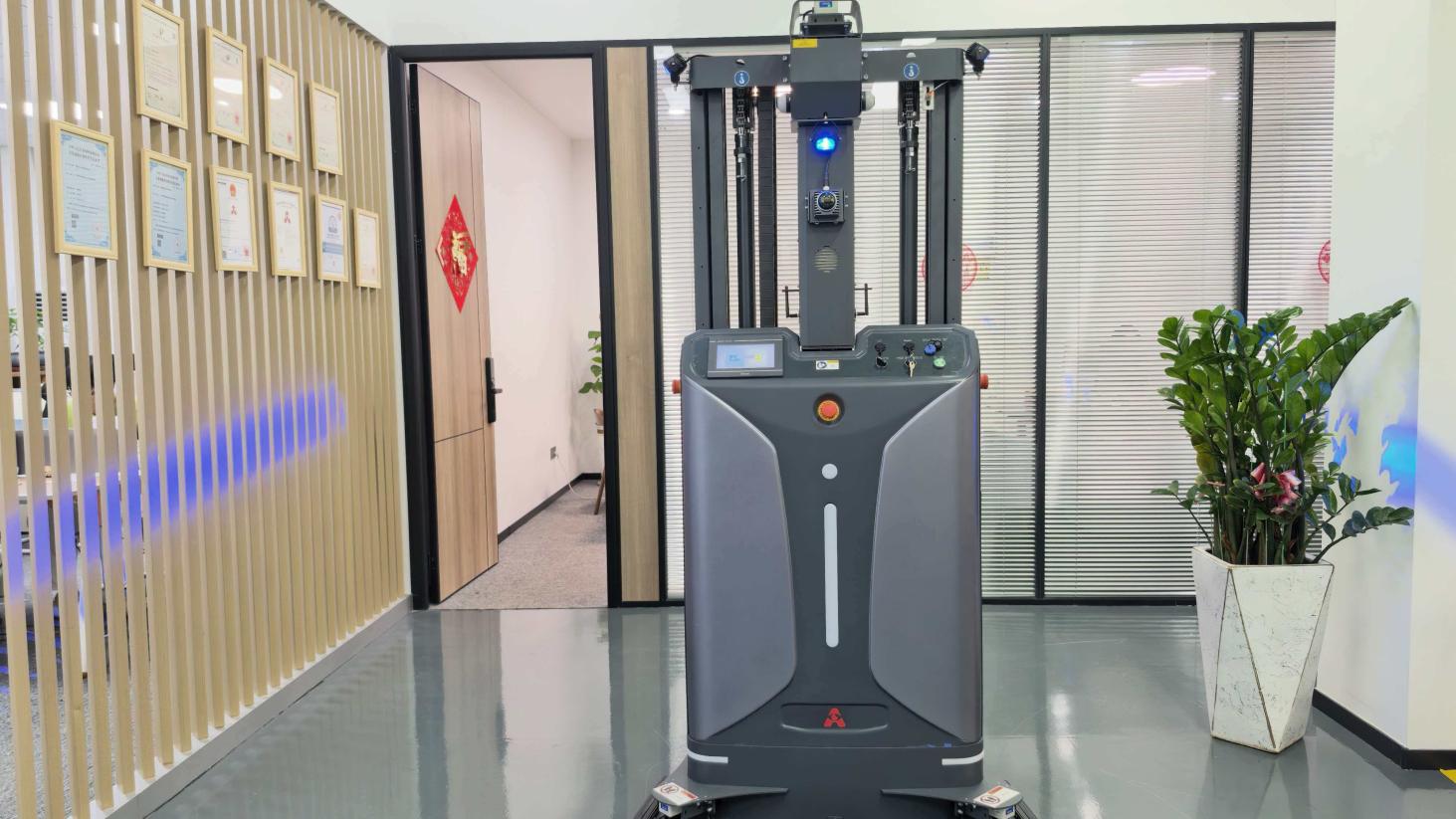
Using laser SLAM on existing site features, Marnix AMRs can map the environment without magnetic tape, reflectors or floor QR codes. This is the standard choice for warehouse transfer, line-side delivery and facilities that change layouts frequently.
Precision Docking Only Where Needed
Adding a QR code scanning camera raises positioning accuracy for handover stations, high-shelf storage, precision docking and wafer-handling flows. QR labels are typically installed only at the stations that truly require tighter tolerance.
AMR Chassis + 6-Axis Arm Repeatability
Composite mobile robots combine autonomous mobility with modular upper mechanisms such as 6-axis arms and roller systems. Multi-layer synchronization protocols support high repeatability for semiconductor and medical-device production tasks.
Accuracy figures are nominal engineering specifications and should be validated against your actual load, route, floor condition, Wi-Fi environment, docking fixture, safety configuration and commissioning scope. A responsible Nashville deployment links navigation accuracy to the process risk: a pallet move may need ±5 mm route stability, while a machine-tending station may justify QR assist or a composite arm.
Inside the Factory: Strengths That Matter After the Purchase Order
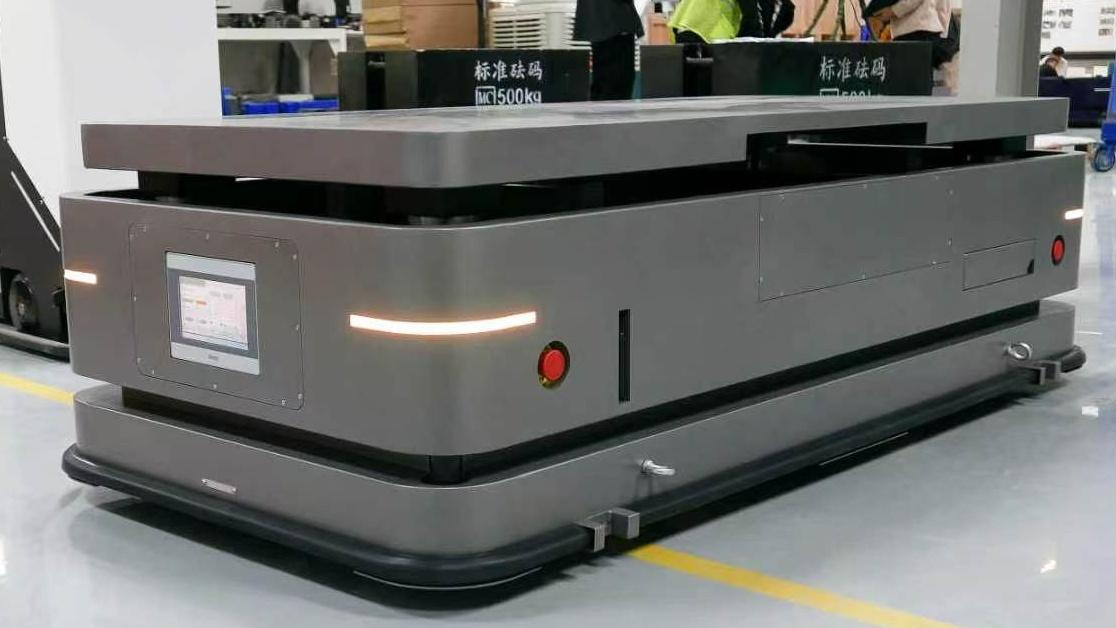
Shenzhen Marnix Intelligent Technology Co., Ltd. is a Shenzhen-based manufacturer with about ten years of AGV engineering experience. The company builds laser SLAM autonomous mobile robots, jacking robots, smart forklifts, composite mobile robots and intelligent charging docks for end users and system integrators. For Nashville buyers, the value is not simply a lower unit price; it is access to a manufacturer that can customize chassis and top modules, support fleet-level coordination and discuss export documentation before the PO.
The portfolio is intentionally broad: jacking units for rack transport, roller conveyors for PCB and production lines, forklift forks for pallet handling and 6-axis arms for precision assembly. Multiple robot types can share the same navigation core and fleet software, which reduces the integration burden when a Nashville warehouse or plant scales from one pilot cell to a multi-zone deployment.

TÜV Rheinland Onsite Assessment
Company premises and operations have been verified through an onsite supplier assessment by TÜV Rheinland. This supports buyers who need a higher level of supplier due diligence before an international robot purchase.
Fortune 500 Supplier Record
Procurement records include a contract with a Fortune 500 company, independently assessed. That experience matters for buyers who need documented trade history, transaction records and credit information.
Manufacturer-Level Customization
As a manufacturer, Marnix customizes chassis, payload interfaces and top mechanisms such as jacking units, roller conveyors, forklift forks and 6-axis arms to connect with production equipment.
Multi-Stage Quality Protocol
Multi-stage intelligent inspections and operational stress testing target reliable uptime after shipment. Robots are coordinated by an intelligent scheduling system over indoor Wi-Fi, with automatic charging through compatible smart docks.

Nashville Buyer’s Guide: Inputs That Shorten Quote and Validation
From our project experience, six inputs determine most of the robot selection. Sharing them upfront can shorten the evaluation from weeks of back-and-forth to a focused technical review. This is especially important for cross-border projects where shipping, integration and safety validation must be planned together.
Load Profile
Provide maximum weight, footprint, center of gravity and pallet or rack type. Include photos of damaged pallets if they are common in your Nashville operation.
Site Layout
Share a CAD drawing or sketch with aisle widths, doors, ramps, expansion joints, elevator or lift points, dock positions and charging locations.
Throughput Target
Define moves per hour, peak periods and shifts per day. This determines fleet size, charging dock count and whether one robot type is enough.
Docking Precision
Identify where ±5 mm is acceptable and where ±2 mm QR assist or composite-arm precision is required. Precision should follow process risk, not catalog superlatives.
Wi-Fi & Network
Document access point placement and coverage quality across the robot operating area. Fleet scheduling depends on stable indoor Wi-Fi and clear network ownership.
Equipment Interfaces
List conveyors, machines, shelving and software systems the robot must hand over to or communicate with, including WMS, MES and PLC requirements.
Information Gain: Build a Nashville-Specific Payback Model Before You Compare Prices
A wholesale robot price is not a business case. Build a simple model that separates labor impact, safety improvement, quality gains, integration cost, freight, commissioning, spares and ongoing support. The formula below is intentionally plain so operations and finance teams can challenge the assumptions together.
Simple payback months = delivered project cost ÷ (annual labor and error savings ÷ 12)
- Validate move counts by shift, not peak-day marketing numbers.
- Include freight, crating, duties, integration labor and training.
- Add Wi-Fi upgrades, dock preparation and safety validation scope.
- Budget spare LiDAR, drives, wheels and charging components.
- Model multi-shift operation and charging dock utilization.
- Compare a phased pilot with a full-zone rollout.
Nashville Procurement FAQ: Importing, Integrating and Supporting Autonomous Robots
These are the questions Nashville-area buyers, integrators, plant engineers and warehouse operators commonly ask when comparing a China wholesale autonomous robot factory with local automation suppliers. Open each question for a direct answer; project-specific details should still be confirmed in the quote and technical review.
Can a China factory ship autonomous robots directly to Nashville?
Yes, international robot shipments can be arranged to Nashville and surrounding Middle Tennessee locations through export crating and freight forwarding. The commercial terms should specify Incoterms, packing, HS codes, commercial invoice, packing list, insurance and final-mile delivery responsibilities. DDP or landed-cost arrangements should be confirmed in writing rather than assumed.
Will we need to rebuild the floor in a Nashville warehouse?
Standard laser SLAM navigation maps existing features, so no magnetic tape, reflectors or floor QR codes are required. QR labels may be added only at stations needing ±2 mm docking. Before deployment, review floor transitions, expansion joints, ramps, dock levelers, aisle cleanliness and lighting conditions with the robot supplier and local integrator.
What U.S. electrical and safety checks should we plan for?
Plan a site-specific risk assessment and safety validation with qualified local resources. Charging docks must be installed according to the site electrical code by licensed personnel. CE marking supports export compliance but is not a substitute for U.S. requirements, NRTL review or OSHA-related risk controls. Robot operating zones, e-stops, traffic rules and pedestrian interactions should be documented.
How is commissioning and after-sales support handled for Tennessee?
Support scope should be written into the quotation: remote commissioning, documentation, training, spare-parts recommendations, software configuration and escalation response. Factory engineers can work with a Nashville-area integrator for installation and safety validation. It is reasonable to align support windows with Central Time and define who owns on-site intervention before the PO.
Can the robots connect to our WMS, MES or conveyor line?
Integration is project-defined. Marnix robots can use fleet scheduling over indoor Wi-Fi and can be customized with top modules such as roller conveyors, jacking units, forklift forks and 6-axis arms. Share the interface requirements, PLC protocols, handshake logic and WMS/MES responsibilities early so the quotation separates robot scope from integrator scope.
How should we compare a China wholesale AMR quote with a local Nashville integrator?
Compare the delivered scope, not the robot unit price alone. Include navigation accuracy, fleet software licenses, charging docks, top modules, freight, crating, duties, installation, training, spare parts, safety validation, warranty and support response. A lower robot price can be misleading if integration, electrical work or spares are excluded. Use total cost of ownership and validated throughput.
Get a Nashville-Ready Autonomous Robot Recommendation
Send your load profile, site layout, throughput target, docking tolerance, Wi-Fi conditions and target timeline. Our factory engineering team can map the right platform—laser SLAM AMR, AGV forklift, jacking robot, conveyor-handoff AMR or open humanoid chassis—and outline customization, export planning and validation steps before you commit to a purchase order.
Get a QuotePrefer email? Reach the export team at info@marnixbot.com