Why German Buyers Search for China Wholesale Automated Transfer Robot Manufacturers & Suppliers
Germany is one of the most demanding markets for automated transfer robots. The buyer’s intent behind this query is rarely “buy the cheapest AGV.” It is usually a more precise commercial-technical search: find a China wholesale automated transfer robot manufacturer or supplier that can deliver a reliable AMR, autonomous forklift, jacking robot or mobile manipulator, support CE-relevant documentation discussions, integrate with German production and warehouse systems, and remain serviceable over a long asset life. That combination of country sourcing intent, product category intent, local compliance intent and long-term service intent is what Google’s semantic search systems reward with relevant, useful content.
For German procurement teams, engineering offices and system integrators, the real comparison is not simply “China versus Europe.” It is total cost per moved pallet, uptime, floor modification risk, safety documentation, integration effort and spare-parts responsiveness. A robot that cannot be integrated into your WMS, MES, PLC layer, safety concept and maintenance organization is not a bargain. A useful supplier page therefore has to answer engineering questions, not only repeat product names.
This whitepaper is designed for that intent. It explains which automated transfer robot platforms are relevant for Germany, where they fit in local application scenarios, what the German market is changing toward, how to prepare a Germany-ready RFQ and which enterprise advantages make Shenzhen Marnix Intelligent Technology Co., Ltd. a credible wholesale manufacturing partner for integrators and end users.
Engineering-led sourcing
Compare navigation accuracy, floor preparation, payload interface and fleet software before price.
German market fit
Support for mixed-traffic factories, high-bay storage, line-side delivery and Industrie 4.0 integration.
Documentation readiness
Project-specific CE, risk assessment and technical information can be aligned with your integrator.
Wholesale customization
Chassis, top modules, charging docks and fleet scheduling reviewed around the real application.
Recommended Automated Transfer Robots for German Intralogistics Projects
These eight platforms cover the most common wholesale inquiry paths for the Germany market: heavy payload AMRs, autonomous forklifts, pallet rack robots, humanoid mobile platforms, high-precision mobile manipulators, lifting AGVs and open ROS2 development platforms.

High-performance Intelligent Smart Automated Guided Vehicle 2000kg AMR Robot
A 2000 kg-class AMR for heavy pallet, rack and module transfer in automotive, battery and machinery environments. Laser SLAM navigation supports trackless routing and Wi-Fi fleet scheduling, while the top interface can be reviewed for your load-handling concept.

AGV AMR Autonomous Forklift Smart Version Auto Mobile Transfer Stacker Robot
An autonomous forklift and stacker concept for pallet movement between goods-in, storage and line-side buffers. It is relevant for German warehouses where fork entry, pallet recognition and repeatable handover are more important than raw travel speed.
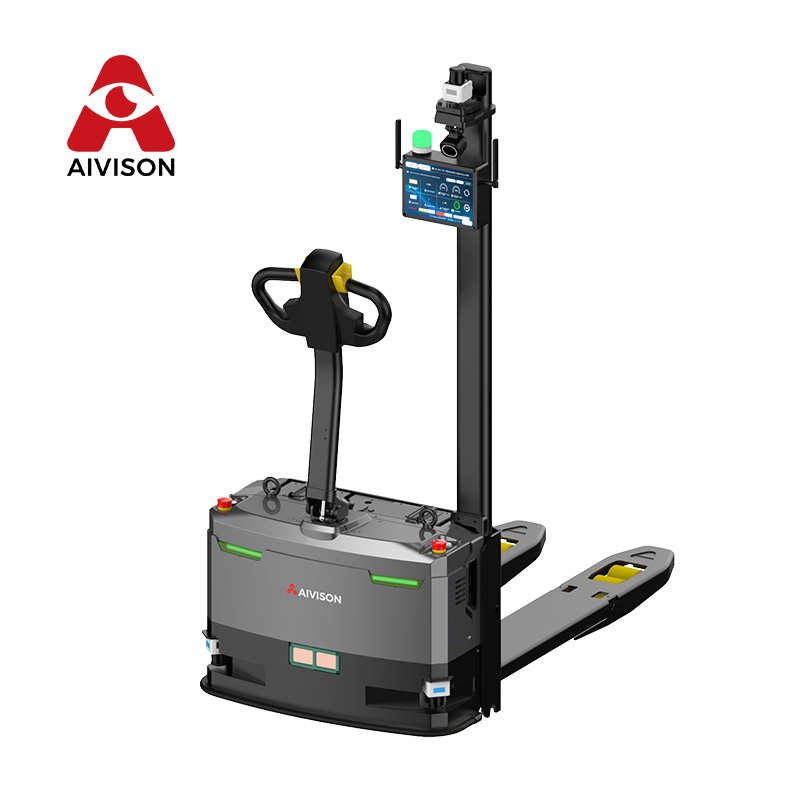
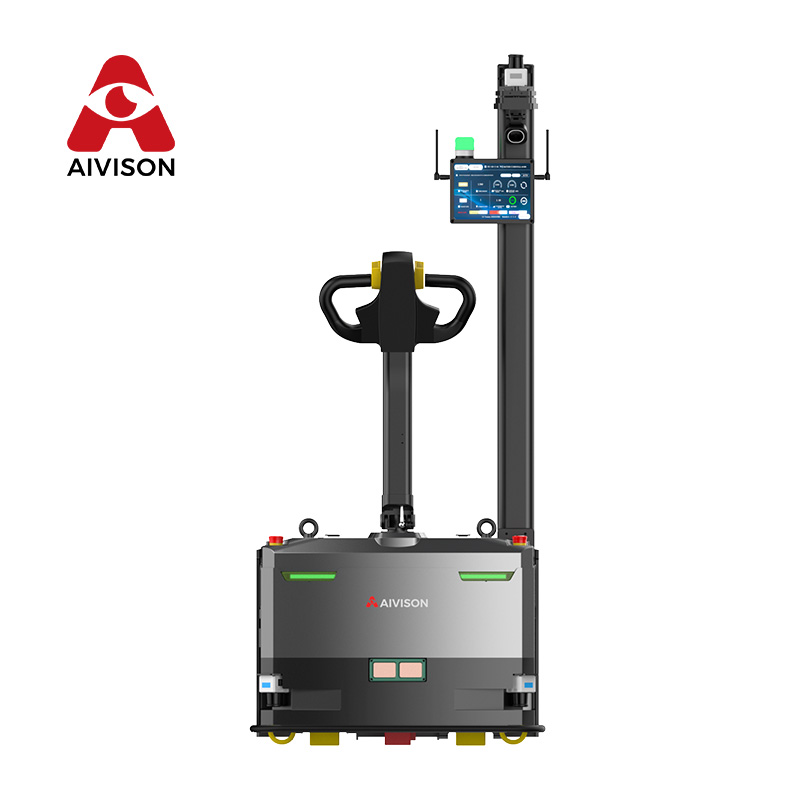
Aivison AGV Forklift High Quality Industrial Unmanned Pallet Forklift
An industrial unmanned pallet forklift platform for high-throughput pallet logistics. German buyers should evaluate it together with existing racking, floor conditions, aisle clearances, safety-zone design and the handover interface to conveyors or production cells.
China Factory Movable Pallet Agv Robot Rack Shelf for Intelligent Robot Warehouse
A movable pallet AGV rack and shelf solution for intelligent robot warehouses. This approach suits rack-based goods-to-person, staging and line-side buffer layouts where the rack itself becomes part of the automation system rather than a fixed obstacle.

Omnidirectional Humanoid Robot Chassis Dual 7-DOF Arms Laser SLAM Autonomous Warehouse AMR Mobile Platform
An omnidirectional humanoid robot chassis with dual 7-DOF arms and laser SLAM. It is relevant for flexible machine tending, research lines and intralogistics tasks where a mobile platform must reach, position and manipulate rather than only transport.

Omnidirectional Mobile Manipulator AMR Dual 7-DOF Arms ±0.03 mm Repeatability Laser SLAM Humanoid Robot Base
A high-precision mobile manipulator AMR with dual 7-DOF arms and ±0.03 mm repeatability as stated in the product specification. It is designed for integrators exploring mobile robotics plus manipulation in precision assembly, inspection and research environments.
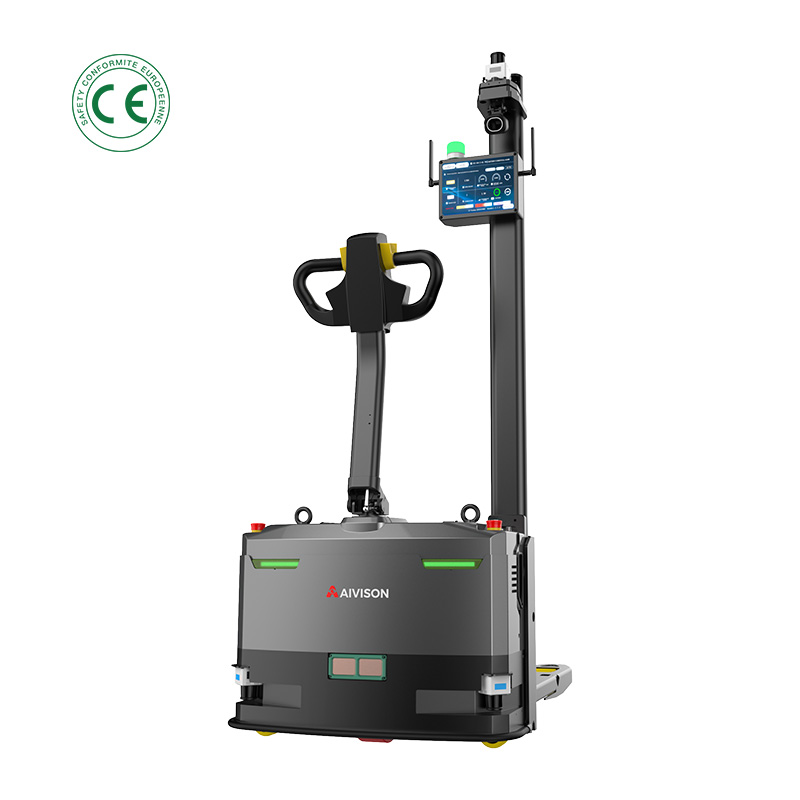
AIVISON CE Laser SLAM Navigation AGV 1500kg Warehouse Lifting Operations
A 1500 kg warehouse lifting AGV with laser SLAM navigation for lifting and transfer operations. The product name references a CE configuration; for Germany, the final CE scope, risk assessment and integration conformity must be confirmed for the exact application.

AI-Ready Humanoid Robot Chassis Dual 7-DOF Arms Omnidirectional Drive ROS2 Laser SLAM Open Development Platform
A ROS2-based, AI-ready humanoid robot development platform with dual 7-DOF arms, omnidirectional drive and laser SLAM. It suits universities, corporate R&D teams and integrators that need an open development base rather than a closed black-box mobile robot.
Not sure which automated transfer robot fits your German site?
Send your payload, rack or pallet dimensions, aisle data, throughput target, docking tolerance, safety requirements and target commissioning date. Marnix can review the configuration against the application instead of quoting a generic platform.
Where Automated Transfer Robots Fit in Germany’s Factory and Warehouse Landscape
German buyers rarely automate a single isolated task. They look for repeatable material flow that can be documented, integrated and maintained across shifts. These four application clusters are especially relevant for wholesale AMR and AGV sourcing.
Automotive and Tier 1 suppliers
Heavy pallets, castings, axles, battery modules, empty containers and line-side sequencing in Baden-Württemberg, Bavaria and other automotive clusters. A 2000 kg-class AMR or autonomous forklift can reduce repeated transport while keeping the safety concept under integrator control.
Machinery, electronics and medical technology
Machine tending, kitting, clean transfer and precision handover in mixed human-robot environments. QR-assisted docking to ±2 mm or mobile manipulators with higher repeatability become relevant when transport ends in a precise machine interface.
Intralogistics and high-bay warehousing
Pallet movement between goods-in, storage, picking and dispatch. German warehouses often run 24/7 and cannot stop operations for floor rework, making natural-feature laser SLAM and optional station-level QR labels more practical than full-floor guidance infrastructure.
Battery, photovoltaic and new-energy production
Module transfer, line-side provisioning and traceable material movement in battery and PV manufacturing. Heavy loads, changing layouts and high uptime requirements make flexible AMRs, jacking robots and autonomous forklifts attractive for both end users and integrators.
Germany Market Trends Reshaping AMR and AGV Procurement
The German automation market is not simply buying more robots. It is buying proof of uptime, integration capability and lifecycle support. This changes how wholesale suppliers from China are evaluated.
Labour shortage and demographic change
Repeated pallet transfer and line-side replenishment are increasingly difficult to staff across shifts. German Mittelstand companies use AMRs to stabilize routine logistics without redesigning the entire factory.
Industrie 4.0 and mixed fleets
Robots must coexist with WMS, MES, PLC-controlled equipment, conveyors and existing forklifts. Fleet scheduling, interface documentation and integrator-friendly customization matter more than a single robot’s headline speed.
Safety and documentation first
German projects often require CE-related technical information, risk assessment support and alignment with standards such as EN ISO 3691-4 where applicable. Buyer and integrator must confirm final conformity for the installed system.
Total cost per moved pallet
Energy cost, spare-parts logistics, charging strategy, service response and floor modification are evaluated alongside purchase price. The lowest unit price is rarely the lowest lifecycle cost.
Germany-Ready RFQ Checklist: What to Send Before You Request a Quote
From Marnix project experience, these eight inputs determine most of the robot selection and shorten technical evaluation from weeks to days. They also give a China wholesale supplier enough context to quote responsibly instead of guessing.
Payload and load profile
Maximum weight, pallet or rack footprint, center of gravity and whether the load is stable during acceleration and braking.
Rack or pallet geometry
Fork entry dimensions, rack leg clearance, pallet type, damaged-pallet risk and whether the robot must lift, tow or stack.
Site layout and floor conditions
CAD drawing or sketch, aisle widths, doors, slopes, lifts, floor flatness, traffic zones and areas where floor rework is not allowed.
Throughput and peak demand
Missions per hour, average distance, peak periods, shift pattern and expected growth. This sets fleet size, charging strategy and buffer capacity.
Docking precision
Where ±5 mm navigation is sufficient, where ±2 mm QR-assisted docking is needed and where manipulation-level repeatability is required.
Equipment and software interfaces
Conveyors, machines, lift systems, WMS/MES/PLC handshakes, Wi-Fi coverage and the integrator responsible for final commissioning.
Safety and compliance scope
Traffic concept, human zones, emergency-stop strategy, CE documentation responsibilities, risk assessment and applicable standards for the installed application.
Acceptance, service and spare parts
Factory acceptance test criteria, documentation language, training, spare-parts list, remote support, warranty terms and escalation process.
Choose the Right Precision Level for Each German Station
Many automation projects over-specify navigation and pay for floor infrastructure they do not need. Match precision to the task: transport, docking or manipulation.
| Configuration | Typical accuracy | Floor setup | Best fit in Germany |
|---|---|---|---|
| Laser SLAM on natural features | ±5 mm | No tape, reflectors or full-floor QR codes | Warehouse transfer, line-side delivery, mixed-traffic intralogistics and layout changes |
| Laser SLAM plus QR code camera | ±2 mm | QR labels only at selected docking stations | High-shelf storage, precision handover, machine docking and wafer-related handling |
| Composite AMR or humanoid platform with arms | ±0.03–0.05 mm | Station calibration and application engineering | Precision assembly, inspection, mobile manipulation, semiconductor and medical device tasks |

Inside Shenzhen Marnix Intelligent Technology Co., Ltd.
Marnix is a Shenzhen-based manufacturer of laser SLAM autonomous mobile robots, jacking robots, smart forklifts, composite mobile robots and intelligent charging docks. The company draws on about ten years of AGV engineering experience and serves both end users and system integrators.
For German buyers, the relevant advantage is not simply “made in China.” It is the ability to combine manufacturer-level customization, a complete AMR portfolio, laser SLAM navigation, QR-assisted precision, fleet scheduling and charging infrastructure in one technical conversation — while working with your integrator on safety, documentation and commissioning responsibilities.
- ±5 mm laser SLAM navigation without auxiliary tracks or QR codes across the whole route.
- Optional QR code scanning camera for ±2 mm station-level docking precision.
- Composite robots with modular arms and roller systems targeting ±0.05 mm repeatability in project-specific configurations.
- Multi-stage quality inspections and operational stress testing before shipment.
- More than 200 manufacturers served across three continents.
Manufacturer DNA
Shenzhen-based R&D and manufacturing with about ten years of AGV engineering experience, not a pure trading intermediary.
Complete AMR portfolio
Laser SLAM AMRs, jacking robots, smart forklifts, pallet robots, composite robots and intelligent charging docks from one source.
Precision ladder
±5 mm natural-feature SLAM, ±2 mm QR-assisted docking and higher-repeatability manipulation for composite platforms.
Custom top modules
Jacking units, roller conveyors, forklift forks and 6-axis arms can be reviewed to match existing racks, pallets and machines.
Fleet scheduling
Intelligent scheduling over indoor Wi-Fi supports simultaneous dispatch, traffic control and automatic charging with compatible docks.
Quality protocol
Multi-stage intelligent inspections and operational tests are intended to target near-zero failure rates before shipment.
Verified credentials
Onsite supplier assessment by TÜV Rheinland, supplier to a Fortune 500 company, and verified multispecialty supplier records.
Integrator-first support
Products and solutions for system integrators, with technical discussion around interfaces, documentation, testing and commissioning.
Request a Germany-specific configuration review
Share your application data and let Marnix compare the suitable platform, navigation level, top module and charging strategy against the real material flow.
From Inquiry to Commissioning: How Marnix Supports German Integrators
A wholesale robot inquiry becomes a workable project only when commercial, technical and documentation questions are visible early. This four-step path keeps the evaluation focused.
Requirement review
Payload, rack geometry, layout, throughput, docking precision, interfaces, safety scope and target schedule are reviewed before a platform is recommended.
Technical proposal
Marnix proposes a robot configuration, navigation level, top module, charging approach and fleet logic for the integrator or end user to validate.
Custom build and testing
Chassis, top mechanism and software configuration are aligned, followed by factory inspection and operational testing before shipment.
Delivery and commissioning support
Shipping documentation, technical information, training inputs and remote support can be coordinated with the German integrator responsible for final site acceptance.
Common Questions German Buyers Ask Before Ordering AMRs From China
These are practical questions from engineering teams, purchasing departments and system integrators evaluating China wholesale automated transfer robot manufacturers and suppliers for the Germany market.
Are you a manufacturer or a trading company?
Shenzhen Marnix Intelligent Technology Co., Ltd. is a manufacturer with about ten years of AGV engineering experience. The portfolio includes laser SLAM AMRs, jacking robots, smart forklifts, composite mobile robots and charging docks.
Do we need to install QR codes across the entire floor?
No. Standard laser SLAM navigation uses natural features and reaches approximately ±5 mm without magnetic tape, reflectors or full-floor QR codes. QR labels can be added only at stations where ±2 mm docking precision is required.
Can you support CE and German safety documentation?
CE scope depends on the final robot configuration and the integrated system. Marnix can provide technical information for the agreed configuration and work with your German integrator or notified body. Final conformity assessment, risk assessment and on-site safety validation must be confirmed in the project.
Is German-language support available?
English is the standard working language. German-language manuals, labels, training inputs or documentation can be discussed as a project requirement. The final language scope should be written into the order.
What is the MOQ and lead time?
Low-MOQ customization is stated among Marnix’s supplier advantages. Lead time depends on model, customization level, testing scope and component availability. A credible quote should follow a defined payload, layout and docking specification — not a generic catalog request.
How should we calculate fleet size and ROI?
Start with missions per hour, average travel distance, loading and unloading time, charging windows and peak demand. Then compare cost per moved pallet against current labour, forklift utilization, damage risk and floor modification cost. A single robot often understates the benefit of a coordinated fleet.
Talk to a China Wholesale Automated Transfer Robot Manufacturer for Your Germany Project
If you are comparing China wholesale automated transfer robot manufacturers and suppliers for the Germany market, the most useful next step is a technical inquiry with real data. Share your payload, layout, throughput, docking tolerance, safety requirements, interface details and target commissioning date. Marnix will review the fit for AMRs, autonomous forklifts, jacking robots, mobile manipulators or composite platforms.
Send an InquiryPrefer email? Write to info@marnixbot.com with your application details and target schedule.