China Top SLAM Navigation AGV Suppliers & Wholesalers serving San Jose
Marnix laser SLAM AMRs, jacking robots, smart forklifts, and composite mobile robots help San Jose manufacturers, wholesalers, and system integrators deploy trackless material flow with ±5 mm navigation, QR-assisted ±2 mm docking, and manufacturer-level customization.
Eight SLAM Navigation AGV and AMR Platforms for San Jose Material Flow
These eight platforms cover heavy pallet stacking, conveyor-line handover, narrow-aisle transfer, light pallet handling, service robotics, and high-precision lifting. Product URLs are preserved from the original range so San Jose buyers, wholesalers, and integrators can review each configuration directly.

Warehouse Robot Robotics 2000KG CE Warehousing Automatic Forklift Stacking AGV
Heavy-duty automatic stacking AGV for high-bay pallet storage, inbound receiving, and repetitive warehouse transfer where stability and load control matter.
View product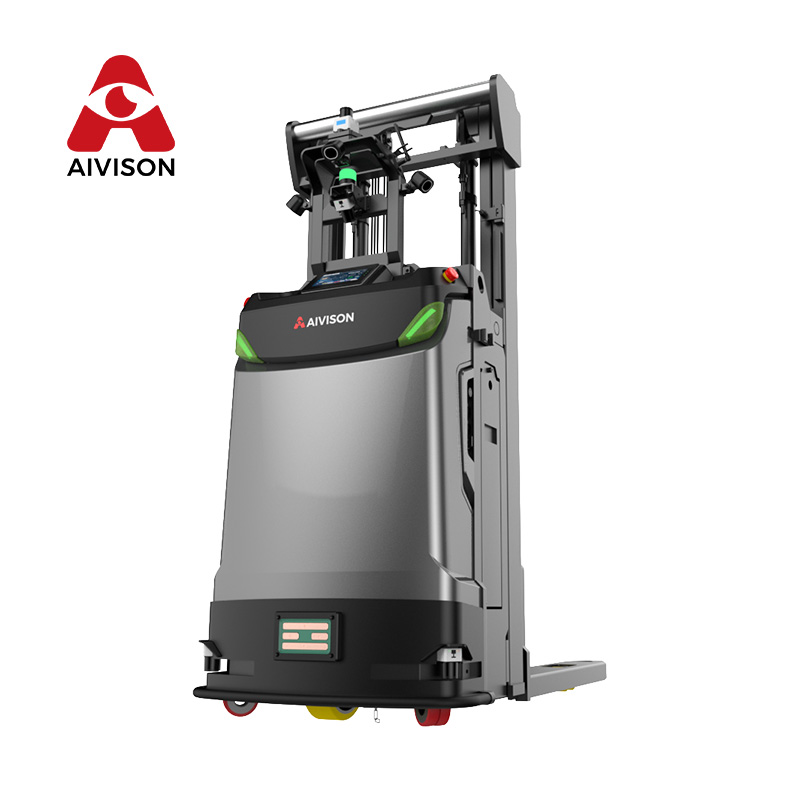
Autonomous Mobile Robots (AMR) Implement Cargo Transportation Between Warehouse and Conveyor Line
Designed for repetitive warehouse-to-line transfer and conveyor handover, reducing travel waste between storage zones and production interfaces.
View product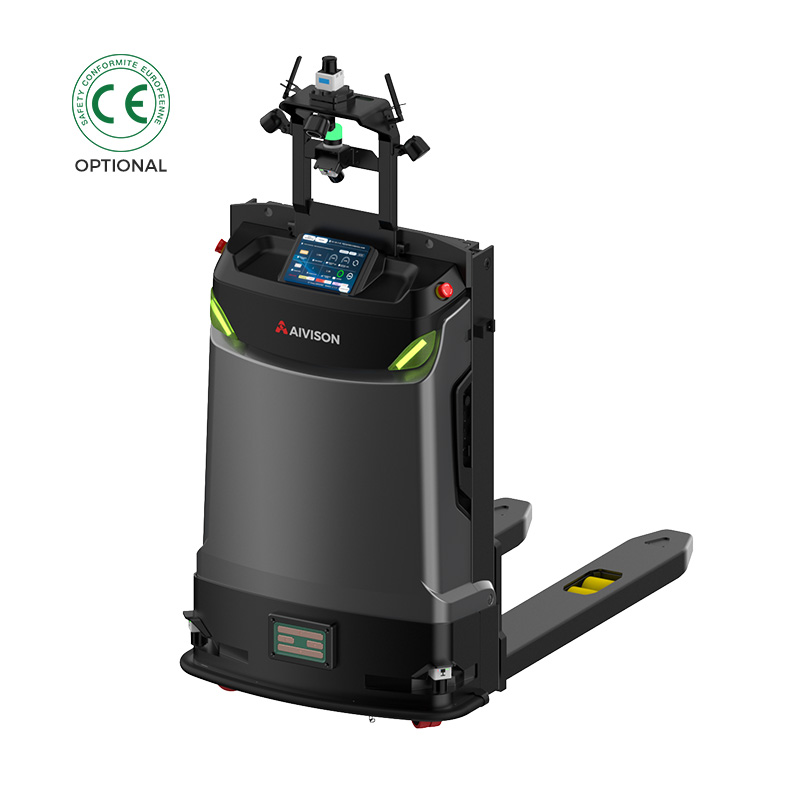
AGV AMR Warehouse Automatic Guided Vehicle 1500kg 2000kg AGV Robot Forklift
Flexible 1.5-ton to 2-ton pallet handling platform for warehouses and production logistics that need mixed-duty autonomous forklift capability.
View product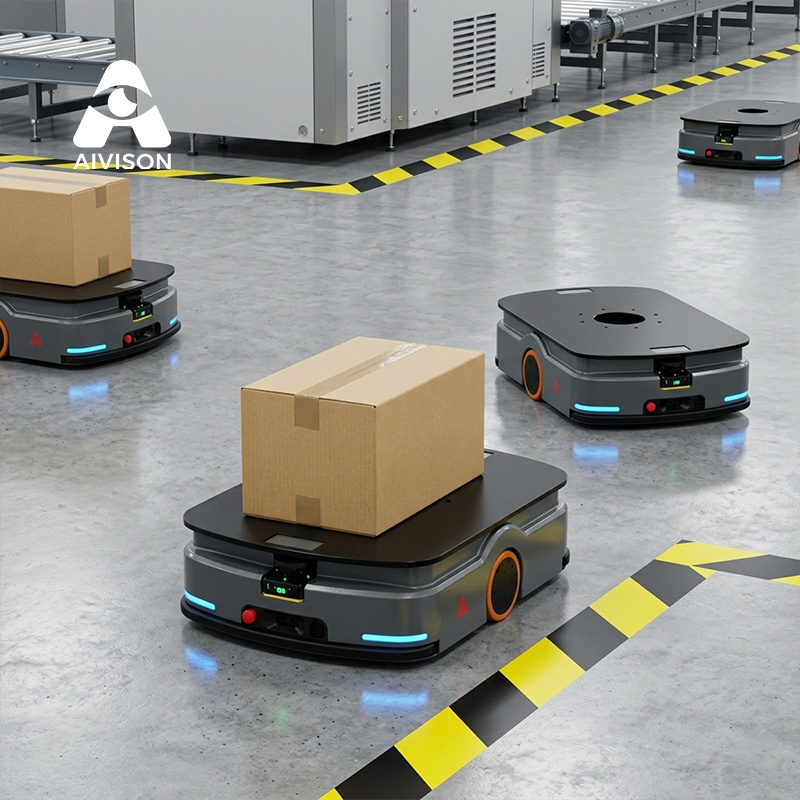
Autonomous Mobile AMR Robot 300kg Payload Laser Guided AGV for Carry Goods in Factory
Light-payload laser-guided AMR for narrow aisles, small parts transfer, and factory routes where full-size forklifts are inefficient.
View product
Warehouse Stacker CE Forklift AGV 800kg Load Capacity Light AMR Pallet
Compact stacker AGV for light pallet movement, storage buffering, and production line replenishment in space-constrained areas.
View product
Omnidirectional Service Humanoid Robot Chassis Dual 7-DOF Arms Laser SLAM Navigation for Hospitality and Retail
Service robot platform for hospitality, retail, showroom, and guided interaction scenarios, combining omnidirectional mobility with dual-arm capability.
View product
New Warehouse Autonomous Cars agv Robot 2000kg Load Capacity Stacker agv Robot
High-capacity autonomous stacker for warehouses seeking repeatable pallet handling, reduced forklift traffic, and consistent throughput.
View product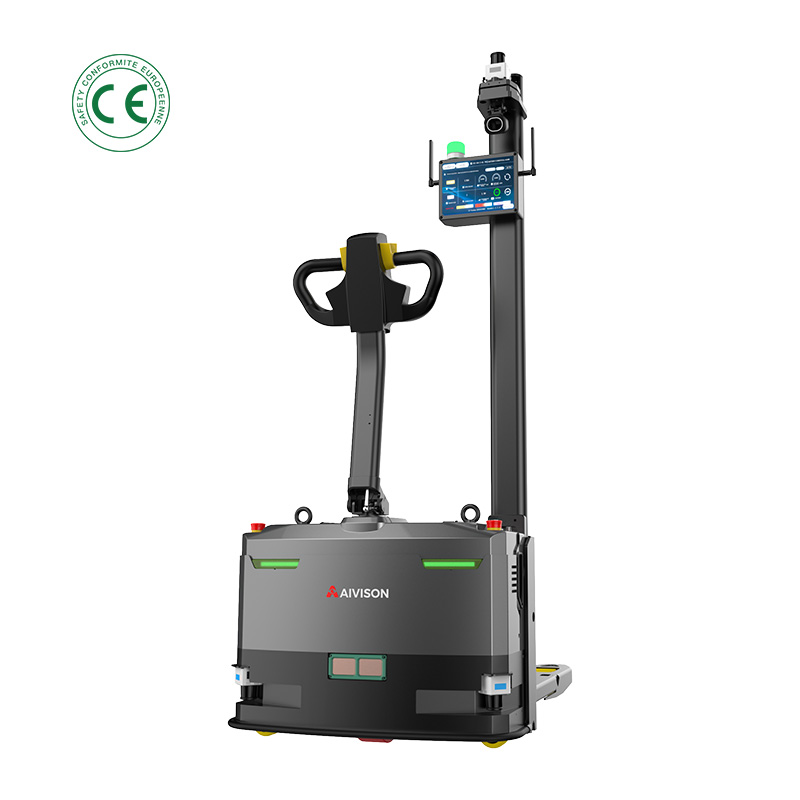
AIVISON CE Laser SLAM Navigation AGV 1500kg Warehouse Lifting Operations
Lifting AGV for warehouse operations that require 1.5-ton handling with laser SLAM navigation and no fixed floor guidance track.
View productA San Jose Buyer’s Guide to China SLAM Navigation AGV Suppliers and Wholesalers
San Jose buyers searching for China top SLAM navigation AGV suppliers are usually not buying a single robot. They are buying a repeatable material-flow asset that must survive mixed traffic, leased-facility constraints, shift-change peaks, and integration with existing conveyors, racks, WMS, and MES systems.
Why the lowest quote is rarely the lowest project cost
In San Jose and the wider Santa Clara County manufacturing market, the hidden cost of AGV deployment is often not the robot hardware. It is the cost of floor modification, electrical work, safety review, production downtime, and future layout changes. A trackless laser SLAM navigation AGV reduces those costs because it maps natural site features instead of depending on magnetic tape, reflectors, or floor-mounted QR codes across every route.
Marnix is a Shenzhen-based manufacturer, not a local San Jose warehouse. That distinction matters. Buyers gain direct access to the engineering team that builds the chassis, navigation stack, top modules, charging docks, and fleet scheduling system. At the same time, San Jose buyers should verify the project scope, shipping terms, integration responsibility, safety validation, and spare-parts plan before placing a multi-unit order.
This guide is written for that evaluation stage. It explains where laser SLAM is sufficient, where QR assist is justified, how to compare ±5 mm against ±2 mm and ±0.05 mm, which local San Jose applications are the best fit, and what wholesalers and system integrators should prepare before requesting a quotation.
- Manufacturer-level customization: jacking units, roller conveyors, forklift forks, and 6-axis arms can be engineered around the production interface.
- Fleet coordination: an intelligent scheduling system coordinates multiple robots over indoor Wi-Fi for task assignment, traffic control, and automatic charging.
- Floor-sensitive deployment: standard SLAM maps existing environments; QR labels are added only at stations that need ±2 mm docking precision.
- Verified supplier signals: TÜV Rheinland onsite assessment, Fortune 500 supplier credentials, and transparent trade records are relevant due-diligence inputs.
Information gain for San Jose buyers
This page is structured around the decisions that determine whether an AGV project succeeds after the robot arrives.
- Match navigation precision to the station, not to the entire building.
- Evaluate lease-sensitive deployment before choosing a guidance technology.
- Plan for mixed human, forklift, and robot traffic during shift changes.
- Confirm voltage, Wi-Fi coverage, safety controls, and conveyor handoff early.
- Separate manufacturer capability from local integration responsibility.
- Use throughput, aisle geometry, and docking tolerance to size the fleet.
For Wholesalers, Integrators, and Multi-Site Buyers Serving San Jose
Wholesalers serving San Jose need more than a catalog price. They need a supplier that can support model selection, mixed-fleet planning, English documentation, spare-parts strategy, and customization that does not break the navigation platform. Marnix supports end users and system integrators with a shared SLAM navigation core across jacking robots, smart forklifts, pallet AMRs, composite robots, and intelligent charging docks.
For multi-site buyers, the strongest starting point is a repeatable reference configuration: one navigation level, one fleet software stack, and a small set of top modules. That approach reduces training, spare-parts complexity, and integration risk across San Jose, Milpitas, Fremont, Sunnyvale, Santa Clara, and other Bay Area sites.
- OEM and integrator support for custom chassis and top modules.
- Mixed fleets share the same navigation core and scheduling logic.
- Application review based on load, aisle width, throughput, and docking tolerance.
- Export documentation and project coordination for California-bound shipments.
- Spare-parts and service planning discussed before order confirmation.
Where SLAM Navigation AGVs Create Measurable Operational Value
San Jose’s manufacturing and logistics base is not a single market. A semiconductor cleanroom, an electronics contract manufacturer, a warehouse near the airport, and a medical device assembler each need a different balance of navigation precision, cleanroom discipline, throughput, and integration depth.
Semiconductor & Advanced Electronics
Santa Clara County cleanroom and advanced electronics operations can use laser SLAM AMRs for interstation carrier transfer and QR-assisted docking where wafer or cassette handoff requires tighter alignment.
PCB, 3C Electronics & Contract Manufacturing
For Bay Area electronics assembly, roller conveyor modules and AMRs can connect line-side buffers, test stations, and packaging areas without forcing a full conveyor rebuild.
Warehouse & E-commerce Fulfillment
San Jose, Milpitas, and Fremont warehouses can reduce forklift travel by using pallet AMRs, stacker AGVs, and smart forklifts for receiving, put-away, replenishment, and outbound staging.
Medical Devices & Life Science Assembly
Composite mobile robots with 6-axis arms target ±0.05 mm repeatability for precision assembly support, while standard AMRs handle controlled material transfer and line-side delivery.

San Jose Automation Trends That Favor Trackless Laser SLAM
Bay Area facilities face high space costs, limited shutdown windows, and growing pressure to make material flow more predictable without locking the floor plan for years.
Lease-Sensitive Retrofits
San Jose manufacturers often operate in leased or multi-tenant facilities. Laser SLAM reduces floor modification and lease-restoration risk compared with magnetic tape or fixed guidepath systems, making automation easier to justify for a shorter lease horizon.
Lower floor disruptionMixed Human-Robot Traffic
Bay Area warehouses and assembly plants rarely have the option to isolate robots behind fences. Dynamic avoidance, clear traffic rules, and station-level docking discipline matter more than maximum top speed.
Safety-first deploymentFleet Orchestration Over Single-Robot ROI
Buyers increasingly evaluate scheduling, charging, and traffic-control economics across a fleet. A single robot can prove a route, but multi-robot coordination is what stabilizes throughput during shift changes and peak order windows.
Throughput planning
A Shenzhen AMR Manufacturer Engineering Robots Around Real Production Lines
Shenzhen Marnix Intelligent Technology Co., Ltd. draws on about ten years of AGV manufacturing experience to build autonomous mobile robots that fit existing factories with minimal disruption—for end users and for the system integrators who serve them. The product range includes jacking robots, smart forklifts, pallet AMRs, composite robots, and compatible intelligent charging docks.
For San Jose buyers, the value is not simply China pricing. It is access to a manufacturer that can customize chassis, payload interfaces, and top modules, while keeping the navigation core, fleet software, and charging ecosystem consistent across the project. That combination supports faster evaluation for wholesalers, integrators, and multi-site operators.
Complete AMR Portfolio
Jacking robots, smart forklifts, pallet AMRs, composite robots, and intelligent charging docks from one manufacturing source.
SLAM Lidar + Vision Fusion
Robots are coordinated by an intelligent scheduling system over indoor Wi-Fi, enabling simultaneous multi-robot dispatch and traffic control.
Quality & Stress Testing
Multi-stage intelligent inspections and thousands of operational stress tests target near-zero failure rates before shipment.
Manufacturer-Level Customization
Custom top modules include jacking units, roller conveyors, forklift forks, and 6-axis robotic arms for direct equipment interfacing.

TÜV Rheinland Onsite Assessment
Company premises and operations verified through an independent onsite supplier assessment.

Supplier to Fortune 500
Procurement contract credentials and trade history can be reviewed as part of supplier due diligence.

Verified Multispecialty Supplier
Low-MOQ customization and multi-category robot procurement capability support integrator projects.
Credit & Transaction Records
Transparent credit index, transaction level, trade capacity, and trade history support risk assessment.
What San Jose Buyers Should Prepare Before Requesting an AGV Quote
From our project experience, six inputs determine most robot selection decisions. Sharing them upfront shortens evaluation from weeks to days and prevents suppliers from quoting a generic platform that does not match the actual station.
Load Profile
Maximum weight, footprint, center of gravity, and whether the robot handles racks, pallets, carriers, or custom fixtures.
Site Layout
A CAD drawing or sketch with aisle widths, doors, slopes, elevator or lift points, fire lanes, and restricted traffic zones.
Throughput Target
Missions per hour, peak periods, and shift-change behavior. These inputs set fleet size and charging dock count.
Docking Precision
Where ±5 mm is sufficient, where ±2 mm QR assist is required, and whether any station needs arm-level repeatability.
Wi-Fi Coverage
Existing access points, dead zones, roaming behavior, and whether the fleet scheduling system will share the production network.
Equipment Interfaces
Conveyors, machines, shelving, WMS, MES, safety devices, and top-module requirements the robot must coordinate with.
Common Questions from San Jose AGV Buyers, Wholesalers, and Integrators
These answers reflect the questions our engineering team receives during project evaluation. For a specific site review, share your layout, load, throughput, and docking tolerance through the inquiry button.
Are Marnix SLAM navigation AGVs suitable for San Jose facilities with narrow aisles?
Yes, provided the aisle geometry, rack overhang, turning radius, and pedestrian traffic are reviewed before model selection. Light AMRs such as the 300 kg platform and compact stacker configurations are often better suited to narrow aisles than full-size forklifts, but the final choice should be based on swept-path analysis and throughput target.
Do San Jose buyers need to modify the floor or install magnetic tape?
No for standard laser SLAM routes. The robot maps natural features in the existing environment, so magnetic tape, reflectors, and floor QR codes are not required across the building. QR labels are added only at stations where ±2 mm docking precision is needed, which keeps floor modification limited and predictable.
What is the minimum order for wholesalers and system integrators?
MOQ depends on configuration, customization level, and whether the order is for standard platforms or engineered top modules. The original supplier profile emphasizes low-MOQ customization and multi-category robot procurement capability, but final terms should be confirmed against the specific model, documentation, spare-parts kit, and project schedule.
How are robots shipped to San Jose, and what documentation is included?
Shipments are coordinated for export to California, with commercial invoices, packing lists, and product documentation prepared according to the order scope. Import duties, customs clearance, and local delivery terms should be agreed with the importer or freight partner before order confirmation. Buyers should also confirm whether commissioning support is remote, integrator-led, or onsite by separate arrangement.
How do you handle voltage, Wi-Fi, safety, and local integration?
Voltage, charging layout, Wi-Fi coverage, safety controls, and equipment interfaces are project inputs, not afterthoughts. The final electrical configuration is confirmed against the destination requirements, and the fleet scheduling system uses indoor Wi-Fi. Local integration responsibility should be assigned clearly between the San Jose buyer, the system integrator, and the Marnix project team.
Can Marnix integrate with WMS, MES, conveyors, or existing equipment?
Custom top modules such as roller conveyors, jacking units, forklift forks, and 6-axis arms can connect robots directly to production equipment. Protocol-level integration with WMS, MES, conveyors, or safety devices should be reviewed during the technical evaluation so responsibilities, interfaces, and acceptance criteria are documented.
How is support and spare parts handled after delivery to California?
Support planning is part of the project review. Remote engineering support, documentation, spare-parts recommendations, and integrator coordination can be structured around the deployment. San Jose buyers should confirm response expectations, spare-parts scope, and onsite service availability before purchase, especially for multi-robot fleets.
How do I start a San Jose project evaluation?
Prepare the six inputs in the buyer’s guide above: load profile, site layout, throughput target, docking precision, Wi-Fi coverage, and equipment interfaces. Then use the inquiry button on this page to start a live discussion with the supplier team. A complete input package usually produces a faster and more accurate recommendation than a general request for catalog pricing.
Request a San Jose AGV Project Review
Share your payload, aisle layout, throughput target, docking precision, Wi-Fi coverage, and equipment interfaces. Marnix engineers can recommend a laser SLAM AGV, jacking robot, smart forklift, or composite mobile robot configuration that fits the actual material-flow task instead of overspecifying the entire facility.
Manufacturer: Shenzhen Marnix Intelligent Technology Co., Ltd. · Laser SLAM AMR, jacking robot, smart forklift, composite robot, and intelligent charging dock support for San Jose and Bay Area projects.