Factory Shortlist for Canadian Warehouses and Production Lines
For Canadian buyers comparing China best robot carrier manufacturers & factory options, the first decision is not price alone. Match payload, aisle width, handover precision, charging strategy and after-sales support to your province, building and shift pattern.

New Warehouse Autonomous Cars AGV Robot 2000kg Load Capacity Stacker AGV Robot
Canada fit: high-bay put-away, pallet stack transfer and dock-to-rack movement in 3PL and distribution centres where consistent pallet handling matters more than maximum speed.
- Laser SLAM
- 2000 kg
- Stacker

High-performance Intelligent Smart Automated Guided Vehicle 2000kg AMR Robot
Canada fit: flexible inter-zone transfer, line-side replenishment and multi-shift dispatch under Wi-Fi fleet scheduling in Ontario manufacturing and GTA fulfilment sites.
- Fleet ready
- 2000 kg
- AMR

Customizable 1500KG Traction Capacity AGV Autonomous Mobile Robot Amr with Lidar Guided Sensor
Canada fit: tugger-style routes for automotive dunnage, cart trains and long internal transport runs where stable traction and lidar guidance reduce route rework.
- Lidar guided
- Custom top
- 1500 kg

Warehouse Stacker CE Forklift AGV 800kg Load Capacity Light AMR Pallet
Canada fit: narrow-aisle pallet and tote movement, smaller distribution facilities and mixed fleets that need a compact CE-configurable stacker.
- CE
- 800 kg
- Light AMR

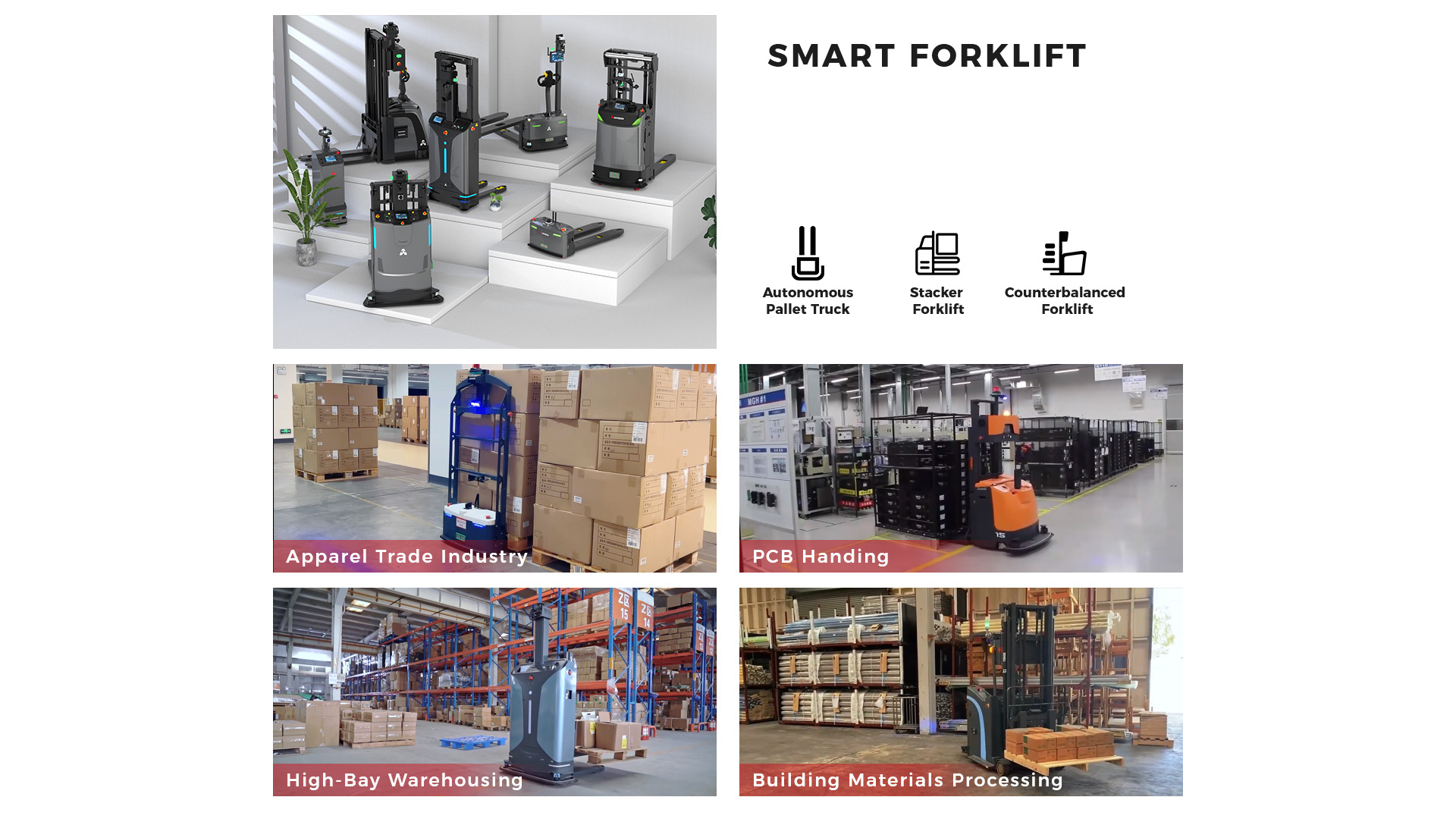
Automatic Handling CE Certificate 2000kg Forklift Robot Vehicle Laser AGV for Large Load Goods-carrying
Canada fit: heavy pallets, large load goods-carrying and dock-to-rack automation where a laser AGV forklift can reduce forklift traffic in mixed pedestrian zones.
- 2000 kg
- Forklift AGV
- Large load
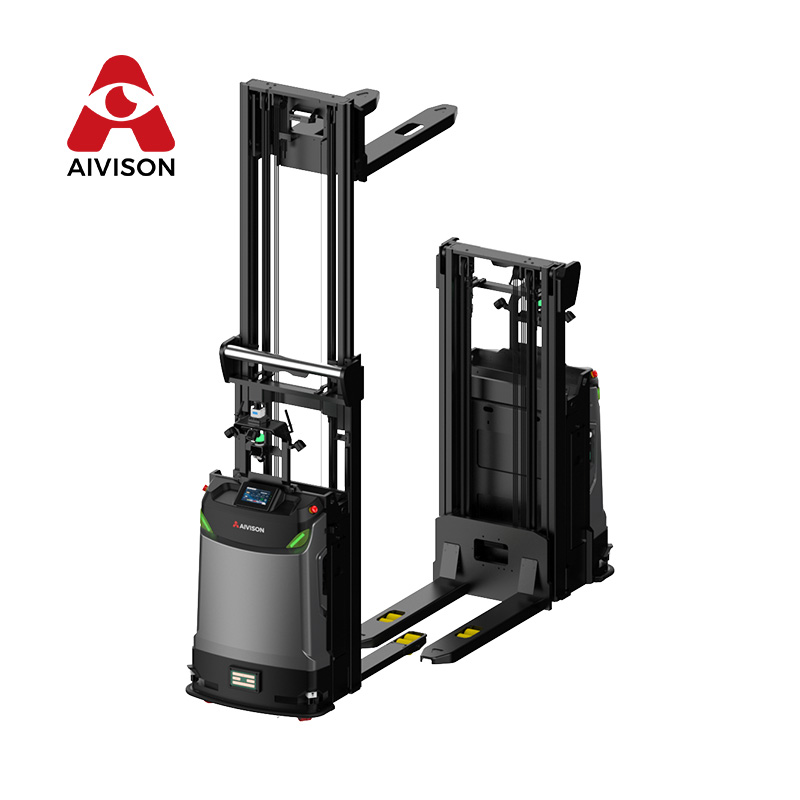
High Precision agv Forklift Full Servo Motor Controlled Laser Forklift with Heavy Load 2000kg
Canada fit: high-rack fork entry and heavy pallet handling where full servo control improves repeatability and reduces rack and pallet damage during automated put-away.
- Full servo
- High rack
- 2000 kg

Omnidirectional Mobile Manipulator AMR Dual 7-DOF Arms ±0.03 mm Repeatability Laser SLAM Humanoid Robot Base
Canada fit: machine tending, electronics and medical-device assembly, research platforms and high-mix production cells that need mobile manipulation rather than simple transport.
- Dual 7-DOF
- Laser SLAM
- Manipulator

Omnidirectional Humanoid Robot Chassis Dual 7-DOF Arms Laser SLAM Autonomous Warehouse AMR Mobile Platform
Canada fit: system integrators building dual-arm mobile manipulators for advanced assembly, lab automation and warehouse research programmes that require an open mobile base.
- Omnidirectional
- Humanoid chassis
- Open platform
Years in AGV Engineering
Shenzhen-based R&D and manufacturing experience
Laser SLAM Navigation
Trackless positioning without reflectors or floor codes
QR-Assisted Docking
Precision only where the handover station needs it
Manufacturers Served
Across three continents, including system integrators
What “China Best Robot Carrier Manufacturers & Factory” Should Mean to a Canadian Buyer
A “robot carrier” is a practical search term Canadian buyers use for autonomous mobile platforms that carry racks, pallets, totes, carts or production fixtures. In factory language it may be an AMR, AGV, jacking robot, stacker, smart forklift or mobile manipulator. The purchasing question is therefore not simply “which factory is cheapest?” but “which China robot carrier manufacturer can prove stable navigation, safe mixed-traffic behaviour, document control and spare-parts support for a Canadian operation?”
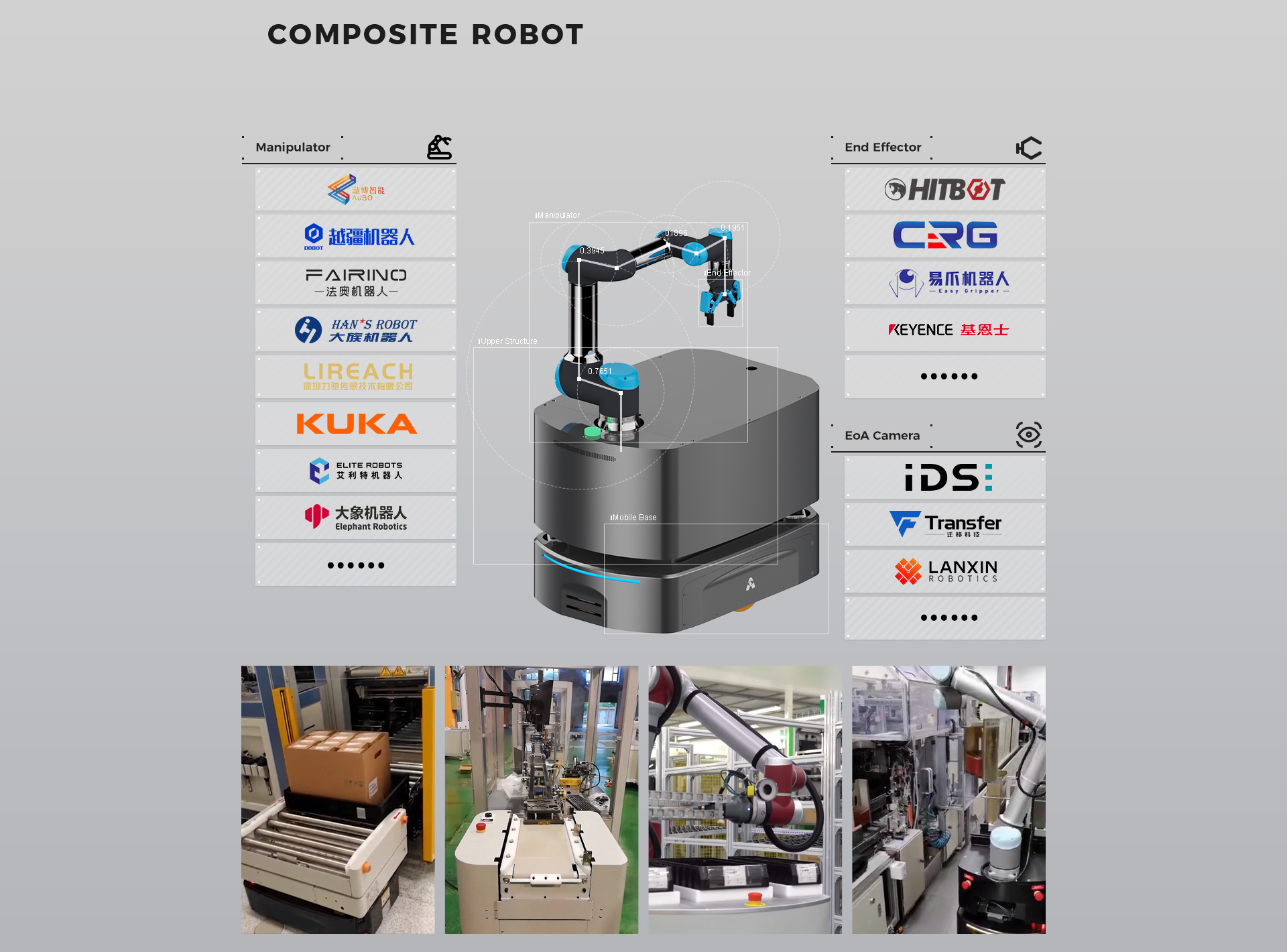
Shenzhen Marnix Intelligent Technology Co., Ltd. is a Shenzhen-based manufacturer with about ten years of AGV engineering experience. Its portfolio covers laser SLAM autonomous mobile robots, jacking robots, smart forklifts, composite mobile robots, dual 7-DOF mobile manipulators and intelligent charging docks. The company reports more than 200 manufacturers served across three continents, a TÜV Rheinland onsite supplier assessment and supply relationships with large logistics and manufacturing companies. For Canadian buyers, these are useful trust signals, but they still need to be translated into project-specific questions about floor conditions, voltage, bilingual documentation, safety validation and local response time.
Our recommendation is to use a two-tier precision model. Specify standard laser SLAM at ±5 mm for most travel and pallet transport routes, then add QR assistance at ±2 mm only at critical docking stations, high-bay racking or automated handover points. For advanced manufacturing, composite robots with a 6-axis arm can reach approximately ±0.05 mm repeatability, while the dual 7-DOF platform is listed at ±0.03 mm repeatability. This avoids over-specifying every metre of the warehouse and keeps floor infrastructure costs under control.
The Canadian-market mistake is to buy the highest payload first. In many 3PL and food warehouses, the real bottleneck is the handover point, charger location or traffic conflict at a blind corner—not straight-line speed. A factory-direct proposal should therefore include a route map, throughput model, charger plan, safety concept and integration plan, not just a robot datasheet.
Canada fit scorecard
Project-weighted example for a high-rack Canadian warehouse. Actual scores must be validated with a site survey.
Best-fit sequence: map the route, define the handover, choose the precision level, then select payload and top module.
Canada Market Trends Driving Robot Carrier Adoption
Canadian buyers are not adopting mobile robots because the technology is fashionable. They are adopting them because labour availability, real estate costs and service-level expectations are changing the economics of material flow.
Labour Pressure and Turnover
Canadian warehouses and food distribution sites continue to face shift coverage challenges. Robot carriers absorb repetitive pallet moves, night shifts and peak-season surges while existing staff focus on exceptions, quality and customer service.
Dense Warehousing in Toronto and Vancouver
High land and rent costs push Canadian operators toward higher racking, narrower aisles and faster put-away. This is where ±2 mm QR-assisted docking and compact stacker AGVs become valuable—not because the whole route needs QR, but because the top two or three handover points do.
Automotive, EV and Advanced Manufacturing
Ontario’s automotive and EV supply chain requires line-side delivery, dunnage handling and traceable material movement. Factory-level customization of top modules—rollers, forklift forks, jacking units or arms—helps connect robots directly to production equipment instead of adding manual transfer steps.
Cold Chain, Food and Cross-Dock Operations
Temperature-controlled facilities in BC, Alberta, Ontario and Quebec demand reliable uptime, safe mixed traffic and predictable charging. Robot carriers with automatic charging and Wi-Fi fleet scheduling can run structured pallet shuttles while minimizing door congestion and unnecessary staff entry into cold zones.
Where Robot Carriers Fit in Canadian Operations
The same robot platform can behave very differently in a Toronto 3PL, an Ontario automotive feeder plant, a BC cross-dock and a Quebec food facility. These application scenarios show how to match the product shortlist to the local workflow.

Ontario Automotive Parts and EV Supply
Use the 1500 kg traction AMR and 2000 kg laser forklift AGV for dunnage, pallet and line-side replenishment. The buying criterion is repeatable docking and safe coexistence with tow motors, not simply top speed.
Toronto and Mississauga 3PL Fulfilment
Use the 2000 kg stacker, 800 kg light pallet AMR and 2000 kg AMR for put-away, replenishment and outbound staging. A two-tier navigation plan keeps ±5 mm travel routes simple while adding ±2 mm QR docking at selected rack faces.
BC Port-Adjacent Cross-Docks
Cross-dock operations need predictable pallet transfer and charger discipline. Use fleet scheduling, automatic charging and heavy-load forklift AGVs to reduce congestion at dock doors and keep staged freight moving without adding manual shuttle drivers.
Quebec Food, Medical and Precision Assembly
For food and medical operations, discuss wash-down boundaries, French-language documentation, safety signage and spare-parts planning. For precision assembly, the dual 7-DOF manipulator platform offers a factory-built mobile base for advanced automation partners.
Choose the Right Precision Level Without Overpaying
Canadian buyers often ask for the highest accuracy everywhere. A better approach is to reserve QR labels, reflectors or station calibration for the few points where automated handover truly requires it.
| Configuration | Accuracy | Floor Setup | Best Canada Fit |
|---|---|---|---|
| Laser SLAM on natural features | ±5 mm | No tape, reflectors or floor QR required for normal travel | General warehouse transfer, line-side delivery, cross-dock pallet movement, layouts that change frequently |
| Laser SLAM + QR code camera | ±2 mm | QR labels only at selected docking or rack stations | High-bay storage, automated conveyor handover, precision pallet put-away in dense Toronto or Vancouver warehouses |
| Composite mobile robot with 6-axis arm | ±0.05 mm | Station calibration and integration engineering | Semiconductor, electronics, medical-device assembly and machine tending |
| Dual 7-DOF mobile manipulator platform | ±0.03 mm | Advanced integration and safety validation | Research, high-mix assembly, lab automation and integrator-led advanced manufacturing projects |
Canadian Floor Reality
Expansion joints, dock levellers, reflective epoxy and floor transitions can affect navigation. Share CAD drawings and photographs during evaluation—not after shipment.
Electrical and Documentation
Confirm charger voltage, control-panel requirements, emergency-stop logic, English/French labels where required and any provincial electrical review before installation.
Wi-Fi and Fleet Scheduling
Robots are commonly coordinated over indoor Wi-Fi. A site survey should confirm access-point coverage, roaming quality and traffic-control rules before fleet size is fixed.

Why Marnix Is Evaluated Among China’s Best Robot Carrier Factories
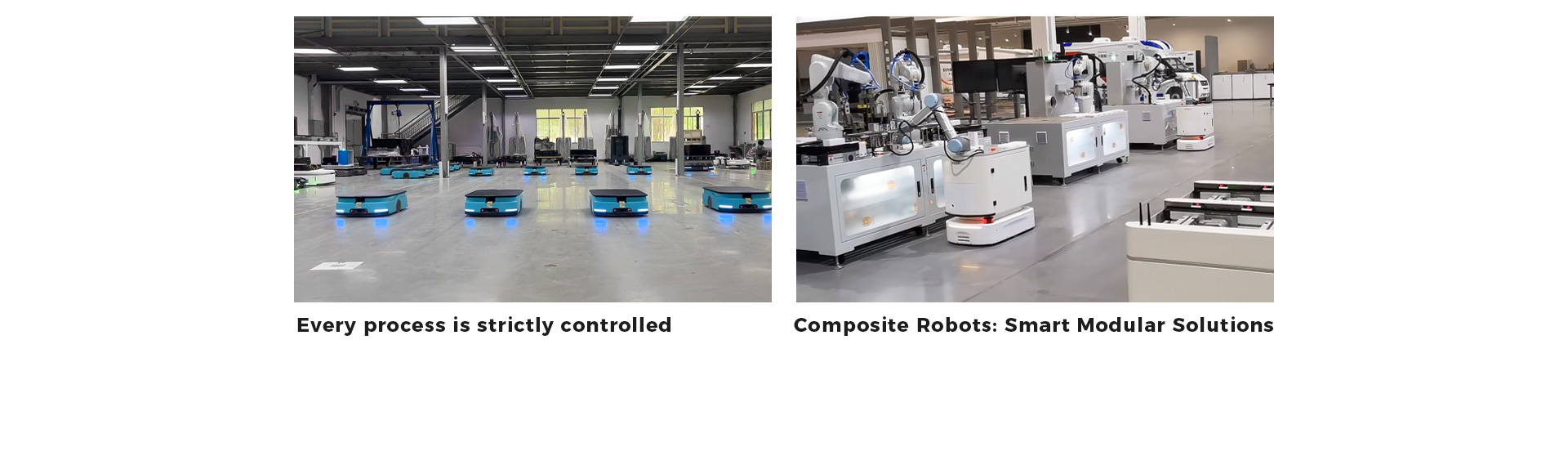
Shenzhen Marnix Intelligent Technology Co., Ltd. builds robots around real production lines rather than forcing a single standard platform onto every project. Its engineering team combines laser SLAM navigation, vision fusion, fleet scheduling and modular top mechanisms so that one navigation core can support jacking, pallet, forklift, roller-conveyor and robotic-arm applications.
The factory is located at Room 102, Building P, No. 163 Ban Xuegang Avenue, Shenzhen, Guangdong, China. For Canadian buyers, the practical value is factory-level customization: chassis, payload, fork dimensions, jacking units, roller modules and arm integration can be discussed during the technical review, with CE-related configurations and project documentation confirmed before order.
Marnix also supports system integrators as well as end users. That matters in Canada, where many successful deployments combine a China factory platform with a local integrator who understands provincial safety expectations, building rules and on-site service logistics. The best model is not “factory versus local partner”; it is a factory platform with a Canadian deployment plan.
Complete Portfolio
Jacking robots, stacker AGVs, smart forklifts, pallet AMRs, composite robots, dual-arm platforms and charging docks from one manufacturing source.
Custom Top Modules
Forklift forks, roller conveyors, jacking units and 6-axis arms can be engineered to interface directly with production equipment and racks.
Verified Quality
Multi-stage inspection, operational stress testing, TÜV Rheinland onsite assessment and CE-related configurations support buyer due diligence.
Integrator Support
Indoor Wi-Fi fleet scheduling, automatic charging, custom modules and project documentation help integrators shorten commissioning and scale mixed fleets.
TÜV Rheinland Onsite Assessment
Independent onsite supplier verification supports factory capability review.
CE-Configurable Platforms
Product families include CE-related configurations; final compliance scope must match the installed system.
Trade History and References
Supplier to large manufacturers, with 200+ manufacturers served across three continents.
What to Prepare Before Requesting a Robot Carrier Proposal
From our project experience, six inputs determine most of the technical route and commercial scope. Sharing them upfront shortens evaluation from weeks to days and reduces the risk of an oversized or under-specified fleet.
Load and Duty Cycle
Provide maximum weight, rack or pallet footprint, centre of gravity, operating hours and peak-shift demand. A 2000 kg stacker may be right for one lane but excessive for a light-tote workflow.
Floor and Aisle Map
Share a CAD drawing or sketch with aisle widths, doors, ramps, dock levellers, expansion joints, blind corners, elevator or lift access points and no-go zones.
Throughput and Peaks
State moves per hour, distance per trip, peak periods and acceptable response time. This sets fleet size, charger count and whether opportunity charging is needed.
Docking Precision and Interfaces
Identify where ±5 mm is sufficient and where ±2 mm QR docking or arm-level repeatability is needed. List conveyors, machines, racks and shelving the robot must hand over to.
Power, Safety and Labels
Confirm charger voltage, emergency-stop expectations, warning labels, bilingual documentation needs and any site-specific safety rules from your insurer or engineering team.
Support and Spare-Parts Plan
Agree on remote diagnostics, commissioning support, spare-parts kit, warranty terms and escalation path. A Canadian integrator partner can add local service depth to the factory platform.
Common Local Procurement Questions
These are the questions Canadian buyers most often ask when comparing China robot carrier factories with local integrators and North American brands.
Are Marnix robot carriers compliant for Canada?
Marnix offers CE-related configurations and has undergone a TÜV Rheinland onsite supplier assessment. Compliance is project-specific: Canadian buyers should confirm the final installed system scope, electrical requirements, emergency-stop design and any CSA/UL field-evaluation or provincial review required by their site. Ask for the final technical file and safety validation plan before purchase.
Do Canadian warehouses need floor modification?
Standard laser SLAM navigation maps existing natural features, so normal travel usually does not require magnetic tape, reflectors or floor QR codes. QR labels are typically added only at selected docking or high-precision stations. Floor flatness, expansion joints, ramps and reflective surfaces should still be reviewed during the site survey.
How long does delivery to Canada take?
Lead time depends on payload, top-module customization, fleet size, testing scope and shipping method. Standard evaluation starts with load, layout, throughput and precision data. Ocean freight, customs clearance, duty and applicable GST/HST should be planned with your broker. Request a written schedule before committing to a launch date.
Can documentation be provided in French for Quebec?
English technical documentation is standard, and French-language labelling, training materials or manuals can be discussed as a project requirement. The exact scope should be agreed in the purchase specification and reviewed by your local safety, legal or integrator team before deployment.
Can robot carriers work in cold storage or near dock doors?
These are project-specific conditions. Battery performance, condensation, floor condition, safety sensors and charger placement must be reviewed for the actual temperature and traffic pattern. Do not assume a standard indoor robot is automatically suitable for every cold-chain zone; ask for a written technical review.
How should we compare a China factory with a local integrator?
Compare total deployment risk, not unit price alone. A China factory can offer customization, product breadth and competitive cost; a Canadian integrator can add site survey, local service, safety validation and spare-parts response. The strongest model is often a factory platform plus a local deployment partner, with clear responsibility for commissioning and support.
Request a Robot Carrier Recommendation for Your Canadian Site
Share your payload, aisle layout, throughput target, docking precision, province, charger voltage and documentation language. Our engineering team will help you match the right robot carrier, top module and fleet configuration before you commit to a factory order.
Contact Us