
AGV AMR Autonomous Forklift Smart Version Auto Mobile Transfer Stacker Robot
Handles the complete pallet cycle — automatic fork entry, lifting and transfer — without floor tape or reflector installation.
Laser SLAMAuto stacking
Laser SLAM autonomous mobile robots, jacking robots, smart forklifts and mobile manipulators engineered for the millimetre docking, narrow aisles and mixed traffic of Japanese production floors.
Inquire NowEvery platform below shares one SLAM localisation core, one indoor Wi-Fi fleet scheduler and one charging ecosystem — so jacking robots, pallet AMRs, forklifts and arm bases can be mixed inside a single map instead of a single software stack.
Handles the complete pallet cycle — automatic fork entry, lifting and transfer — without floor tape or reflector installation.

A light-footprint pallet AMR sized for high-density aisles, supplied with CE documentation for European and Japanese procurement files.
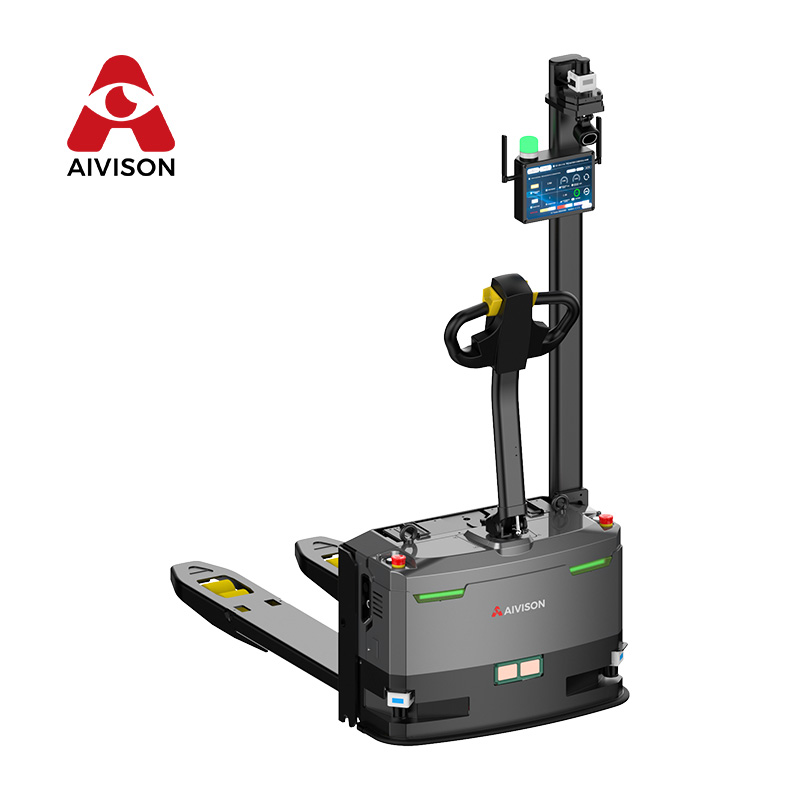
The 1.5-tonne platform for heavy pallet flows, mapping existing aisles by natural features rather than reflectors.

An open research chassis for Japanese universities, labs and integrators — native ROS2 access, omnidirectional drive and onboard SLAM.
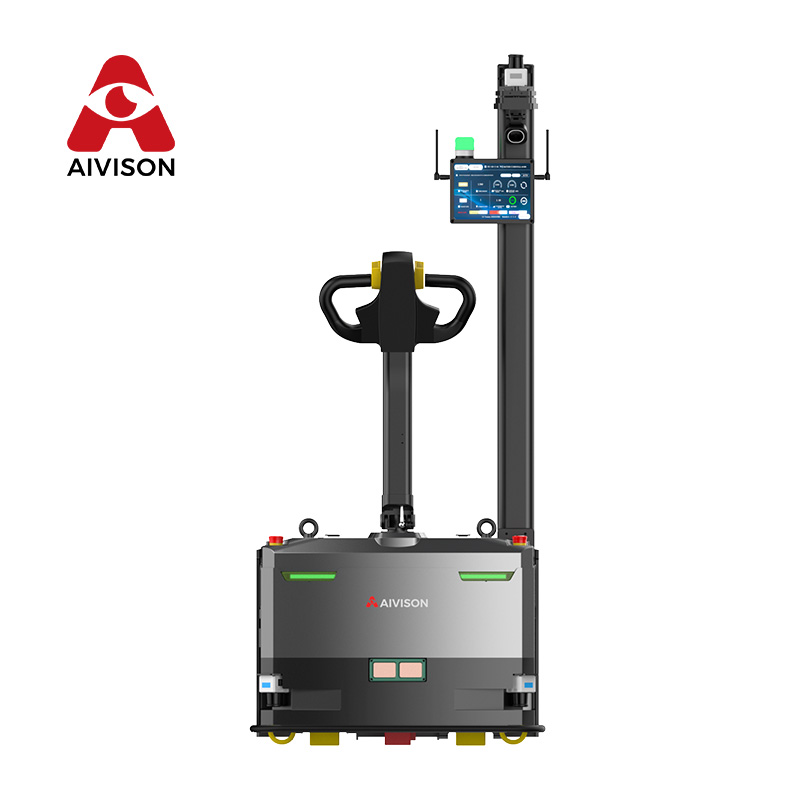
Turns the rack itself into the transport unit, so storage density grows by adding racks rather than by rebuilding the aisles.

A mobile manipulator that carries the part and performs the handling duty — built for station-level docking that fixed arms cannot reach.
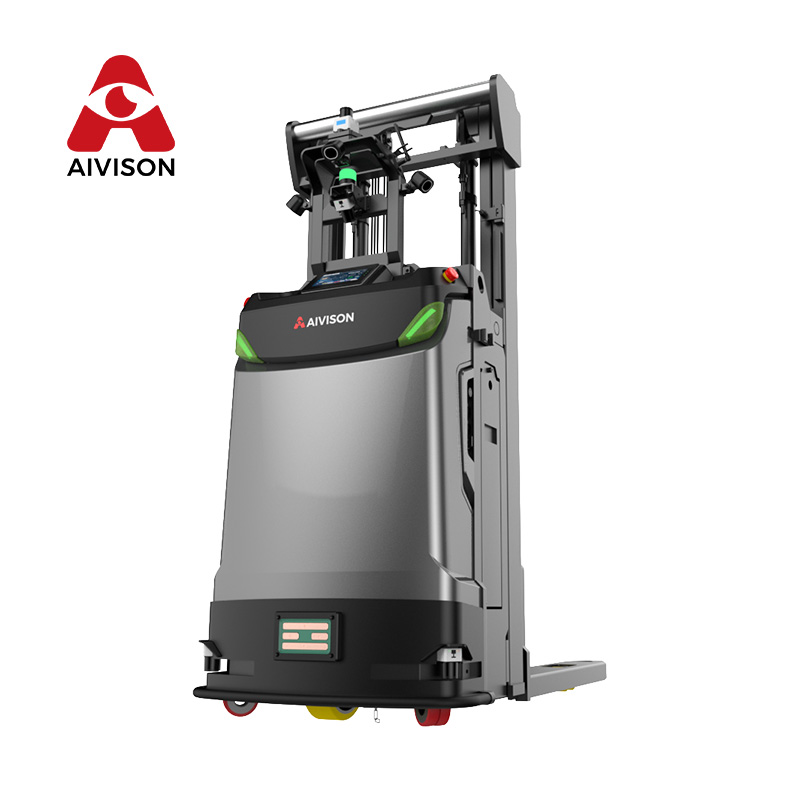
The classic warehouse-to-line handover task, with top modules configured to interface directly with roller conveyor equipment.

The perception component behind the map — supplied to integrators building their own navigation layer on a proven chassis.
The shift is not driven by price alone. It is driven by six structural pressures that have changed what a material-handling robot must deliver in Japan.
Japan's cap on overtime hours for highway truck drivers, applied from April 2024, cut the slack that used to absorb factory fluctuations. Receiving, put-away and line-side delivery now have to move with fewer people on a fixed schedule — exactly the workload an autonomous mobile robot handles without fatigue.
With a declining working-age population and an ageing manufacturing workforce, repetitive pallet and cart transport is among the hardest roles to fill. Procurement logic has therefore shifted from "what is the payback period" to "can we actually staff this line next year".
Many Japanese plants installed magnetic-tape or reflector-guided AGVs in the 1990s and 2000s. Those systems are now at end of life, and relaying tape means stopping operations. Natural-feature laser SLAM maps the environment as it already is at ±5 mm, with QR labels added only where ±2 mm docking is genuinely needed.
Automatic transport safety in Japan is an engineering decision made per site, not a badge on a product box. Buyers expect evidence covering obstacle-detection logic, deceleration distances, emergency-stop circuits and warning-signal behaviour. Suppliers who ship that documentation with the robot reach site acceptance far faster than those who treat it as an afterthought.
Line-side kitting and one-piece flow leave little tolerance at the docking point. A single accuracy grade rarely fits the whole route, which is why mixed fleets now layer ±5 mm SLAM between stations, ±2 mm QR assist at handover points, and ±0.05 mm at the wrist of a composite robot.
A rising share of Japanese automation projects is led by system integrators who buy motion-control bases and add their own safety package, top module and MES interface. That raises the bar on customisation depth, firmware access and spare-part continuity rather than on catalogue breadth alone.
Six deployment patterns we design against repeatedly, each with its own precision level, traffic profile and documentation expectation.
Fab expansions in Kyushu and Tohoku place a premium on low-particle movement and repeatable carrier handover. A SLAM base plus a QR-scanning camera reaches ±2 mm at the load port, while the fleet scheduler keeps multiple robots off the same interbay route.
Plants in Aichi, Shizuoka and Hiroshima run sequenced delivery on tight takt times. Forklift-type AMRs cover pallet replenishment while low-profile jacking robots slip under carts — and both respond to the same call logic from the host system.
Cell and module handling combines heavy carriers with delicate tooling interfaces. Jacking robots move racks between formation and assembly stations while composite units perform the wrist-level transfer, which is where ±0.05 mm repeatability matters.
Compact chassis navigate narrow aisles between test cells and assembly benches in Kanto and Kansai plants. Top modules are configured to hand cassettes directly to test equipment, removing the manual walk between stations.
Multi-floor facilities require routes that account for lifts, clean zones and traceable movement. Because the map is built around the existing layout, additional floors are added as new map layers rather than as new infrastructure.
Short and narrow aisles reward a robot that turns in place. Pallet AMRs replace walk-behind stackers on repetitive put-away runs, and automated charging docks keep the fleet cycling through break periods instead of parking it.
Most buyers over-specify navigation and then pay for floor infrastructure they never needed. Our engineering position is simple: choose accuracy per docking point, and let the rest of the route stay infrastructure-free.
| Configuration | Accuracy | Floor Requirement | Recommended For |
|---|---|---|---|
| Laser SLAM on natural features | ±5 mm | None — no tape, reflectors or floor codes | Warehouse transfer, line-side delivery, sites that change layout frequently |
| SLAM + QR code scanning camera | ±2 mm | QR labels only at precision stations | High-bay storage, precision docking, carrier and wafer handover |
| Composite robot (AMR + manipulator) | ±0.05 mm | Station calibration only | Semiconductor and medical device assembly; ±0.03 mm on dual-arm platforms |
Safe behaviour in mixed pedestrian and forklift traffic, including people who step into the path without looking.
Simultaneous task assignment, traffic control and route priority across an indoor Wi-Fi network.
Compatible intelligent charging docks sustain round-the-clock duty without a dedicated operator.
Shenzhen Marnix Intelligent Technology Co., Ltd. builds laser SLAM autonomous mobile robots, jacking robots, smart forklifts, composite mobile robots and intelligent charging docks — with roughly a decade of AGV engineering behind the current range.
Design and assembly sit inside the same Shenzhen facility. When a project needs a non-standard chassis, we re-engineer it instead of answering "that option does not exist".
Jacking units, roller conveyors, forklift forks and 6-axis arms are produced as part of the same delivery. Integrators can take the bare base or the full machine — firmware and documentation come from the original source either way.
Every platform runs the same localisation stack and the same fleet controller. Adding a forklift to a jacking-robot project does not mean adding a second, incompatible software platform to the plant network.
Onsite supplier assessment by TÜV Rheinland, a procurement contract with a Fortune 500 company and verified multispecialty supplier status. The evidence exists outside our own brochure.
From our project reviews with Japanese buyers, sharing these six items at the enquiry stage shortens evaluation from weeks to days and prevents the most expensive correction: resizing the fleet after the layout is fixed.
Maximum weight, footprint and centre of gravity of every rack, pallet or carrier the fleet will move — including the heaviest exception, not just the daily average.
A CAD drawing or dimensioned sketch showing aisle widths, door openings, floor slopes, lift interfaces and any zone where pedestrian traffic is dense.
Missions per hour and the peak window — this single figure sets fleet size, charging-dock count and whether opportunity charging is required.
State where ±5 mm is sufficient and where ±2 mm QR assist or manipulator-level repeatability is genuinely required. Precision is a cost driver, not a free upgrade.
Access-point positions and measured signal quality across the operating area. Fleet scheduling depends on a stable network far more than on robot hardware.
Conveyors, machines or shelving the robot must hand over to, plus the communication protocol available on the host side and any top-module requirement.
Direct answers from our engineering team. For anything project-specific, raise it through the enquiry channel and it reaches an engineer rather than a mailbox.
Laser SLAM on natural features reaches ±5 mm positioning without magnetic tape, reflectors or floor QR codes. Adding a QR code scanning camera raises accuracy to ±2 mm at selected stations. Composite robots paired with a 6-axis arm reach ±0.05 mm repeatability, and the dual-arm omnidirectional platform is specified at ±0.03 mm.
No. Standard laser SLAM maps the environment as it stands, so no auxiliary tracks or full-floor coding are needed. QR labels are added only at the docking points that require ±2 mm precision, which keeps both the infrastructure budget and the shutdown window to a minimum.
Each floor is captured as a map layer, and lift handover routines are defined during the project with the integrator or the user's facilities team. The robot waits for the lift to reach the floor, enters, and resumes the mapped route on the destination floor — the constraint is normally the lift controller's interface, not the robot.
Deliveries include the documentation needed to support a site risk assessment: motion-control logic, obstacle-detection and deceleration behaviour, emergency-stop circuits, warning-signal behaviour and the parameter table. The formal safety argument is prepared per site by the user or integrator, and our technical file is written to feed straight into it.
Yes. Chassis, payload rating, top module, communication interface and branding can all be customised. Integrators typically take either a bare motion base or a standard robot and layer on their own upper mechanism, safety package and MES connectivity — while still sourcing firmware and documentation from the original manufacturer.
An intelligent scheduling system manages the fleet over indoor Wi-Fi, handling simultaneous task assignment, traffic control and automatic charging through compatible docks. Consumables and common spare parts are stocked at the Shenzhen facility, and commissioning support can be delivered remotely with on-site attendance during the ramp-up phase.
Send your load profile, layout drawing, throughput target and docking precision. Our engineers will return a recommended configuration — chassis, top module, precision level and fleet size — rather than a generic catalogue page.
Inquire Now