Eight AGV & AMR Platforms Selected for Kawasaki Material Flow
These eight platforms are recommended because they map cleanly to the material-handling jobs most often found in Kawasaki, Kanagawa and the wider Keihin industrial belt: pallet transfer, line-side delivery, conveyor handover, heavy-load lifting, stacker work, precision forklift handling and integrator-grade robotics. Product URLs are retained exactly where provided.
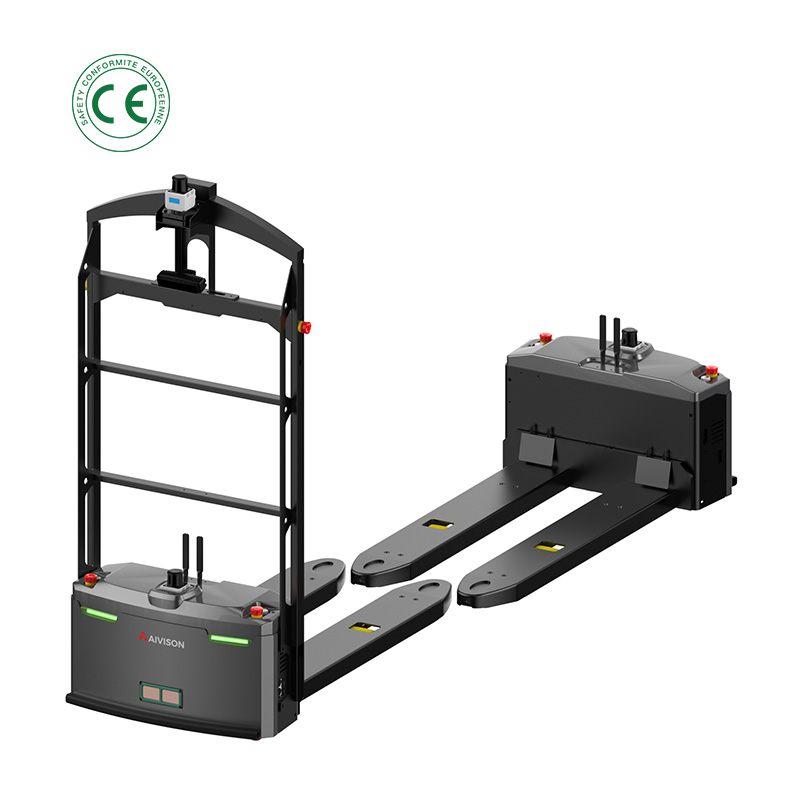
Aivison Customized 800kg Warehouse AGV Robot Lithium Battery AMR
A customized 800 kg warehouse AMR for lithium-battery, electronics and precision-component material flow. Its flexible footprint suits Kawasaki buildings where fixed conveyors are difficult to retrofit.
View product specs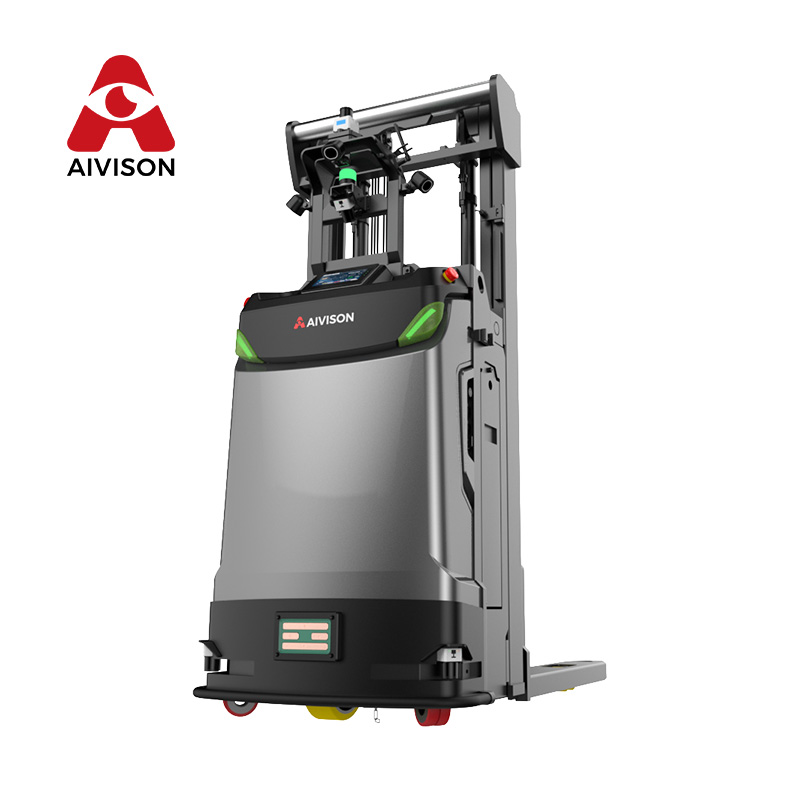
Autonomous Mobile Robots (AMR) Implement Cargo Transportation Between Warehouse and Conveyor Line
An AMR-to-conveyor handover platform that reduces fixed conveyor gaps and supports high-mix production. It is suitable for warehouse-to-line transfer and repeated buffer replenishment.
View product specs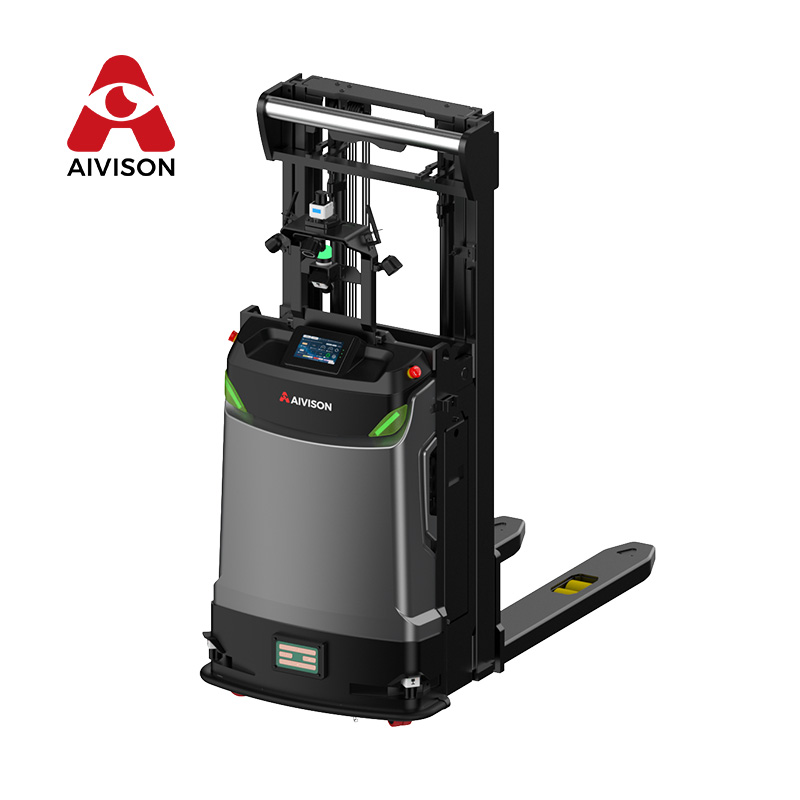
Heavy Load 2000KG Load Forklift Laser Guide AMR for Warehouse Pallet
A 2,000 kg laser-guided forklift AMR for pallet movement, high-bay storage and heavy transfer. It is relevant to Kawasaki automotive-parts and machinery warehouses where pallet weight is high.
View product specs
Humanoid Robot Chassis Dual 7-DOF Arms Laser SLAM Omnidirectional Navigation ROS2 Open Platform AMR
An integrator-oriented ROS2 open platform with dual 7-DOF arms and omnidirectional navigation. It is recommended for advanced research, flexible assembly cells and system integrators building differentiated Kawasaki solutions.
View product specs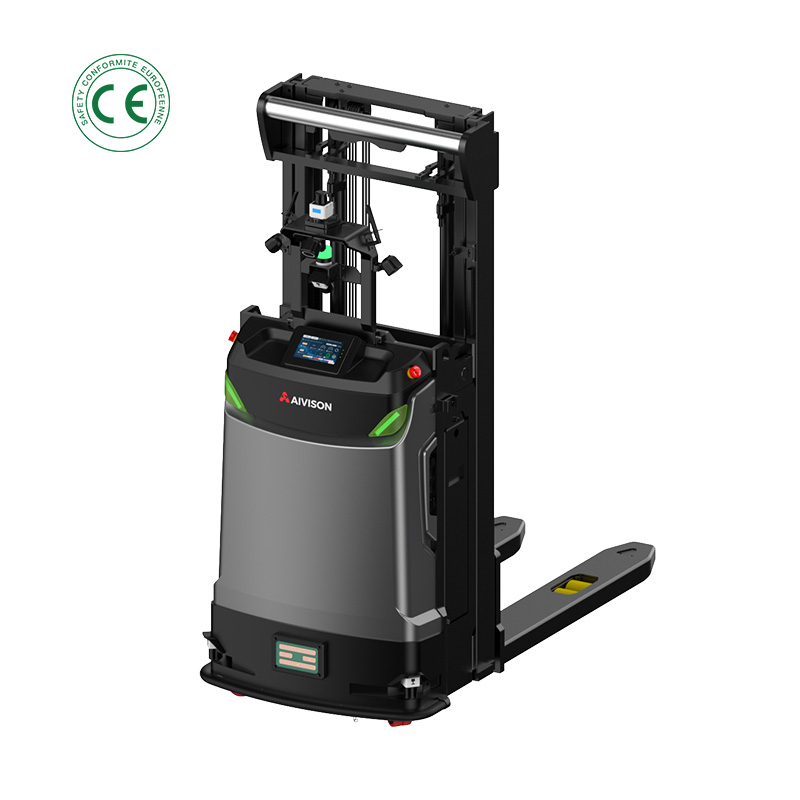
Aivison AMR Robot Vehicle for Automated Warehouse Logistics
A general warehouse AMR vehicle for repetitive transport, receiving-to-storage transfer and dispatch staging. Its role is to stabilize routine movement before more complex automation is added.
View product specs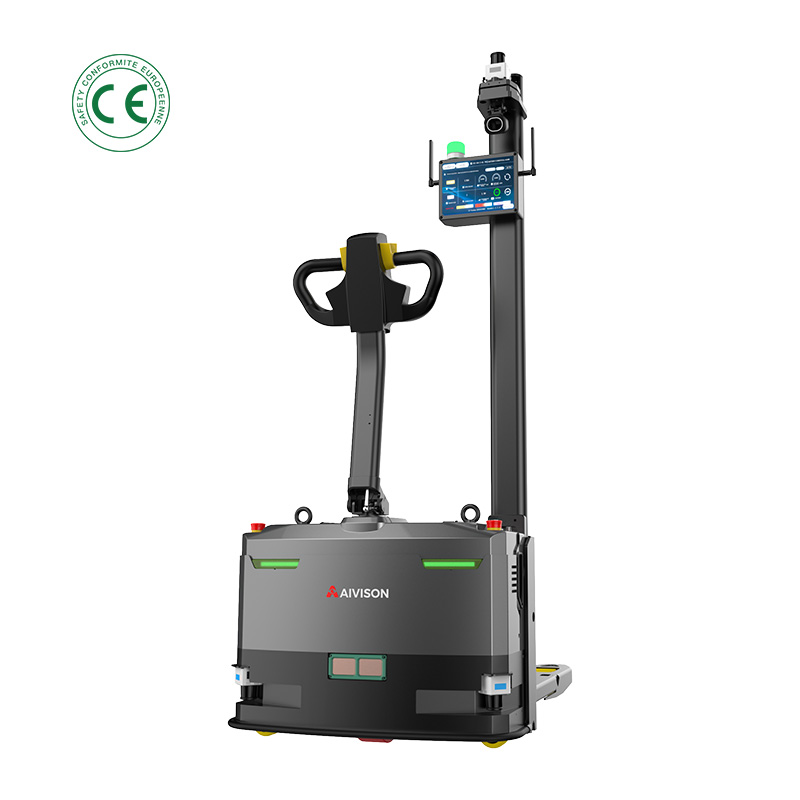
AIVISON CE Laser SLAM Navigation AGV 1500kg Warehouse Lifting Operations
A 1,500 kg lifting AGV with laser SLAM navigation for warehouse lifting and transfer. It fits Kawasaki operations that need powered lifting without committing to a full conveyor redesign.
View product specs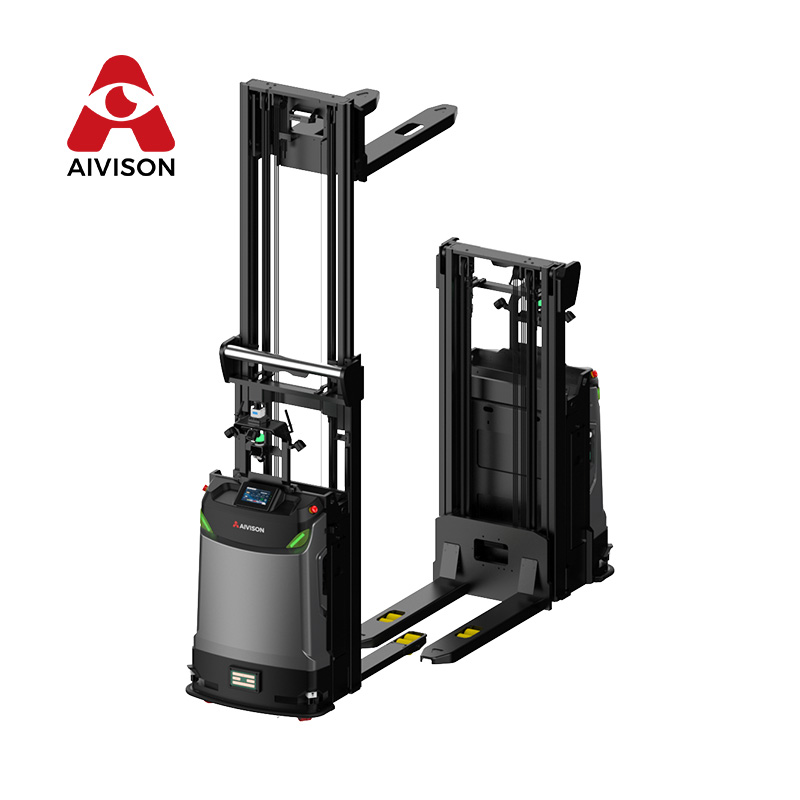
High Precision AGV Forklift Full Servo Motor Controlled Laser Forklift with Heavy Load 2000kg
A full-servo, 2,000 kg laser forklift for precise pallet handling and demanding load control. It is a strong fit for metal parts, machinery components and automotive supply chains around Kawasaki.
View product specs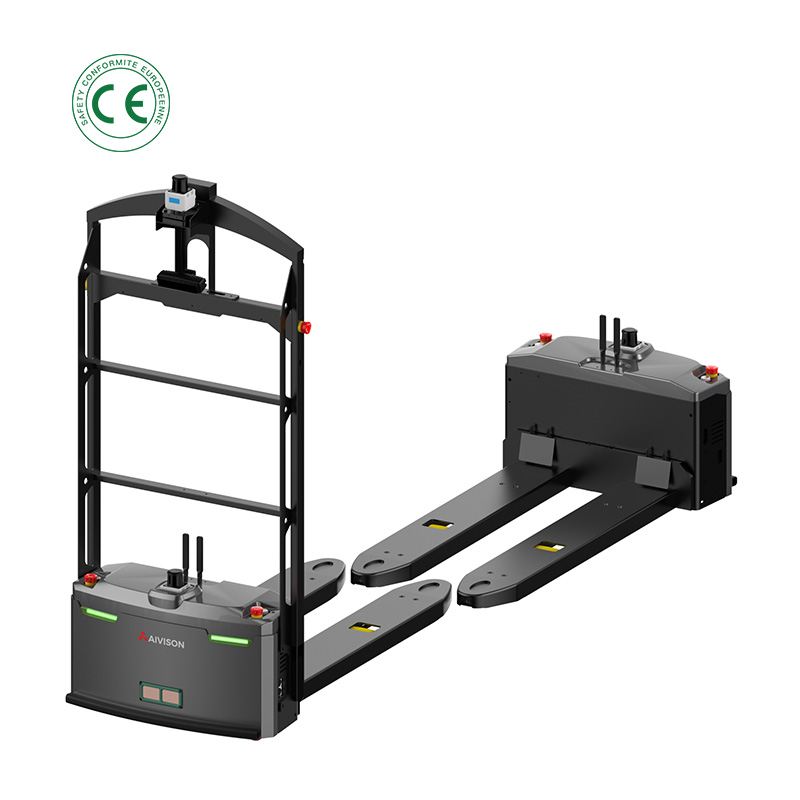
Warehouse Stacker CE Forklift AGV 800kg Load Capacity Light AMR Pallet
A compact 800 kg stacker AGV for lighter pallets and space-constrained aisles. It helps Kawasaki warehouses automate buffer movement without the footprint of a conventional forklift fleet.
View product specsNot sure which platform fits your aisle width, pallet type or docking tolerance? Share your load profile and layout first; the product recommendation should follow the process, not precede it.
What Kawasaki Buyers Really Mean by “AGV Control System”
The query “China best AGV control system manufacturer & wholesalers for the Kawasaki market” combines three different buying intents: sourcing a control-system supplier, comparing wholesale or OEM partners, and finding a platform that works in Kawasaki’s local industrial environment. This guide treats “best” as a search phrase, not an independent ranking. Use the criteria below to judge any supplier, including us.
Onboard control layer
This is the robot’s real-time decision layer: laser SLAM positioning, obstacle sensing, speed and safety management, QR-assisted docking, battery logic and task execution. Ask whether the supplier owns the navigation and motion-control engineering or simply integrates third-party modules.
Fleet and charging layer
For multi-robot sites, the control system must coordinate task assignment, traffic rules, route priorities, charging docks and exception handling over indoor Wi-Fi. A single robot demo is not proof of fleet capability. Ask for a scheduling logic review and a mixed-traffic safety plan.
Integration layer
Kawasaki buyers rarely need a robot in isolation. They need handshakes with conveyors, racks, safety doors, PLCs, WMS or MES processes, and sometimes custom top modules. Define the interface early: a clear handshake specification is often more valuable than a marginal payload increase.
Where AGV Control Systems Earn Their Payback in Kawasaki
Kawasaki is not a generic export market. The city and its surrounding Keihin industrial belt combine high-value manufacturing, port-adjacent warehousing, compact industrial buildings and mixed human-forklift traffic. A control system that performs well in a new open warehouse may still struggle in a constrained Kawasaki retrofit if route design, safety validation and charging strategy are not addressed together.
Automotive & precision components
Use 2,000 kg laser forklifts and full-servo fork AMRs for pallet transfer, line-side replenishment and finished-goods staging. The value is not only labor savings; it is repeatable fork positioning and stable takt support in high-mix production.
Port-adjacent warehouses
Kawasaki’s logistics corridor needs buffer movement between receiving, storage and dispatch. Compact stacker AGVs, 1,500 kg lifting platforms and automatic charging can support repetitive pallet flow while reducing forklift congestion in shared aisles.
Electronics & small parts
For 3C electronics and precision assembly, ±5 mm natural SLAM may be sufficient for transfer, while ±2 mm QR-assisted docking is reserved for machine or shelf interfaces. This tiered approach avoids adding floor codes everywhere and keeps the layout reconfigurable.
Integrators & advanced automation
System integrators in Kawasaki often need a platform they can adapt, not a closed appliance. The dual 7-DOF ROS2 open platform, composite robots, roller top modules and custom chassis options support proof-of-concept work and differentiated customer solutions.
Kawasaki Market Trends That Should Shape Your 2025–2028 AGV Roadmap
Buyers in Kawasaki are not only comparing payload and price. They are responding to labor availability, Japan’s logistics efficiency agenda, stricter safety expectations, high-mix production and the need to connect robots with existing digital systems. These trends change what “best” should mean in a procurement decision.
Labor and logistics pressure
The “2024 problem” in Japanese logistics has increased attention on driver hours, warehouse throughput and repetitive internal transport. Kawasaki buyers increasingly expect automation business cases to show not only labor reduction but also schedule stability and peak-season resilience.
Safety and compliance first
Safety is a project-level deliverable, not a catalog checkbox. For Kawasaki deployments, review ISO 3691-4 risk assessment, site traffic rules, scanner coverage and emergency handling. Electrical and radio requirements such as PSE and Giteki may apply depending on the actual configuration; CE marking for another market is not automatically a substitute.
High-mix, low-volume flexibility
Kawasaki’s industrial base includes many high-value, variable products. Fixed automation can become a bottleneck when layouts change. Laser SLAM with no floor tape, plus optional QR docking only at precision stations, supports reconfiguration without repeated floor rework.
Data integration and lifecycle value
Wholesalers and end users increasingly ask how robots report status, how tasks are triggered, how exceptions are traced and how firmware is maintained. The control system should support a clear integration plan with the site’s WMS, MES, PLC or safety systems, and a lifecycle plan for batteries, chargers and spare parts.
Match Navigation Accuracy to the Station, Not the Brochure
Over-specifying accuracy is one of the most common AGV procurement mistakes. Every precision tier adds engineering, commissioning and maintenance requirements. The right approach is to identify where millimeter-level docking is truly needed and where natural-feature SLAM is sufficient.
| Configuration | Typical accuracy | Floor / infrastructure | Best-fit Kawasaki use |
|---|---|---|---|
| Laser SLAM on natural features | ±5 mm | No tape, reflectors or floor codes required | Warehouse transfer, line-side delivery, buffer movement and layouts that change frequently |
| SLAM plus QR code camera | ±2 mm | QR labels only at selected precision stations | High-shelf storage, machine docking, electronics handover and precision pallet interfaces |
| Composite AMR with 6-axis arm | ±0.05 mm | Station calibration and process integration | Semiconductor-adjacent, medical device and high-precision pick-and-place applications |

Manufacturer-Level Capability from Shenzhen Marnix
Shenzhen Marnix Intelligent Technology Co., Ltd. does not ask Kawasaki buyers to accept a slogan. The company has about ten years of AGV engineering experience and builds a complete portfolio that includes laser SLAM autonomous mobile robots, jacking robots, smart forklifts, composite mobile robots and intelligent charging docks. That matters because a control-system supplier should be able to explain how navigation, chassis design, top modules, charging and fleet scheduling interact in the real environment.
Marnix’s laser SLAM navigation reaches ±5 mm without auxiliary tracks or floor QR codes. Where a station needs tighter docking, a QR code scanning camera can raise accuracy to ±2 mm. Composite robots with a 6-axis arm reach ±0.05 mm repeatability for advanced production tasks. This tiered precision strategy is especially relevant to Kawasaki buyers who need to retrofit automation into existing buildings rather than build a new warehouse around the robots.
- Complete AMR portfolio: jacking robots, smart forklifts, pallet AMRs, stackers, composite robots and charging docks from one engineering source.
- Fleet coordination: an intelligent scheduling system manages robots over indoor Wi-Fi for task assignment, traffic control and automatic charging.
- Manufacturer-level customization: chassis and top modules can be engineered around existing racks, conveyors, forks, roller lines and robotic-arm tasks.
- Quality discipline: multi-stage intelligent inspections and extensive operational stress testing target stable performance before shipment.
What Kawasaki Wholesalers and Integrators Should Demand from a China AGV Partner
Wholesale buyers are not only purchasing a machine; they are taking on lifecycle responsibility for their customers. The strongest partner is the one that makes engineering, documentation, spare parts and escalation paths predictable. Price matters, but unclear responsibility is far more expensive after commissioning.
Commercial clarity
Define MOQ, Incoterms, warranty boundaries, spare-parts kits, battery and charger pricing, and customization ownership. Low-MOQ customization is part of Marnix’s verified supplier profile, but final MOQ depends on the model, top module and configuration changes.
Engineering access
Ask for the load calculation, route assumptions, charging strategy and safety concept behind the quotation. A serious manufacturer should be willing to review aisle widths, floor conditions, Wi-Fi coverage and machine handshakes before promising throughput.
Compliance and documentation
For Japan-bound projects, confirm PSE and Giteki requirements with the actual electrical and radio configuration, and conduct an ISO 3691-4-aligned risk assessment for the site. Request the exact certificate list for the BOM being quoted, not a generic brochure claim.
Lifecycle support
Discuss Japanese-language documentation or HMI scope, operator training, remote diagnostics, spare LiDAR and drive-wheel availability, firmware change policy and response times. These should be written into the project plan rather than assumed.
Six Inputs That Shorten a Kawasaki AGV Evaluation
From project experience, a small number of inputs determine most of the robot selection. Sharing them at the start shortens the path from inquiry to a defensible proposal and reduces later redesign.
01 · Load profile
Maximum weight, pallet or rack footprint, center of gravity, load stability and whether the load is open, cased or racked. A 2,000 kg rating is not meaningful until the actual load geometry is known.
02 · Site layout
CAD drawing or sketch with aisle widths, door clearances, slopes, floor condition, elevator or lift points, charging locations and restricted zones. Kawasaki retrofits often depend on details that a generic floor plan omits.
03 · Throughput target
Missions per hour, peak periods, shift pattern and expected growth. Throughput influences fleet size, route design, charging dock count and buffer capacity. It should be stated as a range, not a single average.
04 · Docking precision
Identify where ±5 mm is acceptable and where ±2 mm QR-assisted docking or robot-arm-level precision is required. Precision should be assigned station by station to avoid unnecessary infrastructure and commissioning cost.
05 · Wi-Fi and radio
Share access-point placement, coverage quality, roaming behavior and any restrictions on wireless modules. For Japan, confirm whether the final configuration requires Giteki certification and how updates will be managed.
06 · Equipment interfaces
List conveyors, machines, safety doors, lifts, racks and IT systems the robot must communicate with. Define whether the handshake is PLC I/O, an API gateway or a WMS/MES message so that integration scope is priced correctly.
Questions Local Buyers Ask Before Choosing an AGV Control System Manufacturer
These answers are written for engineering and sourcing teams. Final compliance and performance must always be verified against the actual configuration, site risk assessment and agreed acceptance criteria.
Are you a manufacturer or a trading company?
Shenzhen Marnix Intelligent Technology Co., Ltd. is a manufacturer with about ten years of AGV engineering experience. The portfolio includes laser SLAM AMRs, jacking robots, smart forklifts, composite robots and charging docks. We serve both end users and system integrators; wholesale and OEM/ODM projects are evaluated according to configuration and customization scope.
Can you support buyers in Kawasaki, Japan?
We support Kawasaki-area projects through remote engineering and project-specific documentation, with shipping and local coordination scoped in the quotation. Share the destination, Incoterms, voltage, language requirements, site contact and target commissioning date so the commercial and technical plan can be aligned.
Which certifications should a Kawasaki buyer verify?
Do not assume that CE alone satisfies Japanese requirements. Depending on the actual BOM and use, PSE may apply to electrical equipment and Giteki/MIC certification may apply to radio modules. Safety should be validated through an ISO 3691-4-aligned site risk assessment. Ask for certificates that match the exact configuration being purchased.
Does eastern Japan’s 50 Hz power affect charger selection?
Yes. Kawasaki is in eastern Japan, where 50 Hz supply is standard. Specify the available voltage, plug type, transformer arrangement and charging location. The charger, battery and power interface should be quoted as a matched set; retrofitting a mismatched charger after shipment is avoidable.
Can multiple robots be managed by one control system?
Yes. Marnix robots can be coordinated by an intelligent scheduling system over indoor Wi-Fi, covering task assignment, traffic control and automatic charging through compatible docks. The right fleet size is determined by throughput, aisle layout, charging strategy and peak demand, not by a single headline number.
Can top modules be customized for existing Japanese equipment?
Yes. As a manufacturer, Marnix customizes chassis and top modules such as jacking units, roller conveyors, forklift forks and 6-axis robotic arms to connect with production equipment. The earlier the interface details are shared, the more accurate the engineering and acceptance plan will be.
What is the wholesale MOQ?
Low-MOQ customization is part of Marnix’s verified supplier profile, but final MOQ depends on the model, top module, documentation and certification scope. A mixed order may be possible after engineering review. Request a configuration-level quotation rather than relying on a generic MOQ statement.
Do you provide Japanese-language HMI or manuals?
Japanese-language documentation, HMI text or training support can be scoped as project requirements. Because translation and validation affect delivery time, include language needs in the RFQ. We will confirm what is standard, what is customized and how the final content will be reviewed before shipment.
What should be included in an RFQ?
Include load profile, layout, throughput, docking precision, Wi-Fi conditions, equipment interfaces, destination, voltage, language, safety standard, target date and whether you are an end user, wholesaler or integrator. For Kawasaki projects, also state any port, warehouse or building constraints that affect route design.
How can I verify quality before ordering?
Review the TÜV Rheinland onsite assessment, trade records and current product documentation. Ask for the factory acceptance test plan, pre-shipment inspection scope, spare-parts list and commissioning responsibilities. For a wholesale program, clarify warranty escalation and firmware update ownership in writing.
Request a Kawasaki-Specific AGV Control System Proposal
Send your load profile, site layout, throughput target, docking precision and equipment interface requirements. Our team will help you select a platform, define the navigation tier and prepare a practical configuration for the Kawasaki market.
info@marnixbot.com