What Dallas Buyers Really Mean When They Search for a CE Certified Laser SLAM Robot Manufacturer
The query “CE Certified Laser SLAM Robot Manufacturers & Manufacturer in Dallas” usually combines two different buying intents. One is technical: the buyer wants a trackless AMR or AGV platform with laser SLAM navigation, CE-related documentation and a manufacturer that can customize the chassis or top module. The other is local: the buyer wants confidence that a robot can be deployed in Dallas–Fort Worth without disrupting an operating warehouse, 3PL hub or production line.
Marnix is a Shenzhen-based mobile robot manufacturer, not a Dallas storefront. For Dallas projects, we work as a factory-direct engineering partner and coordinate with local integrators when on-site installation, safety validation or service response requires a Texas presence. That distinction matters for E-E-A-T: buyers should verify the manufacturing source, the certification scope, the navigation method and the support model—not just the headline “CE certified.”
Three questions behind a Dallas manufacturer search
Precision Selection Dashboard
Most Dallas warehouses do not need one accuracy level everywhere. Match precision to the station, not the whole building.
8 Laser SLAM Robots & AGVs for Dallas Material Handling Projects
These eight product directions cover pallet stacking, high-payload transfer, narrow-aisle movement, service robotics, LiDAR integration and 2,000 kg warehouse logistics. Product links are preserved from the original catalog so Dallas buyers can review specifications directly.

Warehouse Robot Robotics 2000KG CE Warehousing Automatic Forklift Stacking AGV
A heavy-payload stacking AGV for repetitive pallet movement, trailer loading and high-bay replenishment where stable fork entry and route repeatability matter.

High-performance Intelligent Smart Automated Guided Vehicle 2000kg AMR Robot
Designed for high-throughput transfer between receiving, storage and dispatch zones, with laser SLAM navigation and fleet coordination for multi-shift operations.
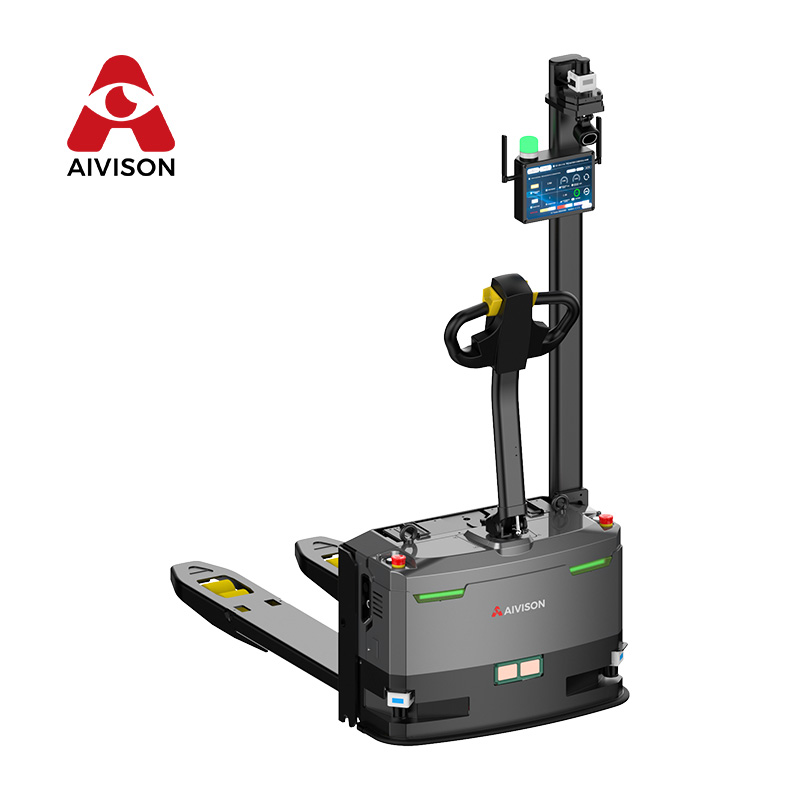
Laser SLAM Navigation Automated Guided Vehicle Forklift AGV 1500kg Load Capacity
A 1,500 kg-class laser SLAM forklift AGV for pallet handling in dense warehouses, offering a practical balance between payload, aisle access and deployment speed.
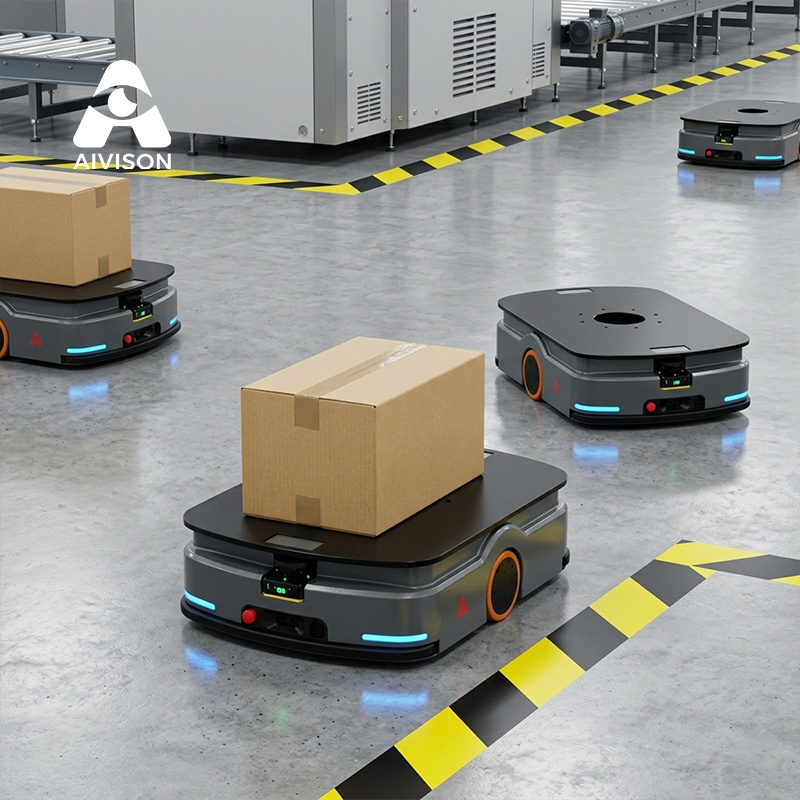
Autonomous Mobile AMR Robot 300kg Payload Laser Guided AGV for Carrying Goods in Factory
A compact 300 kg AMR for light material handling, kitting carts and line-side delivery where full-size forklifts are inefficient or impractical.

Customizable 1500KG Traction Capacity AGV Autonomous Mobile Robot with LiDAR Guided Sensor
A customizable tugger-style platform for cart trains and towed delivery routes, suited to Dallas production campuses with long internal transport loops.

Omnidirectional Service Humanoid Robot Chassis Dual 7-DOF Arms Laser SLAM Navigation for Hospitality and Retail
A service robotics platform for hospitality, retail and public-facing environments, combining omnidirectional movement, dual arms and laser SLAM navigation.

Hot Selling Logistics Navigation Detector Sensor LiDAR Manufacturers Direct Sales
A direct-sales LiDAR and navigation sensing option for integrators building custom AMR, AGV or logistics detection systems in Dallas automation projects.
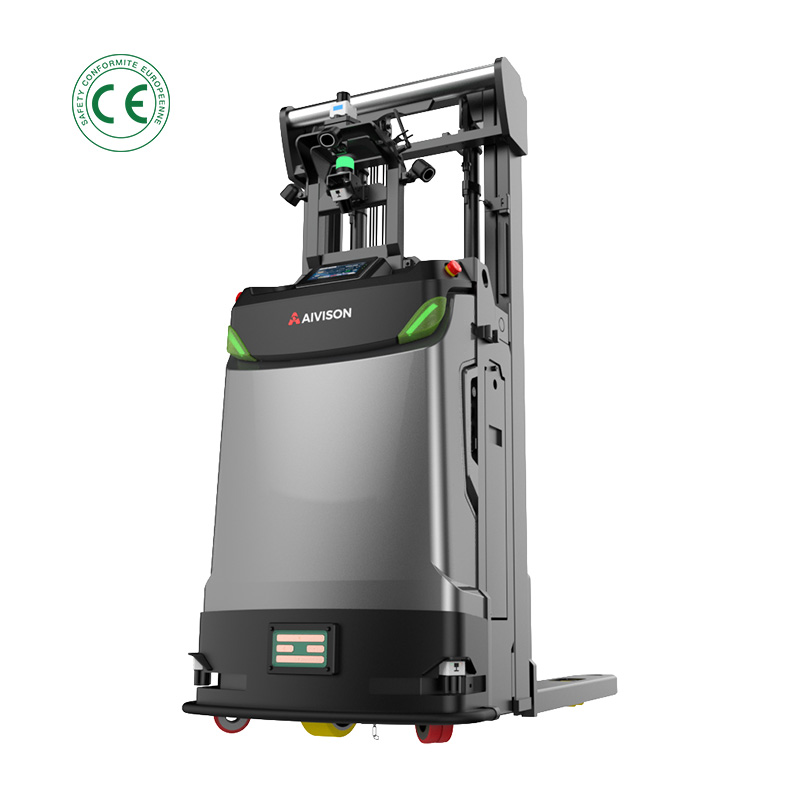
Smart Transport Robotic with Laser Navigation Reach 2000KG AGV Logistics Robots Warehouse Robot AMR
A 2,000 kg laser-navigation logistics robot for warehouse transport and reach tasks, coordinated by fleet scheduling for continuous material flow.
Where Laser SLAM Robots Deliver ROI in Dallas–Fort Worth
Dallas is not a single warehouse market. The DFW Metroplex includes 3PL operations, cross-dock facilities, manufacturing campuses, high-bay storage and customer-facing service environments. Each has a different automation case.
3PL & E-commerce Fulfillment
AllianceTexas, DFW Airport corridors and South Dallas distribution parks face seasonal peaks, SKU churn and multi-shift labor planning. Laser SLAM robots can re-route when racking or pick modules move, while QR labels are reserved for conveyor or pack-out docking points.
Automotive & Light Manufacturing
For component kitting, line-side delivery and finished-goods movement, a tugger AGV or 1,500–2,000 kg AMR reduces repeated walking and forklift traffic. The value is highest when routes are long, tasks are repetitive and takt time must stay stable across shifts.
High-Bay & Narrow-Aisle Storage
High-shelf storage often needs tighter docking than general transport. A practical design uses ±5 mm natural SLAM for travel and ±2 mm QR-assisted docking at the rack or conveyor, keeping floor labels limited instead of covering the entire warehouse.
Electronics, Medical & Service Robotics
Clean, precision-sensitive logistics and customer-facing environments need quieter, more controlled movement. The 300 kg AMR supports light goods handling, while the dual-arm service chassis demonstrates how laser SLAM can extend into hospitality and retail use cases.
Dallas Automation Trends Shaping Robot Procurement in 2025–2026
A Dallas robot decision is influenced by labor availability, distribution growth, safety documentation and the practical realities of Texas heat and multi-shift operations.
Multi-Shift Labor Volatility
Dallas warehouse operators increasingly automate repeatable transport so existing staff can focus on exceptions, quality checks and customer-specific handling. The strongest ROI case is usually not full lights-out automation; it is a stable robot route that removes walking and waiting from every shift.
Near-Shoring & Distribution Growth
As supply chains shorten and distribution footprints expand across Texas, layouts change more often. Natural-feature laser SLAM is attractive because routes can be re-mapped without installing magnetic tape or reflectors across a new leasing space.
Mixed Fleets & Wi-Fi Scheduling
Buyers rarely automate one route forever. They compare how jacking robots, forklifts, pallet AMRs and charging docks share one scheduling layer. Ask how the fleet handles traffic control, task priority, charging windows and future expansion.
Heat, Power & Safety Documentation
Dallas summer conditions make charging location and duty-cycle planning part of the engineering brief. Plan ventilated charging zones, confirm electrical requirements and review safety standards such as ANSI/RIA R15.08 for industrial mobile robots and ANSI/ITSDF B56.5 where automated forklifts are involved.
Match Navigation Precision to Each Dallas Station
A common procurement mistake is specifying one accuracy target for the entire building. The better approach is to separate travel accuracy from docking accuracy and assembly repeatability.
Natural-Feature Laser SLAM
Best for warehouse transfer, line-side delivery, cross-dock movement and routes that change with seasonal layouts.
No magnetic tape, reflectors or floor QR codes. The robot maps existing walls, columns, racks and fixed infrastructure.SLAM + QR Code Camera
Best for high-shelf storage, conveyor handover, pack-out stations and other points where docking tolerance is tighter.
QR labels are added only at precision stations, preserving aisle flexibility while improving repeatable docking.Composite Robot + 6-Axis Arm
Best for semiconductor, medical device and precision assembly tasks where the robot must interact with equipment.
Multi-layer synchronization protocols connect mobile movement with arm operation for tighter process repeatability.
Why Marnix Is Shortlisted by Integrators and End Users
Shenzhen Marnix Intelligent Technology Co., Ltd. draws on about ten years of AGV engineering experience to manufacture laser SLAM autonomous mobile robots, jacking robots, smart forklifts, composite mobile robots, LiDAR modules and intelligent charging docks. Our robots are used by more than 200 manufacturers across three continents and in eight core industries, from semiconductor and 3C electronics to lithium battery, photovoltaic, automotive parts, PCB, textile and medical devices.
For Dallas projects, the advantage is factory-level customization combined with a clear support model. We help buyers define payload, layout, throughput and docking precision, then configure the robot around the process rather than forcing a standard platform into an existing operation.
- TÜV Rheinland onsite assessment of company premises and operations by an independent inspection body.
- Verified supplier to Fortune 500 companies with third-party-assessed trade records.
- Verified multispecialty supplier with low-MOQ customization capability and multi-category robot procurement.
Factory-Level Customization
Chassis, payload and top modules can be engineered around jacking units, roller conveyors, forklift forks or 6-axis arms to connect directly with production equipment.
SLAM, Vision & Fleet Coordination
Laser SLAM navigation with optional QR camera assistance, managed by an intelligent scheduling system over indoor Wi-Fi for simultaneous multi-robot dispatch.
Complete AMR Portfolio
Jacking robots, smart forklifts, pallet AMRs, composite robots, LiDAR options and intelligent charging docks from one manufacturing source.
Quality Before Shipment
Multi-stage intelligent inspections and operational stress tests target near-zero failure rates before robots leave the factory for Dallas or any other market.
CE Documentation Support
CE-related documentation is configuration-specific. For eligible models we support buyers with the declaration scope, EMC/LVD documentation and risk-assessment inputs needed for project review.
Integrator-Friendly Support
We supply products and complete solutions to system integrators, with remote engineering, spare-parts planning and commissioning coordination for Dallas-area projects.
What to Send for a Faster Dallas Robot Quote
From our project experience, four inputs determine most of the robot selection. Sharing them upfront shortens evaluation from weeks of back-and-forth to a focused engineering review.
Load Profile
Maximum weight, footprint, center of gravity and whether the robot will lift racks, tow carts, handle pallets or interface with a conveyor.
Dallas Site Layout
A CAD drawing or sketch with aisle widths, doors, slopes, dock areas, elevator or lift points and any restricted zones for mixed human traffic.
Throughput & Shifts
Moves per hour, peak periods, number of shifts and available charging windows. This sets fleet size, charging dock count and scheduling logic.
Precision & Interfaces
Where ±5 mm is enough, where ±2 mm QR assist is required, and which machines, conveyors or shelving the robot must hand over to.
Questions Dallas Buyers Ask Before Automating
These are the practical questions that matter during a Dallas–Fort Worth robot evaluation, especially when the buyer is comparing a factory-direct manufacturer with a local distributor.
Do you supply CE certified laser SLAM robots to Dallas?
We provide CE-related documentation support for eligible robot configurations. CE marking is not a blanket claim that applies to every optional module, so Dallas buyers should request the declaration of conformity, applicable EMC/LVD documentation and the configuration scope before purchase.
Is there a Marnix factory or office in Dallas?
Marnix manufactures in Shenzhen and serves Dallas customers through factory-direct engineering plus local integrator coordination where on-site work is required. This model is suitable for buyers who value manufacturing transparency and can plan installation and safety validation with a local partner.
Do we need to modify our Dallas warehouse floor?
Standard laser SLAM navigation maps existing walls, columns, racks and fixed features, so no magnetic tape, reflectors or floor QR codes are required for general travel. QR labels are added only at stations where ±2 mm docking precision is needed.
How should we plan for Dallas summer heat and charging?
Plan charging locations with ventilation, confirm the electrical supply and define charging windows around peak throughput. Battery duty cycle, route length and opportunity charging should be reviewed together rather than treated as an afterthought.
Which safety standards should a Dallas site review?
For U.S. projects, review ANSI/RIA R15.08 for industrial mobile robots and ANSI/ITSDF B56.5 where automated forklifts are involved, alongside OSHA requirements and the site risk assessment. For EU-bound equipment, ISO 3691-4 and CE conformity are relevant. Final scope depends on the application.
Can you customize a robot for our production line?
Yes. As a manufacturer we customize chassis and top modules such as jacking units, roller conveyors, forklift forks and 6-axis robotic arms so the robot can connect directly with production equipment and handover stations.
Request a Dallas-Specific Robot Recommendation
Share your payload, rack or pallet dimensions, aisle layout, throughput target and docking tolerance. Our engineering team will recommend the right combination of laser SLAM AMR, jacking robot, smart forklift, QR-assist option or charging dock for your Dallas–Fort Worth project.
Email: info@marnixbot.com