CE Certified Jacking Robot with QR Code Camera for 2 mm Positioning Accuracy — Factory & Wholesalers Serving Toronto
Laser SLAM AMRs, jacking robots, smart forklifts and charging docks engineered for Toronto warehouses, 3PLs, automotive suppliers, medical device assemblers and system integrators. Use ±5 mm navigation in transit and QR-assisted ±2 mm docking only where the process truly needs it.
Eight AMR, Jacking Robot and Smart Forklift Platforms for Toronto Buyers
These eight product platforms share Marnix's navigation, fleet-control and charging ecosystem. The product URLs below are preserved exactly so Toronto engineering teams, wholesalers and integrators can review the original configurations. For a jacking robot with a QR code camera for 2 mm positioning accuracy in Toronto, the laser SLAM lifting AGV and the 1500 kg autonomous forklift are often the most relevant starting points.
Aivison AMR Robot Vehicle — Automated Warehouse AGV Logistics
Laser SLAM warehouse AMR for transfer between receiving, storage and dispatch. Suitable for Toronto and Mississauga distribution centres where seasonal inventory changes routes frequently.
View configuration
Humanoid Robot Chassis with Dual 7-DOF Arms and Laser SLAM
ROS2 open platform with omnidirectional navigation and dual arms. A practical development base for Toronto research labs, universities and integrators building mobile manipulation applications.
View configuration
Omnidirectional Service Humanoid Robot with Dual 7-DOF Arms
Service humanoid chassis for hospitality, retail and public-facing demonstrations. Helps wholesalers show advanced mobile manipulation without engineering a custom base from scratch.
View configuration
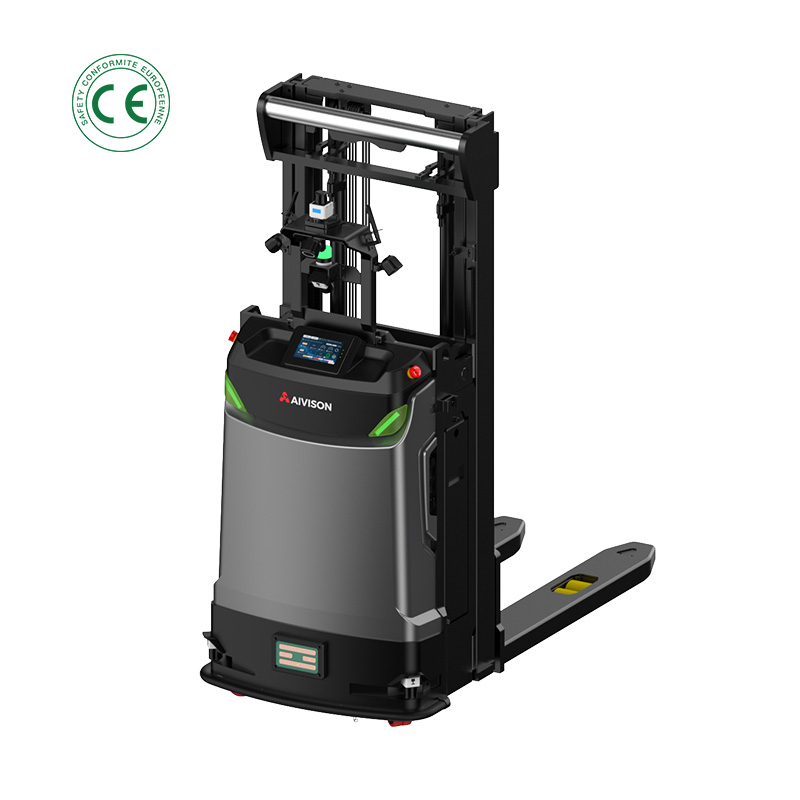
New Warehouse Autonomous Stacker AGV Robot — 2000 kg
High-payload stacker AGV for pallet movement and repetitive lifting. A strong candidate for heavier automotive parts, building supply and industrial distribution in the GTA.
View configuration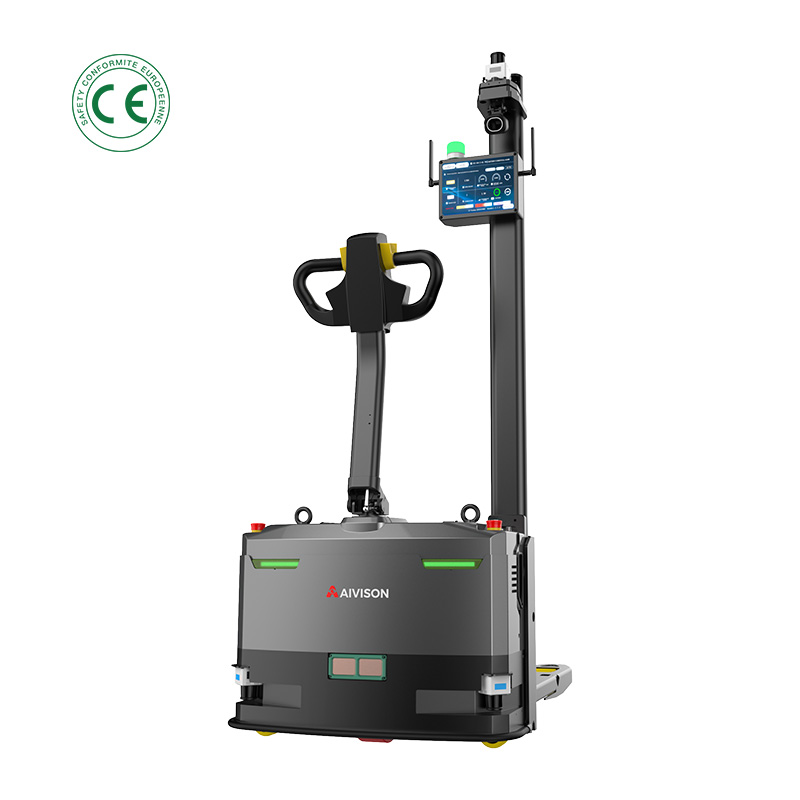
AIVISON CE Laser SLAM Lifting AGV — 1500 kg Warehouse Operations
CE-certified laser SLAM lifting AGV for rack and shelf movement. The platform can accept a QR code camera for ±2 mm final docking at high-shelf faces, conveyors and work cells.
View configuration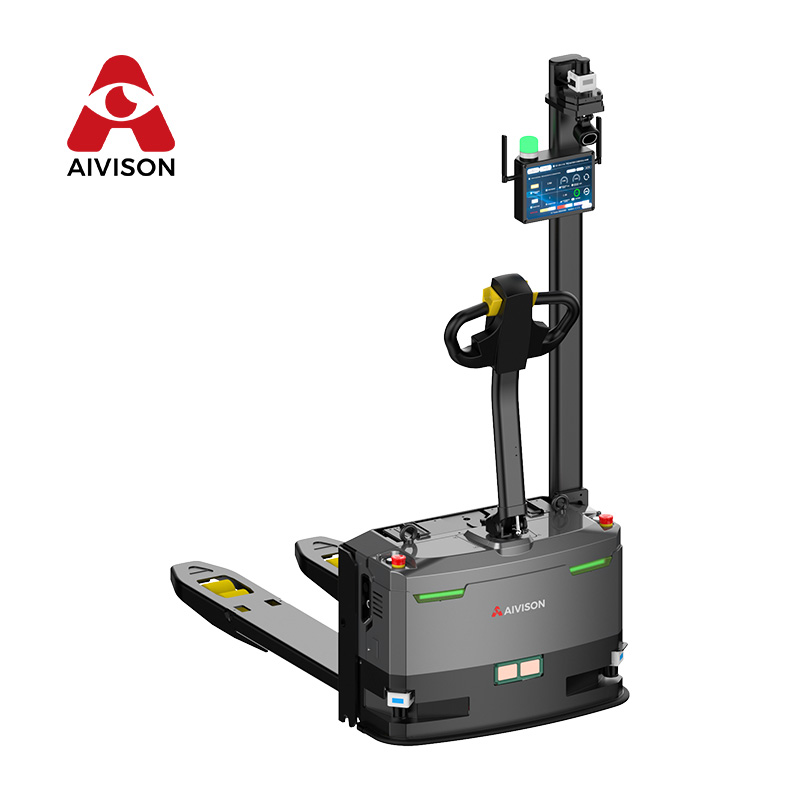
Laser SLAM Navigation AGV Forklift — 1500 kg Load Capacity
Autonomous forklift for pallet handling and repetitive put-away. Camera-assisted pallet recognition and QR station docking support reliable fork entry in mixed-traffic warehouses.
View configuration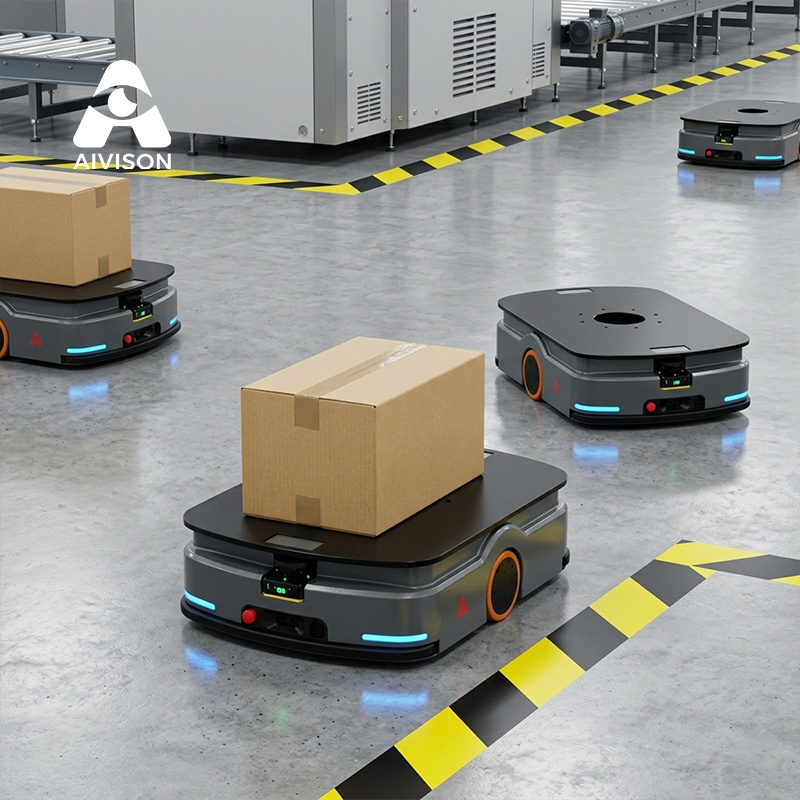
Autonomous Mobile AMR Robot — 300 kg Factory Payload
Compact 300 kg AMR for narrow aisles and light material handling. Useful where full-size forklifts are blocked by congestion, insufficient turning radius or floor-space constraints.
View configuration
Customizable 1500 kg Traction AGV with Lidar Guidance
Customizable 1500 kg traction-capacity AGV for towing and mobile material flow. Engineered for integrators that need bespoke top modules, sensors or mechanical interfaces.
View configurationWhat a QR Code Camera for 2 mm Positioning Accuracy Really Changes
A common buying mistake is treating 2 mm as a whole-site navigation requirement. In practice, free travel and final docking have different precision needs. Matching accuracy to the task reduces cost, commissioning time and future rework.
Hybrid navigation is the practical Toronto choice
Laser SLAM maps natural features such as walls, pillars, racking and fixed equipment. It navigates at approximately ±5 mm without magnetic tape, reflectors or floor QR codes. That is enough for transfer routes, line-side delivery and most warehouse movement. When the robot reaches a charger, conveyor, high-shelf pick face or test station, a downward QR code camera reads a label and tightens final positioning to ±2 mm.
For Toronto operations, this approach is valuable in leased buildings. A full-floor QR or magnetic tape installation can conflict with landlord approvals, floor maintenance, aisle reconfiguration and future rack layouts. With hybrid navigation, QR labels are placed only where precision creates value—not across the entire route. The robot keeps route flexibility while meeting tight handover tolerances.
CE certification is an important baseline, but it is not a substitute for a site-specific safety review. Ontario buyers should verify risk assessment, safety laser scanners, emergency-stop placement, speed limits, audible and visual warnings, traffic rules, and integration with fire doors or elevators. Where the local authority having jurisdiction or electrical contractor requires it, validate charger installation and electrical protection. Marnix supplies CE documentation, TÜV Rheinland-assessed manufacturing credentials and engineering data for integrator review.
- SLAM for transit: no magnetic tape, no reflectors and no continuous floor codes.
- QR for docking: tighten final positioning to ±2 mm at selected stations.
- Composite robots: add a 6-axis arm for ±0.05 mm repeatability in specialist assembly.
Use the lowest precision that reliably completes the work
For a Toronto jacking robot project, define the precision requirement station by station. This is the fastest way to avoid over-specifying the floor while protecting the operations that depend on repeatable handover. Ask for the robot's docking tolerance under loaded conditions, not only in an empty test bay.
Where a Jacking Robot with a QR Camera Pays Back in Toronto
Toronto buyers rarely automate a single isolated task. They connect receiving, storage, line-side delivery, staging and dispatch. The list below shows where hybrid laser SLAM plus QR-assisted docking is most often evaluated in the Greater Toronto Area.
3PL and e-commerce fulfilment in Mississauga and Brampton
High SKU change and seasonal peaks make fixed paths expensive. Laser SLAM supports route changes, while QR docking at pack stations, conveyors and high-shelf faces gives repeatable handover without covering the floor in labels.
Automotive parts operations in Brampton and Oakville
Line-side delivery, returnable containers and sequenced material flow require stable takt time. A jacking robot can lift racking and deliver to work cells, with ±2 mm QR docking where fixtures and conveyor interfaces demand repeatability.
Electronics and medical device assembly in Markham and Vaughan
Test stands, inspection stations and clean assembly cells often need precise transfer. QR-assisted docking reduces micro-adjustments by operators, while interlocked handover and traceability data support rigorous production documentation.
Food packaging and consumer goods in Toronto
Indoor pallet and rack transfer can be automated across multiple shifts. Buyers should match the robot enclosure and cleaning method to the zone; not every washdown area is suitable for a standard indoor AMR. Marnix helps define the correct configuration before quotation.
Wholesalers and equipment distributors serving the GTA
Wholesalers need demonstrable platforms, clear documentation and fast answers on customization. Marnix supports wholesale buyers who want factory-direct chassis, configurable top modules and a consistent navigation core across multiple client projects.
System integrators and automation consultants
Integrators value ROS2 access, scheduling integration and custom top mechanisms. The same chassis can be delivered with jacking, roller conveyor, forklift fork or 6-axis arm modules, reducing engineering risk across different Toronto client sites.

Toronto-specific evaluation: mixed traffic, leased buildings and uptime
Many GTA sites share the same constraints: limited expansion space, multi-shift schedules, mixed pedestrian and forklift traffic, and leased buildings where floor modifications are sensitive. A robot that demands extensive infrastructure can lose its business case before commissioning begins. Marnix engineers around this constraint by using natural-feature SLAM for main routes and selective QR labels for critical docking stations.
Ask for a layout-based cycle-time study rather than a headline speed. The real productivity gain comes from consistent handover, fewer blocked aisles, automatic charging and predictable fleet dispatch. For Toronto wholesalers, that same data becomes a credible sales tool when presenting automation to end customers.
Toronto Buying Trends: From Fixed-Path AGVs to Hybrid Precision
Toronto and the GTA remain a high-cost industrial market, so automation must fit existing buildings, racking and shift patterns. Buyers are moving away from blanket infrastructure toward precision where it matters.
What changed in the buying conversation
Industrial space is expensive, and many Toronto operations cannot dedicate a clean greenfield zone for a pilot. They need robots that map an existing facility, integrate with current Wi-Fi and safety rules, and avoid unnecessary floor work. At the same time, labour availability and turnover continue to pressure multi-shift material handling. This combination explains why hybrid navigation is gaining attention: laser SLAM provides flexibility, while a QR code camera provides the final 2 mm accuracy required at high-value docking points.
Wholesalers and system integrators serving Toronto are also being asked tougher questions. End users want CE documentation, risk assessment information, spare-parts strategy and clear assumptions about commissioning. The most reliable suppliers do not treat CE as a marketing sticker; they treat it as one input into local safety and compliance review. Buyers should ask how the robot behaves around people, how it recovers from a blocked route, how fleets are scheduled over Wi-Fi and how chargers are installed.
| Operational requirement | Recommended configuration | Why Toronto buyers care |
|---|---|---|
| Frequent layout changes | Laser SLAM navigation without floor tape | Reduces rework and landlord approval issues in leased GTA buildings. |
| High-shelf or conveyor docking | SLAM plus QR code camera for ±2 mm | Protects racking, conveyors and work cells without coding the whole route. |
| Line-side delivery | Jacking robot with Wi-Fi fleet scheduling | Coordinates multiple missions across shifts and changing production priorities. |
| Pallet handling | Smart forklift with camera assistance | Improves pallet recognition and fork entry in busy warehouses. |
| 24/7 uptime | Intelligent charging docks and opportunity charging | Supports multi-shift operations without adding manual charging labour. |
| Custom equipment interface | Roller, jacking, fork or 6-axis arm top module | Lets integrators connect robots directly to production equipment. |
Why Toronto Buyers Source From a Mobile Robot Manufacturer
Marnix is Shenzhen Marnix Intelligent Technology Co., Ltd., a manufacturer of laser SLAM AMRs, jacking robots, smart forklifts, composite robots and charging docks. Factory-direct engineering gives wholesalers and integrators more control over configuration, documentation and delivery planning.
CE-certified model engineering
CE documentation is available for applicable configurations. The QR code camera option is specified only where ±2 mm handover is justified, keeping the robot practical for real floor layouts.
About ten years of AGV experience
Marnix builds mobile robots around real production lines, not catalogue drawings. This experience matters when a Toronto site has slopes, doors, mixed traffic, narrow aisles or unusual racking.
TÜV Rheinland onsite assessment
The company has completed an onsite supplier assessment by TÜV Rheinland and has served as a supplier to a Fortune 500 company. These credentials help wholesale buyers and integrators qualify Marnix faster.
200+ manufacturers and eight industries
Marnix robots are used by more than 200 manufacturers across three continents, in semiconductor, 3C electronics, lithium battery, photovoltaic, automotive parts, PCB, textile and medical device operations.
Wi-Fi fleet scheduling and auto charging
Multiple robots can be coordinated by an intelligent scheduling system over indoor Wi-Fi, with simultaneous task assignment, traffic control and automatic charging through compatible smart docks.
Modular chassis and top mechanisms
Jacking units, roller conveyors, forklift forks and 6-axis robotic arms can be engineered onto the same SLAM chassis. This is especially useful for integrators serving multiple Toronto clients.

Manufacturer-level customization, not catalogue-only supply
Toronto wholesalers often need a platform that can be positioned differently for each end user. A 3PL may prioritize high-shelf docking; an automotive supplier may need line-side rack transport; a medical device manufacturer may need a composite robot with a 6-axis arm. Marnix can customize chassis and top modules so the robot connects directly with production equipment instead of forcing the process to change.
The result is a more practical procurement path: review the standard platform, define the precision stations, confirm safety and Wi-Fi assumptions, then engineer the top module and fleet rules. This is how a factory-direct supplier supports Toronto end users and the wholesalers who serve them.
What to Prepare Before Requesting a Jacking Robot Proposal
From Marnix project experience, these six inputs determine most of the robot selection. Sharing them upfront reduces engineering iterations and shortens the path from inquiry to a reliable configuration.
Load and rack footprint
Maximum weight, rack dimensions, centre of gravity and whether the robot lifts, tows or forks the load.
Route and site layout
CAD or sketch with aisle widths, doors, slopes, elevators, fire shutters, charging zone and future layout changes.
Throughput and shifts
Missions per hour, peak periods and number of shifts. This sets fleet size, charging strategy and buffer capacity.
Docking precision map
Which stations need ±5 mm, which need ±2 mm QR docking, and whether any require composite arm-level repeatability.
Wi-Fi and safety review
Access-point coverage, network roaming, traffic rules, scanner zones and coordination with local safety requirements.
Top module and interfaces
Conveyors, racks, pallets, work cells or machines the robot must connect to, plus any PLC or software integration needs.
CE Certification, QR Positioning and Wholesale Supply Questions
These are the questions most frequently raised by Toronto end users, wholesalers and system integrators during early evaluation.
What does a QR code camera add to a jacking robot?
A QR code camera reads floor or station labels during final docking. Laser SLAM handles free travel and route mapping, while the camera tightens positioning to approximately ±2 mm at chargers, conveyors, high-shelf faces or work cells. This hybrid approach avoids placing QR codes across every aisle.
Is ±2 mm positioning accuracy necessary across the whole route?
Usually not. Most transfer and line-side delivery tasks are well served by laser SLAM at approximately ±5 mm. The ±2 mm requirement should be assigned to specific stations where misalignment causes damage, delay or manual intervention. This station-by-station method controls cost and keeps routes flexible.
Is CE certification accepted in Toronto and Ontario?
CE is a manufacturer's declaration for applicable European requirements, not a Canadian certification. Toronto buyers should still evaluate local electrical installation requirements, fire and life-safety policies, workplace safety rules and an ISO 3691-4-based risk assessment. Marnix supplies CE documentation, safety data and TÜV Rheinland-assessed supplier credentials to support the review; the final compliance path should be confirmed with the site's authority having jurisdiction and qualified local contractors.
Can Marnix supply wholesalers and system integrators serving Toronto?
Yes. Marnix supports end users, wholesalers and system integrators with factory-direct robot platforms, custom top modules, fleet scheduling, charging docks and engineering documentation. Wholesale buyers can standardize on a navigation core while ordering different top mechanisms for Toronto client projects.
Do the robots require magnetic tape or full-floor QR codes?
No. Standard laser SLAM navigation uses natural features and requires no auxiliary tracks, reflectors or floor QR codes. QR labels are added only where ±2 mm docking is needed. This is especially relevant in leased Toronto facilities where floor modifications may be restricted.
What payload and platform options are available?
The range includes a 300 kg light AMR, 1500 kg laser SLAM lifting AGV, 1500 kg autonomous forklift, 2000 kg stacker AGV and customizable 1500 kg traction AGV. Jacking robot selection depends on rack load, lift height, travel distance, docking tolerance and required top module.
How are multiple robots coordinated in a Toronto warehouse?
Robots can be managed by an intelligent scheduling system over indoor Wi-Fi. The system assigns tasks, controls traffic at shared intersections and coordinates automatic charging with compatible smart docks. Network coverage and roaming quality should be reviewed during the site survey.
How do we start a Toronto project evaluation?
Prepare the load and rack footprint, site layout, throughput target, docking precision map, Wi-Fi coverage information and equipment interfaces. Send them through the inquiry button or to info@marnixbot.com. Marnix engineers can then recommend navigation accuracy, fleet size, top module and CE documentation scope for the project.
Request a Toronto-Ready Jacking Robot Configuration
Share your rack footprint, payload, docking points, shift pattern and site layout. Marnix will respond with a navigation accuracy allocation, top-module recommendation, fleet sizing and CE documentation list. Factory-direct supply is available for end users, wholesalers and system integrators serving Toronto and the GTA.
Email: info@marnixbot.com · Product engineering · Fleet scheduling · Custom top modules · Wholesale support