Eight Electronics Handling Robot Platforms for Jakarta Production and Warehouse Teams
The shortest route to a reliable procurement decision is transparency: compare payload, navigation, docking tolerance, top module, and floor preparation before asking for a quote. The eight platforms below are the starting portfolio. Every product link is preserved exactly so your engineers can review specifications without a dead end. For electronics handling, the decision is rarely just “AMR or AGV”; it is whether the robot can dock to a conveyor, lift a rack, enter a pallet, or hand over to an operator at the right takt time.
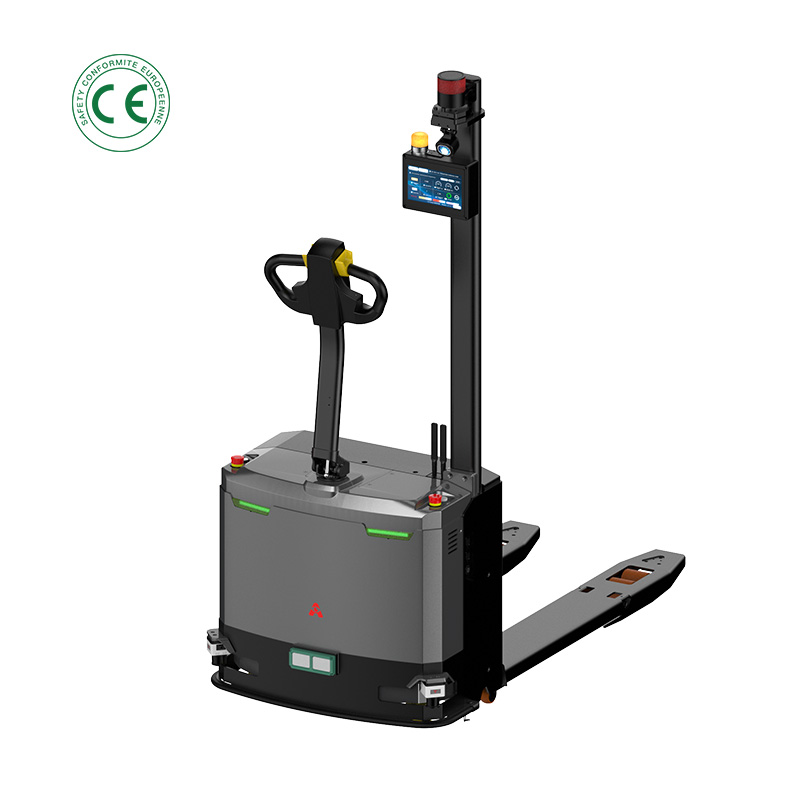
Autonomous Mobile Robot AMR AGV Forklift Pallet Stacker CE Certificate for Smart Warehouse and Production Line Automation
A CE-certificate-oriented AMR/AGV forklift platform for smart warehouses and production-line automation. In Jakarta electronics plants, use it to move pallets between receiving, kitting, and line-side buffers without fixed rails.
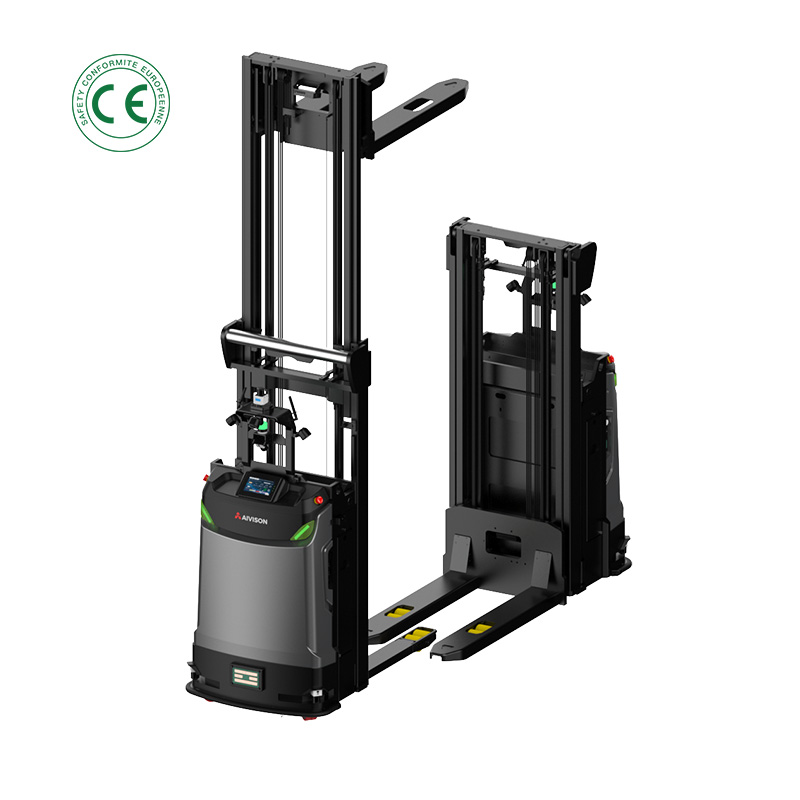
Factory AMR Robot AGV Robot Laser 2000kg Forklift AGV for Industrial Material Handling
A 2,000 kg laser forklift AGV for industrial material handling. It suits palletized components, battery modules, and heavy WIP where conventional forklift traffic competes with people and precision docking matters.
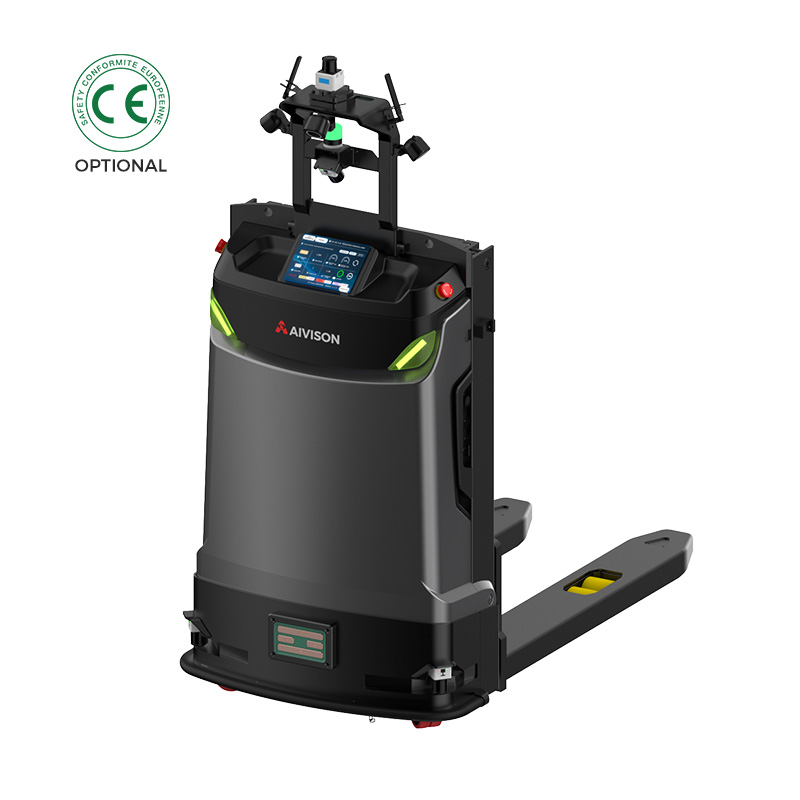
China Factory Automated Mobile Robot SLAM Lifting Wholesale AGV Chassis Vehicle
A SLAM lifting AGV chassis for wholesale and integrator projects. It is a flexible base for rack lifting and custom top modules, with mapping of existing aisles instead of installing floor tracks.

Omnidirectional Service Humanoid Robot Chassis Dual 7-DOF Arms Laser SLAM Navigation for Hospitality and Retail
An omnidirectional humanoid service chassis with dual 7-DOF arms and laser SLAM. For Jakarta technology showcases, retail, hospitality, and advanced electronics demonstrations where interaction and manipulation are part of the pilot.

New Warehouse Autonomous Cars agv Robot 2000kg Load Capacity Stacker agv Robot
A 2,000 kg autonomous warehouse stacker AGV for high-throughput pallet stacking and replenishment. It fits Jakarta warehouses that need repeatable put-away and transfer without adding fixed conveyor infrastructure.

AGV AMR Autonomous Forklift Smart Version Auto Mobile Transfer Stacker Robot
A smart autonomous forklift stacker for automatic transfer. Use it where pallet recognition and repeatable fork entry can reduce product damage, improve safety, and lessen dependence on night-shift labor.
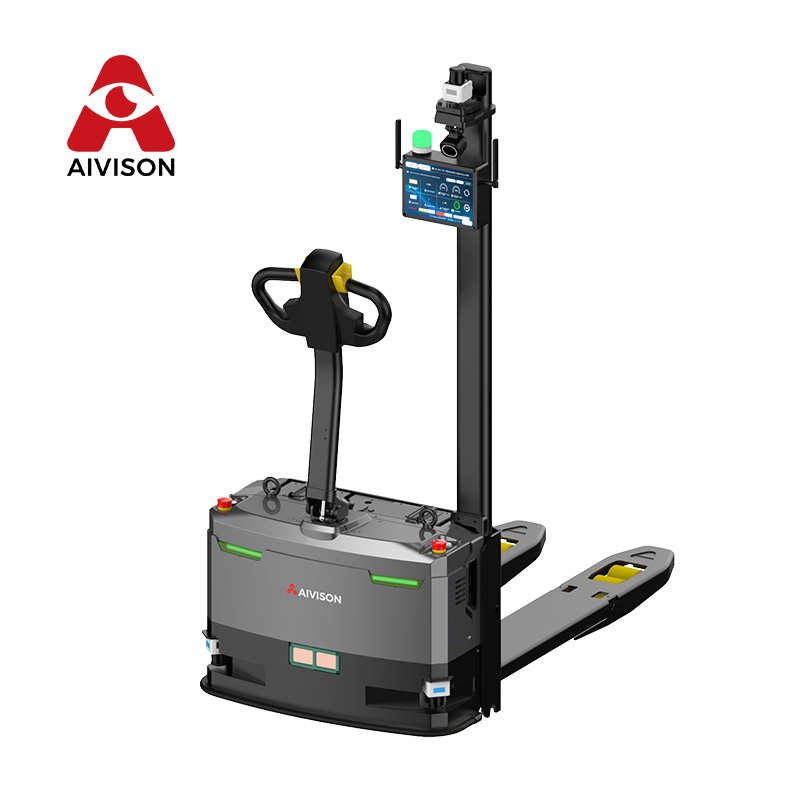
Aivison AGV Forklift High Quality Industrial Unmanned Pallet Forklift
An industrial unmanned pallet forklift for high-quality material handling. A practical option for 24/7 warehouse transfer, staging, and container-loading interfaces where pallet flow must remain predictable.

Humanoid Robot Chassis Dual 7-DOF Arms Laser SLAM Omnidirectional Navigation ROS2 Open Platform AMR
A ROS2 open-platform humanoid AMR chassis with dual arms for integrators and R&D teams building electronics inspection, kitting, or service applications in Indonesia.
What Jakarta Buyers Can Verify Before Shortlisting a Robot Supplier
Automation projects in Greater Jakarta are often reviewed by production engineering, EHS, procurement, and the local systems integrator at the same time. A useful supplier conversation therefore needs evidence, not adjectives.
What “CE Certified” Should Mean in a Jakarta Electronics Procurement File
CE marking is not a decorative badge. For an electronics handling robot operating in Indonesia and potentially exported again, the document trail matters as much as the robot itself.
Confirm the exact configuration, not only the product family
Buyers should ask for the exact model, electrical configuration, safety functions, EU Declaration of Conformity, test reports, and nameplate information. Because CE is configuration-dependent, Marnix treats it as a document review process: confirm the selected forklift or AMR variant, the charger, the safety scanner options, and the intended use. This prevents a common procurement error: quoting a CE-certified base platform while adding a non-assessed top module.
In Jakarta, where import clearance and factory acceptance may be reviewed by EHS, procurement, and the systems integrator, the file matters. Ask whether the certificate covers the final robot, the charging dock, and the safety configuration. The first platform in the list above is presented as a CE-certificate AMR/AGV forklift; other models and custom top modules should be verified against the proposal and datasheet. That is a more reliable approach than assuming a blanket certification across every option.
Information gain for project teams: separate the navigation specification from the compliance specification. A robot can reach ±2 mm at a docking station while still requiring a site-specific risk assessment, operator training, and safety validation. The best supplier helps you document all three.
Illustrative selection guide, not a claim that every robot uses every mode. Request the datasheet for the selected model.
Where Electronics Handling Robots Fit in Greater Jakarta Operations
Jakarta’s electronics value chain is not one factory. It includes consumer electronics assembly, PCB and SMT operations, battery packs, automotive electronics, medical devices, and the warehouses that feed them. The common thread is high mix, short changeover, and the need to move materials without blocking aisles.
SMT & PCB Line-Side Transfer
Move magazines, trays, reel carts, and WIP between storage and SMT lines. Laser SLAM maps existing aisles, so reconfiguration does not require new floor tracks when product models change.
- Line-side replenishment
- Magazine and tray transfer
- Flexible route changes
Electronics Kitting & WIP
Deliver kits and subassemblies to cells in the right sequence. For high-mix production, the robot can be re-tasked by route and schedule rather than by moving fixed conveyors.
- High-mix low-volume lines
- Shift-by-shift routing
- Operator handover stations
Lithium Battery Module Logistics
Jacking robots and low-profile AGVs can lift racks and carriers in battery module areas where stable, repeatable movement is more important than raw speed.
- Rack lifting and delivery
- Line-side buffers
- Traceable task records
Finished-Goods & Pallet Warehousing
Use AGV forklifts and stacker robots for pallet transfer, put-away, and replenishment. Camera assist and repeatable fork entry can reduce damage in busy dispatch zones.
- Pallet put-away
- Dispatch staging
- Night-shift continuity
Cleanroom & High-Spec Electronics
Semiconductor, sensor, and precision electronics operations often need stable material flow with less human traffic. Cleanroom and ESD-related requirements must be specified and validated for the selected configuration.
- Precision docking options
- QR assist at stations
- Site-specific risk review
Integrator & R&D Pilots
System integrators can use the ROS2 open-platform humanoid chassis or custom AGV bases to prototype inspection, kitting, and service applications before scaling to production.
- OEM top modules
- ROS2 platform option
- Factory acceptance support
Jakarta Automation Trends That Change Robot Selection
Localization is not only language. It includes 220 V/50 Hz power planning, tropical humidity and dust, floor flatness, Wi-Fi dead zones, spare-parts response, and operator training. These four trends are shaping procurement conversations across Greater Jakarta.
Greater Jakarta Industrial Corridor Growth
New and expanded factories in Bekasi, Cikarang, Karawang, and Tangerang are often designed around flexible layouts. Trackless SLAM robots fit better than fixed floor infrastructure when lines may be rebalanced after launch.
Multi-Shift Labor & Safety Planning
Night-shift staffing, turnover, and mixed human-vehicle traffic push teams toward repeatable automation. The goal is not simply replacing people; it is stabilizing throughput and reducing avoidable forklift incidents in shared aisles.
High-Mix, Short-Cycle Electronics
Consumer electronics and component lines change faster than fixed conveyors can be rebuilt. Map-based routing, Wi-Fi fleet scheduling, and swappable top modules let a single robot base support different stations over its service life.
Traceability & Fleet Integration
Procurement teams increasingly ask how robots connect to WMS, MES, and production dashboards. Task logs, charging status, traffic control, and exception alerts are part of the evaluation, not an afterthought.
Why Marnix Fits a Jakarta Project: Manufacturer-Level Engineering, Not a Catalogue Reseller
Shenzhen Marnix Intelligent Technology Co., Ltd. draws on about ten years of AGV manufacturing experience. The company builds autonomous mobile robots for end users and for the system integrators who serve them, with customization at chassis and top-module level.

Engineering evidence that matters in a tender
Marnix is a Shenzhen-based manufacturer with an AMR portfolio that includes jacking robots, smart forklifts, pallet AMRs, composite robots, and intelligent charging docks. The standard laser SLAM stack supports ±5 mm positioning without magnetic tape or reflectors; a QR scanning camera can raise docking accuracy to ±2 mm where the process demands it. Composite robots with a 6-axis arm can reach ±0.05 mm repeatability for semiconductor and medical-device production.
The company is an independently assessed supplier with a TÜV Rheinland onsite assessment, Fortune 500 supplier status, and verified trade records. More than 200 manufacturers across three continents have worked with Marnix, and the customer base includes system integrators who need a reliable robot platform plus engineering support. For Jakarta buyers, this combination is valuable because it connects product selection, CE documentation, factory acceptance, and integrator coordination in one technical conversation.
Our manufacturing and engineering base is in Shenzhen, and we support Jakarta factories through remote engineering, export documentation, factory acceptance testing, and coordination with local integrators and service partners. If your procurement requires local assembly, TKDN calculation, or a specific Indonesian partner, confirm those requirements early so the proposal reflects the correct commercial and compliance route.
Manufacturer-Level Customization
Chassis, payload, jacking units, roller conveyors, forklift forks, and 6-axis arms can be engineered around your process instead of forcing a standard fit. Low-MOQ customization is available for suitable projects.
Laser SLAM + QR Upgrade Path
Start trackless at ±5 mm, then add QR assist at selected stations for ±2 mm docking. This avoids unnecessary floor infrastructure while preserving a path to higher precision.
Wi-Fi Fleet Scheduling & Auto Charging
An intelligent scheduling system coordinates simultaneous task assignment, traffic control, and automatic charging through compatible smart docks for 24/7 duty.
Verified Supply & Integrator Support
TÜV Rheinland onsite assessment, Fortune 500 supplier status, credit index, trade capacity, and trade history help procurement teams review risk before the PO.
A Practical Four-Step Path from Jakarta Discovery to Pilot
Robot selection becomes faster when the project is framed as an operating problem, not a product catalogue request. These four steps are the minimum data set for a defensible proposal.
Requirement Discovery
Share payload, load footprint, throughput per hour, shift pattern, docking tolerance, and the equipment the robot must hand over to.
Site Survey & Mapping Plan
Review aisle widths, floor conditions, doors, lifts, charging locations, Wi-Fi coverage, and mixed human-vehicle traffic zones.
Configuration & FAT
Confirm top module, navigation mode, safety options, CE documentation, and factory acceptance criteria before shipment.
Jakarta Pilot & Scale
Train operators, define KPI acceptance, monitor exceptions, and expand fleet size only after the pilot proves stable takt-time support.
Common Questions from Jakarta Electronics Manufacturers and Integrators
These are the questions that appear repeatedly in project evaluations. For a site-specific answer, prepare your layout, load profile, throughput target, and docking tolerance before contacting our engineering team.
Are your electronics handling robots CE certified?
CE status is model- and configuration-dependent. Ask for the EU Declaration of Conformity, applicable test reports, nameplate information, charger details, and safety configuration for the exact robot you plan to buy. Do not accept a product-family claim without reviewing the final configuration.
Do we need to modify the factory floor in Jakarta?
Standard laser SLAM navigation maps existing features, so no auxiliary tracks or floor QR codes are required for basic routing. QR labels are added only where a station needs ±2 mm docking precision. Floor condition, gradients, and aisle clearance should still be checked during the site survey.
How long does deployment take?
A pilot can be planned in weeks after requirements are clear, but the real timeline depends on site layout, top-module customization, Wi-Fi readiness, safety review, and operator training. For Jakarta projects, confirm whether factory acceptance testing will be remote or witnessed before shipment.
Can you customize a robot for our electronics line?
Yes. As a manufacturer, Marnix customizes chassis and top modules such as jacking units, roller conveyors, forklift forks, and 6-axis robotic arms to connect with production equipment. Low-MOQ customization is available for suitable projects; the technical scope must be documented before quoting.
What about spare parts and after-sales support in Indonesia?
Discuss spare-parts kits, remote diagnostics, response time, warranty terms, and local integrator coordination in the proposal. A clear service model is especially important for multi-shift operations. The commercial contract should state what is handled remotely, what is handled locally, and what parts are recommended on site.
How should we handle import, tax, and TKDN questions?
Use a qualified local customs broker or consultant to confirm current Indonesian import duties, taxes, and TKDN implications for your project. Requirements can change and may depend on the buyer, project type, and product scope. Marnix can provide export documentation, packing lists, and technical files to support your local process.
Share Your Layout, Payload, and Docking Requirement
Our engineers will help you match the right AMR, AGV forklift, jacking robot, or humanoid platform to your electronics handling scenario, and will identify the CE documentation and site data needed for the next review.
Contact Us