Eight AMR Platforms for Dortmund Factories, Warehouses and Integrators
Begin with the platform that matches your payload, aisle width and handover point. Final CE configuration, safety zones and top modules are confirmed against the Dortmund site’s risk assessment, Wi-Fi coverage and integration scope.
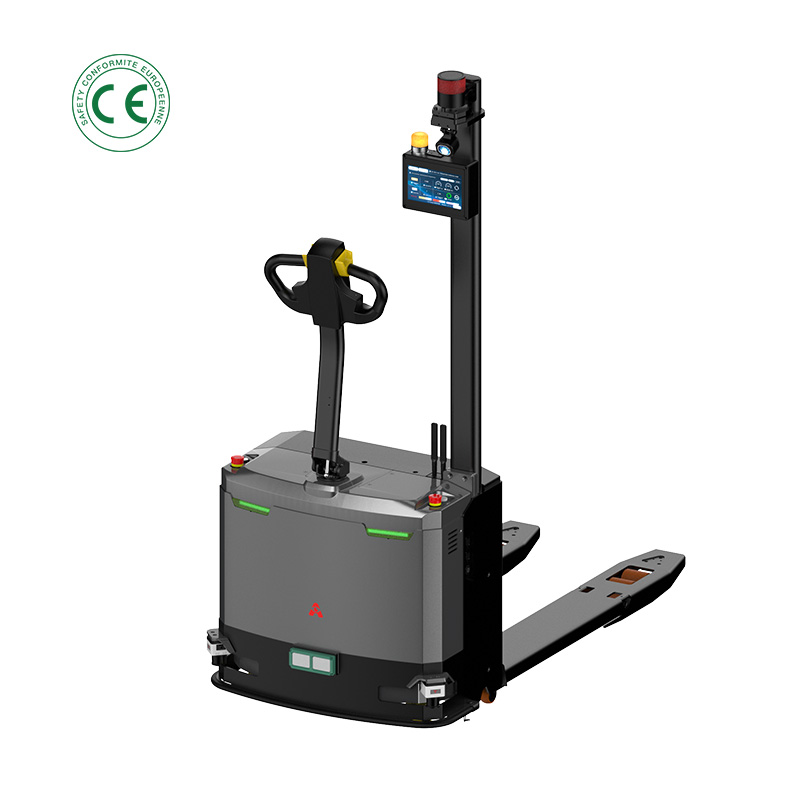
Autonomous Mobile Robot AMR AGV Forklift Pallet Stacker CE Certificate for Smart Warehouse and Production Line Automation
A 2,000 kg-class AMR forklift and pallet stacker for dock-to-line, finished-goods and smart warehouse transfers where a standard forklift creates traffic bottlenecks but the aisle cannot be rebuilt.
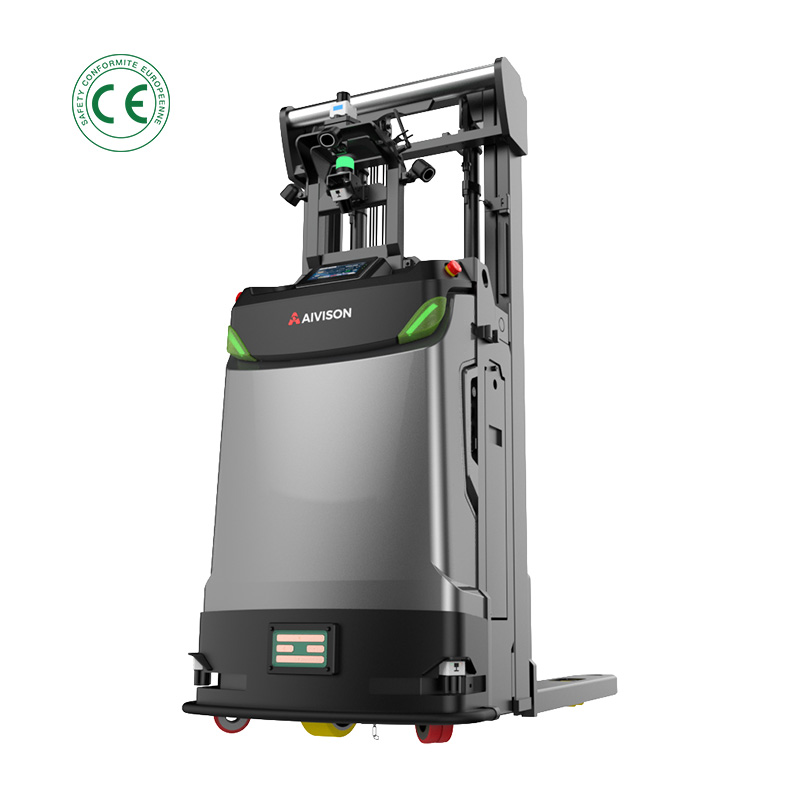
Smart Transport Robotic with Laser Navigation Reach 2000KG AGV Logistics Robots Warehouse Robot AMR
A 2,000 kg laser navigation reach platform for high-bay storage and fast warehouse transfer. The reach design suits racking where pallet pick height matters and a full floor QR grid is impractical.
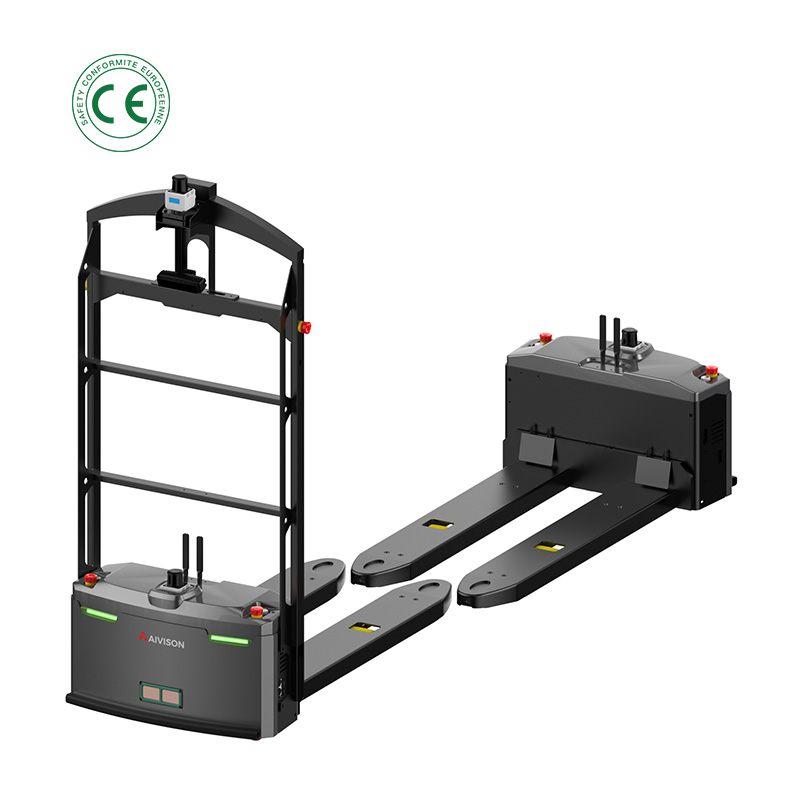
Aivison Customized 800kg Warehouse AGV Robot Lithium Battery AMR
A customized 800 kg warehouse AGV with lithium battery power for light-to-medium internal transport. A compact option for electronics, battery and assembly areas with limited turning space.
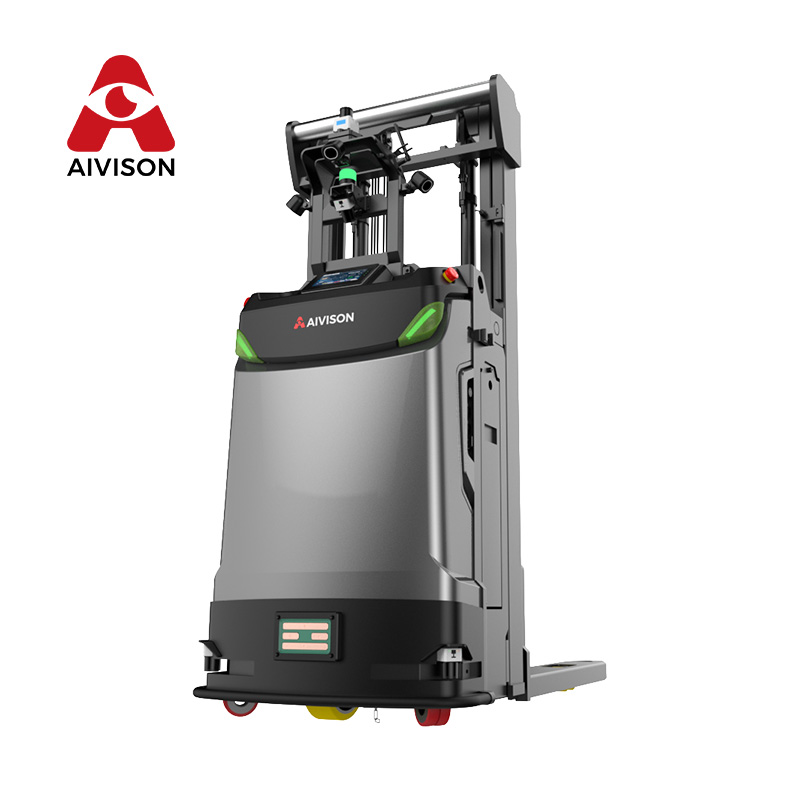
Autonomous Mobile Robots (AMR) Implement Cargo Transportation Between Warehouse and Conveyor Line
Autonomous cargo transport for warehouse-to-conveyor handover. Designed to match production line interfaces and reduce manual staging between storage buffers and conveyors.

Omnidirectional Humanoid Robot Chassis Dual 7-DOF Arms Laser SLAM Autonomous Warehouse AMR Mobile Platform
An omnidirectional humanoid AMR chassis with dual 7-DOF arms for research, flexible assembly and integrator projects. Combines laser SLAM mobility with a platform for arm-based station tasks.

New Warehouse Autonomous Cars agv Robot 2000kg Load Capacity Stacker agv Robot
A 2,000 kg autonomous stacker AGV for warehouse pallet handling. A practical upgrade path from manual counterbalance trucks where repeatable pallet pick-and-place is the priority.

Heavy Load 2000KG Load Forklift Laser Guide AMR for Warehouse Pallet
A heavy-load 2,000 kg laser-guided forklift AMR for warehouse pallets. The platform targets high-duty pallet flows and mixed traffic, with safety configuration matched to project risk assessment.

Humanoid Robot Chassis Dual 7-DOF Arms Laser SLAM Omnidirectional Navigation ROS2 Open Platform AMR
A dual 7-DOF humanoid robot chassis on an open ROS2 platform. A development and integration platform for teams testing omnidirectional navigation, arm coordination and custom end effectors.
Shenzhen-based R&D and manufacturing experience.
No magnetic tape, reflectors or floor-wide QR codes.
Across three continents, from end users to integrators.
Semiconductor, 3C, lithium battery, PV, automotive, PCB, textile and medical.
Why AMR Fleet Management Is a Local Infrastructure Decision in Dortmund
Dortmund is not a clean-sheet automation market. The city and its surrounding Ruhr logistics corridor combine Dortmund Port, steel and metal-processing heritage, machine-building suppliers, packaging plants, electronics firms and dense 3PL operations. Many sites were built around manual forklifts, overhead cranes and fixed conveyors, not around robot aisles. A useful AMR project therefore starts with a brownfield constraint survey: door widths, floor flatness, lift interfaces, fire doors, Wi-Fi dead zones, charging locations and mixed pedestrian traffic. Laser SLAM lets the robot map natural features instead of requiring magnetic tape or a QR grid across the entire route. That is why ±5 mm AMR navigation is often enough for transfer routes, while ±2 mm QR docking is reserved for the few stations where the handover truly demands it.
Fleet management is the second decision. A Dortmund buyer is rarely buying one isolated robot; they are buying transport capacity across shifts. The fleet layer must assign missions, prevent deadlocks, manage charging windows, expose task status to WMS, MES or line-side systems, and provide evidence that the safety concept works in the actual building. In tender reviews, the strongest proposals show a site map, throughput calculation, safety file and escalation plan together—not only a robot specification sheet. This is where a CE-ready AMR factory with documented navigation tiers and charging hardware becomes more valuable than a catalogue-only reseller.
Marnix supports that decision with a single engineering base for jacking robots, smart forklifts, pallet AMRs, composite robots with dual arms and intelligent charging docks. The portfolio shares a laser SLAM navigation core and fleet scheduling concept, so a Dortmund project can start with one route and scale to a mixed fleet without changing the operating logic. For local teams, the practical question is not “which robot looks most advanced?” but “which configuration can pass our safety review, connect to our line, and keep moving across three shifts?”
Dortmund fit checklist
- CE file matched to the exact top module, payload and site limits.
- Laser SLAM route design with QR assistance only at precision stations.
- Fleet sizing based on peak throughput, charging window and traffic rules.
- Interface test with WMS, MES, conveyor or existing production equipment.
- Spare-parts list, operator training and remote support plan for lifecycle uptime.
Where AMRs Fit Dortmund’s Industrial and Logistics Environment
Dortmund projects usually connect a constrained building to a high-throughput flow. These are the application patterns our engineering team sees most often when European integrators and factory teams evaluate laser SLAM AMRs.
Port and 3PL pallet staging
Dortmund Port and nearby logistics parks handle inbound pallets, containers and 3PL transfers. AMR forklifts can run repeatable dock-to-storage loops while manual trucks focus on exceptions and yard work.
Automotive and machinery line-side supply
Line-side supply in automotive and machinery plants needs predictable delivery windows. A laser SLAM fleet can deliver totes, racks or pallets on planned routes and re-route when a cell or aisle is temporarily blocked.
High-bay storage and narrow aisles
Older warehouses often cannot give up floor space for fixed guide paths. QR-assisted docking at the rack face supports high-shelf positioning while the main travel route remains free of floor codes.
Electronics and lithium battery transport
Battery and electronics sites need compact robots for clean, repetitive movement between processes. An 800 kg AMR can reduce manual pushcart traffic without changing the process layout or widening every aisle.
Conveyor, packaging and pallet handover
Where production lines already have conveyors, the robot must match the handover rather than the other way around. Roller, fork or lifting top modules connect the fleet to existing equipment and reduce manual staging.
Integrator labs and flexible assembly
System integrators in NRW use open platforms to test arms, vision and end effectors. The dual 7-DOF chassis provides a mobile base for development projects that may later become a composite AMR workcell.
Six Trends Shaping AMR Procurement in Dortmund and NRW
German buyers rarely adopt automation for novelty. They adopt it when it reduces operational risk, meets safety expectations and fits the building they already own.
Brownfield-first retrofits
Dortmund plants increasingly prefer robots that map existing infrastructure rather than trigger shutdowns, floor cutting or fixed guide-path installation. Natural-feature SLAM is becoming a procurement baseline.
CE becomes a gate, not a checkbox
As the EU transitions from the Machinery Directive 2006/42/EC to Regulation (EU) 2023/1230 from January 2027, buyers ask earlier for risk assessment, safety-function evidence and configuration-specific technical files.
Fleet management joins WMS and MES talks
Robots are no longer evaluated as standalone machines. Dortmund teams ask how dispatch, task status and exception handling will appear in their existing software landscape and who owns the interface definition.
Mixed-traffic safety in shared spaces
Older Dortmund buildings rarely have clean separation between pedestrians, manual forklifts and automated vehicles. Speed zones, scanner fields, warning lights and operator training are now reviewed together.
Energy-aware charging strategy
Multi-shift operation makes charging a planning variable, not an afterthought. Fleet size, route intensity, opportunity charging windows and dock count are calculated together to protect peak throughput.
Lifecycle support transparency
Dortmund buyers compare not only robot price but spare-parts lists, remote diagnostics, training, documentation language and escalation paths. A clear lifecycle plan is now part of the commercial evaluation.
A Practical Four-Step AMR Fleet Plan for Dortmund Projects
This sequence keeps the project grounded in site reality and prevents a robot specification from running ahead of the safety, integration and throughput case.
Site and safety survey
Collect CAD layout, aisle widths, door and lift dimensions, floor condition, Wi-Fi coverage, traffic flows, racking heights and handover points. Define the risk assessment scope before selecting a robot.
Map, route and fleet sizing
Build the laser SLAM map, set traffic rules and calculate missions per hour, cycle time, charging window and peak surges. This decides whether one platform or a mixed fleet is the correct answer.
CE file and interface test
Align the CE documentation with the exact top module and safety configuration. Test WMS, MES, conveyor, door or lift interfaces in a controlled environment before full commissioning.
Commissioning and KPI review
Train operators and maintenance teams, verify safety zones in the live building, and review uptime, mission completion and charging behavior after the first production shifts.
Example tender weighting for a Dortmund AMR project
Use this as an illustrative scorecard, then adjust the weighting to your site. It keeps safety evidence, fleet logic and local support visible alongside robot price.
Recommended Configurations by Dortmund Use Case
Select by flow, not by headline payload alone. The safest starting point is the combination that matches aisle width, docking precision, handover equipment and CE documentation scope.
Dock-to-line pallet flow
For inbound pallets, finished goods and repetitive trailer-to-rack movement, start with a CE-ready AMR forklift or heavy-load laser-guided forklift. Confirm fork entry, pallet condition and mixed forklift traffic zones.
High-bay and precise rack docking
For high-shelf storage or stations where ±2 mm docking matters, pair a 2,000 kg laser navigation reach platform with QR assistance at the rack face. Keep the main route free of floor codes whenever possible.
Conveyor and production handover
When the real bottleneck is staging between storage and a conveyor, use an AMR cargo platform with the appropriate top module. The interface test should define load present, handshake and fault behavior.
Integrator and flexible assembly platform
For NRW integrators building a composite workcell, begin with the ROS2 open platform or dual 7-DOF humanoid chassis. Plan arm safety, station calibration and cycle-time validation before scaling the fleet.
Why Marnix Is a Practical AMR Factory Partner for Dortmund Projects
Shenzhen Marnix Intelligent Technology Co., Ltd. combines AGV engineering experience, laser SLAM navigation and manufacturer-level customization for end users and system integrators.

Engineering depth from a Shenzhen AMR manufacturing base
With about ten years of AGV engineering experience, Marnix builds autonomous mobile robots that drop into existing factories with minimal disruption—for end users and for the integrators who serve them. The portfolio includes jacking robots, smart forklifts, pallet AMRs, composite robots and compatible intelligent charging docks from one source.
TÜV Rheinland onsite assessment
Company premises and operations verified through an independent onsite supplier assessment.
Supplier to Fortune 500
Procurement contract with a Fortune 500 company, assessed by independent third parties.
Verified multispecialty supplier
Low-MOQ customization and multi-category robot procurement capability for integrators.
Credit and transaction records
Transparent credit index, transaction level and trade-capacity information available for review.
Documentation and Testing That Support a Dortmund Safety Review
Reliability should be verified before shipment, not discovered on the shop floor. Marnix applies multi-stage intelligent inspections and thousands of operational stress tests to target near-zero failure rates. More than 200 manufacturers across three continents have selected our robots for production and warehouse environments.
For CE-related projects in Germany, the discussion must match the exact machine configuration. A base AMR, a forklift AMR, a jacking robot and a composite robot with an arm do not share the same risk assessment. The technical file should identify the safety functions, scanner fields, speed limits, emergency-stop strategy, load-handling limits, instructions and integration assumptions used for the final CE marking.
- Multi-stage inspection and operational stress testing before shipment.
- Safety review aligned to the intended use, route layout and top module.
- Interface validation for conveyors, doors, lifts and production equipment where specified.
- Composite robots can deliver ±0.05 mm repeatability for semiconductor and medical-device production tasks when the station and calibration are engineered for that precision.

What Dortmund Factory and Logistics Teams Ask Before Buying an AMR Fleet
These are the practical procurement questions that appear repeatedly in European AMR projects. Project-specific answers depend on layout, payload, safety scope and integration depth.
Are these AMRs CE certified for Dortmund use, and what documents are supplied?
CE certification is configuration-specific. We support a CE documentation package for the selected platform and safety configuration, which can include declaration-of-conformity information, electrical and EMC test evidence, risk-assessment inputs, user instructions and safety-function test records. When the robot is integrated with a conveyor, lift, arm or custom top module, the final assembly may require a new risk assessment by the entity placing it on the market. Dortmund buyers should request a CE file that matches the exact top module and site limits—not only the base robot.
Do we need to rebuild floors or install QR codes across the entire route?
Normally no. Laser SLAM maps natural features such as walls, pillars and fixed equipment, so the main travel route does not need magnetic tape, reflectors or floor-wide QR codes. QR labels are added only at stations where ±2 mm docking precision is needed. Floors must still be suitable for wheel loads, ramps and safe stopping distances, so a site survey remains essential.
How many AMRs do we need for a Dortmund warehouse or production building?
Fleet size is calculated from missions per hour, one-way route length, load and unload time, charging window, battery strategy and peak surge. A one-route pilot with real shift data is usually more reliable than a generic robot-count formula. The calculation should also include traffic rules at intersections, doors and handover points.
Can the fleet connect to WMS, MES, ERP or existing conveyors?
Fleet scheduling runs over indoor Wi-Fi and can coordinate multiple robots, task assignment, traffic control and charging. WMS, MES, ERP or conveyor integration scope is defined per project. To evaluate it properly, share the interface list, required data points, handshake logic, exception handling rules and who will own the integration layer.
How is safety handled in mixed pedestrian and forklift traffic?
Mixed traffic requires a site risk assessment, speed zones, safety laser scanner fields, emergency-stop strategy, warning signals and operator training. For driverless industrial trucks in Europe, projects typically reference EN ISO 3691-4 and related safety-control standards such as ISO 13849. The final validation must reflect the actual building, route and integrated top module.
What about delivery, installation and service near Dortmund?
Dortmund projects are planned with agreed logistics, commissioning scope and service responsibilities. Depending on the project, support can combine Marnix remote engineering, documentation, spare-parts planning and European integrator partners for local installation or service attendance. The commercial proposal should state exactly who performs mapping, integration, safety validation, training and first-line response.
What lead time should we expect for a CE-ready AMR configuration?
Lead time depends on payload, top module, quantity, safety configuration, documentation requirements and testing scope. A standard platform can be quoted faster than a customized forklift, jacking robot or composite arm solution. Provide the CAD layout, load profile, throughput target, docking precision and CE requirements so the factory can confirm engineering and production timing.
How do we start an AMR evaluation for a Dortmund site?
Send the layout, maximum load, rack or pallet dimensions, aisle widths, required moves per hour, docking points, Wi-Fi coverage and any existing WMS/MES/conveyor interfaces. Our engineers can then recommend a platform, navigation tier and preliminary fleet size. Use the catalogue request button on this page to begin the technical conversation.
Request a CE-Ready AMR Fleet Assessment for Your Dortmund Project
Share your CAD layout, payload, throughput, aisle width, docking precision, Wi-Fi coverage and target handover equipment. We will match the right AMR platform, navigation tier and fleet logic to your Dortmund factory, warehouse or integrator project.
Technical contact: info@marnixbot.com · Shenzhen Marnix Intelligent Technology Co., Ltd. · Room 102, Building P, No. 163 Ban Xuegang Avenue, Shenzhen, Guangdong, China.