8 Autonomous Mobile Robot Configurations for Textile Warehouse Transport
Start with the material flow, not the robot category. In textile warehouses, the highest-value transport tasks are usually fabric-roll pallets, cart-based line-side supply, carton and accessory totes, returns handling and cross-docking. The eight configurations below cover sensing, pallet transfer, lifting, stacking and custom integration so Tokyo buyers can compare a realistic shortlist.

Hot Selling Logistics Navigation Detector Sensor LiDAR
Best for integrators building a custom textile AMR: mapping, obstacle detection and natural-feature navigation. This is a sensing component, not a standalone load carrier; specify scan range and field of view against aisle width and rack density.
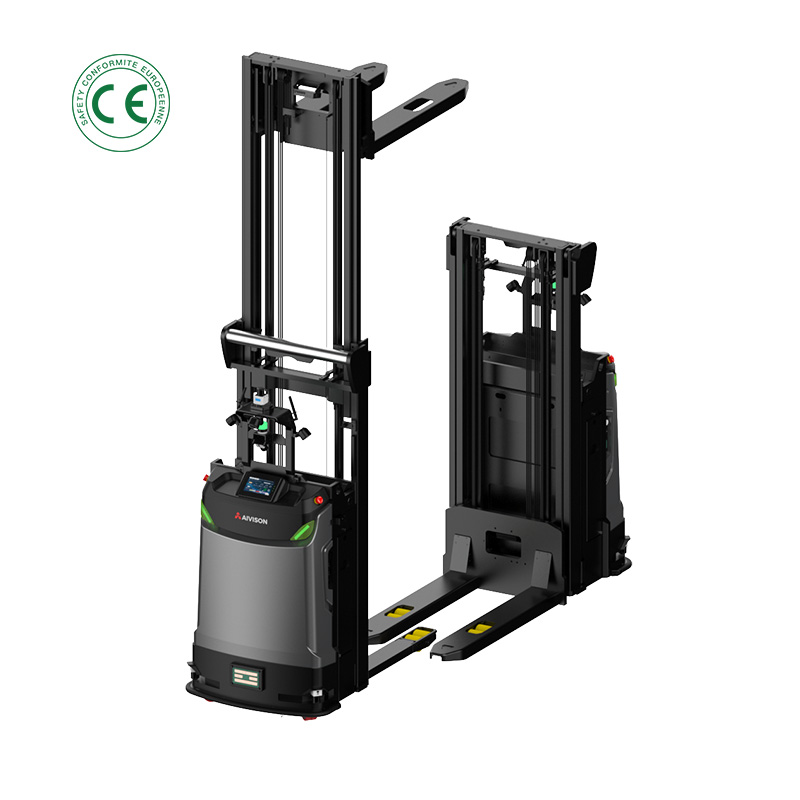
Factory AMR Robot AGV Robot Laser 2000kg Forklift AGV
Best for 2,000 kg palletized fabric rolls, cartons and 3PL receiving-to-storage moves. Use a forklift AGV when the load is already palletized and the dock-to-rack route has been surveyed for floor flatness, clearance and mixed traffic.
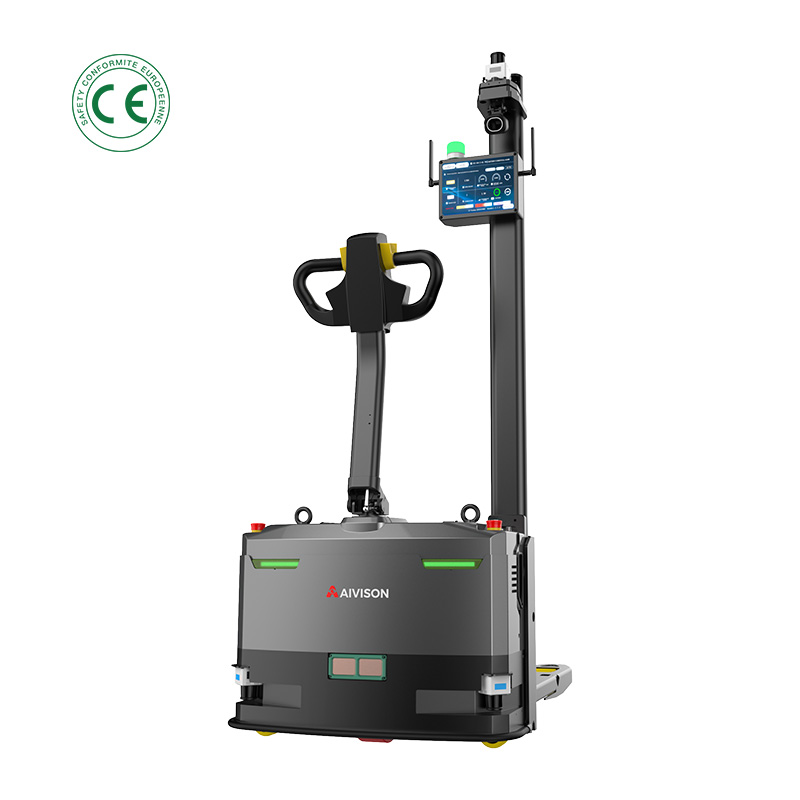
AIVISON CE Laser SLAM Navigation AGV 1500kg Warehouse Lifting
Ideal for rack and cart lifting in apparel and home-textile warehouses. Laser SLAM reaches about ±5 mm without floor tracks; add QR assist only at stations that need about ±2 mm docking precision for repeatable handover.

Omnidirectional Service Humanoid Robot Chassis Dual 7-DOF Arms
Not a primary textile transport unit. This platform is best for showroom, retail and hospitality service where customer-facing interaction supports the textile brand experience; do not select it for heavy fabric-roll logistics.

AGV AMR Autonomous Forklift Smart Version Auto Mobile Transfer Stacker
Flexible pallet transfer and stacking for mixed cartons and roll pallets. Choose this when loads vary and you want vision-assisted pallet entry without fixed tracks, while retaining a route to fleet scheduling and automatic charging.
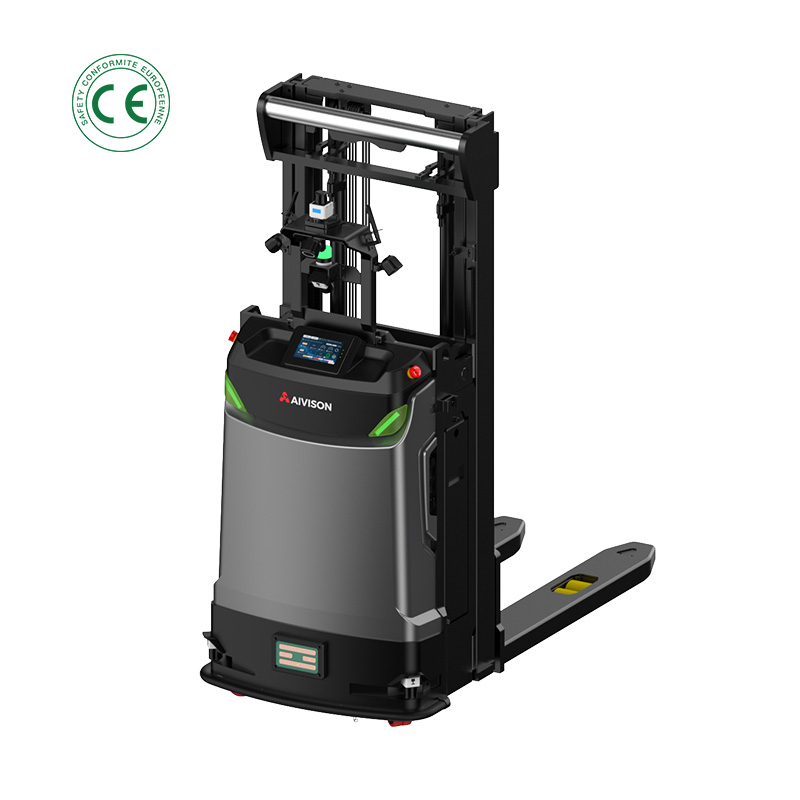
Aivison AMR Robot Vehicle Automated Warehouse Logistics
For repetitive warehouse transfer between receiving, storage and dispatch. Suited to 24/7 duty with fleet scheduling, traffic control and automatic charging; a practical choice for Tokyo 3PL sites that need a phased AMR rollout.

New Warehouse Autonomous Cars AGV Robot 2000kg Stacker
Heavy stacker AGV for floor-to-rack and pallet stacking. Compare aisle width, lift height, pallet quality and floor flatness before selection; a 2,000 kg platform is most valuable where dense roll pallets or bulk cartons dominate.
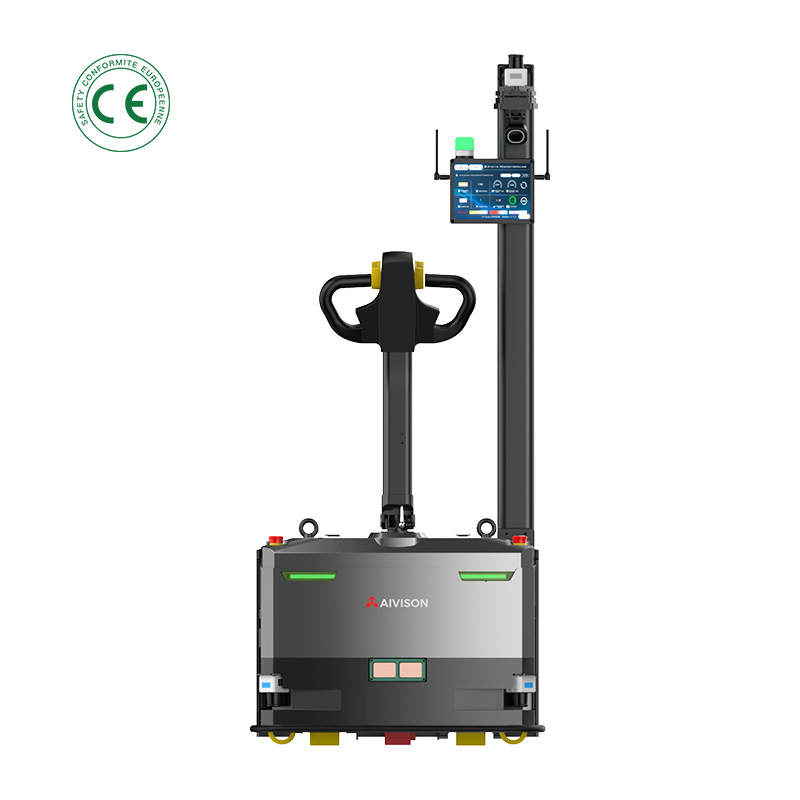
Autonomous Mobile Robot AGV CE Laser SLAM Navigation
General-purpose transport platform for mixed warehouse logistics and line-side supply. A strong candidate for phased AMR deployment in Tokyo textile warehouses because routes can be remapped without floor rework as racking or SKU flows change.
Search intent note: “manufacturers & manufacturer in Tokyo”
Buyers using this phrase often mix two intents: finding a local Tokyo supplier for fast service, and finding the most capable manufacturer for a textile-specific AMR project. The right evaluation combines both. Marnix is a Shenzhen-based manufacturer with about ten years of AGV engineering experience, exporting to end users and integrators worldwide; Tokyo buyers should use this page to benchmark the build, navigation, customization and service model before choosing a local trading partner or a direct manufacturer.
±2 mm with QR assist; ±0.05 mm composite repeatability
Shenzhen-based R&D and manufacturing experience applied to mobile robot projects.
Natural-feature navigation without magnetic tape, reflectors or floor QR codes.
Deployments across three continents, serving end users and system integrators.
From semiconductor cleanrooms to textile warehouses and medical device assembly.
Why Textile Warehouse Transport in Tokyo Requires a Different AMR Brief
Textile warehouses are not uniform boxes. Fabric rolls behave differently from cartons, hanging garments, accessory totes and returns. Tokyo adds constrained land, multi-floor buildings, narrow aisles, shared loading docks and mixed pedestrian traffic. A robot that performs well on a wide, single-floor factory floor may need a different configuration in Tokyo.
A useful starting point is to map four flows before comparing autonomous mobile robot manufacturers: receiving-to-put-away, reserve-to-pick-face replenishment, line-side or cutting-room supply, and returns or cross-dock transfer. For each flow, record pallet footprint, load weight, aisle width, floor flatness, elevator or lift interface, Wi-Fi coverage and peak throughput. This brief turns a vague “we need AMRs” request into a selection matrix that any manufacturer can quote against.
Laser SLAM is particularly relevant for Tokyo brownfield sites because it maps existing natural features and does not require magnetic tape, reflectors or floor QR codes across the entire route. That matters when the building is leased, when racking changes with seasonal apparel ranges, or when floor work would interrupt operations. QR labels can be added only at stations where precision docking matters, which keeps infrastructure cost focused on the value-critical handover points.
For Tokyo procurement teams, total cost of ownership is rarely decided by the robot alone. It is decided by route density, deadhead travel, charging uptime, response time to faults, local integrator availability and the ability to add a second robot without re-engineering the first deployment. The strongest AMR brief therefore includes a pilot success definition: missions per shift, handover accuracy, intervention rate and recovery time after an obstacle event.

Manufacturer-level engineering: mobile robot platforms, top modules and fleet software configured around real production and warehouse flows.
Where Autonomous Mobile Robots Fit in Tokyo Textile Operations
These are the application patterns most often discussed with Tokyo 3PLs, apparel distributors and fabric converters. Actual deployment depends on site survey, load data and safety review.
Fabric-roll receiving to storage
Palletized fabric rolls move from inbound inspection to reserve storage. A forklift AGV or stacker AGV reduces waiting at the dock and makes put-away timing more predictable during peak container arrivals.
Cutting-room and line-side supply
Jacking robots and lifting AGVs deliver carts or racks on a timed route. This is useful when the cutting room cannot absorb large buffers and replenishment must be small, frequent and traceable.
Multi-floor transfers
Tokyo sites often reuse multi-tenant buildings. A compact AMR can move between zones and hand over at freight elevators or lifts, provided the site survey confirms door widths, floor transitions and traffic controls.
Returns and cross-dock sortation
Apparel returns create irregular, high-mix flows. AMRs transport totes and cartons between inspection, rework and dispatch zones, reducing the distance walked by operators while keeping SKU movement visible to WMS or ERP systems.
Localized Trends Shaping Textile Warehouse Automation in Tokyo
The buying conversation in Tokyo is moving from “Can a robot move a pallet?” to “Can the system sustain throughput through labor shortages, seasonal peaks and multi-floor constraints?”
Labor availability and the 2024 logistics problem
The widely discussed 2024 logistics problem has accelerated interest in automation among Japanese distributors. In textile warehouses, repetitive transport is an early candidate because it reduces walking, forklift waiting and shift-to-shift variability without changing the core warehouse process.
High-mix, low-volume apparel and e-commerce
More SKUs, smaller replenishment lots and shorter campaign cycles favor flexible navigation. Laser SLAM lets routes change when racking, pick faces or seasonal layouts change, which is more practical than fixed-track automation in a high-mix textile environment.
Brownfield and multi-floor sites
Tokyo land constraints push automation into existing buildings rather than purpose-built warehouses. Buyers now ask for no floor rework, compact turning radii, controlled elevator handover and clear traffic rules in shared aisles with people and manual forklifts.
Serviceability, spare parts and energy cost
Procurement teams increasingly evaluate charging strategy, battery uptime, remote diagnostics and spare-parts planning alongside robot price. A lower-cost platform that blocks a dock during peak season is not lower cost in Tokyo operations.
Textile transport fit matrix
Indicative fit based on common textile logistics patterns; validate with an engineering survey.
Six Inputs That Shorten a Tokyo AMR Evaluation
From project experience, these six inputs determine most robot selection decisions. Sharing them upfront helps a manufacturer quote the right platform instead of over-specifying payload or under-sizing the fleet.
Load profile
Record maximum weight, pallet or rack footprint, load height and center of gravity. For textile rolls, also note whether rolls are palletized, boxed or carried in custom stillages.
Site layout
Provide a CAD drawing or annotated sketch with aisle widths, door clearances, slopes, floor transitions, elevator or lift points and charging locations. In Tokyo multi-floor sites, elevator handover is often the critical constraint.
Throughput target
State missions per hour, peak periods and shuttle distance. Fleet size is driven by cycle time, traffic congestion, charging windows and handover delay—not simply by the number of pallets moved per day.
Docking precision
Separate routes that are fine at ±5 mm from stations that need ±2 mm QR assist. A clear precision map prevents unnecessary floor labels and keeps the project focused on value-critical handover points.
Wi-Fi and traffic
Review access-point coverage, dead zones, roaming behavior and shared traffic with people and manual forklifts. Stable indoor Wi-Fi supports fleet scheduling, task assignment and traffic control across multiple robots.
Top module and interfaces
Define whether the robot must lift a rack, move a cart, handle a pallet, connect to a conveyor or interface with a machine. Marnix customizes chassis and top modules such as jacking units, roller conveyors, forklift forks and 6-axis arms.
Why Shenzhen Marnix Is a Credible Build Partner for Tokyo Textile Projects
Shenzhen Marnix Intelligent Technology Co., Ltd. builds laser SLAM autonomous mobile robots, jacking robots, smart forklifts, composite mobile robots and intelligent charging docks for factories and integrators worldwide. The company is not a catalogue reseller; it engineers chassis, navigation and top modules around the production or warehouse process.
About ten years of AGV engineering
Practical mobile robot experience across industrial material handling, from jacking and lifting to pallet transfer and composite robot applications.
Precision without floor rework
±5 mm laser SLAM navigation on natural features; ±2 mm with QR scanning; ±0.05 mm repeatability for composite robots with 6-axis arms.
Manufacturer-level customization
Chassis, payload and upper mechanisms can be engineered to match the line—jacking units, roller conveyors, forklift forks and robotic arms.
Fleet scheduling and charging
Robots are coordinated by an intelligent scheduling system over indoor Wi-Fi, with multi-robot dispatch, traffic control and compatible automatic charging docks.
Quality and third-party verification
Multi-stage intelligent inspections and operational stress tests target reliable uptime. The company has an onsite supplier assessment by TÜV Rheinland and is a verified supplier to a Fortune 500 company.
End users and system integrators
With more than 200 manufacturers served across three continents, Marnix supports both direct end-user projects and integrators who need reliable robot platforms and custom top modules.
TÜV Rheinland onsite assessment
Company premises and operations verified by an independent inspection body.
Supplier to Fortune 500
Procurement contract with a Fortune 500 company, assessed by independent third parties.
Verified multispecialty supplier
Low-MOQ customization and multi-category robot procurement capability for integrators.
Transparent trade records
Credit index, transaction level and trade capacity information available for review.
Common Questions from Tokyo Buyers Comparing AMR Manufacturers
These answers are written for procurement, operations and engineering teams evaluating autonomous mobile robots for textile warehouse transport in Japan.
Can a Shenzhen manufacturer support a Tokyo textile warehouse project?
Yes, provided the project is structured correctly. A Shenzhen manufacturer can supply the robot platform, navigation configuration, top module and factory testing, while a Tokyo-based integrator or the buyer’s engineering team handles local installation, Japanese-language site coordination and ongoing service. For the best result, share the site layout, load profile, throughput target, Wi-Fi coverage and docking precision before quoting. English documentation, remote engineering support and factory acceptance testing are practical ways to reduce cross-border project risk.
Which robot is best for fabric rolls, cartons and apparel carts?
There is no single “textile robot.” Palletized fabric rolls and dense cartons usually point to a 2,000 kg forklift AGV or stacker AGV. Racks and carts in cutting or line-side supply often suit a 1,500 kg lifting AGV or jacking robot. Mixed totes and general warehouse transfer may fit a general laser SLAM AMR. A dual-arm service humanoid is not appropriate for heavy textile transport; it belongs in showroom or customer-service scenarios.
Do we need to install magnetic tape or QR codes throughout the floor?
No. Standard laser SLAM navigation uses natural features and does not require auxiliary tracks, reflectors or QR codes across the route. QR labels are typically added only at specific stations where about ±2 mm docking accuracy is needed. This is particularly useful in Tokyo leased buildings or textile warehouses where racking and pick faces change with seasonal ranges.
Can AMRs work in narrow aisles and multi-floor Tokyo warehouses?
Often yes, but the site survey is critical. The evaluation must confirm aisle width, turning clearance, door and elevator dimensions, floor transitions, slope, load overhang and traffic rules around people and manual forklifts. For multi-floor buildings, the handover point at the freight elevator or lift should be designed as a controlled station rather than left to ad-hoc traffic. A compact jacking or lifting AGV is often more practical than a large forklift AGV in brownfield sites.
How should Tokyo buyers calculate AMR return on investment?
Start with transport labor hours, forklift waiting time, walking distance, shift coverage and peak-season overtime. Then model missions per hour, average route distance, charging windows, intervention rate and expected uptime. The strongest business case usually comes from stabilizing throughput and reducing non-value-added travel, not from headcount reduction alone. Include spare-parts planning, local integrator support and the ability to scale from a pilot to a multi-robot fleet.
What credentials reduce procurement risk when choosing a manufacturer?
Look for independent verification, real production experience and evidence of repeatable quality. Marnix has about ten years of AGV engineering experience, an onsite supplier assessment by TÜV Rheinland, Fortune 500 supplier status, more than 200 manufacturers served across three continents and a product range covering laser SLAM AMRs, jacking robots, smart forklifts, composite robots and charging docks. Buyers should still validate the exact configuration with a site survey and factory acceptance test.
Plan a Textile Warehouse AMR Pilot for Tokyo
Share your load profile, aisle widths, throughput target, docking precision and Wi-Fi coverage. Our engineering team will recommend a practical configuration from laser SLAM AMRs, jacking robots, smart forklifts, stacker AGVs, service robots and custom top modules.