Eight Automated Material Transfer Systems for Nakhon Ratchasima Buyers
Compare the most requested platform classes before you shortlist a supplier: light AMRs, 800 kg warehouse AGVs, 2,000 kg forklift AMRs, dual-arm mobile platforms, LiDAR sensors and service robots. The product URLs below are preserved from the original range.
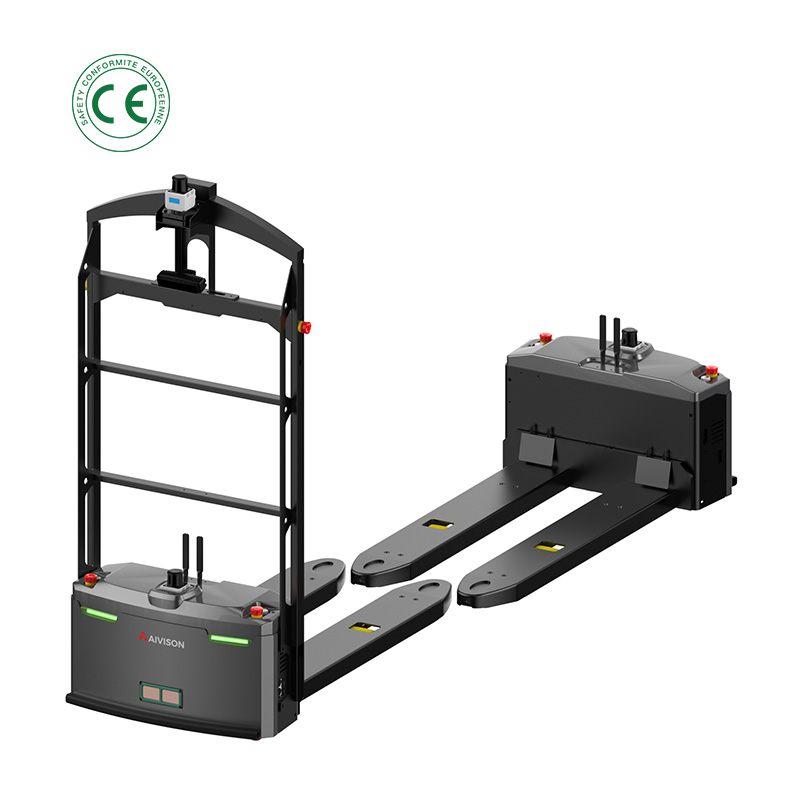
Aivison Customized 800kg Warehouse AGV Robot Lithium Battery AMR
An 800 kg-class warehouse AMR for repetitive pallet, rack and material transfer. In Korat, it fits battery, electronics and light assembly plants where skilled labor is better used on higher-value tasks.
View product details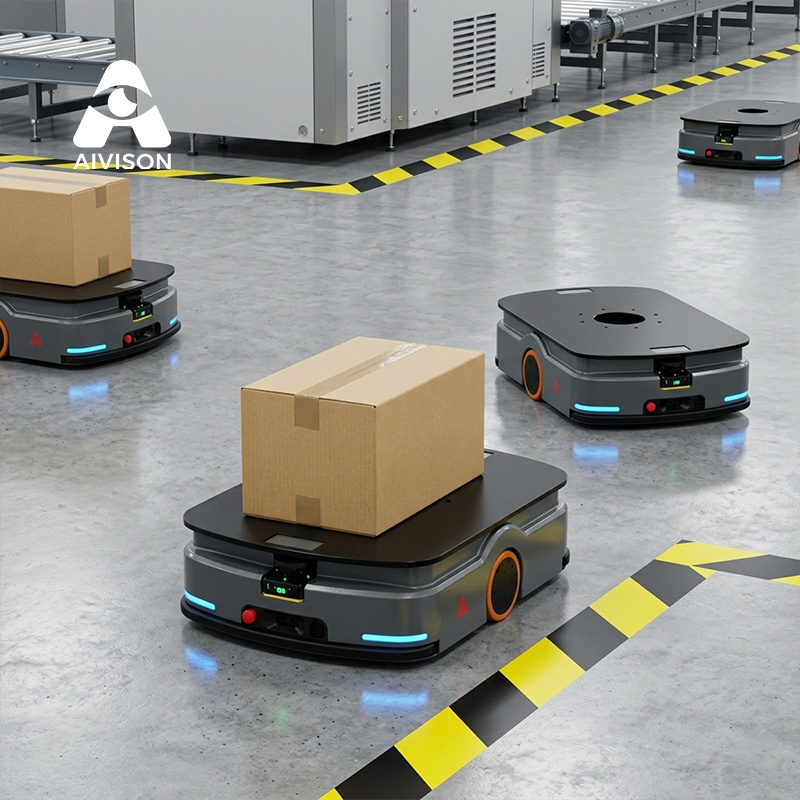
Autonomous Mobile AMR Robot 300kg Payload Laser Guided AGV for Carry Goods in Factory
A compact 300 kg laser-guided factory AMR for narrow aisles, line-side replenishment and finished-goods transfer in food packaging, automotive parts and 3C electronics operations in Nakhon Ratchasima.
View product details
Omnidirectional Humanoid Robot Chassis Dual 7-DOF Arms Laser SLAM Autonomous Warehouse AMR Mobile Platform
An advanced mobile manipulation platform for semiconductor, medical device and research environments. Dual 7-DOF arms and omni-directional movement support precise station handover and flexible process design.
View product details
Warehouse Stacker CE Forklift AGV 800kg Load Capacity Light AMR Pallet
An 800 kg pallet stacker AMR for light warehousing, distribution centres and cross-dock operations. It is a practical first automation step for Korat 3PLs facing repeated pallet put-away and retrieval.
View product details
Heavy Load 2000KG Load Forklift Laser Guide AMR for Warehouse Pallet
A 2,000 kg forklift AMR for heavy pallet flows. Suitable for building materials, agro-processing, cement distribution and manufacturing warehouses where safety and repeatability matter more than raw speed.
View product details
Hot Selling Logistics Navigation Detector Sensor Lidar Manufacturers Direct Sales
A LiDAR navigation and detection component for integrators building local automated material transfer projects. Direct manufacturer supply helps wholesalers and system integrators control BOM cost and spare-part planning.
View product details
Warehouse Robot Robotics 2000KG CE Warehousing Automatic Forklift Stacking AGV
A 2,000 kg automatic stacking AGV for high-bay and dense warehouse operations. It supports automated put-away and retrieval where aisle discipline, load stability and docking precision are critical.
View product details
Omnidirectional Service Humanoid Robot Chassis Dual 7-DOF Arms Laser SLAM Navigation for Hospitality and Retail
A service-oriented mobile platform for hospitality, retail, healthcare and customer-facing environments. Laser SLAM navigation and dual-arm potential help local operators test service automation beyond the factory floor.
View product detailsWhy Nakhon Ratchasima Procurement Teams Benchmark Marnix
Automated material transfer is a long-life asset, not a one-off cart purchase. The numbers below summarise the engineering, precision and installed-base context that matter during supplier due diligence.
Years of AGV engineering
Shenzhen-based R&D and manufacturing experience across mobile robot platforms.
Laser SLAM navigation
Trackless positioning without tape, reflectors or floor QR codes in standard operation.
Manufacturers served
End users and integrators across three continents, from cleanrooms to distribution centres.
Core industries supported
Semiconductor, 3C, lithium battery, PV, automotive parts, PCB, textile and medical devices.
Automated Material Transfer in Nakhon Ratchasima Is a System Decision
Nakhon Ratchasima, commonly called Korat, is a strategic gateway to Thailand’s Northeastern Isan market and the greater Mekong trade corridor. The province combines food and agro-processing, automotive parts, electronics, building materials, cold chain, retail distribution and growing warehouse capacity along the Mittraphap Highway. For procurement teams, the supplier decision is rarely just about a robot price. It is about whether material can move reliably from receiving to storage, from storage to line-side, and from line-side to dispatch without adding hidden infrastructure cost.
Search demand reflects this complexity. Buyers search for automated material transfer suppliers in Nakhon Ratchasima, AGV wholesalers in Korat, AMR prices in Thailand, smart forklift distributors, jacking robot integrators and LiDAR sensor suppliers. Each phrase implies a different intent. A 3PL operator wants fleet uptime and spare-part response. A food factory wants hygienic, repeatable pallet movement. An electronics manufacturer wants ±2 mm docking and clean integration with production equipment. A wholesaler wants stable OEM supply, documentation and margin protection.
The most efficient procurement path is to compare a manufacturer-direct platform against trading-company offers using the same load profile, layout, throughput and precision requirements. This prevents a low purchase price from becoming a high life-cycle cost through proprietary parts, weak fleet software or time-consuming floor modifications.
Three buyer intents to separate before you send an RFQ
- “Supplier near me”: prioritise commissioning support, spare-part planning, Thai-language documentation and response time.
- “Wholesale price”: compare payload class, battery strategy, charging ratio, software licences and OEM top-module cost, not just unit price.
- “Integration partner”: verify PLC handover, Wi-Fi fleet scheduling, safety routines and mechanical interfaces with conveyors, racks or machines.
Where Automated Material Transfer Pays Back in Nakhon Ratchasima
Deployment success depends on matching the robot platform to the local process. These are the six application clusters most relevant to Korat’s manufacturing, logistics and service economy.
Cassava, sugar, rice and feed processing
Seasonal peaks and repetitive bag or pallet handling create clear automation cases. AMRs can move raw materials, packaging and finished goods between processing, storage and loading zones while reducing forklift traffic in shared areas.
Automotive parts and 3C electronics
Line-side replenishment, kitting and finished-goods transfer demand repeatability. The 300 kg and 800 kg AMR classes fit narrow aisles; optional QR assist brings docking precision to ±2 mm where machine or rack handover is unforgiving.
Warehousing and 3PL distribution
Korat’s distribution role makes cross-docking, put-away and replenishment high-value targets. Heavy-load 2,000 kg forklift AMRs and 800 kg stackers can support pallet movement while fleet software coordinates traffic and charging.
Building materials and heavy distribution
Cement, tile, steel and construction-material warehouses handle dense, heavy loads. A 2,000 kg AMR reduces unsafe manual forklift interaction and stabilises repetitive put-away, but only after aisle, floor and load-centre checks are completed.
Cold chain and retail distribution
Cold storage and retail replenishment require battery planning, condensation control and service access. AMRs can remove repeated short-distance trips from workers, but the charging strategy and enclosure specification must be agreed before purchase.
Hospitality, healthcare and service
Hotels, retail stores and hospitals in Nakhon Ratchasima can pilot service robots for delivery, guidance and customer engagement. A dual 7-DOF platform is best treated as an innovation project with clear tasks, safety rules and service KPIs.
Six Market Trends Reshaping Automated Material Transfer Procurement in Korat
The Nakhon Ratchasima market is not adopting automation in a vacuum. Labor, logistics, energy and supplier-verification trends should all influence the specification you approve.
Labor cost and skills pressure
Factories and warehouses face more competition for skilled forklift and material-handling staff. Automation is increasingly evaluated as a retention and safety strategy, not only a headcount reduction tool.
Isan gateway and CLMV logistics
Nakhon Ratchasima’s road and rail links make it a natural distribution node for Isan and nearby cross-border trade. Multi-site warehouses need scalable fleet software and repeatable deployment standards.
High-mix, high-variation production
More factories are handling frequent product changes. Trackless laser SLAM makes route changes faster than fixed conveyors or floor markers, but station precision still needs a separate engineering decision.
Energy and charging readiness
Thai facilities generally plan around 220–240 V / 50 Hz supply, but robot charging docks need a dedicated review of circuit capacity, location, safety and charging-to-working ratio. Battery strategy affects fleet size more than brochures admit.
Safety in mixed traffic
AMRs must share space with people, reach trucks, pallet jacks and visitors. Dynamic obstacle avoidance, zone rules, warning audio and traffic control should be demonstrated during evaluation, not assumed from a datasheet.
Supplier verification and after-sales
Buyers increasingly check third-party assessment, trade history, spare-part lists and software support before signing. A wholesaler without engineering depth can slow down integration when production equipment interfaces change.
A Six-Point RFQ Checklist for Nakhon Ratchasima Factory and Warehouse Teams
From project experience, these six inputs determine most of the robot selection. Sharing them upfront shortens evaluation from weeks to days and gives suppliers a fair basis for comparison.
Load profile and load centre
Record maximum weight, rack or pallet footprint, centre of gravity and load stability. A 2,000 kg rating is not automatically suitable if the load is wide, tall or unstable.
Mission throughput and peaks
Calculate missions per hour, distance per mission and peak concurrency. Fleet size depends on mission time plus charging ratio, not simply on how many aisles exist.
Station precision map
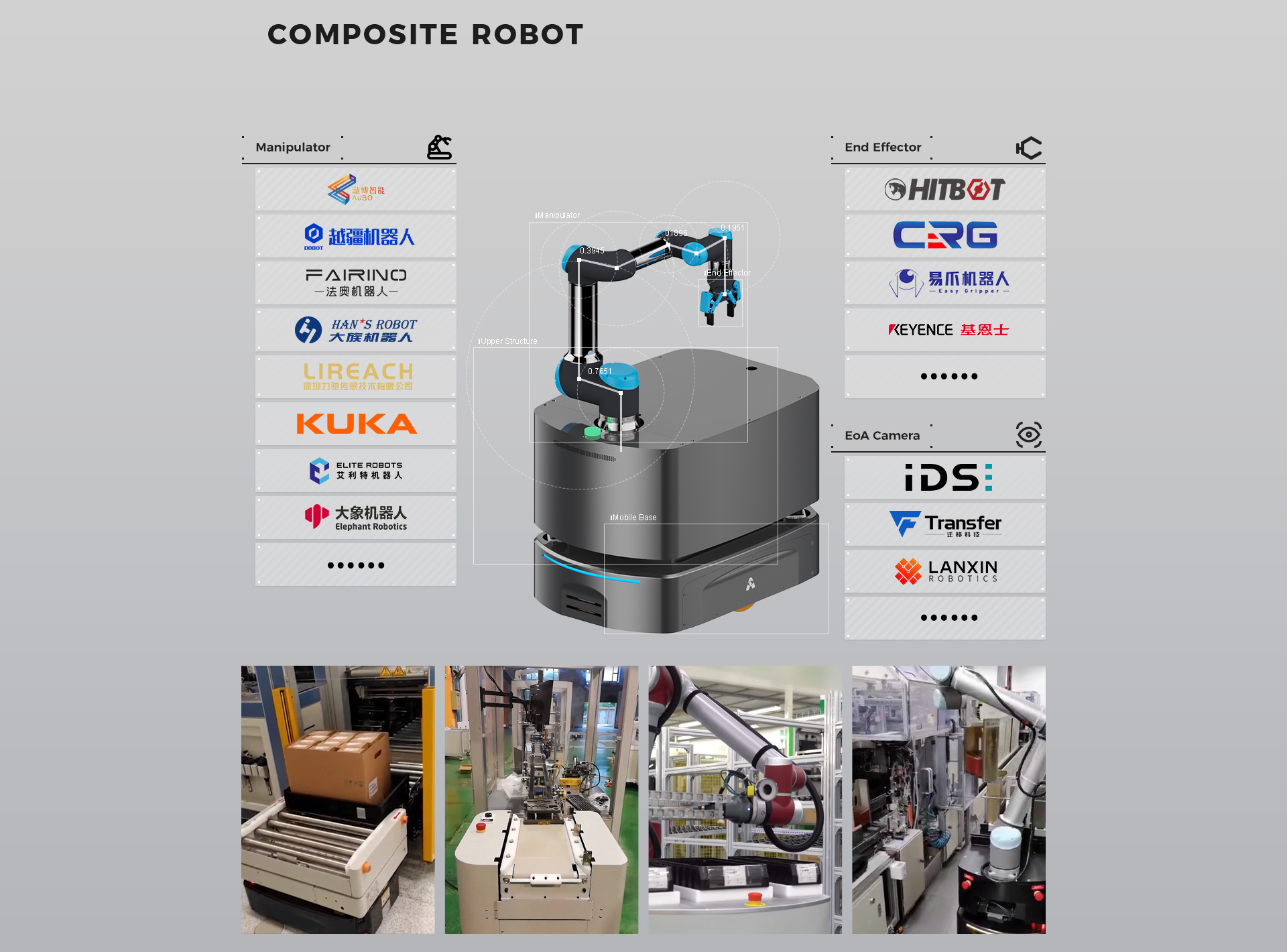
Mark which stations need ±5 mm navigation, where ±2 mm QR docking is required, and whether a composite arm at ±0.05 mm repeatability is justified. Over-specifying raises cost.
Floor, Wi-Fi and charging readiness
Review floor flatness, slope, aisle width, door transitions, lift interfaces and Wi-Fi coverage. Charging dock locations should be planned around work zones, not squeezed into unused corners.
Equipment interface and top module
List conveyors, machines, racks or shelves that the robot must hand over to. Jacking units, roller conveyors, forklift forks and 6-axis arms should be specified as part of the process.
Service, spare parts and contract clarity
Agree warranty scope, spare-part list, remote support, response time, training, software updates and acceptance criteria before shipment. This is especially important for first-time automation buyers.
Match Precision to the Station, Not the Sales Brochure
Laser SLAM, QR-assisted docking and composite-arm repeatability solve different problems. Use the precision ladder below to avoid unnecessary floor infrastructure cost.
A Shenzhen AMR Manufacturer Built Around Real Production Lines
Shenzhen Marnix Intelligent Technology Co., Ltd. draws on about ten years of AGV engineering experience to build autonomous mobile robots that enter existing factories with minimal disruption. That matters for Nakhon Ratchasima buyers because local operations often need a practical retrofit path rather than a full greenfield rebuild.
Manufacturer-direct portfolio
Jacking robots, smart forklifts, pallet AMRs, composite robots and intelligent charging docks from one engineering source.
Precision without floor rework
±5 mm laser SLAM without tracks or QR codes; QR scanning upgrades to ±2 mm where docking demands it; composite robots reach ±0.05 mm repeatability.
Custom top modules
Manufacturer-level customization of chassis, payload and top mechanisms such as jacking units, roller conveyors, forklift forks and 6-axis arms.
Fleet coordination and charging
An intelligent scheduling system coordinates robots over indoor Wi-Fi with traffic control and automatic charging through compatible smart docks.

Supplier Due Diligence Before You Buy in Thailand
For cross-border procurement, verification matters. These credentials help Nakhon Ratchasima buyers and wholesalers assess whether a supplier has the engineering depth and trade record to support a multi-year automation investment.
TÜV Rheinland onsite assessment
Company premises and operations have been assessed by an independent inspection body.
Fortune 500 supplier
Procurement history and trade records support independent verification before commitment.
Multi-stage quality protocol
Intelligent inspection and operational stress testing target high uptime before shipment.
Global installed base
200+ manufacturers served across three continents, including end users and system integrators.
Automated Material Transfer FAQs for Nakhon Ratchasima Buyers
These are the questions local factories, warehouse operators, wholesalers and integrators ask most often when comparing suppliers.
Are automated material transfer suppliers available for Nakhon Ratchasima projects?
Yes, but the market is usually served through three channels: manufacturer-direct suppliers, regional distributors and system integrators. For Korat projects, the best approach is to evaluate the manufacturer’s engineering depth together with the local integrator’s commissioning capability. Marnix supports buyers as a manufacturer with AMR, AGV, smart forklift and top-module customization.
What is the difference between an AMR wholesaler and a manufacturer?
A wholesaler typically focuses on supply, pricing and stock availability. A manufacturer controls chassis design, navigation software, top-module integration and quality testing. For simple purchases, a wholesaler may be sufficient; for production-line integration, a manufacturer-direct route usually gives clearer technical accountability and a more stable spare-part path.
Do AMRs require floor tracks or QR codes in a Korat factory?
No. Standard laser SLAM navigation maps the existing environment and operates without magnetic tape, reflectors or floor QR codes. QR labels are added only at stations where ±2 mm docking precision is needed. This is useful where production layouts change or where construction disruption must be minimized.
Which navigation accuracy should I choose?
Use ±5 mm laser SLAM for general transfer, line-side delivery and warehouse movement. Add a QR camera for ±2 mm docking at high-shelf, machine or rack handover points. Choose a composite robot with a 6-axis arm at ±0.05 mm only when the assembly process truly requires sub-millimetre repeatability.
Can the robots be configured for Thailand’s 220–240 V / 50 Hz power?
Charging dock specification should be reviewed project by project. Buyers should confirm supply voltage, circuit capacity, plug type, earthing, charger location and safety requirements. Marnix engineering can review charging strategy as part of the deployment plan so the fleet’s charging-to-working ratio is correctly sized.
How many robots do I need for a warehouse in Nakhon Ratchasima?
Fleet size is calculated from missions per hour, average travel distance, docking time, charging time and peak concurrency. A simple aisle count is not enough. A practical supplier should ask for load profiles and throughput targets before quoting a number of robots.
Can Marnix customize top modules for my production line?
Yes. Marnix customizes chassis and top modules such as jacking units, roller conveyors, forklift forks and 6-axis robotic arms. This allows the robot to connect directly with production equipment instead of forcing the line layout to match a standard robot platform.
How are multiple robots coordinated in the same area?
Robots are managed by an intelligent scheduling system over indoor Wi-Fi, enabling simultaneous task assignment, traffic control and automatic charging with compatible smart charging docks. Buyers should still validate Wi-Fi coverage and dead zones during site surveys.
What after-sales support should a Thai buyer request?
Request a spare-part list, warranty terms, remote support process, training plan, software update policy and acceptance test criteria. If you work with a local integrator, define who handles mechanical service, electrical checks, software networking and emergency response.
How do I start a project evaluation for Nakhon Ratchasima?
Prepare your load profile, layout drawing, throughput target, station precision needs, Wi-Fi coverage and equipment interface list. Share them with the supplier and ask for a proposed robot mix, charging strategy, top-module concept and acceptance plan. You can use the Contact Us button below to begin the live inquiry.
Request a Nakhon Ratchasima Project Evaluation
Share your payload, floor layout, throughput, docking precision and top-module requirement. Marnix engineers can recommend an AMR, AGV, smart forklift or composite robot configuration for your Korat factory, warehouse or integration project.