AMR Charging Station Factories & Suppliers Serving Surabaya
Laser SLAM autonomous mobile robots, jacking robots, smart forklifts and intelligent charging docks engineered for Surabaya warehouses, 3PL hubs, laboratories and East Java production lines.
Eight AMR Platforms for Surabaya Warehouses and Production Lines
An AMR charging station is only as effective as the robot fleet it supports. For Surabaya buyers, the practical question is not simply which factory sells a charger, but which supplier can align charging docks, lithium battery strategy, navigation precision, top modules, fleet scheduling and after-sales response with the realities of an East Java operation. These eight platforms are high-intent starting points for quotation and site-fit review.

Humanoid Robot Chassis Dual 7-DOF Arms Laser SLAM Omnidirectional Navigation ROS2 Open Platform AMR
For AI labs, integrator pilots and advanced electronics R&D moving from fixed cells to mobile manipulation. Omnidirectional drive, dual 7-DOF arms and laser SLAM support rapid mapping without floor tape.

Warehouse Robot Robotics 2000KG CE Warehousing Automatic Forklift Stacking AGV
A 2,000 kg CE-marked stacking AGV for pallet handling where payload and stability matter. Recommended for 3PL warehouses, automotive parts distribution and block storage around Tanjung Perak, SIER and Sidoarjo.

Customizable 1500KG Traction Capacity AGV Autonomous Mobile Robot Amr with Lidar Guided Sensor
A 1,500 kg traction AMR with LiDAR-guided navigation for tow trains, cart sequencing and heavy work-in-process transfer. Useful when factories need flexible routes between staging, production and dispatch without cutting the floor.

Omnidirectional Mobile Manipulator AMR Dual 7-DOF Arms ±0.03 mm Repeatability Laser SLAM Humanoid Robot Base
A dual 7-DOF mobile manipulator with high repeatability at the arm level. Recommended for precision machine tending, inspection and assembly support where the mobile base must dock repeatedly at one station.

AI-Ready Humanoid Robot Chassis Dual 7-DOF Arms Omnidirectional Drive ROS2 Laser SLAM Open Development Platform
An AI-ready humanoid chassis for development teams that need ROS2, omnidirectional drive and laser SLAM in one open platform. A practical way for Surabaya integrators to prototype automation services before committing to a full line.

Omnidirectional Humanoid Robot Chassis Dual 7-DOF Arms Laser SLAM Autonomous Warehouse AMR Mobile Platform
An omnidirectional humanoid AMR base for warehouse research, mixed-traffic testing and pilot deployments. Gives integrators a stable mobile platform for arms, sensors and application-specific top modules.
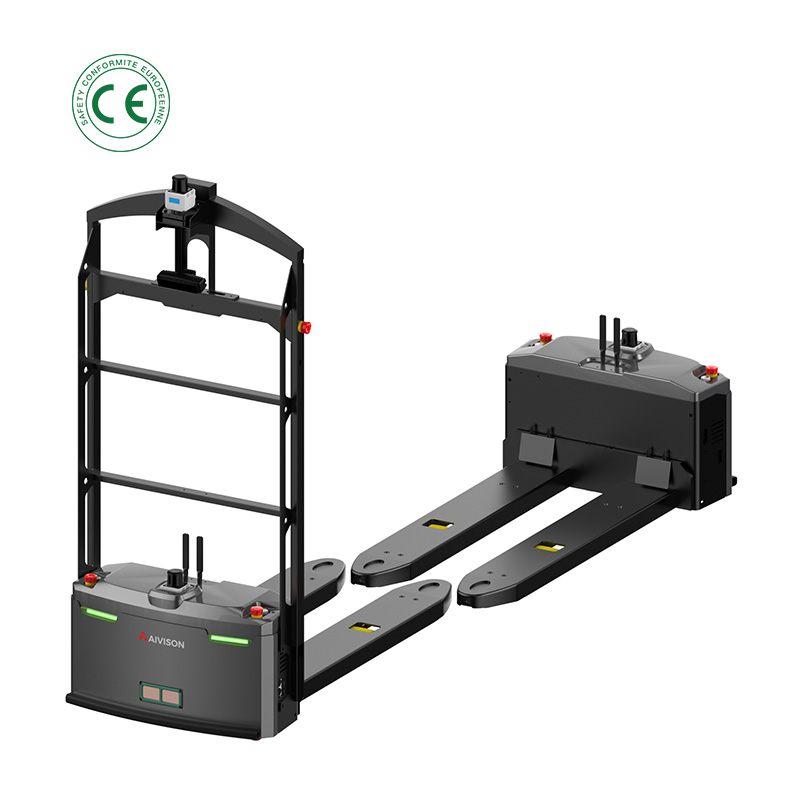
Aivison Customized 800kg Warehouse AGV Robot Lithium Battery AMR
An 800 kg customized warehouse AGV with lithium battery power for compact pallet and container movement. Suitable for electronics, consumer goods and distribution centers with narrow aisles and frequent route changes.

Hot Selling Logistics Navigation Detector Sensor Lidar Manufacturers Direct Sales
A LiDAR sensor option for logistics navigation, mapping and obstacle detection. Ideal for integrators building their own AGV/AMR or adding a second sensor layer to a fleet operating in mixed traffic.
Not sure which platform matches your load, aisle width, floor condition or docking precision? Send a short requirement brief and our engineers will recommend a starting configuration.
Get a QuoteWhy AMR Charging Station Choices Define Uptime in Surabaya
Charging is often delayed until after robot selection, yet it determines real fleet availability. A robot that stops for long overnight charging needs more units to hit the same throughput as a fleet using opportunity charging at natural handover points.
Opportunity charging, not guesswork
Short stops at receiving, line-side staging, lift lobbies or dispatch keep batteries in a healthy state of charge without pulling robots out of service for long periods. The right number of docks comes from missions per hour, average dwell time, charger output and battery capacity.
Power and heat readiness
Surabaya’s tropical climate makes charger placement important. Leave ventilation clearance, keep chargers out of direct sun and away from dust-heavy loading areas, and confirm electrical design with a local licensed contractor. Marnix supplies export-ready configurations and recommends protection settings per project.
Fleet scheduling and auto charging
Marnix robots are coordinated by an intelligent scheduling system over indoor Wi-Fi, enabling simultaneous task assignment, traffic control and automatic charging with compatible smart charging docks. This turns charging from a manual routine into part of the fleet’s daily throughput plan.
Where AMR Charging Stations and Mobile Robots Fit in Surabaya
Surabaya is not a single market. It is a port city, an industrial gateway and a dense urban logistics environment. That creates different AMR duties within a 30–50 km radius, from Tanjung Perak to SIER, Rungkut, Sidoarjo and Gresik.
Port-adjacent 3PL and distribution
Around Tanjung Perak, warehouses face variable inbound timing and mixed pallet types. AMR tow tractors and 800–1,500 kg platforms can move pallets and cartons between receiving, staging and dispatch without fixed conveyors. Charging docks should sit near handover zones where robots already dwell.
SIER and Rungkut electronics
Electronics and PCB operations need clean, repeatable transfer with limited floor disruption. Laser SLAM maps existing aisles; QR assist can raise docking to ±2 mm at test and assembly stations. Compact 800 kg AGVs and 1,500 kg traction robots are typical starting points.
Sidoarjo and Gresik automotive parts
Automotive suppliers often run high-mix production with heavy totes and sequenced lines. A 2,000 kg stacking AGV or 1,500 kg traction AMR can link warehouse, kitting and line-side stations, with opportunity charging scheduled around shift changes.
Food, beverage and consumer goods
Fast-moving consumer goods warehouses need predictable replenishment and dispatch. AMR pallet movement can reduce forklift travel in shared aisles; charger placement should avoid washdown zones and dusty loading bays unless the project has been reviewed for ingress protection.
Textile and general manufacturing
Textile and light manufacturing environments often have long aisles, changing layouts and mixed manual traffic. Trackless laser SLAM avoids floor reconstruction, while fleet scheduling manages intersections, narrow doors and shared pedestrian zones.
Lithium battery, PV and medical devices
Higher-value production demands traceable, repeatable handling. Composite mobile robots with 6-axis arms and roller modules can support precision assembly, inspection and clean transfer. Verify ESD, cleanliness and temperature requirements before selecting a top module.

Surabaya Automation Trends Shaping AMR and Charger Decisions
Procurement teams in East Java are moving from stand-alone automation demonstrations to fleet-level decisions. The winners are the projects that model charging, navigation and service support before placing a purchase order.
From fixed conveyors to flexible fleets
As product mixes shorten, fixed conveyors become expensive to relocate. AMR fleets with trackless laser SLAM can be remapped when a line changes. For Surabaya manufacturers, this flexibility is valuable when contracts shift between models or export destinations.
Opportunity charging and smaller batteries
Instead of buying robots with oversized batteries and long charge windows, buyers increasingly design opportunity charging into handover points. This can reduce fleet size and charger footprint, but it requires accurate mission data and a supplier who can model dwell time.
ROS2, LiDAR and integrator ecosystems
Surabaya’s system integrators and engineering teams are becoming more comfortable with ROS2, LiDAR mapping and open platforms. AI-ready humanoid chassis and mobile manipulators allow local developers to build applications on top of proven base hardware rather than starting from a complete custom machine.

Factory-Direct Engineering for Surabaya, Not Catalogue-Only Supply
Shenzhen Marnix Intelligent Technology Co., Ltd. draws on about ten years of AGV engineering experience to build mobile robots that drop into existing factories with minimal disruption. That matters in Surabaya because charging docks, top modules, fleet scheduling and safety logic are validated together rather than sourced from disconnected vendors.
Marnix serves more than 200 manufacturers across three continents, supports both end users and system integrators, and supplies robots for semiconductor, 3C electronics, lithium battery, photovoltaic, automotive parts, PCB, textile and medical device production. Its premises have been assessed onsite by TÜV Rheinland, and it holds a procurement contract with a Fortune 500 company, assessed by independent third parties.
Get a QuoteComplete robot and charger ecosystem
Jacking robots, smart forklifts, pallet AMRs, composite robots and compatible intelligent charging docks from one source.
±5 mm laser SLAM navigation
Trackless positioning on natural features, with no magnetic tape, reflectors or floor QR codes required for standard routes.
±2 mm QR-assist docking
Add a QR scanning camera only at high-shelf, lift or precision stations where ±2 mm handover precision is needed.
Composite and arm-level precision
Dual-arm platforms reach ±0.03 mm repeatability in the featured product, while composite robot configurations are engineered for ±0.05 mm repeatability.
Wi-Fi fleet scheduling
Intelligent scheduling over indoor Wi-Fi coordinates simultaneous task assignment, traffic control and automatic charging.
Manufacturer-level customization
Chassis, payload, jacking units, roller conveyors, forklift forks and 6-axis arms can be engineered around your production interface.
Verified credentials and quality
TÜV Rheinland onsite assessment, Fortune 500 supplier status and multi-stage quality inspections before shipment.
Export-ready support for Surabaya
Project documentation, packaging, spare parts planning and commissioning sequence aligned with shipment to Tanjung Perak and local integrator schedules.
Match Charging and Navigation Precision to Each Surabaya Station
Over-specification is common. Use this matrix to separate where standard SLAM is sufficient from where QR assist or arm-level repeatability is genuinely needed.
±5 mm Laser SLAM
Best for most warehouse transfer, line-side delivery and route changes. No tape, reflectors or floor QR codes for standard navigation.
±2 mm QR assist
Add QR labels only at high-shelf, lift or precision docking points. Keeps most of the route trackless while improving station handover.
±0.03–0.05 mm robot arm
Composite and dual-arm platforms for precision assembly, machine tending and inspection. Calibrate at station level and validate the full workcell.
Marnix will confirm the right accuracy level with a site survey, docking audit and throughput model—not a generic specification sheet.
Get a QuoteFrom Site Survey to Commissioning in Surabaya
A disciplined six-step process keeps robot selection, charging dock placement and local site readiness aligned from the first meeting.
Site and power survey
Share CAD layout, aisle widths, floor condition, 230 V/50 Hz supply points and proposed charger locations. Confirm heat, humidity and dust conditions.
Mission and throughput model
Provide loads, trips per hour, peak periods and handover points. This sets robot count, battery strategy and the opportunity-charging window.
Map and route design
Laser SLAM maps existing features with no track or reflector installation. Restricted zones, doors, lifts and traffic rules are configured for the site.
Docking precision audit
Decide which stations need ±5 mm, ±2 mm QR assist or arm-level repeatability. Only those stations require extra fixtures or labels.
Charging dock and Wi-Fi validation
Place docks at natural dwell points, verify Wi-Fi coverage and validate traffic rules before the first autonomous production run.
Training, handover and support
Operators and maintenance staff are trained on daily checks, fault escalation and safe manual recovery. Export documentation and spare parts planning are agreed before shipment.
Questions Surabaya Buyers Ask About AMR Charging Stations
Straight answers from a factory-direct mobile robot supplier, written for procurement, operations and system integrator teams evaluating East Java deployments.
Are Marnix AMR charging stations compatible with 230 V/50 Hz power in Surabaya?
Marnix configures charging equipment for the project’s electrical supply, and we commonly plan for 230 V/50 Hz in Indonesia. Final compatibility, earthing and protection must be confirmed by a local licensed electrical contractor. We provide charger input requirements, power budgets and recommended protection settings for verification.
How many charging docks will our warehouse need?
It depends on missions per hour, route length, battery capacity, charger output and dwell time at handover points. A two-shift 3PL warehouse with many short trips may use opportunity charging and fewer docks; a heavy 2,000 kg stacking operation may need a different ratio. We model the numbers from your throughput data.
Can AMRs handle heat, humidity and dust in East Java?
The base robots are engineered for industrial environments, but charger and robot placement still matters. Avoid direct sun, provide ventilation clearance, keep dust-heavy areas under review and confirm ingress protection needs. For washdown, cold-chain or high-dust zones, the project should be reviewed before configuration.
Do we need to modify the floor or install QR codes everywhere?
No. Standard laser SLAM uses natural features, so no tape, reflectors or floor QR codes are required for general navigation. QR labels are only added at stations where ±2 mm docking is needed. This keeps most of the route flexible if your Surabaya layout changes.
What is the lead time and shipping route to Surabaya?
Lead time depends on the platform, customization and charger quantity. Shipments typically move from Shenzhen to Tanjung Perak by sea, with export documentation prepared for the project. We confirm Incoterms, packaging, spare parts and commissioning sequence in the quotation so your local team can plan site readiness.
Do you provide installation and after-sales support in Surabaya or East Java?
Support is arranged by project scope. We provide remote engineering, documentation and commissioning guidance, and can coordinate on-site support with local partners or our team depending on the deployment. Spare parts, training and service response expectations are agreed before shipment.
Can Marnix customize top modules for our production line?
Yes. As a manufacturer, Marnix customizes jacking units, roller conveyors, forklift forks, 6-axis arms and other top modules to connect with production equipment. Share your handover height, load interface, cycle time and safety requirements; we will recommend whether a standard platform or engineered configuration is the better fit.
How do we calculate ROI and start a quote?
Build a simple model around labor hours saved, forklift utilization, space release, safety incidents, throughput and energy. Then add charger count, battery strategy, integration and service costs. Send your load profile, layout, throughput target and docking precision to start a factory-backed evaluation.
Request a Factory-Backed AMR Charging Station Proposal for Surabaya
Send your load profile, floor layout, throughput target and docking precision. Our engineers will recommend the right robot platform, charging dock count and customization path for your Surabaya or East Java project.