AGV Stacker Factories & Wholesalers in Louisville
A 2026 buyer’s guide to autonomous forklifts, pallet AMRs, stacker AGVs, local material-flow applications, wholesale sourcing, and factory-direct engineering for Louisville warehouses, 3PLs, and manufacturers.
8 AGV Stacker & Pallet AMR Products for Louisville Buyers
Louisville procurement teams usually need more than a generic stacker. The right shortlist depends on load weight, aisle width, docking precision, fleet size, WMS handshake, and whether a local integrator will support commissioning. These eight products cover heavy pallet handling, laser SLAM navigation, CE-certified warehouse automation, light stackers, lidar sensing, and advanced composite AMR platforms.

Heavy Load 2000KG Load Forklift Laser Guide AMR for Warehouse Pallet
Best for dense pallet movement, trailer-to-staging transfer, and heavy warehouse flows where a 2,000 kg load profile is common.
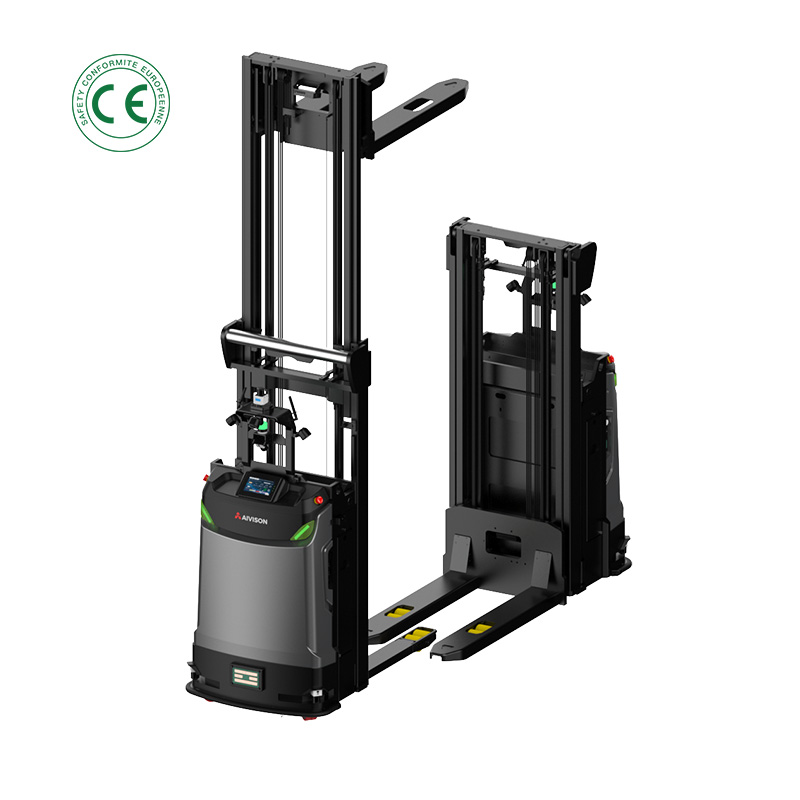
Factory AMR Robot AGV Robot Laser 2000kg Forklift AGV for Industrial Material Handling
A strong fit for Louisville manufacturing plants that need repeatable line-side delivery and pallet transfer without fixed tracks.
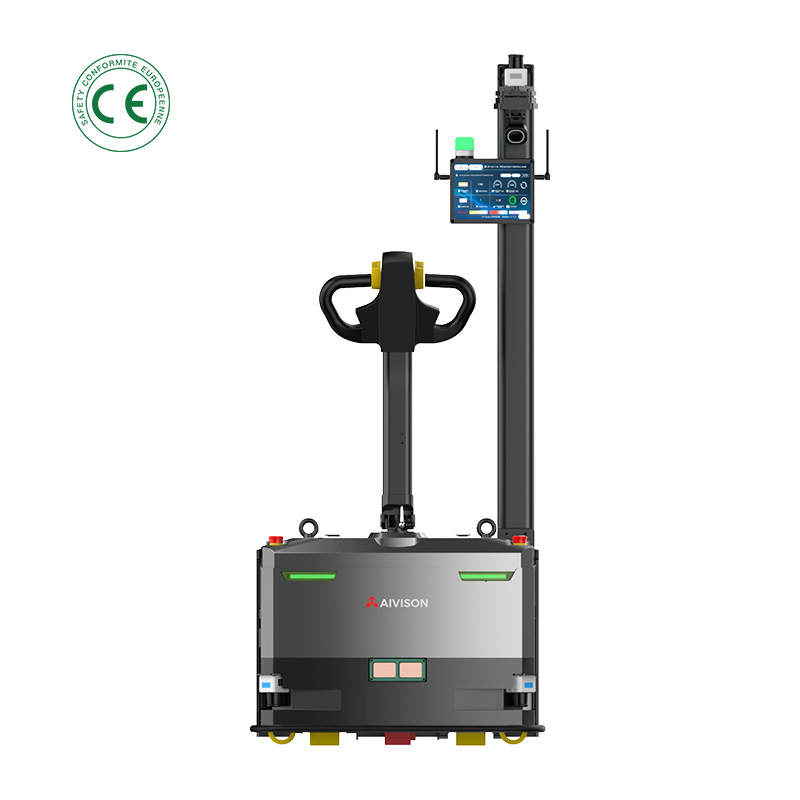
Autonomous Mobile Robot AGV CE Laser SLAM Navigation for Material Handling and Logistics
Recommended for Louisville 3PLs and distribution centers that need flexible routing, mixed-traffic safety, and quick layout changes.
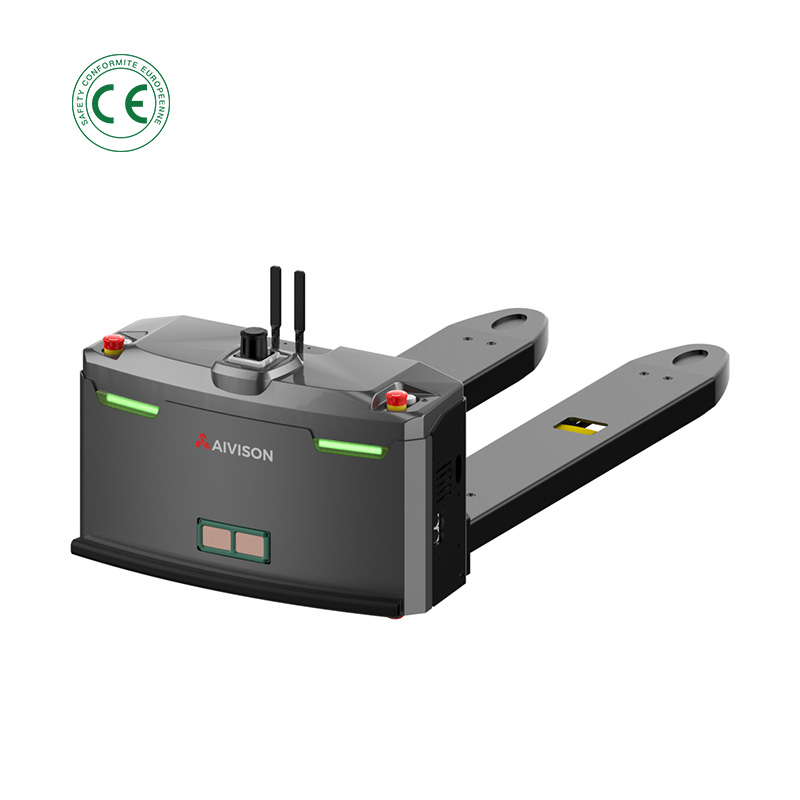
AMR Automated Warehouse Robot Logistics Automatic Industrial Logistics Robots AMR Robot
A practical platform for repetitive warehouse transfer between receiving, storage, staging, and dispatch zones.

Warehouse Stacker CE Forklift AGV 800kg Load Capacity Light AMR Pallet
Suited to narrow aisles and lighter pallet work where a full-size autonomous forklift would be oversized or inefficient.

Hot Selling Logistics Navigation Detector Sensor Lidar Manufacturers Direct Sales
A critical sensing component for integrators building or maintaining stacker AGV fleets in Louisville’s mixed-traffic warehouses.
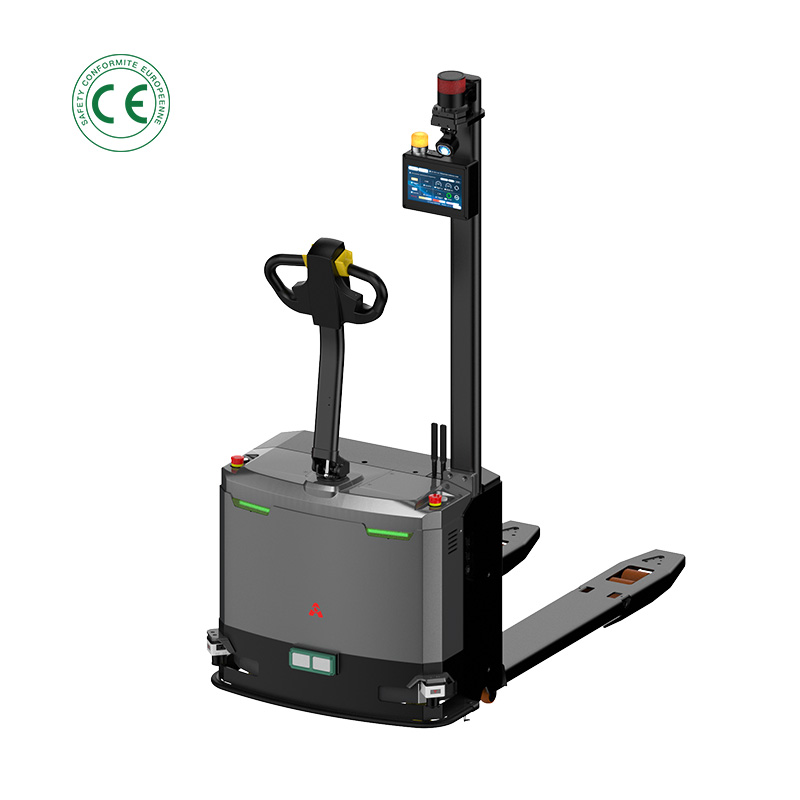
CE Certification Industrial AMR AGV Robot for Warehouse Automation Autonomous Material Handling Logistics
For Louisville projects that need a CE-marked automation platform with room for custom top modules and fleet coordination.

Humanoid Robot Chassis Dual 7-DOF Arms Laser SLAM Omnidirectional Navigation ROS2 Open Platform AMR
An advanced platform for research, flexible assembly support, and integrators exploring higher-dexterity mobile robotics.
Why AGV Stackers Fit Louisville’s Logistics and Manufacturing Base
Louisville is not just another warehouse market. It is a regional freight, air-cargo, food-and-beverage, automotive, appliance, healthcare, and e-commerce hub where pallet flow has to work across mixed traffic, tight labor, and high service expectations.
For buyers comparing AGV stacker factories and wholesalers in Louisville, the most important question is not “Who has the lowest unit price?” It is “Which supplier can deliver a safe, repeatable pallet flow that survives real shifts, real docks, and real maintenance?” The local context makes that distinction visible. Louisville distribution operations often sit inside networks connected to UPS Worldport, the Ohio River corridor, I-65, I-71, I-64, and I-264. A stacker AGV that saves labor in a clean pilot aisle can still fail in production if traffic rules, Wi-Fi coverage, dock handoffs, and charger placement are not engineered together.
That is why factory-direct sourcing and wholesale distribution should be evaluated as different risk profiles. A factory can customize chassis height, fork dimensions, top modules, navigation precision, and fleet software. A wholesaler can shorten procurement and provide a familiar local commercial channel. The best Louisville projects usually combine both: a manufacturer that supports engineering, documentation, and spare parts, plus a local integration partner who understands the site, electrical environment, safety workflow, and maintenance response requirements.
Louisville Buyers Are Solving for Throughput, Labor, and Safety at the Same Time
In Louisville’s 3PL, parcel, food and beverage, and assembly operations, pallet movement is not a single task. It includes trailer unloading, put-away, replenishment, line-side delivery, staging, cross-docking, and dispatch. Each step has a different load profile, travel distance, docking tolerance, and safety exposure. A stacker AGV program that begins with one route can scale into a fleet only when mapping, traffic control, task scheduling, and charging are designed from the start.
Warehouse teams also need evidence, not just brochures. Ask for a site survey, route simulation, safety review, site acceptance test, spare-parts list, and a clear handoff between factory engineering and local support. The information gain that matters most to Louisville buyers is practical: how the robot behaves at a busy dock door, how it recovers when a pallet is misaligned, how it re-routes when a forklift blocks an aisle, and how quickly a local technician can replace a sensor or drive module.
- Trackless deployment: standard laser SLAM maps existing features, avoiding magnetic tape, reflectors, or floor QR codes across ordinary travel routes.
- Precision where needed: add QR-assisted docking only at stations that require higher accuracy, such as high-shelf handoff or tight conveyor interfaces.
- Fleet coordination: intelligent scheduling over indoor Wi-Fi supports multi-robot task assignment, traffic control, and automatic charging with compatible docks.

How Louisville Buyers Should Compare AGV Stacker Factories and Wholesalers
Use a weighted scorecard rather than a single price comparison. The most expensive mistake is not overpaying for hardware; it is buying a robot that cannot be integrated, serviced, or expanded without redesigning the whole flow.
Factory-Direct Model
Best when the project needs custom forks, top modules, fleet software, or a tighter link between engineering and production.
- Custom payload and chassis engineering
- Direct access to sensor and navigation configuration
- OEM and integrator support
- Requires clear local service planning
Wholesale or Distributor Model
Best when speed, local commercial familiarity, and bundled installation support matter more than deep customization.
- Quicker local communication
- May bundle installation and spare parts
- Limited engineering flexibility
- Confirm factory lineage and firmware support
Integrator-Led Model
Best for Louisville sites that need a full material-flow design, safety review, WMS handshake, and ongoing service desk.
- Site survey and risk assessment
- WMS, conveyor, and PLC integration
- Operator training and change management
- Select a factory that supports integrators
Where AGV Stackers Deliver Value in Louisville Operations
These are the local scenarios where pallet-level automation usually earns its place first: repetitive travel, constrained labor, mixed traffic, and a clear handoff point that can be measured.
Trailer-to-Staging and Cross-Dock Flow
Stacker AGVs can move pallets from receiving to staging buffers and dispatch lanes, reducing forklift travel in crowded cross-dock areas. Louisville’s air-cargo and parcel networks reward repeatable, scheduled movement.
Packaging, Palletizing, and Warehouse Transfer
Food, beverage, and bourbon-related operations need clean handoffs, stable pallet transport, and clear traffic rules. Confirm IP rating, washdown policy, condensation management, and charger placement before piloting.
Line-Side Delivery and Heavy Pallet Handling
Louisville manufacturing sites can use 2,000 kg autonomous forklifts for repeatable line-side replenishment, kitting support, and end-of-line transfer where labor is difficult to redeploy.
Precision Docking in Narrow Aisles
Light AMR pallet stackers and QR-assisted docking help with high-shelf handoff and narrow-aisle movement. Use ±5 mm travel navigation and reserve ±2 mm QR assistance only for stations that truly need it.
Louisville Automation Trends Shaping AGV Stacker Purchasing
Buyer intent in Louisville is shifting from “Can we buy a robot?” to “Can we operate a mixed fleet without adding complexity?” That change favors suppliers who can document safety, integration, and lifecycle support.
Labor Flexibility
Louisville warehouses are redesigning shifts around turnover and cross-training. Stacker AGVs absorb repetitive pallet moves so people can focus on exceptions, quality, and dock coordination.
Flexible Layouts
Laser SLAM lets teams re-map routes without floor rework. That matters in Louisville 3PLs where racking, staging lanes, and customer flows can change faster than fixed infrastructure can adapt.
24/7 Charging Strategy
Automatic charging docks and opportunity charging are becoming part of the initial design, not an afterthought. Fleet size should be calculated with peak throughput, charger count, and battery duty cycle.
Interoperability
Louisville buyers increasingly ask for WMS/ERP integration, API documentation, fleet scheduling, and multi-robot traffic control. The stacker is only one part of the material-flow system.
Marnix: A Shenzhen AGV & AMR Manufacturer Serving Louisville Projects
For Louisville buyers, source transparency matters. Marnix is a Shenzhen-based manufacturer of laser SLAM AMRs, jacking robots, smart forklifts, composite mobile robots, and intelligent charging docks. It is not presented as a Louisville storefront. Its value is factory-level engineering, customization, and a product portfolio that local integrators can configure for Louisville sites.

Engineering Depth That Louisville Integrators Can Use
Shenzhen Marnix Intelligent Technology Co., Ltd. draws on about ten years of AGV engineering experience. The portfolio includes laser SLAM autonomous mobile robots, jacking (lifting) robots, smart forklifts, pallet AMRs, composite mobile robots, and compatible intelligent charging docks. For stacker projects, customization can extend to chassis design, payload configuration, jacking units, roller conveyors, forklift forks, and 6-axis robotic arms.
Marnix reports ±5 mm positioning accuracy with laser SLAM on natural features, no magnetic tape, reflectors, or floor QR codes required for standard travel. Adding a QR code scanning camera can raise docking accuracy to ±2 mm. Composite robots with a 6-axis arm can reach ±0.05 mm repeatability for demanding semiconductor and medical device assembly workflows. These specifications are useful for Louisville buyers, but they should be matched to a site risk assessment and a measurable acceptance test.
The company also states that an intelligent scheduling system coordinates robots over indoor Wi-Fi, supporting simultaneous task assignment, traffic control, and automatic charging with compatible smart charging docks. More than 200 manufacturers across three continents have been served, and the company supports both end users and system integrators. Verified credentials include a TÜV Rheinland onsite supplier assessment, Fortune 500 supplier status, and transparent trade history records.
Complete AMR Portfolio
Jacking robots, smart forklifts, pallet AMRs, composite robots, and charging docks from one engineering source reduce integration uncertainty.
No Floor Rework by Default
Standard laser SLAM maps natural features. QR labels are reserved for stations that need ±2 mm docking rather than the entire travel route.
Custom Top Modules
Roller conveyors, jacking units, forks, and robotic arms can be engineered to connect with production equipment and conveyor handoffs.
Quality and Lifecycle Support
Multi-stage intelligent inspections and operational stress testing support uptime goals. Service planning should still be confirmed for every Louisville site.
What Louisville Buyers Commonly Ask Before Ordering an AGV Stacker
These answers reflect the practical questions that arise when a factory-direct or wholesale AGV stacker program is evaluated for a Louisville warehouse, plant, or 3PL operation.
Are there AGV stacker factories in Louisville that build and support robots locally?
Louisville has integrators, service providers, and commercial channels, but most stacker AGV factories are global manufacturers. Buyers should verify where the chassis is engineered, who supports commissioning, where spare parts are stocked, and which local partner will handle service. Marnix is a Shenzhen-based manufacturer; Louisville projects should pair factory engineering with local integration and service planning.
What shipping and lead-time factors should Louisville buyers plan for?
Overseas projects usually involve production lead time, international freight, customs clearance, inland transport, commissioning, and site acceptance testing. Ask for a written schedule that separates factory build time from shipping and installation. For urgent Louisville projects, confirm whether standard modules, batteries, chargers, and spare sensors are available from stock or through an integrator.
Will an AGV stacker require magnetic tape or floor QR codes?
Not for normal laser SLAM travel. Marnix reports ±5 mm accuracy using natural-feature SLAM without magnetic tape, reflectors, or floor QR codes. QR labels are added only where ±2 mm docking precision is required. This matters in Louisville facilities that do not want to interrupt operations for floor rework.
How do Louisville 3PLs integrate stacker AGVs with WMS and ERP systems?
Integration should define task creation, queue rules, priority logic, error handling, handoff confirmation, and reporting. Ask whether the factory supports API documentation, indoor Wi-Fi fleet scheduling, barcode/QR handoff, and integration with conveyors or PLCs. A local integrator should validate the WMS handshake before full fleet rollout.
What safety due diligence should local buyers request?
Request a site-specific risk assessment, traffic-management plan, emergency-stop logic, lidar safety fields, operator training plan, and site acceptance test. Confirm applicable U.S. requirements and standards with your safety team, including ANSI/ITSDF B56.5 considerations where relevant, plus UL-listed components or other compliance items required by your insurer or authority having jurisdiction.
What information shortens a factory quote for a Louisville project?
Send the load weight and footprint, rack or pallet type, aisle widths, doorway and elevator limits, throughput target, peak periods, docking precision, Wi-Fi coverage, charger locations, conveyor or machine interfaces, and desired go-live date. A CAD layout or annotated sketch is especially valuable because it shortens simulation and proposal time.
Build a Louisville TCO Model Before You Choose a Wholesaler or Factory
Compare AGV stacker proposals on six variables: hardware configuration, navigation infrastructure, WMS and conveyor integration, safety validation, spare-parts strategy, and local service response. A low quotation can become expensive if the robot needs floor rework, if the charger count is insufficient at peak, or if the local integrator has to redesign the traffic plan after delivery.
Also ask for the information that proves operational readiness: route simulation, cycle-time assumptions, battery and charging calculations, fleet dispatch logic, acceptance criteria, training scope, warranty terms, and the escalation path for downtime. Louisville operations often run high-throughput shifts; the supplier handoff should be documented before the first robot enters the aisle.
Ready to Shortlist AGV Stacker Factories & Wholesalers for Louisville?
Share your pallet load, aisle layout, throughput target, docking precision, Wi-Fi coverage, and go-live window. Our team can help match the right stacker AGV, pallet AMR, autonomous forklift, or composite mobile robot configuration to your Louisville material-flow project.
Get a Quote