8 AGV & AMR Platforms for Fort Worth Fleet Projects
These platforms map directly to loads, aisle widths, docking tolerances and handover points commonly found in Fort Worth manufacturing and logistics facilities. Product URLs and images are preserved from the original range.
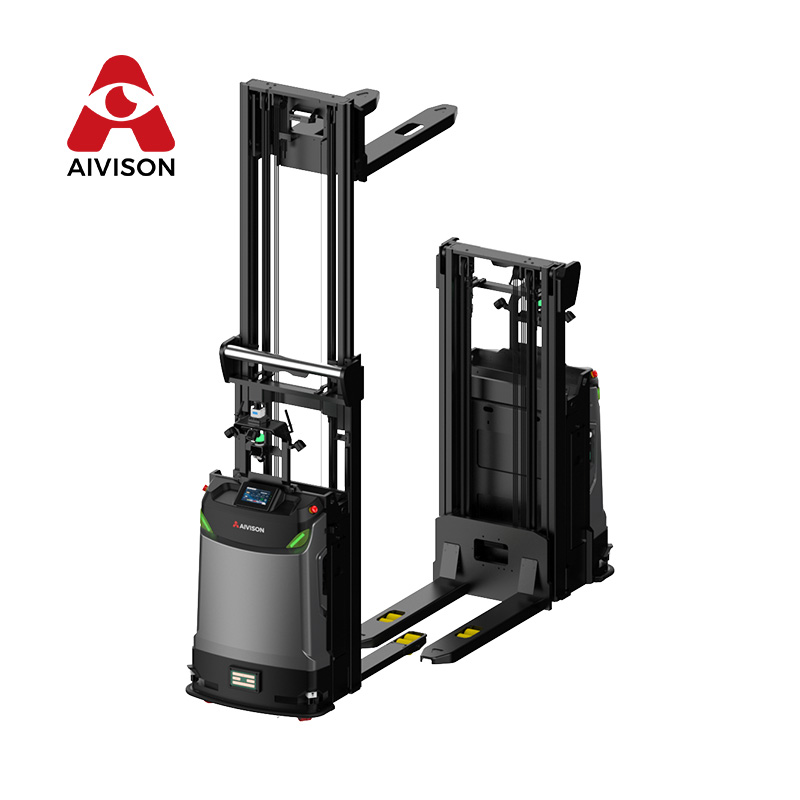
High Precision AGV Forklift Full Servo Motor Controlled Laser Forklift with Heavy Load 2000kg
For Fort Worth metal fabricators, aerospace suppliers and building-product warehouses moving dense pallets. Full-servo control supports smooth fork entry, while laser AGV navigation avoids floor tape and reflector retrofits.
View product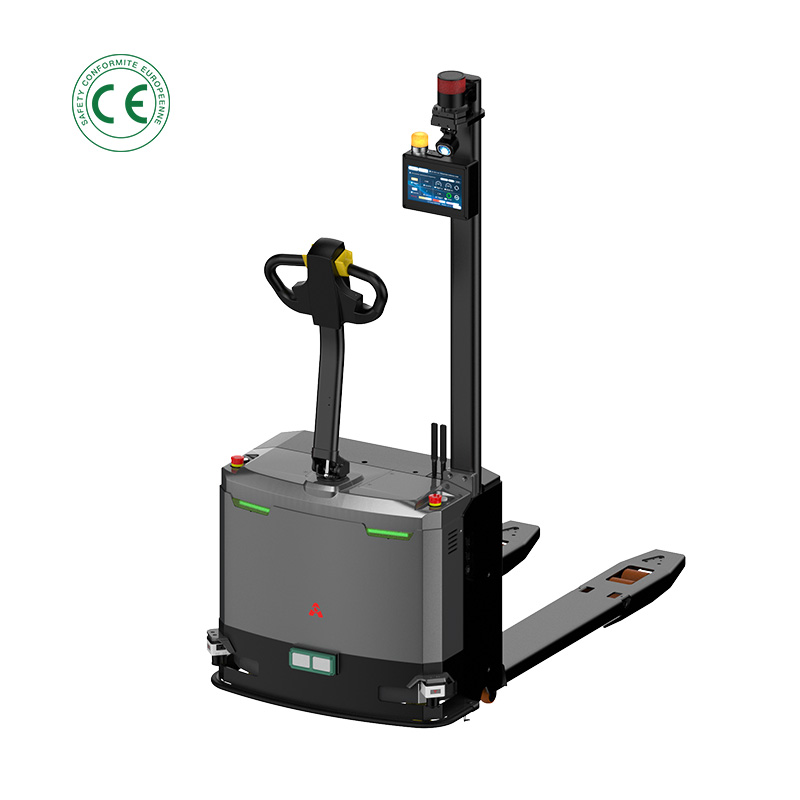
CE Certification Industrial AMR AGV Robot for Warehouse Automation Autonomous Material Handling Logistics
Deploy in Fort Worth 3PL and e-commerce sites where SKU mix changes weekly. Laser SLAM maps existing racking, while fleet software coordinates pick-up and drop-off with minimal WMS disruption.
View product
Automatic Handling CE Certificate 2000kg Forklift Robot Vehicle Laser AGV for Large Load Goods-carrying
A heavy-load AGV forklift for AllianceTexas distribution centers, food-grade warehouses and end-of-line palletizing. Use it for trailer-to-rack transfer, replenishment and large load goods-carrying.
View product
Omnidirectional Service Humanoid Robot Chassis Dual 7-DOF Arms Laser SLAM Navigation for Hospitality and Retail
For Fort Worth hospitality, healthcare and retail pilots. Dual 7-DOF arms and omnidirectional mobility can support guided service, sample handling, light front-of-house tasks and customer-facing demonstrations.
View product
Warehouse Robot Robotics 2000KG CE Warehousing Automatic Forklift Stacking AGV
Designed for high-bay stacking and repetitive put-away in Fort Worth warehouses. Laser navigation keeps travel reliable, while optional QR assist can improve repeatable docking at rack faces.
View product
Customizable 1500KG Traction Capacity AGV Autonomous Mobile Robot Amr with Lidar Guided Sensor
Best for cart, trailer and towed-cart moves in automotive parts and distribution facilities. The 1,500 kg traction platform can be adapted with custom top modules for Fort Worth system integrators.
View product
Warehouse Stacker CE Forklift AGV 800kg Load Capacity Light AMR Pallet
A compact stacker AMR for light pallet flows in tight aisles, cross-docks and production cells. It supports quick mapping and lower-cost automation for growing Fort Worth operations.
View product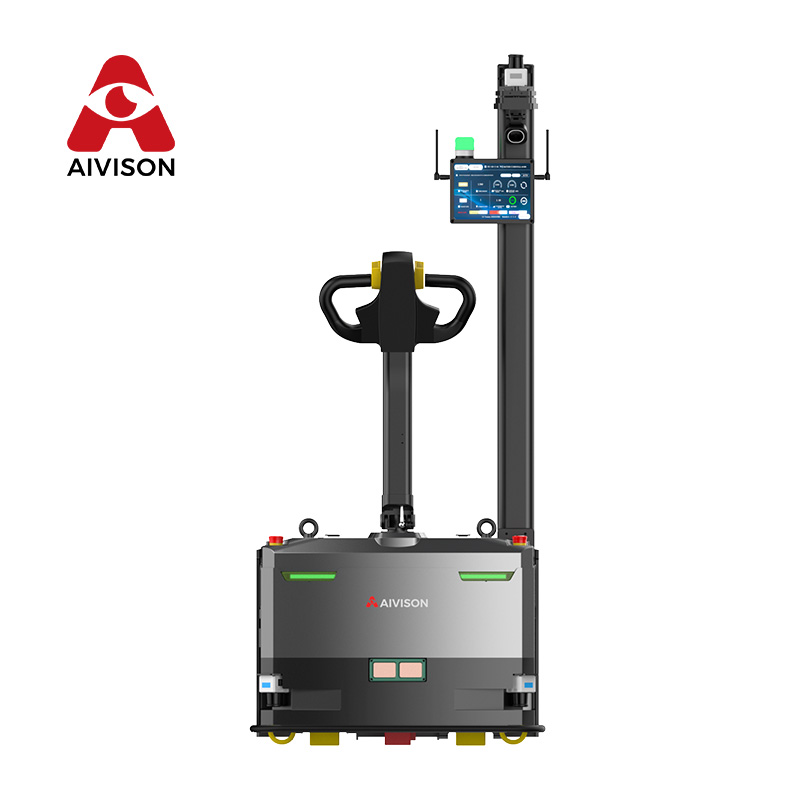
China Factory Movable Pallet Agv Robot Rack Shelf for Intelligent Robot Warehouse
Use movable AGV racks as a flexible alternative to fixed racking in Fort Worth warehouses where layout changes are frequent. The rack and robot combination supports goods-to-person workflows and reconfigurable storage.
View productAGV Fleet Management in Fort Worth: Why the Market Is Moving
Fort Worth is no longer only a freight crossroads. It is a diversified industrial market where aerospace suppliers, automotive parts producers, food distributors, 3PLs, electronics manufacturers and healthcare operations increasingly share the same automation vocabulary: AGV, AMR, smart forklift, fleet scheduling, charging dock and WMS integration.
Factories Need Flexible Intralogistics
Fort Worth manufacturers are under pressure to raise output without expanding aisles or adding fixed conveyors. Laser SLAM AMRs can be redeployed when lines change, which matters in aerospace, automotive and metal fabrication environments.
Distribution Networks Require Throughput
Warehouses serving AllianceTexas, Haslet, Saginaw, Haltom City and the wider Dallas-Fort Worth metroplex need repeatable pallet movement across receiving, storage, staging and dispatch.
Safety and Labor Are Board-Level Topics
Fort Worth operations teams are asked to reduce forklift near-misses, stabilize shift coverage and improve traceability. A coordinated AGV fleet adds predictable task execution without turning the entire warehouse into a fixed automation system.
Global Suppliers Are Evaluated Locally
Fort Worth buyers often compare factory-direct suppliers with regional integrators. The strongest proposals connect product engineering, fleet software, charging strategy, spare parts and commissioning support into one accountable plan.
Where AGV Fleets Create ROI in the Fort Worth Market
The right robot is determined by the handover point, not by the straight-line travel route. These six local application scenarios show where Fort Worth factories and warehouses typically begin.
AllianceTexas Distribution & Cross-Dock
For high-volume distribution centers, a fleet of 2,000 kg AGV forklifts and towing AMRs can move pallets from inbound trailers to staging lanes and rack faces. The key metric is not maximum speed; it is consistent moves per hour during the receiving window.
Aerospace & Precision Metal Fabrication
Aerospace suppliers and machine shops in Fort Worth often need line-side delivery of fixtures, raw material and work-in-process without floor modifications. Composite mobile robots with 6-axis arms can support machine tending and precision handover where ±0.05 mm repeatability is required.
Automotive & EV Supply Chain
Automotive parts facilities around Fort Worth use 1,500 kg traction AMRs to move carts, returnable containers and sequenced parts. Fleet scheduling must account for narrow aisles, crossing points and shift-change peaks.
Food, Cold Chain & Consumer Goods
Food distributors and consumer goods operations can use compact 800 kg pallet stackers for light storage and replenishment. In temperature-controlled areas, battery strategy and charging location should be reviewed before the fleet size is fixed.
3PL & E-Commerce near DFW Airport
Third-party logistics sites need quick layout changes and easy onboarding of temporary SKUs. Laser SLAM AMRs map natural features, while a QR camera can be added only at stations where ±2 mm docking accuracy is necessary.
Hospitality, Retail & Healthcare
Fort Worth service operators can pilot omnidirectional humanoid robot chassis for guided service, retail engagement and light handling. Treat these projects as customer-experience pilots with clear safety zones and measured service outcomes.
Fort Worth Trends Shaping AGV Fleet Decisions
The local market is moving from isolated robot purchases toward measured fleet deployment. Buyers now ask for a deployment plan, not only a machine specification.
1. Re-Shoring and Regionalization
More production and distribution activity in Texas is encouraging Fort Worth factories to design flexible material flow. An AMR fleet can be expanded module by module instead of committing to a fixed conveyor layout.
2. Labor Flexibility over Headcount Replacement
Operations leaders are using AGVs to absorb repetitive travel while redeploying associates to inspection, exception handling and customer-critical tasks. The business case is strongest when robot utilization is measured by shift.
3. Fleet Software Becomes the Buying Center
Fort Worth buyers increasingly evaluate traffic control, task assignment, charging rules, elevator or door integration and reporting. A robot without fleet scheduling is a single asset; a coordinated fleet becomes infrastructure.
4. Safety and Documentation Maturity
Procurement teams now request CE documentation where relevant, risk assessments, safety sensor architecture, speed-zone logic and spare-parts plans. The best supplier conversations start with the site safety team, not only the operations team.
What Most AGV Supplier Lists Do Not Explain
Most product pages list payload and speed. A Fort Worth AGV project turns on station-level precision, charging ratio, Wi-Fi behavior, floor conditions and escalation support. This is the information gain that separates a useful proposal from a catalog page.
| Navigation Configuration | Accuracy | Floor Setup | Best Fort Worth Use Case |
|---|---|---|---|
| Laser SLAM on natural features | ±5 mm | No tape, reflectors or floor codes | Warehouse transfer, line-side delivery, layout changes in 3PL and distribution sites |
| SLAM plus QR code camera | ±2 mm | QR labels only at precision stations | High-shelf storage, conveyor docking, wafer handling and repeatable pallet handover |
| Composite robot with 6-axis arm | ±0.05 mm | Station calibration | Aerospace, medical device and precision assembly cells requiring robotic handover |
Specify by Station
A robot may travel a long aisle at ±50 mm and still need ±10 mm at a conveyor. Define accuracy at the dock, not only at the robot data sheet.
Fleet Size Is a Flow Decision
Calculate moves per robot hour, peak surge, battery swap or opportunity charging, and blocked time at handovers. Add buffer for real Fort Worth peak periods.
Wi-Fi Is a Fleet Constraint
Dead zones cause waiting, route retries and false traffic conflicts. A pre-deployment Wi-Fi survey is cheaper than discovering coverage gaps after commissioning.
Charging Ratio Drives Uptime
Do not size the fleet for perfect charging. Decide where robots will charge, how they will queue and whether opportunity charging is allowed during peak windows.
A common failure mode in Fort Worth is treating AGV procurement as a vehicle purchase. The more valuable approach is to model the fleet as a material-flow system: incoming loads, task queues, docking tolerance, safety zones, charging access, network coverage and escalation procedures. When those inputs are clear, the product selection becomes much more reliable.
Why Marnix Is a Practical AGV Partner for Fort Worth Projects

Shenzhen Marnix Intelligent Technology Co., Ltd. draws on about ten years of AGV engineering experience to build laser SLAM autonomous mobile robots, jacking robots, smart forklifts, composite mobile robots and compatible intelligent charging docks. The company serves both end users and system integrators, with a portfolio that includes jacking robots, smart forklifts, pallet AMRs and custom top modules.
- Laser SLAM navigation reaches ±5 mm without auxiliary tracks or floor QR codes; add QR scanning for ±2 mm docking, and composite robots with a 6-axis arm can reach ±0.05 mm repeatability.
- An intelligent scheduling system coordinates robots over indoor Wi-Fi for simultaneous task assignment, traffic control and automatic charging.
- As a manufacturer, Marnix customizes chassis and top modules such as jacking units, roller conveyors, forklift forks and robotic arms to connect with production equipment.
- Independent verification includes a TÜV Rheinland onsite supplier assessment, and the company reports service to more than 200 manufacturers across three continents, including a procurement contract with a Fortune 500 company.

From Fort Worth Requirement to Running Fleet
A disciplined project path reduces installation risk and makes supplier comparisons more objective.
Discovery & Data Collection
Share load profile, layout, throughput target, docking precision, Wi-Fi coverage, interfaces and safety constraints. A CAD drawing and peak-period data are more useful than a general inquiry.
Mapping & Simulation
Confirm robot routes, traffic zones, handover points, charging locations and estimated fleet size. Identify the stations that truly require ±2 mm QR assist or composite precision.
Pilot Fleet & Acceptance
Run a pilot on the real floor with production-like loads. Measure task completion, waiting time, safety interventions and charging behavior before scaling.
Scale, Integrate & Service
Expand robot count, connect with WMS or MES rules, and agree on spare parts, response escalation and periodic performance reviews for the Fort Worth site.
Local Buyer Questions Before Choosing an AGV Supplier
These are the practical questions Fort Worth operations, procurement and engineering teams ask when comparing factories, suppliers and integrators.
Can a Shenzhen AGV factory support a Fort Worth deployment?
Yes. Marnix supplies end users and system integrators and can support a Fort Worth project with product engineering, configuration review, fleet software and documentation. For installation, maintenance and local escalation, many projects benefit from pairing factory-direct equipment with a regional integrator or service partner. The best model is clear accountability: factory ownership for product and configuration, plus local execution for site work.
How long does delivery and commissioning usually take?
Lead time depends on the model, payload, top module, battery and charger configuration, documentation requirements and whether the project is standard or engineered to order. Heavy 2,000 kg AGV forklifts and composite robots normally require a more detailed technical review than a standard AMR. Request a written project schedule covering technical clarification, factory acceptance testing, shipping, site acceptance and spare-parts planning.
Do we need to modify our Fort Worth warehouse floor?
Standard laser SLAM navigation maps the existing environment, so magnetic tape, reflectors and full-floor QR grids are not required. QR labels are typically added only where ±2 mm docking precision is needed. Still, review floor flatness, ramps, expansion joints, metal plates, reflective surfaces and dock transitions during the site survey. A good proposal should identify potential navigation risks before shipment.
How many AGV or AMR units will our fleet need?
Calculate the required moves per hour, the sustainable moves per robot hour, peak surge, travel distance, handover wait time and charging time. Add a practical buffer for congestion and shift changes. For a Fort Worth distribution center, a simulation based on real order profiles is more reliable than dividing total pallets by a robot specification. Fleet software rules can also change the effective capacity.
Can the fleet integrate with our WMS, MES or conveyor controls?
Integration is project-specific. Define the task source, pickup and drop-off points, priority rules, traffic zones, door or elevator interactions, error handling and reporting requirements. A factory that supports intelligent scheduling over Wi-Fi can coordinate multi-robot dispatch, but the site integration plan must be agreed early with your IT, controls and operations teams.
What safety and compliance documents should Fort Worth buyers request?
Request the applicable CE documentation, risk assessment, safety sensor architecture, emergency-stop design, speed-zone configuration, battery charging instructions and maintenance schedule. Your Fort Worth safety team should also review site traffic, pedestrian crossings, fire doors, aisle clearances and local operating policies. The supplier should provide equipment documentation, while the buyer confirms site-specific safety procedures.
Need a Fort Worth-Specific AGV Fleet Recommendation?
Share your load profile, plant layout, throughput target, docking tolerance and Wi-Fi conditions. Our engineering team can help match the right AMR, smart forklift or composite robot configuration to your local application.
Project contact: info@marnixbot.com · Shenzhen Marnix Intelligent Technology Co., Ltd.