300kg Load Capacity AMR Pallet Robot for Light Material Handling — Manufacturer & Supplier Serving Monterrey
An E-E-A-T-focused buyer guide for plant, warehouse and integrator teams evaluating a 300 kg AMR pallet robot for high-frequency line-side delivery, kitting, empty-container returns and precision docking in Monterrey.
8 AMR, AGV & smart forklift platforms for light and mixed material handling
The first product cards below preserve the original catalogue URLs and images. The 300 kg laser-guided factory AMR is the focal platform for light material handling; the heavier units show how a mixed fleet can cover inbound pallets, trailer loading and high-payload work.

AGV AMR Autonomous Forklift Smart Version Auto Mobile Transfer Stacker Robot
Fork-style autonomous platform for repetitive pallet and stacker moves where a lifting interface is required instead of a simple deck.
View specification
Automatic Handling CE Certificate 2000kg Forklift Robot Vehicle Laser AGV for Large Load Goods-carrying
Heavier laser AGV forklift option for large-load goods-carrying, useful when a Monterrey site needs one fleet for both light loops and inbound pallets.
View specification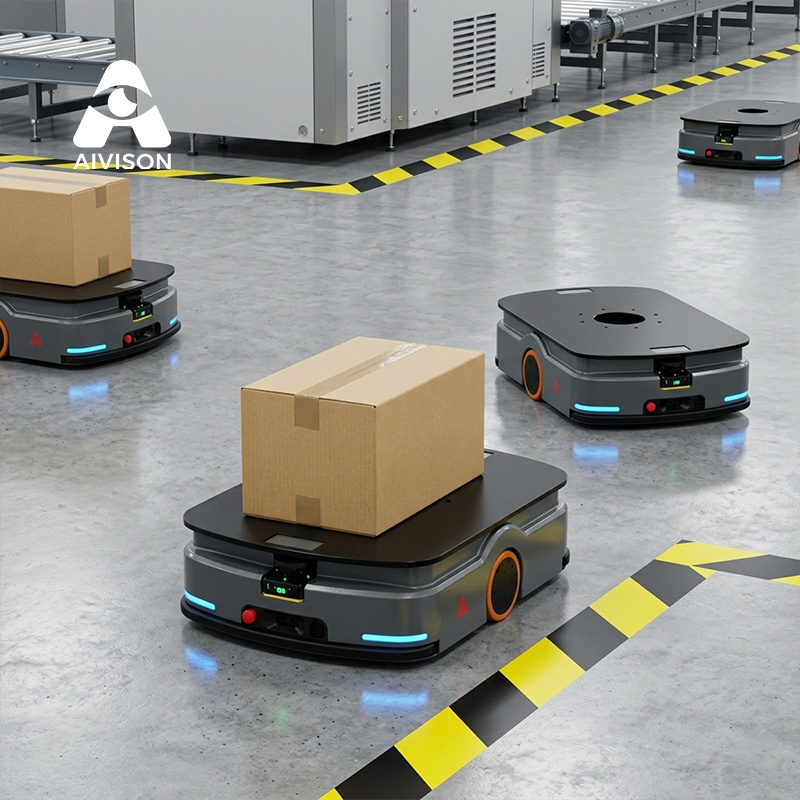
Autonomous Mobile AMR Robot 300kg Payload Laser Guided AGV for Carry Goods in Factory
The core light-duty platform for this guide: 300 kg payload, laser guidance and factory material carrying with optional precision docking.
View specification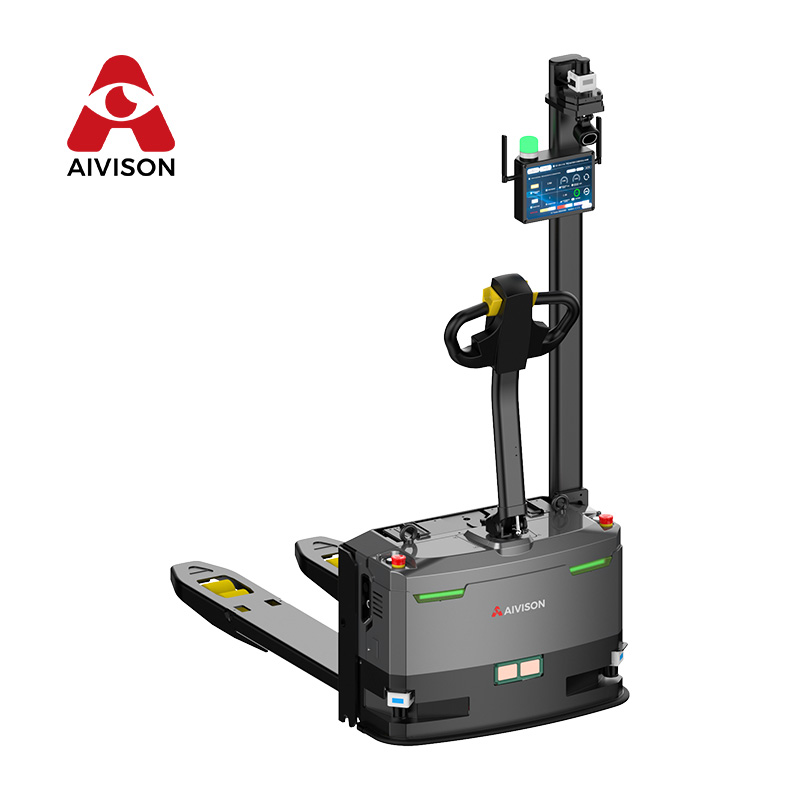
Laser SLAM Navigation Automated Guided Vehicle Forklift agv 1500kg Load Capacity
SLAM-navigated forklift AGV for medium-to-heavy pallet handling, useful for sites that want to reserve the 300 kg AMR for fast light loops.
View specification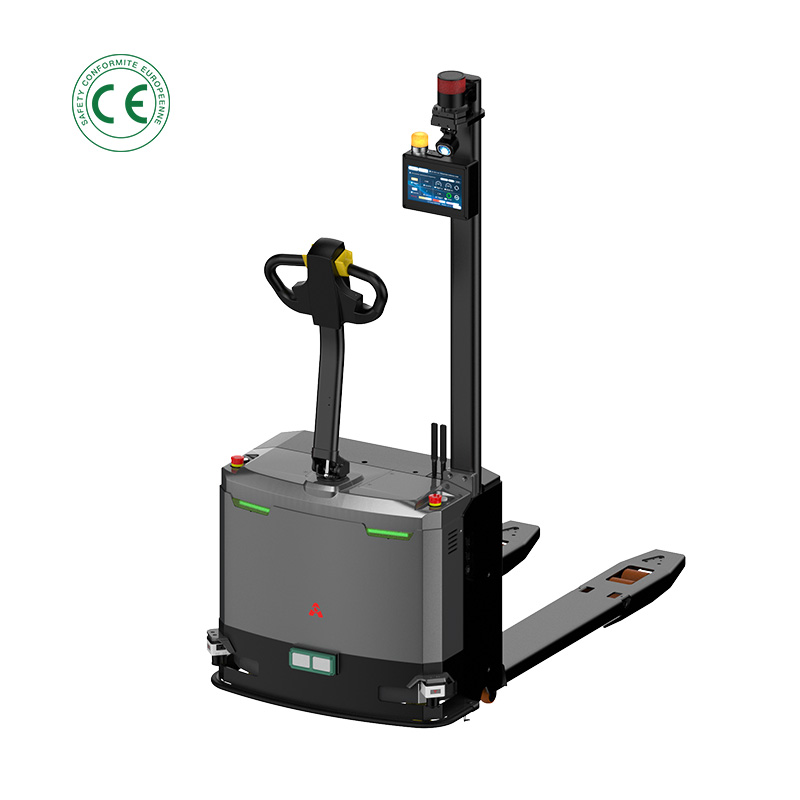
CE Certification Industrial AMR AGV Robot for Warehouse Automation Autonomous Material Handling Logistics
Industrial AMR platform for warehouse automation and autonomous material handling, suited to multi-route logistics inside existing buildings.
View specification
Customizable 1500KG Traction Capacity AGV Autonomous Mobile Robot Amr with Lidar Guided Sensor
Customizable 1500 kg traction platform with lidar guidance for towed or integrated material flow where the load is not carried on-deck.
View specification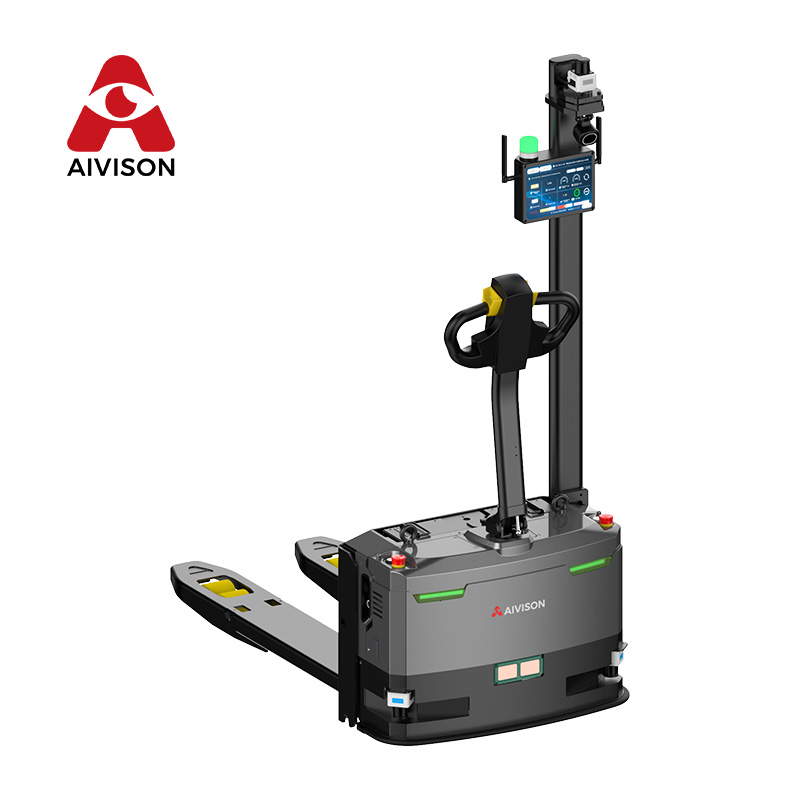
Aivison Stacker Truck Pallet Stacker Forklift Agv 1.5 Ton Autonomous Forklift Smart Deliver AMR Robot
Stacker-style autonomous forklift for smart delivery and pallet stacking, bridging light AMR loops and conventional warehouse forklift work.
View specification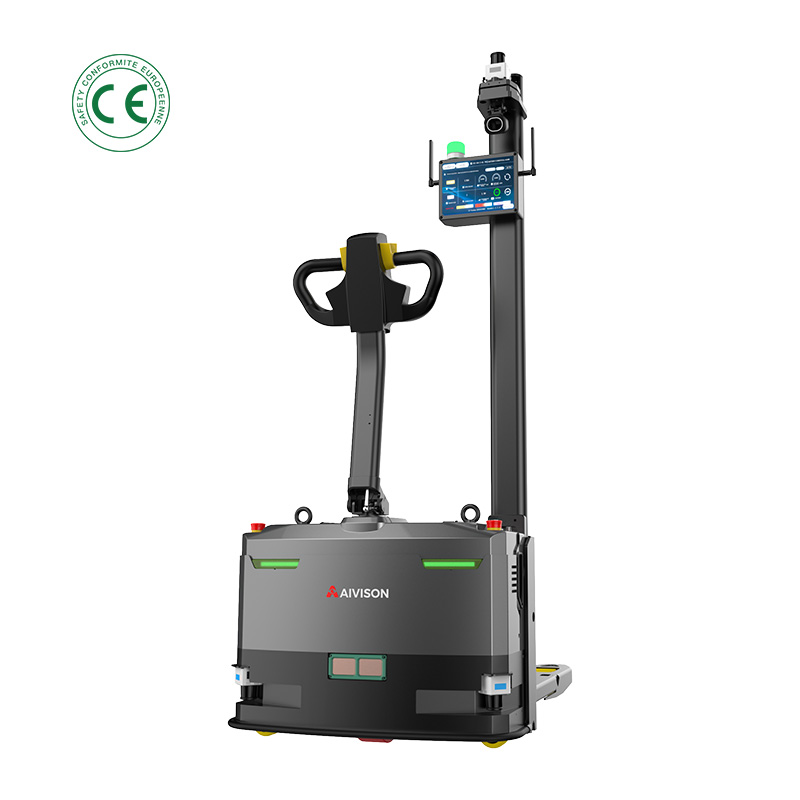
AIVISON CE Laser SLAM Navigation AGV 1500kg Warehouse Lifting Operations
Laser SLAM lifting AGV for warehouse operations where medium loads need automated lifting and transfer with a higher payload envelope.
View specificationNeed help matching the 300 kg robot to a 1.5 t forklift or a 2 t AGV? Share your unit load, aisle width and moves per hour; our engineering team will recommend a mixed-fleet configuration.
Contact UsWhy the 300 kg Class Is a Different Kind of Intralogistics Investment in Monterrey
Monterrey is not a generic automation market. Plants and distribution centres in Apodaca, Santa Catarina, Guadalupe, Pesquería and the wider Monterrey–Saltillo corridor are absorbing nearshoring demand, smaller batch sizes, more frequent changeovers and higher traceability expectations. Yet not every material move is heavy. In many factories, a large share of daily trips involve components, kitting carts, small pallets, empty containers, packaging, fixtures and subassemblies below the 300 kg class.
A 300 kg load capacity AMR pallet robot is often the most misunderstood asset in this environment. It is not a stripped-down forklift. It is a light-duty, high-frequency material-flow device engineered for smaller unit loads, narrower aisles and repetitive routes where a full-size forklift creates congestion, safety exposure or wasted operator time. The economic case improves when the robot is assigned the right missions rather than being compared only on payload.
Right-sizing reduces risk. A 1.5 t or 2 t smart forklift remains appropriate for inbound pallets, trailer loading and heavy WIP. A 300 kg AMR can run the high-frequency line-side loop, return empty containers, move small shelves and feed kitting stations. This tiered fleet model often beats forcing one large machine to handle every task. It also makes the automation project easier to phase: start with one repeatable light-material route, prove the KPIs, then add larger platforms as the flow matures.
This page is written for three search intents common among Monterrey buyers: product shortlisting, technical validation and supplier due diligence. The most useful questions are not “What is the payload?” but “Which high-frequency missions can this robot complete safely, how much floor and WiFi work is required, and what local support exists after commissioning?”
Right-sizing scorecard before quotation
Use these six numbers to avoid over-specifying the robot and under-planning the flow.
Payload is a system number
A 300 kg rating is not a licence to move 300 kg blindly. The top module, pallet, rack, fixture, centre of gravity and braking envelope all consume margin. Validate the complete load case with engineering before quotation.
Aisle design changes the business case
Light AMRs often win because they fit existing aisles and mixed traffic. If the route needs a large forklift envelope, the 300 kg platform may be the wrong tool even when the payload is correct.
Precision should be zoned
Most routes do not need the same accuracy everywhere. Use ±5 mm laser SLAM for general travel and reserve ±2 mm QR assist for the few stations where high-shelf or machine docking demands it.
Fleet software is the hidden interface
Multi-robot coordination, traffic control and task assignment matter as much as the chassis. Ask how the scheduling system handles peaks, blocked aisles, manual intervention and future integration with WMS or MES.
Charging strategy defines uptime
A robot that is cheap to buy but waits too long at the charger is expensive to operate. Plan charging around shift patterns, mission duration and dock location; automatic charging docks should be part of the layout, not an afterthought.
Local support must be designed
For Monterrey projects, clarify documentation language, integrator roles, remote support hours, spare-parts recommendations and escalation paths before purchase. Support is part of the product, especially for multi-shift operations.
How a 300 kg AMR pallet robot works — and where accuracy really matters
The robot combines a compact drive chassis, laser SLAM navigation, safety sensors, battery system, fleet software and a task-specific top module. The top module is often the difference between a generic AMR and a production-ready tool.
With laser SLAM on natural features, the robot maps the existing environment and navigates without magnetic tape, reflectors or floor QR codes. This is important in Monterrey plants that cannot stop production for floor works or that change layout frequently. Where a station needs tighter docking, a QR scanning camera can raise accuracy to ±2 mm. For composite robots that combine mobility with a 6-axis arm, the published repeatability can reach ±0.05 mm, but that precision belongs to a controlled station and a specific process, not to every travel route.
| Configuration | Typical accuracy | Floor setup | Best fit for Monterrey sites |
|---|---|---|---|
| Laser SLAM on natural features | ±5 mm | No tape, reflectors or floor codes | Line-side delivery, warehouse transfer, empty-container loops and routes that change with production |
| Laser SLAM + QR code camera | ±2 mm | QR labels only at precision stations | High-shelf storage, precision docking, kitting handover and machine tending |
| Composite AMR + 6-axis arm | ±0.05 mm | Station calibration and process validation | Semiconductor, medical device and other controlled assembly tasks where robotic handling is integrated |
Floor and threshold review
Confirm flatness, expansion joints, ramps, drains, door thresholds and lift interfaces. Laser SLAM removes floor codes, but it does not remove physics.
WiFi and fleet scheduling
Fleet coordination depends on reliable indoor WiFi. Walk the route, test access points and identify dead zones before committing to robot count and traffic rules.
Safety integration
Obstacle detection and avoidance support mixed traffic, but final safety validation depends on the integrated cell, traffic rules, training and local EHS review.
Top-module choice
Jacking units, roller conveyors, forklift forks and 6-axis arms solve different handover problems. Choose the module from the process backwards, not from the catalogue forwards.
Battery and charging
Define shift length, mission time, charging opportunity and dock location. Automatic charging docks can support 24/7 duty when the fleet ratio and layout are designed correctly.
Integration scope
Clarify whether the robot must hand over to conveyors, machines, elevators, doors or WMS/MES. Scope integration early; it is a common source of hidden project cost.
Where a 300 kg AMR pallet robot fits Monterrey operations
Monterrey’s industrial clusters reward automation that is flexible, space-efficient and easy to redeploy. These are the scenarios where the light AMR class usually delivers the fastest operational value.
Automotive Tier 1 and Tier 2 line-side delivery
Plants in Apodaca, Pesquería and Santa Catarina often run mixed-model lines with frequent changeovers. A 300 kg AMR can deliver kitting carts, small racks, fixtures and empty containers on a fixed loop while larger forklifts handle inbound pallets and trailer loading.
Electronics, appliance and 3C assembly
Light totes, ESD-safe carriers, packaging and subassemblies move frequently but do not always justify a forklift. The AMR can connect receiving, kitting, assembly and finished-goods staging with repeatable routes and less pedestrian conflict.
Medical device and regulated manufacturing
Controlled material movement, traceability and repeatable handover matter more than raw speed. A light AMR with defined stations, documentation and validation can support clean, consistent internal logistics, subject to the site’s quality and cleaning requirements.
3PL, cross-dock and distribution centres
Nearshoring has increased smaller, more frequent shipments through Monterrey’s logistics corridors. Light pallets, packaging, returns and empty containers can be moved on scheduled loops while heavy forklifts focus on dock and trailer work.
Machine tending and flexible manufacturing cells
When a 300 kg chassis is paired with a roller conveyor or another top module, the robot can become a mobile buffer between machines. This is useful where WIP must be staged, transferred or sequenced without adding fixed conveyors.
Packaging and empty-container return loops
Empty totes, dunnage, small pallets and packaging materials create high-frequency, low-value trips that consume operator time. Automating these loops is often a lower-risk first project than automating the main production flow.
Monterrey automation trends shaping the 300 kg AMR business case
Local buyer intent is not only “Where can I buy an AMR?” It is “How do I make automation work inside a real Monterrey plant, under local labour, space, energy and compliance conditions?”
Nearshoring and smaller batches
More localized production and shorter supply chains increase product variety and changeover frequency. A 300 kg AMR is easier to redeploy than fixed conveyors when routes and line-side layouts change.
Labour turnover and knowledge retention
High turnover makes repetitive material handling harder to stabilise. Automating predictable loops helps protect takt time, reduce training load and keep material flow consistent across shifts.
Industrial space constraints
Vacancy in prime industrial real estate remains tight. Compact AMRs can improve flow within the existing footprint, especially when the alternative is widening aisles or adding staging areas for large forklift manoeuvres.
Energy resilience and uptime
Light-duty robots and opportunity charging can reduce the operational burden of battery swaps. The goal is not simply energy savings; it is predictable uptime across two or three shifts.
Traceability and system integration
Buyers increasingly expect material movements to be visible in production and warehouse systems. Fleet scheduling is the operational layer; WMS, MES and equipment integration must be scoped project by project.
Safety culture in mixed traffic
Robots, pedestrians and forklifts share real floors. The successful project defines traffic rules, exclusion zones, speed limits, warning behaviour, training and escalation before commissioning.
Three practical configurations for Monterrey buyers
Select the configuration from the process, not the other way around. A lighter robot with the right top module often outperforms an over-sized platform on high-frequency work.
Lean line-side light pallet loop
Best for repetitive delivery of small pallets, carts and containers where ±5 mm accuracy is sufficient and the layout may change after the pilot.
Kitting and machine handover
Best where the robot must dock to a station, conveyor or machine with tighter repeatability and clear handover logic.
Hybrid light and heavy fleet
Best for plants that need light loops and heavy pallet work in the same building. This is often the most practical long-term architecture.
A practical ROI model without inflated assumptions
AMR ROI is not a single number from a catalogue. It is the difference between the current flow and the automated flow after labour, safety, quality, space and uptime effects are modelled. Use a pilot baseline; do not rely on vendor benchmarks alone.
Annual value = labour hours avoided × fully loaded labour rate + safety/quality/space benefits − robot total cost of ownership| Input | Why it matters | Evidence to collect in Monterrey |
|---|---|---|
| Moves per hour | Sets fleet size, charging ratio and payback | Time study across shifts, including peak periods |
| Walking and waiting time | Reveals the labour hours that automation can absorb | Route observation and operator interviews |
| Safety exposure | Quantifies the value of separating repetitive trips from forklift traffic | EHS review, near-miss logs and traffic map |
| Floor and WiFi readiness | Prevents hidden infrastructure cost | Site survey, access-point test and layout CAD |
A six-step deployment path for a Monterrey AMR project
Most failed projects are not caused by the robot alone. They are caused by unclear unit loads, optimistic route assumptions or missing support plans. This sequence reduces that risk.
Flow and unit-load study
Measure actual loads, routes, frequencies and handover points. Separate light missions from heavy ones so the 300 kg robot is not forced into the wrong role.
Site and safety validation
Review aisles, doors, ramps, floor condition, charging location, WiFi and mixed-traffic zones. Define the safety concept with EHS and the integrator.
Simulation and fleet sizing
Use moves per hour, distance, docking time and charging windows to size the fleet. Avoid buying one robot and expecting it to cover peak demand indefinitely.
Pilot with KPI baseline
Run a defined route for a fixed period. Track cycle time, uptime, intervention rate, safety observations and operator acceptance before scaling.
Integration and training
Connect the handover process, document the rules, train operators and maintenance staff, and define escalation for exceptions and blocked routes.
Scale and service plan
Add robots, routes or top modules only after the pilot KPIs hold. Confirm spare-parts recommendations, remote support and service responsibilities in writing.

A credible AMR manufacturer and supplier for Monterrey projects
Shenzhen Marnix Intelligent Technology Co., Ltd. draws on about ten years of AGV engineering experience and manufactures laser SLAM AMRs, jacking robots, smart forklifts, composite mobile robots and intelligent charging docks. The portfolio is relevant to Monterrey buyers because it covers both the 300 kg light-duty class and heavier platforms for a mixed fleet.
Published company credentials include an onsite supplier assessment by TÜV Rheinland and supplier status with a Fortune 500 company. The company reports more than 200 manufacturers served across three continents, with deployments in semiconductor, 3C electronics, lithium battery, photovoltaic, automotive parts, PCB, textile and medical device industries.
Serving Monterrey means designing for the local project reality: English/Spanish communication, export packaging, CAD layout review, remote engineering support and cooperation with local integrators. Final service scope, spare-parts plan and commissioning responsibilities should be confirmed in the quotation.
Engineering depth
About ten years of AGV engineering experience, with a portfolio spanning AMR, jacking robots, smart forklifts and charging docks.
Precision options
±5 mm with laser SLAM, ±2 mm with QR assist, and composite robot repeatability to ±0.05 mm at calibrated stations.
Manufacturer customization
Chassis and top modules such as jacking units, roller conveyors, forklift forks and 6-axis arms can be engineered around the process.
Integrator support
Product and solution supply for system integrators, with fleet scheduling, automatic charging and customization support for complex projects.
Procurement, deployment and after-sales questions
These are the questions local buyers commonly ask during technical review, import planning and supplier due diligence.
What does the 300 kg load capacity include?
The rating refers to the robot platform’s payload class, but the engineering calculation must include the pallet, rack, fixture, product, top module and centre of gravity. A load that is nominally below 300 kg can still require a different configuration if it is bulky, high or unstable. Share the complete load case before quotation.
Can the robot work in an existing Monterrey plant without floor modification?
In most standard deployments, laser SLAM maps natural features and does not require magnetic tape, reflectors or floor QR codes. QR labels are added only at stations that need tighter docking accuracy. Floor flatness, thresholds, ramps and aisle width still need a site survey, because navigation software cannot change the physical environment.
How do we choose between ±5 mm, ±2 mm and ±0.05 mm?
Use ±5 mm laser SLAM for general travel and line-side delivery. Add QR assist for ±2 mm where the robot must dock precisely to a shelf, conveyor or machine. Reserve ±0.05 mm repeatability for composite robot stations where a 6-axis arm and calibrated process are part of the scope. Precision should be zoned, not applied to the whole route.
Will the system work with 220 V / 60 Hz power in Mexico?
Charging and electrical requirements must be specified for the site. Confirm voltage, frequency, phase, grounding, protection and charger location during engineering. For Monterrey projects, provide the facility electrical standard and let the supplier confirm the compatible charging configuration in the quotation.
What about CE, NOM and site safety approvals?
CE-certified options are available for relevant models, but final compliance depends on the integrated system, installation and site conditions. Mexican NOM requirements and internal EHS rules should be reviewed with the local integrator, safety engineer and importer. The project should define who validates the final safety concept.
How long does delivery to Monterrey take?
Lead time depends on configuration, drawings, battery and top module, plus shipping schedule. Monterrey-bound equipment may move through Manzanillo or Altamira, or via cross-border logistics through Laredo depending on the importer’s plan. The commercial quotation should state the production lead time and shipping assumptions separately.
Can you support Spanish documentation and local integrators?
Project documentation, training and commissioning scope can be discussed in English and Spanish, with local integrators supporting site work where required. The exact language pack, remote support hours, on-site responsibilities and spare-parts plan should be written into the project agreement so expectations are clear.
How many robots do we need for a given flow?
Fleet size depends on moves per hour, route distance, docking time, charging window, traffic and peak demand. A practical method is to collect a time study, simulate the route and pilot one loop. Buying a single robot without peak analysis often creates a system that looks good on paper but cannot cover the real shift pattern.
Can the robot integrate with WMS, MES and production equipment?
Fleet scheduling coordinates robots and tasks, while WMS/MES and equipment integration are project-specific. Define the data exchange, handover signals, exception process and responsibility matrix early. Roller conveyors, jacking units, forklift forks and 6-axis arms are available as top-module directions, subject to engineering review.
What is the recommended spare-parts and service plan?
For multi-shift operation, the plan should cover critical wear parts, recommended spares, remote diagnostics, escalation paths and maintenance intervals. A light AMR fleet should not depend on a single support channel. Final service levels, response times and spare-parts stocking should be agreed in the purchase contract.
Request a Monterrey-specific 300 kg AMR evaluation
Send your load profile, CAD layout, moves per hour, docking accuracy, power standard and WiFi conditions. Marnix engineering can recommend a 300 kg AMR configuration, clarify the top module and identify what must be validated locally before purchase.
For faster review, include aisle widths, door dimensions, charging location and whether the robot must hand over to conveyors, machines or warehouse software.