Top Trusted Warehouse AGV Factories & Suppliers
A procurement-grade guide to laser SLAM AMRs, jacking robots, smart forklifts and composite mobile robots—written for warehouse operators, manufacturing engineers and system integrators comparing factory-direct suppliers.
Eight Warehouse AGV & AMR Platforms for Material Handling
The eight products below cover the practical core of a modern warehouse AGV program: pallet transfer, rack lifting, high-shelf docking, heavy fork handling, navigation sensing and mobile manipulation. Each product URL is preserved exactly for technical review. For mixed-fleet projects, these platforms share the same engineering logic: trackless laser SLAM navigation, Wi-Fi fleet scheduling, compatible intelligent charging docks and manufacturer-level customization.
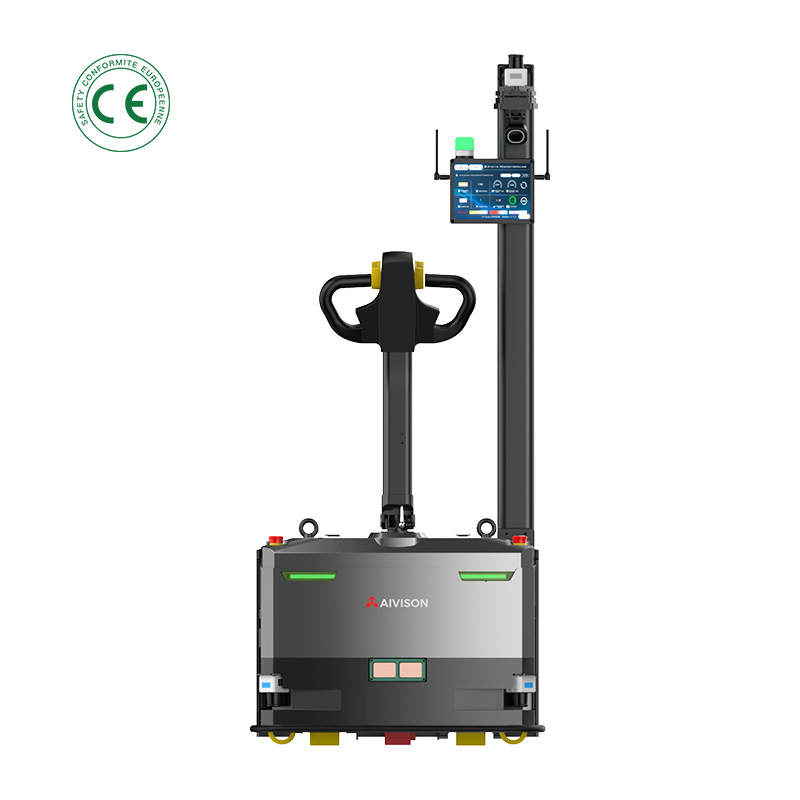
Autonomous Mobile Robot AGV CE Laser SLAM Navigation for Material Handling and Logistics
A general-purpose laser SLAM AMR for transferring totes, racks and pallets between receiving, storage and line-side buffers. It maps natural features at ±5 mm without magnetic tape or floor QR codes, keeping routes flexible when layouts change.
View product
Automatic Handling CE Certificate 2000kg Forklift Robot Vehicle Laser AGV for Large Load Goods-carrying
A 2,000 kg-class unmanned forklift robot for heavy goods-carrying. Designed for pallet transfer, trailer loading and large-load warehouse flows where a standard AMR chassis is not enough.
View product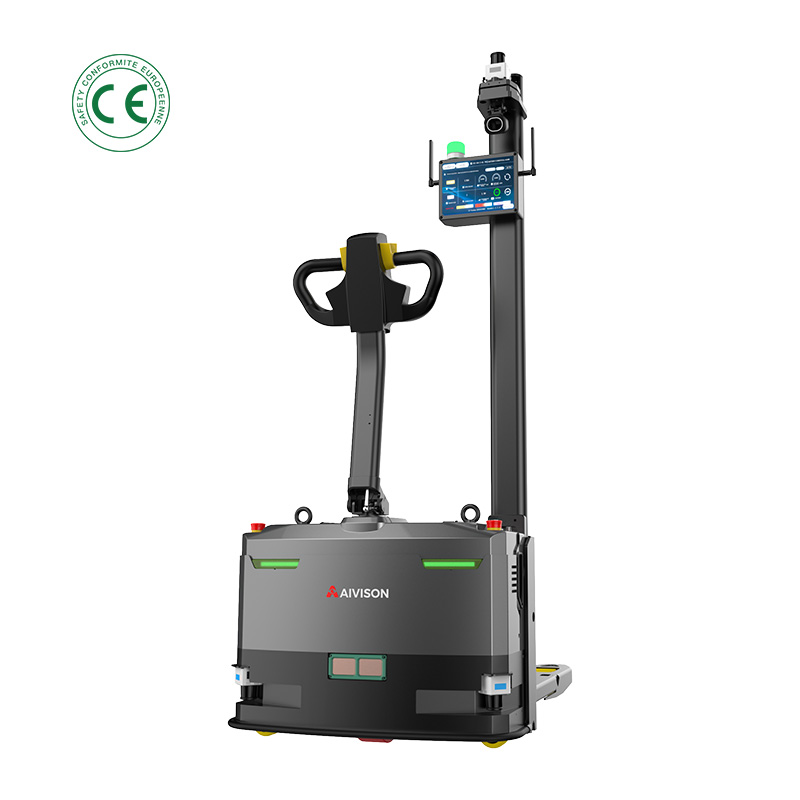
AIVISON CE Laser SLAM Navigation AGV 1500kg Warehouse Lifting Operations
A 1,500 kg lifting AGV for rack and shelf movement. Ideal for high-throughput line-side replenishment, where the robot must lift, carry and dock with repeatable positioning.
View product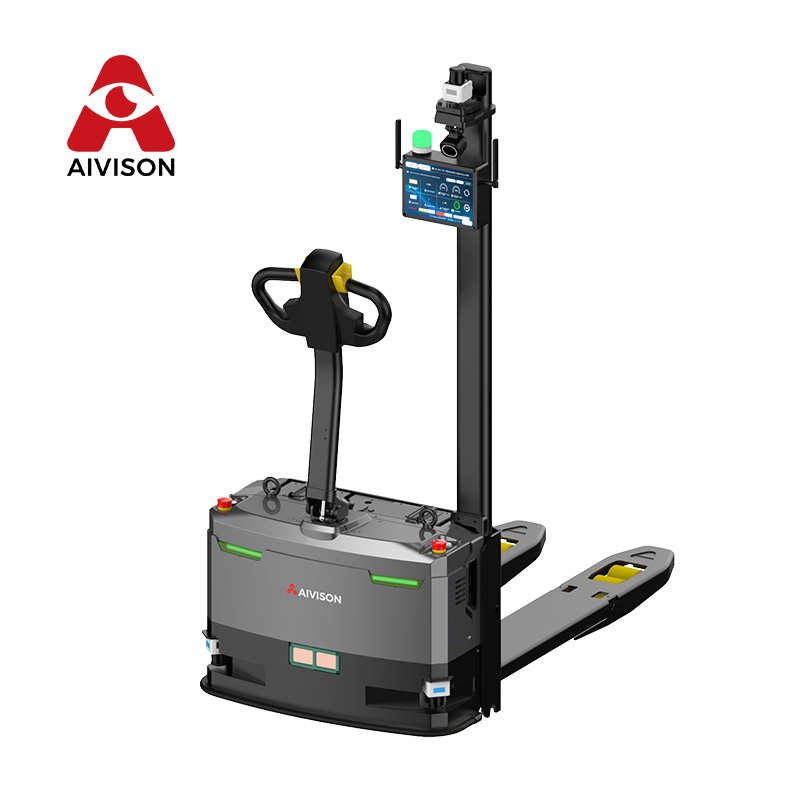
Aivison AGV Forklift High Quality Industrial Unmanned Pallet Forklift
An industrial unmanned pallet forklift for mixed-traffic warehouses. It combines robust forklift mechanics with laser SLAM to automate pallet pickup, transport and put-away in repetitive logistics zones.
View product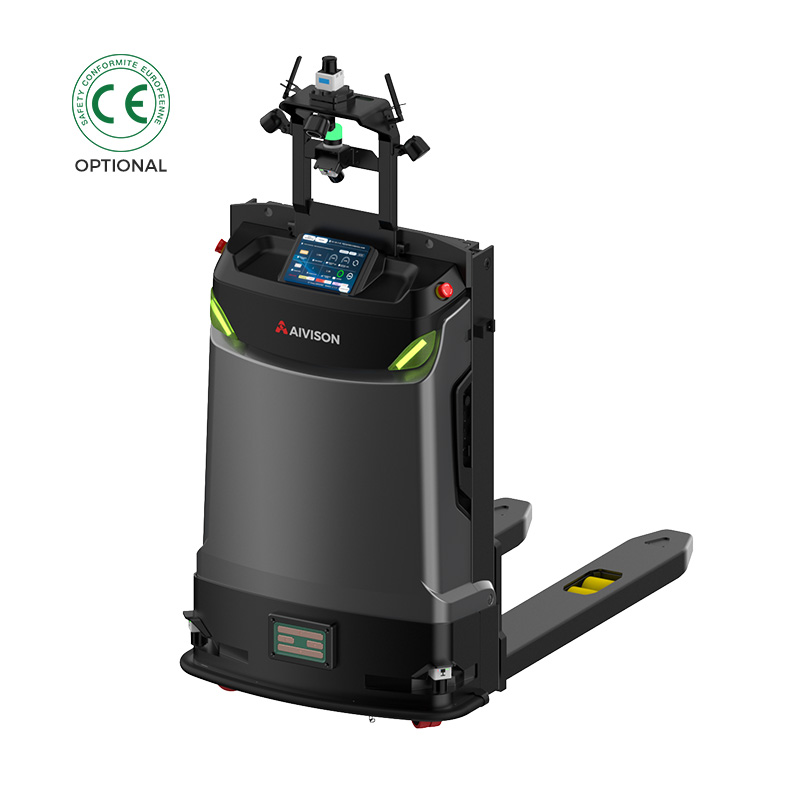
AGV AMR Warehouse Automatic Guided Vehicle 1500kg 2000kg AGV Robot Forklift
A flexible 1,500–2,000 kg AGV/AMR forklift platform that balances heavy load capacity with compact navigation. Suitable for factories and distribution centers moving pallets between zones with variable demand.
View product
Humanoid Robot Chassis Dual 7-DOF Arms Laser SLAM Omnidirectional Navigation ROS2 Open Platform AMR
A future-facing composite mobile robot platform with dual 7-DOF arms, omnidirectional navigation and ROS2 openness. Designed for integrators and advanced manufacturing teams that need mobile manipulation, not only transport.
View product
Hot Selling Logistics Navigation Detector Sensor Lidar Manufacturers Direct Sales
A direct-sale lidar sensor for logistics navigation. Useful for OEMs, integrators and factories building or maintaining AGV/AMR fleets that require reliable obstacle detection and localization hardware.
View product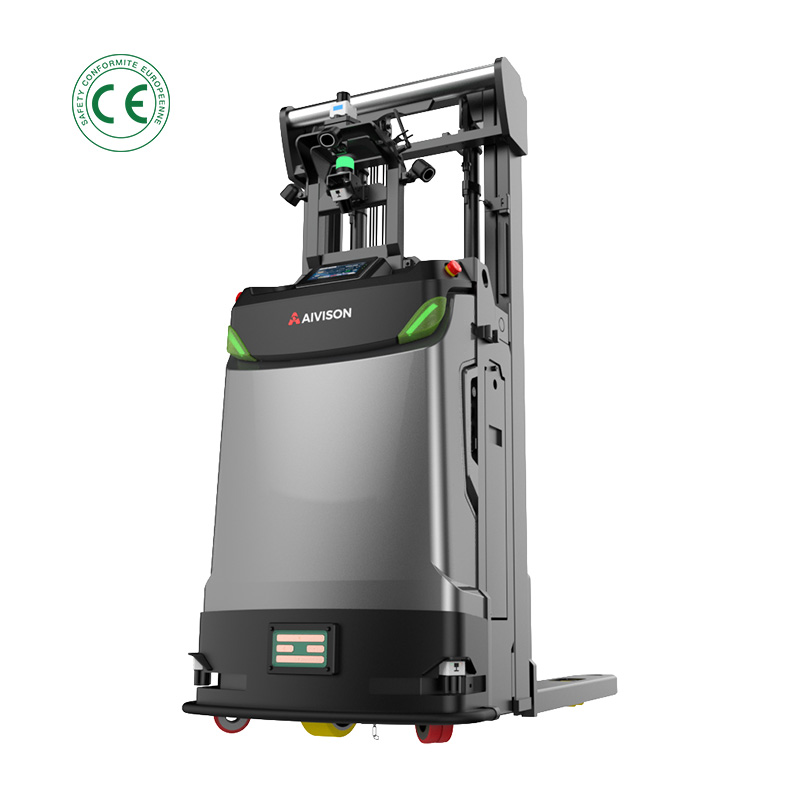
Smart Transport Robotic with Laser Navigation Reach 2000KG AGV Logistics Robots Warehouse Robot AMR
A 2,000 kg laser-navigation reach robot for high-density warehouse transport. The reach configuration supports flexible pallet handling and is well suited to multi-shift logistics operations.
View productWhy Warehouse AGV Buyers Should Evaluate the Factory, Not Only the Robot
Warehouse AGV projects fail for predictable reasons: inaccurate docking assumptions, incomplete safety review, weak fleet control, customized top modules that never integrate with existing equipment, or spare parts that arrive too late. A trusted supplier must demonstrate engineering depth, manufacturing control, verified credentials and post-commissioning service capability.
Shenzhen Marnix Intelligent Technology Co., Ltd.: A Manufacturer Built Around Real Production Lines
Shenzhen Marnix Intelligent Technology Co., Ltd. designs and manufactures laser SLAM autonomous mobile robots, jacking robots, smart forklifts, composite mobile robots and intelligent charging docks. The company draws on about ten years of AGV manufacturing experience and serves both end users and system integrators who need production-ready mobile automation rather than a demonstration robot.
The portfolio covers jacking and lifting robots, pallet AMRs, 1,500–2,000 kg smart forklifts, reach robots, composite robots with 6-axis arms, QR-code cameras, fleet scheduling software and charging docks. This matters during procurement because a mixed fleet should not require separate engineering philosophies. Marnix robots are coordinated by an intelligent scheduling system over indoor Wi-Fi, enabling simultaneous task assignment, traffic control and automatic charging with compatible smart charging docks.
Precision is matched to the station, not over-specified across the whole building. Standard laser SLAM navigation reaches ±5 mm using natural features, so most aisles require no auxiliary tracks, reflectors or floor QR codes. Where high-shelf storage, precision docking or wafer handling demands tighter handover, a QR code scanning camera raises accuracy to ±2 mm. Composite robots with a 6-axis arm reach ±0.05 mm repeatability for semiconductor and medical device assembly.
Trust signals are equally important. Marnix has undergone an onsite supplier assessment by TÜV Rheinland, supplies a Fortune 500 company, and maintains verified supplier, credit and trade records. These credentials reduce procurement risk when a buyer must justify supplier selection to engineering, safety, finance and operations teams.
What Separates a Trusted AGV Factory from a Trading Company
Use these six evaluation criteria when comparing warehouse AGV factories and suppliers. They are the difference between a low purchase price and a low total cost of ownership.
Trackless ±5 mm Laser SLAM
Confirm that the robot maps natural features and navigates without magnetic tape or reflectors. This preserves layout freedom and reduces installation downtime when aisles are reorganized.
QR-Assisted ±2 mm Docking
For high-shelf storage and precision handover, check whether the supplier can add a QR camera at selected stations. This hybrid approach avoids full-floor QR installation while meeting tighter tolerances.
Manufacturer-Level OEM/ODM
Ask whether the factory customizes chassis, payload and top modules such as jacking units, roller conveyors, forklift forks and robotic arms. Integrators need engineering support, not catalogue resale.
Wi-Fi Fleet Scheduling
A single robot is a tool; a fleet is a system. Verify simultaneous dispatch, traffic management, route optimization and integration potential with WMS, MES or production equipment.
Quality Protocol & Safety Discipline
Look for multi-stage intelligent inspection, operational stress testing and clear safety documentation. Warehouse AGVs share floors with people and forklifts; reliability must be engineered before shipment.
Verified Credentials & Lifecycle Service
TÜV Rheinland onsite assessment, Fortune 500 supply history, credit records, spare parts and remote support are not administrative details. They are risk controls for a multi-year automation asset.
Which Warehouse AGV Platform Fits Your Material Flow?
Selection should begin with the mission, not the model number. These four recommendation paths connect common operating scenarios to the most relevant AGV/AMR configurations.
High-Shelf Docking & Precision Put-Away
For high-shelf storage, precision handover and repetitive put-away, use a 1,500–2,000 kg AMR forklift with laser SLAM plus a QR code camera at critical stations. The robot keeps ±5 mm layout freedom in main aisles and switches to ±2 mm docking where the rack interface demands it.
2,000 kg Pallet & Trailer Handling
For heavy pallet transfer, trailer loading and large-load goods movement, choose the 2,000 kg forklift robot or reach robot configuration. These platforms are built for warehouses where payload, fork engagement and stable travel matter more than compact chassis size.
Rack Lifting & Fast Replenishment
For lithium battery, 3C electronics and assembly lines, a 1,500 kg laser SLAM lifting AGV or jacking robot can drive under racks, lift and deliver to line-side buffers. The value is stable takt-time replenishment without fixed conveyor extensions.
Mobile Manipulation & ROS2 Development
For advanced manufacturing, R&D and integrator projects, the dual 7-DOF arm humanoid chassis with omnidirectional navigation and ROS2 openness creates a development platform for mobile manipulation. Pair it with logistics lidar sensors for navigation and obstacle-detection engineering.
Warehouse AGV Procurement Trends for 2025–2030
Buyers are moving from “Can a robot move a pallet?” to “Can this supplier deliver a measurable, safe and expandable material-flow system?” These six procurement trends are reshaping how factories and warehouses compare AGV suppliers.
Total Cost of Ownership Beats Sticker Price
Procurement teams increasingly score AGV projects by installation effort, floor modification, integration hours, energy use, spare parts and uptime—not only unit price. A trackless ±5 mm platform can reduce deployment cost when the building cannot stop for infrastructure work.
Mixed Fleets & Open Integration
Warehouses rarely automate one mission only. Buyers want jacking robots, forklifts, reach robots and charging docks to share scheduling logic. Wi-Fi fleet control and customizable top modules reduce the risk of creating isolated automation islands.
Safety & Standards Review Earlier
Safety is no longer an afterthought. Mixed human, forklift and robot traffic demands documented obstacle avoidance, braking behavior, emergency handling and clear operating rules. Verified suppliers help engineering teams prepare risk assessments before installation.
Modular Payloads as a Buying Requirement
Production lines change. Buyers increasingly prefer a proven navigation chassis with interchangeable top modules: jacking units, roller conveyors, forklift forks and 6-axis arms. Modularity protects the investment from process changes.
Software-Defined Automation
Fleet scheduling, task dispatch, traffic control and charging are now evaluated alongside mechanical design. Suppliers that expose integration-friendly platforms, including ROS2 options for advanced projects, are better positioned for long-term automation expansion.
Serviceability & Spare Parts Confidence
An AGV is a multi-year asset. Buyers now ask how spare parts are stocked, how remote support is handled and how batteries and docks are serviced. Supplier credentials, trade records and assessment reports provide evidence beyond a sales presentation.
Where Warehouse AGV Technology Is Moving Next
The strongest warehouses will not choose between simplicity and intelligence. They will deploy robots that use the simplest navigation that meets each station, then upgrade precision, sensing and manipulation only where the process creates measurable value.
Hybrid Navigation: ±5 mm Everywhere, ±2 mm Where It Counts
Laser SLAM handles aisle navigation without floor infrastructure. QR code cameras are added only at precision stations. This hybrid strategy is becoming the default because it combines flexibility with high-shelf docking accuracy.
3D Lidar, Vision & Semantic Safety
Dynamic obstacle avoidance is moving from simple stop-and-retry logic toward richer perception. Lidar sensors, vision and navigation fusion help robots interpret mixed human and vehicle traffic while maintaining route efficiency.
Composite Mobile Robots & Mobile Manipulation
Composite robots combine mobility with 6-axis arms, roller modules and other top mechanisms. They address operations that previously required fixed automation, such as machine tending, precision handover and assembly support at ±0.05 mm repeatability.
Energy Orchestration & 24/7 Autonomy
Smart charging docks, opportunity charging and fleet-level dispatch are becoming tightly integrated. The goal is not only longer run time, but predictable mission completion across shifts without manual intervention.
Match Navigation Precision to the Workstation
Over-specifying accuracy across an entire warehouse increases cost without improving throughput. The most defensible procurement plan matches precision to the docking interface and uses full-floor laser SLAM for general transport.
Laser SLAM on Natural Features
No tape, reflectors or floor codes. Best for warehouse transfer, line-side delivery, variable layout zones and fast deployment.
SLAM + QR Code Camera
QR labels only at precision stations. Best for high-shelf storage, tight docking, wafer handling and equipment handover.
Composite Robot + 6-Axis Arm
Station calibration and multi-layer synchronization. Best for semiconductor, medical device and advanced assembly applications.
Common Questions Buyers Ask Before Selecting an AGV Factory
These are the questions that most often determine whether a warehouse AGV project moves from concept to installation. Clear answers shorten technical evaluation and reduce deployment risk.
How do I verify a trusted warehouse AGV factory?
Check four categories: independent credentials, real manufacturing scope, proven precision levels and post-sales capability. For example, an onsite assessment by TÜV Rheinland, Fortune 500 supply history, verified trade records and a product portfolio covering jacking robots, smart forklifts and charging docks are stronger signals than a brochure. Also ask for the exact navigation configuration required at your docking points.
Do laser SLAM AGVs require floor modification?
No for standard navigation. Marnix laser SLAM robots map natural features to reach ±5 mm without magnetic tape, reflectors or floor QR codes. QR labels are added only where a station requires ±2 mm docking precision. This is important for warehouses that cannot stop operations for floor work or that frequently rearrange racks and workstations.
What payload and lifting options are available?
The product range includes 1,500 kg and 2,000 kg AGV/AMR forklifts, reach robots, laser SLAM lifting AGVs, pallet AMRs and jacking robots. Buyers can match the platform to rack lifting, pallet fork entry, heavy goods-carrying, high-shelf storage or line-side replenishment. Custom top modules can include jacking units, roller conveyors, forks and robotic arms.
Can warehouse AGVs integrate with WMS, MES or production equipment?
Integration should be discussed during technical evaluation, not after purchase. Marnix robots are coordinated by an intelligent scheduling system over indoor Wi-Fi and can be customized with top modules that connect directly to production equipment. Advanced projects can also use ROS2 open-platform options for engineering teams that require deeper development access.
How are multiple robots coordinated and charged?
An intelligent scheduling system manages simultaneous task assignment, traffic control and charging. Compatible smart charging docks support automatic recharge, allowing 24/7 operation with predictable intervention. When requesting a proposal, provide mission volume and peak periods so fleet size and charging dock count can be calculated correctly.
What information should be included in an AGV request for quotation?
Share the load profile, rack or pallet dimensions, site layout, aisle widths, slopes and lift points, throughput target, docking precision, Wi-Fi coverage and equipment interfaces such as conveyors or machines. Also state whether the project is for an end user or a system integrator. These inputs usually determine 90% of robot selection and shorten evaluation from weeks to days.
Request a Warehouse AGV Feasibility Review
Share your payload, layout, throughput and docking precision requirements. The engineering team can recommend a laser SLAM AMR, jacking robot, smart forklift, reach robot or composite solution—and clarify where ±5 mm is enough versus where ±2 mm QR assistance or ±0.05 mm composite robotics is justified.
Send an Inquiry