8 Under-Rack Robots and AMR Platforms for Factory Evaluation
An under-rack robot project usually starts with one question: which platform can lift, carry, or dock with the existing rack without forcing a floor rebuild? These eight products cover rack transport, dual-arm manipulation, service humanoid bases, heavy AGV traction, laser forklifts, and warehouse AMR deployments. Product URLs are preserved exactly for source verification.
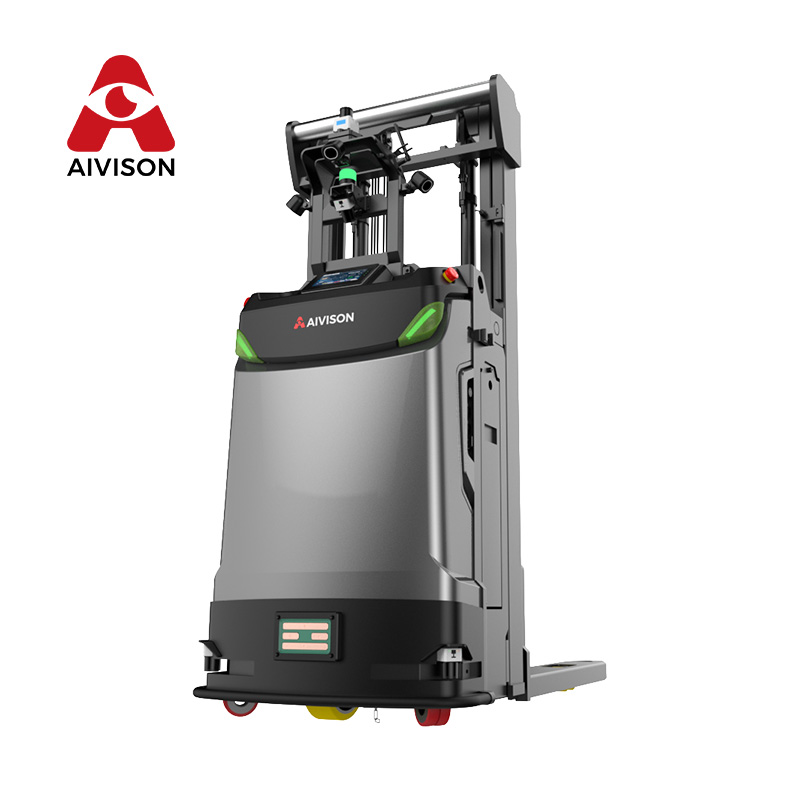
Autonomous Mobile Robots (AMR) Implement Cargo Transportation Between Warehouse and Conveyor Line
Trackless laser SLAM AMR for repetitive warehouse-to-conveyor transfer where fixed conveyors, tape, or floor codes would reduce layout flexibility.

Omnidirectional Mobile Manipulator AMR Dual 7-DOF Arms ±0.03 mm Repeatability Laser SLAM Humanoid Robot Base
Omnidirectional mobile manipulator for flexible pick-place, machine tending, and precision tasks. Product page cites ±0.03 mm repeatability with dual 7-DOF arms.

Omnidirectional Service Humanoid Robot Chassis Dual 7-DOF Arms Laser SLAM Navigation for Hospitality and Retail
Dual-arm service humanoid robot chassis for hospitality, retail, and light logistics. Laser SLAM supports mixed human environments and customer-facing route planning.

AI-Ready Humanoid Robot Chassis Dual 7-DOF Arms Omnidirectional Drive ROS2 Laser SLAM Open Development Platform
ROS2-ready open development platform for research teams, integrators, and advanced automation groups that need a mobile humanoid base with dual arms.

Customizable 1500KG Traction Capacity AGV Autonomous Mobile Robot Amr with Lidar Guided Sensor
Customizable 1500 kg traction AGV for heavier under-rack, cart-towing, or transfer applications where payload and floor tolerance must be verified early.
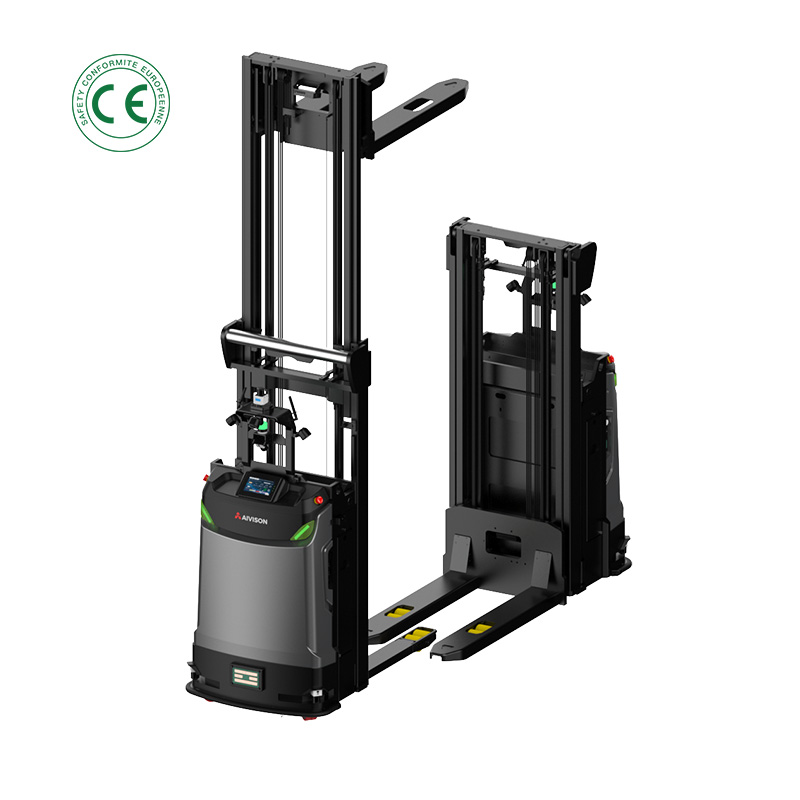
Factory AMR Robot AGV Robot Laser 2000kg Forklift AGV for Industrial Material Handling
2000 kg laser forklift AGV for industrial material handling. A practical upgrade path from manual forklifts when pallets, stillages, or rack interfaces already exist.
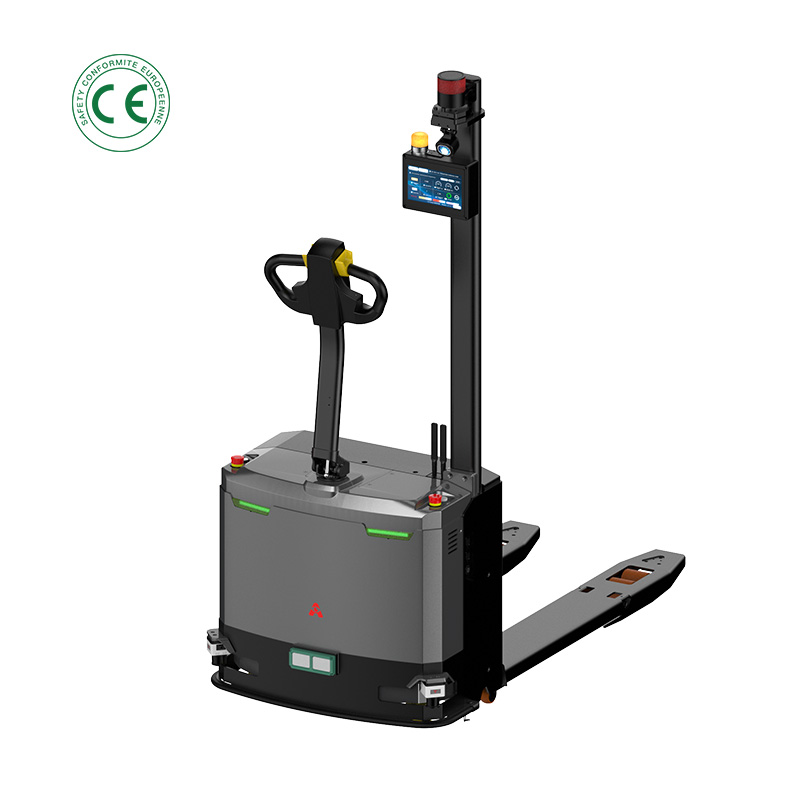
Autonomous Mobile Robot AMR AGV Forklift Pallet Stacker CE Certificate for Smart Warehouse and Production Line Automation
CE-certified AMR forklift pallet stacker for smart warehouse and production-line automation, supporting pallet pickup, transfer, and stacking in defined lanes.
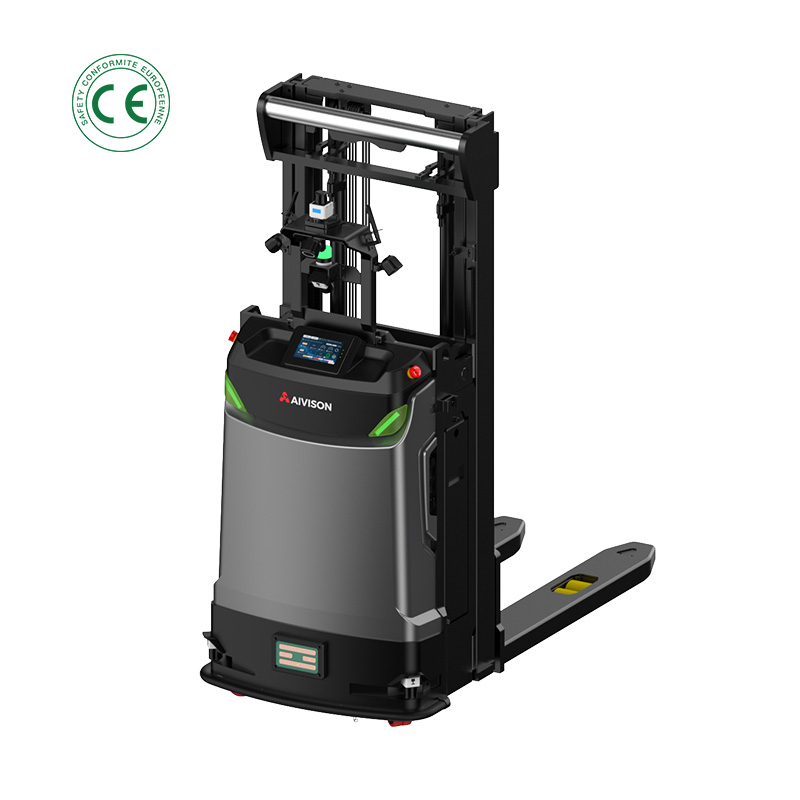
Aivison AMR Robot Whicle Automated Warehouse Automatico agv Logistics Industrial Guided Vehicles
Industrial AMR logistics vehicle for automated warehouses, with an emphasis on guided movement and repeatable material flow in production logistics.

A Shenzhen AMR Manufacturer Engineering Under-Rack Robots Around Real Production Lines
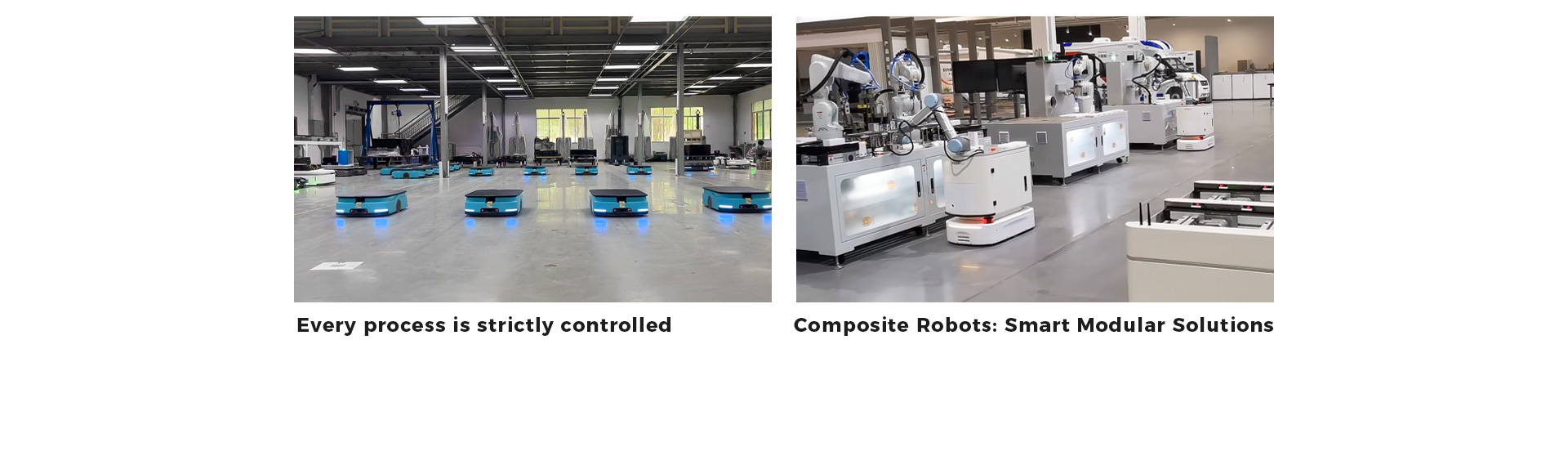
Shenzhen Marnix Intelligent Technology Co., Ltd. draws on about ten years of AGV manufacturing experience to build autonomous mobile robots that drop into existing factories with minimal disruption—for end users and for the system integrators who serve them. The portfolio includes laser SLAM AMRs, jacking robots, smart forklifts, composite mobile robots, and compatible intelligent charging docks.
The engineering approach is deliberate: keep the navigation core stable, customize the chassis and top module around the process, and verify the robot through multi-stage inspections before shipment. This is especially important for under-rack robot projects, where rack geometry, lift engagement, and docking tolerance often matter more than headline speed.
- Complete AMR portfolio: jacking robots, smart forklifts, pallet AMRs, composite robots, and charging docks from one source.
- Precision without floor rework: standard laser SLAM reaches ±5 mm; QR scanning raises docking to ±2 mm where required.
- Manufacturer-level customization: chassis, payload, jacking units, roller conveyors, forklift forks, and 6-axis arms can be engineered around the line.
TÜV Rheinland Onsite Assessment
Company premises and operations verified by an independent inspection body—valuable when procurement teams cannot visit Shenzhen early in the RFQ process.
Supplier to Fortune 500
Procurement contract with a Fortune 500 company, assessed by independent third parties—evidence of enterprise-grade documentation and delivery capability.
Verified Multispecialty Supplier
Low-MOQ customization and multi-category robot procurement capability for integrators, distributors, and end users with mixed project requirements.
Credit & Transaction Records
Transparent credit index and transaction-level history support supplier risk review before a factory commits capex to fleet automation.

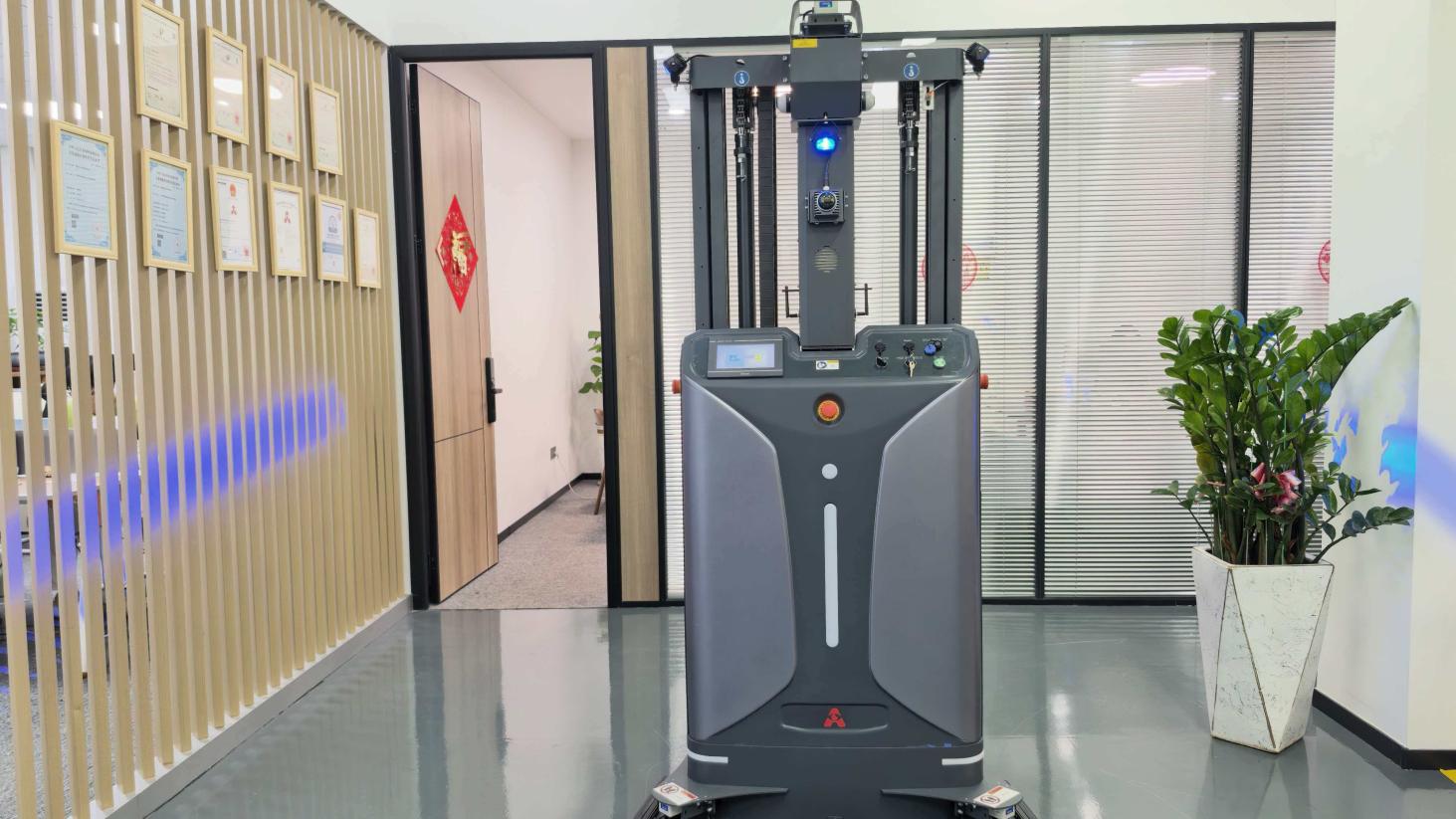
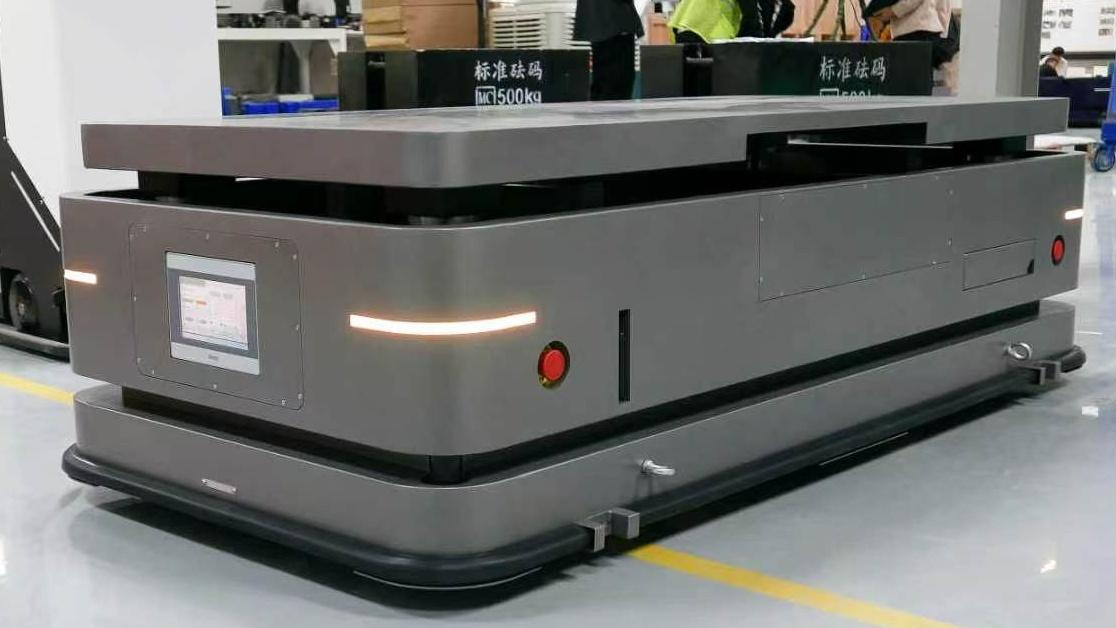
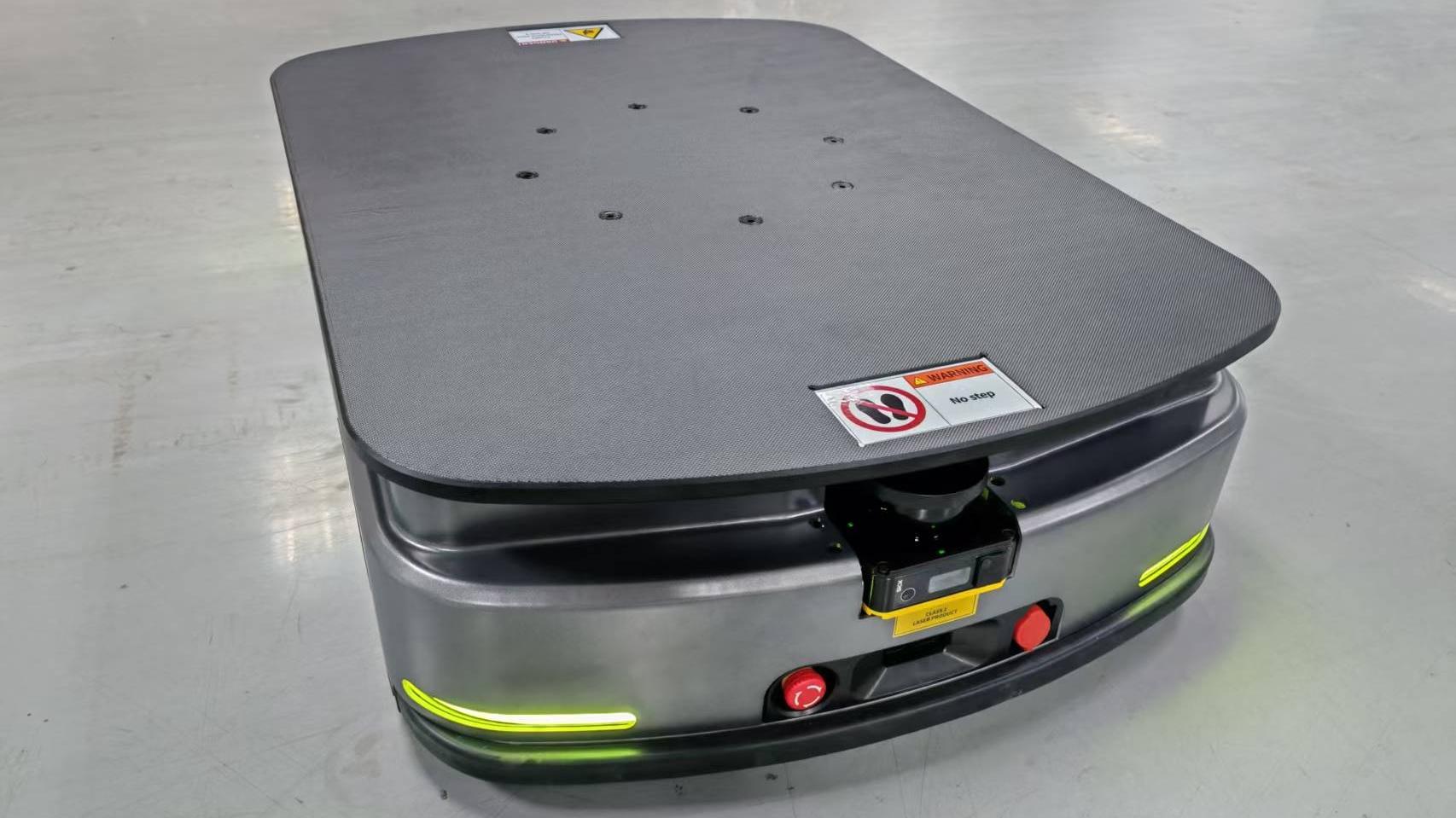
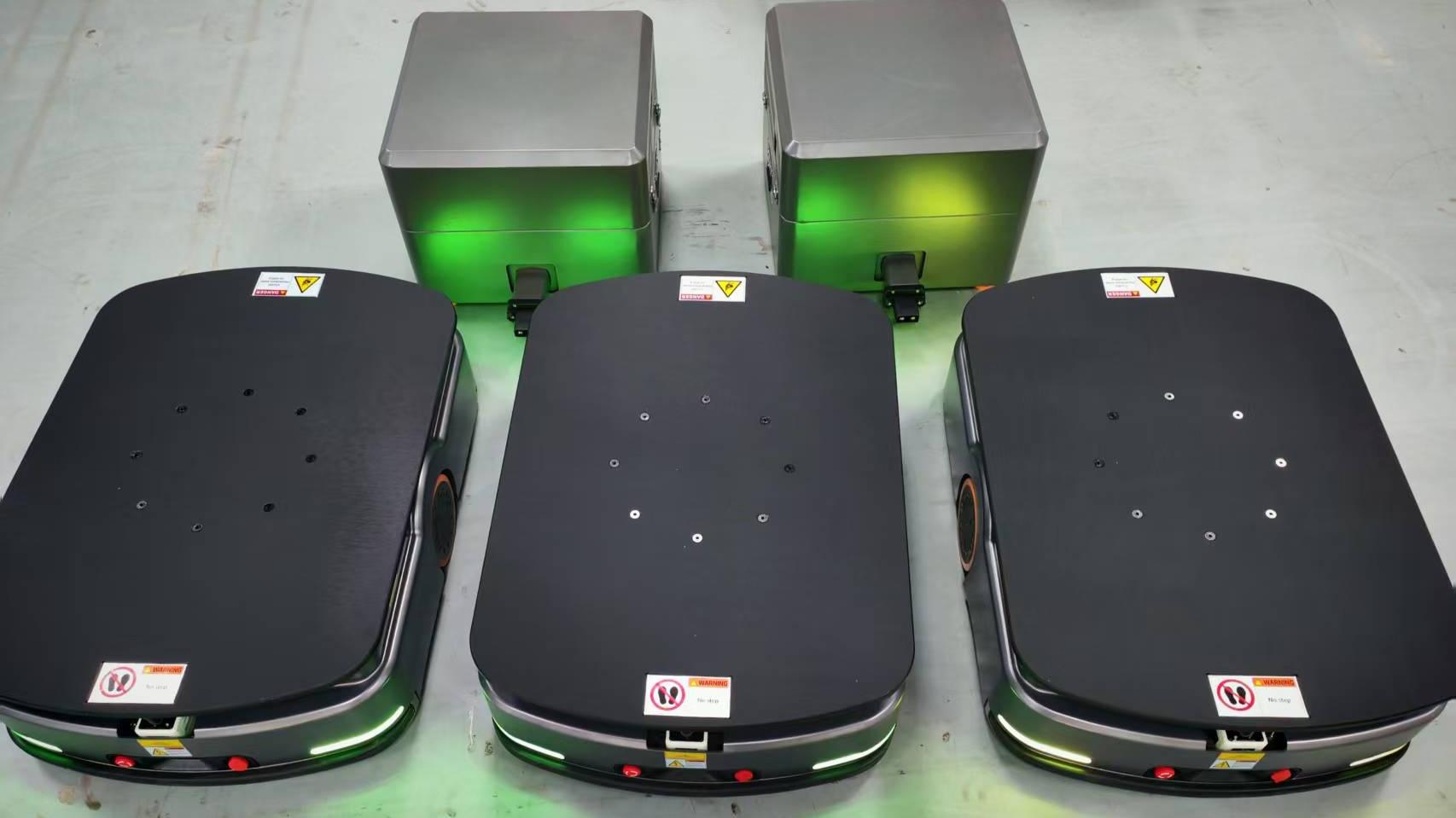
What Is an Under-Rack Robot, and Why Does the Definition Matter?
An under-rack robot is a low-profile AMR or AGV that travels beneath a rack, shelf, cart, or pallet carrier, lifts the load, and moves it through a warehouse or production floor. In English procurement language, buyers may call the same category a latent lifting AMR, under-ride AGV, jacking robot, under-rack lifting robot, rack carrier robot, or rack-moving mobile robot. The naming varies, but the engineering question is constant: how does the robot find the rack, confirm engagement, lift safely, and dock within the precision the process requires?
Under-rack robots are not interchangeable with smart forklifts. A jacking robot works with racks or carts designed for underneath access, while a forklift AGV handles pallets and stacks through forks. Pallet AMRs may carry conveyors or roller modules. For a new automation project, the best supplier list includes vendors who can explain the boundary between these formats—not one that pushes a single chassis into every task.
This is where information gain becomes useful for Google semantic search and for real buyers. A trusted under-rack robot factory should clarify navigation accuracy, floor preparation, load interface, safety strategy, charging method, and fleet software before quoting a robot. That combination determines whether the project succeeds at RFQ stage or stalls during commissioning.
Supplier Capability Profile
Illustrative evaluation based on the configuration range disclosed by the factory.
| Robot format | Typical load interface | Floor and docking requirement | Best-fit use case |
|---|---|---|---|
| Under-rack lifting AMR | Racks, shelves, carts, mobile carriers | Usually no tracks or QR codes at ±5 mm; QR adds ±2 mm at selected stations | Warehouse-to-line transfer, lithium battery and 3C logistics, rack movement |
| Smart forklift AGV | Pallets, stillages, stacked loads | Camera-assisted fork entry, defined lanes, rack or conveyor interfaces | High racks, heavy pallets, existing pallet flows |
| Composite mobile robot | Robot arm, roller conveyor, custom top module | Station calibration where ±0.05 mm or sub-millimeter repeatability is required | Semiconductor, medical device, precision assembly, machine tending |
Why Marnix Is a Trusted Under-Rack Robot Factory and Supplier
Trust is not a badge alone. It is the combination of navigation evidence, customization depth, fleet software, verification records, and the ability to support commissioning across industries.
Complete AMR Portfolio
Jacking robots, smart forklifts, pallet AMRs, composite robots, and compatible charging docks allow one supplier to compare formats honestly instead of forcing a single chassis.
Laser SLAM + Vision Fusion
Natural-feature mapping supports ±5 mm positioning without auxiliary tracks. A QR scanning camera raises precision to ±2 mm only where docking demands it.
Precision Without Floor Rework
Standard laser SLAM maps the existing environment. QR labels are added only at stations that need ±2 mm docking, protecting capex when layouts change.
Manufacturer-Level Customization
Chassis, payload, jacking units, roller conveyors, forklift forks, and 6-axis arms can be engineered around the production line and existing equipment interfaces.
Wi-Fi Fleet Scheduling
An intelligent scheduling system coordinates robot tasks, traffic control, and automatic charging over indoor Wi-Fi, enabling simultaneous multi-robot dispatch.
Multi-Stage Quality Protocol
Multi-stage intelligent inspections and operational stress tests target near-zero failure rates before shipment, supporting 24/7 warehouse and production duty.
Future Procurement Trends for Under-Rack Robots
Buyers are moving away from “robot price per unit” toward measurable uptime, interoperability, and lifecycle support. These six procurement shifts are already visible in serious warehouse and production-line RFQs.
Total Cost of Uptime Replaces Lowest Price
Procurement teams now model charging strategy, spare-parts availability, service response, and failure impact. A lower purchase price is less valuable if a robot stops a production line.
Fleet Interoperability Becomes a Tender Requirement
Mixed fleets are common. A supplier should explain how scheduling, traffic control, task assignment, and charging docks work together rather than treating each robot as an isolated machine.
Modular Top Modules Reduce Engineering Risk
Instead of one-off custom vehicles, buyers prefer a proven SLAM chassis with modular jacking units, roller conveyors, forks, charging docks, or robotic arms configured for the process.
Safety and Compliance Documentation Moves Earlier
CE-related documentation, onsite verification, and application risk assessments are discussed during the first technical meeting, not after the purchase order is issued.
Serviceability Outranks Peak Speed
Fast access to spare parts, remote diagnostics, clear maintenance intervals, and local partner support are more important than a small throughput advantage in a live facility.
Layout Flexibility Protects Capital
Since SKUs, racks, and production lines change, buyers favor trackless SLAM that can be re-mapped. QR labels are limited to high-precision stations rather than installed across the entire floor.
Product Development Trends Buyers Should Watch
Under-rack robots are evolving from simple transfer vehicles into modular mobile automation platforms. These development trends directly affect the questions a buyer should ask during supplier evaluation.
Sensor Fusion: SLAM + Vision + QR
Laser SLAM remains the baseline, but vision and QR scanning are used selectively for pallet recognition, precision docking, and station-level handoff rather than whole-floor infrastructure.
Higher Payloads in Compact Chassis
Heavy-duty AGV and forklift platforms push traction capacity to 1500 kg and 2000 kg while keeping service access and aisle requirements manageable for existing facilities.
Composite Robots and Humanoid Bases
Mobile bases with dual 7-DOF arms and omnidirectional drive are expanding from research labs into semiconductor, medical device, and precision assembly workflows.
Open Development Platforms
ROS2-ready and AI-ready chassis give integrators a faster route to custom applications while retaining the manufacturer’s navigation and safety foundation.
Fleet-Level Intelligence and Auto Charging
Task assignment, traffic control, and automatic charging are becoming fleet-level features. The robot is evaluated as part of a system, not as a standalone vehicle.
Battery and Charging Architecture
Compatible intelligent charging docks and scheduled recharge windows support 24/7 duty. Buyers should ask how charging affects throughput during peak shifts.
What to Prepare Before Requesting an Under-Rack Robot Proposal
From project experience, six inputs determine most robot selection decisions. Sharing them upfront shortens evaluation from weeks to days.
Load Profile
Maximum weight, footprint, and center of gravity of racks, pallets, carts, or carriers to be moved. Include empty and loaded weights.
Site Layout
CAD drawing or sketch with aisle widths, doors, slopes, elevators, lift points, and any mixed traffic zones for people or forklifts.
Throughput Target
Missions per hour, peak periods, and shift pattern. These inputs set fleet size, charging strategy, and buffer requirements.
Docking Precision
Where ±5 mm is enough and where ±2 mm QR assist or arm-level precision is required. Precision should be assigned station by station.
Wi-Fi Coverage
Existing access points and coverage quality across the operating area. Fleet scheduling and task handoff depend on reliable indoor connectivity.
Equipment Interfaces
Conveyors, machines, racks, or shelving the robot must hand over to, plus any top-module needs such as jacking, rollers, forks, or arms.
Under-Rack Robot Factory and Supplier FAQ
Direct answers for procurement teams, system integrators, and factory engineers comparing under-rack AMR suppliers.
An under-rack robot is a low-profile AMR or AGV designed to travel underneath a rack, cart, or shelf and lift it for transport. A standard AMR may instead carry totes, pallets, or conveyors on top. The key differences are chassis height, lift engagement, load detection, and docking tolerance. For a rack-moving project, confirm that the rack under-clearance, robot lift height, center of gravity, and safety sensors match the real load—not just the datasheet payload.
Using laser SLAM on natural features, Marnix AMRs reach ±5 mm positioning without magnetic tape, reflectors, or floor QR codes. Adding a QR code scanning camera raises accuracy to ±2 mm where station docking demands it. Composite robots with a 6-axis arm can reach higher repeatability at the workstation. Buyers should ask which accuracy applies to mobile travel versus final docking, because that distinction drives both cost and infrastructure requirements.
No for standard laser SLAM navigation. The robot maps the existing environment, so no auxiliary tracks or floor QR codes are required for general movement. QR labels are only added at stations where ±2 mm docking precision is needed. This is important for existing factories that cannot stop production for floor work. It also protects the project if rack layouts or production lines are reorganized later.
Yes. As a manufacturer, Marnix customizes chassis and top modules such as jacking units, roller conveyors, forklift forks, and 6-axis robotic arms to connect directly with production equipment. The practical starting point is the interface drawing: how the robot engages the rack, transfers the load, and confirms completion. If a supplier cannot describe this interface precisely, the customization risk should be treated as high.
Robots are managed by an intelligent scheduling system over indoor Wi-Fi, enabling simultaneous task assignment, traffic control, and route coordination. Compatible smart charging docks support automatic recharge so the fleet can continue operating across shifts. During evaluation, ask how the system handles deadlocks, narrow aisles, charging queues, and priority tasks. Those details matter more in daily operation than a single robot’s maximum speed.
Semiconductors, 3C electronics, lithium batteries, photovoltaics, automotive parts, PCB, textiles, and medical devices are common. Each industry has different cleanliness, payload, traceability, and docking requirements. A factory serving both end users and system integrators should be able to reference projects across more than one of these sectors, because the engineering constraints differ significantly between a battery line and a semiconductor cleanroom.
Check for manufacturing evidence, not only trading capacity: factory images, testing areas, engineering team information, independent onsite assessment, trade history, and product URLs with consistent technical data. Marnix provides a company profile, TÜV Rheinland onsite assessment, Fortune 500 procurement history, credit index, and transaction records. A serious factory should welcome a technical review of navigation accuracy, customization boundaries, and quality control methods.
Include load weight and dimensions, rack or cart drawing, aisle width, floor layout, required throughput, docking precision, Wi-Fi coverage, charging location, and any conveyor or machine interface. Add target countries and applicable compliance needs. With these inputs, an engineer can recommend a robot format, navigation configuration, fleet size estimate, and charging strategy instead of quoting a generic AMR that may not fit the line.
Get a Line-Specific Recommendation from the Factory
Share your rack dimensions, payload, layout, throughput target, and docking precision. Marnix engineers will map the requirement to a laser SLAM AMR, jacking robot, smart forklift, or composite mobile robot configuration—and identify where QR assist or custom top modules are genuinely necessary.