8 Load Handling Robot Platforms for Real Production Lines
These platforms are presented by application fit rather than by catalog order. Use the list to compare humanoid AMR development platforms, jacking robots, autonomous forklifts, warehouse AMRs and LiDAR sensing—then request the configuration that matches your payload, aisle, docking tolerance and throughput target.

Humanoid Robot Chassis Dual 7-DOF Arms Laser SLAM Omnidirectional Navigation ROS2 Open Platform AMR
An open development platform for AI-ready humanoid automation, combining omnidirectional mobility, laser SLAM and two 7-DOF arms for research, semiconductor handling and flexible line-side tasks.
View product
Omnidirectional Humanoid Robot Chassis Dual 7-DOF Arms Laser SLAM Autonomous Warehouse AMR Mobile Platform
A warehouse-focused humanoid mobile platform for mixed manual and automated operations. Omnidirectional drive supports narrow-aisle maneuvering and precise alignment at conveyors, racks and workstations.
View product
Aivison Stacker Truck Pallet Stacker Forklift Agv 1.5 Ton Autonomous Forklift Smart Deliver AMR Robot
For repetitive pallet movement where consistent fork entry and reliable delivery matter. Suitable for warehouse transfer, dispatch staging and production supply with laser-guided navigation.
View product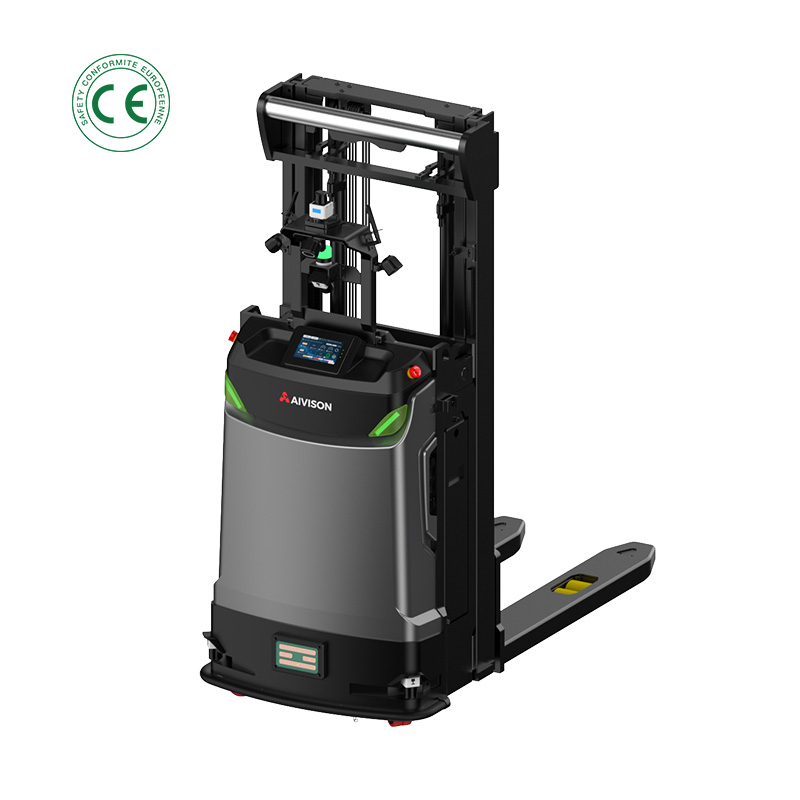
Aivison AMR Robot Vehicle Automated Warehouse Automatico AGV Logistics Industrial Guided Vehicles
An industrial AMR platform for automated warehouse logistics and repetitive transfer tasks. It supports multi-robot scheduling over indoor Wi-Fi and can be adapted for different top modules.
View product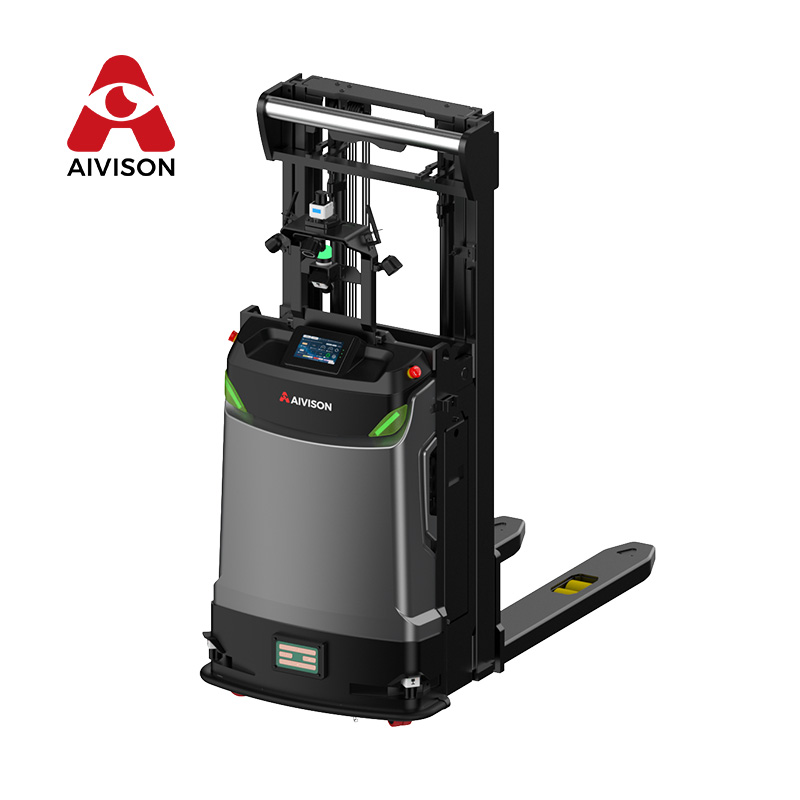
Heavy Load 2000KG Load Forklift Laser Guide AMR for Warehouse Pallet
Designed for heavier pallet loads and high-duty warehouse flows. A practical option when buyers need autonomous pallet handling but want to avoid permanent magnetic tape or floor tracks.
View product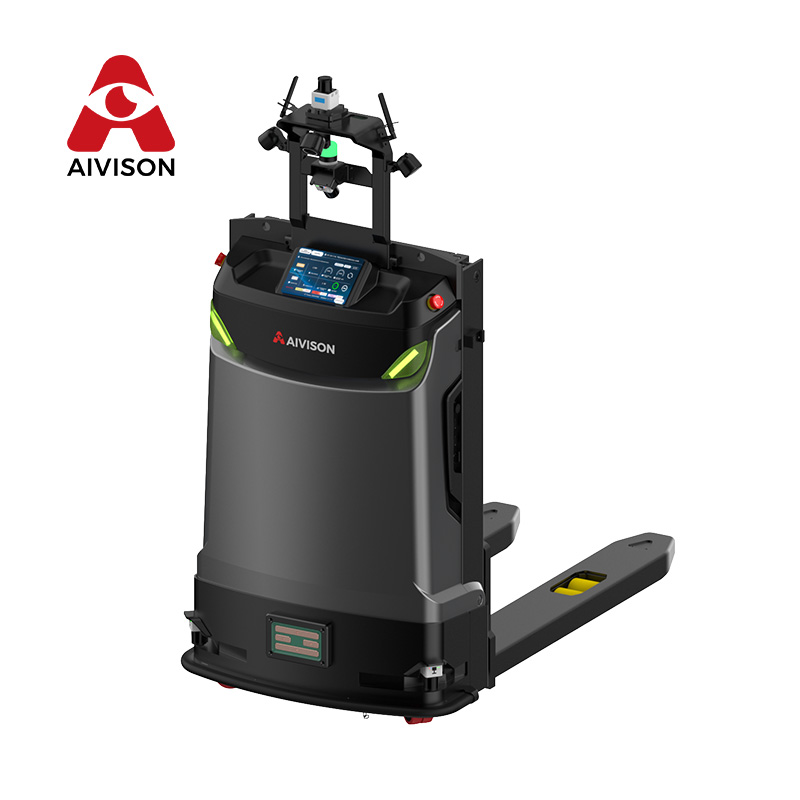
AGV AMR Autonomous Forklift Smart Version Auto Mobile Transfer Stacker Robot
A smart autonomous forklift configuration for transfer and stacking. It fits projects that need a compact, repeatable pallet-handling robot with straightforward integration into existing warehouse routines.
View product
Hot Selling Logistics Navigation Detector Sensor Lidar Manufacturers Direct Sales
A navigation and detection sensor option for logistics robot projects. Useful for buyers comparing LiDAR supply, replacement planning and local sourcing for AMR fleets.
View product
AI-Ready Humanoid Robot Chassis Dual 7-DOF Arms Omnidirectional Drive ROS2 Laser SLAM Open Development Platform
An AI-ready humanoid robot development platform for integrators building new automation applications. It combines omnidirectional drive, dual arms, laser SLAM and ROS2 openness.
View productWhat Makes a Load Handling Robot Manufacturer Trusted by Global Buyers?
Trust in load handling automation is rarely decided by a robot’s appearance or a single specification sheet. It is decided by whether the robot can keep production flowing after the novelty of a demo has passed. A trusted manufacturer and exporter must show how the platform behaves in mixed traffic, how it docks at ±5 mm or ±2 mm when required, how multiple robots share routes, and how custom top modules connect to conveyors, racks, pallets or production equipment. For buyers, the strongest evidence is not a claim of “high precision.” It is a clear engineering logic that explains where precision is needed, where it is not, and how much site modification is avoided.
That distinction matters because load handling robots sit at the intersection of mobility, payload security and process timing. A warehouse AMR moving pallets between receiving and dispatch has a different risk profile from a jacking robot lifting racks on a lithium battery line or a composite mobile robot positioning a 6-axis arm for medical device assembly. A credible supplier should therefore offer a portfolio—not a single forced-fit model—and should be willing to discuss the trade-offs between laser SLAM, QR-assisted docking and arm-level repeatability.
Precision Matched to Station
±5 mm laser SLAM handles most transfer routes; ±2 mm QR-assisted docking is added only where high-shelf or equipment handover demands it.
Floor-Independent Deployment
Natural-feature SLAM maps the existing environment. QR labels are limited to precision stations, reducing installation downtime and future rework.
Payload & Interface Engineering
Jacking units, roller conveyors, forklift forks and robotic arms are engineered around the load—not around a one-size-fits-all chassis.
Fleet Coordination & Service
Wi-Fi scheduling, traffic control, automatic charging and spare-parts planning determine uptime long after the first robot is commissioned.
Navigation Precision: Match Accuracy to Each Station
Over-specifying precision adds cost and infrastructure. Under-specifying it creates failed docking and manual intervention. Use this comparison to define the right configuration before requesting a quotation.
| Configuration | Accuracy | Floor Setup | Best For |
|---|---|---|---|
| Laser SLAM on natural features | ±5 mm | No tape, reflectors or floor QR codes required | Warehouse transfer, line-side delivery, layout changes, mixed pedestrian traffic |
| Laser SLAM + QR code camera | ±2 mm | QR labels only at stations requiring precise handover | High-shelf storage, precision docking, wafer handling, conveyor alignment |
| Composite mobile robot with 6-axis arm | ±0.05 mm | Station calibration and controlled interface design | Semiconductor and medical device assembly, automated machine tending |
A practical procurement rule is to map accuracy by station rather than by project. Most facilities need ±5 mm for movement and ±2 mm only at a minority of docking points. Arm-level repeatability should be reserved for tasks where the robot is actually manipulating a part or tool.
What Shenzhen Marnix Brings to a Load Handling Project
Marnix combines about ten years of AGV engineering experience with in-house customization, fleet software and verified supplier credentials—serving end users and system integrators worldwide.
About Ten Years of AGV Engineering
Founded in Shenzhen, Marnix builds laser SLAM AMRs, jacking robots, smart forklifts, composite robots and intelligent charging docks for factories and integrators.
Manufacturer-Level Customization
Chassis, payload, jacking units, roller conveyors, forklift forks and 6-axis arms can be engineered to connect with existing production equipment instead of forcing a standard fit.
Verified Supplier Credentials
Onsite assessment by TÜV Rheinland, a Fortune 500 supply relationship and transparent trade records support buyer due diligence.
Multi-Robot Scheduling
An intelligent scheduling system coordinates robots over indoor Wi-Fi for simultaneous task assignment, traffic control and automatic charging.
Modular Ecosystem
One navigation core can support jacking, pallet, roller-conveyor, forklift and arm-based top modules, simplifying mixed-fleet planning.
Quality Before Shipment
Multi-stage intelligent inspections and operational stress tests target near-zero failure rates, with 200+ manufacturers served across three continents.
Future Load Handling Robot Procurement Trends
Buyers are moving from isolated robot purchases toward fleet-level operating decisions. These four trends are shaping requests for quotation in 2025 and beyond.
Total Cost of Ownership
Procurement teams now compare unit price against installation time, floor modification, charging ratio, spare parts, service response and expansion cost.
Mixed-Fleet Interoperability
Warehouses rarely buy one robot type. They need jacking robots, AMR pallet vehicles and smart forklifts to share routes and scheduling data.
Base + Top Module Sourcing
Buyers prefer a proven navigation chassis with a custom top module for jacking, conveying, forks or arms—reducing redesign risk and lead time.
Evidence-Based Supplier Selection
Site videos, trial mapping, onsite audit reports, trade history and service SLAs increasingly outweigh brochure claims during shortlisting.
Load Handling Robot Product Development Trends
Robot platforms are becoming more open, more perception-rich and more connected to production systems. These developments affect what buyers should require in a future-ready fleet.
AI-Ready & Open Platforms
ROS2-based humanoid chassis and open development platforms let integrators add perception, manipulation and application logic without rebuilding mobility.
Vision + SLAM Fusion
Laser SLAM remains the backbone, while cameras and QR assist improve pallet recognition, docking confidence and operation in dynamic environments.
24/7 Energy Management
Automatic charging docks and fleet-level charge scheduling are becoming standard requirements for round-the-clock load handling.
Fleet Orchestration & Data
Material flow data, traffic rules, task queues and charging states are increasingly managed as one digital operating layer across mixed robot types.
Load Handling Automation Across Complex Industries
Marnix robots are deployed in environments where people, forklifts and automated equipment share the same floor. The portfolio supports both end users and system integrators.
Semiconductor
Cleanroom logistics, wafer handling and precision handover.
3C Electronics
Line-side delivery and transfer in assembly operations.
Lithium Battery
Rack transport and production-line material flow.
Photovoltaic
Module logistics and automated warehouse transfer.
Automotive Parts
Pallet handling and component warehousing.
PCB
Roller-conveyor interfaces and line-side transport.
Textile
Warehouse transport and repetitive material movement.
Medical Devices
High-repeatability assembly with composite robots.
Load Handling Robot Procurement FAQ
Answers to the questions buyers most often ask before comparing autonomous mobile robots, jacking robots and smart forklifts.
What navigation accuracy can a load handling robot achieve?
Laser SLAM on natural features typically achieves ±5 mm without magnetic tape, reflectors or floor QR codes. Adding a QR scanning camera raises docking accuracy to ±2 mm where stations require tighter alignment. Composite robots with a 6-axis arm can reach ±0.05 mm repeatability for semiconductor, medical device and precision assembly tasks.
Do I need to modify my factory floor before deployment?
No, for standard laser SLAM routes. The robot maps existing natural features, so auxiliary tracks and floor QR codes are not required. QR labels are added only at specific docking stations where ±2 mm precision is needed. This keeps installation disruption low and preserves flexibility when production layouts change.
Can a manufacturer customize the chassis and top module?
Yes. As a manufacturer, Marnix customizes chassis and top mechanisms such as jacking units, roller conveyors, forklift forks and 6-axis robotic arms to connect directly with production equipment. Buyers should bring load dimensions, aisle width, docking tolerance and equipment interface details to the evaluation.
How are multiple robots coordinated on one site?
An intelligent scheduling system manages the fleet over indoor Wi-Fi, handling simultaneous task assignment, traffic control and charging coordination. Compatible smart charging docks support automatic recharge for 24/7 duty. For larger projects, route logic and charging ratios should be reviewed together with throughput targets.
What information should I prepare before requesting a proposal?
Share the maximum load, footprint and center of gravity; a CAD drawing or sketch with aisle widths, doors and slopes; throughput per hour and peak periods; docking precision requirements; Wi-Fi coverage; and equipment interfaces such as conveyors, racks or machines. These inputs determine robot selection, fleet size and charging infrastructure.
How can buyers verify a trusted manufacturer and exporter?
Review third-party onsite assessment, trade history, customer references, trade capacity and service process—not only product photos. For Marnix, buyers can examine TÜV Rheinland onsite assessment, Fortune 500 supply records, credit and transaction history, and request a site mapping review or demonstration relevant to their application.
Build a Load Handling Robot Shortlist with Engineering Evidence
Compare navigation accuracy, payload interface, fleet scheduling, charging strategy and customization before committing to a layout change.
How to Evaluate a Load Handling Robot Supplier Beyond the Quotation
A quotation can show payload, speed and battery capacity, but it rarely shows the operational truth of a project. Buyers should ask how the robot will be mapped, who defines traffic rules, what happens when a docking point drifts, how spare parts are stocked and what service response is promised. The most reliable suppliers make these details visible early. They separate movement accuracy from docking accuracy, explain when QR labels are genuinely necessary, and propose a fleet size based on throughput and charging ratio rather than simply selling more robots.
For global procurement teams, another layer matters: exporter readiness. Documentation, packing, remote commissioning support, language coverage and spare-parts logistics can affect total cost as much as the robot itself. A manufacturer with about ten years of AGV engineering experience, an in-house customization process and verified trade records reduces the risk of a technically attractive but operationally fragile deployment. That is why Marnix positions its portfolio around a shared navigation and scheduling core: jacking robots, autonomous forklifts, warehouse AMRs and humanoid development platforms can be evaluated as one automation roadmap, while each top module is matched to the actual load.
Ready to Match a Load Handling Robot to Your Line?
Share your payload, floor layout, throughput target and docking tolerance. Our engineering team will recommend a practical configuration—laser SLAM, QR-assisted docking or a composite robot with a custom top module.