Eight Heavy Load AMR Products for Serious Factory Projects
These eight platforms cover 1.5-ton to 2-ton forklift-class handling, pallet rack transport, SLAM lifting chassis, omnidirectional manipulation and custom warehouse automation. Each product URL is preserved from the original catalog; non-standard interfaces can be discussed directly with the factory engineering team.
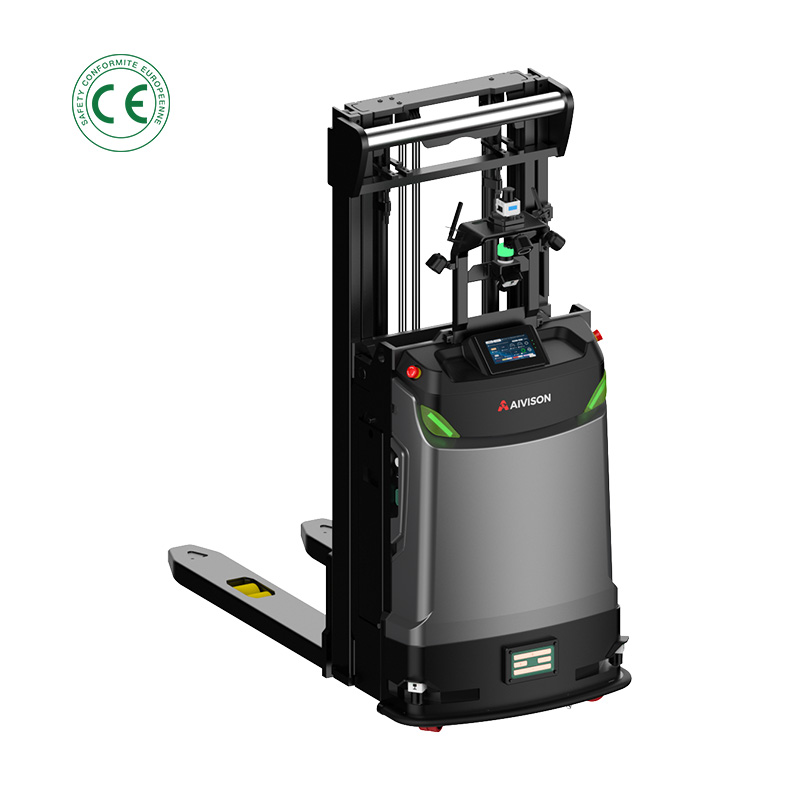
Warehouse Robot Robotics 2000KG CE Warehousing Automatic Forklift Stacking AGV
A CE-oriented 2,000 kg stacking platform for high-bay replenishment, warehouse transfer and trailer loading. Its heavy-duty forklift structure suits pallet handling where safety zones, route planning and charging events must be managed as one workflow.
View Product
Laser SLAM Navigation Automated Guided Vehicle Forklift agv 1500kg Load Capacity
A 1,500 kg laser SLAM forklift for mixed traffic and changing layouts. Natural-feature navigation reduces floor infrastructure, making it practical for 3C electronics, battery production and general manufacturing lines that cannot stop for extensive rework.
View Product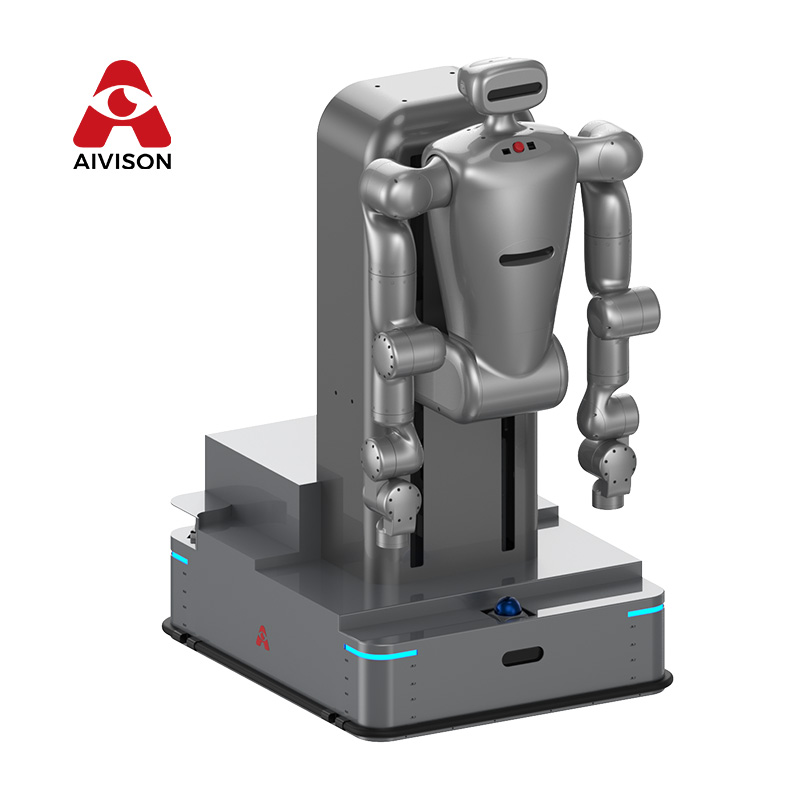
Omnidirectional Mobile Manipulator AMR Dual 7-DOF Arms ±0.03 mm Repeatability Laser SLAM Humanoid Robot Base
An omnidirectional mobile manipulator that combines a laser SLAM base with dual 7-DOF arms for flexible handling at stations. The platform targets precision assembly, machine tending and research-to-production projects that need mobility plus manipulation.
View Product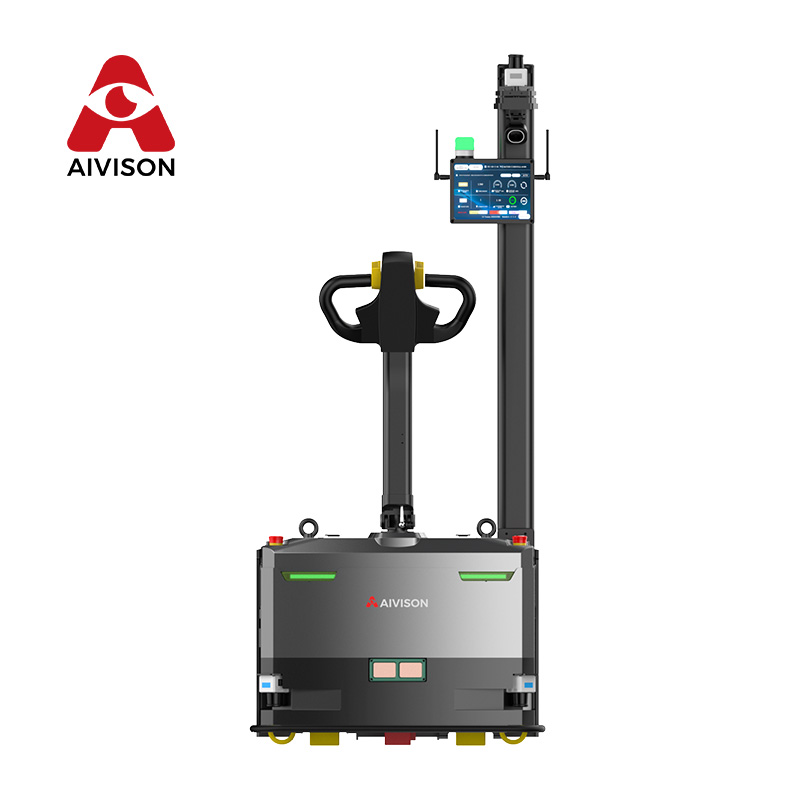
China Factory Movable Pallet Agv Robot Rack Shelf for Intelligent Robot Warehouse
A movable pallet rack designed to turn static storage into a dispatchable resource. The rack-and-robot combination supports goods-to-person strategies and flexible warehouse zoning without committing to fixed conveyor infrastructure.
View Product
Aivison Stacker Truck Pallet Stacker Forklift Agv 1.5 Ton Autonomous Forklift Smart Deliver AMR Robot
An Aivison 1.5-ton autonomous stacker for pallet movement, palletizing and delivery routes. It is a practical bridge between manual forklift operations and fully automated high-bay handling, especially where aisle space and mixed traffic require careful risk assessment.
View Product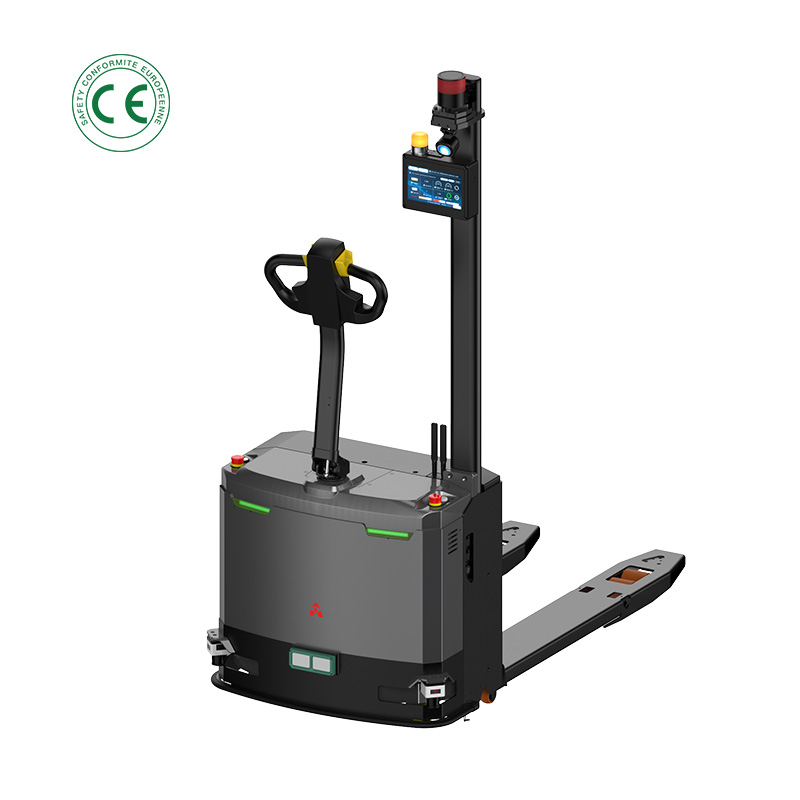
Automatic Handling CE Certificate 2000kg Forklift Robot Vehicle Laser AGV for Large Load Goods-carrying
A 2,000 kg CE-certified laser AGV forklift configured for large-load goods-carrying. The heavy-duty mast, safety-scanner layout and route logic are intended for continuous shifts, repetitive pallet flow and production environments where uptime matters more than peak speed.
View Product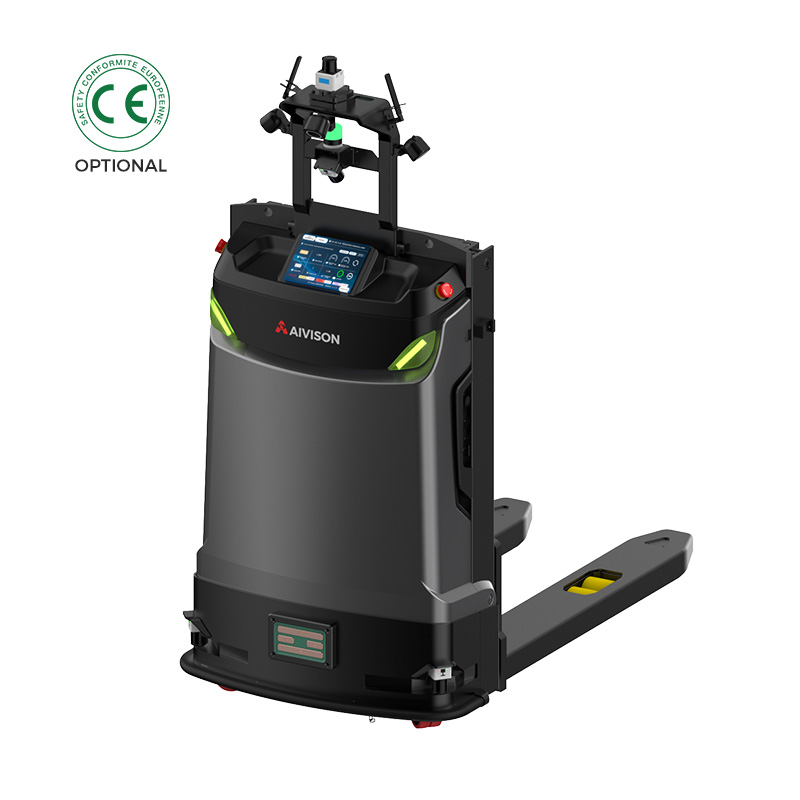
China Factory Automated Mobile Robot SLAM Lifting Wholesale AGV Chassis Vehicle
A SLAM lifting AGV chassis supplied for OEMs, integrators and factory projects that need a proven mobility base. Top modules such as jacking units, roller conveyors, fixtures or special load decks can be integrated around the application rather than forcing a standard robot shape.
View Product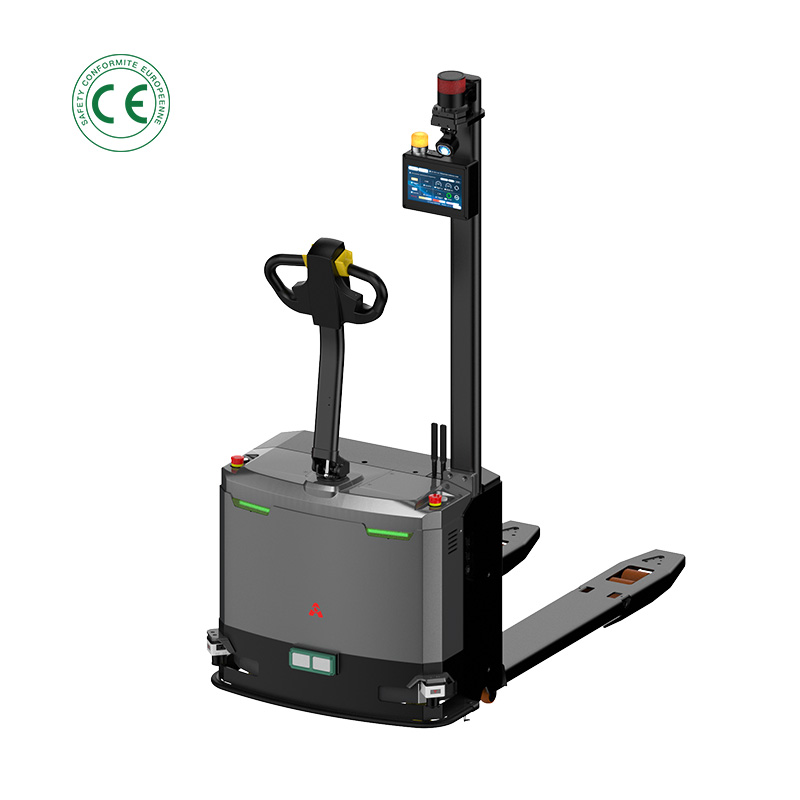
CE Certification Industrial AMR AGV Robot for Warehouse Automation Autonomous Material Handling Logistics
A CE-certified industrial AMR for warehouse automation and autonomous material handling logistics. It fits repetitive transfer, line-side delivery and mixed-fleet operations where one scheduling layer must coordinate multiple robots, charging docks and handover points.
View ProductNeed a non-standard load interface, top module or fleet layout review?
Send an InquiryWhy Heavy Load AMR Buyers Are Moving from Price Comparison to Supplier Verification
A heavy load AMR is no longer a standalone machine purchase. It is a capital-equipment decision that affects safety, production continuity, warehouse layout, IT integration and service response for years. The most reliable suppliers make verification easy.
Future Heavy Load AMR Procurement Trends
Procurement teams are asking more precise questions than “What is the payload?” They want lifecycle evidence, safety logic, integration readiness and a factory that can support the fleet after commissioning.
Lifecycle TCO Becomes the Default
Buyers now model energy consumption, spare-part availability, service response, software updates and downtime risk alongside the purchase price. The lowest unit quote is rarely the lowest total cost of ownership in heavy-load projects.
Safety Evidence Is Requested Earlier
CE declarations, risk assessments, scanner coverage and emergency-stop behavior are being reviewed before layout approval. For 2-ton forklift-class AMRs, safety logic must be visible in the proposal, not added after the floor plan is fixed.
Mixed-Fleet Interoperability Matters
Factories rarely automate every route at once. They need jacking robots, AMR chassis and autonomous forklifts to share traffic rules, handover points and charging resources under one scheduling layer.
Supplier Trust Becomes a Checkbox
Independent onsite assessment, Fortune 500 supply history, transaction records and trade capacity are now part of the shortlist. Verified suppliers reduce commercial and operational risk before a purchase order is issued.
Heavy Load AMR Product Development Trends to Watch
Heavy load AMRs are evolving from transfer devices into mobile workstations. The most valuable development is not simply a larger payload, but the ability to connect safely and precisely with real production equipment.
Sensor Fusion and Edge Intelligence
Laser SLAM, vision, QR assistance and edge computing are being combined task by task. The goal is to use ±5 mm navigation for most routes, then add ±2 mm docking only at precision stations, avoiding unnecessary infrastructure cost.
Opportunity Charging and Battery Strategy
Automatic charging docks and smarter energy management allow heavy load AMRs to run across shifts without manual intervention. Fleet software can schedule charging around production peaks and battery health rather than fixed breaks.
Modular Top Mechanisms
Jacking units, roller conveyors, forklift forks and 6-axis arms are becoming interchangeable modules on a proven chassis. This reduces engineering time for integrators and makes it easier to adapt a fleet when production processes change.
Composite Mobile Robots
Combining an autonomous base with robotic arms enables material transport and station-level manipulation in one platform. For semiconductor, medical device and precision assembly environments, repeatability claims must be clearly tied to the task and calibration method.
Inside a Trusted Heavy Load AMR Factory: Shenzhen Marnix Intelligent Technology Co., Ltd.
The following capabilities are the ones serious buyers should verify when comparing heavy load AMR suppliers. They come from the original factory profile and should be matched against your project’s payload, layout, precision and service requirements.

Engineering Around the Production Line, Not Around a Catalog
Shenzhen Marnix Intelligent Technology Co., Ltd. draws on about ten years of AGV manufacturing experience. The company builds laser SLAM AMRs, jacking robots, smart forklifts, composite mobile robots and compatible intelligent charging docks for end users and system integrators.
The product philosophy is practical: map the existing environment, minimize floor modification, customize the top module, and coordinate the fleet through one scheduling logic. That is important for heavy load projects because every kilogram of payload and every millimeter of docking tolerance affects safety, cycle time and maintenance.
- Complete AMR portfolio from jacking robots and pallet AMRs to smart forklifts and composite robots.
- Laser SLAM with ±5 mm accuracy; QR-assisted docking reaches ±2 mm where required.
- Composite robots with 6-axis arms can reach ±0.05 mm repeatability for precision production tasks.
- Multi-robot scheduling over indoor Wi-Fi, with automatic charging through compatible docks.
10+ Years of AGV Engineering
Long-term Shenzhen-based R&D and manufacturing experience supports practical decisions on chassis strength, drive layout, safety scanners and maintenance access.
Laser SLAM + QR Precision
Natural-feature SLAM reaches ±5 mm without tape, reflectors or floor codes. A QR scanning camera can be added at selected stations to reach ±2 mm docking precision.
Manufacturer-Level Customization
Chassis, payload interfaces and top modules can be engineered for jacking, roller conveying, forklift forks or robotic arms, helping integrators connect robots directly to equipment.
Wi-Fi Fleet Scheduling
The intelligent scheduling system supports simultaneous task assignment, traffic control and coordinated charging for multiple robots operating in shared space.
Quality and Reliability Validation
Multi-stage intelligent inspections and operational stress tests target near-zero failure rates. More than 200 manufacturers across three continents have selected the company’s robots.
TÜV Rheinland Onsite Assessment
Company premises and operations have been verified through independent onsite assessment, giving procurement teams a third-party reference before commercial commitment.
Fortune 500 Supply History
The original profile cites a procurement contract with a Fortune 500 company and transparent trade records, credit index and transaction-level evidence for buyers to review.
Integrator and OEM Support
Products and solutions are supplied to system integrators as well as end users, with flexible engineering support for custom automation projects and mixed-fleet deployments.
Where Heavy Load AMRs Deliver Measurable ROI
Heavy load AMRs create value when they remove repetitive transport from skilled workers, stabilize line-side supply, and keep high-value equipment fed without adding fixed conveyor infrastructure. The application must be judged route by route.

Custom Top Modules for Complex Production Interfaces
Heavy load AMRs often fail commercially when the robot cannot hand over material cleanly. A proven factory should be able to discuss the physical interface before the robot model: fork entry clearance, roller height, pallet condition, station tolerance, sensor position and emergency-stop behavior.
For example, a 2-ton stacking AGV may need verified mast stability, floor friction data and aisle clearance. A jacking robot may need rack leg geometry and lift height. A composite robot with a 6-axis arm may need station calibration and repeatability validation at the point of work.
- Warehouse replenishment, high-shelf storage and trailer loading.
- Line-side delivery for lithium battery, 3C electronics and automotive parts.
- Semiconductor cleanroom logistics and precision station tending.
- PCB, photovoltaic, textile and medical device material flow.
What to Prepare Before Requesting a Heavy Load AMR Proposal
From real project reviews, six inputs determine most of the robot selection. Sharing them upfront shortens evaluation from weeks to days and reduces the risk of an oversized or underspecified fleet.
Load Profile
Maximum weight, footprint, center of gravity and condition of racks, pallets or carriers. Include the heaviest abnormal load, not only the average.
Site Layout
A CAD drawing or sketch with aisle widths, doors, slopes, elevator or lift points, keep-out zones and peak-traffic areas.
Throughput Target
Missions per hour, peak periods, handover time and acceptable wait time. This sets fleet size and charging-dock count.
Docking Precision
Where ±5 mm is enough, where ±2 mm QR assistance is needed, and where arm-level precision or station calibration is required.
Wi-Fi and Power
Access-point coverage, network stability, charging-location power, floor markings and any restrictions on installation work.
Equipment Interfaces
Conveyors, machines, shelves or safety systems the robot must hand over to. Include top-module needs such as jacking, rollers, forks or arms.
Factory Due Diligence: What a Trusted Heavy Load AMR Supplier Should Prove
Trust is not a slogan. It is a set of verifiable facts, documented processes and engineering answers that remain consistent from the first call to final acceptance.
From Independent Assessment to Shop-Floor Acceptance
A credible heavy load AMR factory should be ready to show its manufacturing base, inspection process, test records and third-party credentials. The original Marnix profile includes an onsite supplier assessment by TÜV Rheinland, Fortune 500 supply evidence and transparent trade records—useful signals for procurement teams comparing international suppliers.
At the project level, ask for the acceptance test definition early. Payload stability, emergency-stop distance, ramp behavior, docking repeatability and charging autonomy should be measurable. For software, confirm how route changes are handled and how fleet logs are exported.
- Request the robot’s safety architecture, scanner layout and emergency-stop logic.
- Define acceptance tests for load stability, route cycle time and docking repeatability.
- Clarify spare-parts lead time, remote support process and local commissioning responsibilities.
- Review real references in comparable industries, not only similar payload numbers.

Heavy Load AMR Factory & Supplier FAQ
These are the questions procurement teams ask most often when comparing heavy load AMR factories, autonomous forklifts and custom mobile robot suppliers.
What payload range is considered a heavy load AMR?
In factory logistics, 1.5-ton to 2-ton handling is commonly treated as heavy load for pallets, racks and large components. Specialized autonomous forklifts can go beyond this, but safety distance, floor strength and aisle width become critical selection factors.
Do heavy load AMRs require floor modification?
Standard laser SLAM navigation maps natural features and does not require magnetic tape, reflectors or floor QR codes. QR labels are added only at stations where ±2 mm docking precision is needed, which keeps infrastructure cost focused on real process requirements.
How do ±5 mm, ±2 mm and ±0.05 mm compare?
±5 mm SLAM is suitable for most transport and line-side delivery routes. ±2 mm QR-assisted docking is used for precise station handover. ±0.05 mm repeatability applies to composite robots with arms for precision assembly or machine tending tasks under defined calibration conditions.
Can the factory customize chassis and top modules?
Yes. Manufacturer-level customization can include chassis layout, jacking units, roller conveyors, forklift forks, custom fixtures and 6-axis robotic arms. The right approach is to define the load interface, station handover and safety constraints before selecting the base robot.
How are multiple heavy load AMRs coordinated?
An intelligent scheduling system manages the fleet over indoor Wi-Fi. It assigns tasks, controls traffic at shared zones, coordinates handovers and schedules automatic charging through compatible smart charging docks.
How should I start a supplier evaluation?
Send your load profile, site layout, throughput target, docking precision and equipment interface requirements. A qualified AMR factory can then recommend a robot configuration, estimate fleet size and define the acceptance tests before quotation.
Send Your Load, Layout and Throughput Requirements
Share your maximum payload, aisle dimensions, docking tolerance, charging locations and target cycle time. Our engineering team will match the right heavy load AMR platform, top module and fleet configuration to your production reality.
OEM / ODM · Laser SLAM · Fleet scheduling · Global service