8 Rack Lifting Robot & Smart Forklift Products for Export Buyers
These eight export-ready configurations cover rack lifting, pallet handling, laser SLAM navigation, LiDAR components and CE-oriented warehouse automation. Product links, images and model positioning are preserved for direct comparison.
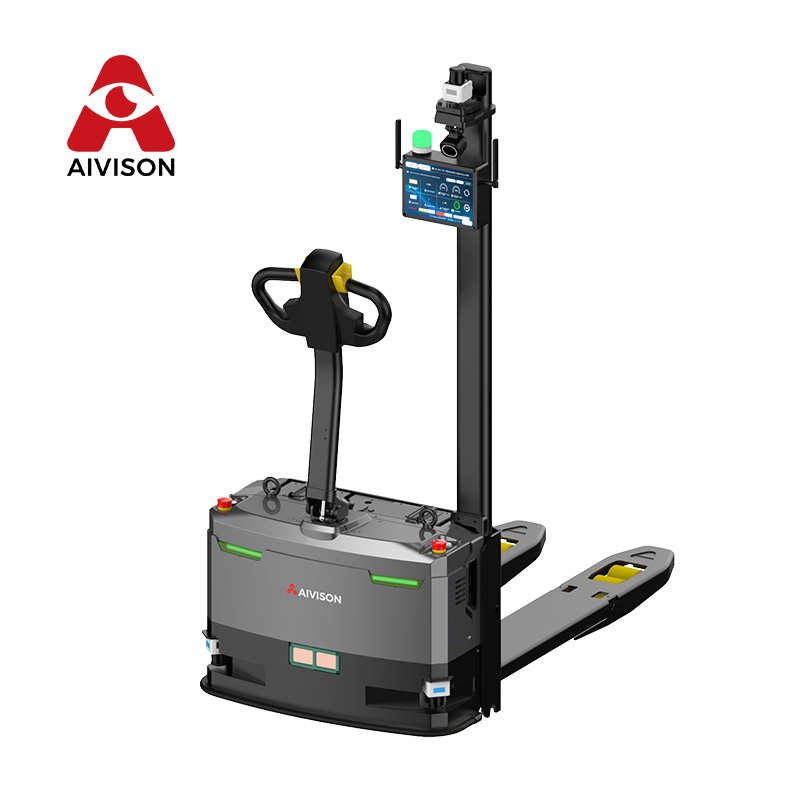
Aivison AGV Forklift High Quality Industrial Unmanned Pallet Forklift
An industrial unmanned pallet forklift for repeatable pickup and transfer in warehouses and production lines. Suitable for buyers seeking a factory-direct smart forklift platform with customization and aftersales support.
View product
Hot Selling Logistics Navigation Detector Sensor Lidar Manufacturers Direct Sales
LiDAR sensor and navigation detector supply for logistics AMR fleets. This component-level option supports wholesalers and integrators that build, maintain or localize autonomous mobile robot systems.
View product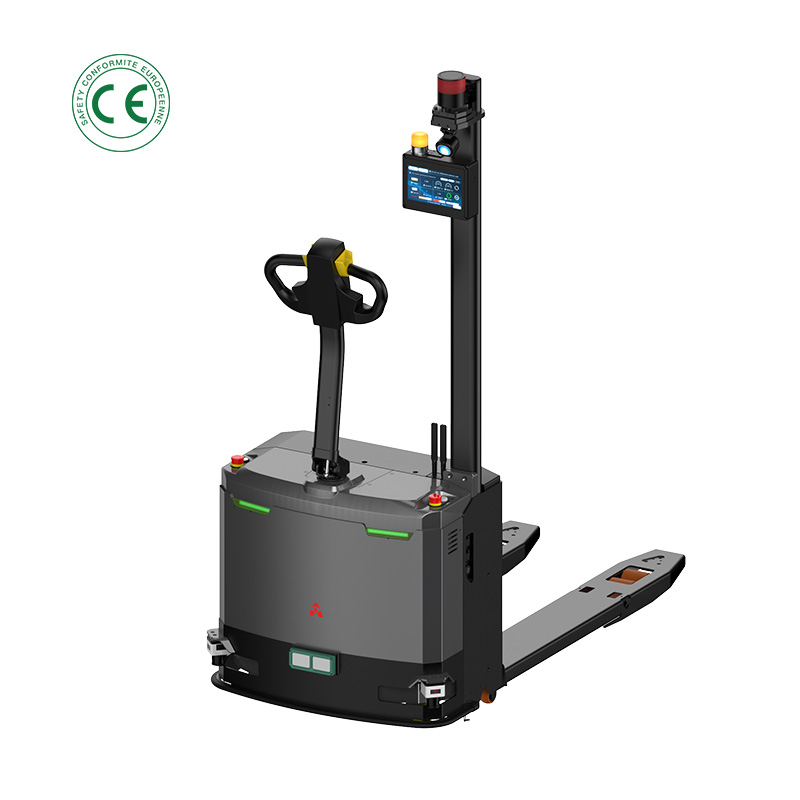
Automatic Handling CE Certificate 2000kg Forklift Robot Vehicle Laser AGV for Large Load Goods-carrying
A 2000 kg laser AGV forklift for large-load goods carrying, line-side replenishment and warehouse transfer. The CE certificate and automatic handling design address payload stability and safety-conscious procurement.
View product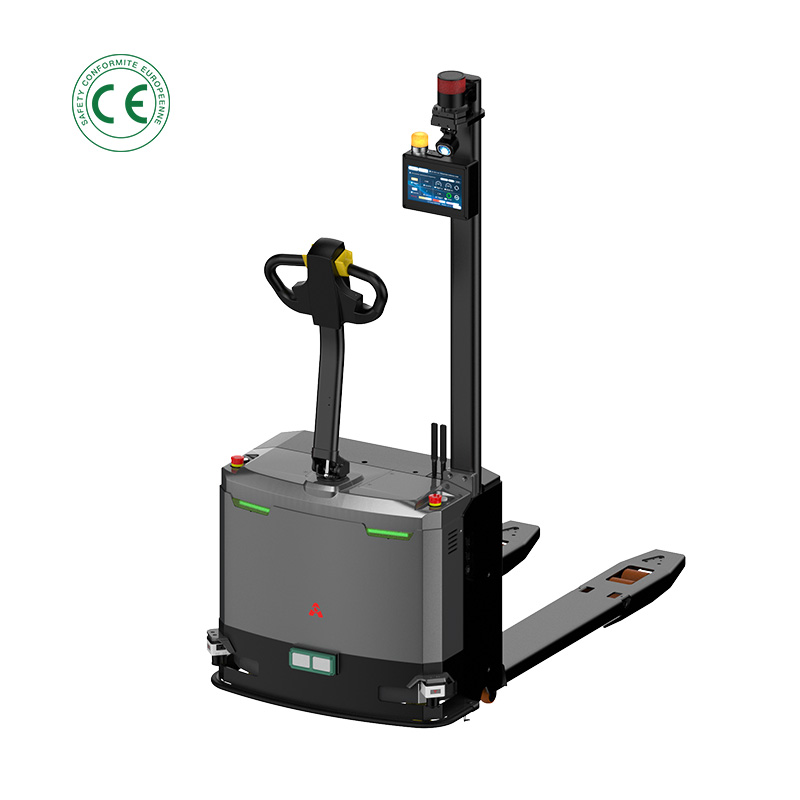
CE Certification Industrial AMR AGV Robot for Warehouse Automation Autonomous Material Handling Logistics
An industrial AMR AGV for warehouse automation and autonomous material handling. A practical fit for mixed-traffic sites that need natural-feature SLAM, fleet scheduling and fast route mapping.
View product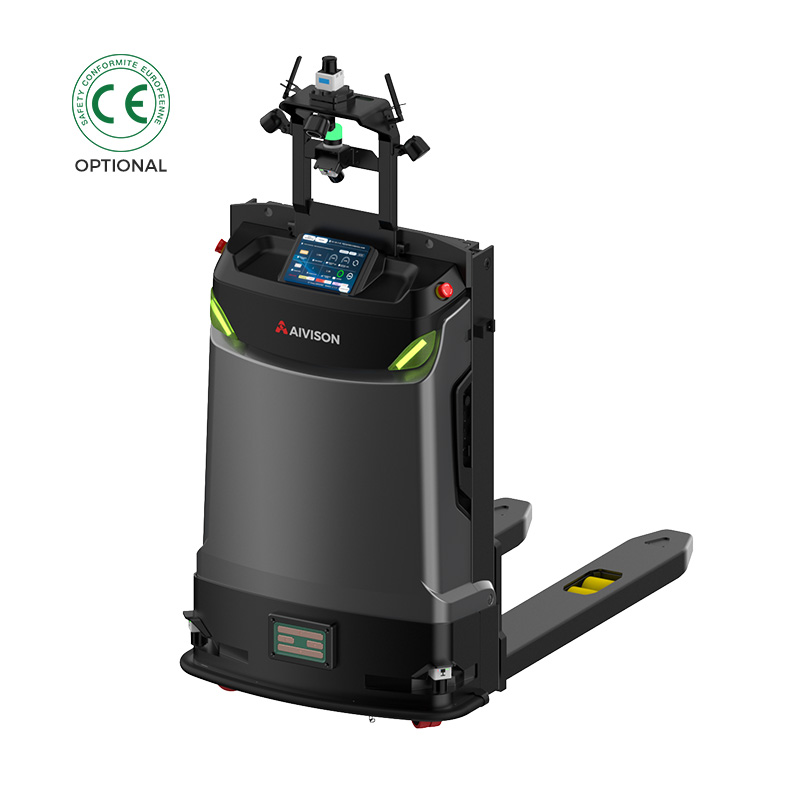
AGV AMR Warehouse Automatic Guided Vehicle 1500kg 2000kg AGV Robot Forklift
A 1500 kg to 2000 kg warehouse AGV/AMR forklift platform balancing payload, maneuverability and automatic charging. Well suited to receiving, storage and dispatch flows with repetitive pallet movement.
View product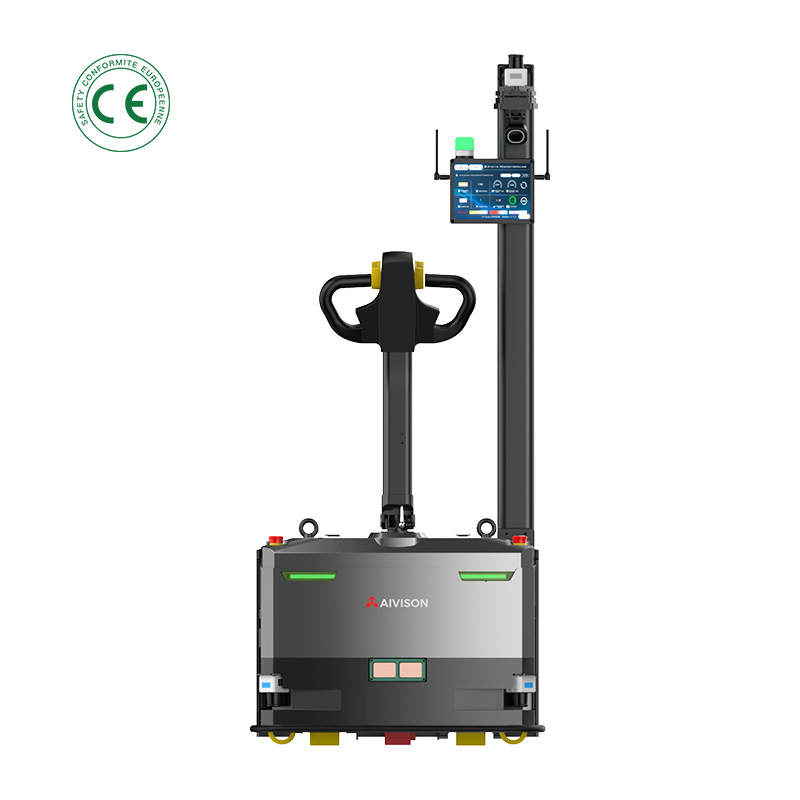
Autonomous Mobile Robot AGV CE Laser SLAM Navigation for Material Handling and Logistics
A CE laser SLAM AMR for material handling and logistics. Choose this platform when the project needs ±5 mm navigation, dynamic obstacle avoidance and a compact footprint in 3C, battery or automotive sites.
View product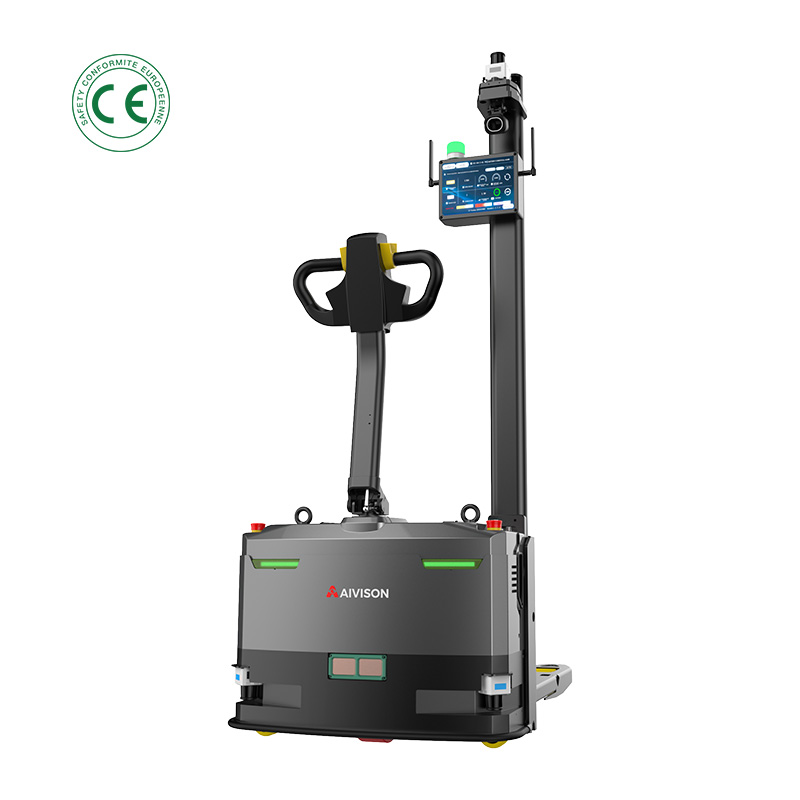
AIVISON CE Laser SLAM Navigation AGV 1500kg Warehouse Lifting Operations
A 1500 kg laser SLAM AGV for warehouse lifting operations. Configure QR-assisted docking only at stations that demand ±2 mm precision while preserving natural SLAM navigation across the wider floor.
View product
Laser SLAM Navigation Automated Guided Vehicle Forklift agv 1500kg Load Capacity
A laser SLAM navigation automated guided vehicle forklift with 1500 kg load capacity. A practical choice for wholesale buyers and integrators sourcing repeatable autonomous pallet handling.
View productWhat Buyers Really Mean by “Rack Lifting Robot”
The phrase covers several procurement intents. Matching the right robot type to the rack, floor and docking task is the first step in avoiding an over-specified or under-performing automation project.
A rack lifting robot is not a single commodity product. In China export procurement, the term is used for jacking robots that drive under a rack or shelf and lift it, lifting AMRs that carry shelves between zones, pallet AMRs that move low-profile pallets, and smart forklifts that enter pallets with forks. Buyers also use related searches such as autonomous mobile robot, laser SLAM AGV, unmanned forklift, pallet handling robot and warehouse lifting AGV. Each term points to a different mechanical interface, safety envelope and precision requirement.
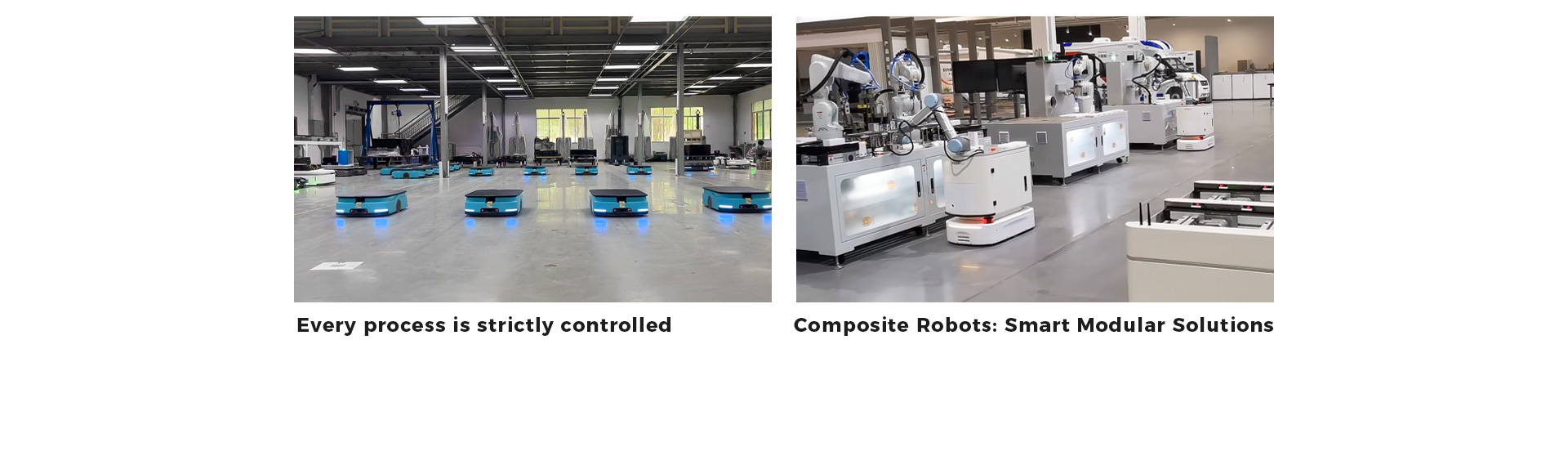
The most important technical distinction is the load interface. A jacking or rack lifting robot usually slides beneath a rack, lifts vertically and transports the entire rack structure. This is often ideal for line-side logistics in lithium battery, 3C electronics and high-mix assembly, where racks are standardized and routes change frequently. A smart forklift is generally better for pallets, floor stacking and higher payloads where fork entry and mast stability matter. A composite mobile robot with a 6-axis arm goes further, connecting mobility with machine tending or precision placement at repeatability levels down to ±0.05 mm.
For wholesale buyers, the supplier question is equally important. A credible China rack lifting robot exporter should provide more than a price list: factory-level customization, laser SLAM know-how, fleet scheduling, charging dock compatibility, safety documentation, export packaging and spare-parts planning. The information gain in this guide is the precision-to-duty decision map below: use natural-feature SLAM for movement, add QR assistance only at precision stations, and reserve arm-level accuracy for true assembly tasks. This approach reduces floor infrastructure cost while protecting cycle time and docking reliability.
Specification Intent
Buyers compare payload, rack footprint, lifting height, aisle width and navigation accuracy. The right RFQ states the load, not just the robot model name.
Supplier Verification Intent
Export buyers check whether the supplier is a manufacturer, trading company or integrator, and look for independent onsite assessment, trade records and repeatable quality control.
Project Integration Intent
Integrators need API access, Wi-Fi fleet scheduling, top-module options and charging docks. The robot must connect to conveyors, machines, shelves and project timelines.


Why Marnix Is a Credible China Exporter, Not Just a Wholesaler
Shenzhen Marnix Intelligent Technology Co., Ltd. draws on about ten years of AGV engineering experience to build autonomous mobile robots, jacking robots, smart forklifts, composite mobile robots and intelligent charging docks. The company serves semiconductor, 3C electronics, lithium battery, photovoltaic, automotive parts, PCB, textile and medical device projects, working with both end users and system integrators.
Its export credibility is supported by independent evidence: a TÜV Rheinland onsite supplier assessment, a procurement contract with a Fortune 500 company, verified multispecialty supplier capability and more than 200 manufacturers served across three continents. For buyers comparing China rack lifting robot exporters, those signals matter because they reduce the risk hidden behind a low quotation.
- Manufacturer-level customization: chassis, payload interface, jacking unit, roller conveyor, forklift forks and 6-axis arm modules.
- Precision without floor rework: ±5 mm laser SLAM, optional ±2 mm QR-assisted docking and ±0.05 mm composite robot repeatability.
- Fleet-level thinking: intelligent scheduling over indoor Wi-Fi, traffic control and automatic charging through compatible smart docks.
Natural-Feature Navigation
Laser SLAM maps existing aisles and racks, so standard deployment avoids magnetic tape, reflectors and full-floor QR codes. That makes layout changes faster and lowers infrastructure spend.
Multi-Format Top Modules
Jacking units, roller conveyors, forklift forks and robotic arms can be engineered around the production line instead of forcing a standard chassis into an unsuitable process.
Fleet Scheduling & Charging
Robots are coordinated by an intelligent scheduling system over indoor Wi-Fi, with simultaneous task assignment and automatic charging support for 24/7 duty cycles.
Verified Quality Signals
Multi-stage intelligent inspection and thousands of operational stress tests support near-zero failure targets, backed by third-party verification and trade history.
Right-Size Navigation Accuracy Before You Compare Quotes
Most buying mistakes happen when every station is specified at the same precision level. Use the duty map below to separate route movement, precision docking and assembly-grade placement.
| Configuration | Accuracy | Floor setup | Best-fit duty |
|---|---|---|---|
| Laser SLAM natural features | ±5 mm | None — no tape, reflectors or codes | Warehouse transfer, line-side delivery, changing layouts and mixed-traffic routes |
| SLAM plus QR code camera | ±2 mm | QR labels only where precision is needed | High-shelf storage, precision docking, wafer handling and tight station handover |
| Composite robot with 6-axis arm | ±0.05 mm | Station calibration | Semiconductor, medical device assembly and machine-tending tasks |
Rack Lifting Robot Procurement Trends for 2025–2030
Buyers are shifting from a single-machine purchase mindset to a fleet-level automation decision. The next procurement cycle will reward exporters that can prove total cost, integration speed and service depth.
Total Cost of Ownership Replaces Lowest Quote
Wholesale buyers increasingly compare deployment time, spare parts, energy use, docking reliability and uptime instead of chasing the lowest FOB price. A robot that avoids floor rework can be more valuable than a cheaper unit that requires extensive site modification.
Mixed-Fleet Compatibility
Projects now combine jacking robots, smart forklifts, charging docks and QR-assisted precision stations. Procurement teams ask whether all platforms share one scheduling layer and whether future models can join the same Wi-Fi fleet.
Integrator-Ready Supply
System integrators prefer exporters that can provide chassis, top modules, APIs, documentation and customization without forcing a closed turnkey solution. OEM and ODM flexibility becomes a procurement differentiator.
Safety and Compliance Evidence
CE-oriented documentation, clear emergency-stop logic, obstacle avoidance data and export testing records are becoming normal RFQ attachments. Buyers want evidence before shipment, not promises after installation.
Charging Infrastructure Planning
Automatic charging is moving into the original layout discussion. Dock quantity, charging window, battery strategy and aisle space all influence fleet size and must be planned together with robot count.
Local Service and Spare-Parts Strategy
Export buyers are asking for commissioning support, remote diagnostics, English manuals, spare-parts lists and warranty terms before placing volume orders. Serviceability is becoming part of the product.
Engineering Trends Shaping the Next Generation of Rack Lifting Robots
Hardware differentiation is moving from “does it drive?” to “how well does it connect, scale and prove reliability?” These development directions influence both product selection and future upgrade paths.
Natural-Feature SLAM Maturity
Laser SLAM on natural features continues to replace fixed guidance infrastructure. The practical benefit is faster reconfiguration when racks move, production zones change or a new aisle is added.
Hybrid QR Precision
Instead of covering the floor with QR codes, hybrid systems use natural SLAM for travel and add QR labels only at critical docking points. This balances ±2 mm precision with low maintenance.
Modular Top Mechanisms
Jacking units, roller conveyors, forklift forks and robotic arms are becoming swappable modules on a common navigation chassis. This reduces engineering lead time for integrators and enables line-specific customization.
LiDAR and Vision Fusion
Safety and pallet recognition improve when LiDAR, cameras and software logic are fused. Vision assistance is especially useful for fork entry, rack alignment and dynamic obstacle interpretation in mixed traffic.
Fleet Orchestration Over Wi-Fi
Scheduling systems now coordinate task assignment, traffic control and charging. The value is not just more robots, but predictable throughput when multiple jacking robots and forklifts share aisles.
Energy Management and Opportunity Charging
Battery strategy, charging dock placement and opportunity charging are becoming part of robot selection. The goal is continuous operation without over-sizing the fleet or disrupting aisle traffic.
Where Rack Lifting Robots Deliver Measurable ROI
Rack lifting, pallet transfer and precision docking create value in different ways. The strongest business case usually appears where repetitive movement, fixed takt time and labor variability overlap.
3C and Lithium Line-Side Logistics
Jacking robots move racks between line-side stations with stable takt time, reducing manual cart traffic and improving traceability in high-mix production.
Warehouse and High-Shelf Transfer
Laser SLAM AMRs move between receiving, storage and dispatch while optional QR assistance supports high-shelf docking where millimeter-level positioning matters.
Pallet Handling with Smart Forklifts
Autonomous forklifts handle repetitive pallet pickup, transfer and floor stacking, especially in warehouses with stable pallet standards and regular routes.
Composite Precision Assembly
Mobile robots with 6-axis arms connect travel with machine tending or precision placement, reaching ±0.05 mm repeatability for semiconductor and medical device tasks.
A Practical Checklist for Wholesale Rack Lifting Robot Buyers
Sharing the right inputs upfront can shorten a project evaluation from weeks to days. These six items determine most of the robot selection and quotation accuracy.
Load and Rack Profile
Provide maximum weight, rack footprint, center of gravity, lifting height and whether the robot must drive under the rack or enter a pallet with forks.
Site Layout and Aisle Width
A CAD drawing or sketch with aisle widths, doors, slopes, elevators and transfer points helps confirm turning radius, sensor placement and route feasibility.
Throughput and Shift Pattern
State missions per hour, peak periods, operating hours and charging windows. These inputs determine fleet size, battery strategy and dock quantity.
Docking Precision Map
Mark which stations can accept ±5 mm, which need ±2 mm QR assistance and whether any task requires arm-level ±0.05 mm repeatability. Avoid applying one precision level to every stop.
Wi-Fi and Safety Environment
Review access-point coverage, human traffic, forklift traffic, emergency-stop rules and any restricted zones. Reliable fleet scheduling depends on stable indoor Wi-Fi.
Commercial and Service Terms
Confirm warranty, lead time, packaging, spare-parts list, commissioning support, English documentation, remote diagnostics and after-sales response commitments.
Credentials That Reduce Import and Integration Risk
When comparing Chinese exporters, third-party verification and repeatable quality systems are more meaningful than a long list of model names.
TÜV Rheinland Onsite Assessment
Company premises and operations independently assessed, helping overseas buyers verify supplier existence and operating capability.
Supplier to a Fortune 500 Company
A procurement contract with a Fortune 500 company supports the supplier’s credibility for industrial projects and repeat-order discussions.
200+ Manufacturers and 3 Continents
Experience across semiconductor, 3C, lithium battery, photovoltaic, automotive parts, PCB, textile and medical device applications.
Multi-Stage Quality Protocol
Intelligent inspections and operational stress tests support near-zero failure targets before robots are packed for export.
Common Questions from Rack Lifting Robot Buyers
Straight answers for procurement teams, integrators and wholesalers evaluating a China exporter for rack lifting, warehouse automation and smart forklift projects.
What is a rack lifting robot, and how is it different from an AGV forklift?
A rack lifting robot typically drives under a rack or shelf, lifts the structure and transports it without forks. An AGV forklift enters a pallet with forks and is often better for pallet stacking and higher payloads. The right choice depends on the load interface, rack standardization, aisle width, lift height and whether the rack stays with the robot during transport.
What navigation accuracy do Marnix robots achieve?
Using laser SLAM on natural features, the robots reach ±5 mm positioning without magnetic tape, reflectors or floor QR codes. Adding a QR code scanning camera raises accuracy to ±2 mm for precision docking. Composite robots with a 6-axis arm reach ±0.05 mm repeatability for semiconductor, medical device and precision assembly tasks.
Do I need to modify my factory floor before deployment?
No. Standard laser SLAM navigation maps the existing environment, so no auxiliary tracks or full-floor QR codes are required. QR labels are only added at stations where ±2 mm docking precision is necessary. This reduces installation time and makes future layout changes easier to manage.
Can the exporter customize the robot for my production line?
Yes. As a manufacturer, Marnix customizes chassis and top modules such as jacking units, roller conveyors, forklift forks and 6-axis robotic arms. The aim is to connect the mobile robot directly with production equipment, racks, conveyors or machine-tending stations rather than forcing the process to fit a standard model.
How are multiple robots coordinated in one site?
Robots are managed by an intelligent scheduling system over indoor Wi-Fi. The system supports simultaneous task assignment, traffic control and automatic charging through compatible smart charging docks. For projects with mixed jacking robots and smart forklifts, route planning and charging strategy should be reviewed together.
Which industries use these rack lifting and AMR solutions?
Typical applications include semiconductors, 3C electronics, lithium batteries, photovoltaics, automotive parts, PCB, textiles and medical devices. The company serves both end users and system integrators, which is useful when a project needs factory-direct customization plus local integration support.
What should I send to get an accurate quotation?
Send the maximum load and rack footprint, a CAD drawing or sketch of the site, aisle widths, doors and slopes, required throughput, number of shifts, docking precision by station, Wi-Fi coverage, and any machine or conveyor interface requirements. A precision map is especially helpful because it separates ±5 mm travel routes from ±2 mm docking points and avoids unnecessary floor work.
Are you a manufacturer, exporter or trading company, and what support is available?
Shenzhen Marnix Intelligent Technology Co., Ltd. is a Shenzhen-based manufacturer with about ten years of AGV engineering experience, serving export buyers and integrators worldwide. Support can include product customization, fleet scheduling, charging docks, English documentation, export packaging, spare-parts planning, remote diagnostics and commissioning guidance. Before you buy, ask for the warranty terms, lead time, spare-parts list and after-sales response process in writing.
Request a Rack Lifting Robot Configuration Review
Share your rack profile, aisle layout, throughput target and precision map. Our engineering team can recommend the right combination of laser SLAM AMR, jacking robot, smart forklift, charging dock and top module for your project.