8 Pallet Transfer and Mobile Manipulation Platforms Recommended for 2025 Projects
The configurations below come from the original factory product portfolio. Use them as engineering references, then match load weight, aisle width, docking accuracy, top module, fleet size and service needs to the real process. Product URLs are preserved so engineers can inspect specifications directly.
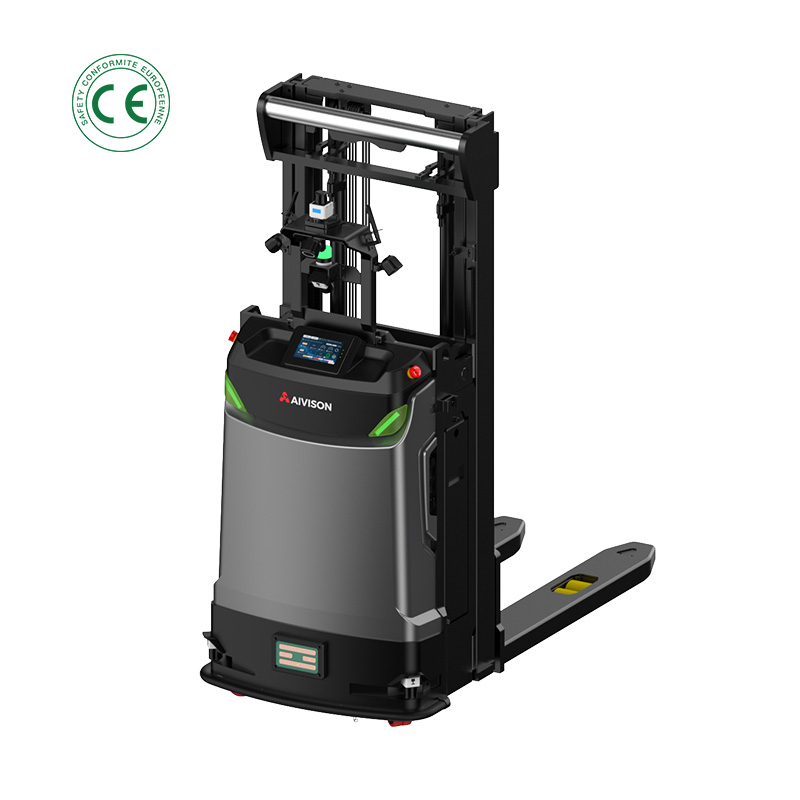
Aivison AMR Robot Whicle Automated Warehouse Automatico agv Logistics Industrial Guided Vehicles
General-purpose automated warehouse AMR for repetitive pallet and material movement where laser SLAM mapping, dynamic avoidance and fleet dispatch are required.

AI-Ready Humanoid Robot Chassis Dual 7-DOF Arms Omnidirectional Drive ROS2 Laser SLAM Open Development Platform
Open development chassis with dual 7-DOF arms, omnidirectional drive, ROS2 and laser SLAM for advanced manipulation pilots, research and integration projects.
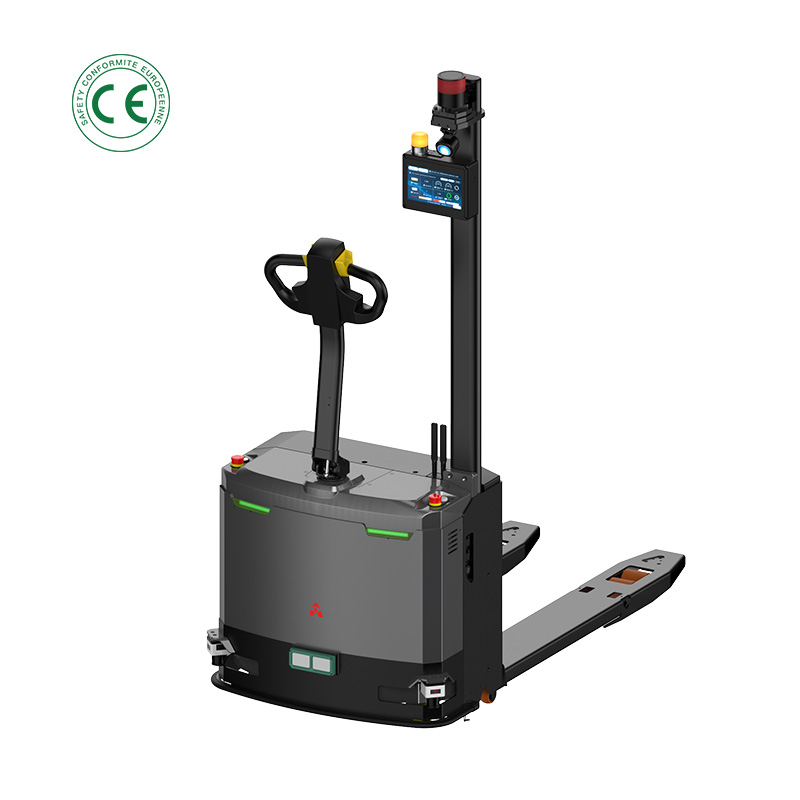
Automatic Handling CE Certificate 2000kg Forklift Robot Vehicle Laser AGV for Large Load Goods-carrying
2000 kg-class laser AGV forklift for large-load goods carrying, heavy pallet transfer and repetitive warehouse moves where manual forklift cycles are difficult to standardize.
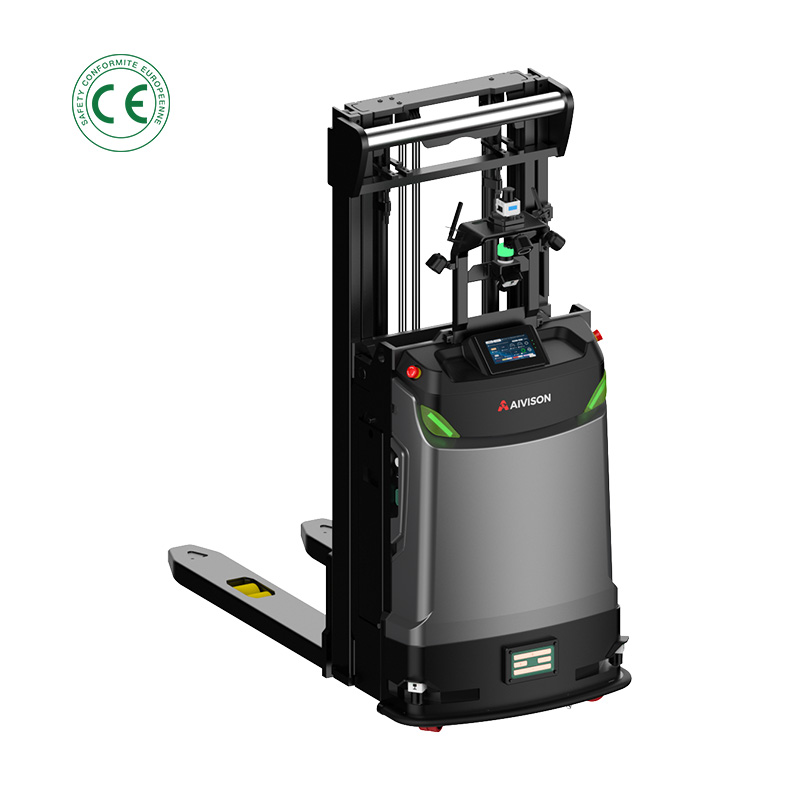
Warehouse Robot Robotics 2000KG CE Warehousing Automatic Forklift Stacking AGV
Stacking AGV forklift for warehouse robotics, high-rack or stacking tasks that need stable pallet pick-and-place, automatic scheduling and repeatable throughput.
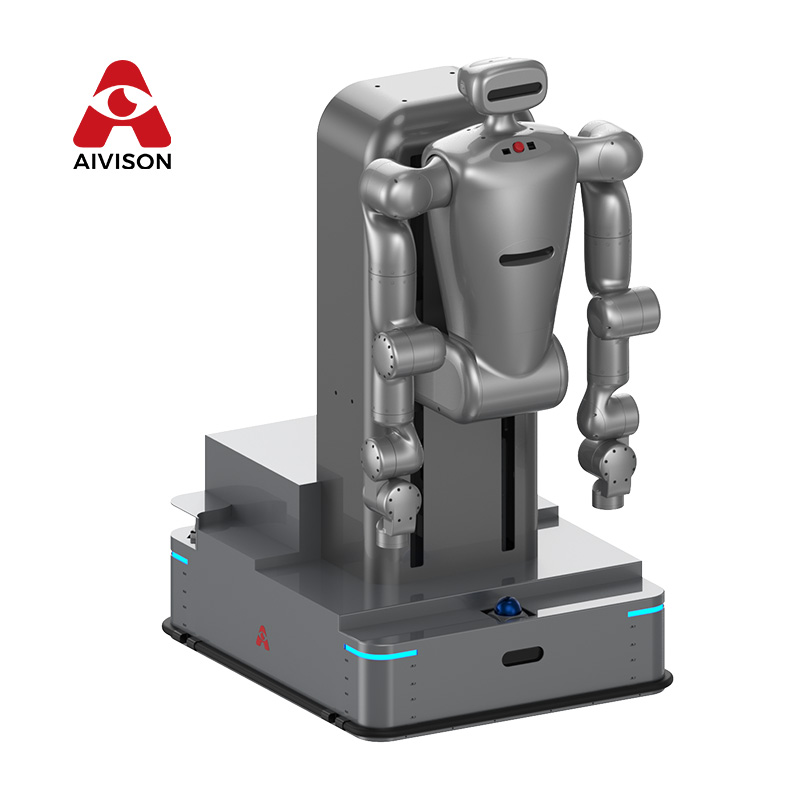
Omnidirectional Mobile Manipulator AMR Dual 7-DOF Arms ±0.03 mm Repeatability Laser SLAM Humanoid Robot Base
Mobile manipulator with dual arms and laser SLAM for flexible machine tending, kitting, inspection and humanoid-base development in mixed production environments.
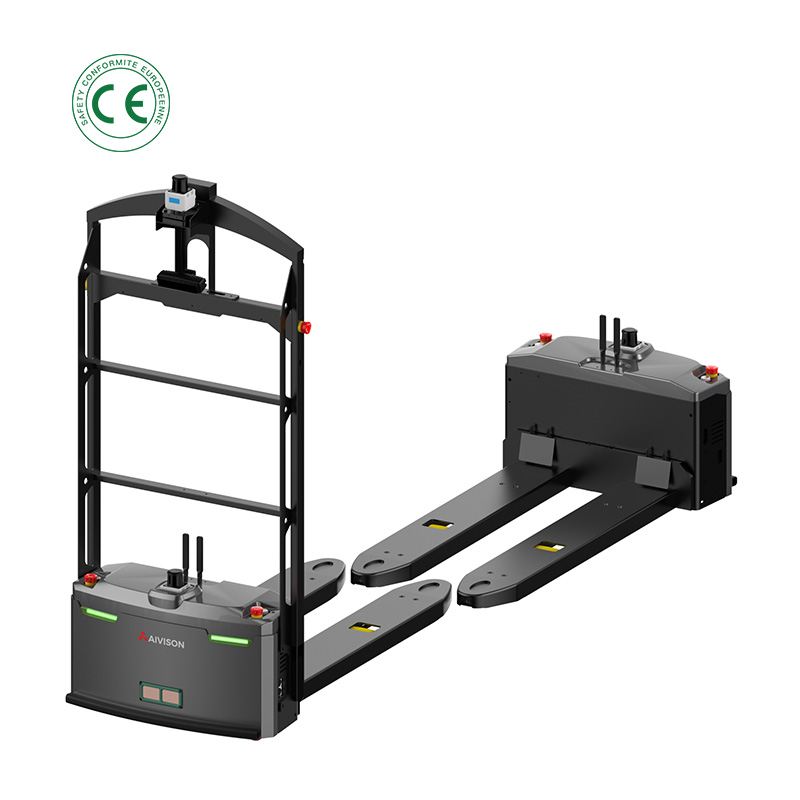
Warehouse Stacker CE Forklift AGV 800kg Load Capacity Light AMR Pallet
800 kg light AMR pallet stacker for narrow aisles, light manufacturing and warehouse replenishment where full-size forklifts reduce agility and layout flexibility.

Omnidirectional Humanoid Robot Chassis Dual 7-DOF Arms Laser SLAM Autonomous Warehouse AMR Mobile Platform
Omnidirectional humanoid AMR platform with dual arms, laser SLAM and autonomous warehouse navigation for open development and systems integration.
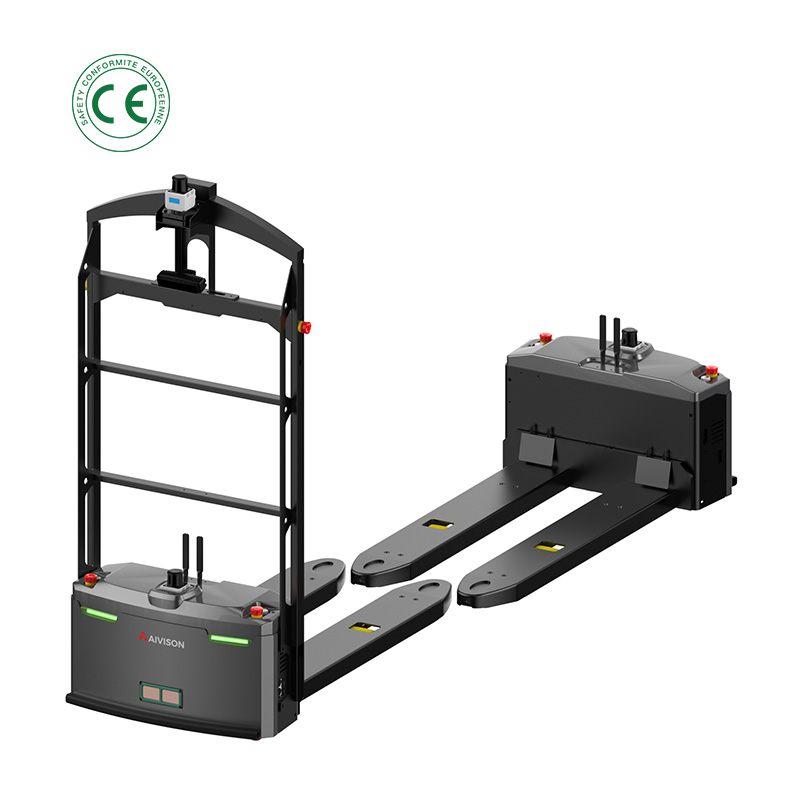
Aivison Customized 800kg Warehouse AGV Robot Lithium Battery AMR
Customized 800 kg warehouse AGV with lithium battery for flexible route changes, automatic charging and medium-payload pallet transfer across mixed warehouse zones.
Why Pallet Transfer Robot Buyers Are Rewriting Their China Sourcing Playbook
The sourcing conversation around pallet transfer robots has moved beyond “What is the price per unit?”. Procurement teams now compare total cost of ownership, integration risk, uptime, safety documentation, spare-parts strategy and the ability of a factory to customize a robot around an existing production line. A pallet transfer robot is no longer a standalone vehicle; it is part of a material-flow system that must coexist with people, forklifts, conveyors, racks and enterprise software.
China remains the world’s deepest supply base for autonomous mobile robots and AGVs, with mature lithium battery, lidar, motor, controller and sheet-metal ecosystems. That depth creates real advantages in customization speed and cost, but it also produces a wide quality range. Serious exporters separate themselves through verifiable navigation accuracy, third-party assessment, documented quality control and reference projects in demanding industries such as semiconductors, 3C electronics, lithium battery, photovoltaics, automotive parts, PCB, textiles and medical devices.
Shenzhen Marnix Intelligent Technology Co., Ltd. reflects this shift. With about ten years of AGV engineering experience, the company builds laser SLAM AMRs, jacking robots, smart forklifts, composite mobile robots and intelligent charging docks. Its core navigation architecture reaches ±5 mm with laser SLAM without tracks, reflectors or floor QR codes, while adding a QR code camera raises docking accuracy to ±2 mm. Composite robots with 6-axis arms reach ±0.05 mm repeatability for more demanding assembly and semiconductor-adjacent tasks. This is the difference between buying a vehicle and buying a transfer system that survives real production pressure.

Years in AGV Engineering
Shenzhen-based R&D and manufacturing experience.
Laser SLAM Accuracy
Natural-feature navigation without floor codes.
Manufacturers Served
End users and integrators across three continents.
Core Industries
From semiconductor cleanrooms to textile warehouses.
What a Verified Pallet Transfer Robot Factory Should Prove
Experience, precision, third-party verification and customization depth are not marketing extras. They are the inputs that determine whether an AMR project reaches stable operation or becomes an expensive pilot.
Ten Years of AGV Engineering
Shenzhen Marnix combines about ten years of AGV experience with in-house R&D and manufacturing. The portfolio covers jacking robots, pallet AMRs, smart forklifts, composite robots, charging docks and fleet software rather than a single catalogue model.
Precision Matched to the Station
Laser SLAM delivers ±5 mm without auxiliary tracks. QR camera assistance reaches ±2 mm only where docking demands it, and composite arms reach ±0.05 mm repeatability. Buyers should avoid paying for precision the process does not use.
Third-Party Verification
The company has completed an onsite supplier assessment by TÜV Rheinland, holds Fortune 500 supplier status, and maintains verified multispecialty supplier records, credit index, transaction level, trade capacity and trade history on Alibaba.com.
Customization and Fleet Support
Top modules can include jacking units, roller conveyors, forklift forks and 6-axis arms. Indoor Wi-Fi fleet scheduling coordinates multiple robots, while intelligent charging docks support 24/7 duty and reduce manual intervention.

The 2025–2030 Procurement Trends Shaping Pallet Transfer Robots
Buyers are moving from isolated robot purchases to measurable material-flow programs. These six trends explain why the lowest quotation is no longer the lowest-risk decision.
Total Cost of Ownership Replaces Sticker Price
Energy consumption, charging ratio, uptime, spare-parts lead time, software licensing and local service now dominate the business case. A robot that costs slightly more but runs two extra shifts per day can pay back faster than a cheaper unit with fragile support.
Precision Is Tiered by Station
Factories increasingly use ±5 mm laser SLAM for general transfer, ±2 mm QR assistance only at high-shelf or docking points, and arm-level repeatability for assembly. This tiered approach avoids unnecessary floor labels and reduces installation friction.
Fleet Interoperability Becomes Mandatory
Buyers rarely automate one route. They connect jacking robots, pallet AMRs, smart forklifts and composite platforms under one scheduling layer. Procurement teams now ask whether new robots can join an existing fleet instead of creating another automation island.
Safety and Documentation Are Audited
Export projects require risk assessment, emergency-stop design, obstacle-avoidance validation and clear operating envelopes. CE-related documentation and third-party factory assessment are becoming baseline checks, especially for Fortune 500 and regulated manufacturing supply chains.
Modular Top Modules Extend Asset Life
Instead of replacing an entire robot when the process changes, buyers add jacking units, roller conveyors, forks or robotic arms to a proven navigation chassis. Modularity protects capital and allows one platform to serve multiple production stages.
Export Service Becomes a Selection Criterion
Remote diagnostics, spare-parts kits, commissioning support, operator training and response-time commitments matter as much as payload. Factories with global service processes reduce the risk of a single sensor failure stopping an entire internal logistics route.
What the Next Generation of Pallet Transfer Robots Will Include
The next procurement cycle will reward factories that can combine robust mobility with better perception, fleet intelligence, energy management and integration standards.
Multi-Sensor 3D SLAM and Semantic Mapping
Lidar remains the backbone, but more robots will fuse vision, depth data and semantic mapping to understand pallets, floor zones and human traffic. The result is more reliable docking in changing environments, not just a 2D map that must be redrawn after every layout adjustment.
AI Fleet Scheduling and Digital Twins
Fleet software will shift from rule-based dispatch to AI-assisted traffic control and simulation. Digital twins will let integrators test peak throughput, charging strategy and aisle congestion before robots arrive, shortening commissioning and improving acceptance tests.
Composite Robots and Mobile Manipulation
Pallet transfer will increasingly merge with mobile manipulation. A single platform may lift a pallet, drive to a machine, scan a code, present the load and use an arm for final placement. This is especially relevant where semiconductor, medical and precision assembly workflows need traceability and repeatability.
Better Battery and Opportunity Charging
Lithium batteries, intelligent charging docks and opportunity-charging logic will reduce downtime. Buyers will ask for battery health visibility, charge-cycle data and a clear plan for peak periods rather than assuming a robot can simply run until the battery is empty.
Standard Interfaces for Integrators
APIs, PLC handshakes, conveyor interfaces and standardized top-module mounts will matter more as integrators build repeatable solutions. A factory that treats every project as a one-off customization creates hidden engineering cost; a factory with reusable modules reduces delivery risk.
Edge Data and Remote Diagnostics
Robots will generate richer data on mission time, failures, obstacle events and charging behavior. Export buyers will expect secure remote access, permission controls and service dashboards that help local teams troubleshoot without waiting for an overseas engineer to arrive.
Match Navigation Accuracy to the Pallet Transfer Task
The most common specification error is buying more precision than the process needs—or assuming every station can tolerate the same tolerance. A rational selection process separates general transfer from precision docking and assembly handover.
For warehouse transfer, line-side delivery and routes that change frequently, natural-feature laser SLAM at ±5 mm is usually sufficient because it requires no tape, reflectors or floor codes. Add a QR scanning camera only at stations that need ±2 mm docking, such as high-shelf storage, precision conveyor handover or wafer-related handling. For semiconductor, medical device and advanced assembly tasks, a composite mobile robot with a 6-axis arm can reach ±0.05 mm repeatability, but it should be validated with a written acceptance method.
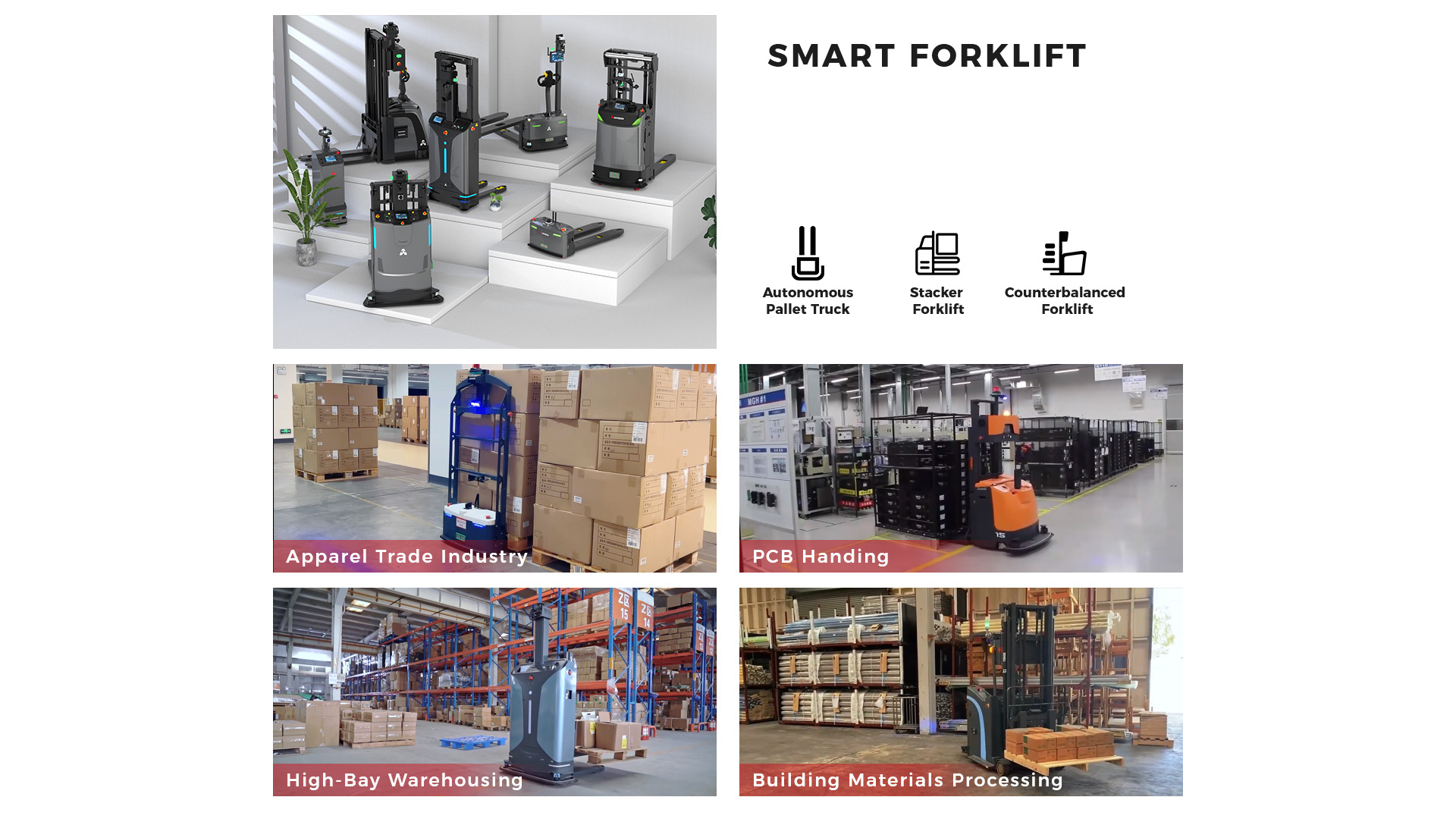
Where Pallet Transfer Robots Deliver Measurable Operational Value
The strongest business cases share a common pattern: repetitive movement, variable human availability, tight traceability and a route that can be measured mission by mission.
Semiconductor
Cleanroom-compatible material flow, precision docking and traceable transfer where manual handling creates contamination and consistency risk.
3C Electronics
Line-side replenishment, fixture movement and flexible routing where product models change faster than fixed conveyors can adapt.
Lithium Battery
Module and rack transfer between production stages, with jacking robots and pallet platforms reducing heavy manual handling.
Photovoltaic
Module logistics and warehouse transfer where large loads, long routes and shift-based throughput require stable fleet scheduling.
Automotive Parts
Pallet transfer between receiving, storage and line feeding, where mixed forklift and pedestrian traffic makes consistent routes valuable.
PCB
Roller-conveyor top modules and AMR platforms can connect PCB lines with automated handover and reduced manual carrying.
Textile
Warehouse transport where repetitive pallet or roll movement benefits from route flexibility and automatic charging.
Medical Devices
Traceable transfer and composite manipulation for assembly or kitting tasks where repeatability and documentation are critical.

How to Verify a China Pallet Transfer Robot Factory Before You Commit
E-E-A-T for industrial sourcing is not a website badge. It is evidence that the supplier has actual experience, technical expertise, recognized authority and reliable operating processes. For pallet transfer robots, that evidence should be visible in factory assessment, trade records, quality protocol and engineering response.
- Third-party verification: check the TÜV Rheinland onsite assessment, Fortune 500 supplier evidence, credit index, transaction level and trade capacity records instead of relying only on brochure claims.
- Precision evidence: require the navigation method, test route, docking fixture and acceptance criteria in writing. A ±5 mm, ±2 mm or ±0.05 mm claim should be tied to a specific station and load condition.
- Quality protocol: ask how multi-stage intelligent inspections and operational stress tests are recorded before shipment, and request the spare-parts list, maintenance interval and remote-support workflow.
- Customization depth: confirm whether the factory can engineer jacking units, roller conveyors, forklift forks, 6-axis arms and fleet software around your line—or only sell a standard chassis.
Frequently Asked Questions About Buying Pallet Transfer Robots from China
These are the questions our engineering team answers most often during initial project evaluation. Clear inputs shorten quotation, simulation and commissioning.
What is the difference between a pallet transfer robot, an AGV and an AMR?
An AGV often follows fixed paths, magnetic tape or reflectors, while an AMR uses laser SLAM and onboard perception to navigate with more layout flexibility. A pallet transfer robot may be either, but the real distinction is the top module and task: fork entry, jacking, roller handover or conveyor docking. Ask for the navigation method, payload, docking accuracy and fleet software, not only the vehicle category.
What load capacity should I choose for pallet transfer?
Start with the maximum gross load, including pallet, rack, fixture and center-of-gravity offset. Then add a safety margin based on acceleration, floor condition and stopping distance. Common configurations include 800 kg light AMR stackers and 2000 kg laser AGV forklifts, but the final choice must be validated against aisle width, lift height and duty cycle.
Do I need tracks, reflectors or QR codes on the floor?
Not for standard laser SLAM navigation. Natural-feature SLAM maps existing walls, pillars and structures, so no auxiliary tracks or floor codes are required for general transfer. QR labels are added only at stations that need ±2 mm docking precision, such as high-shelf storage or precision conveyor handover. This keeps installation faster and layout changes cheaper.
Can a Chinese factory customize top modules and fleet software?
Yes, but the depth of customization varies. A manufacturer with in-house engineering can modify chassis, payload interface, jacking units, roller conveyors, forklift forks and 6-axis arms, and can integrate with production equipment. Fleet software should support multi-robot scheduling over indoor Wi-Fi, traffic control, task assignment and automatic charging. Ask for interface documentation and a commissioning plan.
How are multiple robots coordinated and charged?
An intelligent scheduling system assigns tasks, manages traffic and routes robots to compatible charging docks. The exact fleet size depends on throughput, travel distance, charging ratio and peak periods. For 24/7 operation, buyers should request a charging simulation and confirm battery health monitoring, spare charger availability and failure-recovery procedures.
How do I verify exporter quality and after-sales support?
Review third-party onsite assessment, trade history, transaction level, credit index and reference projects. Ask for factory inspection records, test reports, spare-parts lists and response-time commitments. For export projects, confirm documentation, training, remote diagnostics and escalation paths. A supplier that can explain its quality protocol clearly is usually easier to audit during acceptance testing.
1. Share the Layout
Send a CAD drawing or sketch with aisle widths, doors, slopes, elevator points, rack dimensions and Wi-Fi coverage.
2. Define Throughput
Confirm missions per hour, peak periods, load weight and where ±5 mm, ±2 mm or arm-level precision is required.
3. Receive a Configuration
The factory can recommend chassis, top module, fleet size, charging strategy and acceptance criteria for your project.
Ready to Scope a Pallet Transfer Robot Project?
Share your load profile, floor layout, throughput target, docking precision and Wi-Fi condition. The engineering team can translate those inputs into a robot configuration, fleet estimate and commissioning plan. For faster evaluation, include your target start date and any existing conveyor, PLC or rack interface requirements.