Eight Export-Ready Platforms for a Smart Logistics Robot Shortlist
A credible supplier shortlist should cover light pallet handling, heavy traction, forklift automation, jacking transport, composite manipulation and service robotics. The platforms below show the practical range buyers should compare before requesting a quotation.
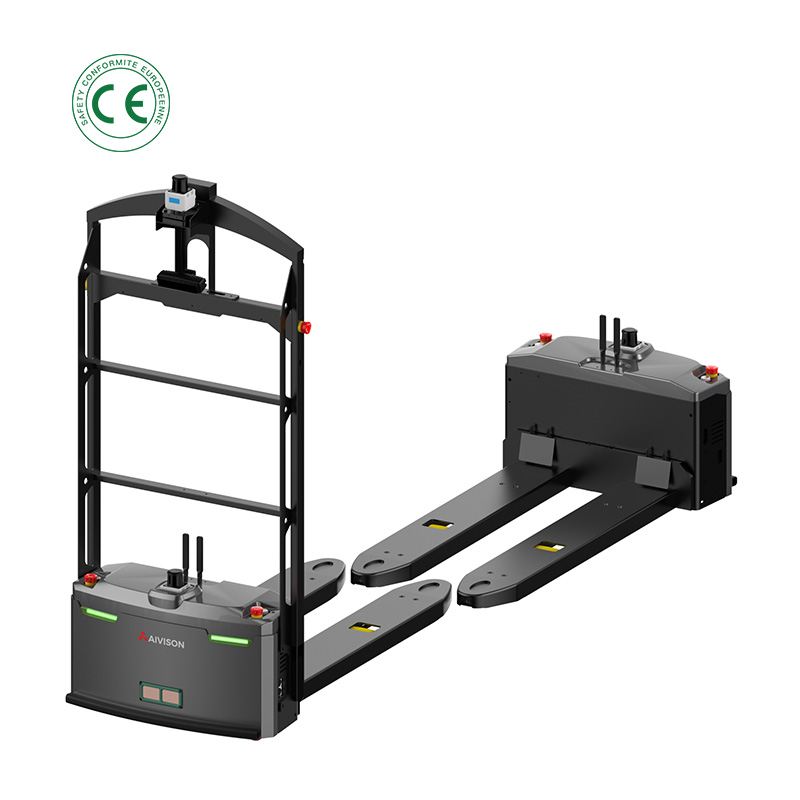
Warehouse Stacker CE Forklift AGV 800kg Load Capacity Light AMR Pallet
A compact stacker platform for light pallet movement, line-side replenishment and warehouse transfer where full-size forklifts are unnecessary.
View product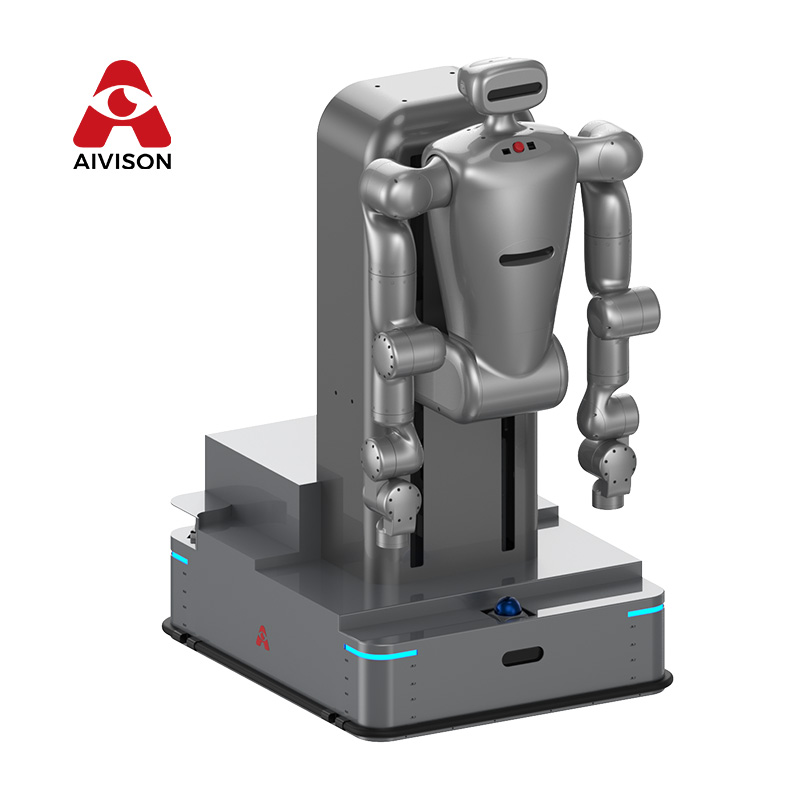
Omnidirectional Mobile Manipulator AMR Dual 7-DOF Arms ±0.03 mm Repeatability Laser SLAM Humanoid Robot Base
A high-precision mobile manipulation base for semiconductor, medical device and advanced assembly tasks that require both mobility and fine repeatability.
View product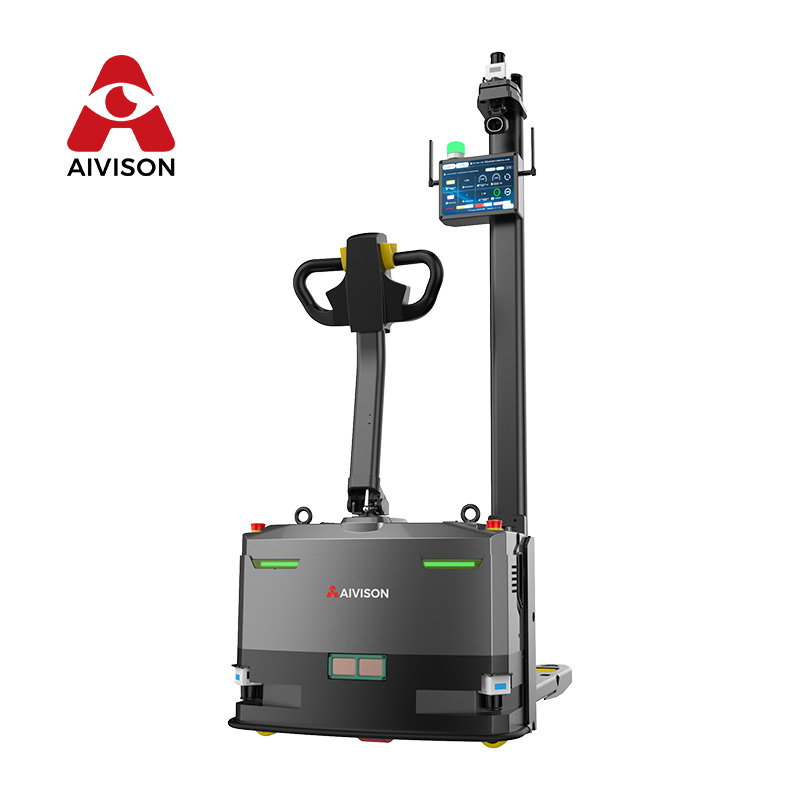
Customizable 1500KG Traction Capacity AGV Autonomous Mobile Robot Amr with Lidar Guided Sensor
A heavier-duty traction platform for towing, cart transfer and material movement in factories where payload stability and route flexibility matter.
View product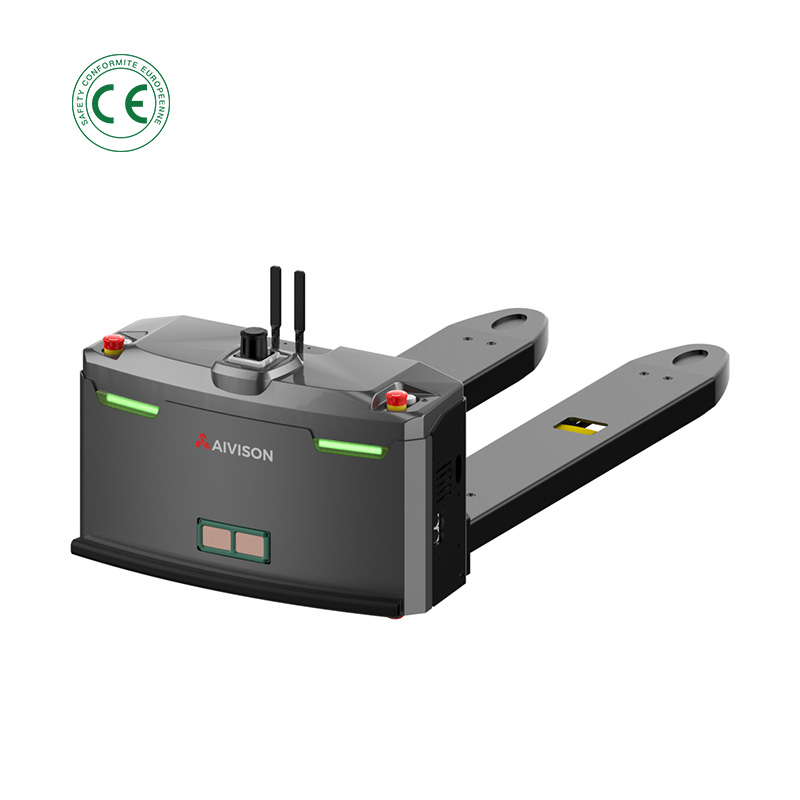
AMR Automated Warehouse Robot Logistics Automatic Industrial Logistics Robots AMR Robot
A general-purpose warehouse AMR for repetitive transfer, receiving-to-storage movement and dispatch support with fast mapping and route changes.
View product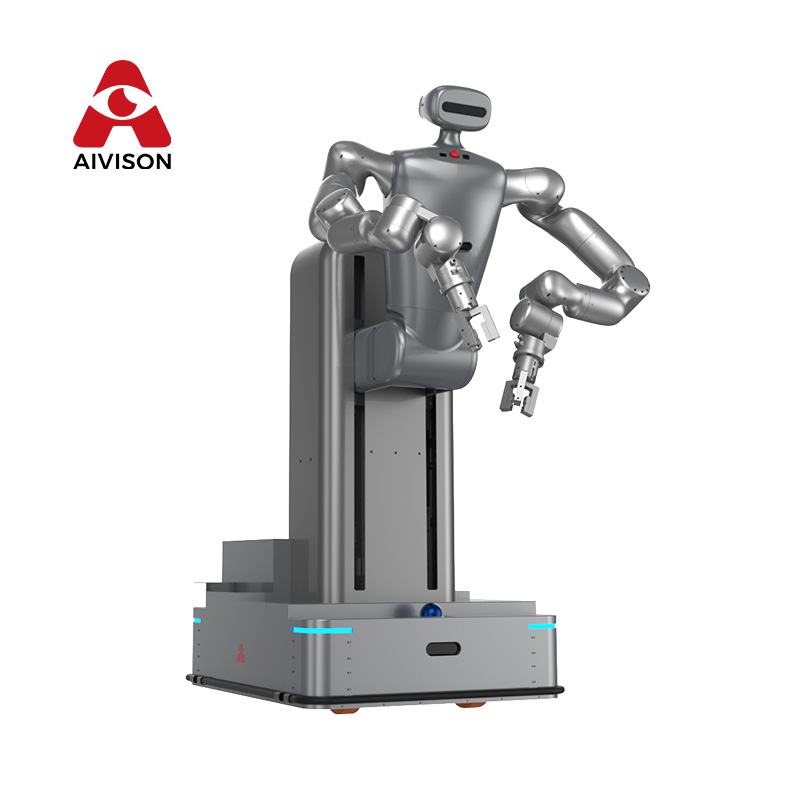
Omnidirectional Service Humanoid Robot Chassis Dual 7-DOF Arms Laser SLAM Navigation for Hospitality and Retail
A service-oriented humanoid robot base for hospitality, retail and interactive environments where mobility, manipulation and public-facing safety must combine.
View product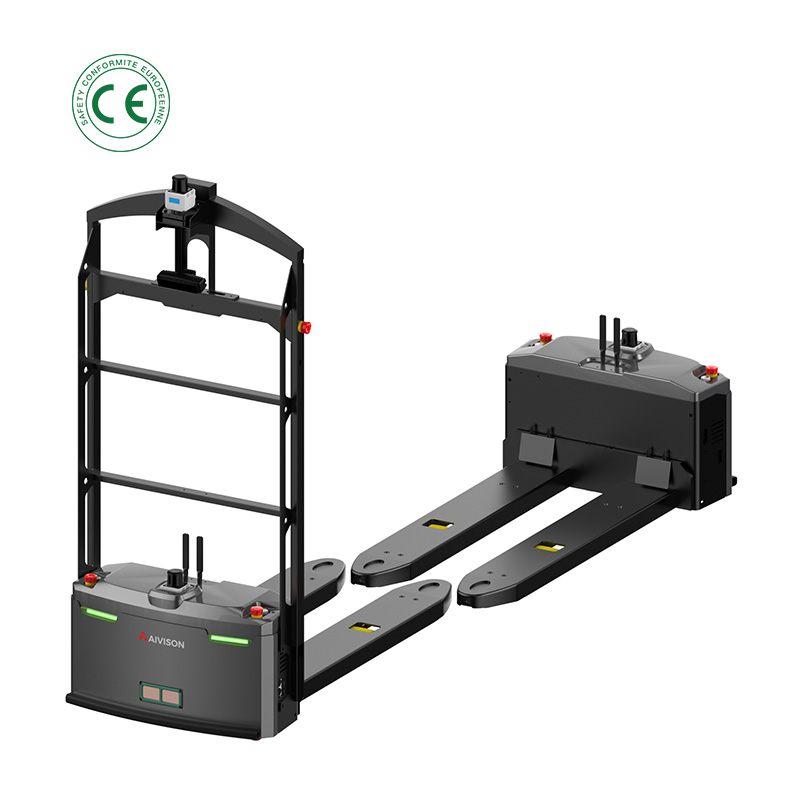
Aivison Customized 800kg Warehouse AGV Robot Lithium Battery AMR
A customizable warehouse AGV for buyers who need lithium-battery operation, class-leading uptime and a platform matched to existing load carriers.
View product
Laser SLAM Navigation Automated Guided Vehicle Forklift agv 1500kg Load Capacity
A trackless forklift AGV for pallet pick-up, put-away and trailer loading where floor infrastructure should stay untouched.
View product
Aivison Stacker Truck Pallet Stacker Forklift Agv 1.5 Ton Autonomous Forklift Smart Deliver AMR Robot
A higher-capacity autonomous stacker for warehouses that need reliable pallet handling, scheduled delivery and reduced dependence on manual forklift shifts.
View productNeed a custom top module, mixed fleet or export-ready configuration?
Why the Top 10 Smart Logistics Robot Suppliers & Exporters Are Evaluated Differently
In 2025, the phrase top 10 smart logistics robot suppliers & exporters no longer describes catalogue size alone. High-intent buyers are comparing uptime, navigation precision, fleet software, safety in mixed traffic, export documentation and the ability to integrate with existing conveyors, racks, lifts and production equipment.
A robot is not a standalone machine. It is a moving node in the material flow. The strongest suppliers prove that their platforms can map an existing site, coordinate multiple robots over indoor Wi-Fi, dock accurately at the station level and support the buyer after commissioning. That is why procurement teams increasingly use a precision-by-station approach instead of asking for one navigation specification for the entire factory.
This whitepaper is informed by Shenzhen Marnix Intelligent Technology Co., Ltd., a Shenzhen-based manufacturer with about ten years of AGV engineering experience. Marnix builds laser SLAM AMRs, jacking robots, smart forklifts, composite mobile robots and intelligent charging docks for end users and system integrators. Its robots are deployed across semiconductor, 3C electronics, lithium battery, photovoltaic, automotive parts, PCB, textile and medical device operations.
- Trackless navigation: laser SLAM maps natural features, so most sites avoid magnetic tape, reflectors and floor QR codes.
- Docking precision by task: ±5 mm for general transfer, ±2 mm with QR assist where needed, and ±0.05 mm repeatability on composite robots.
- Fleet coordination: intelligent scheduling over indoor Wi-Fi supports simultaneous dispatch, traffic control and automatic charging.
- Evidence of export readiness: independent onsite assessment, trade records, references and support for integrators matter as much as the robot itself.

What an Export-Ready AMR Manufacturer Must Prove
For buyers comparing the top 10 smart logistics robot suppliers & exporters, the strongest vendors are not simply product catalogues. They combine platform breadth, customization, verified quality and long-term support.

Manufacturer-Level Engineering, Integrator-Level Flexibility
Marnix combines a broad mobile robot portfolio with flexible engineering of chassis, payload interfaces, jacking units, roller conveyors, forklift forks and robotic arms. This lets end users and system integrators connect robots directly to production equipment instead of forcing a standard platform into a non-standard process.
The company’s quality process includes multi-stage intelligent inspection and operational stress testing. Verified credentials include an onsite supplier assessment by TÜV Rheinland and a procurement contract with a Fortune 500 company, assessed by independent third parties. These signals are relevant to export buyers who need to reduce supplier risk before a factory acceptance test.
Keywords to validate in any supplier proposal: navigation accuracy by station, dynamic obstacle avoidance, fleet scheduling, charging-dock compatibility, safety review, spare-parts plan, export documentation and commissioning support.
Complete AMR Portfolio
Jacking robots, pallet AMRs, smart forklifts, composite mobile robots and intelligent charging docks can be sourced from one engineering partner.
SLAM + Vision Fusion
Laser SLAM and camera-assisted modules support safe navigation in mixed traffic and higher-precision docking where production demands it.
No Unnecessary Floor Rework
Natural-feature SLAM avoids tape, reflectors and full-floor QR codes. QR labels are added only at stations that need ±2 mm precision.
Verified Quality & Support
TÜV Rheinland onsite assessment, multi-stage testing, fleet software and charging docks support reliable 24/7 duty cycles.
The 10-Point Evaluation Framework for Smart Logistics Robot Procurement
Use this weighted scorecard with any shortlisted exporter. Ask for documented evidence, not only catalogue claims. The weights can be adjusted to your site, but every supplier should respond to the same criteria.
Navigation Precision by Station
±5 mm general transfer, ±2 mm QR assist, ±0.05 mm composite repeatability.
Weight 15%Payload and Chassis Fit
Load profile, footprint, center of gravity, rack clearance and towing requirements.
Weight 10%Mixed-Traffic Safety
Dynamic avoidance, human detection, safety zones and integration with site rules.
Weight 12%Fleet Software & Interoperability
Multi-robot scheduling, traffic control, APIs and integration with WMS or MES.
Weight 12%Charging and Uptime Strategy
Battery strategy, smart dock availability, opportunity charging and shift coverage.
Weight 8%Custom Top Modules
Jacking units, roller conveyors, forks and arms engineered for machine interfaces.
Weight 10%Export Documentation
Compliance files, traceability, packaging, shipping terms and after-sales process.
Weight 8%Assessment & References
Independent onsite assessment, trade history, customer references and financial proof.
Weight 8%Commissioning & Spares
Mapping, training, local support, spare-parts plan and response-time commitments.
Weight 10%Total Cost and Scale-Up
Total cost of ownership, fleet expansion path, energy use and change-management effort.
Weight 7%How Top Buyers Will Purchase Logistics Robots in 2025–2030
Procurement is shifting from one-off equipment purchase to a long-term material-flow partnership. The following trends are already visible in serious AMR, AGV and smart forklift projects.
TCO Replaces Sticker Price
Buyers will compare energy use, charging strategy, uptime, service response, spare-parts cost and scale-up potential rather than headline robot price.
Mixed Fleets and Open Scheduling
No buyer wants a robot island. Fleet software must coordinate jacking robots, forklifts and pallet AMRs over shared Wi-Fi without vendor lock-in.
Precision-by-Station Purchasing
Instead of over-specifying the whole floor, buyers will specify ±5 mm for transfer, ±2 mm for docking and arm-level repeatability only where assembly demands it.
Integrator-First Collaboration
System integrators will choose OEM partners that provide customizable chassis, top modules, documentation and co-selling support for faster project delivery.
What the Next Generation of AMR and Smart Forklift Platforms Must Deliver
Hardware differentiation is moving from chassis alone to sensor fusion, modular top mechanisms, fleet-native software and charging infrastructure.
Sensor Fusion and 3D Perception
Lidar, vision and camera-assisted pallet recognition will improve navigation reliability, fork entry and safe operation around people and vehicles.
Modular Top Mechanisms
Jacking units, roller conveyors, forklift forks and 6-axis arms will be engineered as interchangeable modules around one proven navigation core.
Fleet-Native Software
Multi-robot dispatch, traffic control and task prioritization will be evaluated as core product features, not optional add-ons.
Charging as Infrastructure
Compatible smart charging docks, opportunity charging and battery planning will determine real 24/7 availability more than maximum travel speed.

Eight Industries Where Trackless Mobile Robots Prove Their Value
The best deployment is the one that solves a specific material-flow constraint: cleanroom transfer, lithium battery line-side delivery, high-shelf storage, automotive parts movement or medical device assembly.
Semiconductor
Cleanroom logistics and wafer handling.
3C Electronics
Line-side delivery and assembly transfer.
Lithium Battery
Jacking transport and production-line logistics.
Photovoltaic
Module handling and smart forklift transfer.
Automotive Parts
Pallet handling and warehouse movement.
PCB
Roller-conveyor interfaces and machine docking.
Textile
Warehouse transport with repeating routes.
Medical Devices
Composite robot assembly with high repeatability.
What to Prepare Before Requesting a Quote
From Marnix project experience, six inputs determine most robot selection decisions. Sharing them upfront can shorten evaluation from weeks to days and reduce the risk of an over-specified fleet.
Load Profile
Maximum weight, footprint and center of gravity of racks, pallets or carriers to be moved, including any towing demand.
Site Layout
CAD drawing or sketch with aisle widths, doors, slopes, elevator points, charging zones and high-shelf locations.
Throughput Target
Missions per hour, peak periods and shift pattern. This sets fleet size, charging-dock count and traffic-control requirements.
Docking Precision
Identify where ±5 mm is sufficient and where ±2 mm QR assist or composite robot repeatability is genuinely required.
Wi-Fi Coverage
Existing access points and coverage quality across the robot operating area, including dead zones and handover points.
Equipment Interfaces
Conveyors, machines, shelving or lifts the robot must hand over to, plus any need for roller, jacking, fork or arm modules.
Smart Logistics Robot Procurement FAQ
Direct answers for engineering teams, procurement managers and system integrators comparing AMR, AGV and autonomous forklift suppliers.
What navigation accuracy can Marnix AMRs achieve?
Using laser SLAM on natural features, Marnix AMRs reach ±5 mm positioning without magnetic tape, reflectors or floor QR codes. Adding a QR code scanning camera raises accuracy to ±2 mm, and composite robots with a 6-axis arm can reach ±0.05 mm repeatability. The right choice depends on each station, not the whole factory.
Do I need to modify my factory floor?
No. Standard laser SLAM navigation maps your existing environment, so auxiliary tracks or full-floor QR codes are not required. QR labels are only added at stations where ±2 mm docking precision is necessary. This keeps installation faster and lowers infrastructure cost.
Can robots be customized for my production line?
Yes. As a manufacturer, Marnix customizes chassis and top modules such as jacking units, roller conveyors, forklift forks and 6-axis robotic arms. The goal is to connect the robot directly to production equipment rather than forcing a standard platform into a non-standard process.
How are multiple robots coordinated?
Robots are managed by an intelligent scheduling system over indoor Wi-Fi. This supports simultaneous task assignment, traffic control, route coordination and automatic charging with compatible smart charging docks, allowing mixed fleets to operate as one material-flow system.
Which industries use these logistics robots?
Typical deployments include semiconductors, 3C electronics, lithium batteries, photovoltaics, automotive parts, PCB, textiles and medical devices. Marnix serves both end users and system integrators, with 200+ manufacturers served across three continents.
What information is needed for a project evaluation?
Provide the load profile, site layout, throughput target, docking precision, Wi-Fi coverage and equipment interfaces. With these six inputs, an engineering team can recommend a platform, estimate fleet size and confirm whether ±5 mm, ±2 mm or ±0.05 mm precision is appropriate.
Ready to Compare Precision, Payload and Export Support?
Share your load profile, layout, throughput and docking targets. Marnix engineers can recommend a robot platform or mixed-fleet configuration and confirm where ±5 mm, ±2 mm or ±0.05 mm performance is needed. Project evaluations are subject to site survey, safety review and factory acceptance testing.