What navigation accuracy do these AMRs achieve?
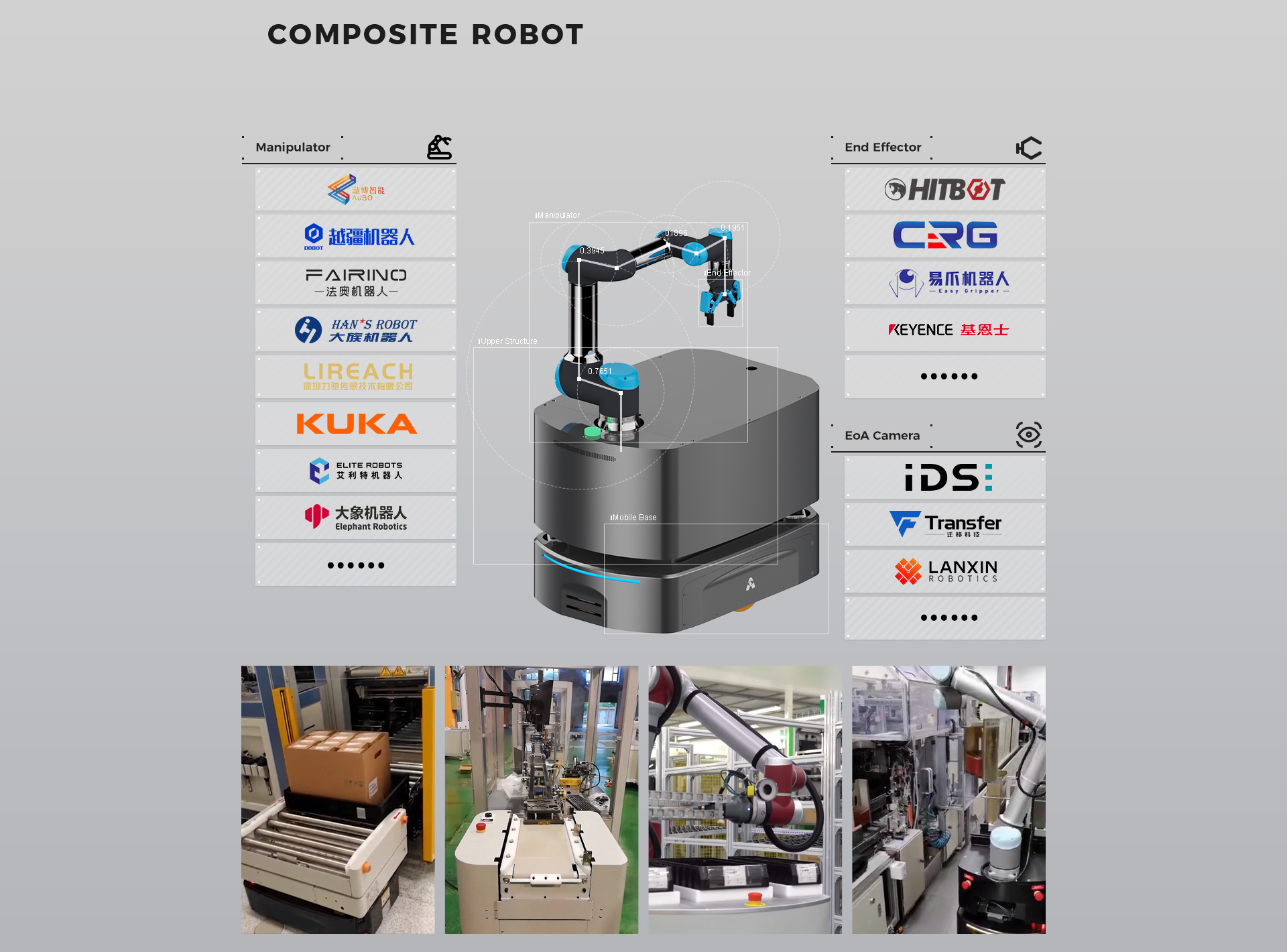
Natural-feature laser SLAM reaches ±5 mm without magnetic tape, reflectors or floor QR codes. Adding a QR scanning camera raises accuracy to ±2 mm at selected stations, and composite robots carrying a 6-axis arm achieve ±0.05 mm repeatability for precision assembly.
Do I need to modify my factory floor before deployment?
No. Standard SLAM navigation maps the existing environment, so no auxiliary tracks or floor codes are installed. QR labels are added only at the stations that genuinely require ±2 mm docking precision — typically fewer than a dozen points on a large site.
Can the robots be customised for my production line?
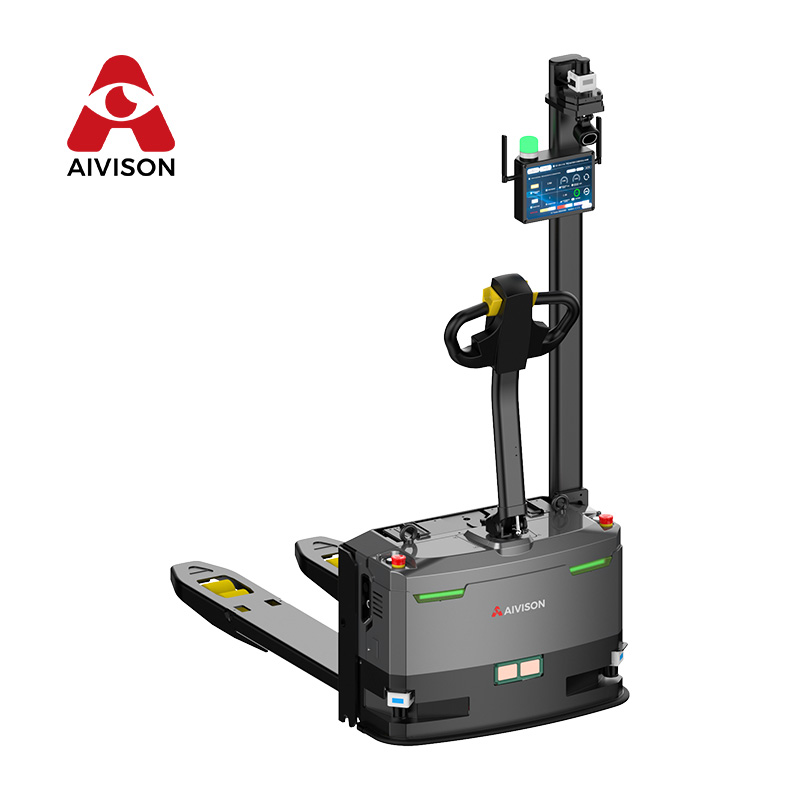
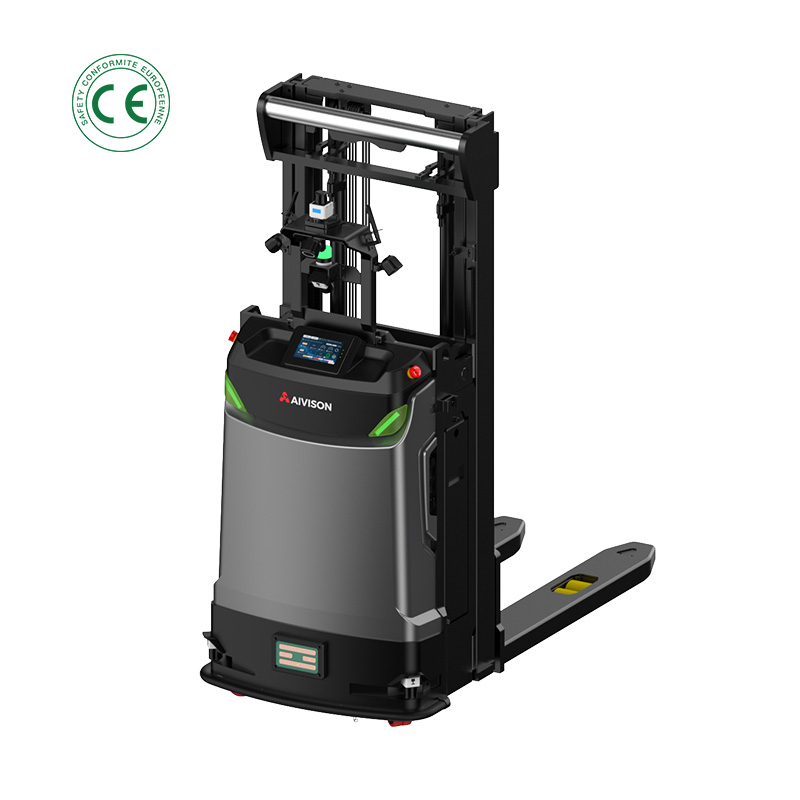
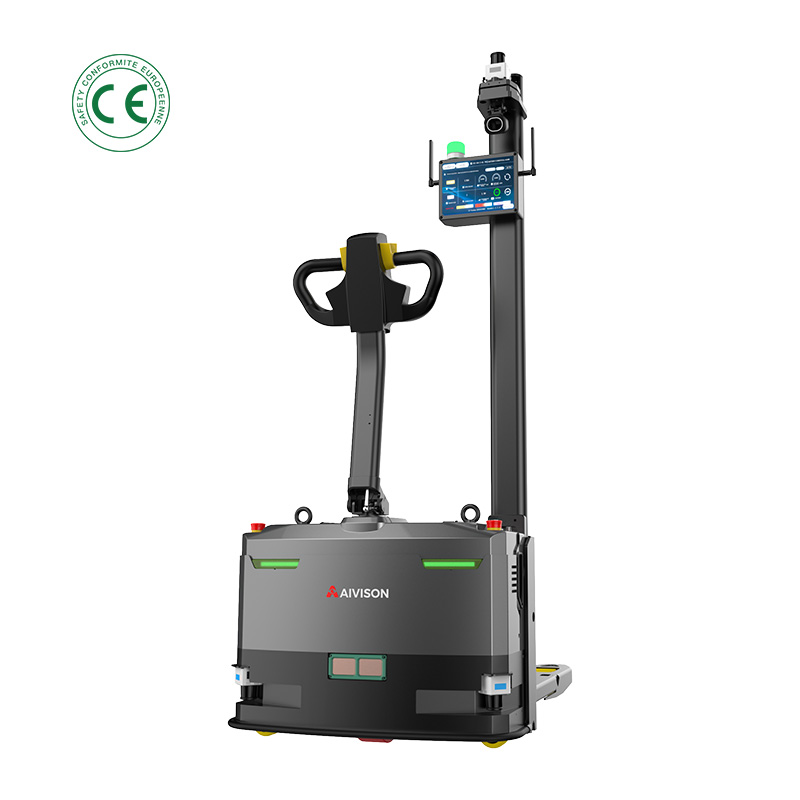
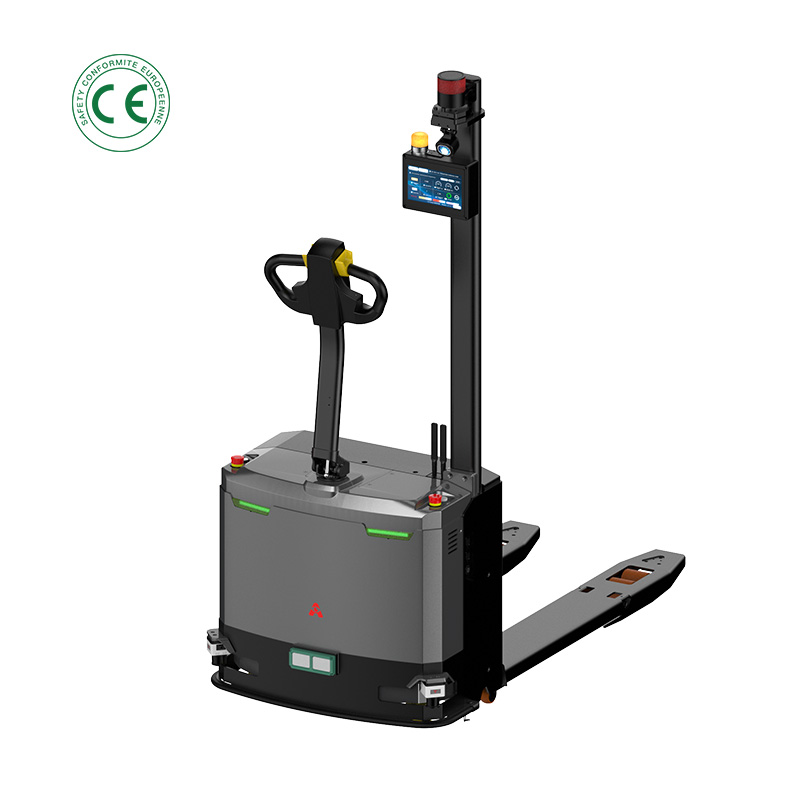
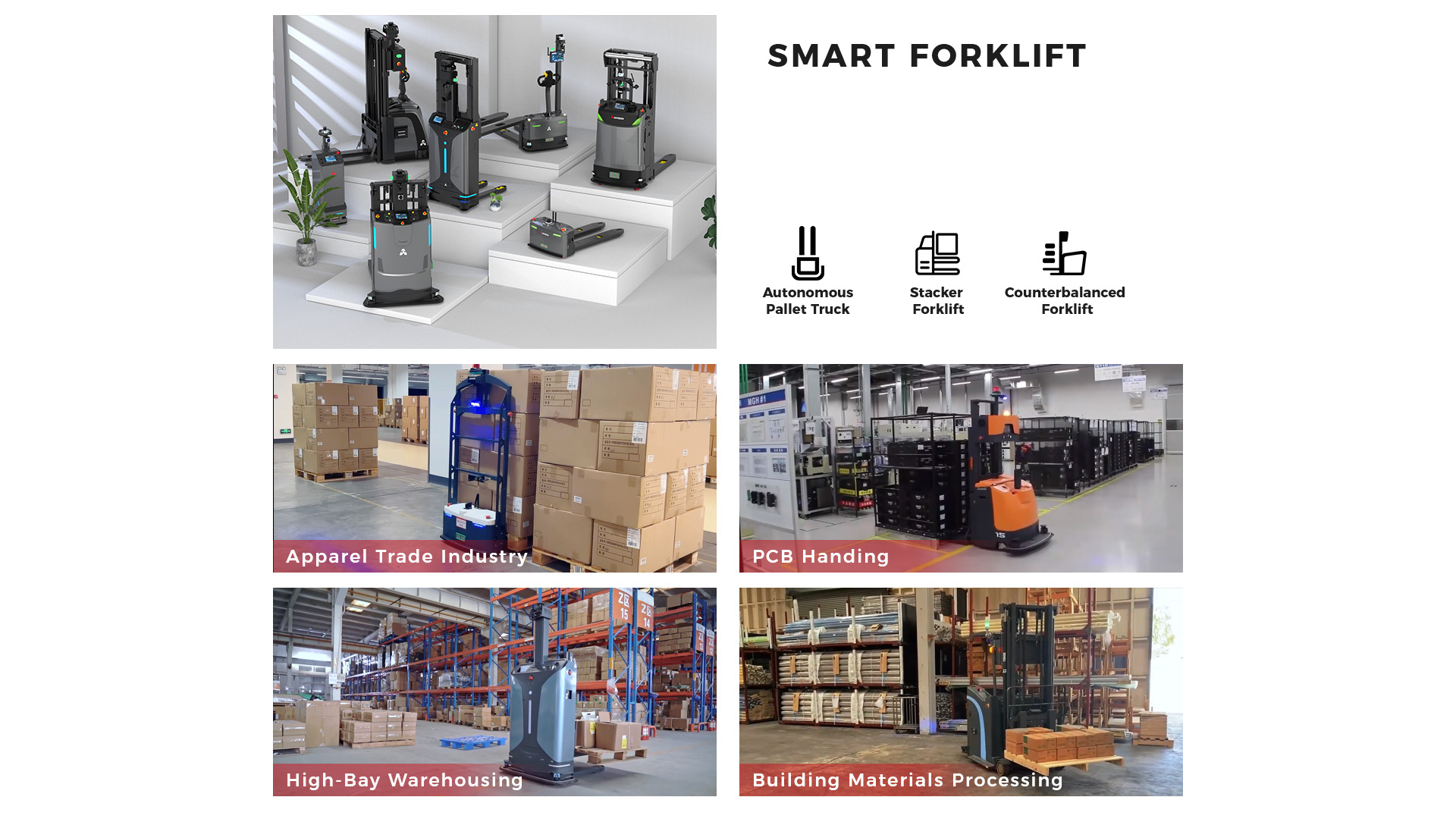
Yes. As a manufacturer, chassis and top modules are engineered to order: jacking units, roller conveyors, forklift forks and 6-axis robotic arms are configured to connect directly with your existing production equipment rather than requiring an adapter station.
How are multiple robots coordinated on one site?
An intelligent scheduling system manages the fleet over indoor Wi-Fi, handling simultaneous task assignment, traffic control and automatic return-to-charge through compatible smart charging docks. Mixed fleets of jacking, pallet and stacker units share the same controller.
Which industries typically deploy these platforms?
Semiconductor, 3C electronics, lithium battery, photovoltaic, automotive parts, PCB, textile and medical device manufacturing. Both end users and system integrators buy the same platforms, with integrators usually taking the customisation route.
How do I choose between laser SLAM and QR-assisted navigation?
Default to laser SLAM for everything that moves material between zones. Add QR assist only where the robot must dock to a machine or high rack within ±2 mm. Composite robots are reserved for assembly stations where an arm performs the final placement.
What is the realistic lead time for a custom platform?
It depends on top-module complexity rather than chassis build. Sending a CAD layout, load profile, throughput target and docking tolerance list at the enquiry stage is what shortens the engineering loop — vague requirements are the main cause of delay.
How do I start a project evaluation?
Share your payload range, floor layout, missions per hour, Wi-Fi coverage and the stations that need tight docking. Our engineers will return a recommended configuration, fleet size and charging strategy based on those six inputs.