8 Rack-Handling and Autonomous Platforms for OEM/ODM Projects
These platforms cover under-rack lifting, pallet handling, high-precision docking, omnidirectional navigation and composite robotics. Their shared engineering logic is simple: match the navigation core, payload interface and safety layer to the real rack, aisle and handover conditions—not to a generic catalog spec.

New Warehouse Autonomous Cars agv Robot 2000kg Load Capacity Stacker agv Robot
Recommended for heavy rack, pallet and stacker duty where payload stability and repeatable pickup height matter more than raw speed.

Omnidirectional Humanoid Robot Chassis Dual 7-DOF Arms Laser SLAM Autonomous Warehouse AMR Mobile Platform
Ideal for OEM/ODM projects that need mobile manipulation, dual-arm flexibility and omnidirectional positioning around racks or workstations.

Humanoid Robot Chassis Dual 7-DOF Arms Laser SLAM Omnidirectional Navigation ROS2 Open Platform AMR
Built for integrators that need an open ROS2 platform, dual-arm architecture and a mobile base for application-layer differentiation.
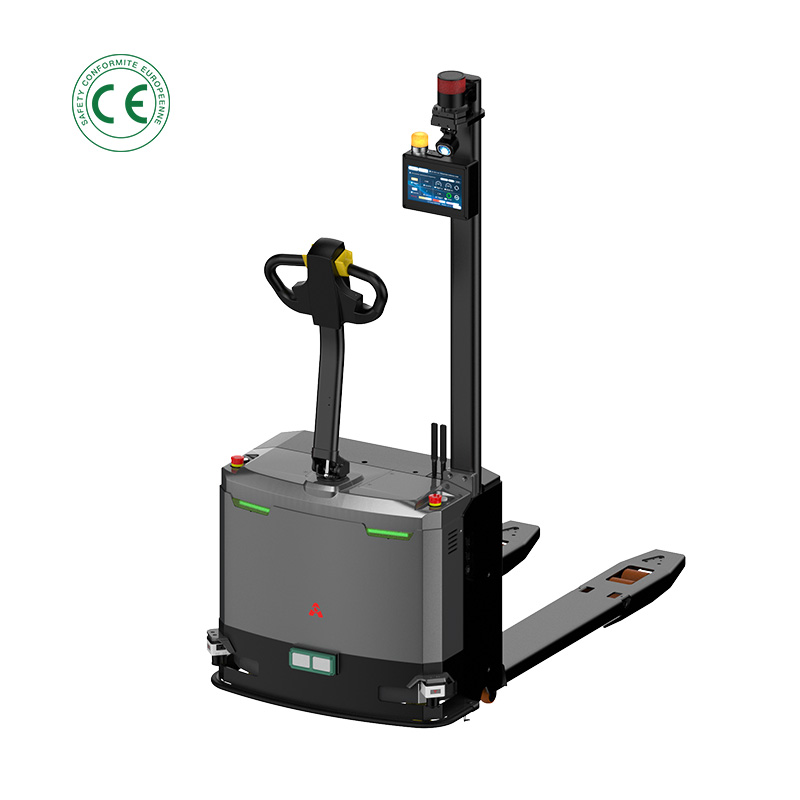
CE Certification Industrial AMR AGV Robot for Warehouse Automation Autonomous Material Handling Logistics
A practical recommendation for warehouse automation projects that need a CE-certified industrial AMR platform and predictable material flow.
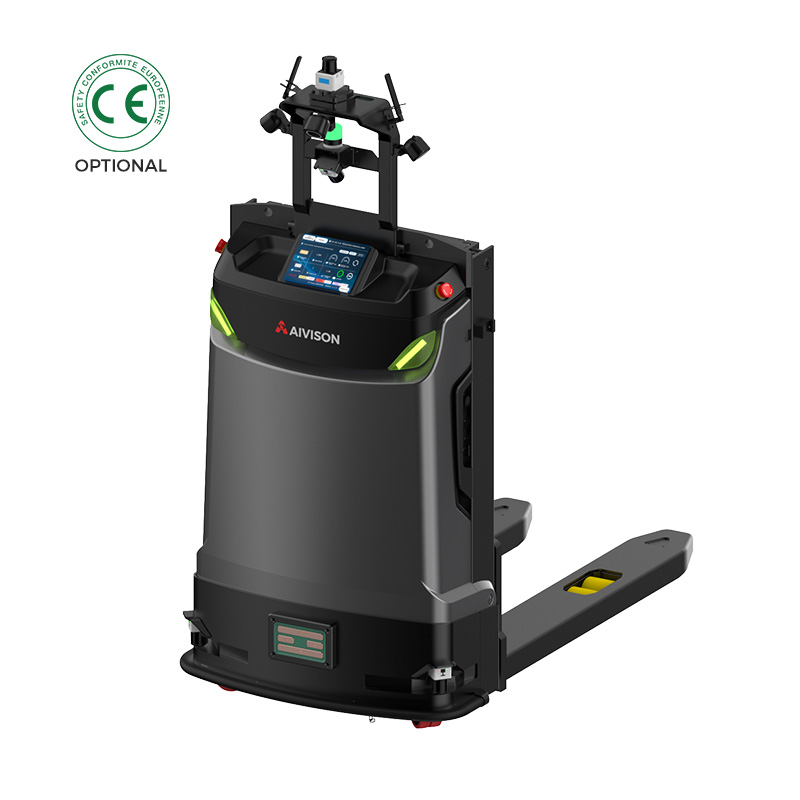
China Factory Automated Mobile Robot SLAM Lifting Wholesale AGV Chassis Vehicle
Suited to under-rack jacking and custom top-module programs where the chassis is the base for a rack-handling OEM/ODM solution.
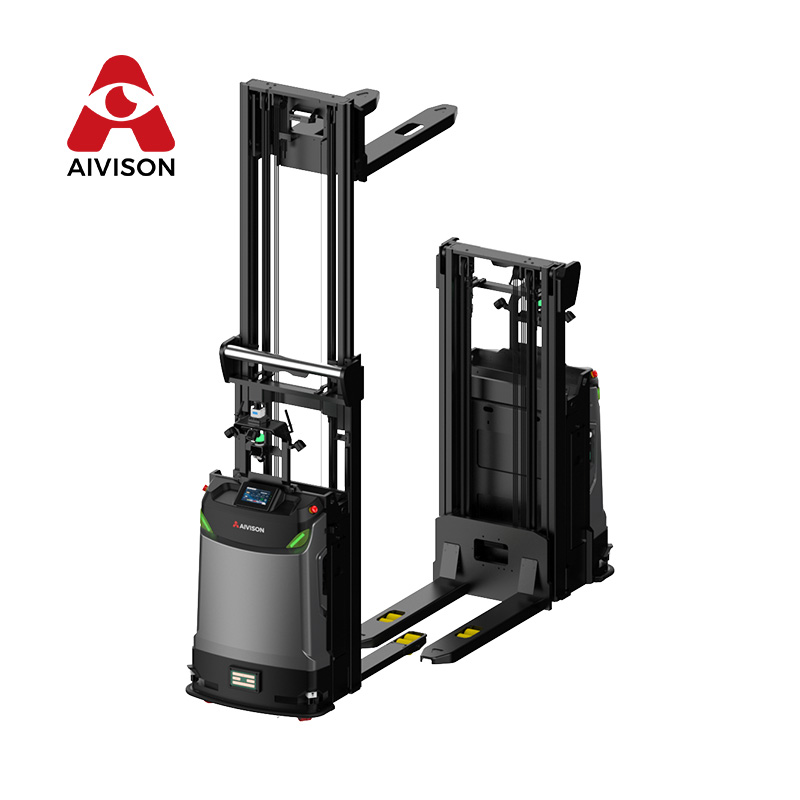
High Precision agv Forklift Full Servo Motor Controlled Laser Forklift with Heavy Load 2000kg
Recommended when rack entry, fork positioning and heavy-load control are the main risk points in the automation business case.
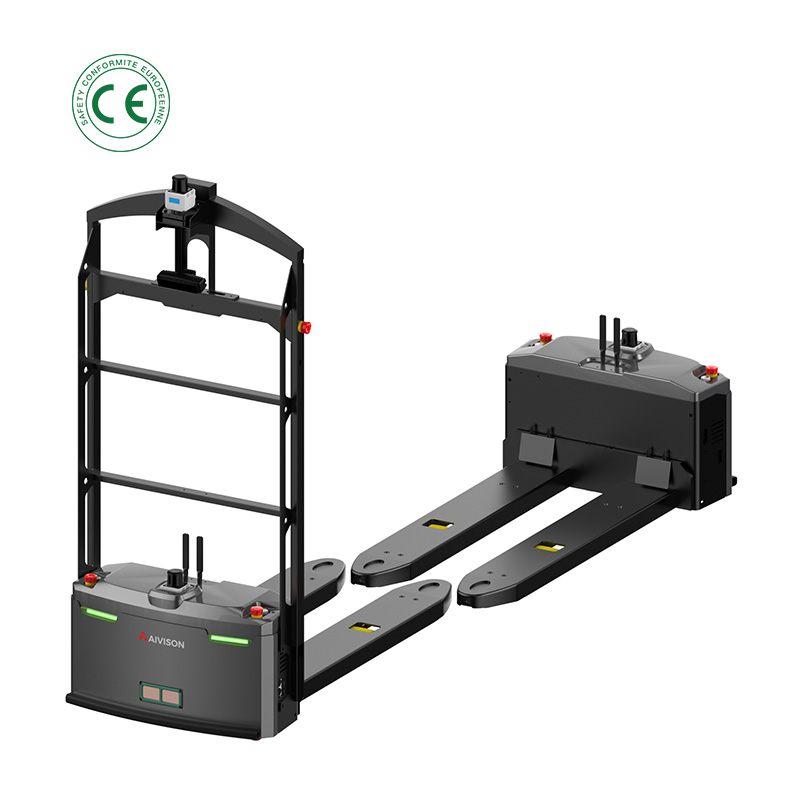
Aivison Customized 800kg Warehouse AGV Robot Lithium Battery AMR
A balanced choice for light-to-medium rack transfer, lithium-battery operation and customized warehouse automation deployments.
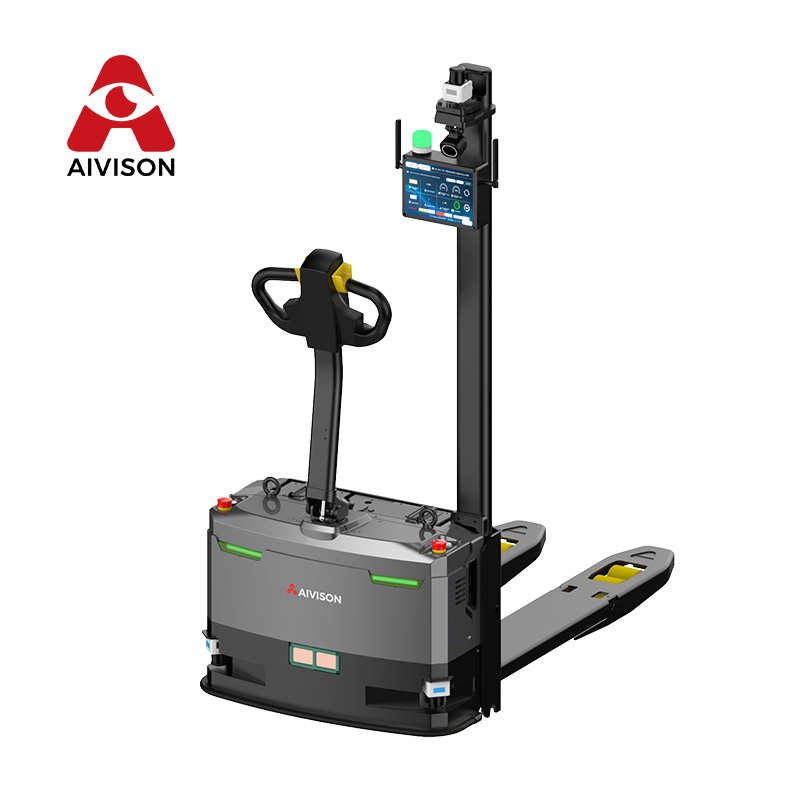
Aivison AGV Forklift High Quality Industrial Unmanned Pallet Forklift
Recommended for conventional pallet flows where an unmanned forklift must interface with existing racks, floor stacks and WMS task rules.
Why Rack Handling Robots Fail or Succeed Before the First Move
A rack handling robot is not a generic AMR with a catalog payload rating. It is a system of tolerances: rack geometry, under-clearance, center of gravity, docking repeatability, fleet traffic, safety logic and service response. Most failed projects do not fail because the motor is undersized; they fail because the specification stopped at load capacity and ignored the handover.
Executive summary: the real procurement problem
Buyers searching for an OEM/ODM rack handling robot manufacturer and exporter are usually solving one of four problems: replacing repetitive rack movement, stabilizing line-side material flow, reducing dependence on forklift drivers, or integrating a rack-handling platform into a larger automation project. The correct first question is not “Which robot has the highest payload?” but “Which handover must repeat reliably, how often, and with what tolerance?”
In high-shelf storage, a 5 mm positioning error may be harmless in a transfer aisle but unacceptable at a rack entry point. In semiconductor, medical device or precision electronics production, the mobile chassis may navigate at ±5 mm while the onboard manipulator must deliver ±0.05 mm repeatability. These are different precision layers, and they require different hardware, calibration and acceptance tests.
Information gain begins with separating navigation accuracy, docking accuracy and process accuracy. A supplier that can explain these three layers—and show how the robot is tested at each layer—is usually a safer OEM/ODM partner than one that quotes only a headline payload figure.
What “rack handling” means in real factories
Rack handling can include under-rack lifting, shelf transport, rack-to-line delivery, pallet-to-rack transfer, high-shelf docking and mobile manipulation around rack faces. The original Marnix portfolio reflects this spread: jacking robots, 800 kg and 2000 kg platforms, stacker AGVs, laser forklifts, omnidirectional mobile bases and dual-arm composite platforms. The buyer’s job is to map the process to the simplest architecture that can meet the acceptance criteria.
- Under-rack jacking AMR: compact, efficient and flexible, but sensitive to rack leg clearance and load center of gravity.
- Stacker or pallet AMR: good for heavy loads and pallet interfaces, but requires aisle and lift-height discipline.
- Smart forklift: works with existing pallet infrastructure, yet fork entry and mixed traffic safety must be engineered carefully.
- Composite mobile manipulator: highest process capability, highest integration complexity and best reserved for high-value precision tasks.

| Architecture | Best fit | Typical precision path | Main procurement risk | OEM/ODM question to ask |
|---|---|---|---|---|
| Under-rack jacking AMR | Rack and shelf transport, line-side replenishment, flexible layout changes | ±5 mm laser SLAM; ±2 mm with QR assist where docking demands it | Rack leg clearance, load center of gravity, floor transitions | Can the lifting platform and rack interface be customized? |
| Stacker or pallet AMR | Heavy pallet movement, warehouse transfer, inbound and outbound flows | Laser SLAM with pallet recognition and controlled lift height | Pallet quality, aisle width, lift stability at height | How is stacker stability validated under full load? |
| Smart forklift | Existing pallet racking, floor stacks, conventional warehouse interfaces | Laser navigation plus vision assist for fork entry | Mixed traffic safety, fork alignment, rack damage prevention | What camera and safety layers are included? |
| Composite mobile manipulator | Semiconductor, medical device, precision electronics, machine tending | ±0.05 mm repeatability with multi-layer synchronization | Calibration drift, station design, integration complexity | How are the chassis and arm calibrated together? |
Eight Variables That Determine Rack Handling Robot Selection
High-performing procurement teams convert site conditions into measurable requirements before they request a quote. This reduces rework, keeps supplier comparisons honest and protects the commissioning schedule.
Payload and Center of Gravity
State maximum load, rack weight, carrier footprint and center of gravity. A robot rated for the mass may still need a different lifting platform if the load is unusually tall or offset.
Under-Rack Clearance
Measure the lowest obstruction, leg spacing and floor transition. Jacking robots need clean entry geometry; forklifts need fork pocket compatibility and sufficient aisle turning space.
Docking Tolerance
Separate free-navigation accuracy from station docking accuracy. Use ±5 mm SLAM where sufficient, add QR assistance for ±2 mm handovers, and reserve micrometer-level work for composite robots.
Throughput and Fleet Size
Define missions per hour, peak bursts and waiting tolerance. Fleet size is a traffic and charging calculation, not simply a division of total tasks by robot speed.
Mixed Traffic and Safety
Map pedestrian crossings, forklift lanes, blind corners and door zones. Require clear stop behavior, obstacle avoidance logic, warning devices and zone-speed rules.
Wi-Fi and Fleet Coordination
Fleet scheduling depends on stable indoor Wi-Fi and disciplined task dispatch. Ask how the system handles route conflicts, deadlocks and charging queue logic.
Charging Strategy
Decide between opportunity charging, scheduled charging and battery exchange. Charging dock placement affects fleet efficiency as much as battery capacity.
Service and Spare Parts
Ask for commissioning support, remote diagnostics, spare-parts strategy and escalation time. A rack handling robot is a production asset; uptime belongs in the contract.
How Rack Handling Robot Procurement Is Changing Through 2030
Buyers are shifting from isolated robot purchases to lifecycle partnerships. The strongest OEM/ODM exporters will be judged on integration speed, fleet openness, service coverage and evidence of repeatable deployment—not only on unit price.
1. Total Cost of Ownership Replaces Sticker Price
Procurement teams now model labor availability, downtime risk, charging cost, spare parts, route changes and integration labor. A lower-cost rack handling robot that requires floor rework or frequent recalibration can be more expensive over five years than a better-integrated platform.
2. Mixed-Fleet Interoperability Becomes Non-Negotiable
Factories rarely automate one process at a time. Buyers ask whether the fleet scheduling system can coexist with existing WMS, MES, conveyors, elevators and safety systems. Open APIs and ROS2-based development options are becoming evaluation criteria rather than nice-to-have features.
3. Safety Evidence Moves into the Tender
Robots that share aisles with people and forklifts must be specified with clear safety behavior, zone control, warning devices and emergency-stop logic. The purchasing question is not “Is it safe?” but “What evidence, test scenario and responsibility boundary are documented?”
4. Local Service and Spare Parts Decide Uptime
Cross-border buyers increasingly score suppliers on commissioning support, remote diagnostics, spare-parts lead time and local partner coverage. An exporter with engineering depth but weak service logistics can expose the buyer to avoidable production risk.
5. Charging and Energy Strategy Moves Upstream
Instead of specifying a battery size, buyers now ask how opportunity charging, dock placement and task scheduling interact. In multi-shift warehouses, charging strategy can determine whether a fleet needs two, three or four robots.
6. Supplier-Managed Automation Becomes a Competitive Option
Some buyers prefer a manufacturer that can support simulation, customization, commissioning and expansion planning. This is especially relevant for OEM/ODM projects where the robot must be adapted to rack geometry, top modules or production equipment interfaces.
Where Rack Handling Robot Technology Is Heading
The next generation of rack handling automation will be defined less by a single robot and more by a modular, observable and serviceable system around the robot.
SLAM Plus 3D Vision
Laser SLAM remains the navigation backbone, but 3D vision and camera-assisted pallet recognition increasingly handle fork entry, rack-face inspection and dynamic load confirmation.
Modular Top Interfaces
One chassis with swappable jacking units, roller conveyors, forklift forks or robotic arms lets an OEM/ODM supplier serve multiple processes while keeping spare-parts and service logic simpler.
Fleet Orchestration and Digital Twins
Simulation before deployment and live fleet dashboards reduce commissioning risk. Buyers want to test route conflicts, charging queues and peak throughput before the first robot arrives.
Edge AI for Local Decisions
Edge processing supports faster obstacle classification, pallet recognition and anomaly detection. The aim is not autonomy for its own sake, but fewer stops, faster recovery and clearer diagnostics.
Battery and Charging Intelligence
Lithium battery systems, smart charging docks and charge-aware scheduling improve multi-shift operation. The procurement focus shifts from “rated runtime” to “available runtime under real task mix.”
Composite Mobile Manipulation
Mobile bases with 6-axis or dual 7-DOF arms move beyond transport into machine tending, precision loading and laboratory material handling, where repeatability and calibration are central.
What to Send Before Requesting an OEM/ODM Rack Handling Robot Quotation
From Marnix project experience, six inputs determine most of the technical selection. Sharing them upfront shortens evaluation from weeks to days and reduces the risk of a mismatched proposal.
Load Profile
Maximum weight, rack or pallet footprint, center of gravity, load height and any overhang. Include photographs of loaded racks and the worst-case load.
Site Layout
A CAD plan or sketch with aisle widths, doors, slopes, floor transitions, elevator or lift points and no-go zones. Mark where people and forklifts cross robot routes.
Throughput Target
Missions per hour, peak periods and acceptable waiting time. Separate average throughput from peak throughput; fleet sizing must survive the peak.
Docking Precision
Which stations can accept ±5 mm, which need ±2 mm QR assistance, and which require arm-level repeatability. Precision requirements should be mapped station by station.
Wi-Fi Coverage
Existing access-point locations, signal quality and IT/OT security rules. Fleet scheduling requires stable coverage along every route, not only at the charging area.
Equipment Interfaces
Conveyors, machines, racks or shelving the robot must hand over to, plus any top-module need such as jacking, roller, fork or arm. Include PLC and WMS/MES protocol expectations.
Six Tests That Should Be Written into the Factory Acceptance Plan
For a rack handling robot, acceptance should verify repeatability under load, traffic and recovery conditions—not simply confirm that the robot moves during a demo.

Why Marnix Is a Practical OEM/ODM Partner for Rack Handling Robots
Shenzhen Marnix Intelligent Technology Co., Ltd. is a Shenzhen-based manufacturer and exporter of laser SLAM AMRs, jacking robots, smart forklifts, composite mobile robots and intelligent charging docks. The company draws on about ten years of AGV engineering experience and serves both end users and system integrators.
The advantage is not a single model. It is the ability to combine a proven SLAM navigation core with payload modules, fleet scheduling and service support. For rack handling, that means the discussion can move from “Which robot do you have?” to “How should the chassis, lift interface, docking precision and traffic rules be engineered for this rack flow?”
- Precision without blanket floor rework: ±5 mm laser SLAM using natural features; QR assistance only where ±2 mm docking is needed.
- Custom top modules: jacking units, roller conveyors, forklift forks and robotic arms can be adapted to production equipment interfaces.
- Fleet-level thinking: intelligent scheduling over indoor Wi-Fi supports simultaneous task assignment, traffic control and automatic charging with compatible docks.
- Evidence-based supplier review: independent TÜV Rheinland onsite assessment, Fortune 500 supplier experience and transparent trade records support due diligence.
These claims must still be matched to your site. A responsible OEM/ODM proposal should state assumptions, exclusions and acceptance criteria. That is the difference between a catalog inquiry and a production-grade rack handling project.
 TÜV Rheinland Onsite Assessment
Company premises and operations reviewed by an independent inspection body.
View report
Common Questions from Rack Handling Robot Buyers
These answers reflect the questions that most often determine whether an OEM/ODM rack handling project moves from inquiry to site evaluation.
What is a rack handling robot, and how does it differ from a standard AGV?
A rack handling robot is engineered around the rack interface: under-rack clearance, lifting or fork entry, load stability, docking tolerance and handover with production equipment. A standard AGV may move material from point A to point B, but a rack handling solution must repeat a physical handover safely and consistently. That is why specification must include rack geometry and center of gravity, not only payload.
Which navigation accuracy do we need for rack docking?
Use laser SLAM at ±5 mm for general navigation and many transfer tasks. Where rack entry or station docking needs tighter repeatability, add QR code scanning assistance to reach ±2 mm. For composite robots with robotic arms, process repeatability can reach ±0.05 mm, but this is a different precision layer and requires station calibration.
Do we need to modify the floor or install QR codes everywhere?
No. Standard laser SLAM maps natural features and does not require magnetic tape, reflectors or floor QR codes for general navigation. QR labels are typically added only at stations where ±2 mm docking is required. The site still needs suitable floor transitions, aisle width and Wi-Fi coverage, but the navigation concept avoids blanket floor rework.
Can the robot be customized for our rack geometry and production equipment?
Yes. OEM/ODM customization can include chassis configuration, jacking units, roller conveyors, forklift forks, robotic arms, charging docks and software interfaces. The practical constraint is that customization should be based on measured rack drawings, load conditions and handover points. A supplier should document which parts are standard, which are customized and how acceptance will be tested.
How do we calculate the number of robots and charging docks?
Start with missions per hour, average route length, loading and unloading time, peak concurrency and acceptable waiting time. Then add traffic constraints, door queues and charging windows. In many projects, the correct fleet size is determined by peak congestion and charging strategy rather than by average throughput. A simulation or route study is often cheaper than adding an extra robot after commissioning.
How are multiple robots coordinated in mixed traffic?
Fleet scheduling software assigns tasks, controls traffic and manages charging over indoor Wi-Fi. The important evaluation questions are how the system handles deadlocks, narrow aisles, temporary obstacles and manual intervention. Buyers should require a congestion test with realistic peak missions before final acceptance.
What safety features should we require in a tender?
At minimum, require documented obstacle detection, warning devices, emergency-stop behavior, zone speed control and restart procedures. The tender should also define who is responsible for traffic routes, pedestrian crossings, forklift interfaces and operator training. Safety is a system responsibility shared between the robot supplier, integrator and site operator.
Can Marnix supply OEM/ODM projects for system integrators?
Yes. Shenzhen Marnix Intelligent Technology Co., Ltd. supplies robots and complete solutions to system integrators as well as end users. The portfolio includes jacking robots, smart forklifts, pallet AMRs, composite mobile robots, charging docks and fleet scheduling. Integrators can discuss chassis customization, top modules and open-platform requirements such as ROS2.
What information should be included in the first inquiry?
Send load weight, rack or pallet dimensions, maximum load height, center of gravity, aisle widths, floor plan, throughput target, docking precision by station, Wi-Fi coverage and equipment interfaces. Photographs or video of the current manual process are also useful. These inputs let the supplier recommend a realistic configuration instead of a generic catalog model.
How can we verify the manufacturer before placing an order?
Review independent assessment records, trade history, product documentation, factory test reports and references from comparable projects. For Marnix, buyers can review the TÜV Rheinland onsite assessment, credit index, trade capacity and transaction history links on the company website. A serious OEM/ODM supplier should welcome technical due diligence and clearly separate verified facts from commercial claims.
Request an OEM/ODM Rack Handling Robot Proposal
Share your rack dimensions, payload, aisle layout, throughput target, docking precision and equipment interfaces. Our engineering team can then recommend the right combination of jacking robot, stacker AGV, smart forklift, composite platform or fleet configuration.
Company: Shenzhen Marnix Intelligent Technology Co., Ltd. • Email: info@marnixbot.com • Focus: laser SLAM AMR, jacking robot, smart forklift, composite mobile robot and intelligent charging dock.