OEM/ODM Material Handling Robot Supplier & Wholesalers
Engineering-grade AMRs, AGVs, jacking robots and smart forklifts for system integrators, distributors and factory owners — with laser SLAM accuracy from ±5 mm, QR-assisted docking to ±2 mm and composite repeatability to ±0.05 mm.
8 Material Handling Robots for OEM/ODM, Wholesale and Integrator Programs
These eight platforms cover the most common buying intents behind the query “OEM/ODM material handling robot supplier and wholesalers”: heavy pallet handling, autonomous stacking, jacking transport, smart forklifts, humanoid or dual-arm research, LiDAR sourcing and high-precision servo control.

Warehouse Robot Robotics 2000KG CE Warehousing Automatic Forklift Stacking AGV
Best fit: CE-ready 2,000 kg pallet stacking, warehouse transfer and trailer loading where a robust stacking cycle matters more than a narrow aisle footprint.

New Warehouse Autonomous Cars agv Robot 2000kg Load Capacity Stacker agv Robot
Best fit: autonomous 2,000 kg stacker projects replacing manual counterbalance trucks on repetitive put-away, replenishment and warehouse transfer routes.

Humanoid Robot Chassis Dual 7-DOF Arms Laser SLAM Omnidirectional Navigation ROS2 Open Platform AMR
Best fit: R&D and advanced automation teams building humanoid or dual-arm applications on a ROS2, omnidirectional, laser SLAM AMR base.
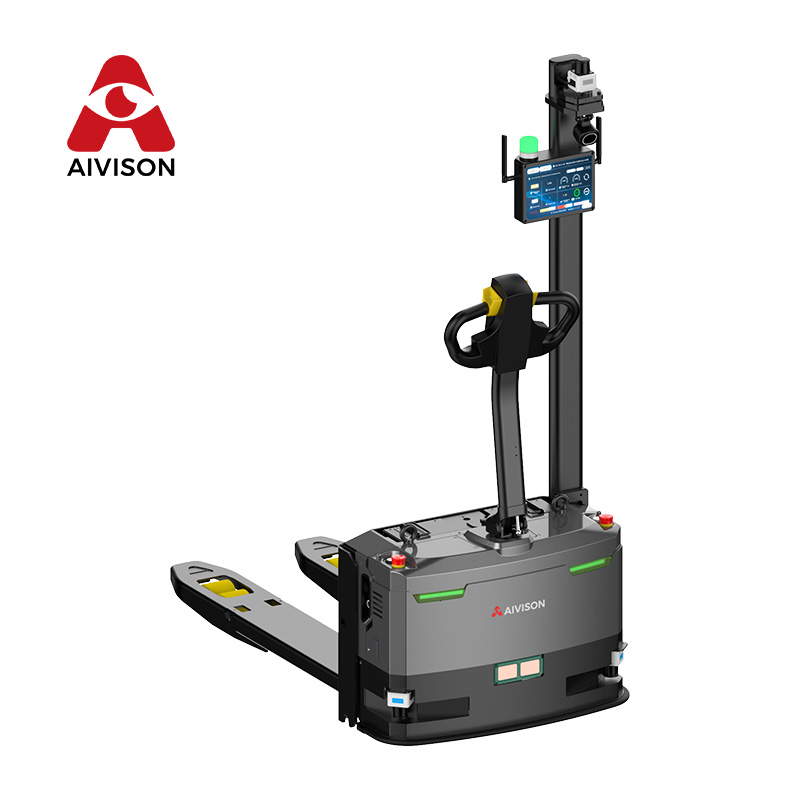
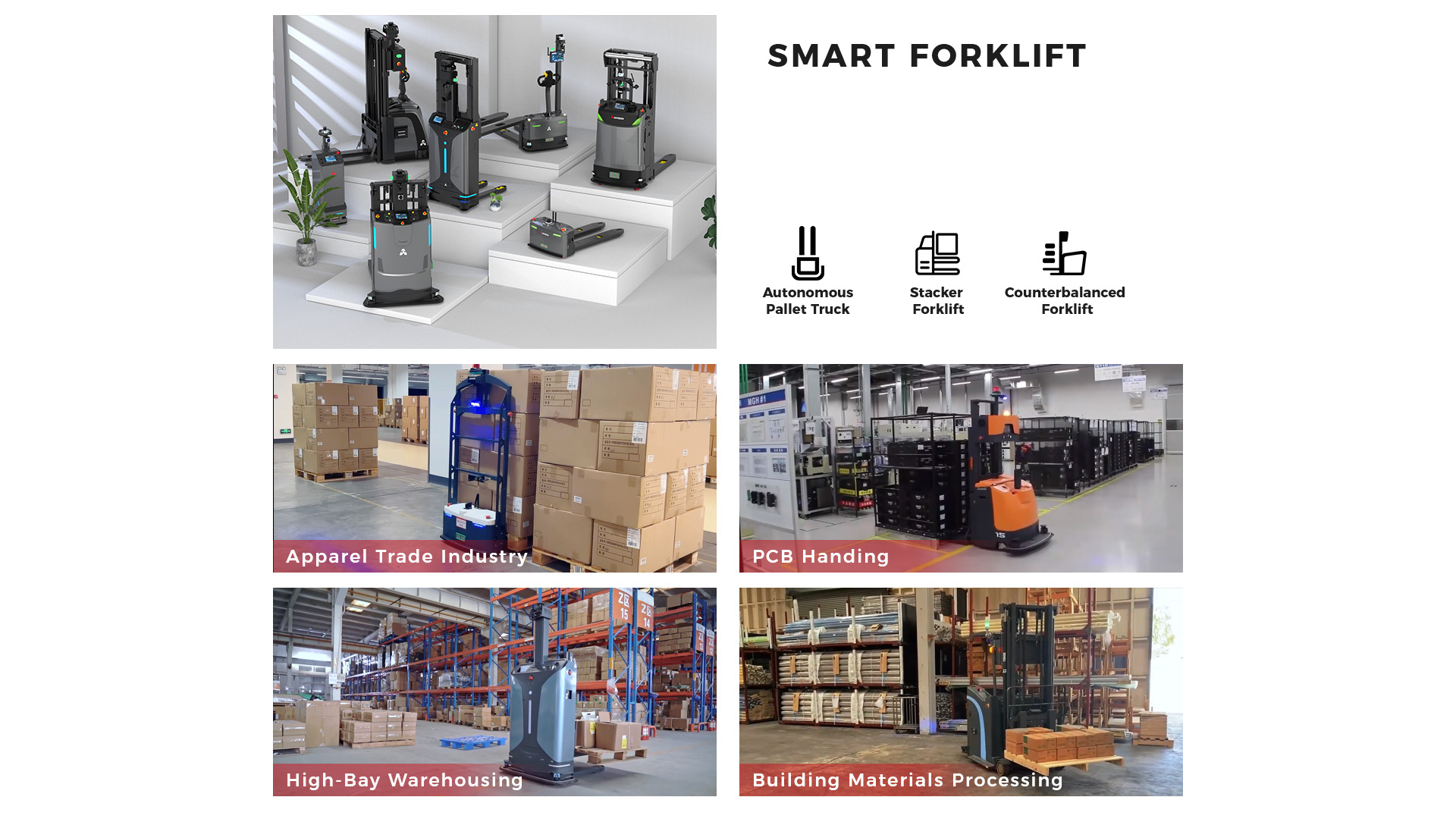
Aivison Stacker Truck Pallet Stacker Forklift Agv 1.5 Ton Autonomous Forklift Smart Deliver AMR Robot
Best fit: 1.5-ton smart pallet delivery and autonomous forklift projects that need an accessible entry platform for distributors and factory users.
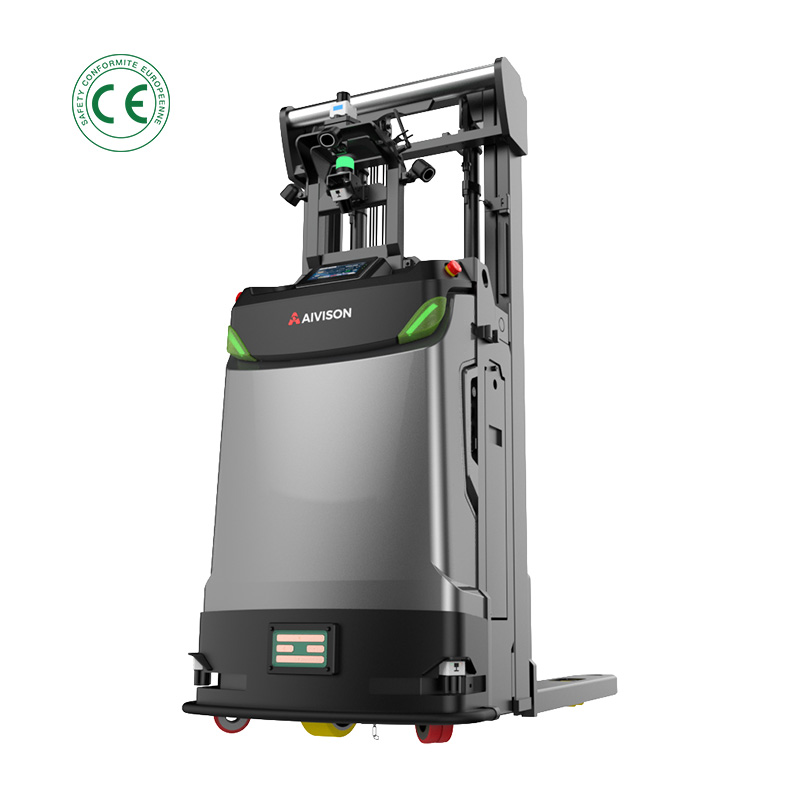
Smart Transport Robotic with Laser Navigation Reach 2000KG AGV Logistics Robots Warehouse Robot AMR
Best fit: 2,000 kg logistics transport in warehouses that need fast mapping, laser navigation and scalable mixed-fleet deployment.

Hot Selling Logistics Navigation Detector Sensor Lidar Manufacturers Direct Sales
Best fit: OEM/ODM integrators and wholesalers sourcing navigation-grade LiDAR and detector modules for their own robot assembly or resale portfolio.
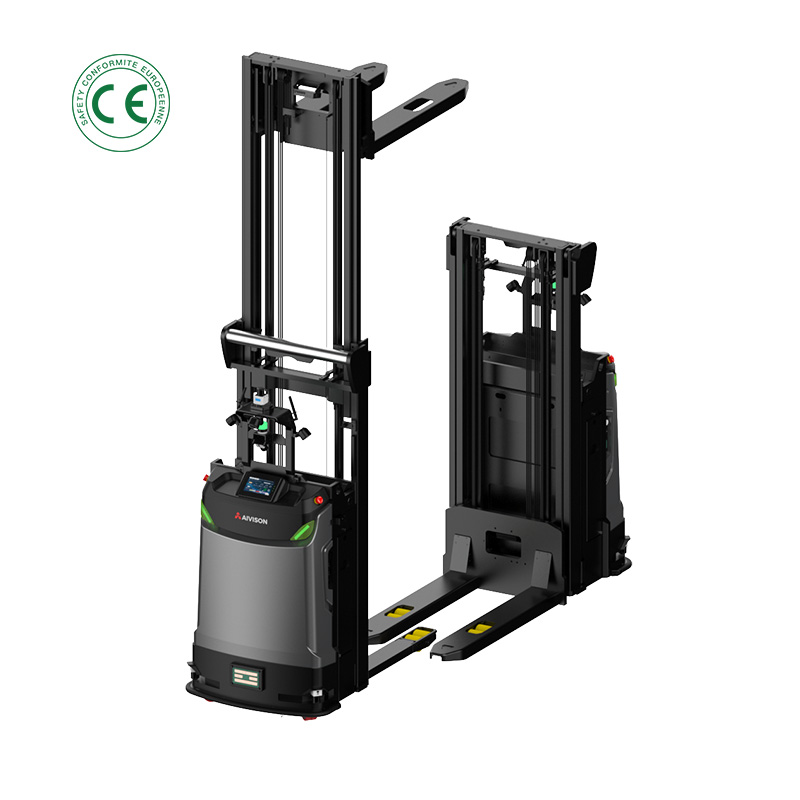
Factory AMR Robot AGV Robot Laser 2000kg Forklift AGV for Industrial Material Handling
Best fit: in-factory material handling where a 2,000 kg laser forklift AGV must connect production cells with warehouse buffers.
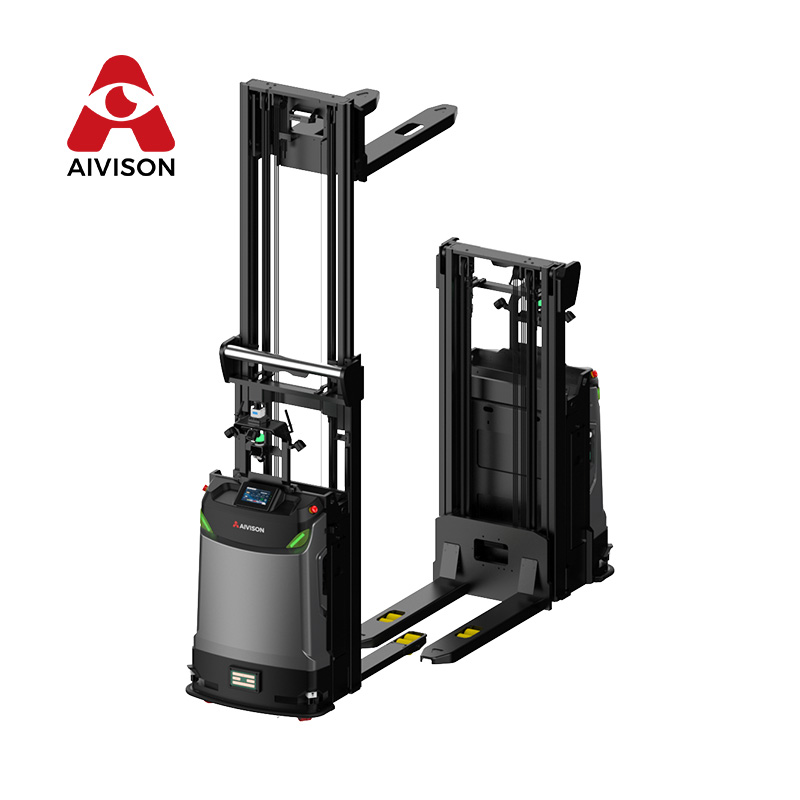
High Precision agv Forklift Full Servo Motor Controlled Laser Forklift with Heavy Load 2000kg
Best fit: high-precision 2,000 kg servo-controlled laser forklift tasks where repeatable fork movement matters as much as payload capacity.
Not sure which starting SKU is right? Send your unit load, aisle width, docking tolerance, throughput target and preferred top module. We will match the platform before you commit to a pilot fleet.
Contact UsWhat OEM/ODM Buyers and Wholesalers Should Verify Before Shortlisting a Material Handling Robot Supplier
The search phrase “OEM/ODM material handling robot supplier and wholesalers” combines three distinct buying intentions. The right supplier must be technically credible for engineers, commercially workable for distributors and deployable for the end factory.
A factory owner is buying an operational outcome: fewer manual moves, stable takt time, safer pallet handling and measurable labor savings. A system integrator is buying a reliable motion platform, documented interfaces, firmware access and an engineering partner who can support custom top modules. A wholesaler or distributor is buying repeatable SKU availability, predictable lead times, spare-parts kits, training and documentation that supports local sales. A supplier that is excellent for one group can still be unsuitable for another. That is why a serious shortlist should be built around evidence, not only a catalogue.
For OEM and ODM programs, the technical boundary matters. OEM supply may mean a standard robot with buyer branding, packaging and documentation. ODM supply usually involves chassis configuration, top-module engineering, firmware or API support and market-specific compliance. The supplier should clearly state which parts are fixed, which are configurable and which require a new design review. Marnix’s manufacturing model is built around this distinction: a standard SLAM navigation core, configurable top modules and practical engineering support for integrators who need to connect robots to conveyors, lifts, machines or third-party fleet systems.
Factory Owner / End User
Prioritizes safety, acceptance testing, cycle time, uptime and service response. The winning proposal should show the route plan, fleet size, charging strategy, intervention assumptions and a staged deployment path rather than a single robot price.
System Integrator
Needs open interfaces, repeatable navigation, clear mechanical envelopes and documentation for PLC, MES, WMS or production equipment handshakes. Custom jacking units, roller conveyors, forks and arm modules often decide whether the project is feasible.
Wholesaler / Distributor
Needs stable quality, spare-parts availability, training materials, packaging standards and configurations that serve multiple customers. A supplier that can quote pilot units separately from series orders is easier to represent in a new market.
Years in AGV Engineering
Shenzhen-based R&D and manufacturing experience applied to mobile robot projects.
Laser SLAM Accuracy
Natural-feature navigation without magnetic tape, reflectors or full-floor QR codes.
Manufacturers Served
Deployments across three continents, including end users and system integrators.
Core Industries
Semiconductor, 3C electronics, lithium battery, photovoltaic, automotive parts, PCB, textile and medical devices.
Material Handling Robot Procurement Trends Shaping 2026–2030 Wholesale Programs
Buyers are moving from “Can this robot move a pallet?” to “Can this supplier support a repeatable automation program?” The following six trends are already visible in serious RFQs.
1. TCO Replaces Sticker Price
Five-year total cost of ownership now includes energy per mission, charging efficiency, tyre or fork wear, spare-parts consumption, software fees and service response. A cheaper robot with proprietary service can cost more than a slightly higher-priced fleet with local parts kits and documented maintenance intervals.
2. Fleet Interoperability
Open APIs, ROS2 support and standard fleet interfaces are moving from optional to tender requirement. Wholesalers should ask whether one scheduler can manage jacking robots, smart forklifts and third-party AMRs without creating separate vendor islands.
3. Modular OEM/ODM by Default
Jacking units, roller conveyors, forks, lifters and six-axis arms are increasingly specified at RFQ stage. Integrators want a proven chassis with a documented mechanical and electrical envelope, not a one-off prototype with unclear serviceability.
4. Third-Party Verification
Onsite assessment reports, CE-ready documentation, risk assessments, safety-distance calculations and MTTR evidence are becoming standard due-diligence items. For distributors, these documents shorten the sales cycle and reduce local compliance risk.
5. Service Coverage Wins Tenders
Procurement contracts increasingly include spare-parts lists, distributor training, remote diagnostics, firmware update policy and response-time SLAs. A supplier that can ship parts directly to channel partners is more attractive than one that requires factory return for every fault.
6. Charging Strategy as a Fleet Variable
Opportunity charging and intelligent charging docks are now part of fleet sizing. Buyers compare robots by available duty cycle, not battery capacity alone; charging strategy affects fleet count, floor space and peak power demand.
How Material Handling Robot Technology Is Evolving for the Next Buying Cycle
Product development is converging on practical deployment rather than novelty. The strongest platforms reduce floor work, simplify integration and give distributors a clear upgrade path.
Hybrid SLAM + QR Navigation
Natural-feature laser SLAM keeps installation simple, while QR cameras are added only at high-precision docking points. This hybrid model lets buyers avoid full-floor QR maintenance while still meeting ±2 mm handover requirements.
Compact Heavy-Payload Forklifts
Demand is growing for 1.5–2 tonne autonomous forklifts that fit existing aisles and pallet flows. Full-servo fork control, camera-assisted pallet recognition and laser navigation are becoming differentiators in wholesale portfolios.
Composite and Humanoid Platforms
AMR chassis are increasingly combined with robotic arms, dual 7-DOF arms or open ROS2 control. These platforms support semiconductor, medical device and advanced manufacturing tasks that require mobility plus fine manipulation.
Sensor Integration at Supplier Level
LiDAR, cameras and safety sensors are being sold as part of a validated navigation stack rather than loose components. For wholesalers, pre-integrated sensor kits reduce field failures and shorten commissioning.
Software-Defined Fleets
Fleet software now determines scalability as much as hardware. Traffic control, task allocation, charging logic and integration with WMS or MES are evaluated during the pilot, not after the purchase order.
Safety and Documentation by Design
Buyers now expect emergency-stop architecture, obstacle-avoidance behavior, speed zones and acceptance-test records to be designed into the product. Documentation quality becomes part of the product itself for channel partners.
A Practical Six-Step Framework for OEM/ODM Material Handling Robot Procurement
Use this sequence to compare suppliers on the same technical and commercial basis, especially when multiple configurations and distributors are involved.
Define the Unit Load and Route Envelope
Record maximum weight, load footprint, center of gravity, rack or pallet type, aisle width, door clearance, floor slope, lift or elevator use and any mixed pedestrian traffic. These inputs determine chassis size, fork length, sensor placement and safe speed.
Match Accuracy to Each Docking Station
Separate transport routes from docking points. Use ±5 mm laser SLAM for general movement, QR-assisted ±2 mm docking only where required, and composite or servo solutions where ±0.05 mm repeatability is essential.
Size the Fleet with Utilization Assumptions
Calculate missions per hour, average cycle time, charging time and target utilization. Keep one buffer unit for critical routes. A pilot should validate real cycle time before committing to a full fleet.
Audit Integration and Open Interfaces
Confirm how the robot communicates with WMS, MES, PLCs, conveyors, automatic doors and production machines. Ask for API documentation, I/O lists, protocol support and responsibility boundaries before the order.
Verify Safety, Quality and Credentials
Review risk-assessment documentation, emergency-stop behavior, obstacle-avoidance tests, onsite assessment reports, CE-ready configuration statements and acceptance-test records. Third-party evidence should be checked, not assumed.
Contract Lifetime Support and Channel Terms
Agree spare-parts kits, training, remote diagnostics, firmware policy, warranty exclusions and response-time targets. Distributors should also clarify packaging, documentation language, pilot-unit pricing and series-order lead times.
RFQ Data That Shortens Evaluation from Weeks to Days
Send these items with your inquiry to receive a more accurate recommendation from the first technical review.
- Maximum load weight, footprint and center of gravity
- CAD layout, aisle width, door clearance and slopes
- Peak missions per hour and operating shifts
- Docking points and required positioning tolerance
- Existing Wi-Fi coverage and access-point locations
- Conveyor, lift, machine or WMS/MES interfaces
- Target country, compliance documents and language
- Pilot quantity, annual forecast and branding needs

How Shenzhen Marnix Meets the OEM/ODM and Wholesale Supplier Bar
Shenzhen Marnix Intelligent Technology Co., Ltd. is a Shenzhen-based manufacturer with about ten years of AGV engineering experience. The product portfolio includes laser SLAM AMRs, jacking robots, smart forklifts, composite mobile robots and intelligent charging docks for semiconductor, 3C electronics, lithium battery, photovoltaic, automotive parts, PCB, textile and medical device industries.
Our engineering approach is practical: trackless laser SLAM maps the existing factory environment at ±5 mm without auxiliary tapes, reflectors or full-floor QR codes. Where higher docking precision is needed, an optional QR scanning camera reaches ±2 mm. Composite robots with a six-axis arm can reach ±0.05 mm repeatability for demanding production tasks. Multiple robots are coordinated by an intelligent scheduling system over indoor Wi-Fi, with compatible smart charging docks supporting continuous duty cycles.
Customization is manufacturer-level. Chassis, payload, jacking units, roller conveyors, forklift forks and robotic arm modules can be engineered around real production equipment rather than forcing a standard platform to fit. This is particularly important for system integrators who need to connect a mobile robot directly to a machine, conveyor or production line, and for wholesalers who need configurations that can serve several customer segments.
Contact UsOnsite Assessment
Company premises and operations assessed by TÜV Rheinland, supporting independent supplier due diligence.
Fortune 500 Supplier
Procurement contract with a Fortune 500 company, assessed by independent third parties.
Manufacturers Served
Active deployments across three continents, serving both end users and system integrators.
Core Industries
Semiconductor, 3C, lithium battery, photovoltaic, automotive parts, PCB, textile and medical devices.
Reliability Is Engineered Before Shipment and Verified During Acceptance
Mobile robots become production equipment the moment they enter a live route. Multi-stage intelligent inspections and thousands of operational stress tests are used to target near-zero failure rates. The goal is not only a robot that moves correctly on day one, but a platform that a distributor can support and an integrator can commission without repeated factory escalations.
Acceptance should be data-based. For each project, define empty-run and loaded-run cycles, docking tests, obstacle-entry tests, emergency-stop behavior and recovery scenarios. Measure positioning error, cycle time, intervention rate and charging behavior. For high-shelf, wafer-handling or medical-device applications, add QR-assisted or composite-arm verification and record the result against the agreed tolerance.
Standard laser SLAM navigation removes the need for auxiliary tracks or floor QR codes. QR labels are added only at stations that require ±2 mm docking. This keeps installation fast and avoids turning the entire factory floor into maintenance infrastructure.

Illustrative precision hierarchy and payload class for product-selection comparison, not a performance rate.
Where Material Handling Robots Deliver Measurable ROI
Material handling robots are most valuable where repetitive movement, mixed traffic, precision docking or shift continuity limits manual performance. The industry list below reflects the applications supported by the Marnix mobile robot portfolio.
Semiconductor
Cleanroom logistics and wafer-handling projects requiring precision and traceable movement.
3C Electronics
Line-side delivery, rack transport and repetitive material movement in assembly areas.
Lithium Battery
Jacking robot transport and safe material flow in battery production and module assembly.
Photovoltaic
Module logistics, pallet movement and production-line transfer with vision or laser navigation.
Automotive Parts
Pallet handling, kitting and warehouse-to-line supply in mixed pedestrian and vehicle traffic.
PCB
Roller conveyor modules, line-side transfer and machine-to-machine material handover.
Textile
Warehouse transport, roll handling and repetitive replenishment in large storage areas.
Medical Devices
Composite mobile robots with arms for precision assembly, transfer and controlled handling.
Mixed-Traffic Sites Need Handover Reliability More Than Top Speed
The limiting factor in most live factories is not maximum robot speed. It is the reliability of the handover: fork entry, conveyor transfer, machine docking, lift call and recovery after a blocked route. A successful deployment defines these interfaces before the pilot and measures them during acceptance.
For distributors, this means the strongest product is not always the one with the longest specification sheet. It is the one with clear documentation, repeatable configuration and a support model that lets the local team solve first-line issues without waiting for an overseas factory response.
Common Questions from OEM/ODM Material Handling Robot Buyers and Wholesalers
These are the questions that most often decide whether an inquiry becomes a pilot, a channel agreement or a long-term supply relationship.
What is the difference between an AGV and an AMR for material handling?
An AGV traditionally follows fixed infrastructure such as magnetic tape, reflectors or guide paths. An AMR uses onboard sensors and mapping to navigate with more flexibility. Marnix platforms use laser SLAM on natural features, so standard routes do not require auxiliary tracks or floor QR codes; QR labels are added only for precision docking.
What information is needed for an accurate OEM/ODM quote?
Provide load weight and footprint, center of gravity, route drawing, aisle widths, door and lift clearances, peak missions per hour, docking tolerance, Wi-Fi coverage, top-module requirements and target compliance documents. Also state whether you are an end user, system integrator or distributor, because commercial terms and documentation requirements differ.
Can the supplier support OEM/ODM branding, top modules and software integration?
Yes, subject to engineering review. A practical OEM/ODM program separates the proven navigation chassis from configurable top modules such as jacking units, roller conveyors, forks, lifters and robotic arms. Software integration should be confirmed early: API documentation, I/O mapping, fleet scheduling and any WMS or MES interface must be agreed before the pilot.
What MOQ and lead times should wholesalers expect?
MOQ and lead time depend on configuration, battery choice, top module, compliance documents and forecast. Marnix supports low-MOQ customization for selected configurations, while final MOQ is confirmed by specification. Wholesalers should ask for pilot-unit pricing, series-order lead time and spare-parts lead times separately.
How is safety proven in mixed human and vehicle traffic?
Safety should be demonstrated through risk assessment, emergency-stop architecture, obstacle-avoidance behavior, speed zones, warning indicators and documented acceptance tests. For complex sites, the robot’s safety configuration must be reviewed against aisle width, blind corners, lift entries and pedestrian flows. CE-ready configurations can be discussed as part of the project review.
Do we need to modify the floor or install QR codes everywhere?
No for standard laser SLAM navigation. The robot maps existing natural features, so no magnetic tape, reflectors or full-floor QR codes are required. QR labels are only used at stations that need ±2 mm docking precision. This reduces installation time and keeps future layout changes simpler.
How many robots do we need for a new route?
Start with a simple estimate: peak missions per hour × average cycle time ÷ target utilization, then add one buffer unit for critical routes. Validate the result in a pilot by measuring real cycle time, charging behavior, blocking events and operator intervention. Fleet software and charging-dock count should be sized together, not separately.
What after-sales support is available for distributors and integrators?
Support should include commissioning guidance, documentation, spare-parts lists, training, remote diagnostics and a clear firmware-update policy. Marnix provides customer service and project support through AMR specialists, and the product portfolio includes charging docks and modular components that help channel partners support complete installations.
How can we verify a supplier’s credibility before buying?
Review third-party onsite assessment, trade history, credit records and reference deployments. Marnix has been assessed onsite by TÜV Rheinland, has a procurement contract with a Fortune 500 company assessed by independent third parties, and has served more than 200 manufacturers across three continents. These records should be combined with technical acceptance tests, not used as a substitute for them.
Which product should we choose first?
For 2,000 kg pallet stacking and warehouse transfer, start with the automatic stacking AGV or the autonomous stacker. For 1.5-ton pallet delivery, the Aivison autonomous forklift is a practical entry point. For line-side rack transport, select a jacking robot. For high-precision work, review the full-servo laser forklift or composite options. For ROS2 and dual-arm research, evaluate the humanoid robot chassis platform.
Request a Factory-Specific Material Handling Robot Recommendation
Share your load profile, layout, throughput target and docking tolerance. Our team will recommend a platform, estimate fleet size and outline the documentation needed for your market.